Andy Hargreaves is an internationally recognized scholar and advisor in education, holding dual roles as Adjunct Professor at Boston College and Visiting Professor at the University of Ottawa. He advises governments including Ontario, Scotland, and New Brunswick on educational policy and system reform. His work focuses on leadership, well-being, student engagement, and systemic educational change. Hargreaves co-leads the ARC Education Project and founded CHENINE, a Canadian research initiative advancing pedagogical innovation. Research Interests: Leadership from the Middle Teacher Well-Being and Professional Capital Identity Development in Schools Play-Based Learning Crisis Management in Education Awards: 2023 Canadian EdTech Awards Educator of the Year 2023 RHSU Edu-Scholar #16 2022 National Academy of Education Member 2015 Grawemeyer Award Key Projects: ARC Education Project (7 nations collaboration) CHENINE (Canadian educational innovation hub) Canadian Playful Schools Network Labs/Teams: Directs CHENINE, collaborates through ARC networks, and leads research on global educational transformation.
Alexander Dunlap is a Research Scientist at Boston University's Institute for Global Sustainability (IGS) and a visiting research fellow at the University of Helsinki's Global Development Studies department. He holds a PhD in Social Anthropology from Vrije Universiteit Amsterdam, an MSc in Modules from the University of Sussex (UK), an MA in Environment, Development and Policy from Sussex, and a BS in Political Science from Portland State University (USA). His work critically examines energy transitions, extractive industries, and the socioecological impacts of green capitalism. Research Interests: Political ecology of low-carbon technologies Green extractivism in global contexts Decolonial and anarchist approaches to sustainability State violence and counterinsurgency tactics Environmental justice in renewable energy projects Publications: Dunlap’s recent work focuses on solar energy injustices in California, industrial solar manufacturing in Ohio, and the militarization of nature. His articles interrogate how 'green' infrastructure reinforces colonial and capitalist systems, often through spatial dispossession and anti-Indigenous violence. Labs/Teams: Active in IGS research clusters studying infrastructural harm and energy justice. Co-editor of Human Geography , a journal promoting radical interdisciplinary scholarship. Future Work: Continuing research on solar project lifecycles, particularly mining-to-decommissioning impacts, and expanding analysis of Europe’s energy grid conflicts.
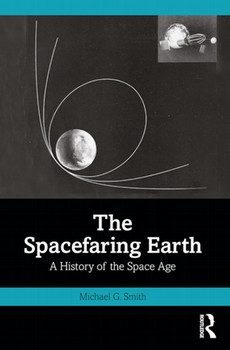
Michael G. Smith is a Professor of History at Purdue University's College of Liberal Arts, specializing in Russian History and Aerospace History. His office is located in BRNG 6170, where he holds office hours by appointment and before or after class. Dr. Smith teaches a diverse range of courses including History of Russia to 1861 (HIST 238), History of Russia from 1861 (HIST 239), History of Aviation (HIST 384), and History of the Space Age (HIST 387), along with numerous advanced seminars on Russian history, aerospace history, and global historical topics. Dr. Smith earned his Ph.D. from Georgetown University in 1991 and has established himself as a leading scholar in both Russian revolutionary history and aerospace history. His research demonstrates remarkable interdisciplinary breadth, connecting linguistic studies with political history in the Soviet context while simultaneously exploring the cultural dimensions of space exploration and aviation history. His scholarly output reveals two major research trajectories: deep investigations into the Russian Revolution with particular focus on language policy, nationalities issues, and revolutionary violence in Azerbaijan and the Caucasus region; and pioneering work on the history of aerospace, space exploration, and the cultural dimensions of the Space Age. These dual interests converge in his examination of how technological innovation intersects with political ideology and national identity formation. Dr. Smith has successfully mentored numerous undergraduate and graduate students whose research has resulted in publications in respected journals such as the Journal of Purdue Undergraduate Research, Quest: The History of Spaceflight Quarterly, and Astropolitics. His students have explored diverse topics including Purdue's aviation pioneers, NASA mission insignia, Shuttle-Mir program, and regional impacts of space programs. Working closely with the Purdue Archives, Dr. Smith has developed innovative archival-research seminars that have produced multiple student publications and special projects including Flight Paths: Purdue University's Aerospace Pioneers and Purdue Students Study Boilermaker Eugene Cernan's Remarkable Career. His commitment to connecting historical research with contemporary technological heritage has created unique opportunities for students to engage with primary sources related to aerospace history.
Tatiana Sánchez Parra is an Assistant Professor of Cultural Anthropology at the University of Tennessee. Her research focuses on reproductive violence and justice in contexts of war and transitional justice, particularly in Colombia and Latin America. She employs feminist peacebuilding, social reproduction frameworks, and creative/arts-based methodologies in her work. Previously, she held a Marie Skłodowska-Curie Actions Fellowship at the University of Edinburgh and remains a visiting researcher there. Education: Ph.D. in Sociology, University of Essex (2018) M.A. in Theory and Practice of Human Rights, University of Essex (2013) M.A. and B.A. in Social Anthropology, Universidad de los Andes, Colombia (2007/2006) Key research interests include: Gendered victimhood in transitional justice Reproductive autonomy and social reproduction in militarized contexts Creative methods for knowledge production Environmental devastation and conflict legacies Her book ‘Born of War in Colombia’ (2024) examines how children born of conflict-related sexual violence remain marginalized in Colombia’s transitional justice systems. Recent publications analyze Colombia’s Truth Commission, feminist methodologies, and reparations frameworks. Awards include the prestigious Marie Skłodowska-Curie Actions Fellowship (2018-2020). She co-edits special journal issues on gender-based violence in Latin America and Colombia’s peacebuilding processes. Teaching includes courses on anthropology of human rights and reproduction/sexuality studies. She collaborates with Afro-Colombian communities and transitional justice actors to advance transformative justice measures for conflict-affected populations.
Annette Finley-Croswhite is a Professor in the Department of History at Old Dominion University and serves as Director of the Center for Faculty Development. Her research focuses on France, Europe, and the intersections of political and religious violence, the Holocaust, and the history of medicine and disease. Ph.D. in History, Emory University (1991) B.A. in History, University of Richmond (1981) Her research explores early modern and modern European history, particularly political violence, gender dynamics, and medical historiography. She has contributed extensively to French history, analyzing topics such as Henry IV's military leadership, urban politics during the Catholic League, and gender roles in fascist movements. Finley-Croswhite's publications span medical history, political violence, and cultural studies. Her recent work includes analyses of the royal touch and scrofula, gender and fascism in 1930s France, and the Holocaust's impact on personal identity. Outstanding Faculty Award Finalist (2016, 2015, 2012, 2011) Provost's Award for Excellence in International Education (2015) Faculty Fellow in Residence, Auschwitz Jewish Center (2015) Senior Scholar, College of Arts and Letters (2012) She has secured significant grants, including National Endowment for the Humanities (NEH) funding for research and travel. Her leadership in faculty development and international education further underscores her academic contributions.
Rachel Marion Scott is a Professor and Chair of the Department of Religion and Culture at Virginia Polytechnic Institute and State University, within the College of Liberal Arts and Human Sciences. She is also affiliated with ASPECT (Alliance of Social, Political, Ethical, and Cultural Thought), reflecting her interdisciplinary engagement with political and ethical theory in Islamic contexts. Her research centers on Islamic political thought, modern Islamic law, constitutional development in Muslim-majority countries, and personal status law. She has made significant contributions to understanding the interplay between religion and the nation-state, particularly in Egypt. Her scholarly work explores how religious authority is negotiated in constitutional frameworks, the evolution of Islamic legal thought, and the role of institutions like al-Azhar and the Muslim Brotherhood in shaping political discourse. Professor Scott’s publications reveal a sustained focus on the dynamics of Islamic law in modern governance, with a particular emphasis on Egypt’s constitutional history and legal reforms. Her work bridges religious studies, political science, and legal theory, addressing themes such as secularism, religious pluralism, citizenship, and hermeneutics. The articles show a trajectory from broader studies of political Islam to more nuanced analyses of constitutionalism, gender, and religious authority. She has authored two major monographs: The Challenge of Political Islam: Non-Muslims and the Egyptian State (Stanford University Press, 2010) and Recasting Islamic Law: Religion and the Nation State in Egyptian Constitution Making (Cornell University Press, 2021), both of which are central to contemporary scholarship on Islam and governance. While no formal list of awards is provided in the text, her publications with leading academic presses indicate recognition and scholarly impact in her field. Rachel M. Scott advises graduate students and contributes to academic mentorship through her leadership roles. As department chair, she oversees curriculum development, faculty collaboration, and interdisciplinary initiatives. There is no explicit mention of external grants, but her research output suggests engagement with funded scholarly projects or institutional support. She is affiliated with research initiatives related to Islamic studies, political thought, and constitutional law, particularly through her work with ASPECT and the Department of Religion and Culture. These affiliations support collaborative scholarship on ethics, cultural thought, and the role of religion in public life.
Luca Somigli is a Professor at the University of Toronto, holding the Emilio Goggio Chair in Italian Studies. His research focuses on European and Italian modernism, avant-garde movements, futurism, detective fiction, genre literature, and comics. Born in Florence, he earned a Laurea from the Università degli Studi di Firenze and a PhD in Comparative Literature from SUNY Stony Brook. Educational Background: PhD, State University of New York at Stony Brook Laurea, Università degli Studi di Firenze Luca's scholarship explores tensions between modernism and postmodernism, colonial narratives in Italian crime fiction, and the intersection of visual narratives with cultural themes. His recent publications include co-edited volumes on futurism and modernism, alongside articles analyzing authors like Marinetti, Pirandello, and Camilleri. Key research trends include: Colonialism in Italian historical fiction Symbolist and avant-garde artistic movements Visual storytelling in comics and film The legacy of fascist ideology in literature Scientific awards highlight his contributions: the 2019 Visiting Scholar at Université de Haute-Alsace and the 2003 American Association for Italian Studies Book Award. Luca has co-authored works with scholars like Federico Luisetti and Eleonora Conti, and his conference presentations address neomodernist novels and modernist historiography. He serves as Chair of the Department of Italian Studies (2021-present) and previously as Associate Chair – Graduate (2020-2021).
Rana Jaleel is an Associate Professor in the Department of Gender, Sexuality, and Women's Studies at the University of California, Davis, within the College of Arts & Sciences. She holds multiple leadership roles, including Chair of the Cultural Studies Graduate Group, Chair of the Designated Emphasis in Feminist Theory and Research, Faculty Advisor for the Sexuality Studies Minor, and Co-Director of HATCH: The Feminist Arts & Sciences Initiative. She is also a 2021–2024 College of Arts & Sciences Dean's Faculty Fellow. Education: Ph.D. in American Studies, New York University J.D., Yale Law School MFA in Poetry, University of Michigan, Ann Arbor Rana Jaleel’s research centers on the politics of evidence, examining how harm is recognized or erased in legal, cultural, and political contexts. Her work critically engages with reproductive labor, race, gender, sexuality, property, and international law. She draws from feminist theory, critical ethnic studies, legal studies, and decolonial thought to interrogate the intersections of power, knowledge, and violence. Her interdisciplinary approach is reflected in her contributions across law, cultural studies, and creative writing. Her publications and editorial projects reveal a strong focus on racial capitalism, settler colonialism, queer/trans of color critique, and feminist legal theory. She explores how international legal frameworks for sexual violence are shaped by imperial and racial power. Her work frequently appears in journals such as Critical Ethnic Studies Journal , Cultural Studies , and Brooklyn Law Review . She has co-edited special issues on democracy, gendered citizenship, and racial capitalism, demonstrating a commitment to collective scholarly work. Scientific Awards: Author of Color First Book Award from Duke University Press for The Work of Rape Rana Jaleel is actively involved in academic service and mentorship. As Co-Director of HATCH and leader of the Write the Future! Lab, she fosters creative and critical scholarship among undergraduate students, particularly from women/queer/trans of color and transnational feminist perspectives. She serves on the Editorial Collective and Board of The Critical Ethnic Studies Journal and is a member of the American Association of University Professors’ Committee A on Academic Freedom and Tenure. Her leadership extends to admissions and curriculum development in interdisciplinary programs. She is co-editing a forthcoming issue of South Atlantic Quarterly on 'Queer/Trans of Color Transits and the Global Imaginaries of Racial Capitalism' and continues to develop projects that bridge creative practice, legal critique, and feminist theory.
Naomi Rogers, Ph.D. (She/Her) is Professor of the History of Medicine in the Section of the History of Medicine and the Program in the History of Science and Medicine at Yale University. She holds courtesy appointments in the History Department and the Women's, Gender and Sexuality Studies Program, and serves on Yale's Dean's Advisory Council for LGBTQI Affairs. Professor Rogers teaches undergraduate, graduate, and medical students, regularly lecturing on the history of AIDS, reproduction, health economics, eugenics, nutrition, disability, and health activism. Professor Rogers' educational background includes: PhD in History from University of Pennsylvania (1986) MA from University of Pennsylvania (1986) BA in Music from Melbourne University (1980) BA with Honors from Melbourne University (1979) Her research focuses on 20th and 21st century history of medicine with emphasis on health inequities and social justice. Professor Rogers' historical interests span gender and health, disease and public health, disability studies, feminism, alternative medicine, health policy, and health activism. Her work critically examines the intersection of medical practices with social movements, particularly how marginalized communities have challenged medical orthodoxy throughout American history. She has published extensively in journals such as American Journal of Public Health, Bulletin of the History of Medicine, Journal of Medical Humanities, Radical History Review, Social History of Medicine, and Women and Health. Professor Rogers' recent scholarship demonstrates a consistent focus on the historical dimensions of contemporary health issues, particularly vaccine politics, abortion history, and community health activism. Her publications reveal patterns of resistance to medical authority, the role of race and gender in shaping health outcomes, and the historical roots of current health justice movements. Her work bridges academic history with public engagement, as evidenced by her frequent media commentary on COVID-19 and other health issues in outlets including BBC Radio, CNN, Huffington Post, National Public Radio, New York Times, Wall Street Journal, and Washington Post. Among her notable recognitions: AAHN's Lavinia L. Dock Award for Exemplary Historical Research for 'Polio Wars: Sister Kenny and the Golden Age of American Medicine' (2014) Presenter of the AAHM's Garrison Lecture: 'Radical Visions of American Medicine: Politics and Activism in the History of Medicine' (2017) Professor Rogers has been actively involved in academic leadership and mentoring. She has served as Director of Graduate Studies for the 2022-23 academic year, Chair of the Women's Faculty Forum, and Liaison to the Committee on Status of Women in Medicine. Her service extends to editorial boards including the Journal of the History of Medicine and Allied Sciences since 2018. She has also contributed to public understanding of medicine through consultations for documentaries including 'The Polio Crusade' (PBS), 'On the Basis of Sex' (Focus Features), and 'War on Science' (in process). Currently, Professor Rogers serves on the Medical School's OBGYN 'Dobbs' Sessions Planning Committee, which has organized webinars for the Yale community, and was co-organizer of the history-themed session 'Rooted in History: Abortion, Law and American Health Care.' She is working on her book project 'Health Radicalism and the Humanization of American Medicine' (under contract with Oxford), examining critics of medical orthodoxy since 1945 including civil rights, consumer, and feminist activists. She also conducts ongoing research on antisemitism in American medicine in the decades before and after World War II.
Ziad Majed serves as Associate Professor and Program Coordinator for Middle East Pluralities within the Department of History and Politics, holding the Elliott E. Burdette Professorship of Middle Eastern Studies. His academic focus centers on Lebanese, Syrian, and broader Arab political affairs, with sustained engagement in civil society reform campaigns since 1994. His educational foundation includes: PhD in Political Sciences from IEP - Sciences-Po, Paris DEA in Political Sciences from IEP - Sciences-Po, Paris MA in Arabic Literature from the American University of Beirut BA in Economics from the American University of Beirut Majed's research critically examines political transitions, civil society dynamics, and democratization challenges across the Arab world. His work demonstrates deep expertise in Lebanese consociationalism, Syrian revolutionary movements, and the interplay between foreign occupation and local authoritarianism, consistently addressing themes of state failure and resistance. Analysis of his 15 most recent publications reveals a clear trajectory from Arab Spring studies toward contemporary analysis of counter-revolutionary processes, Russian and American geopolitical interventions, and the fragmentation of state authority in Syria and Lebanon. The corpus maintains rigorous focus on occupation politics, sectarian governance crises, and regional power rivalries. Professor Majed actively contributes to public discourse as Coordinator of The Arab Network for the Study of Democracy and opinion writer for Al-Quds Al-Arabi, while serving on boards of Lebanese, Syrian, and French cultural institutions and lecturing internationally at major festivals and conferences.
Priyank Chandra is an Assistant Professor at the University of Toronto's Faculty of Information and Director of the STREET Lab (SocioTechnical Resistance and Ethical Technologies Lab). His interdisciplinary research focuses on sociotechnical practices of marginalized communities, leveraging HCI, CSCW, STS, and development studies to design inclusive technologies. He holds a PhD in Information from the University of Michigan, along with MS in Economics and BE in Electronics Engineering. Chandra has received awards at ACM CHI and CSCW for his work on labor movements, digital resistance, and accessibility. Education: PhD in Information, University of Michigan (2019) MS in Economics BE in Electronics Engineering Research Interests: Chandra explores how marginalized communities reconfigure technologies to foster self-organization and resistance. His work bridges HCI/CSCW with theories from development studies and institutional analysis, emphasizing ethical, socially just systems. Recent projects include studying farmer movements in India, gig economy platforms, and weather risk communication for visually impaired Ontarians. Grants & Awards: SSHRC Grant: Repertoires of Contention in Digital Labour Platforms (2023-2024) NSERC Grant: Designing Inclusive Platforms for the Gig Economy (2022-2027) Connaught New Researcher Award (2023) ACM CHI/CSCW Awards for contributions to labor studies and accessibility Advising & Labs: Supervises students in ICTs, design, and marginality. Directs the STREET Lab at KMDI, focusing on ethical tech for vulnerable communities. Teaches courses on inclusive design and marginalized communities' ICT practices.
Isobel Hurst is a Lecturer in the Department of English and Creative Writing at Goldsmiths, University of London. Her research specializes in Classical Reception Studies, focusing on the interplay between Greek and Roman literature and 19th-century women's writing. Academic qualifications: D.Phil. (2003), M.Phil. in English Studies (2000), BA in Classics and English (1995) - all from the University of Oxford Her research explores how women writers like Elizabeth Barrett Browning and George Eliot creatively engaged with classical texts to challenge gender norms and societal constraints, particularly through reworkings of Homeric and Virgilian themes. She examines intersections between domesticity and epic traditions, feminist reinterpretations of mythology, and the role of classical education in women's authorship. Recent publications analyze Louise Glück's mythic poetry, Victorian epic traditions, and transatlantic classical dialogues. She supervises PhD students working on topics including Sapphic poetics, prophetic figures in literature, and epic subversions in contemporary forms. Isobel contributes to academic discourse through her involvement with the Decadence Research Centre and Centre for Comparative Literature, bridging classical traditions with modern literary innovations through both teaching and research.
Rafael Grohmann is an Assistant Professor of Media Studies at the Department of Arts, Culture and Media , University of Toronto. He is also affiliated with Universidade do Vale do Rio dos Sinos (Unisinos University) , Brazil, as an Assistant Professor in Communication. Grohmann serves as Principal Investigator for the Fairwork project in Brazil , Coordinator of DigiLabour Research Lab , and editor of DigiLabour newsletter . His work bridges Latin American digital labor studies, AI's societal impacts, and platform cooperativism. Education: Ph.D. in Communication, University of São Paulo (2016) M.Sc. in Communication, University of São Paulo (2012) BA in Social Sciences, Federal University of Juiz de Fora (2009) Research interests include platform labor , AI and work , datafication , and worker-owned platforms , with a focus on Global South and gender perspectives . His recent work analyzes Brazilian women's hidden labor on AI platforms and labor migration in the gaming industry. Scientific awards include grants from SSHRC , CNPq , FAPESP , and COST Action . Grohmann is an editorial board member of Big Data & Society , Work, Employment and Society , and co-founder of the Platforms & Society journal. He is actively involved in public engagement, including podcasts like Tech Won't Save Us and op-eds on data sovereignty. Projects: Creative Labour and Critical Futures (CLCF) : Studies ethical approaches to AI in creative sectors. Worker-Owned Intersectional Platforms (WOIP) : Explores worker-owned tech solutions in Brazil and Argentina.
Noelle Hurd is a Professor of Psychology at the University of Virginia and co-Director of Diversity, Equity, and Inclusion Initiatives (co-DDEI). She leads the Promoting Healthy Adolescent Development (PHAD) Lab, focusing on marginalized youth development through intergenerational relationships and systemic oppression disruption. Her research integrates clinical and community psychology to address adolescent development, racial discrimination, and mental health disparities. Key interests include natural mentoring as protective factor, anti-racist frameworks, and leveraging community strengths to counteract systemic barriers for Black and Latinx youth. Her work emphasizes youth agency in social justice movements and resilience through familial and community support networks. Recent publications (2023-2025) reveal concentrated exploration of natural mentoring dynamics across marginalized populations, with methodological diversity spanning qualitative analyses of immigrant youth experiences and longitudinal studies of college adjustment. Recurring themes include anti-immigration policy impacts, youth-led anti-racism initiatives, and the intersection of discrimination with mental health outcomes. Dr. Hurd's scientific contributions have earned significant recognition: William T. Grant Scholar and Spencer/National Academy of Education Postdoctoral Fellow Rising Star Award (Association for Psychological Science, 2015) Outstanding Professor Award (UVA Psychology, 2017) Faculty Excellence in Diversity, Inclusion, and Equity Award (2021) Fellowships in American Psychological Association and Society for Community Research and Action As PHAD Lab director, she mentors emerging researchers in community-engaged scholarship funded by NIH, NSF, William T. Grant Foundation, and Institute of Education Sciences. Her team examines mentoring relationships, discrimination mechanisms, and intervention development for youth thriving in oppressive contexts. The PHAD Lab operates as an interdisciplinary research collective developing evidence-based approaches to dismantle systemic barriers through youth-adult partnerships and natural mentoring frameworks.
Clinton Free is a Professor in the Discipline of Accounting, Governance and Regulation at the University of Sydney Business School. He holds leadership roles such as former Deputy Dean and Head of School, Academic Director of the Australian Graduate School of Management (AGSM), and Deputy Director of the Centre for Law, Markets and Regulation. His research focuses on white-collar crime, corporate governance, management accounting, and auditing. He has received an ARC Future Fellowship and multiple grants, including an ARC Linkage Grant and a major SSHRC grant in Canada. His work spans academic leadership, editorial board roles (e.g., Accounting, Organizations & Society ), and executive education across institutions like Oxford and Queen’s School of Business. Research interests include fraud dynamics, corporate governance reforms, sustainability assurance, and algorithmic management. He has advised private and public sector organizations and won teaching awards for undergraduate and postgraduate courses. Clinton’s educational background includes Commerce and Law degrees from UNSW and a doctorate from Oxford as a Rhodes Scholar. Recent publications explore fraud offender narratives, algorithmic labor control (e.g., Uber), climate-related disclosures, and critiques of corporate law reforms. He frequently engages with media, discussing topics like Bunnings’ market dominance, illegal phoenixing, and white-collar crime psychology. Grants: ARC Future Fellowship, ARC Linkage Grant, SSHRC Canada Grant Teaching: EMBA courses on leadership and governance Media Contributions: ABC Four Corners, Sydney Morning Herald, Australian Financial Review








.jpg)