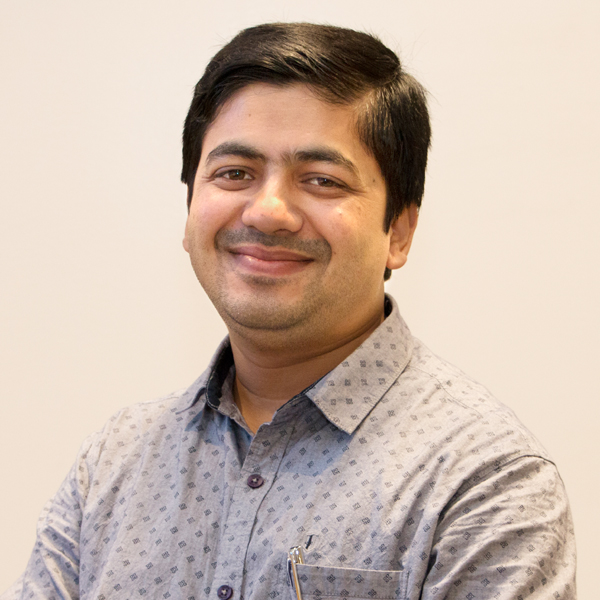
Monowar Bhuyan is an Associate Professor in the Department of Computing Science at Umeå University, Sweden, leading the Cyber Analytics and Learning Group within ADSLab. He holds a Ph.D. in Computer Science from Tezpur University and has held academic positions at Assam Kaziranga University and Umeå University. His research focuses on machine learning, anomaly detection, edge AI, and distributed systems security. He has secured over 35 MSEK in grants from WASP, STINT, and EU Horizon programs. Education Ph.D. in Computer Science and Engineering, Tezpur University (2014) M.Tech. in Information Technology, Tezpur University (2009) B.E. in Computer Science and Engineering, IETE (2007) Research Interests Distributed/Federated/Responsible Machine Learning Cybersecurity and Anomaly Detection in Edge Clouds AI for DDoS Defense and Cyber Resilience Edge AI and Serverless Computing Recent Contributions His recent work addresses secure federated learning, DDoS attack detection in cloud-edge systems, and responsible AI. Key publications include novel frameworks for VSI-DDoS detection and federated learning optimizations. Awards & Grants Best Paper Awards at ICONIP 2023 and ACM ICACCI 2012 WASP NEST Grant (AIR2 Project, 5 MSEK) EU Horizon Europe Grant (SovereignEdge.Cognit, 8.27 MSEK) Lab & Collaborations He leads the Cyber Analytics and Learning Group (ADSlab), collaborating with institutions like KTH, Linköping University, and Nara Institute of Science and Technology (NAIST). The lab focuses on AI-driven security solutions for distributed systems.
ZHANG Zhiyuan is a Full-time Assistant Professor of Computer Science (Practice) at the School of Computing and Information Systems (SCIS) at Singapore Management University. His research focuses on Artificial Intelligence, Machine Learning, and Data Science, with specialties in 3D object detection, neural networks, and computer vision. He holds a PhD from the National University of Singapore (2015). Key research areas include developing efficient neural architectures (e.g., binarized vision transformers, hybrid diffusion models), multimodal human pose estimation, and medical imaging applications like dental biometrics. His work spans theoretical advancements and practical applications in autonomous systems, LiDAR fusion, and low-light image enhancement. Teaching expertise includes Data Structures & Algorithms, Programming Fundamentals II, and Object-Oriented Programming. No grants or awards are explicitly listed in the provided materials.
Jason Hein is an Associate Professor in the Department of Chemistry at the University of British Columbia's Faculty of Science. His research focuses on the development of automated reaction analysis technology and self-driving laboratories that integrate robotics with synthetic organic chemistry. Dr. Hein leads the Hein Lab, which pioneers innovative solutions for mechanistic organic chemistry, catalytic reaction mechanisms, and chemical manufacturing processes. His research interests center on creating modular robotic tools and integrated analytical hardware for automated reaction profiling, with applications in pharmaceutical manufacturing, battery materials processing, and sustainable chemistry. The lab's work combines advanced robotics, artificial intelligence, and process analytical technology to develop self-optimizing chemical systems that accelerate discovery and improve manufacturing efficiency. Analysis of Hein's recent publications reveals a strong focus on AI-driven laboratory automation, with particular emphasis on crystallization optimization for battery materials, computer vision for process monitoring, and interoperable software systems for self-driving laboratories. His work bridges fundamental mechanistic understanding with practical industrial applications, particularly in lithium extraction from waste brines and pharmaceutical process development. NSERC Postdoctoral Fellowship Dr. Hein's research program includes significant grant funding supporting the development of self-driving laboratory technologies and their application to challenging chemical problems. His lab actively collaborates with industry partners in pharmaceuticals and clean energy sectors to translate fundamental insights into deployable technologies. Current projects focus on battery-grade lithium carbonate production, continuous manufacturing processes, and AI-optimized chemical synthesis. The Hein Lab operates as a multidisciplinary research environment combining expertise in organic chemistry, robotics engineering, computer science, and data analytics to create the next generation of autonomous chemical discovery systems.
Dr. Anwar Ali is a Lecturer in the Department of Electronic and Electrical Engineering at Swansea University's Bay Campus, affiliated with the School of Aerospace, Civil, Electrical and Mechanical Engineering. He holds an M.S. in Electronic Engineering (2010) and a Ph.D. in Electronic and Communication Engineering (2014) from Politecnico di Torino, Italy. His research focuses on: Power electronic converters and conditioning systems Embedded systems for aerospace applications Analog/mixed-signal circuit design Satellite technologies including power management Attitude determination and control systems Thermal modeling of aerospace systems Dr. Ali has authored over 50 publications with recent works concentrated in satellite power systems, thermal analysis of spacecraft, machine learning applications in healthcare/robotics, and energy harvesting techniques. His research demonstrates consistent innovation in small satellite technologies and cross-disciplinary applications of electrical engineering principles. He currently supervises PhD projects on: Wireless power transfer for implantable medical devices Integrated power and attitude control optimization for small spacecraft and teaches modules including Analogue Design, Software Engineering, Embedded System Design, and Integrated Circuit Design.
Luis Sentis is a Professor in the Department of Aerospace Engineering and Engineering Mechanics at The University of Texas at Austin and holds the Frank and Kay Reese Endowed Professorship in Engineering . He leads the Human Centered Robotics Laboratory, focusing on control systems, human-robot interaction, and exoskeleton robotics. His affiliations include UT Austin's Good Systems initiative and Apptronik Systems as an innovation advisor. Ph.D. , Electrical Engineering, Stanford University B.S. , Telecommunications and Electronics Engineering, Polytechnic University of Catalonia His research spans humanoid robotics , agile manipulation , autonomous systems , and human-robot teaming . Recent work emphasizes FAIR datasets , EEG monitoring , and collision detection for legged robots, with applications in industrial automation and ethical AI. Scientific awards include the NASA Elite Team Award and La Caixa Foundation Fellowship . Funding sources include DARPA , NSF , NASA , and ONR .
Christopher John Rozell is the Julian T. Hightower Chaired Professor in the School of Electrical and Computer Engineering at the Georgia Institute of Technology's College of Engineering. He serves as Executive Director of the Institute for Neuroscience, Neurotechnology & Society (INNS) and directs the Sensory Information Processing Lab (SIPLab). His research bridges computational neuroscience, machine learning, and neurotechnology, with clinical applications in treatment-resistant depression and neuromodulation therapies. Education: B.S.E. in Computer Engineering & B.F.A. in Music, University of Michigan (2000) M.S. and Ph.D. in Electrical Engineering, Rice University (2002, 2007) Postdoctoral Scholar, Redwood Center for Theoretical Neuroscience, UC Berkeley Research Focus: Dr. Rozell's interdisciplinary work spans computational neuroengineering, theoretical neuroscience, and artificial intelligence. He develops data analysis tools inspired by neural processing and creates therapeutic neurotechnologies. Key areas include: computational psychiatry (developing DBS therapies for depression), neural dynamics modeling, brain-computer interfaces, and societal impacts of neurotechnology. His lab focuses on high-dimensional data analysis, neural coding principles, and scalable neuromodulation approaches. Publication Trends (2023-2025): Recent works concentrate on deep brain stimulation mechanisms for depression, computational modeling of neural/autonomic dynamics, and machine learning applications in neuroscience. Dominant themes include biomarker discovery for treatment response, neural interoception modulation, probabilistic modeling of latent states, and brain-computer interface taxonomy. Clinical translation of neurotechnology is a consistent focus across publications. Awards & Honors: Elected AIMBE Fellow (2025) NIH BRAIN Initiative Photo/Video Award (2024) Congressional Panelist for BRAIN Initiative 10th Anniversary (2024) Sigma Xi Best Faculty Paper (2024) Neuro Open Science International Prize (2022) W. Howard Ector Outstanding Teacher Award (2019) McDonnell Foundation 21st Century Science Award (2014) NSF CAREER Award (2014) Leadership & Training: Dr. Rozell co-founded Neuromatch, Inc. to build global computational neuroscience communities. He advises Motif Neurotech and the Institute of Neuroethics. His mentees have received prestigious fellowships (Schmidt, Fulbright, NIH K99/R00) and hold leadership positions across academia and industry. Research is supported by NIH BRAIN Initiative, NSF, and private foundations. Labs & Initiatives: Directs the Sensory Information Processing Lab (theoretical neuroscience/neuroengineering) and the Institute for Neuroscience, Neurotechnology & Society (addressing ethical/societal implications). Neuromatch promotes open, accessible computational neuroscience training globally.
Edwin Romeijn holds the Jill Stewart Archer Family Chair and Professor position in the H. Milton Stewart School of Industrial and Systems Engineering at Georgia Institute of Technology. He served as School Chair from 2015-2024, overseeing the nation's top-ranked industrial engineering program. Previously, he held faculty positions at the University of Michigan, University of Florida, and Erasmus University Rotterdam, and served as Program Director at the National Science Foundation. Education: Ph.D. in Operations Research (1992), Erasmus University Rotterdam M.S. in Econometrics (1988), Erasmus University Rotterdam Romeijn's research centers on optimization theory and applications , with dual focus areas in radiation therapy treatment planning and supply chain management . His radiation therapy work develops algorithms for cancer treatment planning and clinic scheduling, while his supply chain research addresses integrated optimization of production, inventory, and transportation under demand flexibility, resource constraints, perishability, and uncertainty. His methodologies bridge theoretical operations research with real-world healthcare and logistics systems. His publication portfolio demonstrates consistent contributions to optimization methods across diverse application domains, with recent work spanning healthcare systems, renewable energy, sports analytics, and unconventional logistics. The research exhibits strong methodological continuity in stochastic programming, network optimization, and decision-making under uncertainty. Scientific Awards: Fellow of IISE and INFORMS (2017) Richard C. Wilson Faculty Scholar (2012-2013) Multiple best paper awards in industrial engineering conferences Pierskalla Best Paper Award (2003) Young Investigator’s Award at ICCR (2004) Romeijn has advised numerous graduate students and secured significant research funding through NSF and other agencies. His leadership extends to program direction at NSF and chairing Georgia Tech's Industrial and Systems Engineering school. He maintains active collaborations with healthcare institutions and manufacturing enterprises, translating theoretical advances into practical solutions for radiation oncology and supply chain resilience.
Dr Mahdi Davoodianidalik is a researcher in the Department of Nuclear Physics & Accelerator Applications at the Australian National University (ANU). He is affiliated with the Space plasma power and propulsion group and the Physics of fluids group, focusing on interdisciplinary research at the intersection of plasma physics, fluid dynamics, and space propulsion technologies. His research interests include Turbulence and wave-driven flows Plasma thrusters and electrothermal propulsion Fluctuation-induced forces and interactions Fluid-structure dynamics Thermal engineering of micro-thrusters Nonlinear phenomena in fluids Recent publications highlight his work on analogs of the Casimir effect in turbulent flows, passive propulsion mechanisms, and advanced propulsion systems using solid hydrocarbon propellants. He has contributed to understanding turbulence in both fundamental and applied contexts, with a focus on energy transfer and chaotic flow phenomena. His collaborations span ANU colleagues including Nicolas Francois and Michael Shats, with a strong emphasis on experimental and computational fluid dynamics.
Dr Nour Ali is a Reader in the Department of Computer Science at Brunel University London , where she co-heads the Brunel Software Engineering Lab and serves as Vice-Dean of Education for the College of Engineering, Design and Physical Sciences. She holds a PhD in Software Engineering from Universidad Politecnica de Valencia, Spain, and a Major in Computer Science from Bir-Zeit University, Palestine. Research Interests: Software architecture for distributed and adaptive systems, integrating techniques like Model-Driven Engineering, Reverse Engineering, and Machine Learning. Teaching: Module leader for Software Project Management and supervisor of undergraduate group projects and final-year projects. Scientific Contributions: Over 70 publications in journals, conferences, and books. Key research areas include microservice architecture recovery, autonomic healthcare systems, and mobile self-adaptive architecture. Scientific Awards: Fellow of the Higher Education Academy (HEA). Membership: Deputy Editor-in-Chief for IET Software, member of multiple conference program committees, and reviewer for EPSRC, NWO, and other funding bodies.
Nabil Simaan is a Professor of Mechanical Engineering at Vanderbilt University with secondary appointments in Computer Science and Otolaryngology . He leads the Advanced Robotics and Mechanism Applications (ARMA) laboratory, focusing on surgical robotics, continuum robots, and intelligent human-robot interaction. Education : Ph.D., M.Sci., and B.S. in Mechanical Engineering from the Technion—Israel Institute of Technology . Postdoctoral Research at Johns Hopkins University NSF ERC-CISST (2003-2004). Research Interests : Medical robotics for minimally invasive procedures Kinematic modeling and optimization of parallel/continuum robots Telemanipulation and semi-autonomous control Flexible mechanisms and actuation redundancy Article Trends : His recent work emphasizes subretinal surgical robots, continuum manipulators for transurethral operations, and multi-scale dexterity through mathematical synthesis using screw theory and algebraic geometry. Scientific Awards : NSF Career Award (2009) for intelligent surgical robots IEEE Senior Member (2013) for contributions to robotics Advising & Grants : Advises PhD/MSc students in robotics and mechanism design. NIH-funded work on OCT-guided retinal surgery robots. NSF grants for continuum robot kinematics and redundancy control. Labs & Collaborations : Leads the ARMA Lab , bridging engineering and clinical medicine. Collaborates with Vanderbilt Institute for Surgery and Engineering (VISE) and industry partners like AURIS Surgical Robotics. Translational focus through Titan Medical Inc. partnerships.
Kelly Bijanki is an Associate Professor of Neurosurgery, Director of Intracranial Monitoring Research, and holds joint appointments in Psychiatry and Neuroscience at Baylor College of Medicine. Her work bridges clinical neurosurgery and neuroscience, focusing on understanding the neural basis of affective disorders and developing neuromodulation therapies. She directs the Translational Neuromodulation Lab, where she leverages stereotactic electroencephalography (sEEG) to study deep brain structures critical to emotional functioning. Dr. Bijanki's research explores the electrophysiological, neurobiological, and behavioral correlates of neuromodulation of affective neural circuits. Her lab primarily works with patients undergoing intracranial monitoring for epilepsy or depression, using this unique platform to conduct in-vivo studies of neural correlates to affective function. Her work has identified novel stimulation-based strategies for evoking positive affect and anxiolysis, including the discovery that stimulation to the cingulum bundle evokes changes in anxiolysis, mirth, and euphoria, which was featured as a cover article in the Journal of Clinical Investigation and highlighted in the NIH Director's Blog. Analysis of her recent publications reveals a consistent focus on mapping neural circuits involved in emotion processing, particularly using stereo-EEG informed deep brain stimulation approaches. Her work spans multiple psychiatric conditions including depression, obsessive-compulsive disorder, and anxiety disorders, with a strong emphasis on translating electrophysiological findings into therapeutic applications. The integration of computational approaches, particularly machine learning for decoding neural activity related to mood states, represents a growing trend in her research program. Her scientific achievements include: United States Patent (US:11,241,575) for a novel stimulation-based strategy for evoking positive affect and anxiolysis Journal of Clinical Investigation cover article (March 2019) on cingulum stimulation enhancing positive affect NIH Director's Blog feature highlighting her groundbreaking work Multiple NIH grants including R01, R21, and K01 awards Dr. Bijanki mentors a diverse team including graduate students, postdoctoral fellows, and undergraduate researchers. Her research program is generously funded by multiple NIH grants (R01-MH127006, R01-MH130597, K01MH116364, R21NS104953, UH3NS103549), as well as support from the ARCO Foundation, Caroline Wiess Law Fund, American Foundation for Suicide Prevention, and NARSAD. She maintains strong collaborations with researchers at institutions including UTSW, Iowa, Duke, UCLA, Brown, UPenn, and WashU. The Translational Neuromodulation Lab operates at the intersection of clinical neurosurgery, neuroscience, and engineering, utilizing stereo-EEG as a research platform to study deep brain structures involved in emotional processing. The lab employs multiple methodologies including advanced surgical neuroimaging, affective electrophysiology, autonomic surveillance, facial motor analysis, and pulse-evoked potentials to comprehensively characterize mood-relevant neural circuits. Their current flagship project involves using explainable artificial intelligence to map the relationship between mood and intracranial neural activity, with the goal of developing naturalistic patterns of intracranial stimulation for therapeutic applications.
Kristian Sevdari is a Postdoctoral Researcher at the Department of Wind and Energy Systems, Technical University of Denmark (DTU). He was born in Kucove, Albania, in 1995, and holds a B.Sc in electrical engineering from the Polytechnic University of Tirana (2016), an M.Sc from UiT Norges arktiske universitet, Norway (2020), and a Ph.D. from DTU (February 2024). Since 2020, he has been working at DTU on multiple projects including Solar-Move, AHEAD, FLOW, EV4EU, ACDC, and FUSE. His research focuses on renewable energy integration and electric vehicle grid integration, with specific expertise in vehicle-to-grid systems, power system dynamics and stability, prosumers and flexible demand, wind power integration, and smart grid technologies. His work contributes to UN Sustainable Development Goals related to sustainable energy and climate action. Dr. Sevdari's recent publications demonstrate a strong trend toward solving practical challenges in EV-grid integration, with emphasis on bidirectional charging technologies, harmonics analysis, battery second-life applications, and smart charging strategies for residential and urban environments. His research bridges theoretical control approaches with experimental validation across multiple European contexts. Best paper award at 2024 IEEE Transportation Electrification Conference & Expo Best paper award of the IEEE PES ISGT-Europe 2021 conference As a supervisor, he has guided multiple Master's theses on topics including telematics integration for EV cost reduction, open charge point protocol implementation, vehicle-to-grid testing, and compatibility testing for EV ecosystems. He is actively involved in the IEEE PES Task Force on electric vehicle grid integration and IEA Task 53, and is the founder of IEEE REST conferences, Qendra SUSALB, and EkoVolt.
Dengfeng Sun is a Professor and Associate Head of the Gambaro Graduate Program in the School of Aeronautics and Astronautics at Purdue University. His research focuses on distributed control systems, autonomy, resilient networks, and air traffic management. Sun holds a B.Eng. from Tsinghua University, an M.S. from The Ohio State University, and a Ph.D. from UC Berkeley. His work spans advanced air mobility, UAV trajectory planning, and stochastic optimization for large-scale systems. Key contributions include resilient UAV traffic control, distributed state estimation algorithms, and fault detection methods for navigation systems. Sun's research has been published in top journals like IEEE Transactions on Intelligent Transportation Systems and Transportation Research Part E. Education: B.Eng., Tsinghua University (2000) M.S., Ohio State University (2002) Ph.D., UC Berkeley (2008) He advises on cutting-edge projects integrating robotics, autonomous systems, and cloud-based traffic modeling. His lab develops solutions for urban air mobility, emergency medical UAV networks, and next-generation air traffic control systems. Notable collaborations include work with NASA and industry partners on continuous descent approach procedures and metroplex routing paradigms. Sun's work bridges theoretical control systems with practical applications in aviation and infrastructure optimization.
Nicolas Cambier is a Visiting Professor at Vrije Universiteit Amsterdam, affiliated with the Faculty of Science's Artificial Intelligence department and the Network Institute. His research focuses on swarm robotics, collective behavior, and evolutionary systems. He explores topics like emergent communication, modular robotics, and prosociality in robotic swarms. Key areas include task-driven language evolution, adaptive decision-making, and environmental interaction in constrained environments. His work bridges theoretical models with practical implementations, emphasizing self-organization and cultural evolution in synthetic systems. Recent contributions address challenges in heterogeneous swarms, skill acquisition in modular robots, and decision-making without prior knowledge. He collaborates widely, with publications in IEEE Robotics and Automation Letters, Nature Communications, and top conferences like GECCO and Distributed Autonomous Robotic Systems. Research interests span robotics, artificial intelligence, and evolutionary computation, with applications to both theoretical frameworks and real-world robotic systems. His studies often involve agent-based simulations and embodied evolution approaches to understand complex collective phenomena.
Rui Teixeira is an Assistant Professor in the School of Civil Engineering at University College Dublin (UCD). He leads UCD's Centre for Critical Infrastructure Research (CCIR) and focuses on Uncertainty Quantification, Safety, and Risk in civil engineering systems, with applications to infrastructure resilience. His research emphasizes reliability analysis, multi-fidelity modeling, and AI-driven risk assessment. Education: MSc in Civil Engineering, University of Porto, Portugal PhD in Civil Engineering, Trinity College Dublin Professional Certificate in University Teaching and Learning, UCD Research Interests: Development of novel reliability analysis techniques Resilience of infrastructure systems Artificial intelligence applications for risk assessment Probabilistic system evaluation and safety standards Grants & Projects: Smart Enforcement of Transport Operations (SETO), Horizon Europe (2023–2026) Optimality-Tracking Civil Engineering Systems, Enterprise Ireland (2023–2025) Floating Offshore Wind Dynamic Cables (FlOWDyn), Sustainable Energy Authority of Ireland (2024–2027) Teaching: Coordinates courses such as 'Civil Engineering Systems' and 'Design of Structures 1'. Labs/Teams: Director of the Centre for Critical Infrastructure Research (CCIR), focusing on interdisciplinary approaches to infrastructure resilience.