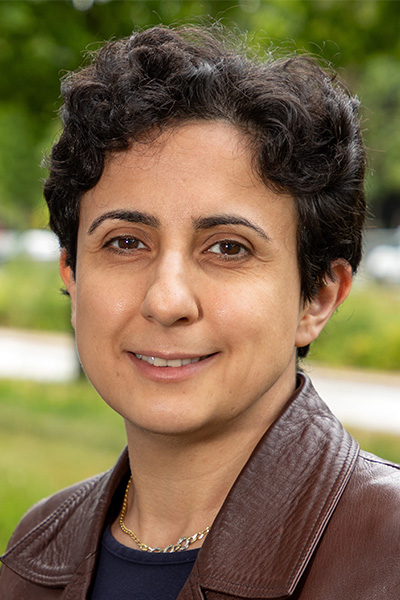
Shiva Nejati is a Professor at the University of Ottawa 's School of Electrical Engineering and Computer Science . He holds a PhD in Computer Science from the University of Toronto and previously worked as a Senior Scientist (2012-2019) and Scientist (2009-2012) at the SnT Centre (University of Luxembourg) and Simula Research Laboratory. Research focus: Software engineering for cyber-physical systems (autonomous vehicles, IoT), blending formal verification, machine learning, and search-based testing Key tools developed: ARIsTEO, SOCRaTEs, SimCoTest, EPIcuRus Editorial roles: Associate Editor for EMSE Journal (2025–), ASE Journal (2025–), IEEE Transactions on Software Engineering (2020–2024) His work combines formal methods , empirical software engineering , and AI/ML to address verification challenges in complex systems, particularly through evolutionary algorithms and surrogate modeling . Notable collaborations include industry partners in telecommunications, automotive, and aerospace sectors. Recent publications emphasize large language models for requirements analysis, adversarial testing of vision systems, and multi-objective optimization for test generation. His Sedna Research Lab actively trains graduate students in these cutting-edge methodologies.
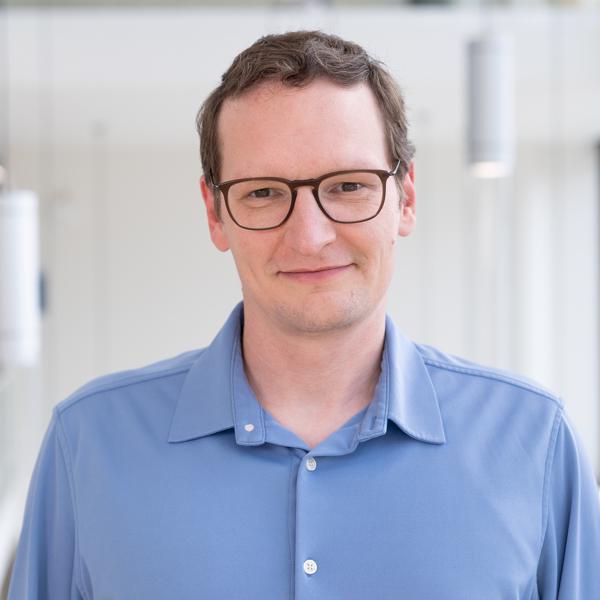
Nils Ole Tippenhauer is a faculty member at the CISPA Helmholtz Center for Information Security , leading the SCy-Phy research group . His academic journey includes an Assistant Professorship at the Singapore University of Technology and Design (SUTD) (2014–2018), a PhD in Computer Science from ETH Zurich (2012), and a Diploma in Computer Engineering from Hamburg University of Technology (2007). He also holds an exchange study year at the University of Waterloo (2004–2005) supported by a DAAD scholarship. Research Interests focus on practical systems security , particularly Security of Cyber-Physical Systems Industrial Control Systems (ICS) and Industrial IoT (IIoT) Physical-Layer Security and Wireless Security Privacy-Preserving Technologies (e.g., DP3T project) Embedded Systems Security Threat Detection & Defenses His work integrates both theoretical and applied approaches, addressing vulnerabilities in critical infrastructures like water systems and power grids. Recent Publications highlight trends in Anomaly detection evasion in industrial networks Microarchitectural side-channel defenses Localization techniques in cellular networks Security analysis of ICS protocols Data-driven vulnerability assessments for robotics Cyber-physical simulation for infrastructure security Scientific Awards include Best paper at DIMVA'23 Distinguished Paper at ACSAC 2022 Best paper at CPSIOTSEC 2022 Best paper at CPSS 2017 K-H Ditze Award for diploma thesis (2007) SG Mark Institution award (2016) Runner-Up at smart energy hackathon (2013) Advising and Grants feature PhD defenses of Daniele Antonioli and Hamid Reza Ghaeini (2022), co-organizing conferences like WiSec and CPSS , and leading projects such as the National Science Experiment (NSE) with 50,000 mobile sensors in Singapore. He also contributed to the DP3T project for privacy-preserving contact tracing. Labs and Teams include the SCy-Phy research group at CISPA and the development of testbeds like SWaT (Secure Water Treatment), WADI (Water Distribution), and EPIC (Electric Power and Industrial Control) at SUTD. These platforms enable hands-on security research in realistic industrial environments.
Marios Polycarpou is a Professor of Electrical and Computer Engineering and Director of the KIOS Research and Innovation Center of Excellence at the University of Cyprus. He holds honorary positions at Imperial College London and is a member of Academia Europaea. His expertise spans intelligent systems, adaptive control, machine learning, and critical infrastructure. Education: B.A. Computer Science (Rice University, 1987) B.Sc. Electrical Engineering (Rice University, 1987) M.S. Electrical Engineering (University of Southern California, 1989) Ph.D. Electrical Engineering (University of Southern California, 1992) Research Focus: Polycarpou’s work emphasizes fault diagnosis in cyber-physical systems, water distribution networks, and adaptive control. He pioneers digital twin technologies for infrastructure resilience and develops algorithms for real-time anomaly detection and system optimization. Article Trends: His recent publications address adaptive control strategies, cybersecurity in networked systems, and AI-driven solutions for water management. Key themes include distributed control, event-triggered mechanisms, and transformer-based anomaly localization. Awards: 2023 IEEE Frank Rosenblatt Technical Field Award 2016 IEEE Neural Networks Pioneer Award Fellow of IEEE and IFAC Grants & Leadership: He secured prestigious grants including ERC Advanced and Synergy Grants. He led KIOS CoE’s Horizon 2020 projects and served as IEEE Computational Intelligence Society President (2012–2013). Labs & Teams: Directs the KIOS CoE, a hub for AI in critical infrastructure. Collaborates on projects like ERC Water-Futures, focusing on long-term water system transitions and contamination mitigation.
John Folkesson is an Associate Professor at the Department of Robotics, Perception and Learning at KTH Royal Institute of Technology. His research focuses on mobile robotics, underwater autonomous vehicles (AUVs), and Simultaneous Localization and Mapping (SLAM), particularly addressing challenges in dynamic underwater environments. He leads the AUV group within the Swedish Maritime Robotics Centre (SMaRC2.0) and supervises multiple PhD projects, including those funded by Ocean Infinity and Vinnova. Folkesson has pioneered work on sonar-based SLAM, bathymetric mapping, and autonomous underwater navigation without human intervention. He teaches courses such as Probabilistic Graphical Models (DD2420) and Applied Estimation (EL2320). Recent projects include developing neural rendering techniques for sidescan SLAM and automatic launch systems for AUVs in collaboration with Purdue University and SAAB. His research emphasizes long-term autonomy, environmental ambiguity, and sensor data interpretation in unstructured underwater scenarios. Education: PhD in Robotics (2005, KTH Royal Institute of Technology) Recent Funding: 2024 projects include ALARS (Vinnova), WASP WARA-PS, and industrial collaborations. Research Interests Folkesson's work spans underwater robotics, SLAM algorithms, and sensor fusion. Key areas include: Underwater SLAM and sonar modeling Bathymetric reconstruction using neural networks Autonomous decision-making in AUV missions Real-time terrain modeling and localization Articles Trends Recent publications emphasize neural networks for SLAM optimization, sonar data processing, and autonomous underwater systems. Themes include real-time bathymetric mapping, sensor fusion in dynamic environments, and neural rendering techniques for improving navigation accuracy. Folkesson's work bridges theory and practice, with applications in marine robotics and industrial surveys. Advising & Grants PhD supervision: AUV perception (2024), SLAM with Ocean Infinity, event-response AUV systems. Collaborations: Purdue University, SAAB, Ocean Infinity. Course responsibilities: Over 10 advanced robotics and engineering courses at KTH. Labs & Teams Lead of SMaRC2.0, KTH's official research center for maritime robotics. Active in developing AUV systems for long-duration missions, including ice-covered and deep-sea exploration.
Xingwang Li is an active researcher affiliated with the School of Physics and Electronic Information Engineering at Henan Polytechnic University in Jiaozuo, China. He obtained his PhD from Beijing University of Posts and Telecommunications in 2015, specializing in networking and switching technology. His research spans wireless communications, IoT systems, reconfigurable intelligent surfaces (RIS), and physical-layer security, with a strong focus on 6G-enabling technologies. Dr. Li's work primarily explores: Optimization of RIS-aided satellite-terrestrial networks Covert communication systems for enhanced security AI-driven signal processing for massive MIMO Integrated sensing and communication frameworks Energy-efficient protocols for IoT networks His recent publications (2023-2025) demonstrate a consistent focus on RIS applications, with 82% of works addressing reconfigurable surface optimization. Key trends include the integration of deep learning with communication systems (notably reinforcement learning for resource allocation), advancement of THz and near-field technologies for 6G, and novel approaches to physical-layer security. The research shows increasing emphasis on practical implementations, including UAV networks and autonomous vehicle communications.
Sebastian Schmidt is a researcher at the Technical University of Munich (TUM) within the Department of Informatics - I26 (Data Analytics and Machine Learning) under Prof. Dr. Stephan Günnemann. His work is situated in the TUM School of Computation, Information and Technology, where he contributes to cutting-edge research in machine learning applications. His research focuses on active learning methodologies with particular emphasis on out-of-distribution detection and uncertainty estimation in open-world perception systems. His work bridges theoretical machine learning with practical applications in computer vision and robotics, as evidenced by publications in top-tier conferences like CVPR, ICRA, and IROS. His recent publications demonstrate a consistent research trajectory in developing active learning frameworks that address real-world challenges in perception systems. The publications show increasing sophistication from temporal stream processing to multi-agent robotic applications and safety-constrained sensor fusion. As a member of the Data Analytics and Machine Learning group, he collaborates extensively with colleagues including Leo Schwinn, Stephan Günnemann, and others across multiple publications. His research has practical implications for autonomous systems requiring reliable perception under uncertainty.
Suining He is an Assistant Professor at the University of Connecticut (UConn)'s School of Computing, leading the Ubiquitous and Urban Computing Lab since 2019. Previously, he was a postdoctoral research fellow at the University of Michigan's Real-Time Computing Lab (2016–2019). He holds a Ph.D. in Computer Science from the Hong Kong University of Science and Technology (2016) and a B.Eng. in Mechanical Design from Huazhong University of Science and Technology (2012). His research focuses on Cyber-Physical Systems (CPS), Smart & Connected Communities, Human-Centered Computing, and Urban Computing Cyberinfrastructure, with emphasis on mobility, equity, and AI-driven solutions. He has received prestigious awards including the NSF CAREER Award (2023), Google Research Scholar Program Award (2021), and recognition as a Stanford Top 2% Scientist (2020–2024). His work spans interdisciplinary grants from NSF, USDA, Google, NVIDIA, and industry partners. Recent publications explore autonomous driving simulation, equity-aware mobility prediction, and urban crowd activity modeling. Teaching excellence is reflected in his 2020 UConn Provost Award. He advises on reinforcement learning, CPS, and mobile computing, with openings for 2025/2026 PhD students. His lab collaborates on socially-conscious AI, privacy-preserving learning, and location-based services with industrial impact.
Prof. Dr.-Ing. Elisabeth Clausen is a Professor and Director of the Chair and Institute for Advanced Mining Technologies at RWTH Aachen University. She holds key roles in the Specialist Group for Raw Materials and Disposal Technology, serves as a rectorate representative, and leads the Commission for EU Research Funding. Her research spans Underground mining automation Acoustic emission diagnostics Sustainable mining systems Space resource extraction Advanced sensor technologies Her recent publications focus on autonomous mining machinery, underground communication systems, and acoustic emission analysis across 15+ studies from 2013–2025, with particular emphasis on Ultra-wideband positioning Thermographic detection Crack monitoring in planetary gearboxes Explosive atmosphere safety Mineral processing diagnostics Digitalization trends Prof. Clausen contributes to mining education reform through initiatives like CDIO™ and has developed innovative learning spaces in underground mines. She coordinates international educational labs and integrates sustainability into mining engineering curricula, with publications on Adaptive ventilation systems Mining education frameworks Future-proof mineral extraction Entrepreneurial mindset in engineering
Brad Hayes is an Associate Professor of Computer Science at the University of Colorado Boulder within the College of Engineering and Applied Science, where he directs the Collaborative AI and Robotics (CAIRO) Laboratory. He also serves as Chief Technology Officer at Circadence, leading efforts in developing AI-enabled products for cybersecurity training and assessment. Undergraduate degree from Boston College PhD in Computer Science from Yale University Postdoctoral Associate at MIT Professor Hayes' research focuses on developing techniques that enable autonomous agents and robots to learn from and collaborate with humans safely, reliably, and productively. His work occurs at the intersection of pervasive and personalized artificial intelligence, human-robot teaming, and decision support. He has made significant contributions to collaborative robotics, dependable explainable AI, and imitation learning, with applications spanning manufacturing, healthcare, disaster response, autonomous vehicles, and space exploration. His recent publications reveal a strong emphasis on human-robot interaction, with particular focus on improving predictability in collaborative tasks, developing explainable AI systems that build trust, leveraging augmented and virtual reality for enhanced collaboration, and creating more efficient learning algorithms from human demonstrations. His work increasingly integrates large language models and advanced neural network architectures while maintaining a strong human-centered design approach. Sustainability Recognition (2025) for computational efficiency in motion planning Best Student Paper Runner-up at AAMAS 2022 Nominated for Best Technical Paper at HRI 2024 Best Technical Paper Runner-up at HRI 2019 Hayes has successfully mentored numerous graduate students through the CAIRO Lab, including multiple PhD graduates in 2024 alone. His lab receives funding from various organizations supporting research in human-robot interaction and collaborative AI. He frequently collaborates with industry partners and has established connections with major technology companies through his research and speaking engagements. The CAIRO Lab, under Hayes' direction, is a vibrant research environment focused on turning theoretical concepts into practical applications through hands-on work with real robots and human participants. The lab's research spans multiple domains including manufacturing, disaster response, autonomous vehicles, and space exploration, with a consistent emphasis on safe and effective human-machine teaming.
Prof. Dr.-Ing. Christoph Stiller is a full professor at the Karlsruher Institut für Technologie (KIT) and serves as the director of the Institute of Measurement and Control Technology (Institut für Mess- und Regelungstechnik, MRT). His work focuses on autonomous driving, sensor fusion, probabilistic estimation, HD mapping, motion planning, and intelligent transportation systems. Education: Details on his academic degrees are not provided in the text, but he holds the title of Dr.-Ing. indicating a doctoral degree in engineering. Research Interests: Prof. Stiller's research spans a wide array of topics critical to the development of autonomous vehicles. His work includes: Sensor Fusion: Integrating data from LiDAR, cameras, and radar to create robust perception systems. HD Mapping & Localization: Developing high-definition maps and precise localization techniques for urban and highway environments. Motion Planning & Decision Making: Creating algorithms for safe and efficient trajectory planning under uncertainty. Machine Learning & AI: Applying deep learning and reinforcement learning to perception, prediction, and control tasks. Publication Trends: His recent publications (2023–2025) emphasize robust traffic light detection, image stitching for panoramic views, motion prediction using redundancy reduction, and safety-enhanced model predictive control. The work increasingly integrates learning-based methods with classical control and estimation theory. Scientific Awards: No specific awards are listed in the provided text. Teaching & Supervision: Prof. Stiller teaches foundational and advanced courses in measurement and control systems, probabilistic estimation, and autonomous driving. He holds regular office hours during both summer and winter semesters and is actively involved in advising students and researchers. Labs & Teams: He leads the Institute of Measurement and Control Technology (MRT) at KIT, which is engaged in cutting-edge research in autonomous systems. The institute collaborates with industry and academia on large-scale projects such as UNICARagil and various European initiatives.
Jukka Manner is a Full Professor (tenured) of Networking Technology at Aalto University's Department of Communications and Networking (Comnet), School of Electrical Engineering. With a career spanning over two decades in internet technologies, he leads research in networking, wireless systems, and energy-efficient ICT solutions. Dr. Manner received his MSc (1999) and PhD (2004) degrees in computer science from the University of Helsinki. His academic journey has been marked by significant contributions to internet standardization through the IETF since 1999, where he served as co-chair of the NSIS working group. Professor Manner's research focuses on networking, software and distributed systems, with particular emphasis on wireless and mobile networks, transport protocols, energy efficient ICT and cyber security. His work bridges theoretical advancements with practical applications, addressing critical challenges in modern communication systems, sustainable networking practices, and security frameworks. His research group has made significant contributions to 5G technologies, UAV communications, and energy-efficient network design. His extensive publication record shows a clear evolution toward sustainability in networking technologies, with recent work focusing on energy efficiency in 5G systems, sustainable web technologies, and the environmental impact of digital infrastructure. The research demonstrates strong interdisciplinary connections between telecommunications engineering, computer science, and environmental science, with particular emphasis on reducing the carbon footprint of digital systems while maintaining performance. Cross of Merit, Signals (2014) Medal for Military Merits for contributions in national defence and C4 (2015) Professor Manner has supervised over 200 MSc theses and more than 20 doctoral dissertations, establishing himself as a dedicated mentor in the field. He has been principal investigator and project manager for over 15 national and international research projects, including serving as Academic Coordinator for the Finnish Future Internet research programme (2008-2012). His leadership extends to conference organization, having served as local co-chair of Sigcomm 2012 in Helsinki, and active participation as a peer reviewer and member of various Technical Program Committees. As an active contributor to internet standardization through the IETF, Professor Manner's work has practical impact on global networking technologies. His research group maintains strong connections with industry partners and participates in shaping future networking standards and practices, particularly in the areas of sustainable networking, 5G evolution, and security frameworks for emerging technologies.
Eshed Ohn-Bar is an Assistant Professor in the Department of Electrical & Computer Engineering at Boston University. He leads the Human-to-Everything (H2X) Lab, focused on developing intelligent systems for assistive and autonomous technologies. His research bridges machine perception, learning, and human-computer interaction, with applications in autonomous driving and accessibility for visually impaired individuals. Educated at UCLA (BS in Mathematics, 2010; MEd, 2011) and UCSD (PhD in Electrical Engineering, 2017), he holds a Humboldt Fellowship and has received the IEEE ITS Society Best PhD Dissertation Award (2017) and the 2025 BU Early Career Excellence in Research Award. His work emphasizes robust autonomy, real-time assistance, and inclusive design, collaborating with industry partners like Motional and receiving NSF grants (e.g., IIS-2152077). Research interests include autonomous systems, computer vision, and assistive technologies. Recent trends in publications highlight advancements in decision-making frameworks, neural volumetric models, and scalable learning for navigation. His lab’s projects address challenges in accessibility, such as blind motion generation and inclusive autonomous vehicle design. Awards: Humboldt Fellowship, IEEE ITS Best Dissertation, BU Early Career Award Grants: NSF IIS-2152077 Labs/Teams: H2X Lab, collaborating on projects with industry and academic partners
Dr. Prabhakar Pagilla is the Associate Department Head and a Professor in the Department of Mechanical Engineering at Texas A&M University. He holds the James J. Cain Professor II title and leads the Robotics and Control Engineering Group. His research focuses on advanced control systems for robotics and roll-to-roll manufacturing, with emphasis on nonlinear dynamics, autonomous systems, and mechatronics. Education: Ph.D., Mechanical Engineering, University of California, Berkeley (1996) M.S., Mechanical Engineering, University of California, Berkeley (1994) B.E., Mechanical Engineering, Osmania University (1990) Research Interests: Modeling and control of roll-to-roll manufacturing systems Autonomous vehicles and cooperative adaptive cruise control Robotics/mechatronics, including workpiece localization and human-robot collaboration Control of large-scale nonlinear dynamic systems Recent Trends in Publications: Dr. Pagilla’s recent work emphasizes safety and efficiency in autonomous systems, including platooning strategies, V2V communication impacts, and exoskeleton ergonomics. His robotics research explores real-time path planning, shared control mechanisms, and anomaly detection in manufacturing processes. Awards: Fellow of ASME (2011) John J. Shelton Best Paper Award (2017, 2019) Regents Distinguished Research Award (2012) Lab/Teams: The Robotics and Control Engineering Group at Texas A&M focuses on interdisciplinary projects combining advanced control theory with practical applications in robotics and manufacturing. Current initiatives include surface finishing of curved geometries and predictive intent modeling for human-robot collaboration.
Philippe BONNIFAIT is a Professor at the University of Technology of Compiègne (UTC) and Director of the Heudiasyc Research Lab (UMR UTC-CNRS 7253) since 2018. He specializes in robotics, autonomous vehicles, and data fusion, with a focus on localization systems and sensor integration. His research addresses challenges in intelligent transportation, fault detection, and cooperative robotics. He holds leadership roles including Head of the Autonomous Land Robotics axis in the TIRREX EQUIPEX+ project, and serves on the steering committee of the SIVALab joint lab with UTC, CNRS, and Renault. His international collaborations include Coimbra University (Portugal). Research Interests: Autonomous Vehicle Navigation Multi-Sensor Fusion GNSS-Based Positioning Decentralized Cooperative Systems Intelligent Transportation Systems Publications highlight advancements in vehicle localization, error mitigation, and sensor integration for autonomous systems. Notable work includes fault detection methodologies and HD map-aided navigation. No scientific awards listed. Active in lab administration and industry partnerships, contributing to experimental vehicles and robotics infrastructure.
Dr. Olga Vysotska is a Researcher affiliated with the Professorship for Robotic Systems at ETH Zurich's Department of Mechanical and Process Engineering. Her work focuses on advancing robotic systems through research in sensor-based navigation, SLAM (Simultaneous Localization and Mapping), and autonomous systems. She holds a doctoral degree and is based in Zurich, Switzerland. Her email is olga.vysotska@inf.ethz.ch. Research Interests: Olga's research spans robotics, computer vision, and autonomous navigation. She specializes in LiDAR-based place recognition, SLAM algorithms, and cross-modal localization using 3D scene graphs. Her work addresses challenges such as environmental changes, sensor fusion, and data association in dynamic environments like agriculture and underground exploration. Key themes include robust localization, loop closure detection, and adaptive algorithms for real-world robotic applications. Publications Overview: Olga's recent work emphasizes diffusion-based LiDAR place recognition (2025), 4D spatial-temporal mapping for agricultural robots (2023), and SceneGraphLoc for cross-modal localization (2024). Her research trends highlight innovation in sensor integration, algorithmic robustness, and practical applications in challenging environments. Earlier contributions include exploration of catacombs with mobile robots (2013) and SLAM enhancements using public map data (2017). Grants & Advising: While specific grants or student advisement details are not listed, her active publication record suggests involvement in funded research projects. Her work often collaborates with industry and academic partners to advance robotic autonomy in complex scenarios. Labs/Teams: As part of the Robotic Systems Professorship, she likely contributes to ETH Zurich's robotics labs focused on SLAM, sensor systems, and autonomous navigation. Her projects may intersect with the Department's broader initiatives in mechanical and process engineering.