

Mark Fagan is a Lecturer in Public Policy at Harvard Kennedy School, with affiliations to the Mossavar-Rahmani Center for Business and Government, Taubman Center for State and Local Government, and Center for Public Leadership. He teaches courses on operations management, policy design, and supply chain management. Previously, he was a Lecturer in Law at Boston University School of Law and a consultant at Norbridge, Inc. Education: MA in City and Regional Planning from Harvard University (199X), BA from Bucknell University (19XX). Research focuses on regulatory policy in competitive markets, autonomous vehicles, transportation systems, and energy markets. Key initiatives include leading the Autonomous Vehicle Policy Scrums initiative and publishing Supply Chain Management: A Public Sector Perspective (2024). His work examines how public policy can optimize supply chains while addressing geopolitical, environmental, and equity challenges. Teaching materials include digital courses on lobbying and advocacy, operations management case studies, and the Architect, Pilot, Scale, Improve policy implementation framework. Professional activities include advising governments on cross-sector policy design and consulting for private-sector clients in transportation, utilities, and telecommunications industries.
جستجوی استاد راهنمای دانشگاهی
برای مسیر پژوهشیتان، استاد راهنما، استاد دانشگاه و پژوهشگر مناسب را پیدا کنید و با آنها ارتباط بگیرید.
نمایش ۷۳۶-۷۵۰ از ۱۸٬۰۷۸ استاد راهنما
اطلاعات پروفایلها از صفحات عمومی دانشگاهها گرفته شده و ممکن است بهروز نباشد.
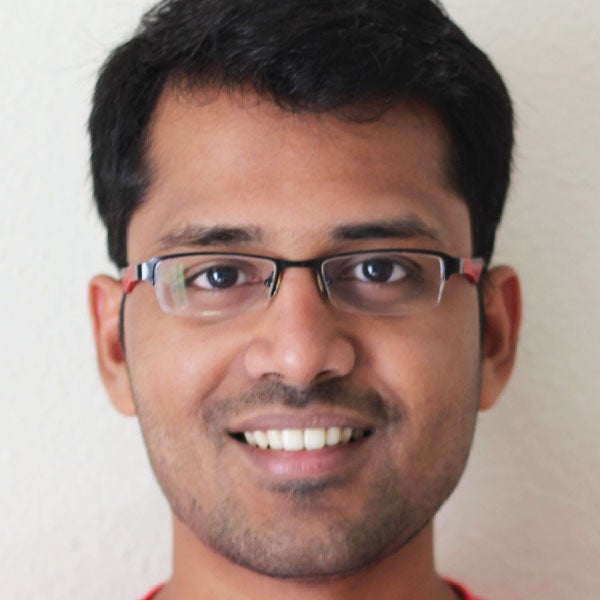
Vivek Boominathanمشاهده پروفایل
استاد پژوهش
Vivek Boominathan is an Assistant Research Professor in the Department of Electrical and Computer Engineering at Rice University. He is affiliated with the GLEE lab (Geometry, Light, & Imaging lab). His research focuses on computational imaging, combining computer vision, machine learning, applied optics, and nanofabrication to develop innovative imaging systems for applications such as robotics, medical sensing, and virtual/augmented reality. He has contributed to projects like PhlatCam (a lensless camera) and NeuWS (neural wavefront shaping). His work bridges optics, algorithms, and materials science to overcome traditional limitations in imaging systems. Boominathan's research interests include lensless imaging, optical meta-devices, turbulence mitigation, and bio-inspired imaging systems. He has developed systems like Foveated thermal imaging prototypes and real-time lensless microscopes. His lab emphasizes interdisciplinary approaches, integrating hardware design with machine learning. Key projects include: NeuWS: Neural wavefront shaping for imaging through scattering media CoIR: Compressive implicit radar for sensing applications FlatCam and PhlatCam: Ultra-thin lensless imaging devices Bioluminescence imaging in marine species His work has been published in top venues like Science Advances, Optica, and IEEE TPAMI. He collaborates with institutions like NASA JPL and industry partners on applied imaging solutions. Current research trends emphasize sensor-algorithm co-design and high-speed imaging systems for AR/VR applications. Boominathan holds a PhD in Electrical Engineering and has extensive postdoctoral experience in computational imaging. He advises projects in the GLEE lab and mentors students in hardware-software co-design for imaging systems. His lab focuses on translating theoretical innovations into practical devices with commercial potential.
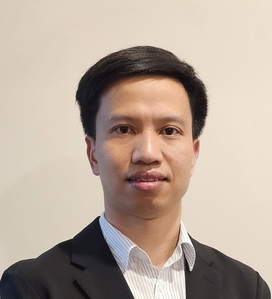
Sonny Phamمشاهده پروفایل
دانشیار
Associate Professor Sonny Pham leads research in artificial intelligence at Curtin University's School of EECMS. His work balances theoretical foundations with practical applications in computer vision, data mining, and deep learning. As head of the IAMAI research group, he collaborates with industry partners on security systems, healthcare AI, and sustainable technologies. His research explores: Computationally efficient deep learning architectures Compressed sensing for high-dimensional data Robust statistical methods for real-world problems Applications in computer vision and industrial automation Recent publications demonstrate a focus on medical imaging interpretation and efficient neural networks, with applications spanning radiology report generation, semantic segmentation for autonomous systems, and cybersecurity. His team's work consistently bridges theoretical AI advancements with industrial applications. Honors include: Multiple WANMA Awards (2021-2024) for industry-impactful research INCITE Award for social impact technology (2024) IEEE Young Author Best Paper Award (2010) Over $5M in competitive research funding including MRFF and DFAT grants He leads the IAMAI research group with 12+ graduate students and coordinates Curtin's Master of Artificial Intelligence program. Industry collaborations include Alcoa Australia, iCetana, and HyprFire.

Professor Lynette Cheah is a leading academic in sustainable transport, holding the position of Professor and Chair of Sustainable Transport at the University of the Sunshine Coast (UniSC), Queensland, Australia. She directs the Sustainable Mobility Research Laboratory, focusing on data-driven models and digital tools to reduce transport environmental impacts. Her expertise spans smart cities, urban freight, transport modeling, and policy assessment. Educations: PhD in Engineering Systems (MIT) MSc in Management Science and Engineering (Stanford University) BSc in Civil and Environmental Engineering (Northwestern University) Research Interests: Lynette’s work integrates interdisciplinary approaches to address sustainable mobility challenges. Key areas include electric mobility, low-carbon transport infrastructure, transport equity, urban freight optimization, and climate policy. She collaborates with urban planners, computer scientists, and policymakers to translate research into real-world impact, such as leading UN climate reports and advising Singapore’s Public Transport Council (2019–2024). Publications & Awards: Lynette has authored over 70 peer-reviewed articles, including high-impact journals like Transportation Research and Nature Energy . Notable awards include the 2023 TRB Best Applied Research Paper Award and the 2020 Graedel Prize. Her work has been featured in CNN, Nature, and ChannelNewsAsia. Grants & Collaborations: Current projects include electric mobility lifecycle assessments, universal basic mobility trials, and low-carbon transport infrastructure studies. Past collaborations include foresight studies for Singapore’s 2040 urban mobility vision and material flow analyses for vehicle lightweighting. Labs & Teams: She leads the Sustainable Mobility Research Laboratory at UniSC, fostering innovation in smart city technologies and sustainable transport systems.
- Sustainable Transport
- Smart Cities
- Urban Freight
- +۷ مورد دیگر
Yolanda Vidal Segui is an Associate Professor in the Department of Mathematics at the Universitat Politècnica de Catalunya (UPC), affiliated with the Escola d'Enginyeria de Barcelona Est (EEBE). Her research focuses on wind energy systems, predictive maintenance, and structural health monitoring of wind turbines. She leads projects in the CoDAlab and WinTurCoM research groups, specializing in data-driven models, condition monitoring, and failure prognosis. Her work integrates machine learning, mathematical modeling, and sensor technology to enhance turbine reliability and energy efficiency. Dr. Vidal holds a PhD in Applied Mathematics and has authored over 350 publications. Her contributions include advancements in SCADA data analysis, vibration-based diagnostics, and AI-driven condition monitoring systems. She has received several accolades, including the WindEurope Technology Workshop recognition and the IFIT Distinction in Mechanism and Machine Science. Her research bridges academia and industry, addressing challenges in offshore wind turbine integrity and maintenance strategies. Active in professional service, she serves on conference committees and editorial boards (e.g., Mechanical Systems and Signal Processing, Wind Energy). Her work emphasizes sustainable energy solutions and has been applied in real-world scenarios like the Alpha Ventus wind farm. She also contributes to educational initiatives, developing innovative teaching materials for engineering students.
- Wind Turbines
- Autonomous Learning
- Deep Learning
- +۸ مورد دیگر

Huazhen Fangمشاهده پروفایل
دانشیار
Huazhen Fang is an Associate Professor in the Department of Mechanical Engineering at the University of Kansas School of Engineering, where he joined in 2014. He leads the Information & Smart Systems Laboratory (ISSL) and holds a courtesy appointment in the Department of Electrical Engineering & Computer Science. His research focuses on enabling intelligence for complex systems through information-driven approaches. Dr. Fang received his Ph.D. in Mechanical Engineering from the University of California, San Diego in 2014, following an M.Sc. from the University of Saskatchewan and a B.Sc. in Computer Science & Technology from Northwestern Polytechnic University in China. He was a Visiting Faculty Fellow at Mitsubishi Electric Research Laboratories in 2022. His research interests span Systems and Control, Advanced Battery Management, Energy Storage Systems, and Robotics, with particular focus on system modeling, estimation, control design, machine learning and numerical optimization. Dr. Fang's work has significant applications in energy management, cooperative robotics, and environmental observing systems. His research has been supported by the National Science Foundation, Department of Energy, Army Research Laboratory, and Mitsubishi Electric Research Laboratories. His extensive publication record shows a clear trend toward increasingly sophisticated integration of physics-based modeling with machine learning approaches, particularly in battery management systems and autonomous vehicle control. Recent work demonstrates a growing emphasis on Bayesian inference methods, distributed control architectures, and safety-critical applications of intelligent control systems. Faculty Early Career Award from National Science Foundation (2019) University Scholarly Achievement Award (2024) Miller Professional Development Award (2022) Miller Faculty Scholar Award (2018, 2019, 2023) Wesley G. Cramer Outstanding Mechanical Engineering Faculty Award (2016) Big XII Faculty Fellowship (2015) IEEE Transactions on Transportation Electrification Prize Paper Award (2024) Dr. Fang has successfully mentored numerous graduate students through the Information & Smart Systems Laboratory, with many receiving awards for their research. His research has attracted significant funding from prestigious organizations including the National Science Foundation, Department of Energy, Army Research Laboratory, and Mitsubishi Electric Research Laboratories. He currently serves as an Associate Editor for multiple prestigious journals including Information Sciences, IEEE Transactions on Industrial Electronics, and IEEE Control Systems Letters. The Information & Smart Systems Laboratory (ISSL) under Dr. Fang's leadership has established itself as a center for cutting-edge research in information-driven smart systems. The lab focuses on pushing the frontiers of information extraction, analysis and exploitation for dynamic systems to deal with system complexity and enable system intelligence. The lab actively collaborates with industry partners and local communities, emphasizing research that serves societal needs.
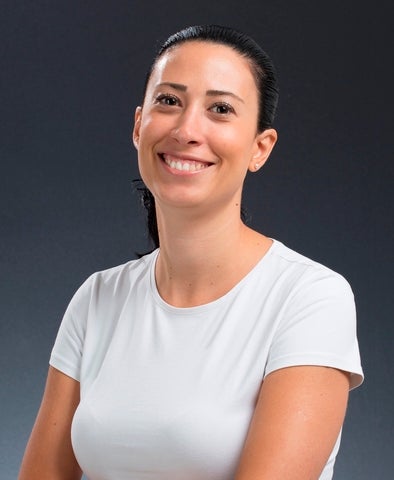
Sibel Alumur Alev is an Associate Professor and Associate Chair of Graduate Studies at the University of Waterloo. Her research focuses on logistics network design, hub location optimization, and sustainable transportation systems. She actively contributes to the fields of operations research and supply chain management, with a strong emphasis on addressing uncertainty in network design and strategic infrastructure planning. Her work spans applications in autonomous mobility systems, electric vehicle charging infrastructure, healthcare logistics, and pandemic response. She has published extensively on hub-and-spoke network models, reverse logistics for environmental sustainability, and multi-period resource allocation strategies. Notable areas of interest include the integration of stochastic and robust optimization methodologies into real-world logistics challenges. Dr. Alev’s research also bridges academic and industrial needs, addressing practical problems such as optimal testing center locations during pandemics and strategic freight hub expansions. Her contributions have been featured in peer-reviewed journals and conference proceedings, reflecting her commitment to advancing both theoretical and applied aspects of logistics and operations research.

Joshua Bardمشاهده پروفایل
دانشیار
Joshua D. Bard is an Associate Professor and Associate Head for Design Research at Carnegie Mellon University's School of Architecture. His work bridges traditional craft and cutting-edge robotics, focusing on human-machine collaboration in construction domains. He leads Archolab, an award-winning research group exploring digital fabrication methods like 'Morphfaux' (robotic plaster techniques) and 'Spring Back' (parametric steam bending). Education: M.Arch (Distinction) from University of Michigan; B.A. in Literature & Philosophy from Wheaton College. Professional affiliations include the Manufacturing Futures Institute and rob|arch. Research emphasizes reviving historical crafts through digital tools, such as augmented reality interfaces for architectural education and thermal-tuned concrete panels via robotic processes. His teaching includes generative modeling and architectural robotics labs. Awards: Architect Magazine R+D Award, Canadian Wood Council Merit Award Key Projects: Plaster ReCast AR app, Thermally Informed Robotic Concrete Panels Collaborators: Dana Cupkova, Garth Zeglin, Steven Mankouche Current courses include 62-225 Generative Modeling and 48-555 Introduction to Architectural Robotics. His work is featured in venues like the Carnegie Museum of Art and academic journals like International Journal of Architectural Computing .
Steve Loughnan is a Professor of Psychology at the University of Edinburgh's School of Philosophy, Psychology and Language Sciences. His research focuses on dehumanization, objectification, and human-animal relations, exploring how societal and psychological factors influence moral judgments and behaviors. He teaches undergraduate courses on social psychology, experimental/applied social psychology, and social class, and supervises PhD students in related fields. Research interests include: Dehumanization of social and ethnic outgroups Psychological impacts of objectification on women and marginalized groups Moral psychology of meat consumption and animal treatment Effects of economic inequality on societal attitudes Anthropomorphism in human-AI and human-pet relationships His publications analyze topics like the psychological mechanisms behind meat consumption paradoxes, the role of dehumanization in conflict scenarios, and the ethical implications of AI romance. He has received no explicitly listed awards but has been widely cited in social psychology domains. Teaching includes year-long programs on social psychology principles, experimental research methods, and social class analysis. Office hours are held weekly to support students. His work bridges theoretical social psychology with applied issues in global inequality, environmental ethics, and veterinary mental health.
- Social Psychology
- Dehumanization
- Objectification
- +۶ مورد دیگر
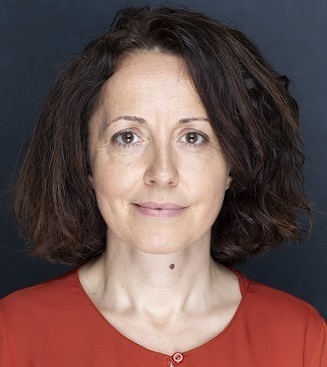
Prof. Hatice Gunes is a Full Professor of Affective Intelligence and Robotics at the University of Cambridge's Department of Computer Science and Technology, leading the Affective Intelligence and Robotics Lab (AFAR Lab). She holds an EPSRC Fellowship and is an EPSRC Fellow. Her research focuses on multimodal affective and social intelligence for AI systems, particularly embodied agents and robots, integrating Machine Learning, Affective Computing, and Human Nonverbal Behaviour Understanding. Key projects include the CHANSE initiative (2025–2028) for child mental health assessment via social robotics, the EPSRC Fellowship on robotic EQ for wellbeing (2019–2025), and the EU Horizon 2020 WorkingAge project. Prof. Gunes has pioneered systems like the EU SEMAINE project's SAL system, recognized with Best Demo and Paper Awards, and co-founded SensingFeeling, a spin-out company from the Innovate UK Sensing Feeling project. Her work emphasizes ethical AI and fairness, earning awards like the Best Paper Award in Responsible Affective Computing (IEEE ACII'23). She has delivered keynote talks at IEEE FG’19 and ICPR’22 and collaborates with the Department of Psychiatry and wellbeing professionals. Education: PhD in Computer Science from University of Technology Sydney (UTS) under Australian Government IPRS Scholarship Postdoctoral Research at Imperial College London (SEMAINe project) Research Interests: Multimodal affective computing, social robotics for mental wellbeing, fairness in AI systems, human-robot interaction (HRI), and ethical deployment of AI technologies. Her lab develops robots for workplace wellbeing coaching and child mental health assessment, with over 700 media coverages and partnerships with industry and healthcare sectors. Notable Achievements: Runner-up Collaboration Award (2023 VC Research Impact) Better Future Award (2023 Hall of Fame) Finalist RSJ/KROS Interdisciplinary Research Award (2021) Shortlisted Sony Women in Technology Award 2025 Labs & Teams: AFAR Lab drives interdisciplinary research in Cambridge, focusing on socially intelligent robots and AI systems that address critical societal challenges in wellbeing and mental health.
Chris Russellمشاهده پروفایل
دانشیار
Chris Russell is the Dieter Schwarz Associate Professor of AI, Government & Policy at the Oxford Internet Institute (OII), University of Oxford. His work bridges computer vision, machine learning, and ethical AI governance. He leads the Governance of Emerging Technologies programme, focusing on algorithmic accountability, transparency, and fairness. Prior roles include Group Leader at the Alan Turing Institute and Reader at the University of Surrey. Russell’s research has been recognized with awards, including the ICRA Best Paper Prize for autonomous driving mapping work. Research interests span algorithmic fairness, explainable AI, and responsible AI design. Notable projects include collaborations with the British Antarctic Foundation on climate modeling and causal approaches to algorithmic fairness. His work with Sandra Wachter and Brent Mittelstadt informs GDPR guidelines and tools like TensorFlow’s 'What-if Tool.' Current projects include advancing medical machine learning for inflammatory arthritis prediction and governance frameworks for emerging tech. Russell advises PhD students on socio-technical AI evaluations and teaches courses in machine learning and AI ethics. Recent publications address deepfake proliferation, LLM regulation, and fairness in foundational models. He co-leads initiatives like the Digital Good Network to align tech development with societal benefit.
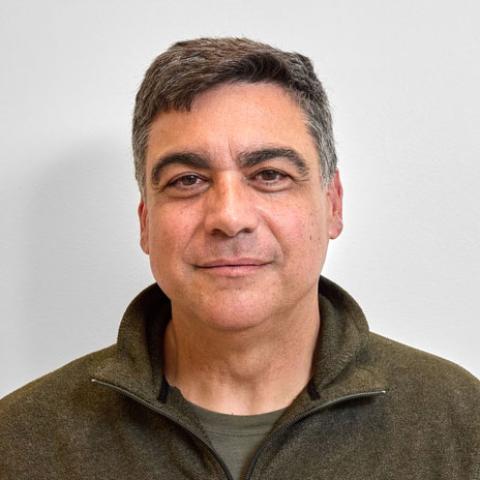
Ignacio Provencio is a Professor of Biology at the University of Virginia. His research focuses on melanopsin-based photoreception and its role in non-visual light responses, including circadian rhythm regulation, fear modulation, and glaucoma pathophysiology. His lab investigates melanopsin signaling pathways and their broader implications for vertebrate physiology. Education: B.A., Swarthmore College, 1987 Ph.D., University of Virginia, 1996 Postdoctoral Research, Uniformed Services University, 1996–1999 Key research interests include: Melanopsin phototransduction mechanisms Role of intrinsically photosensitive retinal ganglion cells (ipRGCs) in non-image-forming vision Impact of light on circadian rhythms and neurodegenerative diseases like glaucoma Light’s influence on fear behavior and weight regulation Recent work highlights: ipRGC survival in glaucoma models Melanopsin’s role in weight loss under dietary challenges Clinical applications of melanopsin-based light therapy His research spans in vivo and in vitro studies, integrating molecular, cellular, and behavioral approaches to understand light’s multifaceted effects on physiology.
- Circadian Rhythms
- Neuroscience
- Photobiology
- +۳ مورد دیگر

Joseph Mooreمشاهده پروفایل
استادیار
Dr. Joseph Moore is an Assistant Professor in the Department of Mechanical Engineering at Johns Hopkins University (JHU), serving as Director of the Agile and Intelligent Robotics (AIRO) Laboratory. He is affiliated with the Laboratory for Computational Sensing and Robotics (LCSR), the Institute for Assured Autonomy (IAA), and holds a Bridging Faculty appointment in the Research and Exploratory Development Department (REDD) at JHU/APL. His research focuses on computational control, machine learning, and robotics to enable agile systems operating in complex environments. Dr. Moore previously served as Robotics Group Chief Scientist at JHU/APL, leading projects on hybrid unmanned aerial-aquatic vehicles and aerobatic fixed-wing systems. He has secured funding as Principal Investigator (PI) for ONR, DARPA, and ARL programs, particularly in post-stall maneuvering control and multi-robot coordination. His work emphasizes robust control strategies for autonomous systems in constrained environments. Research interests include aerial robotics, optimization, and learning-based control. Notable contributions involve NMPC-based systems, UAV navigation, and adaptive control for uncertain environments. His recent articles highlight advancements in swarm coordination, morphing-wing UAVs, and PAC-NMPC frameworks. Dr. Moore advises students such as Mark Gonzales and Adam Polevoy. Key grants include ONR/DARPA-funded projects on post-stall flight control and Army-funded multi-robot coordination efforts. His lab (AIRO) and collaborations (LCSR, IAA) drive applied and theoretical robotics research.
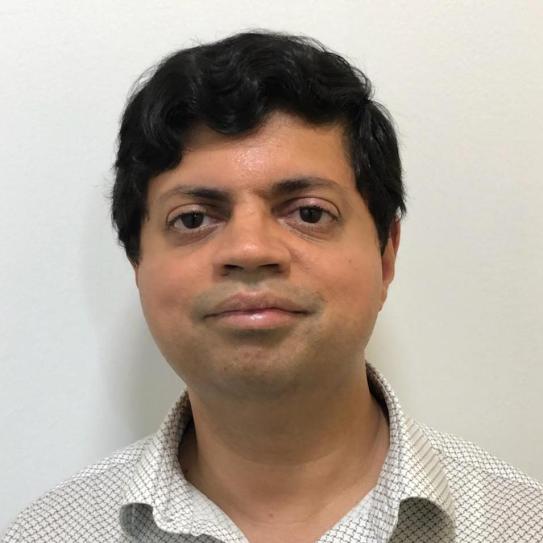
Prashanth Krishnamurthy is a Research Scientist in the Department of Electrical and Computer Engineering at New York University Tandon School of Engineering. His research focuses on robotics, control systems, and cybersecurity, particularly in cyber-physical systems such as power grids and embedded devices. He holds a Ph.D. in Electrical Engineering from NYU. Key research areas include hardware security (e.g., detecting Trojans in chips), anomaly detection in critical infrastructure, and resilient control strategies for robotic systems. He has led or contributed to projects funded by the U.S. Department of Energy (DOE), Office of Naval Research (ONR), and others, including the Tracking Real-time Anomalies in Power Systems (TRAPS) initiative and hardware Trojan detection using short-term aging phenomena. Education: Ph.D., Electrical Engineering, NYU His work bridges theoretical advancements and practical implementations, such as developing FPGA-based testbeds for hardware security validation and creating AI-driven cybersecurity tools like the CRAKEN LLM agent. Collaborators include institutions like SRI International, Karlsruhe Institute of Technology, and the NYU Center for Cybersecurity. Grants include a $1.94M DOE grant for TRAPS and a $359K DURIP grant for hardware Trojan detection. His technical contributions span control systems, anomaly detection algorithms, and cybersecurity frameworks for embedded systems. He is actively involved in advancing secure cyber-physical systems through innovations in real-time monitoring, robust control mechanisms, and AI-augmented security solutions.
- Robotics
- Control Systems
- Cyber-Physical Systems
- +۳ مورد دیگر
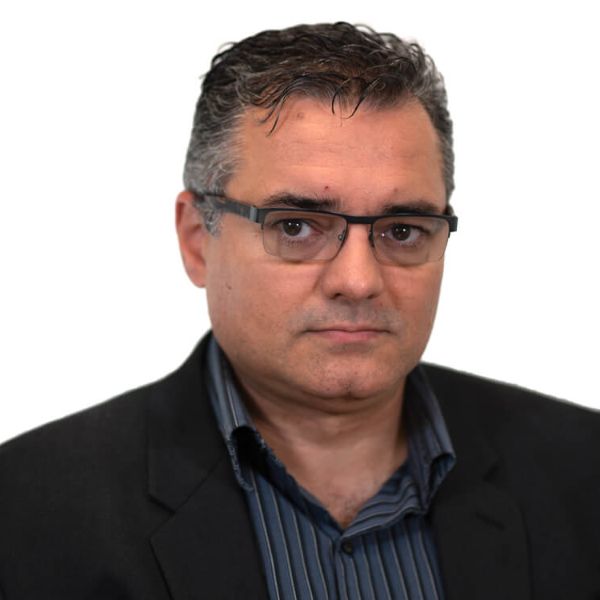
Zeljko Panticمشاهده پروفایل
دانشیار
Zeljko Pantic is an Associate Professor in the Department of Electrical and Computer Engineering at North Carolina State University. He holds a Ph.D. from NC State (2013) and B.S./M.S. degrees from the University of Belgrade (1998/2007). Before joining NC State in 2019, he served as an Assistant Professor and Associate Director of the Electric Vehicle and Roadway Research Facility at Utah State University. He is actively involved in editorial roles for IEEE Transactions on Transportation Electrification and serves on the IEEE IAS Transportation Systems Committee. Education: Ph.D., Electrical Engineering, North Carolina State University (2013) M.S., Electrical Engineering, University of Belgrade (2007) B.S., Electrical Engineering, University of Belgrade (1998) Research: Dr. Pantic specializes in electrified transportation systems, wireless power transfer (WPT), power converter design, and DC microgrid technologies. His work addresses challenges in EV charging infrastructure, magnetic circuit optimization, and energy conversion principles for transportation electrification. Recent projects include autonomous wireless charging systems for UAVs, marine DC microgrids, and road-embedded DWPT solutions. Awards & Recognition: 2019 IEEE JESTPE Second Prize Paper Award 2017 Outstanding Teacher of the Year (USU) 2012 NC State Mentored Teaching Assistantship Award Advisees & Grants: While specific student names are not listed, Dr. Pantic has advised graduate students on projects spanning WPT systems, EV infrastructure, and battery management. His work has been supported by grants focusing on dynamic charging, magnetic materials, and autonomous observatory nodes. Labs & Facilities: He leads research at NC State's Electric Vehicle and Roadway facility, focusing on roadway-integrated wireless charging and high-power WPT systems. Collaborations include ocean observatory development and autonomous system integration.
نمایش نتایج تا ۷۵۰ مورد اول. برای یافتن نتایج دقیقتر، جستجوی خود را با فیلترها محدود کنید.