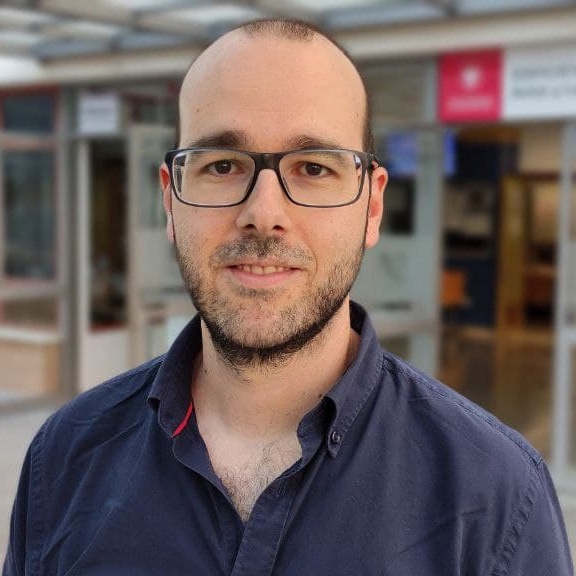
Univ. Prof. Dr. Ezio Bartocci is a Professor at TU Wien, leading the Forschungsbereich Cyber-Physical Systems . His research focuses on formal methods, runtime verification, and probabilistic systems in Cyber-Physical Systems (CPS). He leads projects like 'Distribution Recovery for Invariant Generation of Probabilistic' and 'Trustworthy IoT for CPS'. Key interests include specification mining, probabilistic hyperproperties, and developing tools like MoonLight for spatio-temporal monitoring. Recent work explores reinforcement learning ethics, neural network verification, and adaptive testing frameworks. His contributions span conferences such as HSCC and RV, with notable publications on parameter synthesis, fault localization in CPS, and moment-based analysis of probabilistic loops. Research Interests : Cyber-Physical Systems (CPS) design and validation Formal specification and verification techniques Probabilistic systems and hyperproperties Runtime monitoring and adaptive testing Neural networks and ethical AI Labs/Teams : Active in TU Wien's Cyber-Physical Systems research unit, collaborating with industry and academia on CPS security and autonomous systems.
Björn Lisper is a Professor at Mälardalen University, Sweden, affiliated with the School of Innovation, Design and Engineering and the Division of Computer Science and Software Engineering. His research focuses on formal methods, real-time systems, embedded software, static analysis, and high-level synthesis. He has contributed to advancements in WCET analysis, machine learning applications in testing, and compiler optimization techniques. His work emphasizes practical industrial applications, particularly in automotive and multi-core systems. Research Interests: Real-Time Systems & WCET Analysis Static Program Analysis High-Level Synthesis for FPGAs Machine Learning in Software Testing Formal Methods & Verification Embedded Systems Design Publications span topics like neural network accelerators, automated testing frameworks, and compiler optimizations, reflecting a blend of theoretical and applied computer science. His work is characterized by collaboration between academia and industry to bridge gaps in embedded software predictability and performance.
Roles and Affiliations: Dhaminda Abeywickrama is a Research Fellow in Autonomous Systems at the University of Manchester's Department of Computer Science. He leads assurance research for robotics and autonomous systems (RAS), focusing on safety, ethics, and security. His work is part of CRADLE, a center developing technologies for high-stakes industries like space and energy. Previously, he held roles at the University of Bristol (UKRI TAS Node in Functionality) and University of Warwick (agent-based norms research). He completed ERCIM and Marie Curie fellowships at VTT (Finland) and Fraunhofer FOKUS (Germany), with a focus on autonomic systems. Education: PhD in Software Engineering, Monash University (2010) First Class Honours in Computing, Monash University (2004) Research Interests: His expertise spans assurance engineering, autonomous systems, formal verification, multi-agent systems, and responsible AI. He develops frameworks for trustworthy robotics through model-driven design and dynamic assurance techniques. Key themes include emergent behavior analysis, sociotechnical risk modeling, and ethical decision-making in human-agent collectives. Publications: His work emphasizes cross-disciplinary approaches to assurance in robotics, with recent focus on swarm verification and trustworthiness specifications. Over 35 publications include peer-reviewed articles and conference papers, with 32 as first author. Key topics include robotic swarm validation, ethical AI, and self-adaptive system architectures. Awards and Grants: EU Marie Curie Fellowship (2013–2014) ERCIM Fellowship (2013–2017) Best Paper Award at WETICE’14 IBM Award at ICSOC’08 PhD Symposium Labs and Collaborations: CRADLE (University of Manchester), UKRI TAS Node (Bristol), and collaborations across academia and industry (e.g., Jaguar Land Rover, Volkswagen AG). Research integrates formal methods with real-world applications in robotics, safety-critical systems, and autonomous vehicle coordination.
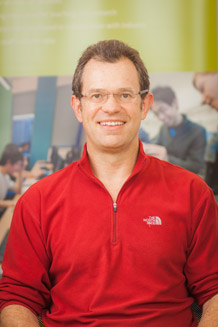
Kung-Kiu Lau is a Senior Lecturer at the School of Computer Science, University of Manchester , specializing in Component-based Software Development and Computational Logic . He leads the Component-based Software Development research group and has supervised 11 PhD students. Research Focus: Component models, algebraic service composition, logic program synthesis, and IoT systems scalability. Key Contributions: Development of tools like X-MAN and D-XMAN for compositional software design, exploration of formal methods in software engineering, and foundational work on steadfast programs. Publications span IoT service composition, component certification, reverse engineering, and formal verification. His work addresses challenges in scalability, reusability, and automated synthesis of software components. Awards: ICIOT 2018 Best Paper Award
Dr. Miguel Molina-Solana is an Associate Professor (Prof. Titular) at the Department of Computer Science and AI, Universidad de Granada (Spain) and Honorary Research Fellow at Imperial College London's Data Science Institute. He holds a PhD in Computer Science and AI from Universidad de Granada (2008-2012) and an MSc in Computer Science from the same institution (2002-2007). His academic journey includes roles as Marie Curie Research Fellow (2017-2019 at Imperial College), Research Associate at the Data Science Institute (2015-2017), and postdoctoral researcher at UGR (2012-2015). Research focuses on Artificial Intelligence , Data Science , Energy Management , and Disinformation Analysis . Notable projects include SINERGY (deep learning for energy simulation), IBERIFIER (EU-funded disinformation observatory), and IA4TES (AI applications for sustainable energy transition). He co-leads the SAIL Lab at UGR and has led research groups in visualization and energy systems. Publications span Angewandte Chemie , Energy and Buildings , and Applied Soft Computing , covering topics like physics-informed neural networks, HVAC control optimization, and Telegram-based disinformation analysis. His work bridges machine learning with domain-specific challenges in energy, music informatics, and smart built environments. Outreach activities include science communication projects (e.g., 'The Sound of Mars' art installation) and education initiatives through Native Scientist. Current roles involve advising PhD students on energy and AI projects, with active grants from Spanish and EU programs. Labs/Teams: SAIL Lab (Universidad de Granada), Data Science Institute (Imperial College London collaborations), and interdisciplinary teams in energy and disinformation research.
Dr. Kester Clegg is a Research Fellow in the Department of Computer Science at the University of York, affiliated with the High Integrity Systems group. He holds a PhD in non-standard computation and has extensive experience in safety-critical systems, including work on air traffic simulation, UAV safety, and carbon nanotube-based computation. His research focuses on automated hazard identification, avionics safety, and evolutionary algorithms applied to engineering challenges. Education PhD in Non-Standard Computation (University of York, 2007) Postgraduate Degrees in Linguistics and Computer Science Research Interests Automated risk discovery in complex systems Safety analysis for aviation and autonomous systems Material-based computing using carbon nanotubes Integration of safety models with system design Key Projects NASCENT project: Evolutionary computation for nanotube configurations (2015) SESAR project: Air traffic risk modeling using RAMS Plus software (2013) Rolls-Royce UTC: Safety-critical jet engine controller software (2002-2005) His work bridges theoretical computer science with practical safety engineering, emphasizing automated tools for identifying worst-case scenarios in high-risk environments. Current activities include teaching safety courses under the HISE initiative.
Qingyun Wang is an incoming Assistant Professor in the Department of Data Science at William & Mary, starting August 2025. He holds a Ph.D. from the University of Illinois at Urbana-Champaign (Siebel School of Computing and Data Science, 2025) and a dual B.S. in Computer Science and Mathematics from Rensselaer Polytechnic Institute (2019). His research focuses on AI for Scientists (AI4Scientist), aiming to automate and democratize the scientific research lifecycle. Key areas include multimodal scientific LLMs, few-shot knowledge acquisition, and human-AI collaborative frameworks. Education: Ph.D., Siebel School of Computing and Data Science, UIUC (2025) B.S. (summa cum laude), Computer Science & Mathematics, Rensselaer Polytechnic Institute (2019) He has developed foundational tools like PaperRobot (ACL 2019) and SciMON, emphasizing automated literature understanding and scientific discovery. Recent work includes organizing workshops on Scaling Environments for Agents (NeurIPS 2025) and VISTA at ICDM 2025. Awards include the NAACL 2021 Best Demo Award for COVID-19 literature analysis tools. His lab explores AI-driven research lifecycle tools (e.g., hypothesis generation, experiment design), with notable collaborations in medical research, molecular science, and cross-lingual AI systems. He actively recruits PhD students and interns for funded research roles.
Joseph Soryal is an Adjunct Associate Professor of Electrical Engineering at the City College of New York (CCNY) , part of the Grove School of Engineering . He holds additional affiliations with the Computer Science and Cybersecurity departments. His research focuses on advanced telecommunications, cybersecurity, autonomous systems, and wireless network innovations. Dr. Soryal's work spans cutting-edge topics such as secure virtual reality environments, autonomous vehicle communication protocols, and satellite-ground network integration. His recent publications emphasize solutions for network security in 5G/6G environments, AI-driven fraud detection, and infrastructure resilience against cyberattacks. Notable research includes developing adaptive beamforming techniques for signal propagation and secure cellular network architectures. His technical contributions address challenges in drone communication systems, holographic data transmission, and emergency response technologies. His work frequently intersects with emerging technologies like reconfigurable intelligent surfaces, smart city infrastructure, and hybrid network architectures for edge computing. While no specific awards or grants are listed, his publications indicate active collaboration with industry on real-world applications of cybersecurity and network optimization. He teaches advanced courses in telecommunications and cybersecurity at CCNY.
Nadia Saad Noori is an Associate Professor at the Department of Information and Communication Technology at the University of Agder (UiA). Since 2016, she has conducted research and teaching at CIEM - Centre for Integrated Emergency Management , and joined NORCE Norwegian Research Center as a Senior Researcher in 2018. Her work bridges industry experience (Cisco, hi-tech startups) with academic rigor , focusing on technology integration in crisis management , cybersecurity , and industrial monitoring systems . Her educational background includes: B.Sc. & M.Sc. in Computer Systems Engineering M.A.Sc. in Technology Innovation Management Ph.D. in Electronic and Information Systems Engineering Research interests span machine learning , autonomous systems , and security frameworks through: Disaster response coordination systems Industrial condition monitoring Humanitarian technology solutions Cyber-physical systems Recent publications demonstrate technical breadth : 2024: Thermal gesture recognition and UAV navigation in industrial spaces 2023: Cybersecurity frameworks and ecological pattern recognition 2022: Industrial seal diagnostics and autonomous systems She leads research groups in: Autonomous and Cyber-Physical Systems (ACPS) CIEM - Integrated Emergency Management Communication and System Security
Dr. Shaukat Ali is a leading researcher at Simula Research Laboratory (Certus Software V&V Center, Norway), with a PhD from the University of Oslo . His work bridges quantum software engineering and cyber-physical systems (CPS) validation, focusing on digital twins, autonomous vehicles, and healthcare IoT applications. Collaborates with institutions like South Dakota State University, COMSATS University, and Mohammad Ali Jinnah University Co-developed tools: QuCAT (Quantum combinatorial testing), DeepScenario (autonomous driving datasets), and EvoCLINICAL (medical digital twin evolution) Research spans quantum software testing (IBM quantum computers), uncertainty-aware validation of medical devices, and search-based optimization in CPS. His 2025 work introduces quantum circuit mutants, uncertainty-wise test oracles, and foundational models for digital twin creation. Publications in journals like ACM Transactions on Software Engineering and conferences including ICSE , GECCO , and IEEE Quantum Software reflect his interdisciplinary approach. Current projects address quantum software robustness, LLM-driven scenario realism, and safe adaptation in robotics.
Einar Broch Johnsen is a Professor at the Department of Informatics, University of Oslo, specializing in formal methods for distributed and concurrent systems, including digital twins, cloud computing, and programming languages like ABS and SMOL. He leads research in scalable data access, software reliability, and AI integration in robotics. Active in EU Horizon projects (e.g., REMARO, NebulOuS) and previously directed Sirius Centre (2015-2023) for Norwegian data innovation. His research bridges software engineering, formal verification, and domain-specific applications in energy, healthcare, and environmental systems. Recent publications focus on knowledge graph testing, self-adaptive robotics, and mutation-based techniques for system reliability. He contributes to journals like Formal Aspects of Computing and conferences such as ECOOP and iFM . Current affiliations include Scientific Council of dScience, editorial roles in formal methods journals, and leadership in international research networks.
Chris Poskitt is an Associate Professor of Computer Science (Education) at the School of Computing and Information Systems (SCIS) at Singapore Management University (SMU). He also serves as Director of the BSc (IS) Smart-City Management & Technology Major and Director of Undergraduate Administration at SCIS. Dr. Poskitt is an active member of the System Analysis and Verification (SAV) research group within SCIS. Dr. Poskitt completed his PhD in 2014 at the University of York (UK) under the supervision of Detlef Plump. Prior to joining SMU, he was a postdoctoral researcher for three years at ETH Zürich, where he worked with Bertrand Meyer. His academic journey reflects a strong foundation in formal methods and software engineering principles. Dr. Poskitt's research broadly addresses the problem of engineering correct and secure software and systems. His work spans several key areas including software engineering, formal methods, cybersecurity, and computer science education. He has developed innovative techniques for testing and defending cyber-physical systems using fuzzing and machine learning, tools for analyzing execution models of concurrency APIs, and logics for reasoning about the correctness of graph-rewriting programs. His research projects include AI agent safety, autonomous vehicle testing, critical infrastructure security, defending cyber-physical systems, analyzing actor-like concurrency models, verifying graph programs, and software engineering education. Dr. Poskitt's recent publications (2024-2026) demonstrate a strong focus on safety and security of autonomous systems, particularly autonomous vehicles and LLM agents. His work combines formal methods with practical applications, addressing challenges in runtime enforcement, causality analysis, and automatic repair of system behaviors. There's a clear progression from foundational work on graph transformation and formal verification toward applied research on cyber-physical systems and AI safety, with an increasing emphasis on real-world impact. Dr. Poskitt serves as research advisor to students including Huang Shaofei, WANG Haoyu, and ZHAO Lu. His research has been supported by various grants that have enabled publications across top software engineering and security venues including ICSE, FSE, ASE, and IEEE Transactions. He has served on numerous prestigious program committees including ICSE, FSE, ASE, and ICGT, indicating recognition by his peers in the software engineering community. Dr. Poskitt is part of the System Analysis and Verification (SAV) group at SMU's School of Computing and Information Systems. This research group focuses on formal methods and verification techniques for software systems, with particular emphasis on safety and security properties. His work often involves collaboration with researchers at institutions including ETH Zürich and other international partners.
Tufan Coşkun Karalar is an Associate Professor in the Department of Electronics and Communication Engineering at Istanbul Technical University (ITU), College of Engineering. His research spans integrated circuits, analog-to-digital converters, wireless sensor networks, and energy-efficient electronic systems. He is actively involved in advanced IC design projects for applications in biomedical implants, green energy, and automotive communications. Research Interests: Integrated and analog circuit design High-speed data converters (ADCs) In-memory computing architectures RF front-end and V2X communication circuits Low-power and energy-efficient sensor networks Hall effect and current sensing technologies His recent publications focus on SRAM-based in-memory computing energy models, high-speed pipelined ADCs, and RF front-end modules for vehicle-to-everything (V2X) systems. These works reflect a strong trend toward energy efficiency, high performance, and application-specific circuit design in modern electronics. Scientific Awards: ELECO 2019 Best Student Publication Award Dr. Karalar has served as Principal Investigator (PI) on multiple research projects funded by TUBITAK and TTO, including studies on ASIC design, micro-implant power control ICs, high-speed ADCs, and improved Hall effect sensors. He is currently supervising 24 theses, indicating an active role in mentoring graduate students. His work involves close collaboration with industry and academic partners in Turkey and internationally. Labs and Research Teams: While specific lab names are not mentioned, his project leadership and publication record suggest he leads a research group focused on analog and mixed-signal integrated circuit design within the Department of Electronics and Communication Engineering at ITU.
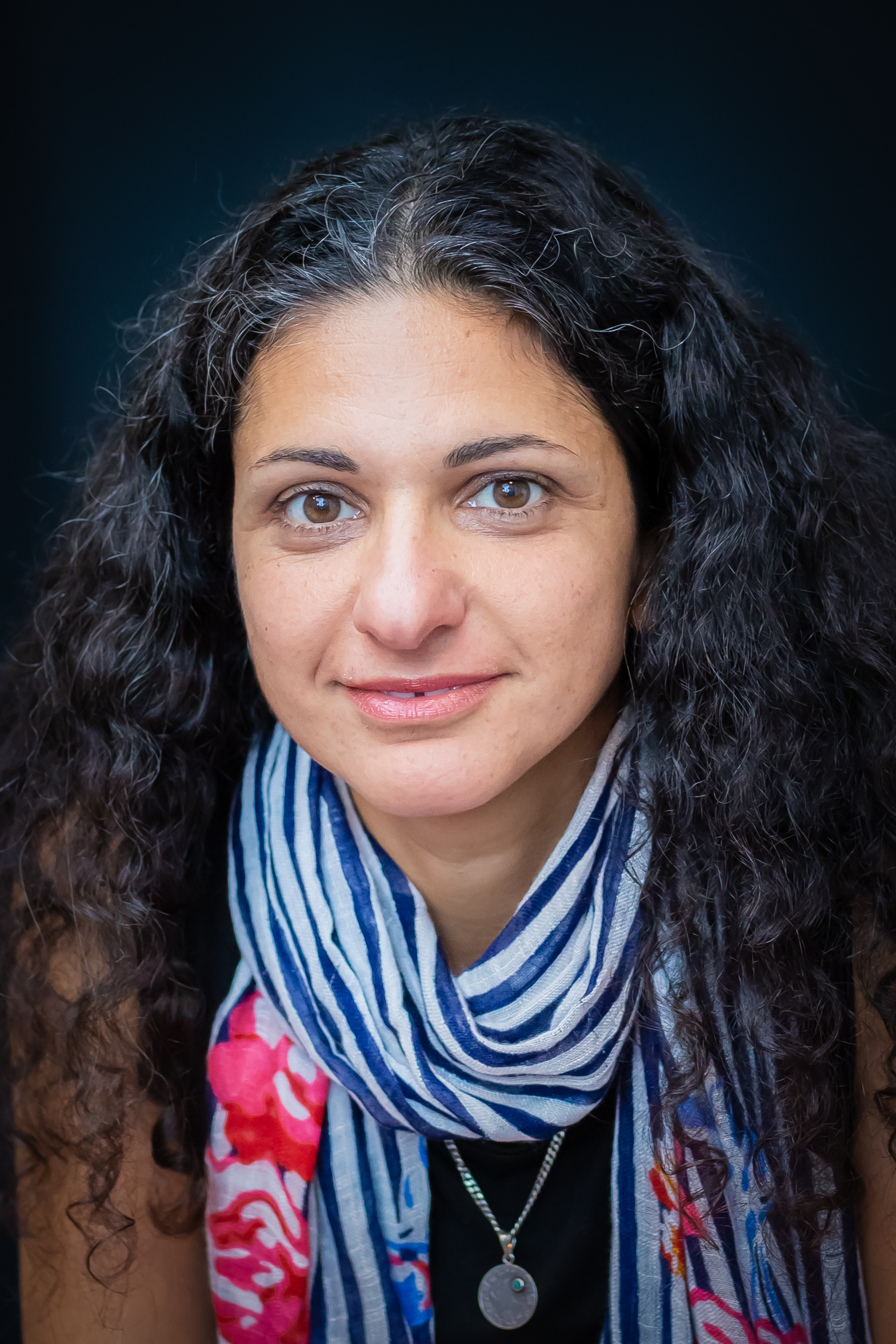
Luigia Petre is a Senior University Lecturer at the Faculty of Science and Engineering , Åbo Akademi University , Finland. Her work spans formal methods, safety-critical systems, and interdisciplinary applications in healthcare and gravitational wave science. Current Role: Senior University Lecturer in Information Technology Email: luigia.petre@abo.fi Research Interests: She specializes in: Formal methods for system design Modeling biological networks using Event-B Machine learning applications in gravitational wave detection Software quality education frameworks Resilient control systems Healthcare system prototyping Publication Trends: Recent articles focus on convolutional autoencoders for anomaly detection in wave data, scalable reaction network modeling, and educational approaches to software quality. Her work bridges theoretical formal methods with practical applications across astrophysics, biomedical engineering, and distributed systems. Projects: She has led and collaborated on Finnish and EU projects like FResCo and ADVICeS, emphasizing dependable system engineering.
Michele Sevegnani is a Senior Lecturer in the School of Computing Science at the University of Glasgow, where he also earned his PhD. His work focuses on formal methods, particularly bigraphs with sharing, for modeling and verifying complex, location-aware, event-based systems. He is actively involved in major research initiatives including Probable Futures, TransiT, and CHEDDAR, funded by Responsible AI UK, UKRI, and industry partners. Education: PhD in Computing Science, University of Glasgow MSc in Bioinformatics, University of Edinburgh and University of Trento His research interests include formal verification, digital twins, probabilistic model checking, IoT, mixed-reality systems, and human-autonomy teaming. He has developed BigraphER, an open-source suite for bigraph simulation and analysis. His recent work addresses formal modeling of BDI agents, 5G/6G protocols, and AI in law enforcement. His publications span formal methods, AI, networking, and human-robot interaction, showing a consistent focus on applying rigorous mathematical models to real-world systems. Trends include runtime verification, safety assurance in autonomous systems, and the integration of AI with formal guarantees. Scientific Awards: Nominated for the BCS Distinguished Dissertation Award (2013) Recipient of Amazon Research Award (2022) He advises multiple PhD students and postdoctoral researchers. He has secured grants from the Royal Society of Edinburgh, Taiwan’s Ministry of Science and Technology, and Amazon. He has been a visiting researcher at UC Berkeley and collaborates with institutions in France and Taiwan. He leads the development of BigraphER and is a member of the editorial board of Science of Computer Programming . He regularly presents at international venues and workshops on formal methods and AI safety.