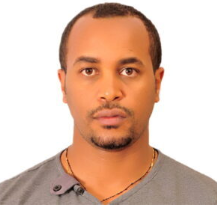
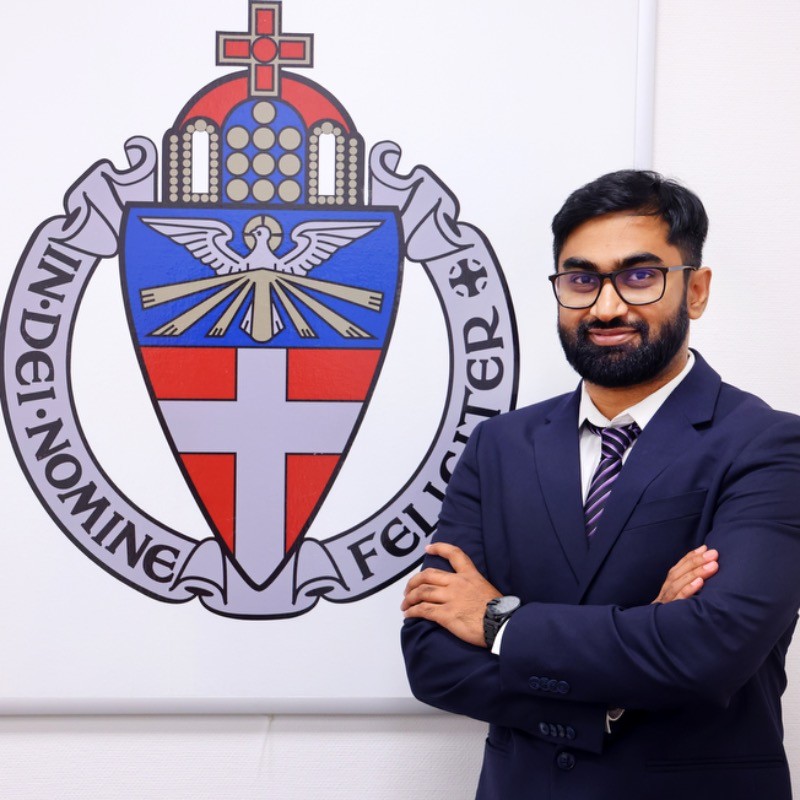
Dr. Yohannes Bekele is an Assistant Professor of Electrical and Computer Engineering at Hampton University's School of Engineering, Architecture and Aviation. His research focuses on cyber-physical system security, reliable distributed computing, and edge computing. He holds a Ph.D. from North Carolina A&T State University (2023), MSc from Addis Ababa University (2018), and BSc from Arba Minch University (2007). Prior to academia, he worked as a senior engineer/project manager at Ethio Telecom and held technical roles in various organizations. His expertise includes hardware fault analysis, secure embedded systems, and transportation IoT security. He currently teaches courses aligned with his research and leads projects on cyber-physical system reliability. Dr. Bekele is affiliated with professional organizations like NSBE and IEEE. Recent publications highlight work on federated learning-based intrusion detection systems, QEMU fault injection tools, and rowhammer attacks on embedded devices. His research bridges theoretical cybersecurity concepts with practical implementation in edge and embedded systems. Dr. Bekele has no listed scientific awards but demonstrates active participation in conferences such as IEEE HOST and AFRICON. His teaching and research emphasize hands-on projects, reflected in courses taught and industry collaborations.
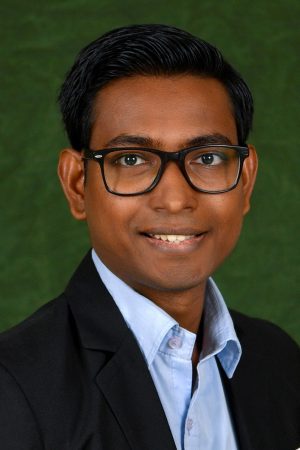
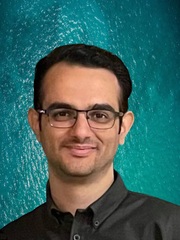
Dr. Dipankar Maity is an Assistant Professor in the Department of Electrical and Computer Engineering at the University of North Carolina Charlotte. His research focuses on control theory, robotics, and information-theoretic decision-making, with recent emphasis on communication-constrained systems and autonomous robot motion planning. He holds a Ph.D. from the University of Maryland-College Park (2018) and a B.E. from Jadavpur University, India (2013). His work bridges theoretical control systems with practical robotics applications, addressing challenges in optimal control under communication constraints, motion planning in dynamic environments, and game-theoretic approaches to distributed systems. Publications span journals like IEEE Transactions on Automatic Control and IEEE Transactions on Robotics, alongside conferences such as the IFAC World Congress. No scientific awards or grants are explicitly mentioned. His research interests also include information-theoretic control and timed automata for formal verification in robotic systems. Contact: dmaity@charlotte.edu , located at EPIC 2163.
Dr. Juan Zhang is a Lecturer at the Department of Computer and Information Sciences, Northumbria University, UK. She holds a PhD in Computer Science from the University of Exeter and has held postdoctoral positions at Helmut-Schmidt University, Germany, and visiting roles at Georg-August-University of Göttingen. Her research focuses on mobile edge computing, intelligent transportation systems, decision-making strategies, and autonomous vehicles. She has published extensively in top journals like IEEE Transactions and IEEE Conference Proceedings, with over 225 citations. Dr. Zhang teaches modules including Computer Networks, Cyber Security, and supervises numerous PhD/MSc students in edge computing and vehicular networks. Education: PhD in Computer Science, University of Exeter (UK) M.Sc. in Control Science & Engineering B.Eng in Mechanical Engineering, Beihang University (China) Research Interests: Her work integrates AI with transportation systems, emphasizing eco-driving controllers, vehicular platooning, and multi-agent systems for HD mapping. She explores game-theoretic approaches for edge computing optimizations and reinforcement learning applications in autonomous systems. Teaching: Current modules: KF7023, KV6017, KF7029, etc. Supervised over 20+ student projects on edge computing, federated learning, and vehicular networks. Labs/Teams: Active in Northumbria's Computer Networks Group and collaborates internationally on vehicular edge computing and smart logistics systems.
Akihiko Torii is an Assistant Professor (Research Associate) at the Okutomi & Tanaka Lab in Tokyo Institute of Technology. He holds a PhD from Chiba University and completed a postdoctoral fellowship at the Center for Machine Perception (CMP) at Czech Technical University in Prague. His research focuses on computer vision, with expertise in 3D reconstruction, place recognition, localization, and structure from motion. He has contributed to influential datasets like the 24/7 Tokyo, Pittsburgh (Pitts250k), SF Revisited, and InLoc datasets, advancing visual localization and feature matching techniques. **Education and Background:** PhD in Computer Science, Chiba University Postdoctoral Researcher, Czech Technical University (2014–2018) **Research Interests:** His work spans Computer Vision , including 3D Reconstruction , Place Recognition , Feature Matching , and Multi-View Stereo . He emphasizes practical applications such as indoor/outdoor localization under changing conditions. **Awards and Recognition:** 2017: CVPR Outstanding Reviewers Award 2016: IEEE Japan Chapter Young Author Award 2015: Tokyo Tech Young Investigator Award Multiple Best Paper Awards (2013–2014) **Key Projects:** Developed algorithms like Multi-View Inverse Rendering and NetVLAD , and contributed to benchmarking frameworks for visual localization accuracy. His work bridges theoretical advancements and real-world applications in robotics and autonomous systems.
Paolo Bocciarelli is affiliated with the University of Rome Tor Vergata , specifically within the Department of Industrial Engineering under the College of Engineering . His work focuses on business process modeling and simulation , leveraging model-driven engineering and distributed simulation to enhance system automation and interoperability. Teaches Service-oriented Software Engineering and other software/systems courses Research emphasizes MSaaS (Modeling and Simulation as a Service) , HLA (High-Level Architecture) , TOSCA , and IoT-aware systems His recent publications (2025–2024) address collaborative business processes in distributed environments, XES extensions for simulation, HLA-based interoperability, and predictive process mining using ebPMN. Earlier works (2023–2019) explore resource modeling, IoT integration, federated MSaaS infrastructures, and microservice-based simulations. He has no listed scientific awards or students in the provided data.
Prof. Bernd Finkbeiner is a faculty member at CISPA Helmholtz Center for Information Security and holds a Professorship in Computer Science at Saarland University. He earned his Ph.D. in 2003 from Stanford University. Leading the Reactive Systems Group since 2003, now part of CISPA, his research focuses on ensuring safety and security in computer systems through formal methods like specification, program synthesis, and verification. Key projects include output-sensitive reactive synthesis (OSARES), hyperproperty logics (HYPER), and real-time monitoring (RTLOLA). Education : Ph.D. in Computer Science, Stanford University, 2003 His research interests span hyperproperties, formal verification, runtime monitoring of cyber-physical systems, and distributed synthesis. He has pioneered tools like StreamLAB and AutoHyper for hyperproperty analysis. His work on temporal causality and information-flow guided synthesis addresses challenges in distributed and secure systems. Key Achievements : Recipient of ERC Advanced Grant 2022–2027 for Project HYPER Best Paper Awards at ICALP 2009, FSEN 2007, and VMCAI 2012 Leader of the Reactive Systems Group at CISPA Grants & Funding : ERC Advanced Grant supporting research on hyperproperties His lab develops cutting-edge tools for formal methods, including BoSy for bounded synthesis and RTLola for runtime verification. Current research explores compositional synthesis, explainable reactive systems, and robust monitoring for medical and autonomous systems.
Georgios Bakirtzis is an Assistant Professor at Télécom Paris, part of the Institut Polytechnique de Paris. His research focuses on decision making in complex systems, intersecting systems theory, formal methods, and reinforcement learning. He organizes the Séminaire Systèmes Complexes and contributes to theoretical foundations linking computation with category theory. Key publications include works on ethical software development and categorical approaches to Turing models. His repositories (e.g., ctmdp , potpourri ) showcase code implementations related to Markov decision processes and mathematical tools. Research interests span formal verification, reinforcement learning applications, and abstract computational models. Notable projects include categorical frameworks for decision-making systems and tools for robust software design. No scientific awards or grants are explicitly listed, though ongoing contributions to open-source projects suggest active collaboration.
Renato Jorge Neves is a Senior Researcher at the University of Minho and an Auxiliar Professor affiliated with the High-Assurance Software Centre (INESC TEC) . His research focuses on the foundations of cyber-physical systems, quantum computing, and programming language semantics. He holds a PhD from the MAP-i doctoral program, specializing in logics and calculi for cyber-physical components. His academic contributions span coalgebraic methods, proof theory, and institutional frameworks. He has led and participated in projects such as Ibex (quantitative cyber-physical programming) and CTRL-F (computational effects). He teaches courses on cyber-physical systems, quantum computing, and program calculus at the University of Minho. Neves has supervised multiple theses, including works on quantum language integration (e.g., iQbricks ) and hybrid system simulation. His recent publications explore quantitative lambda-theories, metric-enriched categories, and probabilistic concurrency models. He actively engages in academic service, including invited talks at FACS'22 and contributions to venues like CSL, CONCUR, and TCS.
Dr. Boris S. Pervan is Professor of Mechanical and Aerospace Engineering at Illinois Institute of Technology's Armour College of Engineering, where he holds the Frank Gunsaulus Faculty Fellow position and directs the CARNATIONS research center. Education: Ph.D. in Aeronautics and Astronautics from Stanford University (1996) M.S. in Aeronautics from California Institute of Technology (1987) B.S. in Aerospace Engineering from University of Notre Dame (1986) His research develops assured navigation technologies for transportation systems, focusing on GNSS integrity monitoring, spoofing/jamming resistance, and multi-sensor fusion for autonomous vehicles. Current projects address resilient positioning for driverless cars and aircraft through USDOT-funded initiatives. Publications demonstrate leadership in navigation security, with recent advances in INS monitoring against spoofing, lidar integrity verification, and interference-resistant signal processing. Research consistently bridges theoretical innovation with real-world validation in urban environments. Awards highlight exceptional contributions: Johannes Kepler Award (2022) AIAA Associate Fellow ION Fellow Multiple best paper awards from IEEE and ION Guggenheim Fellowship He leads the $10M CARNATIONS UTC developing anti-spoofing technologies for transportation infrastructure. Professional memberships include IEEE, AIAA, and Institute of Navigation where he influences technical standards.
Michael Morak is a Professor at the Department of Artificial Intelligence and Cybersecurity, Alpen-Adria-Universität Klagenfurt, affiliated with the Faculty of Technical Sciences. He holds the titles Privatdozent, Diplom-Ingenieur, and Doctor. His research focuses on artificial intelligence, cybersecurity, and computer science, with notable contributions in logic programming, answer set programming, and algorithmic methods. He has led and contributed to multiple research projects funded by entities like the Austrian Research Promotion Agency (FFG) and the Austrian Agency for International Cooperation in Education (OeAD), addressing topics such as multi-agent systems, radar simulation, and educational technology. His work spans theoretical advancements, including reversibility in planning and dynamic programming, as well as practical applications like interactive SQL learning tools (aDBenture). He collaborates with industry partners, including Infineon Technologies, and has published extensively in top-tier conferences and journals. Morak’s teaching emphasizes innovative methods in computer science education, leveraging game-based learning and interactive platforms to enhance student engagement. Key areas of research include formal methods in AI, algorithmic complexity, and the integration of logic programming with real-world systems. His projects often bridge academia and industry, aiming to solve complex challenges in cybersecurity, robotics, and educational innovation.
Prof. Lindner is a distinguished academic specializing in AI ethics, social robotics, and human-robot interaction. He has supervised numerous PhD graduates in technical fields, as indicated by the list of Dr.-Ing. graduates under his mentorship. His research focuses on explainable AI systems, ethical decision-making frameworks for robots, and the integration of moral reasoning into autonomous systems. Key research interests include: Explainability in medical AI Multimodal explanations for robot behavior Human-in-the-loop reinforcement learning Ethical adaptability in dynamic contexts Formalization of deontological principles in AI Recent work explores causal structures in moral dilemmas, trust in AI systems, and the formalization of ethical principles for robots. Lindner’s publications emphasize both technical advancements and normative ethical considerations, bridging gaps between AI capabilities and societal expectations. His students have pursued diverse careers in academia and industry, reflecting the applied nature of his research. Lindner’s contributions to social robotics and AI ethics have been foundational in developing frameworks for ethically aware autonomous systems.
Hasan Poonawala is an Assistant Professor in the Department of Mechanical Engineering at the University of Kentucky since 2018. His research focuses on autonomy and control systems for robotic and mechanical systems, integrating artificial intelligence (AI) and machine learning (ML) for safe and stable operation in uncertain environments. Appointments: 2018–Present: Assistant Professor, University of Kentucky 2015–2018: Postdoctoral Fellow, University of Texas at Austin 2014–2015: Postdoctoral Researcher, University of Texas at Dallas Research Interests: His work emphasizes the feedback between robot dynamics and AI/ML tools, with applications in autonomous control, barrier function design, invariant set estimation, and stability verification for dynamical systems. Specific areas include ReLU neural networks, hybrid systems, and sensor-driven control. Scientific Awards: Notable recognition includes the EAGER grant for robust robotic manipulation (2023).
Basavesh Ammanaghatta Shivakumar is a Researcher and Postdoctoral Associate in the Systems Software Research Group at the Bradley Department of Electrical and Computer Engineering, Virginia Tech, working under Professor Binoy Ravindran. His research focuses on program analysis, reliable systems, systems security, and fuzzing, with a strong emphasis on cryptographic implementations and hardware-software co-security. He holds a Ph.D. from Radboud University (Netherlands) and conducted doctoral research at the Max Planck Institute for Security and Privacy (Germany), supervised by Gilles Barthe and Peter Schwabe. He also earned a Master’s degree from Purdue University (USA) and a Bachelor’s in Computer Engineering from NITK Surathkal (India). His work addresses critical challenges in securing systems software against side-channel attacks, microarchitectural vulnerabilities, and concurrency errors. Recent contributions include HMTRace for dynamic data race detection and robust constant-time cryptographic implementations. Publications span topics like Spectre mitigation, kernel race bug detection, and IoT security. His research bridges theoretical cryptographic principles with practical system-level protections, emphasizing both software and hardware domains. No specific grants or awards are mentioned, but his extensive academic and industrial collaborations reflect his impactful contributions to computer security and systems research.
Arash Bahari Kordabad is a Postdoctoral Researcher at the Max Planck Institute for Software Systems (MPI-SWS) in Kaiserslautern, Germany, since May 2023. His work focuses on theoretical and applied control systems within the EU-funded SymAware project, addressing multi-agent awareness frameworks through collaborations with KTH, Uppsala University, and Siemens Digital Industries Software. His educational background spans three continents: Ph.D. in Engineering Cybernetics, Norwegian University of Science and Technology (NTNU), 2020-2023 (Thesis: "Theoretical properties of learning-based MPC") M.Sc. in Mechanical Engineering, Sharif University of Technology, Tehran (2017-2019; GPA 19.41/20) B.Sc. in Mechanical Engineering, University of Tabriz, Iran (2013-2017; GPA 18.1/20) Research centers on the convergence of Markov Decision Processes, Economic Model Predictive Control, and Reinforcement Learning for energy systems and autonomous vehicles. He pioneers probabilistic guarantees for stochastic systems under temporal logic specifications using Control Barrier Functions and distributionally robust optimization. His MPC-based Reinforcement Learning framework uniquely optimizes closed-loop performance by tuning entire MPC schemes through real-world data, bridging safe control with explainable AI. Recent publications (2022-2024) reveal accelerating focus on safety-critical applications: 75% address Signal Temporal Logic specifications for autonomous systems, 60% integrate distributionally robust methods, and 40% target energy grid applications. Key trends include formal verification of stochastic control, data-driven MPC tuning, and second-order RL algorithms for constrained environments. Scientific recognition includes: First rank in Dynamics and Control at Sharif University (2018) Top 0.25% in Iran's national university entrance exam (2013) Honorary diploma in International Mathematics Tournament of Towns (2013) Current research is supported by the European Innovation Council (SymAware project, 2023–present) and previously by the Research Council of Norway (SARLEM project, 2020–2023). He actively mentors junior researchers and collaborates with industry partners including DNV GL, Kongsberg Maritime, and Netherlands Aerospace Centre. His review work spans ACC, ECC, and CDC conferences alongside journals like Engineering Applications of Artificial Intelligence . He operates within the SymAware consortium's interdisciplinary team, developing frameworks for multi-agent awareness with partners across Europe. Current efforts integrate Wasserstein distributionally robust optimization with chance-constrained Signal Temporal Logic to enable safer autonomous maritime systems, as evidenced by his upcoming guest editorship for the Journal of Marine Science and Engineering .
Vladimir Vantsevich is a Professor in the Department of Mechanical and Materials Engineering at Worcester Polytechnic Institute (WPI), where he serves as co-Director and Principal Investigator of the Autonomous Vehicle Mobility Institute (AVMI). Prior to joining WPI in 2022, he was a professor at the University of Alabama at Birmingham and Lawrence Technological University in Michigan. Before that, he was a professor at Belarusian National Technical University. Dr. Vantsevich earned his Sc.D. and Ph.D. in Automobile and Tractor Engineering from Belarusian National Technical University, and his Dip.-Eng. Summa Cum Laude in Mechanical Engineering with a major in Automobile and Tractor Engineering from Belarusian Polytechnic Institute. His research focuses on vehicle mechanical and intelligent mechatronic multi-physics systems, system modeling, design and control. He specializes in autonomous ground vehicles, with emphasis on wheel power distribution optimization to enhance terrain mobility, maneuverability, and energy efficiency. His work has applications across land, sea, air, and space autonomous vehicle technologies. His recent publications demonstrate expertise in tire-terrain interaction modeling, single-wheel module control systems, and virtual driveline control design for electric vehicles. ASME Fellow AVT Panel Excellence Award (2020) Forest R. McFarland Award (2020) Thar Energy Design Award (2017) Hyundai Distinguished Lecturer Award (2016) Dr. Vantsevich serves as the Founding Editor-in-Chief of the ASME Journal of Autonomous Vehicles and Systems, and Editor-in-Chief of the Journal of Terramechanics. He is the IFToMM TC Chair for Transportation Machinery Tech Committee and previously served as Chair of the ASME Vehicle Design Committee. His research has been funded by the U.S. Army, NASA, Department of Energy, and industry partners. At WPI, Dr. Vantsevich co-directs the Autonomous Vehicle Mobility Institute (AVMI), which focuses on off-road autonomous vehicles for rough terrain applications. The institute has secured significant funding, including a $2 million award from the Massachusetts Technology Collaborative to build a specialized research lab.