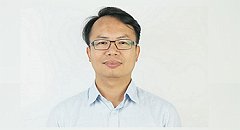
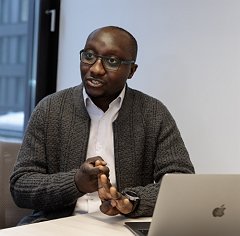
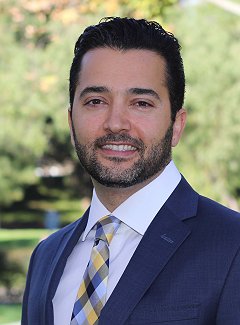
Hoa Khanh Dam is Professor and Deputy Head of School (Research) & Head of Postgraduate Studies in the School of Computing and Information Technology at the University of Wollongong, Australia. He serves as Co-Director of the Decision System Lab where he leads research at the intersection of Software Engineering and Artificial Intelligence. His research focuses on developing AI-driven solutions for software quality, cybersecurity, and productivity enhancement. Key interest areas include: AI/IoT autonomous and cyber resilient systems Software Analytics and Mining Software Repositories Large Language Models for software engineering tasks Defect prediction and vulnerability analysis Agile project management optimization Analysis of Dam's 12 publications from 2018-2025 reveals consistent application of machine learning to software engineering challenges. His work shows progressive evolution from traditional ML techniques toward LLM-based frameworks, with major contributions in defect prediction (DeepJIT), vulnerability analysis, microservice recommendation, and agile effort estimation. The research demonstrates strong industry relevance through practical implementations in code review, component prediction, and security systems. Dam co-leads the Decision System Lab at UOW, which develops intelligent decision support systems using AI and data analytics. The lab's work bridges theoretical AI advancements with real-world software engineering applications, particularly in cybersecurity and autonomous systems development.
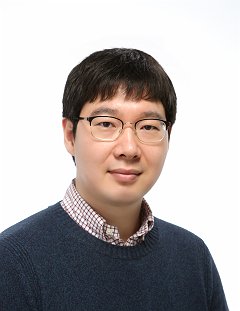
Chung Hwan Kim serves as an Assistant Professor in the Department of Computer Science at the University of Texas at Dallas, where he directs the Software & Systems Security Laboratory (S³ Lab). His research focuses on critical security challenges in cyber-physical systems, embedded devices, and cloud infrastructure, with recognition including the NSF CAREER Award and UT Dallas New Faculty Research Symposium Grant. His expertise spans Computer Systems Security , Cyber-Physical Security , and Software Security and Reliability , emphasizing practical solutions for robotic vehicles, autonomous systems, and trusted execution environments. Current projects address signal injection attacks, resilience testing, and confidential computing through innovative fuzzing frameworks and hardware-assisted protections. Recent publications (2020-2026) reveal three dominant research thrusts: (1) Security for autonomous/robotic systems ( DriveFuzz , IMUFUZZER ), (2) Trusted execution in constrained environments ( Vessels , GEVisor ), and (3) Automated vulnerability discovery ( HFL , TZ-DATASHIELD ), consistently appearing in top venues like IEEE S&P and USENIX Security. Key honors include: NSF CAREER Award (premier early-career recognition) UT Dallas New Faculty Research Symposium Grant Top 10 finalist for CSAW Best Applied Research Paper Award (2018) As principal investigator of the S³ Lab, Kim mentors graduate researchers and secures competitive funding for projects spanning robotic vehicle security, embedded systems hardening, and confidential computing. His teaching portfolio includes Operating Systems, Information Security, and specialized courses on CPS/IoT security. The S³ Lab develops deployable security tools like TZ-DATASHIELD for embedded data protection and IMUFUZZER for resilience testing of aerial vehicles, collaborating with industry partners to translate research into real-world solutions for autonomous systems and critical infrastructure.
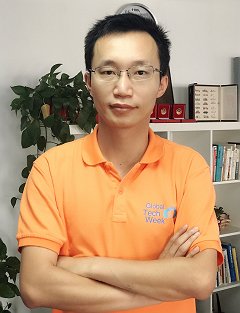
Zhenyu Chen is a Full Professor and Director of the iSE Laboratory at Nanjing University, specializing in AI-driven software testing methodologies. His research bridges artificial intelligence and software engineering with dual focus areas: leveraging AI to enhance testing processes ( AI for Testing ) and validating AI/ML systems ( Testing for AI ). His research interests center on deep learning framework testing , crowdsourced testing optimization , and Large Language Model applications in verification . Recent work demonstrates innovative approaches to metamorphic testing of neural networks, LLM-based test report analysis, and security hardening of code models against backdoors. Key contributions include the development of mooctest.com and frameworks like DevMuT for mutation testing of deep learning APIs. His publication trajectory reveals evolving focus from crowdsourced testing (2018-2020) to deep learning system validation (2021-2023) and current emphasis on LLM-powered testing solutions. Major venues include ASE, ICSE, and ISSTA where he serves regularly on program committees.
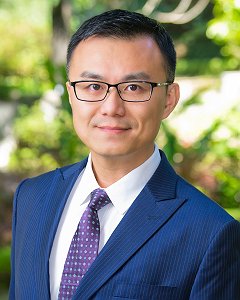
Jacky Wai Keung is an Associate Professor in the Department of Computer Science at City University of Hong Kong with extensive industry connections across the Asia Pacific region. He leads the Artificial Intelligence and Software Engineering Research Group (AiSE) and serves as Chairman of IEEE Computer Society Hong Kong Chapter and Vice-President of Hong Kong STEM Education Alliance. Prof. Keung received his B.Sc.(Hons) in Computer Science from the University of Sydney and Ph.D. in Software Engineering from the University of New South Wales, Australia, before working as a Research Scientist at NICTA (now DATA61, CSIRO) in Sydney. His research spans software engineering, data science, AI, FinTech, machine learning, blockchain systems, and large language models for code generation and analysis. His recent work focuses on applying large language models to software engineering challenges, with publications examining code translation, anomaly detection, and autonomous driving system testing. The research shows a strong trend toward practical applications of AI in software development processes, particularly in FinTech and autonomous systems domains. Among his numerous accolades, Prof. Keung has been named in Stanford's top 2% most highly cited scientists for both 2022 and 2023, received the President's Teaching Excellence Award in 2020, and earned multiple IEEE best paper awards. His editorial service includes roles as Area Editor for Journal of Systems and Software since 2017 and Associate Editor for Information and Software Technology since 2020. Prof. Keung has successfully secured over HK$20 million in research funding through GRF, ITF, and TDG grants, including major projects like 'Smart Intelligent Process Automation for the Mortgage Lending Industry' (HK$2.62 million) and 'Software Data Analytics and Blockchain Technological Advancements' (HK$6 million). His industry collaborations have significantly enhanced student opportunities, with CS student starting salaries increasing by over 15% year-on-year for the past three years. He currently leads multiple research initiatives including RealisticCodeBench for evaluating LLMs in code generation and FedLAD for federated log anomaly detection, with several active projects focused on AI-enhanced InsurTech systems and deep probabilistic reasoning using deep learning.
Gregory Gay is an Associate Professor in the Interaction Design and Software Engineering division within the Department of Computer Science and Engineering at Chalmers University of Technology and the University of Gothenburg, Sweden. His academic profile spans numerous software engineering conferences where he has served as committee member, program chair, and active researcher since at least 2018. Dr. Gay's research focuses on the intersection of software engineering and artificial intelligence, with particular emphasis on: Software Testing and Analysis Search-Based Software Engineering AI for Software Engineering (AI4SE) AI Engineering Automation of development tasks Software Carbon Footprint and sustainability His recent publications demonstrate a strong trend toward applying AI and optimization techniques to software testing challenges, with increasing focus on sustainability aspects of software development. Many studies take an industrial perspective, examining real-world applications in automotive software systems. His work blends theoretical foundations with practical applications, making significant contributions to both academic research and industrial practice in software engineering. Dr. Gay has been actively involved in numerous top software engineering conferences including ASE, ICSE, ESEC/FSE, ISSTA, and ICST, serving on program committees and organizing tracks. His research methodology typically combines optimization, artificial intelligence, and machine learning to help developers deliver complex systems in a safe, secure, and efficient manner.
Seung Yeob Shin serves as a Research Scientist at the University of Luxembourg's Interdisciplinary Centre for Security, Reliability and Trust (SnT), where he contributes to the Software Verification and Validation (V&V) Lab under Prof. Lionel Briand. His active participation in major software engineering conferences includes serving on ASE 2025's Research Papers Program Committee and authoring multiple journal-first publications presented at premier venues like ICSE and ESEC/FSE. Shin earned his PhD in 2016 from the Laboratory for Advanced Software Engineering Research (LASER) at the University of Massachusetts Amherst's College of Information and Computer Sciences. His research expertise centers on applying formal methods to complex software systems, with particular emphasis on model-based verification techniques. His current research program bridges theoretical modeling and practical system validation across critical domains. Key focus areas include developing simulation frameworks for software-defined networks, creating model-checking approaches for cyber-physical control loops, and establishing probabilistic methods for real-time system verification. This work consistently targets reliability challenges in safety-critical infrastructure through rigorous engineering methodologies. Recent publications demonstrate a cohesive trajectory in applying formal verification to emerging system paradigms. The 2024 journal-first papers reveal increasing sophistication in handling non-deterministic behaviors across networking, embedded systems, and requirements engineering domains, with notable emphasis on failure induction and probabilistic safety guarantees. No scientific awards were documented in the available materials. While conference contributions indicate significant scholarly engagement, no information regarding student advising or research grants appears in the provided documentation. As a core member of the V&V Lab at SnT, Shin contributes to Luxembourg's national cybersecurity research infrastructure. The lab specializes in developing mathematical frameworks for system validation, with current projects addressing verification challenges in autonomous systems, critical infrastructure, and secure communications protocols through model-driven approaches.
Prof. Tegawendé F. Bissyandé is a Chief Scientist in the Professor category at the Interdisciplinary Centre for Security, Reliability and Trust (SnT) at the University of Luxembourg. He holds the prestigious position of ERC Fellow and serves as Principal Investigator of the NATURAL project focused on Artificial Intelligence for Program Repair. His research spans software engineering, cybersecurity, and artificial intelligence, with particular emphasis on applying machine learning techniques to software development and security challenges. Dr. Bissyandé's research interests include: Software Debugging (especially bug localization and program repair) Software Security (especially malware detection and analysis) Code Search (both free-form and semantic code-to-code) Machine Learning and Natural Language Processing for software engineering Cyber-security applications in mobile and cloud environments His recent work demonstrates a strong focus on leveraging Large Language Models (LLMs) for various software engineering tasks. Analysis of his 15 most recent publications reveals several key trends: extensive application of LLMs to program repair and code generation; innovative approaches to Android security and malware detection; development of novel techniques for code search and understanding; and exploration of the intersection between natural language processing and software engineering. His research increasingly bridges theoretical software engineering with practical applications in mobile security and developer productivity tools, with a significant portion of his work focusing on Android ecosystem security and program repair technologies. Dr. Bissyandé has received numerous prestigious awards throughout his career: APSEC Best ERA Paper Award (2018) for 'LSRepair: Live Search of Fix Ingredients for Automated Program Repair' IPSJ SIG SE Excellent Research Award (2018) for 'FaCOY: a Code-to-Code Search Engine' FOSS Impact Paper Award (2018) for 'Characterizing Deprecated Android APIs' SANER Best ERA Paper Award (2016) for 'Parameter Values of Android APIs: A Preliminary Study on 100,000 Apps' ASE Best Paper Award (2012) for 'Diagnosys: automatic generation of a debugging interface to the Linux kernel' As an active member of the software engineering research community, Dr. Bissyandé serves on program committees for major conferences including ICSE, ASE, and ISSTA, and has been an Area Chair for ICSE 2024. His industry partnerships include significant collaborations with BGL BNP Paribas (since January 2019), Luxembourg Stock Exchange (since January 2018), and Paul Wurth (January 2015 to 2018), demonstrating the practical impact of his research. He leads the SerVAL lab at SnT, which focuses on software validation and analysis, with particular expertise in mobile security and program repair technologies, and actively mentors PhD candidates through FNR research grants.
Sam Malek is a Professor in the Department of Informatics at the University of California, Irvine's School of Information and Computer Sciences, where he directs the Software Engineering and Analysis Laboratory. Previously serving as Director of the Institute for Software Research (2018-2022), his academic leadership spans software engineering research and institutional management. His research centers on software engineering with specialized expertise in software analysis and testing , mobile computing , security , software architecture , and accessible computing . Malek's work consistently focuses on developing practical techniques and tools for constructing, analyzing, and maintaining large-scale software systems, with recent emphasis on accessibility challenges in mobile and web environments. His publication trends reveal a strategic shift toward accessible computing since 2020, where he pioneered frameworks like Ma11y for web accessibility testing and Groundhog for mobile app crawling. Earlier work established foundations in energy testing (2020), GUI input generation (2021), and architectural analysis, demonstrating methodological evolution from core software engineering to human-centered accessibility solutions. ACM SIGSOFT test-of-time award (2020) National Science Foundation CAREER award (2013) GMU Emerging Researcher/Scholar/Creator award (2013) GMU Computer Science Department Outstanding Faculty Research Award (2011) Malek serves on editorial boards for ACM Transactions on Software Engineering and Methodology and ACM Transactions on Autonomous and Adaptive Systems , while frequently acting as a software expert witness in intellectual property litigation. His research group actively recruits PhD students through UCI's Software Engineering PhD program, with current projects focusing on AI-driven accessibility solutions and mobile testing frameworks. The Software Engineering and Analysis Laboratory under his direction maintains strong industry connections through sponsored research and tool development, particularly in accessibility testing and mobile application quality assurance.
Dr. Siobahn Day Grady is an Assistant Professor of Information Science/Systems at North Carolina Central University (NCCU) and serves as the Founding Director of the Institute for Artificial Intelligence and Emerging Research (IAIER), which she established in 2025. She also holds leadership roles as Co-Director of The Center fOr Data Equity (CODE), Program Director of the Information Science Program, and Faculty Fellow in the Office of Faculty and Professional Development. Dr. Grady reports to the Provost with oversight of a $1M+ annual budget and $3M+ grant portfolio, managing a staff of 5 plus advisory boards. Ph.D. in Computer Science, North Carolina Agricultural & Technical State University (2018) M.S. in Computer Science, North Carolina Agricultural & Technical State University (2018) M.S. in Information Science, North Carolina Central University (2009) B.S. in Computer Science, Winston-Salem State University (2005) Dr. Grady's research focuses on the ethical implementation of artificial intelligence, with particular emphasis on fairness, bias mitigation, and equity in AI systems. Her work bridges technical AI development with social justice considerations, especially in healthcare applications and educational contexts. She has pioneered initiatives to increase AI literacy at HBCUs and developed frameworks for operationalizing fairness in AI governance. Her research interests include natural language processing, machine learning applications for social good, digital literacy programs for marginalized communities, and strategies to increase diversity in STEM fields through her STEM-It-Yourself program. Analysis of Dr. Grady's recent publications reveals a strong trajectory toward practical applications of AI ethics in real-world settings, particularly in healthcare and education. Her work demonstrates a consistent focus on creating frameworks that translate theoretical AI ethics principles into actionable guidelines for practitioners. There's a clear progression from technical AI research toward more interdisciplinary work that bridges computer science with social sciences, nursing, and education. Her publications increasingly address the needs of underrepresented communities and focus on practical implementation strategies rather than purely theoretical contributions. Winston-Salem State University 2023 Distinguished Alumni Award Durham Section of the National Council of Negro Women 2024 Distinguished Educator Sigma Iota Omega Chapter of Alpha Kappa Alpha Sorority, Incorporated® 2022 Soaring to Greater Heights in Science Technology Engineering Arts Mathematics Honoree The Links, Inc., Raleigh (NC) Chapter 2022 Emerald Award Honoree Association for Educational Communications and Technology (AECT) Culture, Learning, and Technology (CLT) Division 2023 Outstanding Publication Award Dr. Grady has secured significant grant funding totaling over $3 million, including a $1 million Google.org investment, $100K+ from Cisco, $15K from FICO, and funding from NTIA and NIH. She serves as Principal Investigator for the Digital Equity Leadership Program (DELP) and the Genomic Research and Data Science Center for Computation and Cloud Computing (GRADS-4C). Her mentoring extends to numerous students through programs like STEM-It-Yourself, which focuses on cultivating STEM identity among adolescent girls. Dr. Grady has established three endowed scholarships supporting economically disadvantaged students at multiple HBCUs, demonstrating her commitment to educational access. As Founding Director of the Institute for Artificial Intelligence and Emerging Research (IAIER), Dr. Grady leads North Carolina Central University's strategic vision for AI education, research, and policy. The institute includes the AI Emerging Scholars and Leaders Programs, which engage students, faculty, and staff in cross-disciplinary AI innovation. She has developed NCCU's first AI minor (pending approval) and serves as co-facilitator for the UNC AI Faculty Learning Community. Dr. Grady also holds leadership positions on the Governor's AI Council and multiple advisory boards, positioning NCCU as a national leader in responsible AI development and implementation.
Marcel Voßhans serves as a Researcher and Technical Project Leader for the AMEISE Team (Project RAFT) at Esslingen University of Applied Sciences' School of Computer Science and Engineering. He teaches specialized courses including Perceptional Algorithms, ROS, Sensory Systems (LiDAR/Camera), Autonomous Driving & Simulation, and Automotive Functional Safety. Education: 2015-2018: B.Eng. in Electrical Engineering and Information Technology, Hochschule Hannover 2018-2020: M.Sc. in Applied Computer Science: Autonomous Systems, Hochschule Esslingen Research Focus: His work centers on Autonomous Driving and AI-driven perception systems , with critical contributions to infrastructure reliability and sensor fusion for automated vehicles. He investigates how conventional road infrastructure interacts with autonomous systems through SLAM technology and deep learning-based environment detection. Publication Trends: His recent works demonstrate a cohesive research trajectory addressing real-world autonomous driving challenges, particularly in vehicle classification using stereo vision (2020), infrastructure-vehicle interaction requirements (2020), and conventional infrastructure reliability validation (2021). These studies emphasize practical implementation of AI in automotive contexts with strong safety considerations. Professional Background: Combines industry experience from Daimler AG (Steer-by-Wire development) and Continental Teves AG (testing rig automation) with academic leadership in the AMEISE research team. His international experience includes academic work in Sweden and China.
Tamás Lovas serves as Associate Professor at the Department of Photogrammetry and Geoinformatics, Faculty of Civil Engineering, Budapest University of Technology and Economics. He teaches advanced courses in Building Information Modeling, Laser Scanning, Remote Sensing, and Intelligent Transportation Systems while supervising diploma theses in Surveying and Geoinformatics Engineering. Education: 1994: High school graduation, Városmajor High School, Budapest 1999: Certified Surveyor and Geoinformatics Engineer, Budapest University of Technology, Faculty of Civil Engineering 2005: PhD (Earth Sciences), Budapest University of Technology and Economics, Faculty of Civil Engineering Research Interests: Dr. Lovas specializes in laser scanning technologies and geospatial data processing with emphasis on airborne and terrestrial point cloud analysis. His work bridges civil engineering applications and computational methods, particularly in infrastructure monitoring and digital representation. Processing, classification, and modeling of airborne laser scanned data Accuracy testing of terrestrial laser scanning Processing and modeling of terrestrial laser scanned data Comparative study of spatial data acquisition technologies His 2022-2025 publications demonstrate accelerating integration of artificial intelligence in point cloud processing, with significant contributions to road surface extraction, urban land cover classification, and BIM automation. Current research trends show strong focus on digital twin development for autonomous vehicles and infrastructure management. Scientific Awards: Republic Scholarship (1998-1999) Karlsruhe Chancellor's Scholarship (1999) ERASMUS scholarship (2000) Korányi Fellowship (2001-2002) János Bolyai Research Scholarship (2008-2011) OHV 1st place (2008) Dean's commendation for ERASMUS committee work (2014) For Students Award - Teaching Department (2017) Advising and Grants: Dr. Lovas mentors students through diploma theses and TDK research projects on topics including object survey with amateur sensors and hull modeling. His research funding includes the prestigious János Bolyai Research Scholarship and international fellowships supporting collaborations with institutions like The Ohio State University. Labs and Teams: As founding member and supervisory board member of the Hungarian BIM Association, he drives industry-academia collaboration. His leadership roles include Deputy Dean of Education at the Faculty of Civil Engineering and responsibility for English language training programs, facilitating international academic exchange.
Dr. Peter J. Robinson is an Honorary Research Fellow at the School of Electrical Engineering & Computer Science, The University of Queensland. His academic career spans over three decades, focusing on foundational research in programming languages, formal methods, and distributed systems. His work includes contributions to Qu-Prolog, a multi-threaded Prolog implementation, and TeleoR, a robotic task programming framework. Research interests include agent-based systems, blockchain security for aerospace applications, software verification, concurrent programming, and education technology. Notable projects include the Pedro publish/subscribe server and MyPyTutor, an interactive Python learning tool. He has collaborated on railway safety protocols and spacecraft control systems using blockchain. Publications span journals like Formal Aspects of Computing and conferences such as IEEE Symposium on Computers and Communications. Technical reports include work on unification algorithms and multi-agent verification frameworks. He has advised on projects involving IoT architectures and swarm intelligence simulations.
Luca Catarinucci is affiliated with the University of Salento in Lecce, Italy. His research focuses on RFID technology, IoT systems, wireless sensor networks, and antenna design. He has collaborated extensively with researchers like Riccardo Colella and Luciano Tarricone, producing impactful work in smart healthcare systems, energy-autonomous sensors, and 3D-printed electromagnetic devices. His contributions span theoretical advancements in circuit design and practical applications in fields like environmental monitoring and biomedical research. Recent work emphasizes energy-efficient solutions and integration of AI-driven microcontrollers. Key research interests include improving RFID tag performance, developing IoT-aware architectures for healthcare, and advancing additive manufacturing techniques for antenna prototyping. His publications reflect a deep engagement with both hardware innovation and system-level integration of smart technologies. Notable projects include energy-autonomous parking sensors and novel RFID-based medical monitoring systems. Collaborations involve cross-disciplinary efforts in electrical engineering, computer science, and biomedical engineering, with applications ranging from industrial automation to personalized healthcare solutions. While no formal awards are listed, his prolific publication record and repeated funding of experimental platforms indicate significant academic influence.
Dr. José Miguel Rojas is a Lecturer in Software Testing at the University of Sheffield's Department of Computer Science. He holds a PhD from the Technical University of Madrid and has held roles including Research Associate at the University of Sheffield and Lecturer at the University of Leicester. His research focuses on automated software testing, search-based techniques, and education in software engineering. Education: PhD in Software and Systems (Technical University of Madrid, 2013). Research Interests: Automated test generation, mutation testing, empirical software engineering, and teaching methodologies for testing. He leads the development of tools like EvoSuite and Code Defenders , which advance unit test generation and education through gamification. Key Publications include work on test suite generation effectiveness, mutation testing games, and accessibility testing for mobile apps. Awards include ACM Distinguished Paper Awards for contributions to testing methodologies. Grants: PI on EPSRC-funded projects like 'Accelerating Software Development using Gamification' and Co-PI on the UKRI Trustworthy Autonomous Systems Node. Labs/Teams: Active in the Testing Research Group and contributes to the Code Defenders educational platform.
Professor Dave White is a leading academic in Infrastructure Geotechnics at the University of Southampton's School of Engineering. He specializes in offshore geotechnical engineering with a focus on renewable energy infrastructure, seabed characterization, and subsea systems. His work bridges fundamental research with industry applications, contributing to design codes and innovative technologies such as robotic soil testing devices. University Affiliation: University of Southampton Current Roles: Professor of Infrastructure Geotechnics, Research Group Leader (Infrastructure Group), Member of Southampton Marine & Maritime Institute Research Focus: Offshore wind energy, geotechnical modeling, seabed anchor systems, pipeline stability Recent research includes advanced mooring line-seabed interaction studies, dynamic anchor reliability analysis, and spatial planning for offshore wind farms. He leads major projects like the EU-funded MARITEC-X initiative and the UKRI-supported TAILWIND program. Key achievements include over 250 publications, development of PIV analysis software, and roles in technical committees like the Royal Academy of Engineering. Awards include the Telford Gold Medal and Fellowships from multiple engineering institutions. Active in PhD supervision across geotechnical engineering topics, with current advisees including Amin Rashidimehrabadi and Shengqi Xia. Collaborates with industry partners on projects involving subsea cable protection and floating offshore wind technologies.