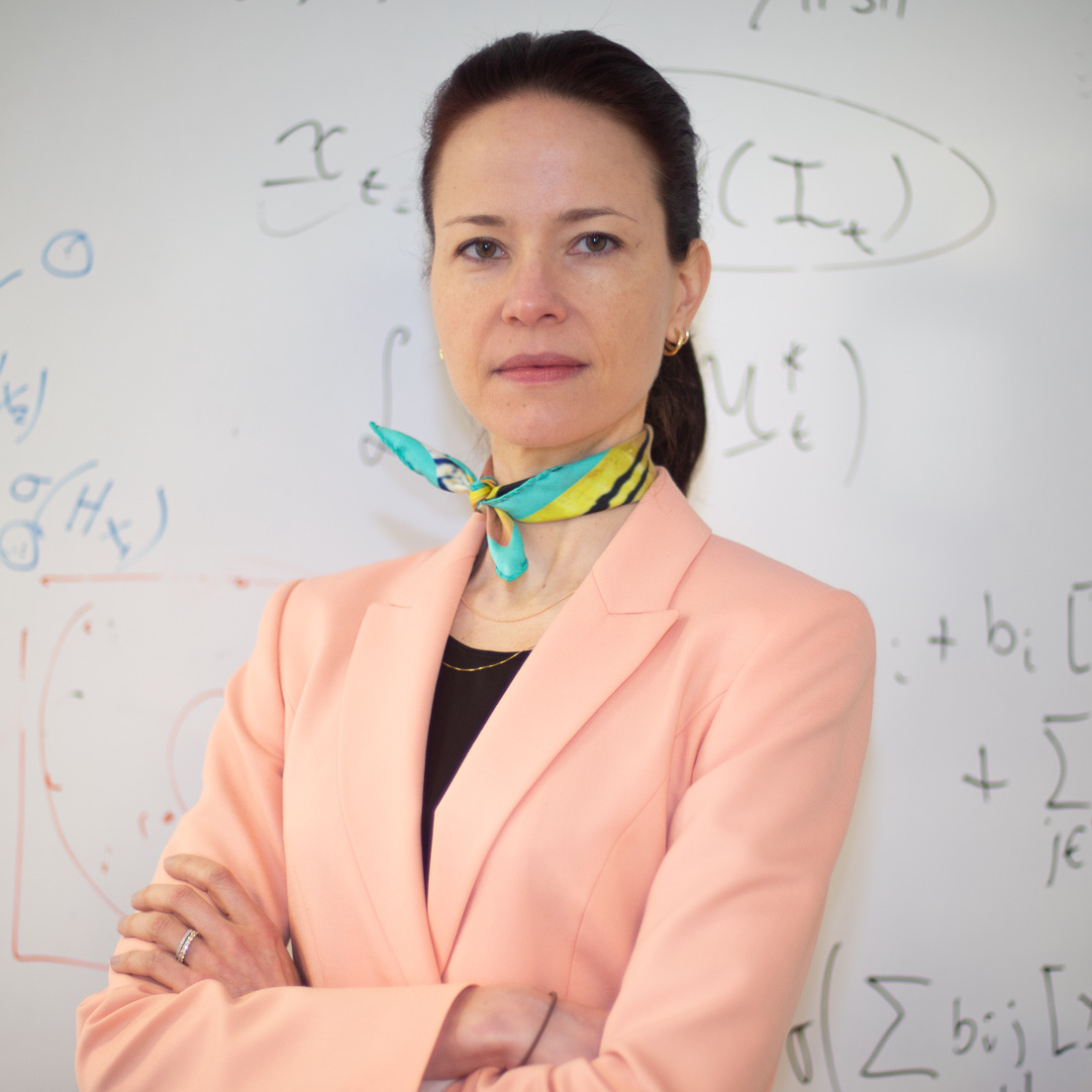
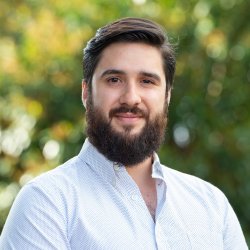
Dr. Mohammad Biglarbegian is an Associate Professor in the Department of Mechanical and Aerospace Engineering at Carleton University. Previously, he served as faculty at the School of Engineering, University of Guelph (2011–2023). He is a Professional Engineer (P.Eng.) in Ontario and a Senior Member of IEEE. Education: B.Sc. in Mechanical Engineering, University of Tehran M.A.Sc. in Mechanical Engineering, University of Toronto Ph.D. in Mechanical Engineering, University of Waterloo Research Focus: His work centers on modeling, design, and control of mechatronics systems, including autonomous robotics, vehicles, and machine learning applications. Key areas include data-driven algorithms for autonomous systems, with applications in automation, automotive, and smart agriculture. Grants & Collaboration: Supported by national/international agencies and industry partners, fostering cross-sector collaborations. Currently supervises graduate and undergraduate students in his research lab. Awards: University of Guelph Research Excellence Award (2018)
Garrett Rose is a Professor and Department Head in the Min H. Kao Department of Electrical Engineering and Computer Science at the University of Tennessee, Knoxville (UTK). He holds a B.S. in Computer Engineering from Virginia Tech (2001), and M.S. and Ph.D. in Electrical Engineering from the University of Virginia (2003/2006). Prior to UTK, he served as Assistant Professor at NYU Polytechnic (2006–2011) and Senior Electronics Engineer at the Air Force Research Lab (2011–2014). His research focuses on nanoelectronic circuit design, neuromorphic computing, hardware security, and memristor-based systems. He leads the SENECA Research Group and the TENNLab initiative, exploring applications in neuromorphic architectures, hardware security primitives (e.g., PUF devices), and device modeling. Recent work emphasizes memristor-driven neuromorphic systems, secure FPGA designs, and in-memory computing. Grants include projects on neuromorphic target detection and nanotechnology-based security solutions. Rose actively mentors students and collaborates on co-design methodologies for real-world neuromorphic applications. Education: Ph.D. Electrical Engineering, University of Virginia, 2006 M.S. Electrical Engineering, University of Virginia, 2003 B.S. Computer Engineering, Virginia Tech, 2001 Research Interests: Dr. Rose’s work spans neuromorphic hardware design, including memristor-based neural networks and spiking systems. He investigates hardware security through nanoscale devices like memristors for PUFs and side-channel resistant circuits. His team develops novel memristor models and explores applications in reconfigurable computing and energy-efficient architectures. Recent efforts focus on neuromorphic vision systems, robotic navigation, and neuromorphic processors with co-design frameworks. Grants & Projects: "Ground-roaming autonomous neuromorphic targeter" (2020) "Secure Backup and Restore for IoT using Nanotechnology" (2020) "Physically Unclonable Reconfigurable Computing System (PURCS)" (2020)
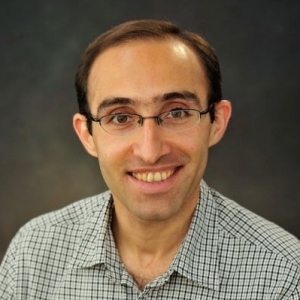
Tønnes Nygaard is an Associate Professor at the Department of Technology Systems, University of Oslo, affiliated with the Faculty of Mathematics and Natural Sciences. His research focuses on evolutionary robotics, morphological adaptation, and embodied artificial intelligence. He leads projects like COCOMO (Co-evolution of Control and Morphologies) and works extensively with the DyRET (Dynamic Robot for Embodied Testing) platform. Key research interests include robot control systems, adaptive morphology design, and real-world implementation of evolutionary algorithms. His work bridges theoretical computer science with practical robotics applications, emphasizing hardware-software co-evolution and embodied cognition principles. Publications span topics like morphological adaptation in quadruped robots, semi-supervised learning for terrain classification, and overcoming convergence issues in multi-objective evolutionary algorithms. Nygaard collaborates internationally and contributes to both academic journals and conferences in robotics and AI. No scientific awards are explicitly listed, though his impactful contributions to real-world evolutionary robotics suggest potential recognition pending explicit mentions. Advising and grant activities are central to his role, though specific student names or grant amounts are not detailed in the provided texts. Labs/Teams: Core contributor to the DyRET project and affiliated with the Section for Autonomous Systems and Sensor Technologies at UiO.
Georgios Andrikopoulos is an Assistant Professor at KTH Royal Institute of Technology's Department of Industrial and Environmental Management (ITM), affiliated with the Digital Futures Faculty. He serves as Co-Principal Investigator (Co-PI) on the 'Real-time exoskeleton control for human-in-the-loop optimization' project, focusing on advanced robotics and human-technology interaction. His research spans soft robotics, exoskeleton systems, and adaptive climbing robots, with applications in healthcare, aerospace, and education. Key projects include: "Connecting Bodies – Designing Shape-changing Wearables" (Postdoc Fellowship, 2023–2025) "Advancing real-time exoskeleton control for human-in-the-loop optimization" (Demonstrator Project) SEC scholar collaboration with Mohamed Elbadawi (May–June 2024) Research interests emphasize: Soft robotic actuators for safe human interaction Optimization of compliant mechanisms in robotics Vortex adhesion systems for autonomous inspection Design of child-friendly interactive robots His work integrates robotics with control systems, biomechanics, and human-centered design. Over 50 peer-reviewed articles demonstrate contributions to exoskeleton technology, climbing robot algorithms, and soft actuator modeling. He advises students like Laia Turmo Vidal (Postdoc) and Mohamed Elbadawi (SEC scholar). Affiliated with the cross-disciplinary Digital Futures initiative, he collaborates with Stockholm University and RISE Research Institutes to address societal challenges through digital innovation.
Robert Katzschmann is an Assistant Professor of Robotics (tenure-track) at ETH Zurich's Department of Mechanical and Process Engineering , leading the Soft Robotics Laboratory . He is also the co-founder and scientific advisor of Mimic Robotics , focused on dexterous manipulation solutions. His research spans Soft Robotics , Musculoskeletal Robotics , Biohybrid Systems , and Underwater Robotics , with breakthroughs like the autonomous soft robotic fish SoFi and biohybrid actuators. He holds a PhD from MIT (2018), a Master's from Stanford (2013), and a Diplom-Ingenieur from KIT (2013). Research Interests: His work emphasizes compliant, bioinspired robots capable of safe human interaction and complex environmental navigation. Key areas include soft material fabrication, biohybrid tissue integration, and dynamic control algorithms. Recent innovations include electrohydraulic actuators and vision-controlled printing for robotic components. Grants & Recognition: Secured funding from SNSF, NSF, and industry partners. Recognitions include a TED Fellowship (2022), Outstanding Paper Award (IEEE RoboSoft 2019), and Redtenbacher-Prize (2014). He serves on editorial boards for Advanced Robotics Research and npj Robotics , and chairs conference workshops globally. Labs & Teams: Directs the Soft Robotics Lab with 17 PhD students and 2 postdocs. Collaborates with leading institutions like MIT, Harvard, and the Weizmann Institute on biohybrid systems and robotic actuation.
Professor Amanda Prorok leads the Prorok Lab at the University of Cambridge's Department of Computer Science and Technology, focusing on multi-agent and multi-robot systems. Her work integrates machine learning, planning, and control to coordinate intelligent agents in shared environments, with applications in transport, environmental monitoring, and search-and-rescue. She is a Fellow of Pembroke College and holds editorial roles at IEEE Robotics and Automation Letters and Autonomous Robots. Education: Ph.D., EPFL (Switzerland); Postdoctoral Research, University of Pennsylvania (USA). Research Interests: The lab pioneers methods like differentiable communication between learning agents and develops decentralized algorithms for navigation, coverage, and coordination. Key themes include neural diversity in collective learning, resilient swarm systems, and environment-aware control. Notable Achievements: ERC Starting Grant, Amazon Research Award, EPSRC New Investigator Award ABB Prize for Best Thesis in Computer Science (EPFL) Teaching: Leads Computing for Collective Intelligence (MPhil/Part III) modules. Lab & Infrastructure: The Prorok Lab operates the Cambridge RoboMaster platform and develops testbeds for connected vehicles and robot swarms. Recent work emphasizes scalable reinforcement learning and graph neural networks for decentralized decision-making.
Dr. Gabor Karsai is a Distinguished Professor of Computer Science and Professor of Electrical and Computer Engineering at Vanderbilt University's School of Engineering. He also serves as Senior Research Scientist at the Institute for Software-Integrated Systems (ISIS), where he contributes to the Executive Council. With over 30 years in software engineering, his research focuses on embedded systems, model-driven development, resilient software platforms, and AI-driven autonomous systems assurance. He holds a PhD from Vanderbilt and degrees from the Technical University of Budapest. Education: Ph.D. in Electrical and Computer Engineering, Vanderbilt University Dr.Tech. in Computer Engineering, Technical University of Budapest M.S. and B.S. in Electrical Engineering, Technical University of Budapest Affiliations: Co-Associate Chair for Computer Engineering External Member of the Hungarian Academy of Sciences His research interests span model-integrated computing , autonomous systems assurance , and radiation-hardened systems . Recent work emphasizes AI integration into engineered systems and radiation effects mitigation for space applications. He has led major projects on distributed control for smart grids and resilient CPS architectures. Over 200 peer-reviewed publications and four patents reflect his contributions to software engineering and systems integration. Awards & Recognition: External Membership in Hungarian Academy of Sciences Leadership roles in ISIS and Vanderbilt's academic governance Advisees & Grants: While no student list is provided, his projects involve collaborative teams across academia and industry. Major sponsors include NSF, NASA, and DARPA. Current work includes the ALC (Assurance-based Learning-enabled CPS) and MIDAS (Model-based Intent-Driven Adaptive Software) initiatives. Labs & Platforms: Co-developer of the RIAPS distributed CPS platform and the SEAM assurance modeling framework. His labs focus on cyber-physical system design, radiation effects analysis, and autonomous system reliability.
Nilanjan Sarkar is the Vice Dean and Senior Associate Dean for Faculty Affairs at Vanderbilt University's School of Engineering, holding the David K. Wilson Professorship in Engineering. He is a Professor in Mechanical Engineering, Computer Engineering, and Computer Science. His research focuses on intelligent systems for human interaction, including robotics, virtual/augmented reality, and assistive technologies for neurodevelopmental disorders and aging populations. Education: PhD (Mechanical Engineering, University of Pennsylvania), ME (Indian Institute of Science), BE (Indian Institute of Engineering Science and Technology, Shibpur). Research interests span human-robot interaction, sensor fusion, and rehabilitation engineering. His lab develops systems for autism intervention, stroke rehabilitation, and elderly engagement through socially assistive robotics and VR/AR. Notable projects include robot-mediated therapy for children and AR telepresence systems for long-term care facilities. Labs/Teams: Robotics and Autonomous Systems Laboratory. Key contributions include CoMove, RASSLE, and the Career Interview Readiness in VR platform. His work emphasizes participatory design with end-users for ethical and inclusive technology.
James Bellingham is the Bloomberg Distinguished Professor of exploration robotics at Johns Hopkins University, holding primary appointments in the Department of Mechanical Engineering and the Applied Physics Laboratory's Asymmetric Operations Sector. He serves as executive director of the Johns Hopkins Institute for Assured Autonomy and is a member of the Data Science and AI Institute. With over 30 years of expertise, Bellingham pioneered small, high-performance autonomous underwater vehicles (AUVs), leading global expeditions across polar and oceanic regions. His work bridges robotics innovation with environmental monitoring, including oil spill response, Arctic exploration, and NASA collaborations for extraterrestrial oceanic exploration. Bellingham's educational background includes BS, MS, and PhD in physics from MIT. He previously led Woods Hole Oceanographic Institution's Marine Robotics Consortium, creating advanced prototyping facilities and fostering entrepreneurship in robotics. His leadership roles span institutional boards such as the Naval Studies Board and OceanX. His research focuses on advancing AUV capabilities for adaptive sampling, fault detection, and interdisciplinary oceanography. Over 50 publications demonstrate his technical contributions, including AUV design, environmental hazard mapping, and collaborative robotic systems. Awards include National Academy of Engineering induction and military honors for public service.
Dr. Allahyar Montazeri is a Senior Lecturer in Control and Electronics Engineering at Lancaster University's School of Engineering, specializing in advanced control systems and signal processing. His research focuses on adaptive signal processing, robust control, system identification, and applications in robotics, active noise/vibration control, and wave energy conversion. He has over 110 publications and serves on editorial boards such as Frontiers in Robotics and AI, and IFAC Technical Committees. Montazeri holds a Humboldt Research Fellowship (2011) and ERCIM Fellowship (2010). His industrial collaborations include Bosch for automotive noise control and Fraunhofer Institute. He has supervised PhD students in acoustic signal processing and leads projects on autonomous robotics and environmental monitoring. Notable awards include 'Outstanding Associate Editor' (2023) and 'Fellow of The Higher Education Academy.' He actively participates in conferences like IEEE CDC and chairs sessions on mechatronics systems. His work bridges theoretical control advancements with practical applications in extreme environments, including nuclear robotics and underwater systems.
Oscar Mendez Maldonado is a Lecturer in Robotics and Artificial Intelligence at the University of Surrey's School of Computer Science and Electronic Engineering, affiliated with the Robotics Department and CVSSP Centre. He holds a PhD (2018) and BEng (2013) from the University of Surrey. His research focuses on Machine Learning, Computer Vision, and Robotics, with emphasis on autonomous systems, localisation, and SLAM applications. Key projects include the Autonomous Valet Parking (AVP) system for indoor navigation and the SMILE project for sign language assessment using AI. He has supervised students like James Ross (Autonomous Vehicles), Xihan Bian (Reinforcement Learning), and Nimet Kaygusuz (Visual Odometry). Notable achievements include the Sullivan Thesis Prize (2018) and impactful publications in IEEE conferences (e.g., ICRA, CVPR, IROS). Research spans topics like 3D hand pose estimation via diffusion models, graph-based visual odometry fusion, and Raman spectroscopy for localisation. He contributes to open-source tools (e.g., RaSpectLoc GitHub) and collaborates with industry partners like Parkopedia. His work bridges theoretical advances with real-world applications in autonomous systems and healthcare.
Ehud Sharlin is a Professor in the Department of Computer Science at the University of Calgary, Faculty of Science. His research focuses on Human-Computer Interaction (HCI) with specializations in human-robot interaction, tangible interfaces, virtual/augmented reality, and autonomous vehicle interactions. He holds a Ph.D. in Computing Science from the University of Alberta (2003), and M.Sc. and B.Sc. degrees in Electrical and Computer Engineering from Ben-Gurion University of the Negev (1997 and 1990). Teaches CPSC 481: Human-Computer Interaction I Recipient of the NSERC Discovery Accelerator Award (2019), ACM Creativity & Cognition Honourable Mention (2018), and multiple academic excellence awards Active in industry collaborations, particularly in medical simulation (e.g., VRSpineSim) and geosciences (e.g., PLANWELL) Research explores: Embodied interaction through robotics and wearables Autonomous vehicle-pedestrian communication systems Immersive tools for creative and professional domains Accessibility in human-technology interfaces Publications span over 100 peer-reviewed works, emphasizing design methodologies, user experience in XR systems, and ethical considerations in sociotechnical systems. His work bridges technical innovation with human-centered design principles.
Orlin D. Velev is the S. Frank and Doris Culberson Distinguished Professor of Chemical Engineering at North Carolina State University (NC State), part of the College of Engineering. His research focuses on colloid science, soft materials engineering, nanotechnology, and sustainable nanocomposites. He leads the Velev Lab, pioneering innovations in self-propelling microdevices, environmentally benign nanomaterials, and responsive materials for energy and biomedical applications. Velev's academic journey includes a PhD in Physical Chemistry from Sofia University (1999), followed by M.S. and B.Tech degrees in Chemical Engineering from NC State. His work bridges chemistry, physics, and biology, with notable contributions to microfluidics, colloidal assembly, and battery technologies. He has supervised numerous graduate and undergraduate students, fostering interdisciplinary research and innovation. Key research areas include: Directed assembly of colloids using external fields Self-propelling microbots and active particles Sustainable biopolymer composites (e.g., lignin-based nanoparticles) Soft robotic components and smart materials Biodegradable electronics and energy storage solutions Honors include the Braskem Award, AIChE’s Andreas Acrivos Award, and multiple fellowships. His lab’s recent advancements include osmotic-capillary wearable patches for sweat analysis and high-performance lithium-sulfur battery separators using soft dendritic colloids. Velev collaborates extensively, with projects funded by NSF, industry partnerships, and federal grants. His work emphasizes translating fundamental science into real-world applications, such as biodegradable packaging, microplastic remediation, and wearable health monitoring devices.
Arpan Gujarati is a Sessional Lecturer in the Department of Computer Science at the University of British Columbia (UBC), affiliated with the Systopia Lab. He teaches graduate and undergraduate courses such as CPSC 538G (Distributed Systems), CPSC 416 (Operating Systems), and CPEN 432 (Real-Time System Design). He holds a PhD from the Max Planck Institute for Software Systems and TU Kaiserslautern, where he was supervised by Björn B. Brandenburg. PhD: Max Planck Institute for Software Systems & TU Kaiserslautern (2020) Undergraduate: Birla Institute of Technology and Science (BITS Pilani) Postdoctoral Researcher: MPI-SWS Research Associate: UBC Software Development Engineer: Citrix R&D, India His research focuses on real-time and distributed systems, with applications in cyber-physical systems, fault tolerance, and machine learning reliability. He investigates scheduling algorithms, reliability analysis, and the integration of learning-enabled components into safety-critical systems. His work combines theoretical analysis with practical system implementations, often involving real-world testbeds and open-source tools. His recent publications span top-tier venues including RTSS, OSDI, ECRTS, DSN, and Middleware, with a strong emphasis on performance predictability, resilience of ML systems, and real-time communication. His work frequently addresses challenges in timing guarantees, fault tolerance, and system reliability in both cloud and embedded environments. SIGBED Paul Caspi Memorial Dissertation Award Best Paper Award at RTSS 2022 Distinguished Artifact Award at OSDI 2020 Best Student Paper Award at Middleware 2017 Outstanding Paper Award at RTCSA 2025 He advises several PhD students and undergraduate researchers at UBC, including Heng Zhao, Aida Aminian, Zainab Saeed Wattoo, and Philip Schowitz. He has led multiple research projects involving robotic arms, NVIDIA Holoscan, FreeRTOS, and distributed key-value stores. His lab work emphasizes reproducibility, open datasets, and practical system building. He has served on program committees for RTSS, RTAS, ECRTS, and Middleware, and contributes to journals such as Real-Time Systems and JSys.
Guanrui Li is an Assistant Professor at Worcester Polytechnic Institute's Robotics Engineering Department and the director of the Aerial-robot Control and Perception Lab (ACP Lab). He holds a Ph.D. in Electrical and Computer Engineering from NYU (2024), an M.S. in Robotics from the University of Pennsylvania (2018), and a B.E. in Theoretical and Applied Mechanics from Sun Yat-sen University (2016). His research focuses on aerial robotics, including control methodologies for collaborative transportation, human-robot interaction, and perception-aware systems. Key contributions include Hybrid Perception-Aware MPC frameworks, cooperative manipulation algorithms, and simulation tools like RotorTM. Education: Ph.D., Electrical and Computer Engineering, NYU (2024) M.S., Robotics, University of Pennsylvania (2018) B.E., Theoretical and Applied Mechanics, Sun Yat-sen University (2016) Research Interests: Control and perception of aerial robots, human-robot collaboration, cooperative manipulation, and autonomous systems. Notable work addresses challenges in payload transportation, sensor fusion, and safety-critical navigation. Awards: NSF CPS Rising Stars (2023) Outstanding Deployed System Paper Finalist (IEEE ICRA 2022) NYU Dante Youla Award (2022) NYU Outstanding Dissertation Award (2024) Lab & Team: ACP Lab focuses on advancing aerial robotics through interdisciplinary research. Current projects include mixed reality interfaces for human-robot interaction and fault-tolerant control systems. Recent collaborations include workshops on Rust for Robotics (ICRA 2025) and embodied-AI for aerial systems (ICUAS 2025).

/tonnesfn/t.jpg)