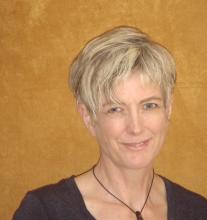
Karon MacLean is a Professor of Computer Science and Director of the SPIN (Sensory Perception and Interaction Research Group) at the University of British Columbia. She joined UBC in 2000 after working at Interval Research Corp. in Palo Alto. Her research focuses on restoring physicality to human-computer interaction through haptic interfaces, multisensory interaction, and affective communication. She holds a Bachelor's degree from Stanford University and graduate degrees from MIT. Her work emphasizes application-driven design, exploring haptic feedback in robotics, embedded systems, and healthcare contexts. Current projects include developing Calmer, a robotic device for preterm infant pain management, and CuddleBits, affective robot pets. She leads the SPIN Lab, which investigates haptic languages, low-power interfaces, and evaluation techniques for tangible computing. Her academic contributions span over two decades, with key areas including physical user interfaces, parasitic power systems, and the integration of haptics into medical and everyday technologies. She advises students on HCI topics and collaborates internationally on projects that merge engineering, psychology, and design.
Andrea Tonoli is a Full Professor at the Department of Mechanical and Aerospace Engineering (DIMEAS) at Polytechnic University of Turin. He serves as Scientific Advisor for partnerships with DAYCO, ITALDESIGN GIUGIARO, and STELLANTIS, and leads Spoke 2 'Sustainable Road Vehicle' at the National Center for Sustainable Mobility (MOST). He coordinates the DIMEAS-LIM research group and participates in CARS and PEIC interdepartmental centers. His teaching includes courses on Car Body Design, Motor Vehicle Design, and Mechatronic Systems Simulation. His research focuses on electric/hybrid powertrain optimization, mechanical design of electric traction machines, energy management in autonomous vehicles, longitudinal/lateral dynamics, virtual sensors for vehicle state estimation, electro-hydraulic/electromechanical shock absorbers, and magnetic bearings. Key subfields include rotordynamic analysis, harmonic finite element modeling for turbines, maglev stability, mechatronic systems for autonomous vehicles, and sustainable transportation. Recent publications emphasize electrodynamic maglev damping, compact assistive knee prostheses, electromagnetic shock absorber testing, and multi-objective optimization of regenerative suspensions. His work spans automotive, aerospace, and biomedical domains with applications to energy recovery, vibration control, and sustainable mobility. He supervises PhD students in mechatronics and automotive engineering, and leads numerous funded research projects including SPHERE (PNRR), MINERVA (PNRR), SmartCorners (EU), and industry collaborations with Hyperloop Transportation Technologies, Dayco Europe, and Racing Force Spa.
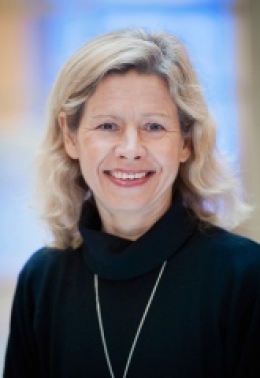
Mariana Catela Jacob Rodrigues is an Assistant Professor in the Department of Applied Digital Technologies at Iscte – University Institute of Lisbon and an Associate Researcher at the Institute of Telecommunications – IUL, where she works within the Instrumentation and Measurements Group. She holds a PhD in Information Technologies and Systems from Iscte, completed in 2024, following a Master’s and Bachelor’s degree in Telecommunications and Computer Engineering from the same institution. Her research interests span a multidisciplinary range of topics, including: Internet of Things (IoT) Assisted Living Environments Smart Sensors and Wearable Devices Cardiorespiratory and Physiological Monitoring Environmental and Air Quality Monitoring Artificial Intelligence in Healthcare Mobile Application Development Virtual Reality in Rehabilitation The analysis of her recent publications reveals a strong focus on the integration of sensor technologies and AI for health and environmental applications. Her work frequently involves the development and evaluation of unobtrusive monitoring systems in ambient assisted living contexts, with specific attention to indoor localization, fall detection, and the impact of environmental stimuli—such as lighting and music—on autonomic nervous system responses. Much of her research is published in IEEE conferences and journals related to instrumentation, sensors, and medical measurements. Her scientific achievements include: Best Student Paper Award at the IEEE International Symposium on Medical Measurements and Applications (2022) ISTA Top Talent 2018-2019 (awarded in 2020) Best Student Paper Award at the 2nd International Symposium on Sensing and Instrumentation in IoT Era (2019) Mariana Rodrigues is actively involved in academic service and outreach. She has served on the organizing committees of multiple scientific events, including the International Symposium on Sensing and Instrumentation in IoT Era and several summer schools on Smart Systems for Ambient Assisted Living. She currently holds leadership positions in IEEE, serving as Chair of the IEEE Women in Engineering (WIE) Affinity Group and the IEEE Instrumentation and Measurement Society Chapter at Iscte. She has also contributed to science communication through events like the ISCTE Summer School on “Healthy and Sustainable Environment.”
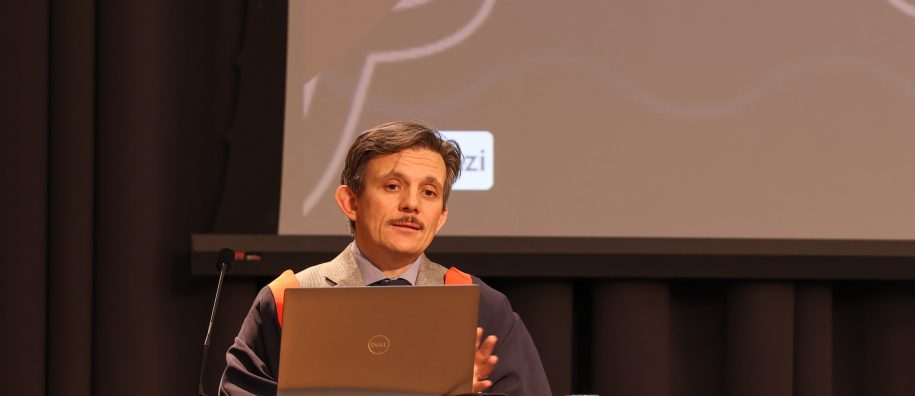
Lorenzo Zucca is a Professor at King's College London, affiliated with the School of Law and the Department of Law. He is a distinguished legal philosopher and scholar with expertise in constitutional law, human rights, religion and state relations, and the philosophical dimensions of legal uncertainty. Recently, he visited Mykolo Romerio University (MRU) as part of an educational exchange program, delivering lectures and engaging in academic dialogue on pressing legal and philosophical issues. His educational background spans major institutions including Milan, Paris, Oxford, Florence, and New York, reflecting a deeply international academic trajectory. His research centers on the concept of uncertainty—not merely as a lack of knowledge, but as a constitutive element of legal and human experience. He explores how legal systems, institutions, and artificial intelligence navigate ambiguity, risk, and moral complexity. Legal Philosophy Constitutional Law Human Rights Religion and State AI and Law Shakespeare and Jurisprudence His recent and forthcoming publications reveal a strong interdisciplinary trend, merging law with literature, philosophy, and technology. The thematic focus across his articles shows a consistent engagement with indeterminacy, power, knowledge, and ethical responsibility in legal systems. He advocates for a 'poetic wisdom' approach in legal education, emphasizing dialogue, narrative, and sensitivity to ambiguity. Scientific contributions and recognition include: Author of The Poet of Uncertainty: Shakespeare on Law, Knowledge, and Power (2025) Leading a new international research project on uncertainty and cybersecurity Active participation in global academic discourse on democracy, AI ethics, and constitutional resilience Professor Zucca advises graduate students and collaborates internationally, with emerging partnerships discussed with MRU faculty, particularly in the areas of digital governance and democratic sustainability. He emphasizes the importance of interdisciplinary and transnational collaboration in addressing contemporary legal challenges. His teaching methodology is dialogic and Socratic, fostering intellectual engagement and critical thinking. He is associated with research initiatives at King’s College London that explore the philosophical foundations of law and the impact of emerging technologies on legal norms. His work contributes to a vibrant intellectual community that bridges legal doctrine with deeper existential and ethical questions.
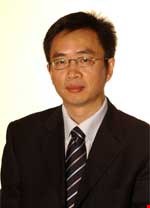
Dr. Qingping Yang is a Reader (Associate Professor) in the Department of Mechanical and Aerospace Engineering at Brunel University London, affiliated with the College of Engineering, Design and Physical Sciences. He directs the Brunel Quality Engineering and Smart Technology (QUEST) and Robotics and Automation Research Groups, focusing on sensor systems, AI, and industrial metrology. Education: PhD in Engineering, Brunel University London (1992) BEng in Instrumentation and Measurement Technology, Chengdu Aeronautical Polytechnic (1983) Research Interests: Dr. Yang integrates measurement systems, quality engineering, and smart technologies (AI/robotics). His work spans industrial metrology, IoT-driven manufacturing optimization, renewable energy forecasting, medical diagnostics, and autonomous inspection systems. Key methodologies include machine learning, Bayesian risk modeling, and non-destructive evaluation. Publication Trends: Recent articles emphasize AI applications in manufacturing (defect detection, robotic path planning), IoT-based monitoring (3D printing, building safety), and healthcare analytics (COVID-19 diagnosis). Methodological innovations include graph theory optimization, computer vision, and ontology-driven quality frameworks. Awards: Three Brunel University Performance Bonuses Marquis Who's Who in the World (1998) Marquis Who's Who in Science and Engineering (2000) Advising & Grants: Supervised 39+ PhD/MPhil students (23 as primary supervisor). Secured £2.7M as PI and £1.2M as Co-I across 18 projects (EU/UK industry/government-funded). Current PhD projects include AI for non-destructive testing and sustainable manufacturing. Leadership: Heads QUEST and Robotics research groups. Former EU research coordinator and MSc program director. Editor-in-Chief of the International Journal of Metrology and Quality Engineering .
Rune Hylsberg Jacobsen is a Professor at the Department of Electrical and Computer Engineering, Aarhus University. His work bridges energy systems, drone technology, and blockchain applications, with a focus on smart grids, autonomous systems, and decentralized infrastructure. Research interests include: Security frameworks for prosumer-driven energy systems using blockchain mmWave and LEO satellite communication protocols Homomorphic encryption for smart meter privacy Cooperative drone swarm navigation and infrastructure inspection Earth observation via CubeSats for climate research His recent publications highlight advancements in: Zero trust security models for renewable energy certificates Transport protocol optimization in satellite networks AI-driven charging window scheduling for drone fleets Decentralized identity management in Web3 infrastructure Key projects include: DISCO-2: Student CubeSat for Arctic climate monitoring Drones4Safety: Safety-critical inspection systems VPP4SGR: Virtual Power Plant networks
Dr. Wei Cai is a Research Associate Professor in the Department of Ocean Science and Engineering at the Southern University of Science and Technology (SUSTech). He also serves as Assistant to the President of the Academy of Marine Sciences at SUSTech and Assistant Director of the Shenzhen Branch of the Laboratory of Marine Science and Engineering of Guangdong Province. Additionally, he is the Deputy Director of the Marine Robot & Power System Laboratory and a member of the National Technical Committee for the Standardization of Submersibles. Dr. Cai received his educational background as follows: Doctor of Biomedical Engineering : Zhejiang University, September 2007 - June 2012 Bachelor of Biomedical Engineering : Zhejiang University, October 2002 - June 2007 Dr. Cai has dedicated his career to marine technology research for nearly 15 years, with expertise spanning multiple disciplines of ocean science and engineering. His primary research interests focus on marine sensors , scientific applications of submersibles , and polymetallic sulfide resources in the international seabed area . His work bridges engineering innovation with practical oceanographic applications, particularly in deep-sea exploration technologies. Dr. Cai has extensive field experience, having participated in 12 cruises on China Ocean Voyages, where he served as chief scientist for several important missions including sea trials of the "Qianlong II" AUV in 2016, "Qianlong III" AUV in 2018, and Deep-Sea Drilling Rig in 2021. His January 2019 expedition with the "Deep Sea Warrior" manned submersible reached a depth of 2,773 meters in the Southwest Indian Ocean, demonstrating his hands-on expertise in extreme deep-sea environments. Dr. Cai's research portfolio demonstrates a clear progression from fundamental sensor development to sophisticated deep-sea exploration systems. His early work focused on chemical sensors for water quality monitoring, particularly for heavy metal detection, which laid the foundation for his later specialization in marine applications. Over time, his research evolved toward deep-sea technologies, with increasing emphasis on autonomous underwater vehicles (AUVs), hydrothermal vent systems, and polymetallic sulfide resource exploration. His publications reveal strong interdisciplinary connections between chemical engineering, robotics, marine geology, and environmental science, with practical applications in both resource exploration and environmental protection. Dr. Cai's scientific achievements have been recognized with several prestigious awards: Second Prize of National Science and Technology Progress Award (Team), 2019 Outstanding Contribution Award of China Marine Engineering Consulting Association (Team), 2019 Outstanding Graduate of Zhejiang Province, 2012 2022 Pearl River Talent Plan Young Top Talent 2022 Shenzhen "Pengcheng Peacock Plan" Special Post C As a principal investigator, Dr. Cai has secured significant research funding, including the National Key Research and Development Program of China, projects from the Deep Blue Project Fund by Shanghai Jiao Tong University, and various provincial and national research grants. His leadership extends to serving as deputy chief designer of technical upgrade and scientific application of the "Qianlong II" AUV. Dr. Cai has also contributed to major scientific endeavors as a participant in numerous China Ocean Voyage projects, with funding ranging from millions to tens of millions of RMB per project. Dr. Cai leads the Marine Robot & Power System Laboratory at SUSTech, where his team focuses on developing advanced marine technologies for deep-sea exploration. His laboratory work integrates robotics, sensor development, and data analysis to create comprehensive solutions for underwater research and resource exploration. The lab's current projects include developing high-sensitivity methane sensors for deep-sea environments, systems for detecting heavy metals in hydrothermal plumes, and wireless sensor networks for red tide early warning systems. This multidisciplinary approach positions Dr. Cai's team at the forefront of marine technology innovation in China.
Elisabeth Wåghäll Nivre is Professor of German Literature at Stockholm University, where she has been teaching since 2004. She previously taught at Växjö University (1995-2012), Högskolan Karlskrona-Ronneby (1994-95), and Davidson College in the USA (1992-94). She earned her Ph.D. from Washington University in St. Louis in 1992. Her academic affiliation is with the Department of Slavic and Baltic Studies, Finnish, Dutch and German within the Faculty of Humanities at Stockholm University. She has been appointed as visiting fellow at Clare Hall, Cambridge, for fall 2024. Wåghäll Nivre served as Dean of the Faculty of Humanities and Deputy Vice President for the Area of Human Science at Stockholm University from 2018 to 2023. She holds board positions at The Wallenberg AI, Autonomous Systems and Software Program – Humanities and Society (WASP-HS) and Riksbankens Jubileumsfond, and is a founding member of several academic networks including Germanistische Literaturwissenschaft in Schweden (GLS), PhDNet Literary and Cultural Studies, and Movens: Phänomene ästhetischer und kultureller Grenzüberschreitungen. Her research primarily focuses on 16th and 17th-century German literature, with particular interest in women's roles, marriage, and family life in early modern German literature. She has extensively explored early modern biographical writing, panegyrics, and travel narratives, with current research examining biographical writing on Queen Christina of Sweden (1626-1689). Additional research interests include German children's literature and pedagogical approaches to teaching literature in foreign language classrooms. Analysis of her recent publications reveals a consistent scholarly trajectory centered on early modern German cultural production. Her work demonstrates methodological sophistication in analyzing gender representations, spatial concepts, and historical consciousness in literary texts. A notable research thread across multiple publications concerns Queen Christina of Sweden, indicating this as a major scholarly contribution bridging Swedish and German historical-literary scholarship. Her interdisciplinary approach connects literary analysis with cultural history, gender studies, and spatial theory. Wåghäll Nivre has supervised nearly twenty Ph.D. students and over one hundred B.A. and M.A. theses. She has held editorial positions including German editor of Moderna språk journal and editor of the Stockholm German and Dutch Studies series. As founder of the Swedish network for empirical research in German as a foreign language, she has made significant contributions to language pedagogy alongside her literary scholarship.
Yushuai Li is an Assistant Professor in the Department of Computer Science at Aalborg University. His research focuses on digital twin technologies, energy internet systems, distributed optimization, and cyber-physical security for energy networks. Institution: Aalborg University, Denmark Academic Rank: Assistant Professor Email: yushuaili@ieee.org, yusli@cs.aau.dk Research Interests: Li's work bridges artificial intelligence with energy systems, emphasizing: Digital Twin for Energy and Transportation Integration Reinforcement Learning in Power Trading Distributed Control for Microgrids Privacy-Preserving Energy Dispatch Autonomous Driving-Energy System Coupling Scientific Contributions: His recent publications address critical challenges in energy internet resilience, including: Distributed control under stealthy attacks Noise-resilient microgrid operations Multi-timescale optimization algorithms Event-triggered control strategies Secure peer-to-peer energy trading Honors & Awards: Recipient of multiple prestigious awards, including: Best Paper Awards (MPCE, ICCSIE, IEEE EI2) Excellent Young Expert Award (MPCE, 2023) National Natural Science Prizes (CAA 2022-2023) Highly Cited Papers (8 ESI Highly Cited, 2 ESI Hot Papers) H-index 24 with 2500+ Google Scholar Citations Academic Leadership: Serves as Associate Editor for four IEEE journals and chairs sessions at leading conferences like IEEE SmartGridComm, ISIE, and IEEE EI2. His 70+ publications span top venues including IEEE Transactions on Cybernetics, Smart Grid, and ACM SIGMOD.
Miquel Martin Casals serves as Professor of Civil Law at the University of Girona's Department of Private Law and Institute of European and Comparative Private Law. Former director of the Institute until 2019, he currently leads the University Master's Degree in Tort Law and contributes to European legal harmonization through multiple expert committees. His institutional roles bridge academic scholarship with practical legal reform initiatives across Spain and the EU. His research focuses on civil liability evolution , tort law modernization , and European private law integration , with recent work examining AI liability frameworks and traffic accident compensation systems. Casals employs comparative methodology across 6 languages to analyze judicial activism versus legislative inertia, particularly in Spanish and Catalan contexts where he helped shape the Civil Code's 'open code' model. Current scholarly trends reveal his leadership in emerging liability domains, especially EU regulatory responses to AI systems and digital-era harm compensation. His 2022-2025 publications demonstrate methodological innovation through real-world case analysis of legal reforms, while maintaining foundational work on the Principles of European Tort Law (PETL). Key honors include: Cross of Honor of Sant Raimon de Penyafort (2015) Election to the International Academy of Comparative Law Membership in the American Law Institute's Restatement projects As principal investigator for 30+ national/international projects since the 1990s, Casals has directed major initiatives like Spain's Expert Commission for Law 35/2015 and Catalonia's Codification Commission. His advisory work extends to EU bodies including ECTIL and IDEC, where he shapes cross-border liability standards. He leads the European Private Law Research Group and maintains active collaboration with the European Group on Civil Liability (EGTL), fostering transnational dialogue through the PETL drafting committee. Current initiatives focus on AI liability working groups and traffic accident scale monitoring commissions.
Thomas Erich Zinner is Professor at the Department of Information Security and Communication Technology, Norwegian University of Science and Technology (NTNU), a position held since August 2019. Previously, he served as visiting professor and head of the FG INET research group at TU Berlin, and led the 'Next Generation Networks' research group at the University of Würzburg's Communication Networks chair. His educational background includes a diploma (2006) and Ph.D. (2012), both from the University of Würzburg. His research spans network architecture performance evaluation with emphasis on SDN/NFV and QoE-centric management approaches for emerging networks. Zinner's recent publications reveal strong trends toward intelligent 6G architectures integrating AI in the user plane, QoE-aware 5G resource allocation, and autonomic management of softwarized networks. His work combines theoretical modeling, simulation frameworks like OMNeT++, and practical implementations focused on real-world applicability in beyond-5G systems. He leads the Networking Research Group at NTNU working on the TeraFlow project, developing secure cloud-native SDN controllers for autonomic traffic management at massive scale. This initiative addresses critical challenges in next-generation network infrastructure through innovative controller architectures and flow management techniques.
Joanna F. Defranco is an Associate Professor of Engineering at the Engineering Division (Great Valley) of Pennsylvania State University. Her research focuses on software development, internet of things (IoT), blockchain, and artificial intelligence, with a particular emphasis on quality assurance, security, and practical implementations in engineering and healthcare. Research Interests Defranco's work addresses critical challenges in IoT security, digital twins for manufacturing, and AI-driven software quality analysis. She explores secure data sharing frameworks, blockchain applications in healthcare, and the evolution of low-code/no-code platforms. Her recent publications highlight interdisciplinary approaches to telemedicine, smart agriculture, and urban infrastructure. Publication Trends Her 2023-2025 publications show increasing focus on IoT integration with AI, secure healthcare data systems, and the societal implications of emerging technologies. Key themes include digital twin adoption in SMEs, generative AI's impact on software development, and cybersecurity resilience. Collaborations She collaborates with institutions like IEEE and researchers such as Paul Laplante, Joseph Voas, and Thrasyvoulos Speicher. Her work bridges engineering education with real-world applications in manufacturing, agriculture, and healthcare.
Sanjay Madria is a Curators’ Distinguished Professor in the Department of Computer Science at Missouri University of Science and Technology. His research spans mobile and sensor computing , machine learning , cloud security , and blockchain , with applications in underground mining safety , UAV systems , and disaster response . PhD: Indian Institute of Technology, Delhi (1995) His work integrates secure sensor cloud architectures , delay-tolerant network optimization , and AI-driven risk assessment . Recent publications focus on UAV swarm detection , reinforcement learning for mining environments , and privacy-preserving social media analytics . Scientific Awards include IEEE Best Paper Awards , NRC Fellowships , and JSPS Fellowship . Funded by NSF , NIST , DOE , Honeywell , and Boeing . He contributes to IEEE/ACM Distinguished Speaker programs and leads the Center for Intelligent Infrastructure at Missouri S&T.
Kazushi Kawamura is an Assistant Professor at the Tokyo Institute of Technology 's AI Computing Research Unit , with prior roles at Waseda University and the Institute of Science Tokyo. His academic journey began at Waseda University, where he earned a Dr. Eng in 2016. 2025.04 - Now: Assistant Professor, School of Fundamental Science and Engineering, Tokyo Tech 2024.10 - 2025.03: Assistant Professor, School of Fundamental Science and Engineering, Waseda 2020.04 - 2025.03: Specially Appointed Assistant Professor, Institute of Integrated Research, Institute of Science Tokyo His research spans combinatorial optimization , annealing processors , Ising machines , and FPGA-based computing systems . He has contributed extensively to LSI design methodology and high-level synthesis . Key publication trends include neural network compression , parallel annealing algorithms , edge AI inference , and sparse matrix operations on FPGAs. His work often integrates theoretical optimization with practical hardware implementations . 2023 CS Achievement Award 2016 ISOCC Best Paper Multiple Algorithm Design Contest Prizes (2014-2019) IPSJ SLDM Outstanding Student Awards Kawamura teaches courses like Physical Electronics Laboratory and Machine Learning at Waseda, with recent projects such as Amorphica (metamorphic annealer) and Pianissimo (sub-mW DNN accelerator). He serves on committees for IEEE , IPSJ , and IEICE , focusing on system design and circuit optimization.
Norikazu Hirose is a Professor at the Faculty of Sport Sciences, School of Sport and Sciences at Waseda University. With a PhD from the University of Tokyo, he has established himself as a leading expert in sports science with a focus on athletic training and injury prevention. His professional experience spans across multiple elite sports organizations including INAC Kobe Leonessa Conditioning Advancer (2025.06-Present), Nippon TV Tokyo Verdy Beleza Physical Coach (2022.02-2022.05), and the Japan Football Association where he served as Physical Coach for the Japan Women's National Football Team from 2008-2021. Dr. Hirose earned his PhD from the University of Tokyo Graduate School, Division of General Culture in 2004, and completed his undergraduate studies in Sports Sciences at Waseda University Faculty of Human Science in 1997. His academic foundation combines deep theoretical knowledge with extensive practical application in elite sports settings. Dr. Hirose's research centers around Athletic Training, Injury Prevention, Talent Identification, Growth & Maturation, and Soccer performance. His work bridges laboratory research with practical sports applications, with particular emphasis on understanding movement mechanics, muscle activation patterns, and recovery protocols. Recent work has expanded into interdisciplinary areas including the relationship between primitive reflex retention and social development in children with developmental disorders. Analysis of Dr. Hirose's recent publications reveals a strong focus on biomechanics of athletic movement, particularly in soccer players. His work examines change of direction mechanics, hamstring injury prevention, and the effects of various training interventions using advanced measurement techniques including motion capture systems and electromyography. His research increasingly incorporates interdisciplinary approaches, combining sports science with child development and neurological considerations. 100th Anniversary Merit Award (2025.03) - Saitama Prefectural Sports Association Good Practice Report (July 2023) - Japanese Society of Athletic Training 100th Anniversary Special Achievement Award (2021.09) - Japan Football Association Best Poster Award (2017.12) - NSCA Japan Young Scientific Researcher Award (2016.01) - Japan Training Instructors Association 優秀ポスター賞 (2015.12) - NSCA Japan Dr. Hirose serves as Associate Member of the Science Council of Japan, Board member of the World Federation of Athletic Training and Therapies, and Editorial Board Member of the Japan Society of Training Science. He has been instrumental in developing consensus recommendations for sports injury and illness surveillance in Japan. His committee memberships include Director of the Japanese Society of Athletic Training and multiple editorial roles in prominent sports medicine journals. Dr. Hirose leads a research laboratory focused on athletic performance and injury prevention, with particular emphasis on soccer biomechanics and youth athlete development. His team utilizes advanced motion analysis systems and physiological monitoring to investigate movement patterns associated with performance and injury risk. Current projects include examining primitive reflex retention in children with developmental disorders and its relationship to motor skills, as well as optimizing injury prevention protocols for elite athletes through innovative approaches like Nordic hamstring exercises with varying knee and hip angles.