Frank Lagor is an Associate Professor in the Department of Mechanical and Aerospace Engineering at the University of Virginia. He joined UVA in 2023 after serving as faculty at the State University of New York at Buffalo. His research focuses on estimation and control for autonomous systems interacting with fluid environments, including gust mitigation in aerospace systems and bio-inspired flow sensing for robotics. Dr. Lagor holds a Ph.D. in Aerospace Engineering from the University of Maryland (2017), with prior degrees from the University of Pennsylvania (M.S., 2009) and Villanova University (B.S., 2006). Before academia, he worked at Lockheed Martin as a Certified Principal Engineer for satellite solar array systems. His research interests emphasize unsteady flow estimation, optimal maneuver design in gust encounters, and reduced-order modeling techniques. Key contributions include sensor placement strategies for data-driven flow estimation and closed-loop control methodologies for autonomous underwater vehicles. He has received prestigious awards including the AFOSR Young Investigator Award (2021) and UB SEAS Early Career Teacher of the Year (2020). Courses taught include advanced control systems theory, dynamics, and stochastic estimation methods.
Timm Schoening is a Researcher and Head of the Data Science Unit at the Information, Data and Computing Centre (IDCC) , GEOMAR Helmholtz Centre for Ocean Research Kiel. He specializes in automated image analysis , machine learning , and deep-sea monitoring , with a focus on polymetallic nodules and digital infrastructure for oceanographic research. His work bridges computer science and marine science to improve data management and underwater imaging systems. Education: Ph.D. in Computer Science (2015), Bielefeld University M.Sc. in Computer Science (2010), Bielefeld University B.Sc. in Computer Science (2008), Bielefeld University Research Interests span marine data science , automated image analysis , and digital twins for ocean monitoring. He develops computational tools for underwater imaging, including multispectral systems and high-performance clusters , with applications in deep-sea mining impact assessment and ecosystem monitoring . Scientific Awards Briese Research PhD Award for Marine Science (2017) Grants & Projects Co-Proponent for GAIA-X project MARISPACE-X (BMWK) Co-Proponent for HMC project FDO-5DI on FAIR marine images (2020) Co-Proponent for EU H2020 project iAtlantic DFG Research Fellowship (2018) Future Ocean Excellence Cluster PostDoc funding GEOMAR Seed Funding for Multi-Spectral Image Capture
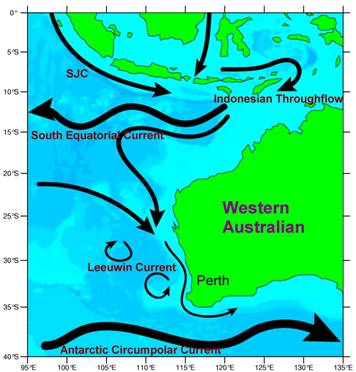
Dr Ming Feng is a Principal Research Scientist at CSIRO Oceans & Atmosphere in Perth, Australia, and an internationally recognised leader in physical oceanography. His career since 2001 has focused on the Leeuwin Current , Indian Ocean climate modes and marine heat-waves , producing >200 refereed publications and leading major programs such as WAMSI Node 2 and Australia’s IMOS observational network. Research interests revolve around boundary-current dynamics, climate variability and biophysical coupling. Key themes include interannual-to-decadal changes in the Leeuwin Current, the Ningaloo Niño marine heat-wave phenomenon, ENSO & IOD teleconnections, Indonesian Throughflow variability, and the connectivity of larval fisheries. He combines in-situ observations, satellite data and high-resolution models to quantify circulation, eddy processes and ecosystem impacts. Recent articles (2024-2025) reveal intensifying marine heatwaves and cold spells within ocean eddies, seasonal de-oxygenation of coastal embayments, and the utility of ocean gliders for extreme-event monitoring. His work underpins operational forecasts and climate-adaptation strategies for Australia’s fisheries and marine biodiversity. Dr Feng has served on the CLIVAR Indian Ocean Panel and contributes to UNESCO’s Ocean Decade activities. He maintains extensive collaborations across the Pacific and Indian Ocean rim and is a frequent chief scientist on research voyages.
Vigdis Tverberg serves as Associate Professor of Physical Oceanography at Nord University since 2012, with prior academic appointments at UNIS (1993-1997) and research roles at the Norwegian Polar Institute and Institute of Marine Research. Her expertise centers on Arctic marine systems, particularly fjord hydrography and biophysical interactions in Svalbard regions. Educational background: Dr. Scient. in Physical Oceanography, University of Bergen, Department of Geophysics (1991) Her research focuses on ocean dynamics, circulation modeling, and climate change impacts in high-latitude environments. Key contributions include studies of Atlantic water inflow effects on phytoplankton blooms, zooplankton distribution patterns, and water mass transformation processes in Arctic fjords. She integrates field observations with autonomous vehicle technology to address ecosystem responses to warming. Analysis of her 2014-2023 publications reveals consistent investigation of Kongsfjorden dynamics, with emphasis on Calanus species ecology, sea ice-ocean interactions, and climate-driven shifts in marine phenology. Her work demonstrates strong methodological innovation through glider technology and long-term time-series analysis. Teaching responsibilities include: Master's course: Biophysical Interactions (Bi312F) Bachelor's elective: Oceanography (Bi222F) Active research projects: GLIDER: Unmanned ocean vehicles for ecosystem monitoring FAABulous: Future Arctic Algal Blooms and climate change impacts ProVoLo: Watermass transformation in the Lofoten Basin Her collaborative network spans UNIS, Norwegian Polar Institute, and international Arctic research consortia, reflecting interdisciplinary approaches to polar oceanography challenges.
Professor Mark E Inall is a Marine Physicist and Director of the Scottish Alliance for Geoscience, Environment and Society (SAGES) at the Scottish Association for Marine Science (SAMS), part of the University of the Highlands and Islands. With 89 journal articles (H-index = 28) and membership on the Scottish Science Advisory Council, he maintains active research across diverse marine environments from equatorial waters to polar regions, accumulating 25 years of field experience including work on ice sheets and sea ice. His research centers on physical oceanography and geophysical fluid dynamics with specific expertise in: Marine mixing processes and internal wave generation by tidal flow over topography Studies across multiple environments: deep sea (Mid-Atlantic Ridge), shelf seas (Malin Shelf, Antarctic Shelf), and coastal waters (Arctic fjords) Development and application of marine autonomous systems for ocean observation Geophysical turbulence and stratified flow dynamics Polar ocean-ice interactions and climate change impacts Analysis of his recent publications reveals an evolving research trajectory with increasing focus on polar systems, particularly Arctic and Antarctic ocean-ice interactions. His work increasingly leverages autonomous platforms (AUVs, gliders) to investigate previously inaccessible regions, with growing emphasis on climate change impacts on ice sheets and fjord systems. Professor Inall has received notable recognition including: Two Geophysical Research Letters Editor's special highlight paper selections Journal of Geophysical Research front cover highlight (February 2014) He currently supervises PhD students Jamie Rodgers (sea ice retreat using AUVs) and James Coogan (Svalbard's subglacial discharge plumes), with former students including Neil Fraser (2018), Matt Toberman (2015), and Emily Venables (2011). His leadership extends to major initiatives including iAtlantic (EU Horizon 2020), CAMPUS (NERC), and OSNAP, alongside his role as Lead Scientist of the Scottish Marine Robotics Facility since 2009. As Director of SAGES and chair of the NERC Marine Facilities Advisory Board, Professor Inall bridges fundamental ocean physics with practical applications for understanding climate change impacts on polar regions while advancing marine robotics capabilities.
Professor Stuart Cunningham is a Physical Oceanographer at the Scottish Association for Marine Science (SAMS), part of the University of the Highlands and Islands. His research focuses on the dynamics and circulation of the Atlantic Ocean and its role in Earth's climate. He specializes in designing observing programs for sustained long-term observations of large-scale ocean circulation and biogeochemistry, with leadership roles in major international projects including RAPID and OSNAP. Professor Cunningham's educational background includes: PhD in Physical Oceanography, University of Liverpool (1999) MSc in Physical Oceanography, University College of North Wales (1990) BSc in Astrophysics, University of Edinburgh (1989) His research centers on physical oceanography with a focus on Atlantic circulation patterns and climate implications. Professor Cunningham has pioneered observing systems to monitor the Atlantic Meridional Overturning Circulation, examining how ocean circulation affects climate change through heat, freshwater, and carbon transport. His work combines sustained observational programs with modeling to understand decadal variability and climate connections across the Atlantic basin. Recent publications reveal consistent focus on Atlantic Ocean circulation dynamics, particularly the Meridional Overturning Circulation and its climate impacts. His work spans observational studies using mooring arrays, ship-based measurements, and autonomous technologies to understand circulation patterns, water mass transformations, and climate connections across the Atlantic basin, with particular emphasis on the subpolar North Atlantic region. Professor Cunningham has received recognition for his contributions to oceanography: The Society for Underwater Technology Oceanography Award (2014) He has mentored numerous graduate students and postdocs in oceanographic research, including Kamila Walicka, Elizabeth Comer, Frazer Christie, Neil Frazer, and Sam Jones. His leadership extends to major research grants including EU Horizon 2020 projects like iAtlantic and CLASS, as well as NERC-funded programs including UK-OSNAP. He serves on multiple advisory boards and has contributed to international climate assessment efforts as an IPCC AR5 author. Professor Cunningham leads research within SAMS' Environmental Physics and Autonomous Technology group. He collaborates extensively with international partners through programs like OSNAP and RAPID, working with institutions across Europe, North America, and Asia to monitor and understand Atlantic Ocean circulation. His work integrates traditional oceanographic methods with emerging autonomous technologies to advance observational capabilities in the marine environment.
Camilla Sætre is an Associate Professor in Ocean Technology/Measurement Technology at the Department of Physics and Technology, University of Bergen. Her research focuses on measurement science, particularly on the reliability and quality of measurements in ocean-related areas. She is actively involved in major research initiatives including SFI Smart Ocean and HyMe: Reliable metering for the hydrogen Supply Chain. Dr. Sætre's work spans ocean observation systems, multiphase flow measurement, underwater optical communications, and sensor technology. Her research addresses critical challenges in obtaining reliable measurements in harsh marine environments, with particular emphasis on data quality assurance and real-time monitoring capabilities. She has made significant contributions to directional wave measurements from navigational buoys, demonstrating their accuracy compared to dedicated wave measurement systems. Her publication record shows a transition from early work in atmospheric physics (doctoral thesis on nitric oxide in the thermosphere) to her current focus on ocean technology. Recent publications reveal innovative approaches to correcting scattering errors in underwater optical measurements, developing smart ocean observation systems, and addressing biofouling effects on sensor data. SFI Smart Ocean project (Research Council of Norway, reference 309612, 2020-2028) HyMe project (Research Council of Norway, reference 336565) Dr. Sætre collaborates extensively with industry partners including Aanderaa Instruments AS and NORCE Norwegian Research Centre AS. Her work bridges theoretical measurement science with practical ocean observation applications, contributing to more reliable and cost-effective monitoring systems for marine environments.
Clara Rodriguez Vives serves as a Guest Researcher at the Section for Geobiology within the Globe Institute, Faculty of Health and Medical Sciences at the University of Copenhagen. Her work bridges geoscience and biological oceanography with focus on polar marine systems. Her research spans Geobiology, Oceanography, and Biogeochemistry with specific expertise in Arctic and Antarctic processes. Key interests include ocean stratification dynamics, trace metal cycling in glacial fjords, water-mass transformations, and biogeochemical responses to polar climate change. Her methodology integrates field observations, autonomous platforms (including Biogeochemical-Argo floats), and satellite data. Analysis of her recent publications reveals a cohesive research trajectory examining physical-biogeochemical couplings across polar regions. Her 2023-2025 work demonstrates increasing focus on high-resolution observational techniques to resolve mesoscale processes in the Icelandic region, Greenland fjords, and Antarctic continental shelves. A unifying theme is understanding how climate-driven changes in ice-ocean interfaces affect marine biogeochemical cycles. Dr. Vives maintains active international collaborations across Greenland, Antarctica, and European institutions as evidenced by her co-authorship patterns. While her Guest Researcher position doesn't include formal advising responsibilities, she contributes to the global polar research community through data sharing and methodological innovations in observational oceanography.
Alia Khan serves as an Associate Professor in the Aerospace Department at the University of Colorado Boulder, where she conducts groundbreaking research in optical remote sensing of Earth's surface using uncrewed aerial systems and satellite-based sensors. Her work bridges aerospace engineering with environmental science, focusing on critical climate-related phenomena in polar and mountainous regions. Dr. Khan earned her PhD in Civil and Environmental Engineering from the University of Colorado Boulder in 2016, following an MS in Environmental Studies from the same institution in 2012, and a BSPH with Honors in Environmental Science and Engineering from the University of North Carolina Chapel Hill in 2009. Her research interests center on autonomous system development for environmental monitoring, with particular expertise in aquatic biogeochemistry, aerosols, and cryosphere studies including glacial and snow hydrology. She has pioneered methods using UAV technology to study snow algae, glacier ablation, and black carbon impacts on ice sheets. Her work spans from Antarctic ecosystems to Andean snowpacks and Arctic oceans, addressing critical climate change indicators through innovative remote sensing approaches. Analysis of Dr. Khan's recent publications reveals a strong focus on polar and cryospheric research, with particular attention to black carbon impacts on ice sheets, snow algae monitoring, and the application of UAV technology for environmental observation. Her interdisciplinary work connects atmospheric science, glaciology, and remote sensing to address pressing climate change questions, with increasing emphasis on human impacts in polar regions and the development of cost-effective monitoring technologies. National Science Foundation - CAREER Grant Awardee (2022) US Fulbright Scholar to the Chilean Antarctic Program (2019) Antarctic Service Medal, National Science Foundation (2012) National Science Foundation Graduate Research Fellowship (2010) Dr. Khan has successfully mentored students including Colby F. Rand and S. Healy, who appear as first authors on multiple publications. Her research has been supported by significant grants including the NSF CAREER award and Fulbright Scholarship, enabling extensive field work in Antarctica, the Arctic, and mountainous regions worldwide. She teaches GEEN 1400 First Year Engineering Projects and Drone Remote Sensing, integrating her research expertise into undergraduate education. Her work involves extensive collaboration with international research teams across polar regions, including participation in Antarctic research programs and Arctic monitoring initiatives. Dr. Khan's laboratory focuses on developing and deploying UAV-based remote sensing systems for environmental monitoring, with particular emphasis on cryospheric applications and the development of cost-effective monitoring solutions for challenging environments.