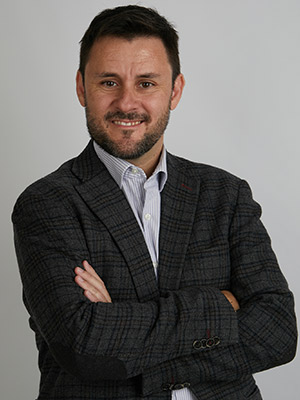
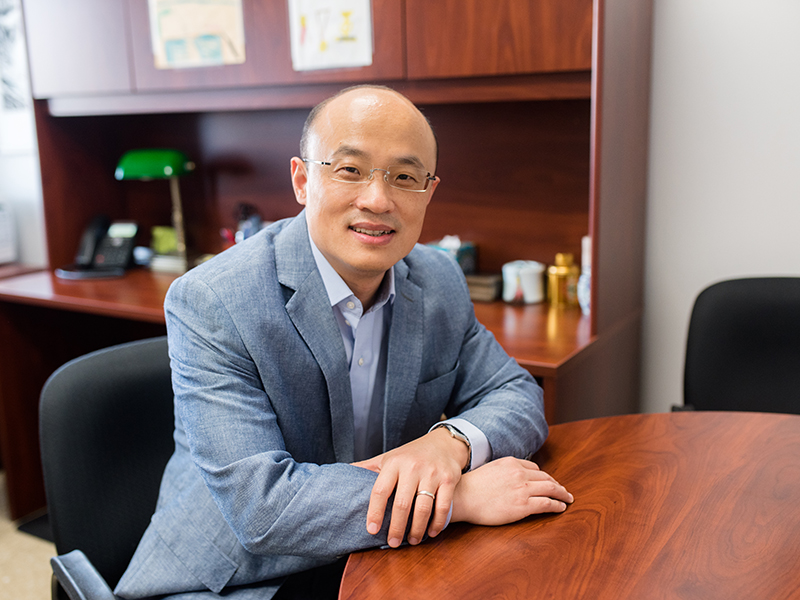
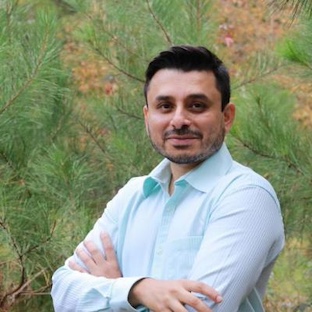
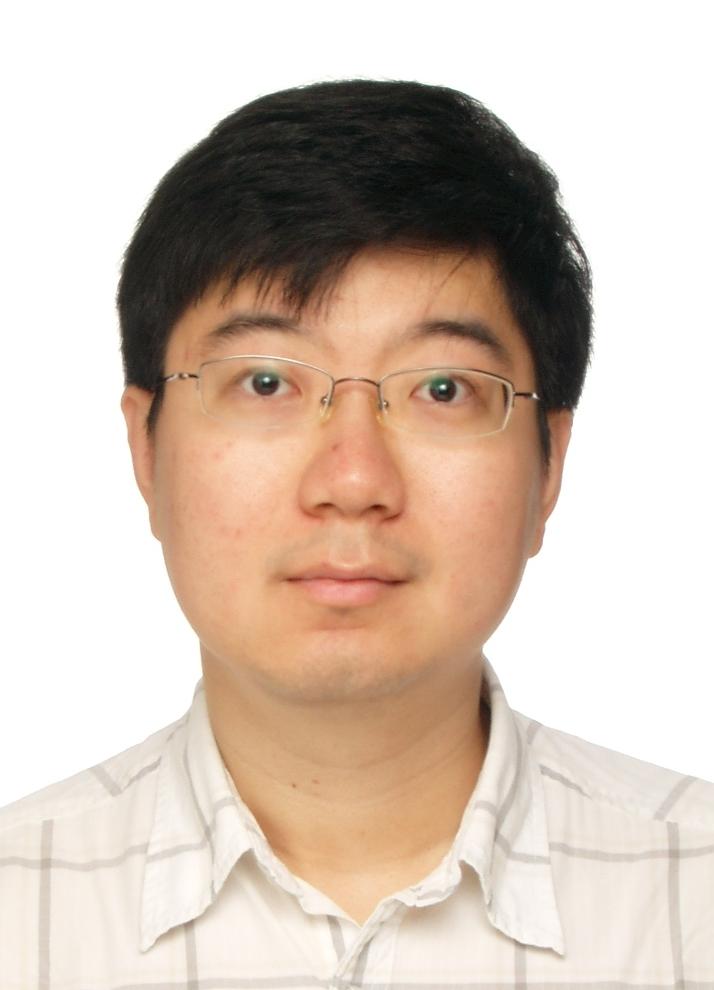
Dr. Daniel Selva is an Associate Professor in the Department of Aerospace Engineering at Texas A&M University. His research focuses on space systems, systems engineering, and intelligent systems, with emphasis on AI-driven design tools like the SEAK Lab’s Daphne cognitive assistant. He leads projects funded by NASA, NSF, and DOD, addressing challenges in satellite constellations, autonomous decision-making, and metamaterials. Awards include recognition for highly cited papers and conference best papers. Education: Ph.D. in Space Systems from MIT (2012), M.Sc. in Aerospace Engineering from ISAE/Supaero (2004), B.S. in Telecommunications Engineering from UPC (2002). Research Interests : Space Systems Architecture, AI for Design, Autonomous Sensor Webs, and Metamaterial Design. Key projects include the Multi-Agent Anomaly Resolution System (MAARS) and the TAT-C ML tool for constellation design. Awards : First Author of most cited Acta Astronautica paper, 2013 IEEE Best Paper Award, and 2018 Design Computing Best Paper. Grants & Projects : NASA STTR (Multi-Agent Anomaly Resolution), NSF-funded metamaterials research, and collaborations with NASA on TROPICS missions. Lab location: HRBB Building, Texas A&M.
Junmin Wang is a Professor and the Fletcher Stuckey Pratt Chair in Engineering at the University of Texas at Austin's Mechanical Engineering Department. He previously served at Ohio State University, where he was promoted to full professor at an early stage. His research focuses on control systems, AI, and dynamical systems applications in automotive, robotics, and mobility. He holds multiple fellowships (SAE, ASME, IEEE) and awards like the NSF CAREER and ONR-YIP. Education: B.E. (Automotive Engineering) and M.S. (Power Machinery) from Tsinghua University (1997-2000); M.S. (Electrical Engineering and Mechanical Engineering) from University of Minnesota (2003); Ph.D. (Mechanical Engineering) from UT Austin (2007). Research Interests: Robotics, autonomous systems, vehicle control, energy systems, AI-driven modeling, and human-automation interaction. His 405+ peer-reviewed publications span adaptive control, battery management, and autonomous vehicle technologies. He directs the Mobility Systems Lab (MSL), which addresses efficiency, safety, and sustainability in transportation. Awards: ASME Draper Award, SAE Vincent Bendix Award, IEEE Fellow. Grants: Funded by NSF, ONR, DOE, industry partners (GM, Ford). Labs/Teams: Mobility Systems Lab focuses on real-world mobility challenges through interdisciplinary research.
Jeff S Shamma serves as Professor and Head of Industrial and Enterprise Systems Engineering at the University of Illinois Urbana-Champaign, holding the Jerry S Dobrovolny Chair. He maintains joint appointments as Professor in Aerospace Engineering, Mechanical Science and Engineering, and the Coordinated Science Lab within the Grainger College of Engineering. His research centers on Control Theory , Game Theory , and Multi-Agent Systems , with significant contributions to distributed learning dynamics, Nash equilibrium convergence, and set-valued observers. Applied work spans industrial robotics including UAV-crawler hybrid systems for pipe inspection and multi-robot underwater pipeline assessment. Recent publications demonstrate strong interdisciplinary trends bridging theoretical game dynamics with practical robotics applications in industrial settings. The 2024-2025 output shows consistent focus on optimization algorithms for multi-agent coordination and non-destructive testing systems. Shamma leads research within the Coordinated Science Lab, a major interdisciplinary hub for computing and physical systems research at UIUC, directing projects that integrate control theory with real-world industrial engineering challenges.
Sushant Kumar Pandey is an Assistant Professor at the Bernoulli Institute for Mathematics, Computer Science and Artificial Intelligence, Faculty of Science and Engineering, University of Groningen. His research focuses on AI-driven software engineering, including software testing, autonomous systems, and data leak detection in computer vision. Previously, he held postdoctoral roles at Chalmers University of Technology and IIT (BHU), Varanasi. Education: PhD in Computer Science (2017–2021) from IIT (BHU), Varanasi, India. Thesis: 'Observations on Software Defect Prediction.' M.Tech in Information Technology (2014) from NIT Patna, India. Thesis: 'Intrusion Detection System using Anomaly Detection in Wireless Sensor Networks.' B.Tech in Information Technology (2008–2012) from United College of Engineering and Research, Greater Noida, India. Research Interests: AI applications in software engineering, defect prediction, deep learning architectures, and industrial collaborations with companies like Volvo Cars. His work bridges theoretical advancements and practical solutions, such as cross-project defect prediction and data handling for autonomous systems. Key Contributions: Over 15 peer-reviewed publications in journals like Knowledge-Based Systems and Expert Systems with Applications, focusing on machine learning techniques for software defect prediction and testing. His recent work explores design pattern recognition using programming language models and input prioritization for deep learning systems. Awards/Grants: Multiple course certifications in machine learning from Coursera and an ethical hacking certification. No specific grants mentioned, but active collaborations with industry partners like Volvo Cars. Labs/Teams: Leads the Software Engineering and Architecture (SEARCH) research group at Groningen under Prof. Paris Avgeriou. Collaborates with teams at Chalmers University and IIT (BHU).
Prashant Doshi is a Professor of Computer Science at the University of Georgia's School of Computing. He leads the THINC Lab , focusing on AI and Robotics, particularly multiagent decision-making frameworks like the Interactive POMDP (I-POMDP) . His work bridges game theory and decision theory, addressing challenges in uncertain, multiagent environments. Notable contributions include applications of I-POMDPs in counter-terrorism, defense simulations, and human behavior modeling. Doshi has published over 150 papers and holds editorial roles at Springer's Journal of AAMAS . Research interests span inverse reinforcement learning (IRL) , robotic learning from observation, SLAM in occluded settings, and semantic Web technologies. Awards include UGA’s Creative Research Medal (2011) and NSF CAREER Award (2009). He has been recognized three times with the CS Department’s Outstanding Faculty Research Award (2009, 2012, 2018). Key Projects: Open Human-Robot Collaboration Systems, I-POMDP framework development, cybersecurity intent recognition. Grants: NSF CAREER Award, Collaborative Research grants on multiagent systems. Labs: THINC Lab (focusing on human-robot interaction and decision-making). Recent work explores open multiagent systems , where agents dynamically join/leave, and occluded IRL for robots learning from partial observations. His research has practical applications in disaster response robots, healthcare resource allocation, and autonomous vehicle decision-making.
Christophe Eloy is a Professor of Fluid Mechanics at Centrale Marseille, conducting research at the IRPHE Institute in Marseille. His work focuses on fluid-structure interactions, hydrodynamic instabilities, animal locomotion, aeroelasticity, rotating flows, and plant biomechanics, combining analytical, experimental, and numerical methods. Affiliation : Centrale Marseille (IRPHE Institute) Research Themes : Fluid mechanics, biomechanics, turbulence, and computational physics at the intersection of biology and engineering. He leads the ERC-funded C0PEP0D project exploring fluid mechanics, AI, and biological systems. Collaborations include nuclear engineering (e.g., PWR fuel assembly dynamics), plant growth mechanics, and microorganism navigation strategies. His work spans experimental setups like ICARE facilities and theoretical models for optimal swimming and flow sensing. Recent studies address reinforcement learning for navigation, planktonic turbulence surfing, and seismic responses of cylinder assemblies. He actively mentors interns and PhD students in multidisciplinary projects.
Aditya Mahajan is a Professor in the Department of Electrical and Computer Engineering at McGill University, Montreal, Canada. He holds affiliations with prominent research institutes including Mila (Quebec Artificial Intelligence Institute), CIM (Center for Intelligent Machines), GERAD (Group for Research in Decision Analysis), and ILLS (International Laboratory for Low Temperature Science). His research focuses on stochastic control, reinforcement learning, decentralized systems, and multi-agent decision-making. Key themes include analysis of Markov decision processes (MDPs), robust control strategies, and optimization in partially observable environments. He explores theoretical foundations of actor-critic algorithms, human-automation collaboration, and networked control systems with applications to robotics and autonomous systems. Recent work emphasizes scalable methods for complex systems, including approximation techniques for MDPs with unbounded costs, delay-resistant stochastic approximation, and policy design in POMDPs. His contributions span both algorithmic innovations and rigorous theoretical analysis, bridging gaps between control theory and modern machine learning paradigms. Major research directions include: Reinforcement learning in decentralized and partially observable settings Optimal control for human-machine teams Robustness and convergence properties of stochastic algorithms Multi-agent systems and mean-field games His articles highlight advancements in control theory, with recent attention to: Decision-making under cognitive load Convergence guarantees for Q-learning variants Structural results for restless bandits and resource allocation He participates in interdisciplinary collaborations through his affiliations, contributing to AI applications in robotics, energy systems, and networked control architectures.
Rafael Patrick is an Assistant Professor in the Department of Industrial and Systems Engineering at Virginia Polytechnic Institute and State University (Virginia Tech), part of the College of Engineering. His research focuses on human factors psychology, auditory situation awareness, and user-centered design with applications in transportation systems, virtual reality, and wearable technology. He holds a Ph.D. in Industrial & Systems Engineering from North Carolina A&T State University (2018), an M.S. in Human Factors and Systems from Embry-Riddle Aeronautical University (2012), and a B.S. in Human Factors Psychology from the same institution (2008). Dr. Patrick’s professional history includes roles as a graduate research assistant at North Carolina A&T’s Transportation Institute and research supervisor at Embry-Riddle’s McNair Scholars Program. He teaches courses such as Discrete Event Systems Modeling & Simulation and Occupational Biomechanics & Ergonomics. His work has been recognized through awards including the McNair Program’s Outstanding Alumnus Mentor Award and Title III Dissertation Fellow designation. His research trends emphasize improving safety through auditory interface design, with recent studies examining bone conduction technology in VR environments and pedestrian-vehicle communication systems. Collaborations include developing the TESSERACT loudspeaker array for spatial sonification and investigating distractions at campus crosswalks. Professional affiliations include the Human Factors and Ergonomics Society (HFES) and Institute of Industrial and Systems Engineers (IISE). Education: Ph.D., Industrial & Systems Engineering, North Carolina A&T State University (2018) M.S., Human Factors and Systems, Embry-Riddle Aeronautical University (2012) B.S., Human Factors Psychology, Embry-Riddle Aeronautical University (2008) Awards: Dr. Ronald E. McNair Scholars Program: Outstanding Alumnus Mentor Award NC A&T Title III Dissertation Fellow NC A&T ISE Department Awards: Humanitarian, Research, & Teaching Labs/Teams: Engages in interdisciplinary projects involving virtual reality safety systems and wearable auditory interfaces through Virginia Tech’s College of Engineering initiatives.
Dr. Renaud Detry is Associate Professor of Robot Learning at KU Leuven with dual appointments in Electrical and Mechanical Engineering. His research develops learning algorithms for robotic perception and manipulation in challenging environments including construction, healthcare, and space operations. Current projects address uncertainty-aware learning systems, robotic sand grading, multi-task policy training, and trajectory prediction for shared control. Applications range from terrestrial construction automation to NASA's Mars Sample Return mission, where he served as machine-vision lead. As associate editor for IEEE Transactions on Robotics and conference organizer for ICRA/IROS, he advances robotic learning methodologies. Received best presentation award at ECCV 2022 for spacecraft pose estimation research.
Ruth Welsh is a Research Fellow at the Transport Safety Research Centre within Loughborough University 's School of Design and Creative Arts. With 16 years of experience in transport safety, her work specializes in naturalistic driving studies and automated vehicle safety. Principal Investigator for the UDRIVE project (European naturalistic driving study) Contributing to EU-funded Prologue and DaCoTA projects Teaches naturalistic driving methodology and statistics for designers Her research focuses on: Automated driving acceptability and safety perception Human factors in vehicle design and emergency response Global road safety policy evaluation (particularly in Africa) Data-driven approaches to vehicle crashworthiness Cross-cultural studies of assistive technology Recent publications show trends in automated vehicle path planning, hydrogen fuel safety, and social context impacts on technology adoption. Her work combines field data with virtual reality testing to improve road safety standards.
Prof Jochen Trumpf is a Professor in the School of Engineering at the Australian National University (ANU). He holds an ORCID identifier and has an h-index of 22 with over 2,500 citations. His research focuses on control theory, observer theory, optimization on manifolds, and applications in robotics, computer vision, and wireless communication. He completed his PhD in Mathematics at the University of Würzburg (2002) and held postdoctoral positions at Ben-Gurion University of the Negev and the University of Notre Dame prior to joining ANU in 2003. His research interests emphasize geometric approaches to nonlinear systems, including equivariant filter design, attitude estimation, and SLAM (Simultaneous Localization and Mapping). He has led or co-investigated multiple projects, including the National Facility for Electricity Grid Security and Resilience Research (2023–2025) and studies on distributed collaborative localization and control. He has collaborated widely, with notable contributions to sensor fusion, inertial navigation, and observer-based control strategies. Prof Trumpf’s work integrates mathematical rigor with practical engineering challenges, with over 90 publications in peer-reviewed journals and conferences. His projects often involve cross-disciplinary teams addressing issues in autonomous systems, navigation, and sensor technology. Despite no explicit awards listed, his citation metrics and project leadership reflect significant academic impact. He supervises research students and has been involved in doctoral training programs, such as the Defence Staff PhD Agreement with Joyce Mau (2018–2022). His research extends to applications in robotics, environmental sensing, and smart grid systems, reflecting a balance between theoretical innovation and real-world problem-solving.
Marcelo H. Ang Jr. is a Professor in the Department of Mechanical Engineering at the National University of Singapore (NUS), where he also serves as the Director of the Advanced Robotics Centre. With expertise spanning robotics, control systems, and intelligent automation, he has made significant contributions to mobile manipulation, compliant control, and multi-robot systems. His work bridges theoretical foundations with practical applications in manufacturing, surveillance, and human-robot interaction. Research Interests: Robust Mobile Manipulation in Unstructured Environments Distributed Mobile Robotic Systems Man-Machine User Interface Control of Dynamic Behavior of Robot Manipulators Passive Compliance and Flexible Robots Mobile Robotics Intelligent Control using Neural Networks and Fuzzy Reasoning His research spans fundamental robotics concepts like impedance control and compliant manipulation to cutting-edge applications in multi-robot systems, autonomous navigation, and soft robotics. Recent work focuses on mobility-enhanced sensor networks, deep learning for perception, and autonomous vehicles. Scientific Awards: Awards for Excellence 2000, for Most Outstanding Paper in 1999 Volume for "A Walk-Through Programmed Robot for Welding in Shipyards" Research Activities: Professor Ang has led multiple funded projects including "Integration of Solid Modeling Systems and Robot Controller Architectures" (1990-1995), "Management of Manufacturing Technologies" (1993-1995), and "Research and Development of a Ship-Welding Robot" (1994-1997). He has supervised numerous students, including Ph.D. candidate Zheng Liu who worked on multi-robot surveillance systems. His laboratory at NUS develops advanced robotic systems for applications ranging from ship welding to autonomous vehicles.
Prof. Alanwar Amr is a Professor at the Chair of Cyber-Physical Systems within the TUM School of Computation, Information and Technology at Technical University of Munich (TUM). His research focuses on data-driven reachability analysis, security-assured reinforcement learning, and privacy-preserving estimation techniques using advanced mathematical frameworks like zonotopes. He holds a PhD from TUM and has held prior positions as an Assistant Professor at Jacobs University Bremen and a postdoctoral researcher at KTH Royal Institute of Technology. His work bridges formal verification, control theory, and cybersecurity in cyber-physical systems. Education: PhD in Automation and Control from TUM (under Prof. Althoff) Research Associate at UCLA and Engineer at Siemens/Morpho Research Interests: Data-driven formal verification methods Secure and resilient control systems Privacy-preserving set-based estimation Adversarial attack defense mechanisms His recent publications emphasize advancements in zonotope-based techniques for safety verification, privacy in distributed systems, and AI-driven control systems with formal guarantees. Key contributions include logical zonotopes for boolean function analysis and diffusion-based observers for multi-agent systems. Notable awards include the KTH Postdoctoral Fellowship, Qualcomm Innovation Fellowship finalist distinctions (2017/2018), and a best demonstration award at IPSN 2017. His work addresses critical challenges in autonomous systems, cybersecurity, and privacy in IoT environments.
Guido Marchetto is a Full Professor in the Department of Control and Computer Science (DAUIN) at Politecnico di Torino , where he conducts cutting-edge research in computer networks, cybersecurity, machine learning, and Industry 4.0. He is a member of the NETGROUP - Computer Networks Group , the SmartData@PoliTO interdepartmental center, and leads research at ACS LAB and LABINF . He serves as Deputy Coordinator of the Doctoral College in Computer and Systems Engineering and is the Scientific Advisor for the European Technology Platform for High Performance Computing (ETP4HPC). PhD Students: Federico Rinaudi, Doriana Monaco, Antonino Angi Research Groups: NETGROUP, SmartData@PoliTO Labs: ACS LAB, LABINF His research focuses on intelligent network management, explainable AI for networking, reinforcement learning, federated learning, and softwarized networks. He has led multiple EU and commercial research projects such as MIRANDA and DESIRE , with applications in cybersecurity, edge computing, and digital twins. Marchetto’s recent publications reveal a strong trend toward integrating AI/ML techniques—especially reinforcement learning and language models—into network automation, traffic engineering, and IoT systems. His work bridges theoretical innovation with practical implementation in cloud, edge, and telco environments. Scientific Awards: Best Paper Award Finalist, IEEE HPSR (2014) Best Paper Award, IEEE ICC (2007) He is a Senior Member of IEEE and serves on the editorial board of IEEE Transactions on Vehicular Technology . He has also been a Contract Professor at the Turin Polytechnic University in Tashkent from 2012 to 2022. His extensive grant leadership includes EU Horizon projects and numerous commercial research contracts with a focus on network intelligence and automation. He is actively involved in doctoral education and curriculum development, contributing to multiple degree programs and supervising ongoing PhD research in AI-driven networking and cybersecurity.
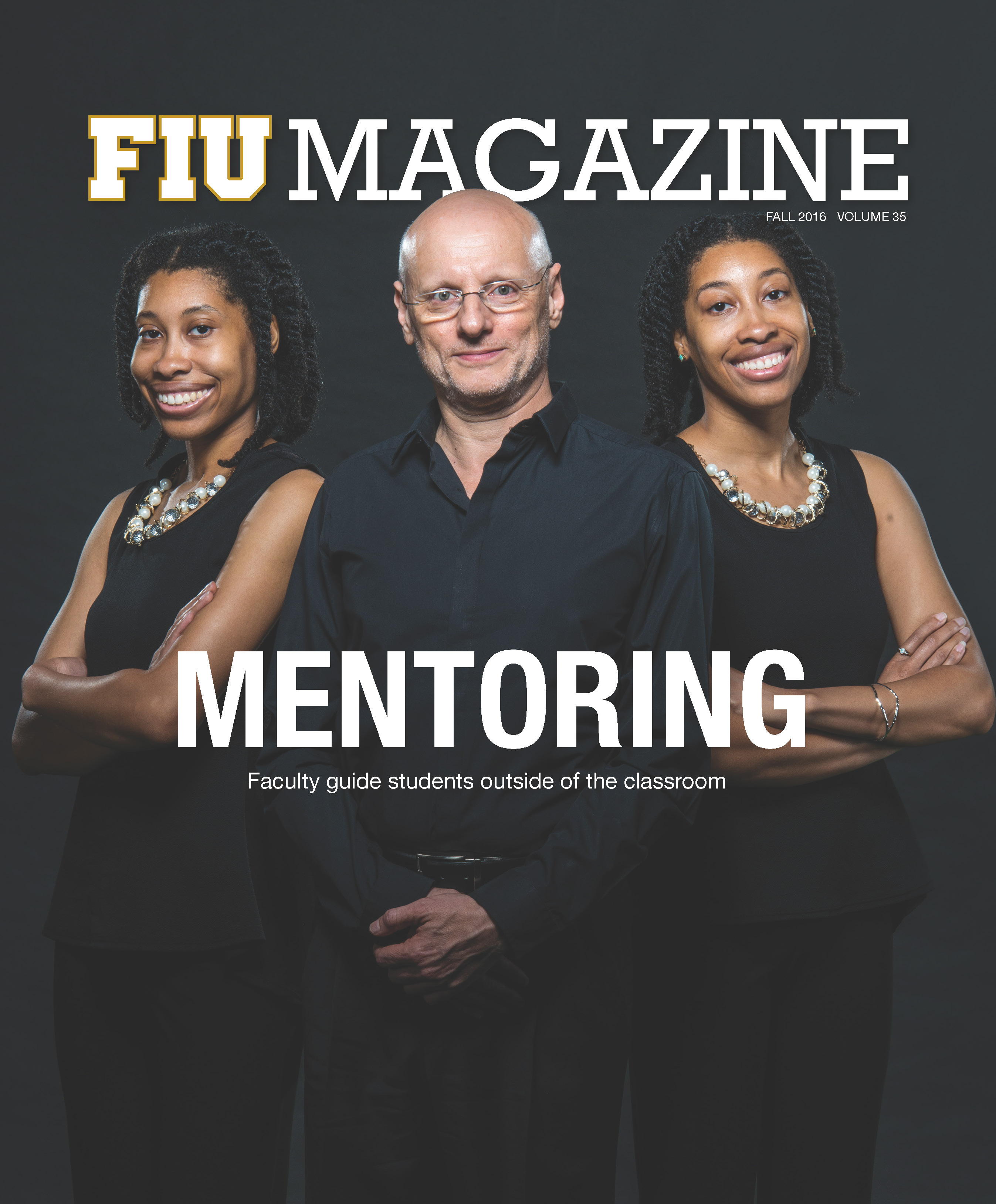
Naphtali David Rishe is a Full Professor in the Knight Foundation School of Computing and Information Sciences at Florida International University (FIU), where he holds the inaugural title of Outstanding University Professor. He is the Founding Director of the NSF Industry/University Cooperative Research Center for Advanced Knowledge Enablement and leads the FIU High Performance Database Research Center and the Geospatial Laboratory. His work spans database systems, geospatial technologies, AI, and health informatics. Dr. Rishe earned his Ph.D. in Computer Science from Tel Aviv University (1981–1984), an M.Sc. from the Israel Institute of Technology (Technion) (1979–1981), and a B.Sc. Summa Cum Laude from the same institution (1975–1979). He has held academic positions at the University of California, Santa Barbara (Visiting Assistant Professor, 1984–1987) and Tel Aviv University (Instructor, 1981–1984). His research focuses on high-performance databases, semantic data systems, geospatial analytics, wearable sensors, and AI applications in health and transportation. He is the architect of the TerraFly project, widely recognized by media such as the New York Times and Nature. His work integrates advanced machine learning with real-world systems for environmental monitoring, urban planning, and threat detection. His recent publications reflect a strong trend in geospatial AI, including terrain mapping using LIDAR, anomaly detection in video, real estate trend modeling, and generative models for map synthesis. These works demonstrate a fusion of deep learning, spatial reasoning, and practical system design. Fellow, National Academy of Inventors (2021) Outstanding University Professor, FIU (2000) IBM Global University Program Academic Award (2021) First Prize, Miami Herald Business Plan Competition (2002) Cover Feature, NSF Breakthroughs Compendium (2014, 2016) Cover Feature, FIU Magazine (Fall 2016) Dr. Rishe has secured over $60 million in research funding as Principal Investigator from agencies including NSF, NASA, IBM, DoI, USGS, and DOT. He is currently leading a $2.6M NSF grant for a Geospatial System for Multimodal Environmental Observations (2020–2025) and co-PI on a $3.3M NSF grant for Alzheimer’s Disease research (2019–2025). He mentors numerous students and has graduated top performers recognized by FIU. He leads multiple research centers and serves on editorial boards and NSF panels. His labs include the High Performance Database Research Center and the Geospatial Laboratory, driving innovation in data systems and spatial intelligence.