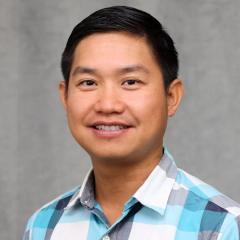
University of Illinois Urbana-ChampaignUnited States
Hadi Meidani is a Clinical Associate Professor at the Carle Illinois College of Medicine , specifically within the Department of Biomedical and Translational Sciences at the University of Illinois at Urbana-Champaign . He teaches courses in Civil and Environmental Engineering, including topics like Systems Engineering & Economics , Machine Learning in CEE , and Uncertainty Quantification . Ph.D., Civil Engineering, University of Southern California (2012) M.S., Electrical Engineering, University of Southern California (2012) M.S., Structural Engineering, Sharif University of Technology (2005) B.S., Civil Engineering, K.N. Toosi University of Technology (2002) Dr. Meidani's research focuses on uncertainty quantification , scientific machine learning , and optimization under uncertainty for engineering systems. His work spans stochastic multiscale analysis , physics-informed machine learning , and model reduction techniques. His recent publications emphasize machine learning for infrastructure systems , graph neural networks , physics-informed models , and traffic assignment . Key trends include deep learning , multi-fidelity modeling , and neural operator transformers applied to metamaterial design , seismic reliability , and autonomous freight delivery .
Brendan Russo serves as an Associate Professor in the Department of Civil Engineering, Construction Management, and Environmental Engineering at Northern Arizona University, where he conducts influential research in transportation safety and traffic engineering. His work focuses on improving safety outcomes for vulnerable road users through rigorous analysis of crash data, traffic operations, and emerging mobility technologies, with significant contributions to Arizona-specific transportation challenges and national safety practices. Russo's research program centers on bicycle and pedestrian safety, crash severity analysis, and the integration of autonomous systems into transportation networks. He employs advanced methodologies including spatial analysis, statistical modeling (e.g., random parameters bivariate probit models), and observational studies to investigate traffic stress levels, intersection safety, and the impacts of infrastructure treatments. His work consistently bridges theoretical transportation engineering with practical applications for safer community design. Analysis of Russo's recent publications reveals a strong emphasis on emerging transportation technologies and their safety implications, particularly regarding autonomous delivery robots and vehicle-pedestrian interactions, while maintaining core focus on traditional safety concerns like bicycle crash frequency and severity. His research demonstrates increasing integration of spatiotemporal analysis and scenario-based testing methodologies, with a clear geographic concentration on Arizona metropolitan regions that provides valuable localized insights applicable to broader transportation contexts. No scientific awards were mentioned in the provided text. No specific information about advising responsibilities or grant funding was provided in the text, though his extensive publication record and dataset contributions indicate active research leadership. Russo collaborates within a robust research network centered on transportation safety, frequently partnering with colleagues including Gehrke, Smaglik, and Holliday on projects involving field data collection, bicycle infrastructure evaluation, and safety performance metrics. His work leverages both observational studies and simulation approaches to develop data-driven guidance for transportation practitioners, with particular attention to Arizona's unique transportation environment and metropolitan planning challenges.
Dr. Tarek Sayed is a Professor at the University of British Columbia's Department of Civil Engineering within the Faculty of Applied Science. He specializes in Transportation Engineering, focusing on road safety analysis, traffic operations, and Intelligent Transportation Systems (ITS). He serves as the Director of the Bureau of Intelligent Transportation Systems and Freight Security (BITSAFS-Engineering) and Editor of the Canadian Journal of Civil Engineering . His research addresses three core areas: improving road safety evaluation techniques, enhancing safety through traffic operations and highway design analysis, and advancing ITS technologies. Notable contributions include frameworks for safety-audits of infrastructure projects like the Sea to Sky Highway and methodologies for evaluating transit signal priority systems in Vancouver. He has authored/co-authored over 250 publications and supervised 60 graduate students. Key Roles: Professor, BITSAFS Director, Journal Editor Awards: Tier 1 Canada Research Chair, Wilbur Smith Award, Sandford Fleming Award, Prince Michael International Road Safety Award Consulting: Global projects in traffic safety and ITS for agencies like ICBC, FHWA, and Ashghal His research integrates Bayesian statistical methods, extreme value theory, and machine learning to model traffic conflicts, pedestrian behavior, and safety interventions. Current projects include real-time safety optimization using autonomous vehicle data and analyzing shared space interactions between cyclists and pedestrians. Dr. Sayed chairs national/international committees, including the U.S. Transportation Research Board’s safety data committee. His work bridges academia and practice, influencing policy and infrastructure investment decisions worldwide.
Roles and Affiliations: Professor David Levinson is a Professor of Transport in the School of Civil Engineering at the University of Sydney since 2017. He holds adjunct faculty status at the University of Minnesota's Department of Civil, Environmental, and Geo-Engineering (since 1999–2016). He previously directed the Accessibility Observatory and the Networks, Economics, and Urban Systems (NEXUS) research group. He is a member of The Net Zero Institute and leads the TransportLab research group. Education: PhD 1998 in Urban and Regional Planning from the University of California, Berkeley. Research Interests: Focuses on transportation networks, urban systems, accessibility analysis, and policy. Key themes include spatial equity, transport economics, and the co-evolution of land use and transport infrastructure. His work emphasizes data-driven approaches to urban mobility challenges, including modeling transport networks and evaluating infrastructure impacts on accessibility and equity. Grants and Projects: Recent grants include Design of micro-decisions in automated transport (2022, ARC) and Reducing pedestrian crashes through better intersection design (2021, Australian Road Safety Innovation). Collaborates internationally on projects like the Accessibility Observatory. Labs and Teams: Leads the TransportLab and collaborates with the NEXUS group. Active in interdisciplinary research, including urban analytics and transport policy.
Polemis Dionysios serves as an Associate Professor in the Department of Maritime Studies at the University of Piraeus, Greece, within the School of Shipping and Industry. His academic profile demonstrates a strong commitment to maritime education and research in the Greek academic context, contributing to one of the Mediterranean's leading institutions for maritime studies. Professor Polemis specializes in International Economics and Maritime International Trade, with research focusing on the intersection of global trade patterns and maritime transportation systems. His scholarly work examines how geopolitical shifts, economic policy uncertainty, and market dynamics impact shipping operations, particularly in the LNG sector. His research interests span shipping economics, maritime transport economics, port management, and the geopolitical dimensions of international maritime trade routes. His publications reveal a consistent focus on analyzing market patterns, regulatory compliance, and sustainability challenges within the maritime sector. His extensive publication record, spanning from 2001 to anticipated 2025 publications, demonstrates a comprehensive understanding of the maritime sector from operational, economic, and policy perspectives. Recent work shows increasing attention to emerging technologies in shipping and the evolving geopolitical landscape affecting global trade routes, particularly regarding LNG transportation and strategic maritime chokepoints like the Suez Canal. As an academic in the Department of Maritime Studies at the University of Piraeus, Professor Polemis contributes to the educational mission of an institution with a strong tradition in maritime education, situated in Piraeus—one of the Mediterranean's most important port cities. His work bridges theoretical economic concepts with practical applications in the shipping industry, providing valuable insights for both academic and industry stakeholders.
Scott Moura is a Professor in Civil and Environmental Engineering at the University of California, Berkeley, holding the Clare and Hsieh Wen Shen Distinguished Professorship. He serves as the Acting Director of the Institute of Transportation Studies (ITS) and directs the Energy, Controls, and Applications Lab (eCAL). Previously, he was Faculty Director of the California Program for Advanced Transportation Technology (PATH) starting January 2022, with recent news (June 2025) confirming new leadership roles at both ITS and PATH. Education: B.S. in Mechanical Engineering, University of California, Berkeley, 2006 M.S.E. in Mechanical Engineering, University of Michigan, Ann Arbor, 2008 Ph.D. in Mechanical Engineering, University of Michigan, Ann Arbor, 2011 Postdoctoral Fellow, University of California, San Diego, Cymer Center for Control Systems and Dynamics, 2013 Visiting Researcher, MINES ParisTech, Centre Automatique et Systèmes, Paris, 2013 Moura's research spans multi-scale energy systems: battery modeling and control at component level, electrified/connected vehicles at system level, and distributed energy resources/smart grid integration at grid scale. His work pioneers real-time battery health estimation, fast-charging algorithms, and vehicle-grid integration to enhance capacity, safety, and efficiency while minimizing degradation. Key methodological contributions include PDE control theory, adaptive control frameworks, and machine learning applications for energy storage systems. Scientific Awards: ASME Division of Control Systems Outstanding Young Investigator Award National Science Foundation CAREER Award NSF Graduate Research Fellowship UC Presidential Postdoctoral Fellowship University of Michigan Distinguished ProQuest Dissertation Honorable Mention University of Michigan Rackham Merit Fellowship College of Engineering Distinguished Leadership Award ITS Faculty of the Year Award (2020) As eCAL Lab Director, Moura mentors undergraduate/graduate students, postdocs, and visiting scholars in developing battery monitoring software and control systems. His research attracts significant funding including a $10M USDOT grant for rural autonomous vehicle freight (2025) and the I-40 Corridor SMART Grant (2024), with industry partnerships focused on practical deployment of energy management solutions. Current projects address EV longevity, HOV lane optimization via AI traffic signals, and climate impact assessments for California infrastructure. eCAL Lab operates at the forefront of energy systems research, combining theoretical control frameworks with experimental validation. The lab's work on battery degradation models directly informs industry practices, while its vehicle-grid integration research supports California's clean energy transition. Recent initiatives include KTH Royal Institute of Technology student exchanges and Bay Area climate impact assessments.
Dr. Jason Monios is a Senior Professor of Maritime Logistics at Kedge Business School in Marseille, France, specializing in operations, supply chain, and information management. His work focuses on the intersection of maritime transport, logistics, and environmental sustainability. Professor Monios' research spans three primary domains: Maritime Transport: Focusing on port system evolution, collaboration in port hinterlands, port governance and policy, and institutional frameworks Multimodal Transport: Examining multimodal corridors, dry ports, development of multimodal terminals, and urban logistics strategies Sustainability: Addressing maritime sustainability, decarbonization policies, green ports, climate change adaptation, and electric/autonomous vehicle integration His recent publications (2022-2025) demonstrate a strong focus on climate change adaptation in port governance, decarbonization of maritime transport, and innovative logistics solutions like urban consolidation centers. His work increasingly examines the intersection of environmental policy, technological innovation, and institutional frameworks in global shipping and logistics. Notable awards and recognitions include: Ranked in the top 2% of logistics researchers worldwide by Stanford/Elsevier (2021 and 2022) Research on climate change adaptation cited in the IPCC report (2022) Professor Monios has led research projects with a total budget exceeding €1 million and has supervised numerous doctoral theses. His work extends beyond academia through collaborations with national and regional transport authorities and technical reports for international organizations including UNCTAD, UN-ECLAC, and the World Bank.
Professor Vinayak Dixit serves as the IAG Chair of Risk in Smart Cities and Director of the Research Centre for Integrated Transport Innovation (rCITI) at the University of New South Wales (UNSW), within the School of Civil and Environmental Engineering. With a distinguished career spanning academia and research leadership, Professor Dixit has established himself as a leading expert in transportation risk analysis and smart city infrastructure. Professor Dixit's research focuses on studying risk in transportation infrastructure systems, with particular emphasis on highway safety, travel time uncertainty, and resilience against natural and man-made disasters. His work integrates cutting-edge approaches including quantum computing applications for transportation network optimization, analysis of connected and automated vehicles, and development of models for transportation resilience. His research interests span multiple disciplines, bridging civil engineering, transportation science, risk analysis, and computational methods. Professor Dixit has secured significant research funding from prestigious organizations including the United States National Science Foundation, Federal Highway Administration, and the Strategic Highway Research Program of the Transportation Research Board. His leadership extends to directing the Research Centre for Integrated Transport Innovation (rCITI), where he oversees a comprehensive research program addressing critical transportation challenges in smart cities through multiple focus areas including Connected Mobility Services, Deep Data and Digitization, Engineering Smart Cities & Logistics, Human-Centred And Automated Systems Design, and Integrated Infrastructure Strategic Planning. Professor Dixit previously served as the Associate Director of Research for the Gulf Coast Centre for Evacuation and Transportation Resiliency at Louisiana State University, where he founded the Driving Simulator Laboratory in collaboration with other faculty members. This demonstrates his longstanding commitment to innovative research infrastructure development and interdisciplinary collaboration across engineering, economics, computer science, and urban planning to address complex transportation challenges in the 21st century.
Mark Fagan is a Lecturer in Public Policy at Harvard Kennedy School, with affiliations to the Mossavar-Rahmani Center for Business and Government, Taubman Center for State and Local Government, and Center for Public Leadership. He teaches courses on operations management, policy design, and supply chain management. Previously, he was a Lecturer in Law at Boston University School of Law and a consultant at Norbridge, Inc. Education: MA in City and Regional Planning from Harvard University (199X), BA from Bucknell University (19XX). Research focuses on regulatory policy in competitive markets, autonomous vehicles, transportation systems, and energy markets. Key initiatives include leading the Autonomous Vehicle Policy Scrums initiative and publishing Supply Chain Management: A Public Sector Perspective (2024). His work examines how public policy can optimize supply chains while addressing geopolitical, environmental, and equity challenges. Teaching materials include digital courses on lobbying and advocacy, operations management case studies, and the Architect, Pilot, Scale, Improve policy implementation framework. Professional activities include advising governments on cross-sector policy design and consulting for private-sector clients in transportation, utilities, and telecommunications industries.
Professor Lynette Cheah is a leading academic in sustainable transport, holding the position of Professor and Chair of Sustainable Transport at the University of the Sunshine Coast (UniSC), Queensland, Australia. She directs the Sustainable Mobility Research Laboratory, focusing on data-driven models and digital tools to reduce transport environmental impacts. Her expertise spans smart cities, urban freight, transport modeling, and policy assessment. Educations: PhD in Engineering Systems (MIT) MSc in Management Science and Engineering (Stanford University) BSc in Civil and Environmental Engineering (Northwestern University) Research Interests: Lynette’s work integrates interdisciplinary approaches to address sustainable mobility challenges. Key areas include electric mobility, low-carbon transport infrastructure, transport equity, urban freight optimization, and climate policy. She collaborates with urban planners, computer scientists, and policymakers to translate research into real-world impact, such as leading UN climate reports and advising Singapore’s Public Transport Council (2019–2024). Publications & Awards: Lynette has authored over 70 peer-reviewed articles, including high-impact journals like Transportation Research and Nature Energy . Notable awards include the 2023 TRB Best Applied Research Paper Award and the 2020 Graedel Prize. Her work has been featured in CNN, Nature, and ChannelNewsAsia. Grants & Collaborations: Current projects include electric mobility lifecycle assessments, universal basic mobility trials, and low-carbon transport infrastructure studies. Past collaborations include foresight studies for Singapore’s 2040 urban mobility vision and material flow analyses for vehicle lightweighting. Labs & Teams: She leads the Sustainable Mobility Research Laboratory at UniSC, fostering innovation in smart city technologies and sustainable transport systems.
Sibel Alumur Alev is an Associate Professor and Associate Chair of Graduate Studies at the University of Waterloo. Her research focuses on logistics network design, hub location optimization, and sustainable transportation systems. She actively contributes to the fields of operations research and supply chain management, with a strong emphasis on addressing uncertainty in network design and strategic infrastructure planning. Her work spans applications in autonomous mobility systems, electric vehicle charging infrastructure, healthcare logistics, and pandemic response. She has published extensively on hub-and-spoke network models, reverse logistics for environmental sustainability, and multi-period resource allocation strategies. Notable areas of interest include the integration of stochastic and robust optimization methodologies into real-world logistics challenges. Dr. Alev’s research also bridges academic and industrial needs, addressing practical problems such as optimal testing center locations during pandemics and strategic freight hub expansions. Her contributions have been featured in peer-reviewed journals and conference proceedings, reflecting her commitment to advancing both theoretical and applied aspects of logistics and operations research.
Jeremy J. Michalek is a Professor of Mechanical Engineering and Engineering and Public Policy at Carnegie Mellon University. He serves as Director of the Design Decisions Laboratory and co-Director of the Vehicle Electrification Group, with affiliations in multiple sustainability-focused institutes including the Center for Climate and Energy Decision-Making. Education: Ph.D. in Mechanical Engineering (University of Michigan, 2005) Research spans vehicle electrification , life cycle analysis , consumer behavior , and green design . His recent publications focus on battery economics, charging infrastructure impacts, and equity considerations in transportation technologies. Key awards include the NSF CAREER Award , ASME Best Paper Award , and George Tallman Ladd Research Award . Michalek's work has been featured in major media outlets including The New York Times , The Atlantic , and BBC , with policy briefings presented on Capitol Hill. Current research explores EV supply chains, climate resilience, and transportation equity.
Mark Burris is the Herbert D. Kelleher Professor in the Department of Civil & Environmental Engineering at Texas A&M University's College of Engineering, where he also serves as Division Head of Transportation & Materials Engineering. He is additionally a Research Engineer with the Texas A&M Transportation Institute, demonstrating his dual commitment to academic research and practical transportation solutions. With a career spanning over two decades since joining Texas A&M in 2001, Burris has established himself as a leading expert in transportation economics and traveler behavior. Burris's research focuses on the intersection of transportation economics, behavioral psychology, and infrastructure management. His work primarily investigates traveler responses to pricing mechanisms, particularly value pricing and high-occupancy toll (HOT) lanes. He has pioneered research combining traditional transportation engineering with behavioral economics to understand seemingly irrational traveler choices, such as paying to use express lanes that are sometimes slower than toll-free alternatives. His research has significantly advanced the understanding of travel time value, reliability valuation, and how psychological factors influence transportation decisions. Analysis of Burris's recent publications reveals a strong trend toward integrating behavioral economics with transportation engineering, with increasing attention to equity considerations in road pricing, the impacts of emerging technologies like autonomous and connected vehicles, and innovative methods for measuring traveler responses. His work consistently addresses practical transportation challenges while advancing theoretical understanding of travel behavior. Burris has served in prominent leadership roles, including a six-year term as chair of TRB's transportation economics committee. He has advised numerous federal agencies, serving on NCHRP panels and participating in FHWA expert forums on road pricing. His expertise is widely recognized in both academic and professional transportation circles. As an educator, Burris has advised over 60 graduate students and numerous undergraduates, teaching core courses including CVEN 307 (Introduction to Transportation Engineering), CVEN 454 (Urban Planning for Engineers), and CVEN 632 (Transportation Engineering: Economics). His research portfolio includes substantial funding from FHWA, NCHRP, and various state transportation agencies, with recent projects focusing on behavioral economics applications to managed lanes, vehicle miles traveled fee equity, and the impact of emerging mobility technologies.
Dr. Saiedeh Razavi is an Associate Professor and the inaugural Chair in Heavy Construction at McMaster University's Department of Civil Engineering, directing the McMaster Institute for Transportation and Logistics (MITL). She holds a multidisciplinary background with degrees in Computer Engineering (B.Sc., Sharif University), Artificial Intelligence (M.Sc., Iran), and Civil Engineering (Ph.D., Waterloo). Her research focuses on smart infrastructure, connected mobility, and construction safety, funded by NSERC and the Ontario Ministry of Transportation. Key areas include transforming construction management through AI, autonomous vehicles, and smart work zones. Education: B.Sc. (Sharif), M.Sc. (Iran), Ph.D. (Waterloo) Research Interests: Smart cities, connected vehicle systems, data fusion, risk analysis, and sustainable logistics Leadership Roles: Director of MITL, Associate Chair (Research), and lead of national/international multidisciplinary projects Her work bridges academia, government, and industry to enhance mobility and safety. Notable grants include NSERC funding for transformative transportation systems. Awards include teaching excellence and innovation in team-based projects. Grants & Projects: NSERC, Ontario Ministry of Transportation, and industry collaborations Labs/Teams: MITL, CPS-based construction safety initiatives, and autonomous vehicle research groups
Tho Le is a tenure-track Assistant Professor of Industrial Engineering Technology at Purdue University’s School of Engineering Technology. He leads the Smart Logistics (SmartLogs) Systems Research Lab and is affiliated with the Institute for Control, Optimization, and Network (ICON), Realizing the Digital Enterprise (RDE) initiative, Integrative Data Science Initiative (IDSI), and Semiconductors @ Purdue. His research focuses on system-scale transportation modeling using optimization, AI/ML, and econometrics to guide industry and policy decisions. Education: Ph.D. in Transportation Systems, Purdue University MSc in Industrial Engineering (Operations Research), Purdue University M.Eng. in Transportation Engineering (Best Thesis Award), Hiroshima University Research Interests: Emerging technologies: sidewalk delivery robots, indoor service robots, drones Semiconductor supply chain resilience and Lean Six Sigma applications Digital twins for logistics systems and fleet management Freight transport, connected/autonomous vehicles, travel behavior modeling Awards & Recognition: Recipient of National Science Foundation grant for energy efficiency modeling (2024) Polytechnic Research Awards (July 2024) Lab & Collaboration: SmartLogs Lab: develops data-driven solutions for urban logistics and asset management Leadership in Purdue’s semiconductor initiatives aligned with the CHIPS Act