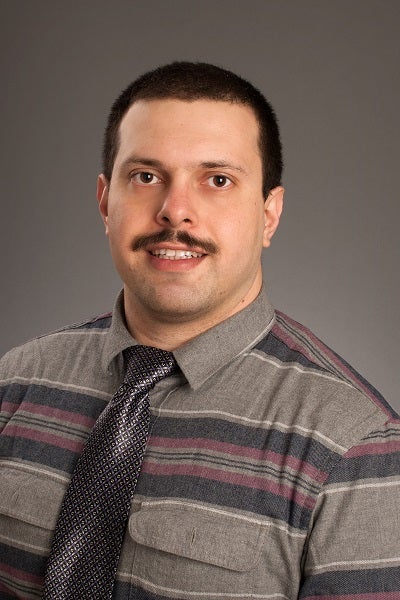
Daniel Delahaye is a Professor at École Nationale de l'Aviation Civile (ENAC), France, affiliated with the OPTIM research team. His work focuses on applying stochastic optimization, dynamic programming, and reinforcement learning to air traffic management and transportation systems. Key research themes: Trajectory optimization, Airspace design, CO2/contrail mitigation, UAV navigation, and multi-modal transportation Recent publications analyze climate-aware air traffic flow management , UAV trajectory prediction , emergency landing planning , and multi-hub airline scheduling . Methodologies include column generation, convolutional neural networks, and multi-objective optimization frameworks. Applications span sustainable air operations, terminal airspace efficiency, and future urban air mobility systems
Jiarong Hong is a Professor in the Department of Mechanical Engineering at the University of Minnesota's College of Science and Engineering. He holds additional affiliations with the Saint Anthony Falls Laboratory, Minnesota Robotics Institute, and Institute on the Environment, demonstrating his interdisciplinary research approach spanning fluid mechanics, renewable energy, and environmental systems. Professor Hong's research focuses on fundamental fluid mechanics with particular emphasis on turbulence, atmospheric and multiphase flows, wind turbine aerodynamics, cavitation and bubbly flows, microfluidic systems, and optical imaging and instrumentation. His work bridges theoretical fluid dynamics with practical applications in flow diagnostics, biophysics, geophysics, medical and material sciences. A significant portion of his research involves developing and applying advanced measurement techniques, particularly digital holography and particle image velocimetry, to study complex fluid phenomena. Analysis of his recent publications reveals a strong trend toward interdisciplinary applications of fluid mechanics principles, with increasing focus on renewable energy systems (particularly wind energy in challenging environments), environmental fluid dynamics, and biomedical applications of optical imaging techniques. His work shows a consistent evolution from fundamental fluid mechanics studies toward practical implementations addressing real-world engineering challenges, with particular emphasis on measurement techniques that can operate in field conditions. Robert T. Knapp Award for outstanding paper Best Paper Award from Measurement Science and Technology Multiple Featured Article designations in Physics of Fluids Cover Article in Acta Mechanica Sinica Cover Article in Biotechnology and Bioengineering Editor's Pick in Physics of Fluids Highlight of Nature Communication for groundbreaking wind turbine research Professor Hong actively mentors graduate students, with several advisees appearing as first authors on numerous publications. His research is supported by significant grants that enable field studies, particularly at the EOLOS wind energy research station. His laboratory develops innovative imaging systems for 3D flow measurement and particle tracking, with applications spanning from wind energy to biomedical diagnostics. The Flow Field Imaging Laboratory, directed by Professor Hong, specializes in developing advanced optical measurement techniques for fluid dynamics research. The lab is particularly known for its innovative use of natural phenomena (like snowfall) for large-scale flow visualization, as well as pioneering work in digital holography for particle field imaging. Recent work has expanded into drone-based atmospheric measurement systems and applications of machine learning to fluid dynamics problems.
Lorena Deleanu is a faculty member at the University of Galati (UGAL), focusing on advanced materials research and mechanical engineering applications. As part of the Personal Teaching staff, she contributes to academic education and experimental investigations in composite materials, tribology, and ballistic protection. Her research spans composite materials, tribology, and defense technologies, emphasizing performance evaluation under extreme conditions. Recent publications explore glass fiber composites, aramid fiber armor systems, and nano-additivated lubricants. Lorena's 15 most recent articles (2025–2024) highlight trends in impact mechanics, ballistic protection standards, and sustainable lubricant formulations. Key keywords include Materials Science, Mechanical Engineering, and Tribology. Her work often involves collaboration with industry and academic partners, focusing on practical applications in marine engineering and personal protection systems. She utilizes advanced testing methods like SEM and finite element modeling.
Ostap Okhrin serves as a Professor of Econometrics and Statistics at Dresden University of Technology, holding the Chair of Econometrics and Statistics with a special emphasis on Transportation Systems. His academic career is marked by a strong focus on methodological advancements in econometrics and statistics, applied to complex real-world problems in transportation and finance. Professor Okhrin's research interests span econometrics, statistical theory, copula modeling, time series analysis, and financial risk management. He has significantly expanded into machine learning and reinforcement learning applications for autonomous systems, with deep expertise in traffic flow modeling, autonomous driving, maritime navigation, and financial volatility estimation. His work bridges theoretical statistics with practical engineering challenges, particularly in transportation systems and risk forecasting, addressing high-dimensional data and dynamic environments through innovative methodological frameworks. Analysis of Okhrin's recent publications (2024-2025) reveals a pronounced interdisciplinary trajectory integrating reinforcement learning with transportation engineering. Key themes include drone-based trajectory data collection for traffic monitoring, algorithms for autonomous ships on inland waterways, and Sim2Real transfer frameworks for autonomous driving. Concurrently, he advances financial econometrics through high-frequency risk forecasting models incorporating realized moments. This dual focus demonstrates his ability to transfer statistical innovations across domains while maintaining rigorous theoretical foundations in copula theory and time series analysis.
Mirjam Lanzer is an academic researcher specialized in autonomous vehicle-pedestrian interaction, human-machine interface design, and intercultural transportation behavior studies. Her work primarily appears in ACM/IEEE conferences and interdisciplinary journals. Key research areas: eHMI design, pedestrian compliance, VR-based automotive testing Collaborates with researchers from TU Chemnitz (M. Baumann), Ulm University (Mark Colley), and University of Ulm (Enrico Rukzio) Recent publications (2020-2024) demonstrate focus on communication strategies for automated vehicles, cross-cultural behavioral analysis, and safety optimization through pedestrian interaction systems. Research spans both technical implementation and psychological impact assessment. 2024 work on PedSUMO extends simulation capabilities 2023 studies explore augmented reality interfaces 2021 papers address trust formation and takeover transitions
Douglas G Thomson is a Senior Lecturer in Autonomous Systems & Connectivity at the University of Glasgow's School of Engineering, specifically within the Aerospace Sciences department. He has held various leadership positions including Head of the Department of Aerospace Engineering (2000-2007) and Head of the Aerospace Sciences Research Division since 2010. Currently, he also serves as the Chief Adviser of Studies for Engineering within the School. Dr Thomson's research primarily focuses on rotorcraft flight dynamics, with notable contributions in inverse simulation techniques applied to rotorcraft. His work spans several specialized areas including evasion strategies for helicopter avoidance of RPG threats, guidance and control of underwater vehicles, and autogyro flight dynamics. Recent research has expanded into planetary exploration rovers, autonomous search and rescue systems, and reinforcement learning applications for drone navigation. His publication record shows a clear evolution from traditional helicopter and rotorcraft dynamics toward autonomous systems and planetary exploration. The most recent publications (2023-2025) demonstrate a strong focus on robotics, AI applications in search and rescue, and planetary exploration technologies, while maintaining his foundational expertise in flight dynamics and inverse simulation. Scientific Awards: Royal Society University Research Fellowship Dr Thomson has supervised numerous PhD and Master's students, with recent collaborations indicating active mentoring in robotics, aerospace engineering, and autonomous systems. His research has been supported by various grants focused on aerospace innovation, autonomous systems, and space exploration technologies. He leads a research team working on fixed-base flight simulators for rotorcraft piloted simulation studies and has developed important understanding of autogyro flight characteristics through simulation and flight testing.
Morteza (Mory) Gharib is a Hans W. Liepmann Professor of Aeronautics and Medical Engineering at the California Institute of Technology (Caltech) since 1992, with appointments in Aeronautics, Bioengineering, and Medical Engineering. He earned degrees from Teheran University (B.S. 1976), Syracuse University (M.S. 1978), and Caltech (Ph.D. 1983). Administrative Roles: Vice Provost (2010-16), Director of the Linde Institute (2014-15), and Director of Graduate Aerospace Laboratories (2015-25). Research Leadership: Director of the Center for Autonomous Systems and Technologies (2017-25), focusing on bioinspired engineering and autonomous systems. His research spans biofluid dynamics , biomechanics , medical device development (e.g., heart valves, drug delivery systems), and advanced flow diagnostics . Recent work includes AI-driven turbulence control, cardiovascular health monitoring, and morphing robots for dynamic environments. Key publications reveal expertise in machine learning for fluid dynamics, autonomous navigation in complex flows, and non-invasive diagnostics for aortic stiffness. His Google Scholar list highlights interdisciplinary collaborations in robotics, plasma physics, and stroke research. Scientific Awards: Ronald J. Adrian Award (2023) for contributions to particle image velocimetry As director of the Gharib Research Group, he leads studies on fluid dynamics in physiological systems and innovative imaging techniques, supported by Caltech’s state-of-the-art facilities.
Maruthi R. Akella is a Professor in the Department of Aerospace Engineering and Engineering Mechanics at the University of Texas at Austin’s Cockrell School of Engineering. He holds the prestigious Cockrell Family Chair in Engineering #19 and directs the Controls Group for Distributed and Uncertain Systems (C-DUS Group). His research spans astrodynamics, robotics, and control systems, with affiliations to the Center for Space Research, Wireless Networking and Communications Group, and the Oden Institute for Computational Engineering and Sciences. Education: Ph.D., Texas A&M University Dr. Akella’s research focuses on nonlinear adaptive control, dynamical systems theory, and uncertainty quantification in complex systems like autonomous space vehicles, hypersonic flow-control systems, and swarm robotics. His work has been applied to astrodynamics and space systems, including onboard guidance algorithms for the Intuitive Machines IM-1 lunar mission. His accolades include the AIAA Mechanics and Control of Flight Award, AAS Dirk Brouwer Award, IEEE Judith A. Resnik Space Award, and election to the International Academy of Astronautics. In 2024, asteroid 5376 was named “Maruthiakella” in recognition of his contributions to astrodynamics. Scientific Awards: AIAA Mechanics and Control of Flight Award AAS Dirk Brouwer Award IEEE-CSS Award for Technical Excellence in Aerospace Control IEEE Judith A. Resnik Space Award VAIBHAV Fellow, Indian Government Ministry of Science and Technology, 2025 Distinguished Alumni Award, NIT Calicut, 2023 Fellow of AIAA, 2022 Fellow of IEEE, 2021 IEEE Control Systems Society Award for Technical Excellence in Aerospace Control, 2020 Elected to International Academy of Astronautics, 2020 Dr. Akella serves as Editor-in-Chief of the Journal of the Astronautical Sciences and on the editorial board of the AIAA Journal of Guidance, Control, and Dynamics. He led the development of the C-DUS Group and contributed to Urban Air Mobility policy in Texas. His lab has been instrumental in advancing control algorithms for space missions, including the historic IM-1 lunar landing.
Karl Dietrich von Ellenrieder is a Professor of Automation at the University of Bolzano's Faculty of Engineering. His career spans institutions like Florida Atlantic University (Ocean Engineering Professor, 2003-2016) and Monash University (Research Fellow, 1998-2002). A Senior Member of IEEE Control Systems and Oceanic Engineering Societies, he serves as Editor-in-Chief Elect of the IEEE Journal of Oceanic Engineering. Education: Bachelor of Science in Aeronautics & Astronautics, MIT (1990) Master of Science in Aeronautics & Astronautics, Stanford University (1992) Doctor of Philosophy in Aeronautics & Astronautics, Stanford University (1998) Dr. von Ellenrieder specializes in nonlinear control systems for marine and aerospace vehicles, focusing on actuator constraints, disturbance observers, and trajectory tracking. His work bridges theoretical control algorithms with practical implementations in autonomous underwater vehicles (AUVs), unmanned surface vessels (USVs), and quadrotor UAVs. His 15 most recent publications (2018-2024) demonstrate expertise in: Backstepping and sliding mode control Dynamic surface control techniques Shared human-robot control systems Control barrier function safety mechanisms Actuator saturation modeling Disturbance-robust control Scientific Honors: Senior Member, IEEE Control Systems Society Senior Member, IEEE Oceanic Engineering Society Editor-in-Chief Elect, IEEE Journal of Oceanic Engineering His research has secured funding from the US National Science Foundation (Award #1526016) and involves collaborations with institutions across the USA, Australia, and Europe.
Edoardo Fadda is a Fixed-term tenure-track Assistant Professor at the Department of Mathematical Sciences (DISMA), Politecnico di Torino . He serves as a member of the College of Mathematical Engineering and College of Electronic, Telecommunications and Physics Engineering . Specializes in Operations Research and Mathematical Programming Active in stochastic optimization , reinforcement learning , and control applications Teaching roles include Optimization Methods for Control Applications and Stochastic Programming courses His research spans supply chain optimization , logistics , and AI-integrated decision systems , focusing on uncertainty modeling and multi-stage stochastic programming. He leads the Development of Decision Support Systems and the SUPERSONIC project for ecological logistics, alongside commercial consulting for RIDIX SPA through Fondimpresa contracts. Notable collaborations include Paolo Brandimarte and Francesca Maggioni . Edoardo supervises PhD candidates Alessia De Crescenzo (39th cycle) and Lorenzo Mazza (40th cycle). His publications emphasize stochastic customer behavior , perishable product policies , and kernel-based system identification , with applications in aerospace, smart cities, and industrial manufacturing.
Cengiz ÖZBEK serves as an Assistant Professor in the Department of Mechanical Engineering at Beykent University's Faculty of Engineering and Architecture. His academic career at the university began as a Research Assistant in 2014, and he was promoted to Doctor Lecturer in 2020, demonstrating a steady progression in his academic position. Dr. ÖZBEK specializes in advanced control systems with particular expertise in robotics, vehicle dynamics, and mechanical systems. His research interests span multiple domains including Control Systems , Robotics , Vehicle Dynamics , Fuzzy Logic , Adaptive Control , and Mechanical Systems . His work demonstrates a strong focus on developing innovative control methodologies that address complex engineering challenges in both theoretical and applied contexts, with publications consistently appearing in SCI-Expanded journals. His publication record reveals a consistent trajectory of high-quality research in control engineering, with a particular emphasis on applying fuzzy logic and adaptive control techniques to solve practical problems. His recent work shows increasing sophistication in handling nonlinearities and uncertainties in mechanical systems, with applications spanning from unmanned aerial vehicles to automotive suspension systems and even environmental engineering solutions like water treatment using metal-organic frameworks. Dr. ÖZBEK teaches a comprehensive range of mechanical engineering courses including Thermodynamics (in both English and Turkish across multiple sections), Introduction to Robotics, Machine Dynamics, System Dynamics and Control, Materials Laboratory, and Occupational Health and Safety. His teaching spans from 2020-2021 through 2024-2025 academic years, demonstrating his integral role in the department's instructional mission across both undergraduate and possibly graduate levels.
Assoc. Prof. Dr. Derya Ahmet Kocabaş is an academician at the Department of Electrical Engineering , Istanbul Technical University , with a career spanning over two decades. They serve as the Manager of the ITU Electric Vehicle Team (ITUEV) and the ITU Autonomous Boat Team (ITUAS) , and hold expertise as an Expert Witness and Workplace Medicine and Occupational Safety Specialist Trainer . Their research focuses on Electrical Machines , Power Electronics , and Hybrid/Electric Vehicle Systems . PhD, Istanbul Technical University , Electrical Engineering MA, Istanbul Technical University , Electrical Engineering Licence, Istanbul Technical University , Electrical Engineering Their research interests center around Electrical Machines and Energy Conversion , Electric/Hybrid Vehicles , and Power Electronics , with a particular focus on mitigating Disruptive Effects in Electrical Machines . They have pioneered methods for Space Harmonics Reduction , Induction Motor Thermal Analysis , and High-Efficiency Power Converters . Recent publications highlight advancements in LLC Resonant Converters for Light Electric Vehicles , GaN-Based Microinverters , and Li-Ion Battery Performance in Aviation Applications . Their work integrates Kalman Filtering for SoC Estimation and Fourier Coefficient Modeling for Electric Machines . Scientific recognition includes: 2024 Best Paper Award, ELECO Conference 2023 & 2024 Academic Performance Awards, Istanbul Technical University 2016 & 2017 Best Graduation Design Project Prizes, Chamber of Electrical Engineers 2013 Siemens Excellence Award They lead multiple ongoing projects funded by BAP and Döner Sermaye , covering Harmonic Optimization , Electric Vehicle Traction Motors , and Battery Pre-Heating Systems . Their mentorship extends to advising teams like ITUEV and ITUAS , while maintaining memberships in IEEE , Chamber of Electrical Engineers , and Chamber of Electrical Installation Engineers .
Dr. Yücel Aydın is a Lecturer at the Department of Control and Automation Engineering , Faculty of Electrical and Electronics Engineering, Istanbul Technical University . His research spans interdisciplinary domains in automation, renewable energy, and cybersecurity for emerging technologies. PhD in Control and Automation Engineering from Istanbul Technical University (2007) MSc in Control and Computer Engineering (1987) BSc in Electronics and Communication Engineering (1982) Current research focuses on Cloud Computing Security , Internet of Things tracking frameworks, and Drone Swarm Authentication . His work addresses critical security challenges in next-generation wireless systems and autonomous aviation technologies. Recent publications demonstrate expertise in Anomaly Detection systems, Adaptive Control for MAGLEV applications, and Group Handover Protocols for drone networks. All work emphasizes practical implementations and mathematical modeling.
Aykut C. SATICI is an Associate Professor in the Mechanical and Biomedical Engineering department at Boise State University's College of Engineering. He directs the Robot Control Laboratory (RCL), focusing on advanced robotics research with applications in aerospace, medical rehabilitation, and autonomous systems. His academic background spans Electrical Engineering, Mathematics, and Mechatronics Engineering from University of Texas at Dallas and Sabanci University. Ph.D. in Electrical Engineering (2014), University of Texas at Dallas M.Sc. in Mathematics (2013), University of Texas at Dallas M.Sc. in Mechatronics Engineering (2010), Sabanci University B.Sc. in Mechatronics Engineering (2008), Sabanci University His research focuses on robotics and nonlinear control , integrating machine learning for complex system challenges. Key areas include motion planning , convex optimization , optimal control , and reinforcement learning , with applications in geometric mechanics , multi-agent control , and environmental contact robotics . His work combines theoretical advancements with practical implementations for aerial vehicles and rehabilitation systems. Recent publications demonstrate trends in data-driven control for underactuated systems, passivity-based control frameworks, and Bayesian inference integration. His research group has published extensively in journals like Automatica , IEEE Transactions , and International Journal of Control , with notable contributions to quadrotor UAV control , ballbot dynamics , and robotic contact scenarios . NIH COBRE Grant : Cellular mechanotransduction research Army SBIR Grant : Robust robotic manipulation NSF MRI Grant : Real-time simulation infrastructure Navy SBIR Grants : Drone technology applications DoE/USDA Grants : Sensor deployment and power systems As an advisor, he mentors multiple PhD and MS students in robotics and biomedical engineering. His lab coordinates with external partners like Pitch Aeronautics and PRISMA Lab at University of Naples. The Robot Control Laboratory serves as a hub for interdisciplinary research addressing aerospace, healthcare, and energy grid challenges.
Szabolcs Rózsa is a Professor at the Department of General and Advanced Geodesy, Budapest University of Technology and Economics (BME), where he serves as Dean of the Faculty of Civil Engineering. His work focuses on GNSS technologies, geodynamics, and their applications in Earth sciences, autonomous systems, and meteorology. PhD in Earth Sciences (BME, 2003) Doctoral Habilitation (BME, 2015) MTA Doktora (Hungarian Academy of Sciences, 2023) Master of Business Administration (BME, 2004) Research Interests include GNSS-based atmospheric monitoring, tropospheric delay modeling, and positioning algorithms for autonomous vehicles. He leads projects like GeoSES (geo-process monitoring) and INTRO (troposphere model integrity) under ESA funding. Recent publications highlight advancements in GNSS meteorology, urban navigation algorithms, and structural health monitoring. His work spans geodetic networks, sensor fusion, and climate-related applications. Scientific Awards : Pro Scientia Gold Medal (1999, 1999) IAG Fellow (2007) Szádeczky-Kardoss Elemér Award (1999, 2012) TDK for Work, BME (2015) Minister’s Certificate of Appreciation (2019) Leadership Roles : President of the Hungarian National Committee of IUGG, IAG Representative in UN bodies, and Secretary of the Cosmic Geodesy Subcommittee (HASP). He contributes to editorial boards of Acta Geodaetica et Geophysica and Geodesy and Cartography .