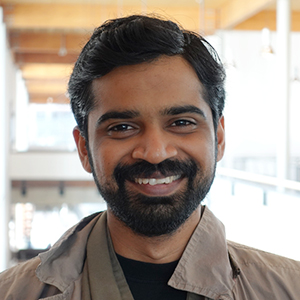
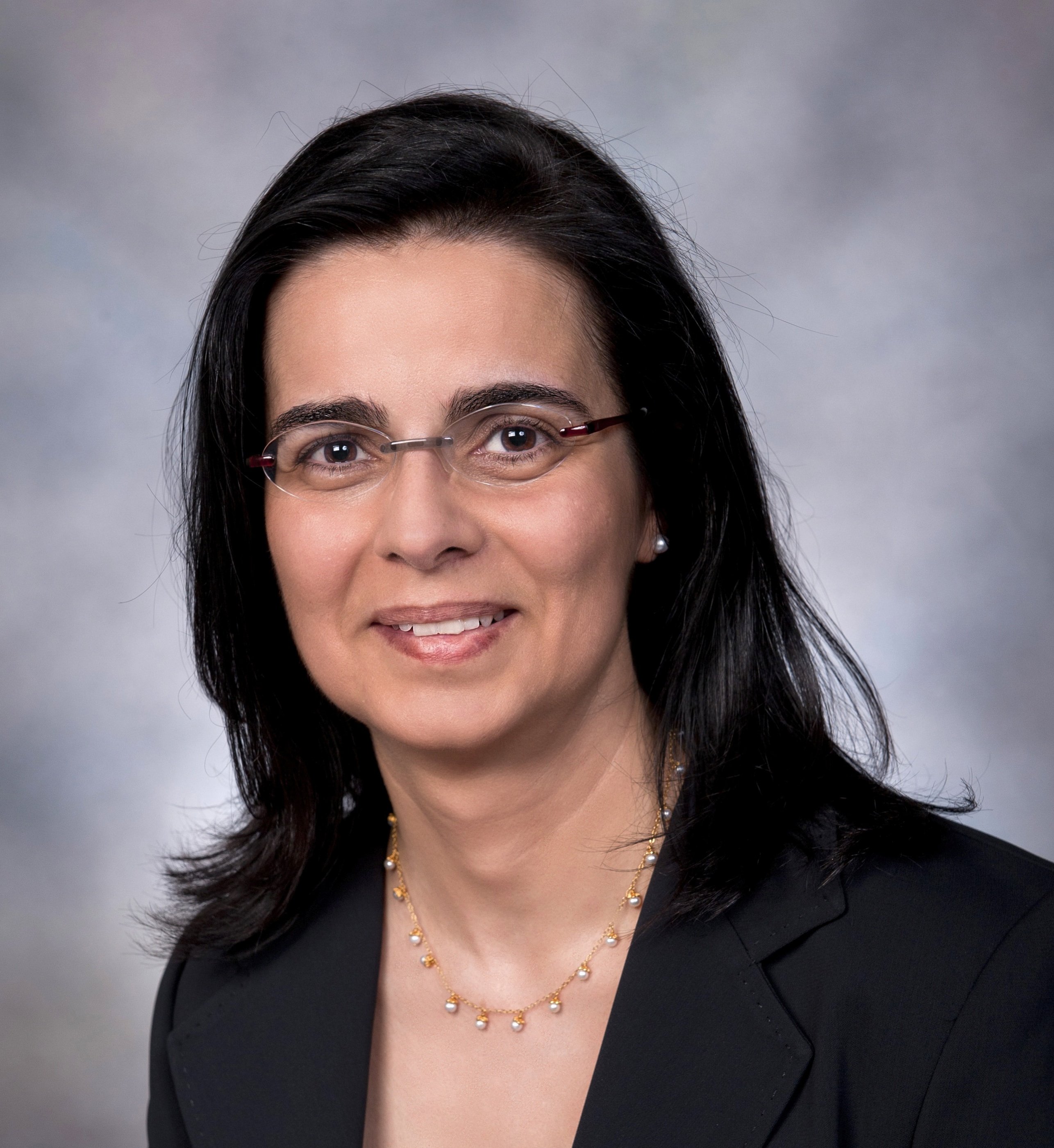
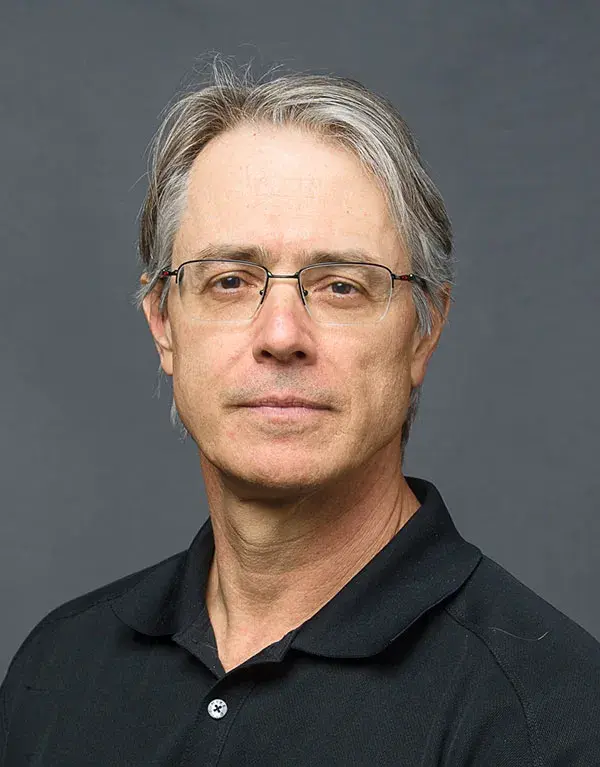
Dr. Ajay Shankar is a Post-Doc Research Fellow in the Department of Computer Science and Technology at the University of Cambridge. His primary research focuses on control, planning, and automation for robotic systems and teams, with a strong emphasis on multi-robot systems, autonomous control, and machine learning applications in robotics. He is affiliated with the Mobile Systems, Robotics and Automation research theme within the department. His work integrates robotics, machine learning, and systems engineering to address challenges in multi-agent coordination, trajectory optimization, and real-time control. Key projects include the development of the Cambridge RoboMaster platform and studies on dynamics-aware trajectory planning using diffusion models. He also explores downwash modeling for multirotor flight in dense environments and heterogeneous multi-robot reinforcement learning frameworks. Dr. Shankar's contributions span academic conferences and journals, with recent publications focusing on aerial robotics, autonomous systems, and multi-agent learning. His research has practical applications in environmental monitoring (e.g., UAS profiling during LAPSE-RATE campaigns) and agile robotics systems design. Department: Computer Science and Technology University: University of Cambridge Affiliations: Cambridge Ring Initiative, Accelerate Programme for Scientific Discovery
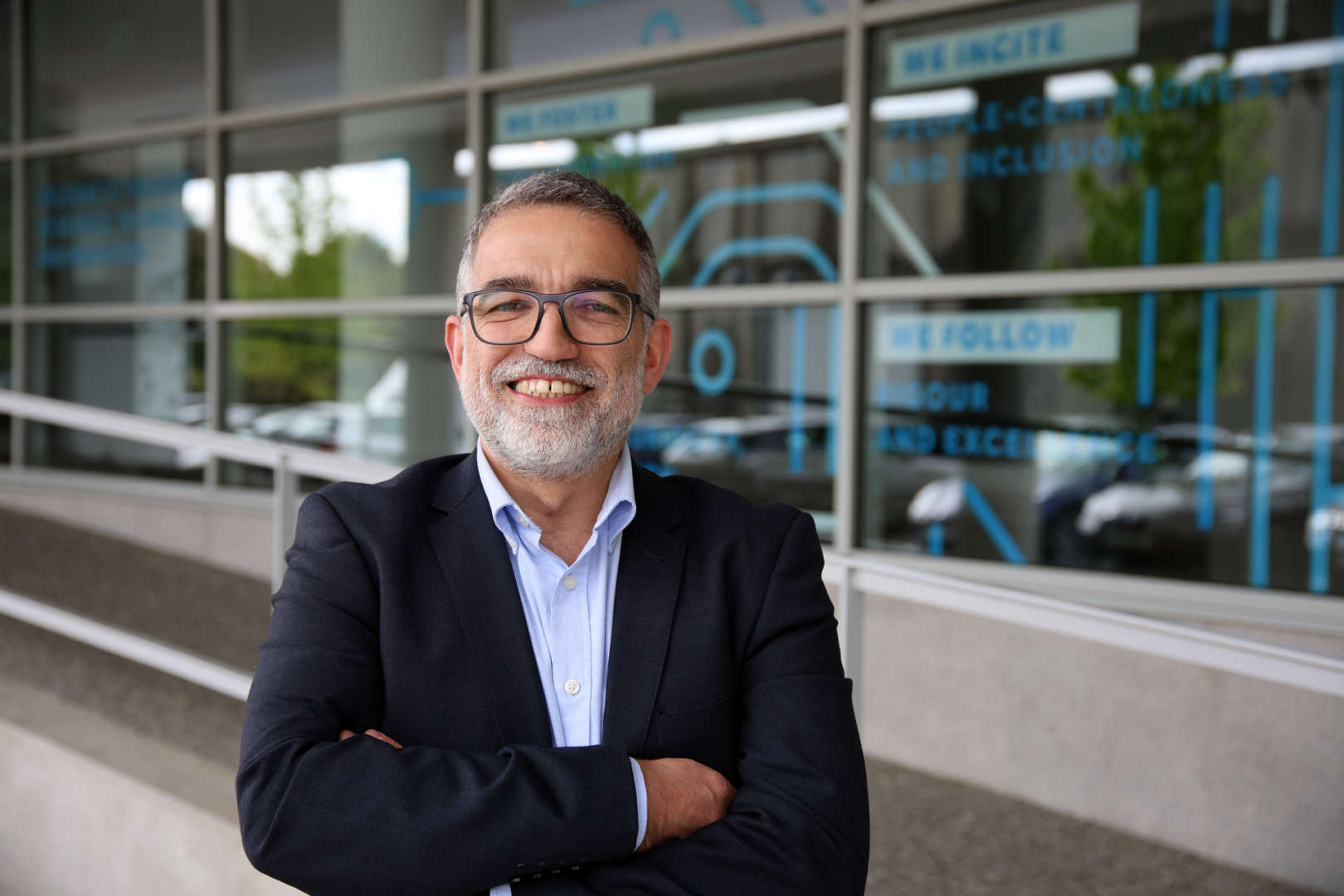
Nuno Cruz is an Associate Professor at the Faculty of Engineering of the University of Porto and Coordinator at the Centre for Robotics and Autonomous Systems at INESC TEC. He holds a MSc in Digital Systems Engineering (UMIST, UK) and a PhD in Electrical Engineering (University of Porto). His research focuses on marine robotics, autonomous vehicles, and underwater sensor systems. He has over 125 publications and 30 years of experience developing marine robotic vehicles like the Zarco/Gama ASVs and MARES/TriMARES AUVs. Research interests include adaptive sampling strategies for autonomous vehicles and energy-efficient underwater platforms. He is a Senior Member of IEEE Oceanic Engineering Society, chairs the Portuguese IEEE OES Chapter, and serves as Associate Editor for IEEE Journal of Oceanic Engineering. Recent work emphasizes underwater sensor calibration via sonar imaging, energy-saving control systems, and advancements in SMART cable technology. Supervised theses include multi-sensor fusion for marine vehicle docking and autonomous bathymetric mapping.
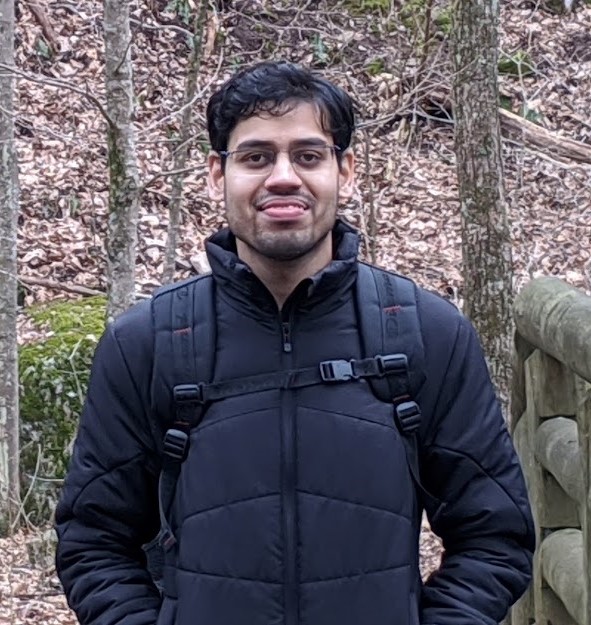
Vishnu Dutt Sharma is a Robotics and Visual Computing Researcher at Nokia Bell Labs . His work focuses on robot perception, planning, and deep learning applications in autonomous systems. He holds a PhD in Robotics from the University of Maryland, College Park , advised by Dr. Pratap Tokekar, and earned his MTech and BTech in Electronics and Electrical Communication Engineering from IIT Kharagpur in 2017, with a minor in Computer Science. His research interests span reinforcement learning, computer vision, and interpretable AI, particularly in robotics and natural language processing. Before his PhD, he worked at American Express India on credit risk management using machine learning. He has interned at Nokia Bell Labs, Comcast, and FlytBase Labs. He received the Kulkarni Foundation Summer Research Fellowship in 2020 for his work at UMD. Key contributions include advancements in robot navigation, next-best-view planning, and generative communication in embodied agents. His interdisciplinary work bridges robotics, computer vision, and NLP, with applications in healthcare, autonomous systems, and security.
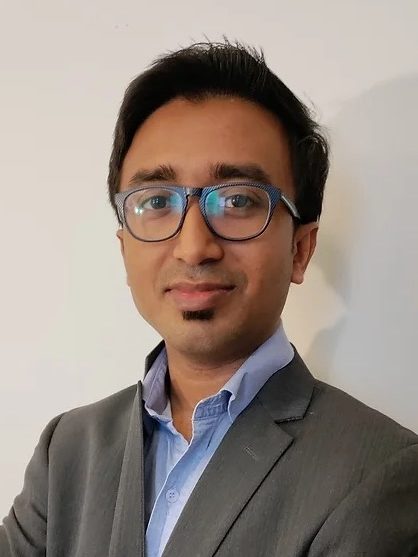
Vibhav Bharti serves as a Research Fellow in Computer Science at Heriot-Watt University's School of Mathematical & Computer Sciences. His work focuses on bridging theoretical machine learning with practical marine robotics applications, contributing to UN Sustainable Development Goals through technological innovation. Research interests span Autonomous Underwater Vehicles , Machine Learning reliability , and Marine Robotics systems . Key contributions include developing deep reinforcement learning frameworks for AUV docking, creating the Stonefish platform for marine ML research, and advancing multi-beam echo-sounder object detection. His fingerprint reveals expertise in underwater vehicle pipelines, sensor data processing, and learning-based assessment systems. Recent publications demonstrate a clear trajectory toward real-world implementation of simulation-trained AI systems, with strong emphasis on safety-critical applications. Work spans 2017-2025 with consistent output in top robotics conferences including OCEANS and TAROS. Collaborations show extensive international network in marine technology, particularly with researchers in underwater perception and machine learning validation. Current projects focus on enhancing reliability of ML components in autonomous systems and improving image quality assessment through edge detection techniques.
Pierre McKenzie is an Associate Professor in the Department of Computer Science and Operations Research at the University of Montreal, part of the Faculty of Arts and Sciences. He is a member of the LITQ (Laboratoire d'informatique théorique et quantique). His research focuses on computational complexity theory, finite automata, Boolean circuits, formal languages, and logic. He has advised numerous graduate and master's students, including Hugo Côté, Nathan Grosshans, and Michael Blondin. His work has been supported by grants from the Natural Sciences and Engineering Research Council of Canada (CRSNG), particularly in projects like 'Lower bounds and derandomizations for branching programs' (2018–2026). Research Interests: Computational complexity hierarchy separations Branching programs and circuit lower bounds Automata theory and its connections to circuit complexity Algorithmic and complexity aspects of counter systems Key Projects: Lower bounds and derandomizations for branching programs (Lead researcher, 2018–2026) THE COMPUTATIONAL COMPLEXITY OF POLYNOMIAL TIME PROBLEMS (Lead researcher, 2012–2019) Labs/Teams: Active member of LITQ, contributing to theoretical computer science research.
Dr. Smriti Nandan Paul is an Assistant Professor in the Department of Mechanical and Aerospace Engineering at the Missouri University of Science and Technology. She directs the Dynamics, Control, and Computer Vision for Space Sustainability and Missions (DCV-Space) group, focusing on astrodynamics, guidance, navigation, and control (GNC) for space autonomy, space weather, and machine learning applications. Her work combines computational and experimental approaches for near-Earth and cislunar space environments. Education : Ph.D. in Aeronautics and Astronautics, Purdue University (2020) Dual Degree (B.S./M.S.) in Aerospace Engineering, IIT Bombay (2015) Research Focus : Space domain awareness (SDA), space traffic management (STM), stochastic machine learning, computer vision for space missions, and GNC systems for sustainable space operations. Her group emphasizes applications in orbital mechanics, sensor tasking, and autonomous satellite systems. Awards : Purdue AAE Teaching Scholarship (2019) AAE Teaching Fellowship (2020) AAE Teaching Assistant Award (2019) Advising & Labs : Leads the DCV-Space group, which develops methodologies for space object tracking, drag coefficient modeling, and machine learning-driven solutions for space sustainability. Past roles include Visiting Assistant Professor at Purdue University and postdoctoral research at West Virginia University.
Dr. Luigi La Spada is a Lecturer in Electrical and Electronic Engineering at Edinburgh Napier University's School of Computing Engineering and the Built Environment. His academic journey includes a PostDoctoral Research Assistant position at Queen Mary University of London (2014-2017) and a Lecturer role at Coventry University (2017-2018). He is actively involved with multiple research groups including the Centre for Artificial Intelligence and Robotic, Centre for Conservation and Restoration Science Engineering Research Group, and Centre for Cybersecurity, IoT and Cyberphysical Systems. His educational background includes: Bachelor's and Master's degree (summa cum laude) in Electronics Engineering from University of RomaTre (2008, 2010) PhD in Electronic Engineering (Biomedical Electronics, Electromagnetics, and Telecommunications) from University of RomaTre and University of Pennsylvania (2011-2014) Dr. La Spada's research spans metamaterials engineering, electromagnetic wave control, and advanced sensor development, with significant contributions to metasurface applications and nanoparticle technology. His work has expanded into AI applications for security systems, quantum cryptography for UAV communications, and medical diagnostics. His interdisciplinary approach bridges theoretical electromagnetic concepts with practical engineering solutions across aerospace, healthcare, and agricultural technology sectors. His publication record shows a clear evolution from fundamental electromagnetic research toward applied technologies, particularly in quantum-enhanced security systems, AI-driven biometrics, and medical applications of metamaterials. Recent work demonstrates strong interdisciplinary connections between electromagnetic theory, quantum physics, and artificial intelligence, with increasing focus on practical implementations in aerospace, healthcare, and agricultural monitoring systems. Dr. La Spada has received significant recognition for his research contributions: 2018 Advances in Engineering (AIE) 'key scientific contributor to excellence in science and engineering research' 2017 URSI Young Scientist Award (Canada) Finalist for 2017 IEEE Young Scientist Award 2016 ISAP Best Paper Award (Japan) 2015 EAI recognition for 'new technologies in telecommunications and sensing' His research has received international scientific recognition and media coverage from CNN, CBS, Times, and Aspen Institute. Dr. La Spada currently supervises PhD student Nida Zeeshan on AI-based biometrics facial recognition. He has secured substantial research funding including a £184,194 European Commission grant for Intelligent Multi-Agent Robotic Systems (iMARS) and multiple Scottish Funding Council projects totaling over £74,000. His current grants span robotics, AI visual systems, medical device development (Airglove technology), and wireless power transfer. Dr. La Spada is actively involved in the Centre for Artificial Intelligence and Robotic and Centre for Cybersecurity, IoT and Cyberphysical Systems, where he contributes to developing innovative methods in AI, Robotics, IoT, and 5G technologies. His work connects theoretical electromagnetic concepts with practical applications in healthcare, aerospace, and security systems.
Kerstin Lux-Gottschalk is an Assistant Professor at the Department of Mathematics and Computer Science , Eindhoven University of Technology, affiliated with the Centre for Analysis, Scientific Computing and Applications (CASA) . She specializes in uncertainty quantification, stochastic differential equations, and optimal control, with applications to climate science, epidemiology, and ecology. Education : B.Sc. and M.Sc. from University of Mannheim, Germany; semester abroad at Université Nice Sophia Antipolis, France; Ph.D. from University of Mannheim (2020) under Prof. Dr. Simone Göttlich. Postdoctoral Research : Technical University of Munich (2020–2023) in Multiscale and Stochastic Dynamics group. Her research focuses on quantifying uncertainty in tipping points of complex systems, including: Analysis of random ordinary differential equations Climate modeling of Atlantic meridional overturning circulation Non-Markovian bifurcation detection Reinforcement learning for control systems Recent publications explore uncertainty quantification of tipping thresholds, stochastic control in transport systems, and numerical methods for SDEs. She contributes to UN Sustainable Development Goals related to climate action and sustainable infrastructure.
Mohammed A. Hannan serves as a Lecturer in the Department of Mechanical Engineering at the University of British Columbia's Faculty of Applied Science, with additional roles as Adjunct Faculty at Newcastle University's Singapore Campus. His career spans academic appointments at Newcastle University (UK), National University of Singapore, and Bangladesh University of Engineering and Technology. His educational foundation includes: PhD in Civil and Environmental Engineering, National University of Singapore (2009-2014) BSc in Naval Architecture and Marine Engineering, Bangladesh University of Engineering and Technology (2004-2009) Dr. Hannan's research integrates computational fluid dynamics, artificial intelligence, and sustainable engineering principles to address ocean technology challenges. His work focuses on renewable energy systems, ship and offshore structure optimization, and marine environmental sustainability, with significant contributions to wind/tidal energy conversion, AI-driven ship maneuvering systems, and sustainable maritime infrastructure design. Analysis of his 15 most recent publications reveals a dominant interdisciplinary trend combining computational modeling with practical marine applications, particularly in renewable energy integration, autonomous navigation systems, and sustainable coastal engineering solutions that address climate resilience and resource efficiency. Dr. Hannan actively mentors student researchers and maintains industry-academic collaborations across multiple continents. His notable project leadership includes a Bill & Melinda Gates Foundation-funded initiative developing odor management systems for low-cost decentralized sanitation solutions in developing regions. He contributes to the engineering community through professional memberships in The Royal Institution of Naval Architects (RINA) and The American Society of Mechanical Engineers (ASME), while serving on organizing committees for major conferences including ASME OMAE and EngineeringX workshops on offshore wind infrastructure safety.
Olivier Gallay is a Lecturer and Invited Guest at École Polytechnique Fédérale de Lausanne (EPFL), with cross-disciplinary affiliations across Microengineering (STI), Humanities and Social Sciences (CDH), and Management of Technology (CDM). His work integrates Applied Probabilities, Queueing Theory, and Information Theory to solve complex problems in production networks and sustainable logistics. Teaching roles in Corporate Sustainability, Social Innovation, and Supply Chain Dynamics Research spans drought resilience, sweet potato supply chains, and hybrid truck-drone delivery systems Key methodologies: stochastic modeling, agent-based simulations, and combinatorial optimization Recent publications analyze nonlinear economic equilibria through van der Waals modeling, decentralized logistics platforms, and weariness dynamics in service networks.
Lydia E. Kavraki is the Noah Harding Professor of Computer Science and Professor of Bioengineering, Electrical and Computer Engineering, and Mechanical Engineering at Rice University . As Director of the Ken Kennedy Institute , she leads initiatives in AI, data science, and computing across seven schools and 27 departments. B.A., University of Crete (1989) Ph.D., Stanford University (1994) Her research bridges robotics , AI , and computational biomedicine . In robotics, she pioneered sampling-based motion planning (OMPL library) and recently developed microsecond-level planning frameworks. In biomedicine, her work focuses on peptide-HLA interactions , personalized immunotherapy , and drug metabolite prediction , with tools like APE-Gen and DINC. Recent publication trends highlight her interdisciplinary work: 2022 PNAS Nexus study on HLA charge interactions , 2020 Frontiers in Immunology work on TCR cross-reactivity , and 2017 structural modeling of immune checkpoints. Themes include structure-based drug discovery , AI-driven motion planning , and ethical AI considerations . Scientific honors include: IEEE Frances E. Allen Medal (2023) ACM-AAAI Allen Newell Award (2020) ACM Athena Lecturer (2017) Three National Academy memberships (NAS/NAE/NAM) NSF CAREER, Sloan Fellowship, Whitaker Investigator Kavraki actively mentors students and postdocs, with over 40 alumni in academia and industry. Her Ken Kennedy Institute leadership spans AI in Health Conference organization and industry partnerships .
Sérgio Paulo Carvalho Monteiro is an Assistant Professor in the Department of Industrial Electronics at the School of Engineering, University of Minho, and a Senior Researcher at Centro Algoritmi. He serves as Director of the Doctorate in Electronics and Computer Engineering since 2021 and previously led the Integrated Masters program (2011-2013), with core expertise in robotics and signal processing education. His academic credentials include a Doctor of Engineering (DEng), Master of Science (MSc), and PhD. Monteiro's research centers on intelligent robotics with dual focus on single-robot autonomy and multi-robot coordination . His work pioneers dynamic neural field approaches for human-vehicle interaction, particularly in learning driver routines through machine learning. Key application domains span industrial logistics , autonomous transportation , and collaborative workstations , emphasizing safety in human-robot shared environments. Analysis of his 42 publications reveals a clear trajectory from foundational formation control (2002-2010) toward contemporary AI-driven solutions for intelligent cockpits (2020-2024), with increasing emphasis on human-centered design and real-world industrial implementation. He has secured funding through major European initiatives including Horizon 2020 (iFACTORY), FP6 (CoopDyn), and national FCT projects, focusing on autonomous logistics and multi-robot collaboration. His academic leadership extends to directing doctoral programs and shaping curriculum for over 500 engineering students. As core member of the Mobile and Anthropomorphic Robotics Lab within Centro Algoritmi's CAR R&D Group, he develops bimanual manipulators (RAMBO) and safety-critical systems for human-robot collaboration, with recent expansion to CCG/ZGDV Institute affiliation (2023).
Joseph Sottile is a Professor in the Department of Mining Engineering at the University of Kentucky, with a joint appointment in Electrical and Computer Engineering. His research focuses on electrical fault detection , mining automation , and mine safety systems . He holds a Ph.D. in Mining Engineering from Penn State University. Ph.D., Mining Engineering, Penn State (2008) M.S., Mining Engineering, Penn State (1997) B.S., Mining Engineering, Penn State (1991) Research Interests include detection of electrical component incipient failure, energy management, and electrical applications in mining. His work addresses electrical system protection and safety education , integrating electrical engineering principles into mining technologies. Publications reveal expertise in autonomous mining machinery , dust suppression systems , and arc flash modeling for low-voltage mining infrastructure. He explores sensor-based diagnostics and predictive maintenance in industrial power systems. Professional Contributions span roles at the U.S. Bureau of Mines and industry collaborations. His academic career at the University of Kentucky since 1991 includes leadership in mining electrical systems research.
Paolo Gasbarri is a Full Professor in the Department of Aerospace and Astronautical Engineering at the University of Rome La Sapienza, School of Aerospace Engineering. With over 25 years of academic experience since becoming an Assistant Professor in 1996, he has established himself as a leading expert in aerospace structures and dynamics, with significant contributions to space robotics and control systems. Professor Gasbarri's research focuses on the complex interplay between structural dynamics and control in space systems. His work spans aeroelasticity, multidisciplinary optimization, active vibration control of flexible spacecraft, guidance and control of multi-body systems in space, and structural health monitoring. Recent publications demonstrate a strong emphasis on applying deep learning techniques to structural health monitoring of space structures and developing advanced control strategies for flexible spacecraft with spinning appendages. His research shows a clear trend toward integrating artificial intelligence with traditional aerospace engineering approaches to solve complex space system challenges. Corresponding Member of International Academy of Astronautics (IAA) since 2006 Full Member of International Academy of Astronautics (IAA) since 2009 President of Structures and Materials Committee of International Astronautical Federation since 2008 Editor-in-Chief of AIDAA journal 'Aerotecnica Missili e Spazio' Professor Gasbarri has secured significant research funding through multiple European Space Agency (ESA) contracts and international collaborations, including programs with Thales Alenia Space, ONERA, and ASTRIUM. His leadership extends to coordinating joint research activities between the University of Rome and the Brazilian Space Research Center (INPE). He has also served as a scientific referee for numerous international journals and as a member of prestigious organizations including the NATO Research Technology Agency working groups and the International Astronautical Federation.
Professor Houxiang Zhang holds a faculty position at the Norwegian University of Science and Technology (NTNU), serving as a Professor in Mechatronics and Deputy Research Leader (Nestleder forskning) at the Department of Ocean Operations and Civil Engineering within the Faculty of Engineering. He joined NTNU in 2011 after completing a Habilitation in Informatics at the University of Hamburg (2011). His research focuses on biological robotics, modular robotics, virtual prototyping, and maritime mechatronics, with over 300 publications and multiple best-paper awards. Academic memberships include the Academy of the Royal Norwegian Society of Sciences and Letters (DKNVS), Norwegian Academy of Technological Sciences (NTVA), and IEEE Senior Member. He has led significant projects such as the EU Horizon-RIA Project "Robotic Safe Adaptation in Unprecedented Situations" and the NFR Research Infrastructure Program "The Digital Ocean Space-Møre Ocean Lab." Research interests span marine automation, AI applications, and hybrid modeling. Notable achievements include pioneering work in digital twin technology for maritime systems and contributions to offshore mechatronics. His lab, the Intelligent Systems Lab, focuses on integrating advanced technologies for marine operations and automation. Recent awards include the 2024 Best Paper Award from IEEE RAS and multiple finalist recognitions at robotics and automation conferences. Current research emphasizes autonomous ship systems, environmental modeling, and data-driven decision support for maritime safety and efficiency.