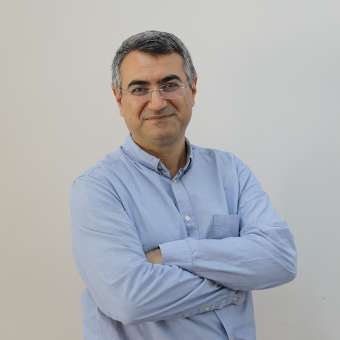
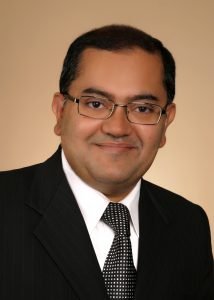
Brian Ziebart is a Professor in the Department of Computer Science at the University of Illinois at Chicago. He earned his Ph.D. in Machine Learning from Carnegie Mellon University in 2010. Research Interests: Machine Learning, Robotics, Assistive Technologies, Human-Computer Interaction, Adversarial Prediction, Inverse Optimal Control, Structured Prediction. Key Grants: NSF CAREER (RI)-1652530, NSF EAGER (SCH)-1650900, NSF IIS-1526379, NSF III-1514126, Future of Life Institute grant, NSF NRI-1227495. Notable Awards: Best Paper Runner-Up (ECCV, 2012), Best Paper Award (ICML, 2011), CMU School of Computer Science Dissertation Honorable Mention (2011). Teaching & Leadership: Senior Lecturer at CMU, actively involved in mentoring students and leading research teams.
Joseph Harrington is the Patrick T. Harker Professor of Business Economics and Public Policy at The Wharton School of the University of Pennsylvania. He holds a named professorship in the Department of Business Economics and Public Policy and has established himself as a leading authority in industrial organization and antitrust economics. Professor Harrington's research interests center on industrial organization, microeconomic theory, and organizations, with a particular focus on collusion and cartels. His work spans theoretical frameworks and practical applications, examining observed collusive practices, developing markers for detecting collusion, and designing competition policy to deter anticompetitive behavior. His research has evolved to address contemporary issues including pricing algorithms, artificial intelligence, and their implications for market competition. Harrington has published more than 75 articles in leading journals including the American Economic Review, Journal of Political Economy, Econometrica, Management Science, and American Journal of Sociology. His current research focuses on the intersection of algorithmic pricing and competition policy, addressing how autonomous pricing systems might facilitate collusion and what regulatory responses are appropriate. SEEK Grant, 2013-2014 President (2012-13) and Vice President (2010-11), Industrial Organization Society Cátedras de Excelencia (Chair of Excellence), Universidad Carlos III de Madrid, Sept 2012 – Dec 2012 National Science Foundation Grant, 2012-2015 Honorable Mention for the Jerry S. Cohen Memorial Fund Writing Award for antitrust scholarship, 2010 ENRE Best Publication Award, INFORMS, 2007 Professor Harrington has served extensively in editorial capacities, including co-editor at the RAND Journal of Economics and the International Journal of Industrial Organization. He is currently associate editor at Economics Letters, the Journal of Industrial Economics, and the Review of Industrial Organization. He has performed significant service as President of the Industrial Organization Society and remains active on its Board of Directors. His research has been supported by multiple National Science Foundation grants, reflecting the significance and impact of his work on competition policy.
Dr. İsmail Arı is an Assistant Professor in the Computer Science department at Özyeğin University . He holds a PhD from the University of California, Santa Cruz (2004), MS from University of Maryland (2000), and BS in Electrical & Electronics Engineering from Boğaziçi University (1998).
Kirill Djebko is a researcher at the Chair of Computer Science VI - Artificial Intelligence and Knowledge Systems within the Institute of Computer Science, Faculty of Mathematics and Computer Science at the University of Würzburg . His work spans AI-based optimization systems , autonomous spacecraft operations , and deep reinforcement learning applications. Doctorate completed in 2020 Active in research since 2015 Key projects: KINERGY (heating system optimization), VeriKI (AI verification for space), LeLaR (AI attitude control for nanosatellites) Research focuses on metaheuristics , genetic algorithms , regression algorithms , and deep reinforcement learning for practical applications. His work integrates digital twin modeling , decision support systems , and AI robustness in industrial and space contexts. Recent publications (2024-2016) analyze heating system optimization , spacecraft fault detection , and autonomous nanosatellite operations . These studies emphasize sim-to-real-world transfer , data-driven calibration , and AI quality assurance in complex environments. Current affiliations include the Center for Artificial Intelligence and Data Science (CAIDAS) . Contact details: Email - kirill.djebko@uni-wuerzburg.de | Phone +49 931 31-86405 | Room 03.010, Emil-Fischer-Straße 50, Würzburg.
Nadeem Abbas is a Senior Lecturer at the Department of Computer Science and Media Technology, Faculty of Technology, Linnaeus University, Sweden. He earned his PhD in Computer and Information Science from Linnaeus University and has been working with software systems since 2001. His primary research interests include Self-Adaptive Software Systems, Dynamic Software Product Lines, Software Reuse, Requirements Engineering, Software Architecture and Design, and Architectural Analysis and Reasoning. He is actively involved in multiple research groups including: AdaptWise - focusing on foundations and engineering of self-adaptive software systems Engineering Resilient Systems (EReS) Research Lab - investigating system resilience Smart Industry Group (SIG) - an interdisciplinary group focusing on production and product innovation His recent publications show a strong trend in self-adaptive systems with expansion into health inequality research and environmental monitoring applications. His work bridges theoretical software engineering with practical industrial applications, particularly evident in his survey of industry practices in self-adaptation. Nadeem teaches several courses including: 1DV532 - Starting Out with Java 1DV533 - Structured programming with C++ 1DV534 - Object-Oriented Programming with C++ 2DV600 - Foundations of Software Technology 4DV610 - Adaptive Software Systems 2DV604 - Software Architectures 1DV607 - Object-Oriented Analysis and Design using UML He currently supervises multiple research projects related to self-adaptive systems, architectural analysis tools, and health inequality mitigation through digital solutions. His research portfolio demonstrates strong connections between academic research and practical industry applications, particularly in software architecture and adaptation techniques.
Samarjit Chakraborty is the William R. Kenan, Jr. Distinguished Professor in the Department of Computer Science at the University of North Carolina at Chapel Hill. He previously held the Chair of Real-Time Computer Systems at the Technical University of Munich (2008–2019) and was an assistant professor at the National University of Singapore (2003–2008). His research spans real-time embedded systems, cyber-physical systems (CPS), and automotive security. Research Interests include distributed embedded systems, hardware/software co-design, low-power systems, energy storage, electromobility, and sensor network-based information processing. His work addresses challenges in scheduling algorithms for autonomous vehicles, timing predictability in automotive networks, and safety-critical controller implementations. Recent Publications highlight advancements in Timing analysis for automotive networks Energy modeling of Bluetooth Low Energy Autonomous vehicle perception computing Security in automotive systems Flexible manufacturing with process dynamics Scientific Awards include the ETH Medal, European DAAD Outstanding Doctoral Dissertation Award, multiple best paper awards at conferences (ISLPED, ICCD, RTCSA, etc.), the 2023 Humboldt Professorship, and IEEE Fellowship. Advising active PhD students: Clara Hobbs, Shengjie Xu, Sharmin Aktar, and postdoc Enrico Fraccaroli. His research is supported by NSF grants and industry partnerships with General Motors, Intel, Google, BMW, Audi, Siemens, and Bosch.
Bo Chen is a Professor in the Department of Mechanical Engineering – Engineering Mechanics and the Department of Electrical & Computer Engineering at Michigan Technological University. She directs the Intelligent Mechatronics and Embedded Systems (IMES) Laboratory, focusing on advanced controls, optimization, and artificial intelligence for connected and autonomous vehicles, electric vehicle–smart grid integration, and smart mobility. PhD in Mechanical and Aeronautical Engineering from the University of California, Davis (2005) Visiting Professor at Argonne National Laboratory (2014–2015, 2016) Sabbatical at Oak Ridge National Laboratory (2022–2023) Dr. Chen's research spans Mechatronics , Embedded Systems , Hybrid Electric Vehicles , and Cyber-Physical Systems . Her work includes vehicle-to-grid integration , battery control systems , and cybersecurity for automotive systems . Recent publications highlight advancements in predictive control algorithms for hybrid vehicles, consensus-based frequency regulation , and plausibly deniable encryption systems for mobile devices. Funded by the National Science Foundation, Department of Energy, and industry partners, her research has secured over $10 million in grants. ASME Fellow Best Paper Award (2008 IEEE/ASME MESA Conference) Top Cited Article Award (Journal of Computers & Graphics) Best Survey Paper Award (IEEE Transactions on ITS) Co-recipient of four Best Student Paper Awards Dr. Chen has held leadership roles as Chair of the Technical Committee on Mechatronics and Embedded Systems (IEEE ITS Society), Chair of the ASME Design Engineering Division's Technical Committee, and Associate Editor for IEEE Transactions on Intelligent Transportation Systems (2012–2019). She organized multiple international conferences and co-edited special issues on intelligent transportation systems.
Thilo Stadelmann is the Founding Director of the Centre for Artificial Intelligence at the Zurich University of Applied Sciences (ZHAW) . A computer scientist by training, he earned his Doctor of Science degree from Marburg University, Germany, and has held engineering and leadership roles in the automotive industry before transitioning to academia. His research interests lie at the intersection of representation learning and the societal implications of artificial intelligence . He is particularly focused on understanding how AI systems can be designed to enhance human capabilities while addressing ethical concerns and societal challenges. Stadelmann is a prolific speaker and educator, delivering TEDx talks and lectures on topics such as "How Not to Fear AI" , "AI vs Human: Understanding the Fundamental Differences" , and "Decoding AI Fear: The Philosophy Behind It" . His work emphasizes the importance of demystifying AI and fostering a balanced perspective on its potential and limitations. His recent publications span a wide range of AI applications, from safety-critical network infrastructures and medical imaging to industrial process control and AI governance . Notable works include studies on AI risk assessment for public policy, document recognition, and the societal impact of AI technologies. Beyond his academic role, Stadelmann is actively involved in the digital ecosystem as a (co-)founder and senior leader in several organizations, bridging the gap between research and practical implementation in the AI space.
Raghavendra Ramachandra is a Professor at the Department of Information Security and Communication Technology (IIK) , within the Faculty of Information Technology and Electrical Engineering at the Norwegian University of Science and Technology (NTNU) in Gjøvik. His research focuses on biometric systems, particularly in face, fingerprint, and finger vein recognition, with emphasis on presentation attack detection, morphing attack detection, and deep learning applications. Current research projects include: SALT (2022-2026) : Developing privacy-preserving facial biometric authentication systems. OffPAD (2022-2025) : Creating cryptographic tools and presentation attack detection for fingerprint biometrics. SWAN (2015-2020) : Developing biometric countermeasures against presentation attacks. His recent publications demonstrate technical expertise in: Face morphing attack detection using vision transformers and point cloud networks Image fusion techniques for multispectral biometrics GAN-based synthetic data generation for security evaluation Explainable AI approaches for biometric verification Professor Ramachandra also supervises PhD and Master’s students, and has extensive experience in leading national and EU research initiatives.
Rui Ning is an active Assistant Professor in the Department of Computer Science at Old Dominion University (ODU), within the Batten College of Engineering & Technology. His academic journey includes a B.S. in Computer Science & Engineering from Lanzhou University (China), an M.S. in Computer Science from the University of Louisiana at Lafayette, and a Ph.D. in Electrical & Computer Engineering from ODU. Dr. Ning's research focuses on cybersecurity, privacy-preserved AI, and secure AI systems, with particular emphasis on backdoor detection in neural networks, federated learning security, and privacy-preserving deep learning. His work bridges theoretical security mechanisms with practical implementations in real-world AI systems, addressing critical vulnerabilities in modern machine learning frameworks. Analysis of his publication trends reveals a strong focus on adversarial machine learning, with increasing attention to multimodal AI security since 2022. His research shows consistent growth in addressing sophisticated attack vectors while developing practical defense mechanisms applicable to industry settings. Notably, his work spans both theoretical contributions and practical implementations, often achieving high acceptance rates at top-tier conferences. Mark Weiser Best Paper Award, IEEE PERCOM, 2018 Best In-session Presentation Award, IEEE INFOCOM, 2019 NSF CRII Award, 2022 Ph.D. Researcher of the Year, ODU ECE, 2019 Dr. Ning actively mentors graduate students, currently supervising multiple Ph.D. candidates and an M.S. student at ODU. His grant portfolio demonstrates significant research impact, with over $1.5 million in funding as PI or Co-PI from sources including NSF, DoD, NSA, and industry partners like Interdigital. His research addresses critical challenges in AI security with practical applications for cybersecurity infrastructure. Dr. Ning also contributes substantially to academic service as a reviewer for top conferences and journals, and serves on program committees for major AI and security venues.
Tanvir Arafin serves as an Assistant Professor in the Department of Cyber Security Engineering at George Mason University, where his research focuses on hardware security and trust mechanisms for emerging computing platforms. With publications in premier venues including IEEE Transactions on Very Large Scale Integration Systems, IEEE Transactions on Computers, and ACM International Conference on Computer-Aided Design, he addresses critical security challenges in next-generation systems through rigorous hardware-software co-design approaches. His research portfolio spans Hardware Security, Trusted Computing, and IoT Security, with specialized expertise in Side-Channel Attacks and Secure Hardware Design. Dr. Arafin investigates electromagnetic side-channel vulnerabilities in O-RAN networks, develops countermeasures for autonomous vehicle cybersecurity, and pioneers RRAM-based security solutions for memory-constrained devices. His work bridges theoretical security models with practical implementations, emphasizing real-world applicability in edge computing environments and autonomous navigation systems. Current projects explore machine learning integration for anomaly detection in connected vehicles and secure acceleration of cryptographic operations. Analysis of Dr. Arafin's 2022-2025 publications reveals strategic focus areas: electromagnetic fingerprinting for radio units in O-RAN (2025), spatial acceleration of Kolmogorov-Arnold Networks (2025), and NTT-based cryptography accelerators (2024). His research demonstrates consistent innovation in securing autonomous navigation systems and edge devices, with emerging work on in-memory computing architectures using resistive memory technologies. Key trends include hardware-centric defense against model inversion attacks, voltage overscaling for lightweight authentication, and robust multi-robot coordination in dynamic environments. Scientific Awards: No scientific awards, fellowships, or medals were documented in the source materials. Dr. Arafin leads significant collaborative research, including the NSF CISE-MSI grant (DP: CNS) for edge-based robust multi-robot systems. His educational initiatives feature Capture-the-Flag competitions targeting underrepresented students in cybersecurity. Current grant activities emphasize practical security solutions for autonomous navigation, multi-robot coordination, and IoT edge devices, with demonstrated focus on translating research into deployable countermeasures for real-world threats in dynamic operational environments.
Jean-Marie Bonnin is a Researcher at IMT Atlantique , affiliated with the Network Systems, Cyber Security and Digital Law department. His work spans autonomous industrial vehicles, vehicular networks, and cooperative systems, with a focus on energy management, task allocation, and safety protocols. IMT Atlantique, Rennes Campus Research in Industry 4.0 and Smart Mobility Research Interests : Autonomous Industrial Vehicle Fleets Fuzzy Logic for Multi-Agent Systems V2X Communication Protocols Scientific Contributions include: Modeling energy consumption in extreme-edge IoT nodes Decentralized task allocation for autonomous vehicles Collision avoidance in industrial environments
Dr. Eve M. Schooler is a Visiting Professor of Sustainable Computing at the University of Oxford , sponsored by the Royal Academy of Engineering. She is an IEEE Fellow and co-recipient of the IEEE Internet Award (2020), with expertise in Networking , Distributed Systems , and Carbon-aware Networking . Her work bridges industry-academia partnerships, focusing on edge-cloud infrastructure and AI for cybersecurity . BS, MS, PhD in Computer Science (Yale, UCLA, Caltech) Board of Directors, Computing Research Association (US) Advisory Council, University of Delaware College of Engineering Her research spans IoT security , smart grids , reverse CDNs , and data-centric networking . She co-founded the IETF's SUSTAIN research group on sustainability and chairs standards initiatives in fog computing and open footprints. Recent trends in her publications include carbon-aware networking , edge-cloud convergence , and AI-driven cybersecurity , with over 100 papers and 35 patents. IEEE Fellow (2021) IEEE Internet Award (2020) N2Women Stars in Networking (2023) Dr. Schooler champions STEM outreach , serving organizations like Grace Hopper Conference and Sally Ride Science. She leads industry-academia collaborations through projects like EU H2020 SPATIAL and NSF-Intel ICN-WEN.
Dr. Sönke Knoch is a researcher affiliated with the Ubiquitous Media Technology Lab (UMTL) at the Saarland Informatics Campus and the German Research Center for Artificial Intelligence (DFKI) GmbH . His work focuses on Human-Computer Interaction , Activity Recognition , Process Mining , and Industry 4.0 technologies. Current Affiliation: DFKI GmbH (Saarland Informatics Campus) Academic Role: Researcher Research Interests span digital twins, augmented reality in manufacturing, and safety-critical systems. He leads projects like RZzKI (AI and Digital Transformation) and BaSySafe (risk assessment via management shells). His work addresses zero-defect manufacturing and cognitive support for impaired workers . Recent Publications focus on digital twins for industrial safety, AR-based task adaptation , and AI quality management in smart factories. Key themes include human-centric AI , real-time process conformance , and context-aware systems . Leadership includes contributing to the WALL-ET project for autonomous logistics and co-developing the PARTAS system for cognitively impaired workers.
Dr. Alfonso José López Rivero is a Professor at the School of Computer Science , Pontifical University of Salamanca , specializing in Statistics and Operations Research . He earned his PhD from the Universidad Pontificia de Salamanca in 2004 with a thesis on Software Quality in Information Selection and Classification , supervised by Dr. Luis Joyanes Aguilar. Education: PhD in Computer Science (2004), Universidad Pontificia de Salamanca. His research spans Digital Transformation , Machine Learning , and Sustainable Mobility , with a focus on applications in healthcare, battery recycling, and strategic management. Recent work includes IoT systems for voice-based disease detection and AI-driven sustainability in SMEs. Key trends in his publications include Electric Vehicle (EV) Optimization , IoT in Healthcare , and Ethical AI . He leads the Gestión tecnológica y ética del conocimiento research group, emphasizing technological ethics and data-driven decision-making.