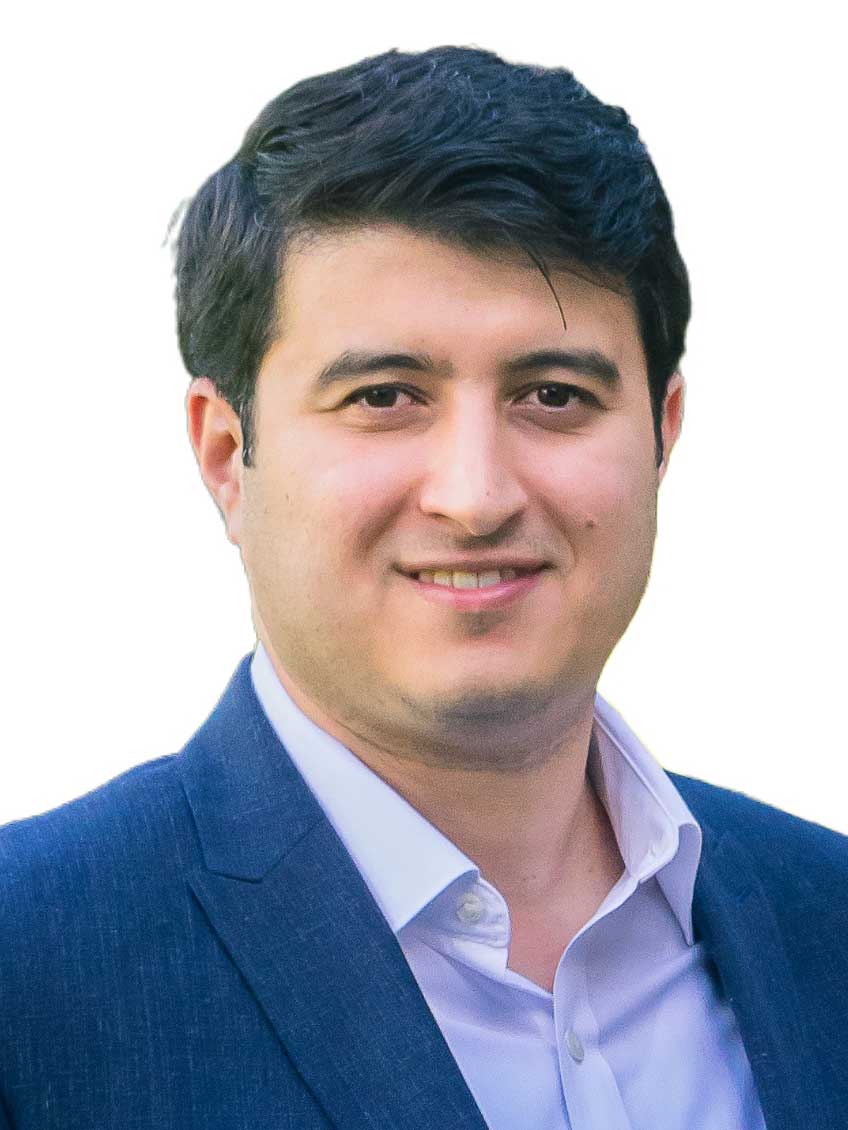
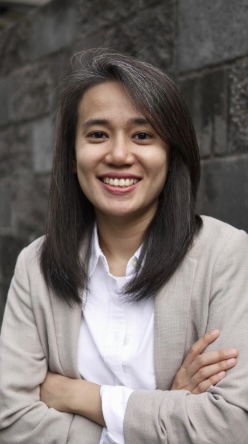
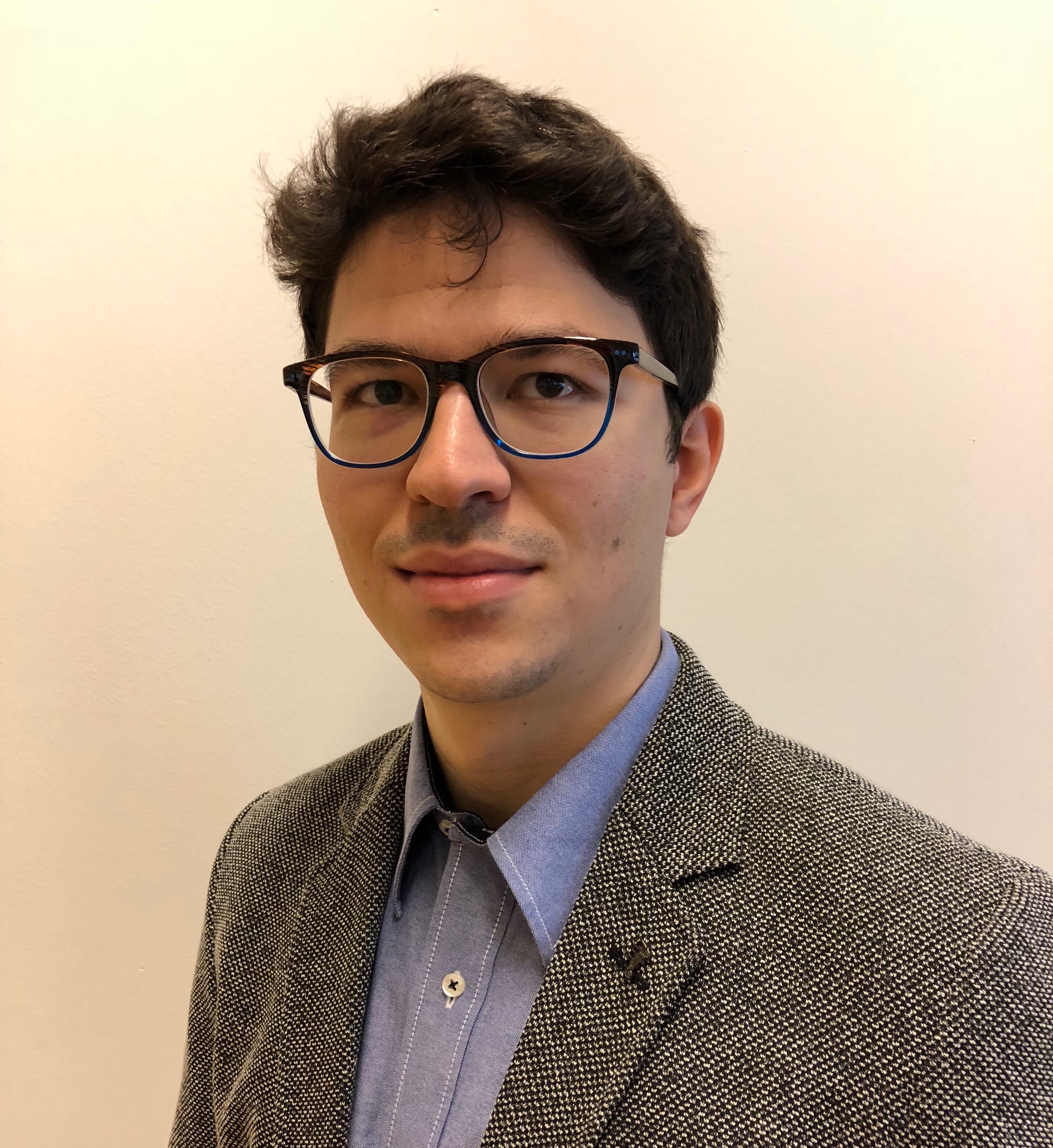
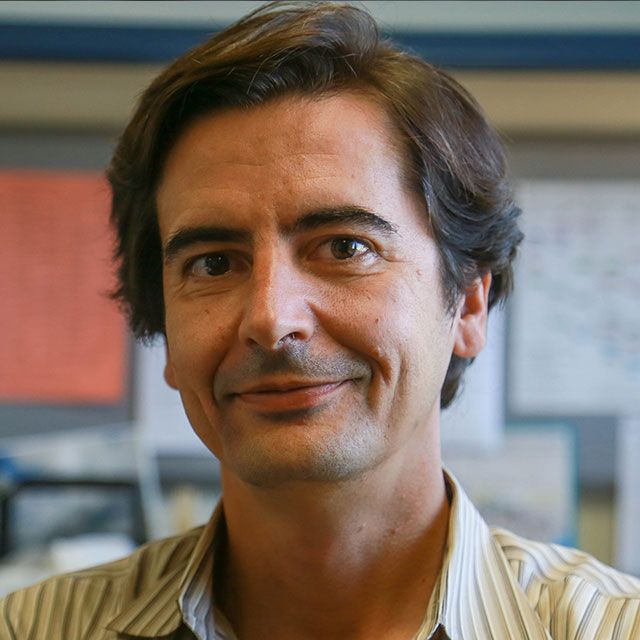
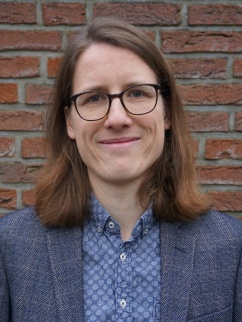
Dongwook Kim is affiliated with the Korea Advanced Institute of Science & Technology (KAIST) as a faculty member in the Department of Business and Technology Management under the College of Business. His research spans multiple domains including machine learning, robotics, signal processing, and biomedical engineering. Key contributions in Computer Vision (CNN-based semantic segmentation, 3D point cloud analysis) Significant work in Hardware Design (energy-efficient processors, neuromorphic computing) Interdisciplinary expertise in Medical Imaging (bone age assessment, retinal biomarkers) and Cybersecurity (attack detection, network analytics) Publications since 2015 demonstrate sustained innovation in AI applications , Signal Processing , and Smart City Governance . His work often integrates theoretical advances with practical implementations in real-world systems. No scientific awards or student mentorship details are explicitly documented in the provided records.
Benyamin Davaji serves as an Assistant Professor in the Department of Electrical and Computer Engineering at Northeastern University, where he joined in January 2022. He holds additional appointments as a Center Member of The Plastics Center and Core Faculty of the Institute for NanoSystems Innovation (NanoSI). His work bridges microsystems engineering, nanofabrication, and data science to develop next-generation sensing technologies. Dr. Davaji's educational background includes: Postdoctoral Associate in Electrical and Computer Engineering at Cornell University (2016-2021) Ph.D. in Electrical Engineering from Marquette University (2016) His research centers on integrated microsystems with emphasis on mechanical wave-based sensing and computation, ultrasound transducers, bio-interfaces, and microcalorimetry. The Autonomous Integrated Microsystems (AIMS) Laboratory combines physics with AI/ML to invent novel sensors and computational devices through advanced nanofabrication. Key thrusts include power-sustaining architectures and analog/digital computational integration. Recent publications (2024-2025) reveal strong trends in MEMS/NEMS optimization using digital twins, plasmonically enhanced infrared detection, ferroelectric actuators for high-speed scanning, and ultrasound-enabled metrology. His work increasingly integrates machine learning for design automation and process optimization across semiconductor manufacturing and flexible hybrid electronics. Dr. Davaji advises graduate students including Yilmaz Arin Manav (PhD'28), who won the FLEX 2024 Future Student Poster Award. He has secured over $3 million in competitive funding as PI/Co-PI, including a $550k NSF grant for MEMS actuators, $330k NSF grant for quantum detectors, and $2M DARPA grant for inertial sensors. He directs the interdisciplinary AIMS Laboratory focused on MEMS, ultrasound, and calorimetric technologies. The lab collaborates extensively with NanoSI and The Plastics Center, developing autonomous microsystems for biomedical, environmental, and industrial applications through advanced manufacturing techniques.
Camellia Zakaria is an Assistant Professor at the University of Toronto, holding appointments in the Biostatistics Division and Institute of Health Policy, Management, and Evaluation (IHPME) at the Dalla Lana School of Public Health (DLSPH), and the Faculty of Information (FoI). She was recently named Canada Research Chair (Tier 2) for mobile health solutions. Her research focuses on integrating mobile technologies and machine learning to develop equitable health monitoring systems. Education: University of Toronto (Present) University of Massachusetts Amherst (2020–2023) Singapore Management University (2014–2019) Research interests span mobile health, applied machine learning, and human-computer interaction, with a focus on creating inclusive health applications. Her work addresses challenges in environmental sensing, sleep monitoring, and mental health tracking through innovative sensor technologies and data analytics. Key articles (2024–2016) explore medical decision-making, aerosol emissions, and group behavior modeling. Her work has been recognized in venues like BMJ , IMWUT , and CHI . Awards : Canada Research Chair (Tier 2, 2024) Projects like StressMon and WATCHME highlight her commitment to scalable health monitoring systems. She collaborates on lab initiatives such as sensAILabs, advancing interdisciplinary health technology solutions.
Juan Manuel Pérez Pardo is an Associate Professor in the Department of Mathematics at Universidad Carlos III de Madrid, where he has been a faculty member since 2019, progressing from Assistant Professor to his current position as Associate Professor since December 2022. His academic journey includes postdoctoral research at prestigious institutions including the Istituto Nazionale di Fisica Nucleare in Naples, Italy, and the Instituto de Ciencias Matemáticas in Madrid. Dr. Pérez Pardo earned his PhD in Mathematics from Universidad Carlos III de Madrid in 2013, following a Master's degree in Mathematical Engineering from the same institution and a Master's degree in Theoretical Physics from Universidad Complutense de Madrid. His undergraduate studies were in Physics at Universidad Complutense de Madrid. His research focuses on the intersection of functional analysis and quantum physics, particularly in three main areas: Functional Analysis : Applying functional analytical tools to quantum systems, with emphasis on quadratic forms associated with differential operators and evolution equations in Hilbert spaces. Quantum Systems with Boundary : Studying quantum dynamics when boundaries are present, combining operator theory, spectral theory, and differential geometry. Quantum Control on Infinite Dimensional Systems : Developing mathematical theory for controlling quantum systems that are infinite dimensional in nature, relevant to quantum computation technologies. His publication record shows a strong focus on quantum control theory, self-adjoint extensions of differential operators, and the mathematical foundations of quantum mechanics. Recent work (2022-2025) has concentrated on stability of non-autonomous Schrödinger equations, quantum controllability, and relativistic quantum systems. Dr. Pérez Pardo has received several prestigious awards including the Juan de la Cierva Fellowship and the QUITEMAD+ Postdoctoral Fellowship. His work on boundary dynamics driven entanglement was highlighted in Europhysics News and tagged as IOPselect by the Institute of Physics. He actively mentors students at all levels, currently supervising PhD candidate Ángel Aitor Balmaseda Martín on "Quantum Control at the Boundary." He has also supervised numerous Master's and Bachelor's students on topics ranging from numerical solutions of quantum control problems to modeling Josephson junctions. Dr. Pérez Pardo is a key member of the Q-Math Research Group at UC3M and has organized multiple international workshops on Information Geometry, Quantum Mechanics, and Applications. He also serves on the editorial board of the International Journal of Geometric Methods in Modern Physics.
Ikjot Saini is a Professor at the University of Windsor’s Faculty of Engineering, co-leading the SHIELD Automotive Cybersecurity Centre of Excellence, Canada’s first organization addressing threats in connected transportation. Her research focuses on automotive cybersecurity, vehicular networks, and privacy-preserving technologies. She has supervised doctoral students Shiva Nejati and Kunj Dhonde, and contributed to courses in the University’s Continuing Education program, specializing in cybersecurity education for professionals. Her work includes pioneering studies on blockchain-based security for connected autonomous vehicles (CAVs), machine learning-driven intrusion detection systems, and privacy-enhancing mechanisms like pseudonym-changing strategies. She has been recognized with the K.W. Michael Siu Award from the APMA Institute for Automotive Cybersecurity (2020). Saini’s research bridges theoretical advancements with real-world applications, ensuring vehicles and infrastructure remain secure against evolving cyber threats. Her contributions span academic publications, industry partnerships, and policy recommendations, positioning her as a leader in vehicular cybersecurity. Ongoing projects emphasize eco-efficiency in cybersecurity solutions and adversarial modeling for privacy evaluation.
René M.B.M. de Koster is a Full Professor of Logistics and Operations Management at the Rotterdam School of Management (RSM), Erasmus University, where he has been a faculty member since 1995. He holds a PhD from Eindhoven University of Technology (1988) and is a leading expert in warehousing, material handling, and sustainable logistics. PhD, Eindhoven University of Technology, 1988 Professor, RSM, Erasmus University, 1995–present Honorary Francqui Chair, Hasselt University, 2018 His research focuses on warehousing systems , robotics in logistics , container terminals , and behavioural operations . He integrates operations research with real-world logistics challenges, emphasizing sustainability and automation. His work contributes to UN Sustainable Development Goals related to responsible consumption and industry innovation. The most recent publications highlight a strong trend toward autonomous systems and AI-driven logistics , particularly in robotic fulfillment, dynamic routing, and human-robot collaboration. These works reflect interdisciplinary engagement with computer science, industrial engineering, and behavioural science. Notable scientific awards include: IISE Annual Conference Best Student Paper Award (2024) Transportation Science Paper of the Year (2023) EJOR Best Paper Award (2023) Best European Journal of Operational Research Review Paper (2022) Best Paper Finalist at major logistics conferences Professor de Koster has supervised over 30 students and is actively involved in editorial service for top journals such as Transportation Science , Production and Operations Management , and International Journal of Production Research . He is chairman of Stichting Logistica and founder of the Material Handling Forum, contributing significantly to both academic and industry advancement in logistics. He leads research in advanced logistics labs focusing on robotic sorting, mobile fulfillment, and sustainable supply chains, often in collaboration with European institutions and industry partners.
Jordi Guitart Fernández is a Professor at the Department of Computer Architecture, Barcelona School of Informatics (FIB), Universitat Politècnica de Catalunya (UPC). He is also affiliated with the Barcelona Supercomputing Center (BSC-CNS), a leading national supercomputing facility. He leads the CROMAI research group, focusing on Computing Resources Orchestration and Management for AI. His work bridges high-performance computing, cloud systems, and artificial intelligence. Research Interests: Cloud Computing and Edge Computing Green and Energy-Efficient Computing Containerization and Virtualization for HPC Resource Orchestration and Management Autonomic and Self-Adaptive Systems Machine Learning Workflow Management AI-Driven System Optimization His recent publications reveal a strong focus on intelligent management of computing resources across cloud, edge, and HPC environments using machine learning and agent-based frameworks. He investigates performance, efficiency, and reliability in containerized AI and HPC workloads, particularly within Kubernetes and distributed infrastructures. His work increasingly integrates human-in-the-loop and trustworthiness aspects into AI systems. Scientific Awards: CLOUD Conference 2025 Best Paper Award VISIGRAPP 2025 Best Student Paper Award Premi Extraordinari de Doctorat 2025 - Àmbit d'Enginyeria de les TIC Test of Time Award Honorable Mention (e-Energy) Reconeixement als Mèrits Docents d'Especial Qualitat Top reviewers for Polytechnic University of Catalonia (Computer Science) - September 2017 Advising and Grants: He has advised doctoral students, including Peini Liu. He leads and participates in numerous competitive R+D+i projects, such as CROMAI and DALEST, funded by national and European programs like HORIZON 2020 and the Spanish State Research Plans. His work is supported by grants focused on knowledge generation and industrial leadership in computing technologies. Labs and Teams: He is the leader of the CROMAI - Computing Resources Orchestration and Management for AI research group at UPC. He also collaborates closely with the Barcelona Supercomputing Center (BSC-CNS), contributing to large-scale computing initiatives and strategic research agendas in Europe.
Huaizu Jiang is an Assistant Professor at Khoury College of Computer Sciences, Northeastern University. His research bridges computer vision, graphics, and natural language processing to develop AI systems that understand and reconstruct 3D visual environments. Prior to joining Northeastern, he was a Postdoc Researcher at Caltech and Visiting Researcher at NVIDIA. He holds a Ph.D. from UMass Amherst (advised by Prof. Erik Learned-Miller), and M.E./B.E. degrees from Xi'an Jiaotong University. His research focuses on fundamental challenges in 3D scene understanding, including geometry reconstruction, semantic interpretation, novel view synthesis, motion generation, and optical flow estimation. Core interests span video processing, human-object interactions, multimodal reasoning, and efficient edge-device implementations. Recent publications emphasize diffusion models for motion/scene generation, transformer-based 3D perception, and video interpolation. Key trends include multi-view consistency techniques, text-to-3D synthesis, and efficient real-time algorithms for robotics applications. Awards & Honors: Winner of the VQA Challenge 2020 He advises 15+ graduate students on projects spanning 3D reconstruction, motion synthesis, and vision-language models. His group collaborates with institutions like NVIDIA and Caltech, focusing on generative AI for dynamic scene understanding.
Alexandros Daglis is an Associate Professor of Computer Science at the Georgia Institute of Technology, with an adjunct appointment in the School of Electrical and Computer Engineering. His research focuses on blurring boundaries between network and compute for high-performance, scalable microsecond-scale services in datacenters, particularly through network endpoints and memory-centric computing. Primary Affiliation: Georgia Tech College of Computing, School of Computer Science Adjunct Affiliation: School of Electrical and Computer Engineering Key research areas include: Rack-scale computing and network-compute co-design CXL-based memory systems Low-latency datacenter architectures Transactional memory and concurrency control Edge-cloud continuum and geo-distributed infrastructures He has received prestigious awards including the NSF CAREER Award, Google Faculty Research Award, and Georgia Tech's Outstanding Junior Faculty Teaching Award. His students include Marina Vemmou (network-compute co-design), Albert Cho (memory system design), and Peidi Song (microsecond-scale scheduling). Grants: NSF, IARPA, Intel, Samsung Teaching: High Performance Computer Architecture, Systems and Networks, Datacenter Design
João P. Hespanha is a Distinguished Professor at the University of California, Santa Barbara (UCSB), affiliated with both the Department of Electrical and Computer Engineering (ECE) and the Department of Mechanical Engineering (ME). He is also associated with the Center for Control, Dynamical-systems, and Computation (CCDC). Born in Coimbra, Portugal (1968) Licenciatura, Instituto Superior Técnico, Lisbon (1991) Ph.D. in Electrical Engineering and Applied Science, Yale University (1998) Assistant Professor at University of Southern California (1999-2001) His research spans hybrid/switched systems , networked control systems , game theory , multi-agent control , and stochastic biological modeling . His work addresses computational complexity, communication constraints, and nonlinear sensor/actuator challenges in autonomous systems. He has authored influential lecture notes on Linear Systems Theory and Noncooperative Game Theory . Key scientific recognitions include NSF CAREER Award , IEEE/IFAC Fellowships , and multiple best paper prizes (2005-2019). His research has been supported by NSF , NIH , ONR , DARPA , and ARO . He has advised numerous Ph.D. students and postdocs, many of whom now hold academic or industry positions globally. His laboratory integrates advanced sensing/actuation technologies and a 10-camera Vicon motion capture system for experimental validation.
Dr. Amir Javed is a Lecturer in the School of Computer Science and Informatics at Cardiff University, where he has been employed since 2019. Previously, he served as a Research Associate at the same institution from 2015 to 2019, working on projects including WEFO collaboration with Airbus, the EPSRC Ebb and Flow Energy Systems project, and the ESRC HateLab project. His research spans cybersecurity, machine learning, and IoT security, with particular focus on intrusion detection systems for in-vehicle networks, adversarial machine learning, cloud security, and cybersecurity education. He investigates malware propagation on social networks, drive-by download attacks on Twitter, and the application of machine learning for real-time cyberattack forecasting. His recent work explores generative AI integration in cybersecurity education and adversarial attacks on autonomous vehicle security systems. Dr. Javed's publication trends reveal a strong emphasis on automotive cybersecurity (particularly intrusion detection for connected vehicles), adversarial machine learning techniques, and innovative approaches to cybersecurity education. His work increasingly focuses on federated learning applications for vehicle security and the educational challenges of integrating generative AI into cybersecurity curricula. He leads the Social Data Science Lab (ESRC-funded, £1.5 million, 2020-2022) and teaches the CMT116 Cyber Security and Risk course. His supervisory portfolio includes doctoral research on in-vehicle network security, cloud service abuse detection, and adversarial attacks in intrusion detection systems.
Shaukat Ali serves as Research Professor and Head of the Department of Engineering Complex Software Systems at Simula Research Laboratory, concurrently holding the title of Chief Research Scientist. His academic leadership drives innovation at the critical nexus of quantum computing, artificial intelligence, and software engineering, with concentrated expertise in verification, validation, and testing methodologies for complex systems including cyber-physical infrastructures and autonomous robotics. His primary research domains encompass: Verification and Validation Search-Based Software Engineering Autonomous Driving Systems Cyber-Physical Systems Engineering Digital Twin Technologies Quantum Software Engineering Analysis of recent publications (2024-2025) reveals a decisive trend toward quantum-AI convergence in software engineering, particularly through quantum software testing frameworks and AI foundation models applied to cyber-physical systems. His work systematically addresses noise mitigation in quantum hardware, uncertainty quantification in adaptive robotics, and novel testing paradigms using vision-language models for industrial robotics—demonstrating both theoretical rigor and industrial applicability. As department head, Ali spearheads strategic research directions in complex software systems, fostering cross-disciplinary collaboration while actively shaping quantum software engineering through workshops like QAI2024 and Q-SANER 2024. His invited presentations at venues including JYU Quantum Electronics and EU-Korea Quantum Forums underscore his influence in defining emerging research landscapes.
Nils Wilde is an Assistant Professor in the Faculty of Computer Science at Dalhousie University, Halifax, Canada. He specializes in robotics, AI, and human-computer interaction, with a focus on cognitive robotics, multi-robot systems, and human-robot interaction. His research integrates planning, optimization, control, and machine learning to develop interactive and adaptive robotic systems. His educational background includes: BSc and MSc in Computer Science or related field from Technical University Berlin (2012, 2016) PhD in Electrical and Computer Engineering from the University of Waterloo (2016–2020), co-supervised by Dana Kulić and Stephen L. Smith Postdoctoral Fellow at TU Delft (2021–2024) in the Autonomous Multi-Robots Lab with Javier Alonso-Mora Postdoctoral Fellow at the University of Waterloo’s Autonomous Systems Lab (until August 2021) Nils Wilde's research centers on enabling robots to learn from human feedback and adapt to user preferences in dynamic environments. His work spans preference learning , multi-objective planning , motion planning , task assignment in multi-robot systems , and human-robot interaction . He develops algorithms that allow robotic systems to balance competing objectives such as efficiency, safety, and user comfort, particularly in service robotics applications like hospitals and industrial facilities. His recent publications (2020–2024) demonstrate a strong trajectory in top robotics venues (T-RO, RA-L, ICRA, IROS, CoRL, CDC, WAFR), with a focus on multi-objective optimization, dynamic vehicle routing, sensor scheduling, and learning user preferences. A key theme is improving the quality of service in robotic systems by optimizing metrics like waiting times, statistical distinctness of plans, and user satisfaction, often through novel cost functions and learning frameworks. Nils is actively building a new robotics lab at Dalhousie University, with funded PhD positions and an interdisciplinary research environment. He is involved in organizing academic workshops, such as the upcoming 2025 RSS workshop on Multi-Objective Optimization and Planning in Robotics. He mentors prospective students and encourages applications from diverse backgrounds.
Vidar Hepsø is a Professor at the Department of Computer Technology and Informatics, Faculty of Information Technology and Electrical Engineering, Norwegian University of Science and Technology (NTNU). His work bridges anthropology of science and technology with practical challenges in digitalization, energy transition, and remote operations. Research focuses on digital infrastructures, socio-technical systems, and human factors in oil and gas industries Active in NTNU Applied Information Technology and NTNU Energy Transition Initiative Publications emphasize open-source ecosystems, autonomous systems, and environmental monitoring His scholarly output spans computer-supported collaborative work, IT infrastructure governance, and risk-informed anomaly detection in subsea systems. He leads projects connecting digital innovation with offshore wind and petroleum geoscience.
Ricardo Valerdi is a Professor and Department Head in the Department of Systems and Industrial Engineering at the University of Arizona's College of Engineering. He is a Distinguished Outreach Professor, Faculty Athletics Representative for the Big 12 Conference and NCAA, and a member of the Graduate Faculty. His academic journey includes positions at MIT (2005–2011) and continuous service at the University of Arizona since 2011, with current roles beginning in 2018 and ongoing leadership since 2020. His educational background includes a PhD in Industrial and Systems Engineering from the University of Southern California, an MS in System Architecture and Engineering from the same institution, and a BS in Electrical Engineering from the University of San Diego. Valerdi's research spans systems engineering, cost estimation, model-based systems engineering (MBSE), digital engineering, sports analytics, and test and evaluation of complex systems. He is renowned for his work on the Constructive Systems Engineering Cost Model (COSYSMO) and has pioneered the integration of virtual reality with MBSE. His recent publications reflect a strong focus on executable modeling, systems thinking education, cost modeling convergence, and applications in space and defense systems. His body of work from 2020 to 2025 shows a consistent trajectory in advancing digital engineering tools, integrating immersive technologies into systems design, refining parametric cost models, and assessing systems thinking competencies in education. The publications emphasize interdisciplinary applications, including space missions, ERP systems, and cyber resiliency, demonstrating a blend of theoretical and applied systems engineering. Best paper award, Journal of Systems Engineering International Council of Systems Engineering, Summer I 2016 Foreign Member, Mexican Academy of Engineering, Summer I 2016 Frank Freiman Award for Lifetime Achievement in Cost Estimation and Parametric Modeling, International Cost Estimating & Analysis Association, Fall 2015 Dr. Valerdi has advised numerous graduate students and led educational initiatives integrating industry-focused projects. He founded and co-edited the Journal of Enterprise Transformation and served as editor-in-chief of the Journal of Cost Analysis and Parametrics. He has received significant recognition and grants supporting research in systems engineering cost modeling, human systems integration, and digital transformation. His leadership extends to service as a Fulbright Scholar, visiting professor at West Point, and visiting fellow of the UK Royal Academy of Engineering. He leads research teams focused on cost estimation, digital engineering, and systems integration, often collaborating with defense and aerospace stakeholders. His labs and initiatives emphasize virtual reality integration, executable modeling, and systems thinking assessment. Future work is expected to further explore AI-driven cost models, digital twins for complex systems, and scalable frameworks for MBSE adoption across domains.