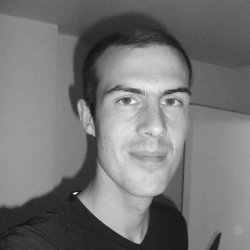
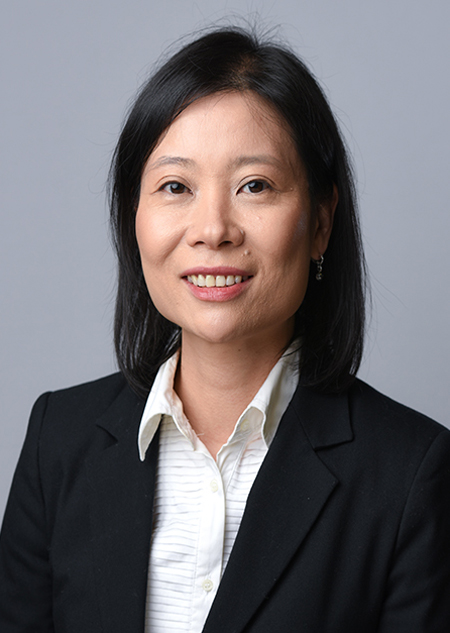
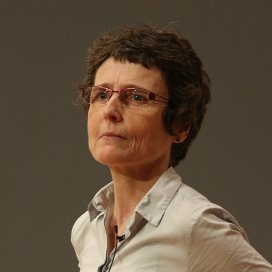
Mattia Cavicchi is an Associate Professor at the Institute of Mathematics of Burgundy (IMB) within the University of Burgundy Europe. He serves as a Teacher-Researcher in the Department of Mathematics, affiliated with the GADT team (Geometry, Algebra, Dynamics, and Topology). Research Focus: Algebraic geometry, motivic decompositions, mixed Hodge theory, Galois representations, and automorphic forms. Academic Leadership: Organized workshops including A Panorama of Algebraic Geometry (2025) and co-organized the JAVA summer school series. Collaborations: Active in international projects with researchers like J. Bajpai, F. Déglise, and J. Wildeshaus. His recent publications explore motivic decompositions of Lagrangian fibrations and cohomology of Shimura varieties. He contributes to academic events supported by the BQR Project 'Network Research.'
Adrien Dubouloz is an Associate Researcher at the Institut de Mathématiques de Bourgogne (IMB) , Université de Bourgogne, Dijon, France. He is affiliated with the Geometry, Algebra, Dynamics, and Topology team and actively collaborates on projects related to algebraic geometry, motivic homotopy theory, and transformation groups. Research Focus : Algebraic and motivic geometry, affine algebraic geometry, birational rigidity, A¹-contractible varieties, and automorphisms of open varieties. Supervision : Co-supervises doctoral students with institutions including University of Milan, ENS Lyon, and IMB Dijon. Projects : Leads grants like ANR-21-CE40-0015 (HQDIAG) and ANR-18-CE40-0003 (FIBALGA). Conferences and Workshops : Organizes and participates in international events such as the Real Motivic Geometry workshop (2025, Le Croisic), Swiss-French Workshop in Algebraic Geometry (multiple editions), and collaborations on Cremona groups and polynomial automorphisms. Grants and Collaborations : Involved in France-Japan IRN AHGT, Polish NCN projects, and joint initiatives with institutions in Japan, Switzerland, and Canada.
Lucy Moser-Jauslin is a Professor in the Department of Mathematics at the University of Burgundy, affiliated with the Institut de Mathématiques de Bourgogne (IMB) CNRS -- UMR 5584. She works within the Geometry, Algebra, Dynamics and Topology research team and holds a joint position as Teacher-Researcher. Her academic career spans decades with continuous contributions to algebraic geometry. Her research focuses on affine algebraic geometry, algebraic transformation groups, complex algebraic geometry, and polynomial automorphisms . Moser-Jauslin's work explores equivariant structures, real forms of complex varieties, and classification problems in affine geometry. She has developed significant results on group actions, embeddings of algebraic varieties, and the structure of automorphism groups. Analysis of her publication record reveals sustained contributions to Geometric Invariant Theory and Real Algebraic Geometry , with recurring themes in circle actions, Danielewski surfaces, and Koras-Russell threefolds. Her collaborative work spans international institutions, demonstrating strong engagement with the global mathematics community. She has supervised five doctoral students: G. Bousquet (2000), Ph. Bonnet (2000), P. M. Poloni (2008), C. Petitjean (2015), and B. Alhajjar (2015). Her teaching portfolio includes courses like L1-Math2B and M1-MEEF/PMG - Algèbre. Moser-Jauslin is actively involved with the Geometry, Algebra, Dynamics and Topology research group at IMB, contributing to both theoretical developments and collaborative projects in algebraic geometry. Her ongoing work continues to address fundamental questions in affine transformation groups and real structures on complex varieties.
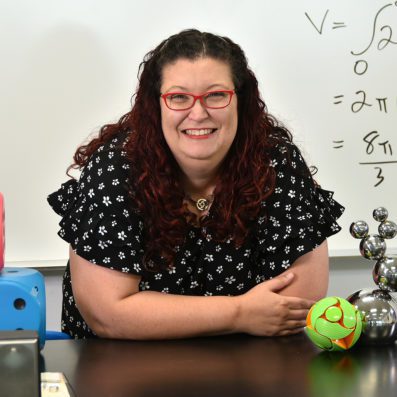
Meghan De Witt is a Professor at St. Thomas Aquinas College (STAC), where she teaches a range of mathematics courses. She earned her academic background in pure mathematics from Brigham Young University and the University of Wisconsin at Madison before shifting focus to applied mathematics. Her office is renowned as a hub for 3D printers, Legos, and toys, providing a creative space for students to relax. Education: Brigham Young University University of Wisconsin at Madison Research Interests: Her work bridges abstract algebra with real-world applications, focusing on group theory in natural systems and its extension to group-like structures. She also applies Bayesian inference to interdisciplinary problems and integrates innovative teaching methods like flipped classrooms into her pedagogy. Publications & Presentations: Her research spans Galois representations, inverse Galois problems, and symmetries in hypercubes, with recent explorations into swarm dynamics and interdisciplinary projects via STAC's X-Lab initiative. Outreach & Contributions: She leads the Girls Exploring Mathematics program to address gender disparities in STEM and mentors undergraduates in accessible pure math research projects. Teaching & Facilities: Courses taught include College Algebra, Calculus, Abstract Algebra, Topology, and specialized topics like Life Contingencies. She is celebrated as the 3D printer guru at STAC, fostering hands-on learning.
Chiara Esposito is an Associate Professor at the Department of Mathematics of the University of Salerno, Italy. Her research focuses on Poisson geometry, deformation quantization, and quantum groups. She is affiliated with the research group Geometry@Unisa , collaborating with Professors and Researchers like Antonio De Nicola, Giovanni Sparano, and Luca Vitagliano. For her work, she has been recognized through organizational roles in international workshops. Education: Master in Physics, Università di Napoli Federico II (2006) PhD in Mathematics, University of Copenhagen (2012) Her research explores the intersection of Poisson geometry, mathematical physics, and formality theory, with a focus on universal deformation formulas and BRST reduction. Publications address coisotropic algebras, L-infinity structures, and quantum algebras with involutions. She teaches courses such as Geometria 1 and Geometria Superiore at the University of Salerno. Reception hours are scheduled weekly on Monday, Wednesday, and Friday. Scientific Contributions: Organized workshops on Lie Theory and Poisson geometry (2022), Poisson 2020 (2020), and Noncommutative Geometry (2017-2015) Authored book: Formality theory: from Poisson structures to deformation quantization (Springer, 2014) Advising: Mentored PhD student Antonio Maglio. Collaborates with researchers on coisotropic triples, Hochschild cohomology, and BRST reduction frameworks.
Professor Martin Bridson is the President of the Clay Mathematics Institute and holds the Whitehead Professorship of Pure Mathematics at the University of Oxford's Mathematical Institute. His research spans geometric group theory, non-positively curved spaces, and low-dimensional topology, with significant contributions to understanding group presentations, profinite completions, and hyperbolic geometry. Key Affiliations: Clay Mathematics Institute (President) University of Oxford (Whitehead Professor of Pure Mathematics) Research Interests: Geometric Group Theory Geometry of Non-Positively Curved Spaces Low-Dimensional Topology Profinite Group Theory Isoperimetric Inequalities Fixed-Point Properties Scientific Awards: 2020 Steele Prize for Mathematical Exposition (with André Haefliger) Fellow of the Royal Society (2016) Fellow of the American Mathematical Society (2015) London Mathematical Society Whitehead Prize (1999)
Alan Lauder is a Lecturer at the Mathematical Institute of the University of Oxford and a Tutor in Mathematics at Hertford College. His research lies at the intersection of Number Theory and Arithmetic Geometry, with a focus on modular forms, p-adic analysis, and computational aspects of arithmetic geometry. His recent publications include groundbreaking work on modular forms of weight one, such as A computation of modular forms of weight one and small level (2016), and collaborative studies with Darmon and Rotger on p-adic iterated integrals, Stark points, and class fields of real quadratic fields. These works span computational number theory, algebraic geometry, and p-adic methods in modern arithmetic research. He is affiliated with the Number Theory research group and has contributed to advancements in computational algorithms for modular forms and their applications to class field theory and automorphic representations.
Tom Sanders is a Senior Research Fellow at the Mathematical Institute, University of Oxford, and a Tutorial Fellow at St. Hugh's College. His research spans algebra, analysis, combinatorics, geometry, and number theory, with a focus on additive combinatorics, harmonic analysis, and analytic number theory. University: University of Oxford Department: Mathematical Institute College: St. Hugh's College His work explores the intersection of algebraic and analytic methods in number theory and combinatorics, particularly on problems involving additive structures and Boolean functions. Recent publications highlight trends in Diophantine equations, Ramsey theory, and spectral analysis of Boolean functions. Adams Prize (2011) European Mathematical Society Prize (2012) Whitehead Prize (2013) European Prize in Combinatorics (2013) ICM Section Lecture (2014) His research includes collaborations with mathematical institutions and contributions to analytic number theory and harmonic analysis.
Dr. Ariane Masuda is a Professor in the Department of Mathematics at the School of Arts and Sciences, City University of New York (CUNY), specifically at New York City College of Technology. She concurrently serves as the Mathematics Education Clinical Experiences Director and a City Tech OER Fellow, demonstrating dual commitment to research and pedagogical innovation. Her academic credentials include: Ph.D. in Mathematics, Carleton University, Canada M.Sc. in Mathematics, Federal Fluminense University, Brazil B.S. in Mathematics, Federal University of Paraná, Brazil Dr. Masuda's research centers on Number Theory with specialized expertise in Finite Fields, Permutation Polynomials, and their cryptographic applications. Her work bridges abstract algebra and practical implementations, particularly in coding theory and cryptographic protocol design. She has made seminal contributions to understanding permutation binomials, Rédei permutations, and subgroup structures in linear groups, often revealing connections between combinatorial patterns and algebraic properties. Analysis of her 15 most recent publications (2024-2008) reveals consistent focus on algebraic structures within finite fields, with increasing emphasis on computational aspects and educational applications. Her research trajectory shows progression from theoretical foundations in permutation polynomials toward interdisciplinary applications in optimization and cryptography, while maintaining core number-theoretic investigations. Dr. Masuda has secured significant research funding as Principal Investigator for multiple PSC-CUNY grants: Traditional A grants: 2013-2020, 2021-2022, 2023-2025 Traditional B grant: 2020-2021 She has mentored 30 students through high school and undergraduate research programs and previously served as OER Co-Director for the U.S. Department of Education-funded Opening Gateways project (2017-2021), which targeted Hispanic-Serving Institution development. Currently directing Mathematics Education Clinical Experiences, she integrates research insights into teacher preparation while advancing open educational resources through her City Tech OER Fellowship, creating synergies between theoretical mathematics and classroom practice.
Claire Voisin is a Professor at the Collège de France , holding the Algebraic Geometry Chair since 2015. Her work bridges algebraic geometry, complex geometry, and topology through the lens of Hodge theory , with a focus on hyper-Kählerian varieties and infinitesimal variations of Hodge structures . Academic Affiliations : Collège de France (2015–present), École polytechnique (2012–2014, part-time), Institut de Mathématiques de Jussieu (1995–2007), CNRS (1986–2007) Research Themes : Topology of algebraic varieties, K3 surfaces, abelian varieties, Torelli theorems, Jacobian rings, and connections to Shimura varieties. Key awards include the CNRS Gold Medal (2016) , Shaw Prize (2017) , and L'Oréal-UNESCO International Award for Women in Science (2019) . Her lectures emphasize the interplay between algebraic cycles, period mappings, and geometric structures. Scientific Contributions : Proof of unobstructed deformations for Kähler varieties with trivial canonical bundles Advances in generic Torelli theorems via infinitesimal Hodge variations Study of intermediate Jacobian fibrations and 4-dimensional cubics
Caglar Uyanik serves as Assistant Professor of Mathematics and Director of the Madison Experimental Mathematics Lab (MXM) at the University of Wisconsin-Madison's Department of Mathematics. His research bridges geometric topology, group theory, and dynamical systems with significant contributions to Teichmüller theory and geodesic currents. His primary research interests include Geometric Topology , Geometric Group Theory , Ergodic Theory , and Dynamics , with specialized focus on mapping class groups, Teichmüller spaces, Out(F N ), geodesic currents, Veech surfaces, and symbolic dynamics. His work explores connections between group actions, hyperbolic geometry, and probabilistic methods in dynamical systems. Recent publications demonstrate evolving focus from foundational work on North-South dynamics (2014-2019) toward contemporary applications in random walks on Teichmüller space (2023) and singularity analysis of Cannon-Thurston maps (2025). Key thematic threads include geometric structures on moduli spaces, spectral properties of group actions, and distribution phenomena in translation surfaces. Scientific recognition includes: NSF CAREER award supporting research on geometric group theory Uyanik actively mentors graduate students including PhD recipients Yandi Wu (2024) and current candidates Rongsong Yang and Rachel Heikkinen, plus Master's student Hart Easley. He co-leads the NSF-funded RTG: Geometry, Group Actions and Dynamics while directing MXM which engages undergraduates in experimental mathematics projects. His research receives primary support through NSF Award DMS 2439076 and the RTG grant. As founder and director of the Madison Experimental Mathematics Lab, he cultivates collaborative research environments where students investigate geometric structures through computational experimentation, particularly focusing on translation surfaces and group actions.
Ngô Bảo Châu is the Francis and Rose Yuen Distinguished Service Professor at the Department of Mathematics , University of Chicago. His work bridges automorphic forms, algebraic geometry, and number theory, with significant contributions to the Langlands program and geometric endoscopy. Research Interests : Automorphic forms, geometric representation theory, Hitchin systems, fundamental lemma, integrable systems, and arithmetic geometry. Publications : His recent work includes advancements in perverse sheaves, Langlands functoriality, and geometric interpretations of automorphic L-functions. Students : He has mentored PhD students such as Alexis Bouthier, Shuyang Cheng, and Hồ Phú Quốc, many of whom now hold postdoctoral or academic positions. Teaching : Courses include representation theory of p-adic reductive groups, algebraic number theory, and geometry of Hitchin fibrations. Editorial Roles : Serves on the editorial boards of Grundlehren der mathematischen Wissenschaften , Compositio Mathematica , and Vietnamese mathematical journals.
Darija Brajković Zorić is a researcher at the School of Applied Mathematics and Informatics , Josip Juraj Strossmayer University of Osijek. Her work focuses on the representation theory of p-adic groups, particularly the unitary dual of SO(7) and its connections to automorphic forms. PhD : Theoretical Mathematics, University of Zagreb (2019) MSc : Mathematics and Computer Science Education, University of Osijek (2020) MSc : Theoretical Mathematics, University of Zagreb (2011) BSc : Mathematics, University of Osijek (2009) Her research examines the interplay between unitary representations, Aubert involutions, and composition factors in classical p-adic groups. Recent publications (2021–2025) analyze symplectic and orthogonal group structures, contributing to broader understanding of automorphic forms and the Langlands program. She actively participates in international workshops and conferences, including Building Bridges EU/US Summer School (2022), Workshop on Arthur Packets (2022), and events at CIRM Marseille. Her service includes organizing the MathOS Cup competition and mentoring students at multiple faculties.
Andreas Malmendier is an Associate Professor in the Department of Mathematics and Statistics at Utah State University , affiliated with the College of Arts & Sciences . His research focuses on advanced topics in algebraic geometry and mathematical physics, particularly K3 surfaces, elliptic fibrations, modular forms, and their applications to string theory and duality. His recent publications highlight trends in: Classification and properties of K3 surfaces via lattice theory Interactions between automorphic forms and algebraic geometry Dualities in F-theory and CHL string compactifications Isogenies and theta function identities Moduli spaces and mirror symmetry Applications to physics-informed mathematical structures Andreas contributes to understanding geometric structures in theoretical physics through rigorous mathematical frameworks, with ongoing work on higher-genus curves and their connections to modular forms.
Liyang Yang is a Sherman Fairchild Postdoctoral Scholar and Research Fellow in the Department of Mathematics at the California Institute of Technology , affiliated with the Division of Physics, Mathematics and Astronomy. His research focuses on advanced topics in number theory and automorphic representations. Research Interests: Number Theory, Automorphic Representations, Arithmetic Geometry, L-functions, Trace Formulas, and Analytic Number Theory. Recent work involves applications of the Relative Trace Formula to prove nonvanishing results for L-functions, including simultaneous nonvanishing for GL(3)×GL(2) and GL(3)×GL(1) , uniform nonvanishing of central values, and subconvexity bounds for Rankin-Selberg L-functions. His publications highlight connections between automorphic forms, representation theory, and algebraic number theory. Scientific Awards: Sherman Fairchild Postdoctoral Scholar