Ignat Sorokoمشاهده پروفایل
استادیار مهمان
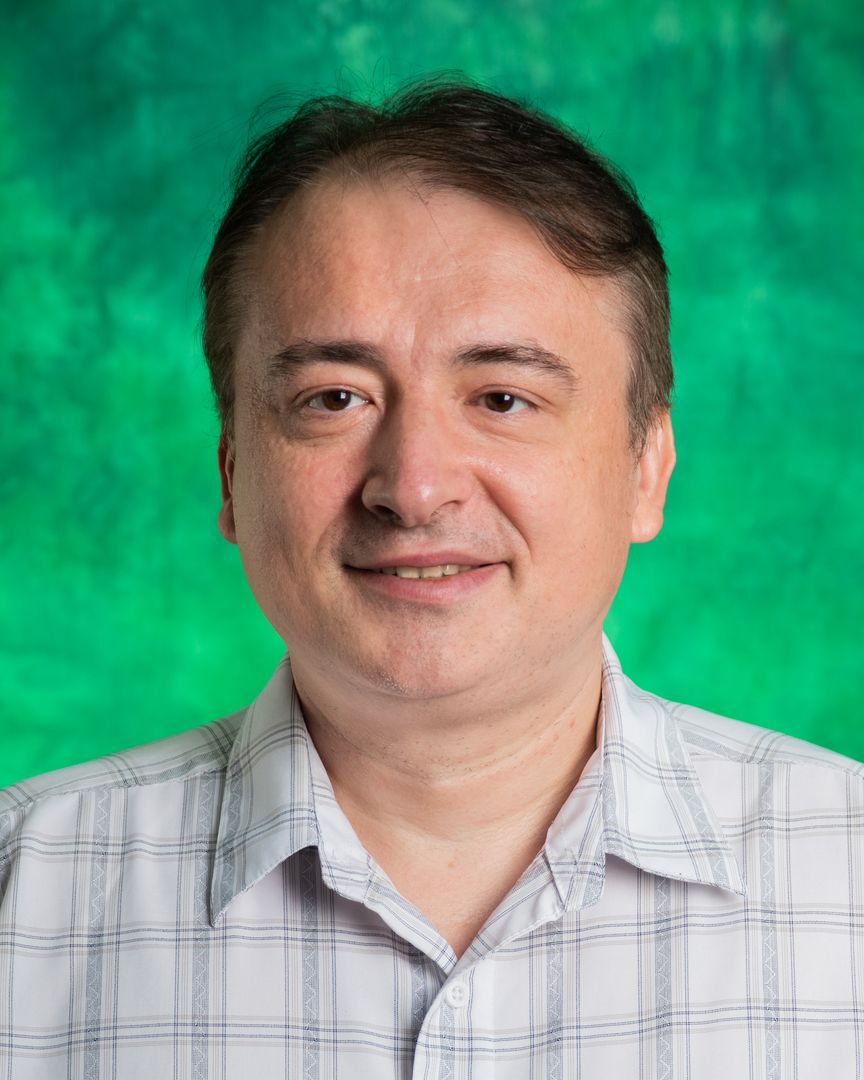
Ignat Soroko is a Visiting Assistant Professor in the Department of Mathematics at the University of North Texas, where he teaches courses including Discrete Mathematics, Linear Algebra, and Calculus. Previously, he held postdoctoral positions at Louisiana State University under Pallavi Dani and at Florida State University as a Dean's Postdoctoral Scholar. Dr. Soroko earned his Ph.D. from the University of Oklahoma in May 2018 under the supervision of Noel Brady. His research focuses on geometric group theory and low-dimensional topology, with particular emphasis on Artin groups, Coxeter groups, mapping class groups, quasi-isometry invariants, and Dehn functions of groups. He also investigates Hanna Neumann-type questions, stable commutator length, and criteria for linearity. His recent publications reveal a strong focus on structural properties of Artin and Coxeter groups, with significant contributions to understanding Dehn functions, endomorphisms, and property R∞. His work spans both theoretical developments and computational approaches, including the development of GAP code for hypergraph index calculations. Notably, his 2025 paper "Humanity's Last Exam" represents a significant interdisciplinary contribution to AI benchmarking. Thank-a-teacher (UNT, 2023, 2024) Thank you letter from the students (FSU, 2021) Provost Certificate of Distinction in Teaching (OU, 2014) Dr. Soroko has taught various courses including Discrete Mathematics (Spring 2025), Linear Algebra and Vector Geometry (Fall 2022-2024), Calculus II (Spring 2023-2024), and Business Calculus (Fall 2024). His teaching evaluations have consistently been positive across multiple institutions including UNT, FSU, and LSU. While specific grant information isn't detailed in the provided text, his numerous publications in top journals indicate successful research funding. Dr. Soroko maintains active collaborations with researchers including Pallavi Dani, Noel Brady, R. Kropholler, and several international colleagues. His work on the HypergraphIndex project demonstrates his commitment to developing computational tools for geometric group theory.