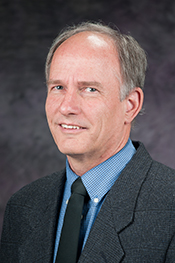
Tim Murphy is a Professor in the Department of Psychiatry at the University of British Columbia's Faculty of Medicine. He holds a B.Sc. from Saint Mary's College (1984), Ph.D. from Johns Hopkins University (1989), and completed postdoctoral training at Johns Hopkins (1994). He is a Full Member of the Djavad Mowafaghian Centre for Brain Health and leads UBC's Dynamic Brain Circuits in Health and Disease research cluster. His research focuses on understanding brain circuit reorganization after stroke using advanced neuroimaging techniques. Key areas include: In vivo imaging of synaptic interactions and sensorimotor processing Optogenetic brain mapping and neuroplasticity mechanisms Development of automated imaging/stimulation tools for neurological disorders Mouse models of stroke, depression, and autism Synthetic data approaches for behavioral analysis Dr. Murphy's recent publications demonstrate strong focus on developing novel neurotechnologies, including mesoscale imaging systems, 3D calibration tools, and synthetic biomarkers. His work integrates neuroscience with biomedical engineering and computational approaches. He leads an active laboratory developing open-source neuroscience hardware and software. The lab participates in the Canadian Neurophotonics Platform and has created innovative tools like the Diesel2P mesoscope and automated home-cage imaging systems.
Aiko Pras is a Professor at the University of Twente in Enschede, Netherlands. His research spans network and service management, cybersecurity, and distributed systems, with a focus on DNS security, DDoS mitigation, IPv6, and software-defined networking. Research Interests: Network and Service Management Cybersecurity and DDoS Mitigation DNS Security and IPv6 Software-Defined Networking (SDN) Internet Measurement and Performance Critical Infrastructure Protection (ICS/SCADA) Article Trends: Pras's recent work emphasizes collaborative DDoS defense, DNS security, and IPv6 vulnerabilities. His studies often involve large-scale measurements and propose practical solutions for internet resilience and security. Collaborations: He frequently collaborates with Anna Sperotto, Roland van Rijswijk-Deij, and other experts in network security and measurement.
Daniel Hardt serves as Associate Professor in the Department of Management, Society and Communication at Copenhagen Business School. His interdisciplinary research bridges computational linguistics, artificial intelligence, and social analysis, with particular focus on natural language processing applications and theoretical linguistic phenomena. His primary research domains include Computational Linguistics (specializing in ellipsis resolution and sluicing phenomena), Natural Language Processing (developing methods for psychographic classification and sentiment analysis), and Artificial Intelligence (examining large language model capabilities and limitations). Recent work analyzes travel behavior during crises, gender effects in evaluations, and GDPR policy comprehension through NLP techniques. His publications span top venues including Linguistic Inquiry , Tourism Management , and ACL proceedings. Hardt actively engages with practical business applications through 27 media contributions discussing AI implementation, ChatGPT transparency, and data-driven leadership strategies. His academic service includes organizing events like the 2019 "Fake News" conference at CBS and presenting at international venues including JSAI 2024. With 28 supervised academic works documented, he maintains substantial mentoring activity while contributing to public discourse on digital transformation challenges.
Prof. Dr. Robert Risse is an esteemed academic and practitioner in tax law, currently serving at the Institute for Austrian and International Tax Law at Vienna University of Economics and Business since 2020. Previously, he held the position of Corporate Vice President Tax & Trade at Henkel AG & Co KGaA from 2000 to 2020, where he was globally responsible for taxation and customs. He also holds the title of Honorary Professor for Tax Compliance and Applied Tax Planning at the Institute for Business Taxation, University of Leipzig. His extensive career bridges academic excellence with practical corporate tax leadership. Education 2017: Chairman of the Board of Directors for the Transfer Pricing Center of the Institute for International and Austrian Tax Law, Vienna University of Economics and Business 2014: Doctoral Thesis "Tax Compliance und Tax Risk Management: Eine rechtsvergleichende Analyse und Umsetzung in einem internationalen Konzern" at University of Freiburg 1986-1989: Second State Examination in Law, University of Bonn 1983-1986: First State Examination in Law, University of Bonn 1979-1982: Diplom Finanzwirt FH in Financial Sciences, University of Applied Sciences for Finances North Rhine-Westphalia Research Interests Prof. Risse's research focuses on the intersection of tax compliance, digitalization, and international tax systems. His work explores how digital technologies can transform tax compliance processes, particularly in multinational corporations. He has pioneered research on Tax Compliance Systems, Transfer Pricing in the digital age, and the integration of tax risk management with corporate governance frameworks. His expertise spans international tax law, corporate taxation, and the practical implementation of tax strategies in global business environments. His recent work emphasizes the practical implementation of digital tax systems, with particular attention to blockchain applications, AI in tax compliance, and the integration of tax processes with broader business systems. He has developed frameworks for assessing tax risk in multinational corporations and has contributed significantly to the understanding of transfer pricing in the context of digital business models. Publication Trends Prof. Risse's recent publications reveal a strong focus on digital transformation in tax systems, with increasing attention to practical implementation challenges. His work consistently bridges theoretical tax principles with real-world corporate applications, particularly in multinational contexts. The emergence of topics like AI in tax administration, blockchain applications, and digital compliance systems reflects his forward-looking approach. His research shows a clear trajectory from traditional tax compliance toward integrated digital tax ecosystems that address both regulatory requirements and business efficiency needs. Professional Engagement President of Gesprächskreis Rhein-Ruhr, Internationales Steuerecht e.V./International Fiscal Association (IFA) West Member of DIHK Finanz- und Steuerausschuss, Berlin Member of Düsseldorfer Vereinigung für Steuerrecht e.V Member of Fachinstitut der Steuerberater e.V., Düsseldorf Member of Institut Finanzen und Steuern, Berlin Teaching and Advisory Roles Prof. Risse has extensive teaching experience across multiple institutions including University of Leipzig, Vienna University of Economics and Business, University of Freiburg, University of Cologne, and WHU – Otto Beisheim School of Management. He has supervised doctoral students through the "Doktorandenseminar zur Betriebswirtschaftlichen Steuerlehre" at University of Leipzig. His teaching focuses on international taxation, corporate tax law, and the practical application of tax planning in multinational corporations.
Samuel McDermott is an Associate Teaching Professor at the Department of Chemical Engineering and Biotechnology , University of Cambridge. He serves as the Sensor CDT Programme Manager , focusing on interdisciplinary research in healthcare, biotechnology, and open-source hardware. His research spans machine learning applications in medical imaging , laboratory automation , and web-of-things (WoT) integration for scientific equipment. Recent work emphasizes federated learning in healthcare, blood cell morphology classification, and low-cost diagnostic tools. Key article trends include: deep diffusion models for malaria detection , open-source microscopy platforms like OpenFlexure, and AI-driven clinical data generalization . His projects often combine 3D-printed hardware and IoT-enabled laboratory systems .
Simone Silvestri is a Professor and Director of Graduate Studies in the Department of Computer Science at the University of Kentucky, within the Stanley and Karen Pigman College of Engineering. He has held this position since 2025, having previously served as Associate Professor from 2021-2025 and Assistant Professor from 2017-2021. Prior to his appointment at UK, he was an Assistant Professor at Missouri University of Science and Technology (2014-2017) and held postdoctoral positions at Pennsylvania State University (2012-2014) and Sapienza University of Rome (2010-2012). Dr. Silvestri earned his Ph.D. in Computer Science from Sapienza University of Rome, Italy in 2010, following a Laurea cum Laude in Computer Science from the same institution in 2006. His research focuses on Cyber-Physical-Human Systems, Internet of Things, Smart Grid Security, Terrestrial and Aerial Mobile Networks, and Network Management. His work bridges computer science with practical applications in agriculture, energy management, and disaster response scenarios. His research program has been supported by over $5 million in federal funding, including an NSF CAREER award in 2020. He has published more than 100 papers in top-tier journals and conferences including IEEE Transactions on Mobile Computing, IEEE Transactions on Smart Grids, and ACM Transactions on Sensor Networks. His recent work shows a strong trend toward applying cyber-physical systems to agricultural technology, energy management, and precision livestock farming, with increasing integration of machine learning techniques. NSF CAREER Award (2020) Best Demo Runner-Up Paper - IEEE PerCom (2025) Excellent Editor Award - IEEE Transactions on Network Science and Engineering (2024) Best Editor Award - Elsevier Pervasive and Mobile Computing (2024) Best paper award - IEEE International Conference on Network Protocols (2009) Dr. Silvestri has advised numerous graduate students to completion, including Ph.D. candidates Xu Tao and Ashtuoth Timilsina, and Master's students Josh Guess and Seifalla Moustafa. His research group has secured significant funding from NSF, NIFA, NATO, and other agencies for projects totaling over $6 million. He also created the CSMentor resource, providing guidance for computer science graduate students on academic writing, PhD success, and career development. Dr. Silvestri actively collaborates with researchers across multiple disciplines, particularly in agricultural technology and precision farming applications.
Bogdan Iancu is a University Lecturer in the Department of Information Technology at the Faculty of Science and Engineering, Åbo Akademi University. He holds a PhD and Docent qualification in Computer Science, with extensive expertise in artificial intelligence and computer vision applications, particularly in the maritime domain. His academic career spans numerous research projects and publications that bridge theoretical AI concepts with practical industry applications. Dr. Iancu's research focuses on AI applications in maritime technology, with special emphasis on object detection systems, security challenges in AI models, and sustainable technological solutions. He has developed benchmark datasets like ABOships and ABOships-PLUS that have become valuable resources for researchers in maritime computer vision. His work addresses critical challenges including adversarial attacks on object detection systems, as evidenced by his 2025 publication on TOG Adversarial Attacks in YOLO Models. The analysis of his recent publications reveals a clear progression from foundational dataset creation to advanced security analysis and neurosymbolic approaches that combine neural networks with symbolic reasoning. His research shows increasing sophistication in addressing real-world challenges in maritime AI systems, with particular attention to robustness, security, and practical implementation. Dr. Iancu actively participates in numerous research projects including EDISS (Engineering of Data-intensive Intelligent Software Systems), SMARTER (Sea4Value Smart Terminals), and DECATRIP (Decarbonizing Transport Corridors). These projects involve collaboration with industry partners across Finland and Europe, focusing on applying AI to solve real-world challenges in maritime transport, digitalization, and sustainability. He has contributed to the academic community through teaching courses in Artificial Intelligence, Data Science, and Graph Algorithms, and through active participation in the Finnish Artificial Intelligence Society. His work aligns with UN Sustainable Development Goals, particularly those related to industry innovation, infrastructure, and climate action through projects like DECATRIP that focus on decarbonizing transport corridors.
Peter Bui is a Teaching Professor in the Computer Science and Engineering department at the University of Notre Dame , located within the College of Engineering. He teaches courses such as Data Structures, Systems Programming, and Ethical and Professional Issues, while also managing the core Elements of Computing programming sequence for the Computing & Digital Technologies minor. Education: Ph.D. in Computer Science and Engineering from University of Notre Dame (2012) His research interests span systems programming, operating systems, parallel computing, cloud computing, distributed computing, programming languages, compilers, and web services . He actively integrates these domains into his teaching and extracurricular work with the Linux Users Group. Recent publications highlight his work in distributed computing frameworks , including the development of tools like WorkQueue and Madeup for scalable scientific workflows and 3D printing integration. Projects such as ROARS and Weaver demonstrate his focus on robust data management and workflow automation. Outside academia, he stewards the Linux Users Group , engages with open-source communities, and balances personal interests like gaming in RuneScape with family time.
Timothy Grant is an Assistant Professor of Biochemistry at the University of Wisconsin–Madison and an Investigator at the Morgridge Institute for Research , embedded within the John W. and Jeanne M. Rowe Center for Research in Virology . His laboratory, the Grant Lab , focuses on pushing the limits of cryo-electron microscopy (cryo-EM) to visualize ever-smaller and more dynamic biological macromolecules. Education & Academic Home: Faculty appointment: Assistant Professor, Department of Biochemistry, UW–Madison College of Agricultural and Life Sciences. Concurrent appointment: Morgridge Institute Investigator, Rowe Center for Research in Virology. Research Interests: The Grant group develops computational and experimental methods that extend cryo-EM into two major frontiers: size —capturing structures of very small proteins previously invisible to cryo-EM—and motion —resolving conformational changes of molecular machines in real time. These advances are integrated into the open-source software package cisTEM , which provides a user-friendly workflow for single-particle image processing. Publication Trends: Across the 15 most recent papers (2021-2025), Grant’s work spans method-centric algorithmic innovation, high-resolution structural studies of bacterial DNA replication-restart machinery, and integrative technologies that couple native mass spectrometry with cryo-EM. A clear trajectory emerges from tool development toward application in virology and antibiotic-target validation. Scientific Awards: None explicitly mentioned in the provided text. Students & Research Team: Grant currently mentors six graduate students (Colin Hemme, Gan Li, Heidy Elkhaligy, Peter Ducos, Roma Broadberry, Shashwat Shastri) and several postdoctoral researchers and staff, including Alex Duckworth, Raison Dsouza, and Tim Wagner. Laboratory & Collaborations: The Grant Lab is physically located within UW–Madison’s Biochemistry Building and leverages the Center for High-Throughput Computing shared between UW–Madison and Morgridge to perform large-scale cryo-EM data processing.
Giles Reger is a Senior Lecturer in the Formal Methods Group of the School of Computer Science at the University of Manchester. He completed his BA in Computer Science at the University of Cambridge in 2009, followed by an MSc in Advanced Computer Science at the University of Manchester in 2010 (awarded Highest Achiever of the Year), and earned his PhD from the University of Manchester in 2014 with a thesis titled "Automata based monitoring and mining of execution traces". His research spans several key areas within computer science: Automated Theorem Proving (first-order) Saturation-based techniques Reasoning with theories and quantifiers Finite Model finding Collaborative and Concurrent proof attempts Runtime Monitoring/Verification Temporal specification languages Specification Mining/Inference Dr. Reger leads multiple EPSRC-funded research projects including SCorCH (Secure Code for Capability Hardware), CAPS (Collaborative Architectures for Proof Search), and QuTie (reasoning with Quantifiers and Theories). His work on the Vampire theorem prover and MarQ monitoring tool demonstrates his bridge between theoretical computer science and practical applications. Recent publications show strong focus on runtime verification, theorem proving, and program analysis with applications to security and performance monitoring. Notable awards: Highest Achiever of the Year Award for MSc studies Dr. Reger collaborates extensively with institutions including the University of Oxford, Arm, Amazon Web Services, and CERN (CMS Experiment). As Manchester lead on the SCorCH project, he develops formal analysis tools for security-aware hardware chips. His work on the VyPR framework enables developers to analyze Python program performance through temporal specification languages and monitoring algorithms.
Anastasios Zafeiropoulos serves as Assistant Professor at Harokopio University of Athens, specializing in Spatial Data Management and Analysis within the Postgraduate Studies Program for “Applied Geography and Spatial Management” (Direction C: Geoinformatics). His academic role encompasses teaching “Spatial Databases” and advancing research at the intersection of geospatial technologies and distributed computing systems. His research program focuses on Spatial Databases, Internet of Things (IoT), Cloud/Edge Computing, and 6G Network Orchestration, with significant extensions into Knowledge Graph applications for Sustainable Development Goals (SDGs) and socio-emotional learning in education. Key innovations include the EduCardia methodology for student competency assessment and frameworks for climate vulnerability analysis using knowledge graphs. Analysis of his 2024-2025 publications reveals three dominant thrusts: (1) AI-driven orchestration of 6G services across the computing continuum using reinforcement learning; (2) Knowledge Graph applications for SDG interlinkage analysis and materials science; (3) EU-funded IoT/Edge Computing project ecosystems. His work consistently bridges theoretical networking concepts with practical sustainability and educational applications. Dr. Zafeiropoulos actively contributes to EU-funded initiatives in IoT and Edge Computing standardization, particularly through AIOTI WG Standardisation. His project portfolio includes NEPHELE multi-cloud ecosystem development and O-RAN slice admission control research, demonstrating strong industry-academia collaboration in next-generation networking. He leads the development of innovative tools including Palindrome.js for distributed system visualization and the EmoSocio open-access emotional intelligence model, reflecting his commitment to translating research into practical educational and environmental solutions.
Angel Merchan Perez is a faculty member at the Universidad Politécnica de Madrid , affiliated with the College of Computer Science and the Computer Systems Architecture and Technology Department . He is a key member of the Center for Biomedical Technology (CTB) since 2011 and the Technologies for Health Sciences Research Group since 2018. His work bridges neuroscience and computational technologies, focusing on ultrastructural analysis of the brain. Doctoral Postdoc: Harvard Medical School (1992-1995) Current Projects: Cajal Blue Brain Project, Human Brain Project His research focuses on developing advanced 3D electron microscopy techniques (FIB-SEM) for synaptic reconstruction, enabling quantitative analysis of synapse distribution and density in rat, mouse, and human cerebral cortex . He also contributed to image-analysis software like Espina for automated synapse detection. Recent publications highlight his expertise in: 3D Synaptic Mapping in Hippocampal Neurons Neurodevelopmental Disorder Pathology (Schizophrenia, Autism) Thalamocortical Circuit Complexity Mitochondrial Distribution in Neuropil Software Tools for Electron Microscopy
Meng Xu is an Assistant Professor in the Cheriton School of Computer Science at the University of Waterloo, Canada. He is affiliated with the Cryptography, Security, and Privacy (CrySP) group and the Cybersecurity and Privacy Institute (CPI). His research focuses on system and software security, emphasizing secure-by-design languages (e.g., Rust, Move), automated program analysis, and runtime defense techniques. Education : Ph.D., Computer Science (2020), Georgia Institute of Technology B.Eng. and B.Business (First Class Honors), Nanyang Technological University (2014) Research Interests : Secure-by-design languages Automated security analysis (fuzzing, symbolic execution) Runtime defense mechanisms (moving target defense, secure hardware) Key Awards : EAPLS Best Paper Award (2022) USENIX Security Distinguished Paper Award (2018) Grants & Funding : BlackBerry Research Grant (CAD $200,000) Amazon Research Award (USD $60,000) NSERC Discovery Grant (CAD $170,000) Labs & Collaborations : CrySP (Cryptography, Security, and Privacy Group) Cybersecurity and Privacy Institute (CPI)
Prof. Dr. Thomas Ludwig is the Director of the German Climate Computing Center (DKRZ) and a Professor at the Universität Hamburg. He holds a doctoral degree and habilitation from the Technische Universität München, with expertise in High-Performance Computing (HPC), energy efficiency, and data storage systems. His research focuses on optimizing parallel systems, storage technologies, and computational efficiency for climate science applications. He leads projects like AIMES and PeCoH, advancing HPC storage and energy-aware computing. Education: Doctoral degree and habilitation from TU München (1988–2001). Chair in Parallel Computing at Universität Heidelberg (2001–2009). Research Interests: HPC, data reduction techniques, energy-efficient systems, parallel I/O optimization, and climate modeling infrastructure. Recent Research Trends: His work emphasizes storage system efficiency, machine learning in HPC, and convergence between HPC and Big Data. Key contributions include frameworks for portability (Vecpar), automated performance tools, and energy-aware storage solutions. Awards: Some publications received recognition, e.g., a Best Paper award in 2014 for work on energy efficiency. However, no personal awards are explicitly listed. Advising & Grants: Supervised numerous theses in HPC, I/O optimization, and energy efficiency. Leads major projects funded by national and international initiatives. Labs/Teams: Heads the DKRZ team providing supercomputing and data management for climate research, collaborating with global institutions like the University of Hamburg and European research networks.
Mitchell L. Neilsen is a Professor in the Department of Computer Science at Kansas State University's College of Engineering, where he also serves as the graduate program director. He holds the Warren and Gisela Kennedy - Carl and Mary Ice Keystone Research Scholar position and maintains an active research program with multiple ongoing projects. His educational background includes a Ph.D. in Computer Science (1992), M.S. in Computer Science (1989), and M.S. in Mathematics (1987), all from Kansas State University, plus a B.S. in Mathematics Education from the University of Nebraska-Kearney (1982). After beginning his career as an assistant professor at Oklahoma State University, he returned to K-State in 1996. Research Interests: Cyber-Physical Systems: Design, Analysis, Verification of systems integrating computing, networking, and physical processes Distributed Systems: Algorithms, design, and analysis of distributed computing systems Scientific Computing: Computational Fluid Dynamics, Finite Element Analysis, High Performance Computing, and Simulation Application Areas: Agriculture technology, Dam safety analysis, Mobile applications, Natural resources management, and Real-time Embedded Systems His research program shows clear evolution toward agricultural technology applications, particularly high-throughput phenotyping, while maintaining strong foundations in cyber-physical systems and scientific computing. Recent publications indicate increasing integration of machine learning and computer vision techniques into traditional research areas. Research Funding: National Science Foundation U.S. Department of Agriculture Sandia National Laboratories Department of Homeland Security Private industry partners Dr. Neilsen has mentored numerous graduate students through their M.S. and Ph.D. programs, with recent advisees focusing on applications in agricultural technology, dam safety, and embedded systems. His advising approach emphasizes practical applications of theoretical computer science concepts. Current Teaching (Fall 2024): CIS 450 - Computer Architecture and Operations CIS 625 - Concurrent Software Systems CIS 720 - Advanced Operating Systems