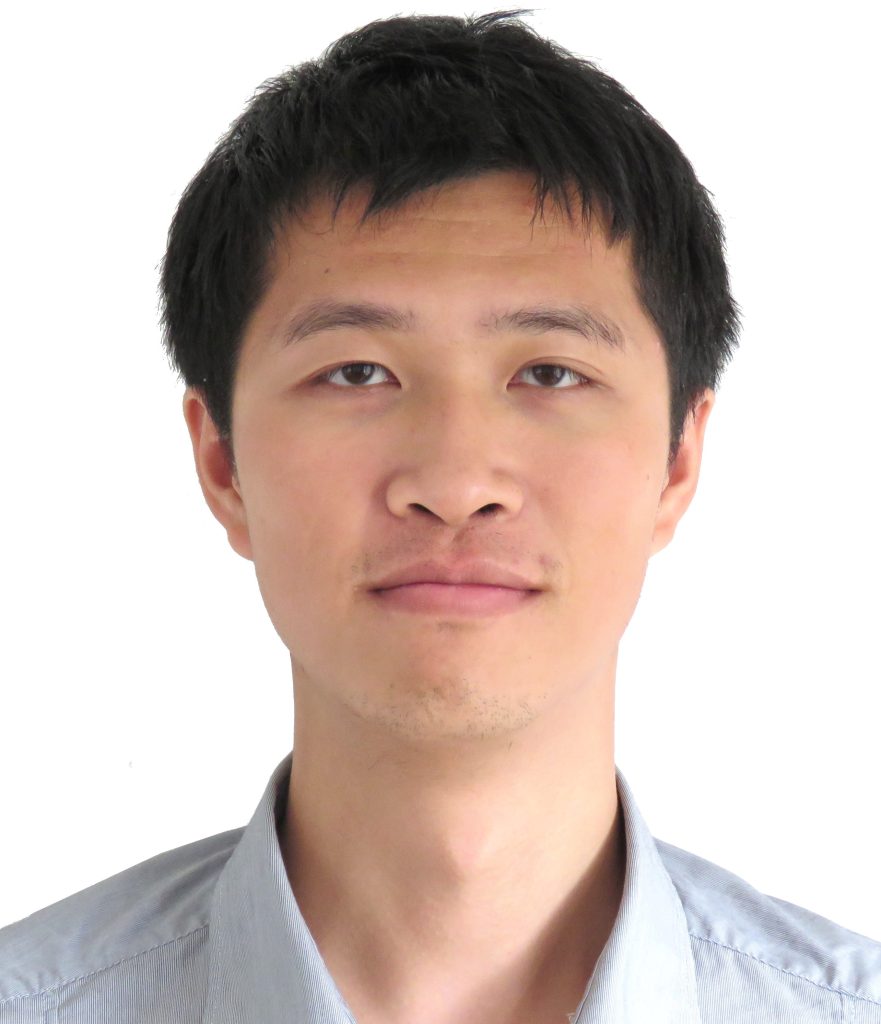
Mohammad Pirani is an Assistant Professor in the Department of Mechanical Engineering at the University of Ottawa, with a joint appointment at the School of Electrical Engineering and Computer Science. Previously, he held postdoctoral and research assistant professor roles at the University of Waterloo, University of Toronto, and KTH Royal Institute of Technology. Education: Ph.D., Mechanical and Mechatronics Engineering, University of Waterloo (2017) MASc., Electrical and Computer Engineering, University of Waterloo (2014) BASc., Mechanical Engineering, Amirkabir University of Technology (2011) His research focuses on resilient and fault-tolerant control in complex systems, including networked control systems and multi-agent systems . He explores intersections with network science , cybersecurity , and machine learning , addressing vulnerabilities in cyber-physical systems like automotive networks. Notable contributions include publications in IEEE Transactions on Control of Network Systems and Automatica , with recent work on network critical slowing down and graph-theoretic resilience strategies. His research trends emphasize reliable learning , security in distributed systems , and data-driven detection of critical transitions . Scientific Awards: Senior Member, IEEE Mohammad Pirani holds a dual appointment at the University of Ottawa and an adjunct professor position at the University of Waterloo. His work bridges mechatronics , robotics and automation , and networked systems , with future directions targeting cybersecurity in cyber-physical systems.
Professor David Abbink is a Full Professor of Haptic Human-Robot Interaction at Delft University of Technology, holding a joint appointment between the Department of Cognitive Robotics in the Faculty of Mechanical Engineering and Industrial Design Engineering since November 2023. He founded the Delft Haptics Lab and co-founded the Cognitive Robotics Department in 2017. Abbink leads the transdisciplinary research and innovation centre FRAIM, which was awarded the prestigious NWO Stevin Premie (Dutch Nobel Prize equivalent) in June 2024. Trained as a mechanical engineer specializing in biomechanics, Abbink's research focuses on human behavior adaptations when interacting with autonomous systems. He has published over a hundred scientific articles on human-robot interaction, haptics, shared control, tele-operation, driver assistance systems, and sensorimotor control. His research has been funded by industry partners (Nissan, Boeing, Renault), RVO (Brightsky project 2022-2026), and the Dutch Science Foundation NWO through personal grants (VENI 2010-2014, VIDI 2015-2019). Abbink's recent work centers on worker-robot relations as an academic focus, collaborating with organizations like Erasmus Medical Centre for nursing work, Schiphol and KLM for baggage handling, and KLM Engine Repair Services for maintenance work. He also serves as scientific director for the Centre for Meaningful Human Control, launched in October 2024. His work bridges engineering, social sciences, and practical applications to responsibly shape the future of work with emerging robotic capabilities. NWO Stevin Premie (2024) Best IEEE SMC journal paper on Cybernetics (2019) Top 25 scientific talents according to New Scientist (2015) Best teacher of Faculty 3mE (2013, 2014) Best teacher of Department of BioMechanical Engineering (seven consecutive years) Abbink has supervised over 110 MSc students and 11 PhD students. His educational contributions include developing the Master Programme in Robotics at TU Delft and receiving international recognition for his course 'The Human Controller.' He is also a prominent science communicator, featured on national television, radio, and major Dutch newspapers, and has delivered lectures at venues like The Royal Institution and Lowlands Festival. Despite his academic commitments, Abbink maintains a drummer persona, having recorded four albums and performed over 400 shows across three continents between 1999-2014.
Marat I. Latypov serves as Assistant Professor in the Department of Materials Science and Engineering at the University of Arizona's College of Engineering. He is also a member of the Applied Mathematics Graduate Interdisciplinary Program and leads the Materials Informatics Lab. His research spans computational materials science, sustainable alloy design, and machine learning applications for materials development. Dr. Latypov holds a PhD in Materials Science and Engineering from Pohang University of Science and Technology (POSTECH, South Korea, 2014) and a Dipl.-Ing. in Engineering Physics from Ufa State Aviation Technical University (Russia, 2011). His postdoctoral training included appointments at Georgia Tech/CNRS in France and the University of California, Santa Barbara. His research focuses on materials informatics , physics-informed machine learning , and sustainable structural alloys . Key methodologies include graph neural networks for polycrystal mechanics, vision transformers for microstructure representation, and adaptive experimental design for materials optimization. Recent work emphasizes circular economy applications through construction waste recycling and copper mine tailings valorization. Analysis of his publication record reveals strong emphasis on computational microstructure-property linkages (35% of recent work), machine learning for materials design (30%), and sustainable materials processing (25%), with growing integration of large language models for materials knowledge extraction. NSF CAREER Award (2025) : For damage control in recycled aluminum alloys ISTI Distinguished Faculty Scholar (2024) : At Los Alamos National Laboratory Novelis Hackathon First Prize (2021) : Computer vision application Acta Materialia Outstanding Reviewer (2018) Young Researcher Award (2017) : NanoSPD7 Conference Dr. Latypov advises PhD students including Herbold Fellow Zhuocheng Huang and leads projects funded by NSF and the Grantham Foundation. Current initiatives include chalcopyrite leaching optimization for copper mining and graph neural network development for fatigue prediction. His Materials Informatics Lab maintains collaborations with Los Alamos National Laboratory, MIT, and industry partners including Novelis. The lab operates at the intersection of metallurgy , machine learning , and high-performance computing , with capabilities spanning deep learning, Bayesian inference, and cloud-based computational infrastructure. Recent news highlights participation in CODAS-HEP summer school and publication of vision transformer work in Acta Materialia.
Tsun-Ming Tseng is a Professor and principal investigator at the Chair of Electronic Design Automation at the Technical University of Munich (TUM). He leads the Emerging Technology Group and oversees multiple DFG/BMBF-funded research projects in the areas of microfluidic large-scale integration, optical network-on-chip design, and novel microfabrication techniques. Dr. Tseng's research focuses on design automation for emerging technologies, with particular expertise in three main areas: microfluidic large-scale integration, optical network-on-chip systems, and novel microfabrication processes. His work bridges the gap between electronic design automation and cutting-edge applications in bioengineering, photonics, and advanced manufacturing. His research group develops sophisticated algorithms and tools for optimizing design, reliability, and performance in these emerging domains. Analysis of Dr. Tseng's recent publications reveals a strong focus on practical implementation challenges in emerging technologies. His work spans both theoretical algorithm development and practical system implementation, with particular emphasis on reliability, performance optimization, and manufacturing considerations. The research shows increasing integration between different technology domains, particularly the convergence of microfluidics, optical networking, and electronic design automation. Dr. Tseng has been awarded multiple significant research grants including: "DE-TW-CloudWRONoC" (BMBF-NSTC project, PI, 2025-2028, EUR 797.7K) "DE-TW-PI3D" (BMBF-NSTC project, PI, 2024-2027, EUR 391.6K) "Physical Design for Microfluidic Large-Scale Integration" (DFG research grant, PI, 2024-2026, EUR 331.9K) Multiple other DFG and industrial projects totaling over EUR 3 million in funding He has successfully supervised numerous doctoral researchers and postdoctoral fellows, with current group members including Jiahui Peng, Debraj Kundu, Liaoyuan Cheng, and several others. Dr. Tseng leads the Emerging Technology Group at TUM, which focuses on developing design automation methodologies for next-generation technologies. The group maintains strong collaborations with international institutions, including partnerships with researchers in Taiwan and Hong Kong. The team operates state-of-the-art facilities for research in microfluidics, optical networking, and advanced microfabrication techniques.
Professor Lyudmila Mihaylova is a distinguished academic at the University of Sheffield's School of Electrical and Electronic Engineering, where she holds the position of Professor of Signal Processing and Control. She has established herself as a leading researcher in the fields of signal processing, Bayesian methods, and autonomous systems, with significant contributions to particle filtering techniques for intelligent transportation systems. Her work bridges theoretical developments with practical applications across multiple domains including transportation, healthcare, and industrial automation. Prof. Mihaylova's research interests center on nonlinear filtering, sequential Monte Carlo methods, statistical signal processing, and sensor data fusion. Her work spans both theoretical advancements and practical implementations, with particular focus on high-dimensional problems including vehicular traffic flow estimation, image processing, and localization in sensor networks. She has extensive experience with various image modalities such as optical, thermal, LIDAR, SAR, and hyperspectral imaging. Her group actively develops novel methods for autonomous intelligent systems focusing on sensing, tracking, decision making, and machine learning applications. Analysis of Prof. Mihaylova's recent publications reveals a strong trend toward uncertainty quantification in machine learning models, particularly for safety-critical applications. Her work increasingly integrates traditional signal processing techniques with modern deep learning approaches, with applications spanning sewer inspection robotics, medical diagnostics (particularly sleep apnea detection), UAV swarm tracking, industrial manufacturing, and autonomous vehicle systems. A significant portion of her recent research focuses on developing robust methods that can handle incomplete or outlier-corrupted data while providing reliable uncertainty estimates. Among her notable professional achievements: President of the International Society of Information Fusion (ISIF) Senior member of the IEEE Signal Processing Society Associate Editor for IEEE Transactions on Aerospace and Electronic Systems Associate Editor for Elsevier Signal Processing Journal Prof. Mihaylova has successfully mentored numerous PhD students and postdoctoral researchers, many of whom have gone on to prominent academic and industry positions. Her research has been supported by major funding bodies including EPSRC, EU, MOD/DSTL, and industry partners, with recent projects including 'Protecting Environments with UAV Swarms' (InnovateUK, 2022-2024), 'ShiRAS: Towards Safe and Reliable Autonomy in Sensor Driven Systems' (NSF-EPSRC, 2019-2023), and 'Confident safety integration for Cobots' (Lloyd's Register Foundation, 2019-2020). Her research group follows a collaborative approach with the philosophy 'We share knowledge, we grow.' Prof. Mihaylova maintains active research collaborations with institutions worldwide and has held previous academic positions at Lancaster University (2006-2013) and University of Bristol (2004-2006), along with research visiting positions at the University of Ghent, Katholic University of Leuven, and the Bulgarian Academy of Sciences.
John F. Reid is a prominent Research Professor at the University of Illinois at Urbana-Champaign in the College of Engineering , with dual appointments in Computer Science and Agricultural and Biological Engineering . He serves as Executive Director of the Center for Digital Agriculture . With over 35 years of experience in academic and industrial R&D, his career spans faculty roles at UIUC (1986-2000), leadership at Deere & Company (2000-2020), and Vice President positions at Brunswick Corporation (2020-2022). Education : Ph.D. in Agricultural Engineering (Texas A&M, 1987), M.S. and B.S. in Agricultural Engineering (Virginia Tech, 1982 & 1980) Dr. Reid's research focuses on agricultural automation , machine vision , and innovation management . He has pioneered agricultural robotics , precision technologies , and embodied AI applications in food, construction, and marine systems. His work has resulted in over 30 patents in automated guidance , sensor systems , and agricultural informatics . His scientific contributions center on stereo vision navigation , 3D field mapping , and adaptive control systems for mobile equipment. These innovations underpin modern precision agriculture and agricultural robotics frameworks. Major awards include: NAE Election (2019) ASABE Fellow (2004) University Scholar (1995) Academy of Engineering Excellence (2020) He holds leadership roles in international organizations including the CIGR Working Group on Circular Bioeconomy Systems (Chair 2024-present) and Fraunhofer USA (2013-2022).
Shimon Y. Nof is a Professor of Industrial Engineering at Purdue University's PRISM Center , where he directs NSF-industry supported research on collaborative robotics, cyber-physical systems, and industrial automation. He has held visiting positions at MIT and universities across six countries. Education: B.Sc./M.Sc. in Industrial Engineering & Management (Technion, Israel), Ph.D. in Industrial & Operations Engineering (University of Michigan) Key Achievements: Pioneered computer-aided facility design and Collaborative Control Theory (CCT), with applications spanning factories of the future, agricultural robotics, and transportation security systems His research focuses on cyber-supported integration of distributed e-Work systems and robotics, including precision agriculture with sensor networks. The PRISM Center under his leadership has developed groundbreaking protocols like Best Matching Protocol (BMP) and HUB-CI telerobotics, with real-world implementations across 400+ labs globally. Scientific honors include: Engelberger Medal (2002) Induction into Purdue's Book of Great Teachers (1999) Leadership roles in IFPR and IFAC Multiple book awards from Association of American Publishers The PRISM Global Research Network (est. 2001) now extends his work through 18 books and 6 patents, including the FTTP-TIF communication protocol and Facility Sensor Network (FSN) technology currently applied in greenhouse robotic operations.
Thad Starner is a Professor in the College of Computing at Georgia Institute of Technology and Technical Lead/Manager on Google's Glass. He directs the Contextual Computing Group (CCG), co-founded the Animal Computer Interaction Lab, and contributes to Georgia Tech's Ubicomp Group and Brainlab. A wearable computing pioneer since 1993, he has over 500 publications and 80 issued U.S. patents. Coined 'augmented reality' in 1990 Developed CopyCat for ASL learning in deaf children Invented Passive Haptic Learning for skill acquisition His research spans wearable interfaces for Deaf-hearing communication, dolphin interaction systems (CHAT), dog-handler communication (FIDO), and brain-computer interfaces for ALS patients. Current projects focus on optical aging simulation, XR input methods, and animal behavior telemetry. Recent publications (2023-2025) explore AR display ergonomics, AI-augmented reasoning, sign language recognition, and animal-computer interaction. His work has been featured in 60 Minutes, BBC, National Geographic, and Time Magazine. CHI Academy (2017) Lemelson-MIT Prize finalist White House Champions of Change finalist He advises graduate students in wearable systems and teaches AI and prototyping courses. His lab developed the Perceptive Workbench for gesture tracking and created early Eigenfaces research for face recognition.
Prof. Dr. Matthias Weidlich is a faculty member at Humboldt University of Berlin within the Institute of Computer Science under the Faculty of Mathematics and Natural Sciences . His research focuses on Process Mining , Complex Event Processing , and Data Privacy with applications in Business Process Management and Scientific Workflows . Research Interests: Business Process Management and Process Mining Complex Event Processing and Stream Data Analysis Data Privacy and Security in Process Systems Scientific Workflow Systems and User Behavior Heterogeneous Network Embeddings Algorithm Design and Optimization Recent Publications (2023-2025) demonstrate expertise in: Efficient stream processing techniques Privacy-preserving process mining frameworks Scientific workflow analysis tools Graph neural network applications Multi-modal data integration Adaptive querying systems Contact: Office: Unter den Linden 6, 10099 Berlin Phone: 030 2093-41277 Email: matthias.weidlich@hu-berlin.de Web: hu.berlin/data
Giacomo Chiesa is a Full Professor at the Department of Architecture and Design (DAD) at Politecnico di Torino. He is a member of the Interdepartmental Center Ec-L - Energy Center Lab. His research focuses on Architectural Technology , Bioclimatic Design , Building Performance , and Urban Climate . Research Interests : Building Simulation, Passive Cooling, Smart Buildings, Digital Twin, Climate Change Adaptation Recent publications analyze urban weather datasets for energy simulations, shading control thresholds , and ventilation strategies in educational buildings. His work covers energy renovation roadmaps , thermal comfort , and climate-resilient building systems . Teaching : PhD courses in Human-Centric Methodologies and MSc courses in ICT in Building Design Research Leadership : Scientific Director for projects like Urban Generation and Prelude , EU-funded initiatives
Dr. Gabriella Lindberg is an Assistant Professor in the Department of Bioengineering at the University of Oregon's Knight Campus, leading the Lindberg Lab. Her research focuses on developing bioinks, hydrogels, and bioresins to engineer musculoskeletal tissues that replicate native biological environments. She holds a PhD from the University of Otago and previously served as a Research Fellow in the Christchurch Regenerative Medicine and Tissue Engineering (CReaTE) Group. Dr. Lindberg has secured significant grants, including a New Zealand Health Research Council Emerging Researcher Grant, and has won multiple awards such as the ISBF Young Investigator Award (2019) and CMDT/MedTech CoRE awards. Her work spans collaborative projects with institutions in New Zealand, Germany, Netherlands, and Australia. Current lab members include researchers like Vinni Thoms (Lab Manager) and Tim Wheeler (Postdoctoral Scholar). The lab is recruiting for postdoctoral and graduate positions in immunomodulation for osteoarthritis and bone marrow tissue engineering. Key research platforms include biofabrication, biomaterials, and organoid development. Dr. Lindberg’s research emphasizes clinical relevance, with projects addressing patient variability and disease progression modeling. Her team explores oxygen control in 3D-printed constructs and integrates inflammatory biology with biomaterials science. The lab’s long-term goals include advancing 3D bioassembly for musculoskeletal repair and hematological disease treatments. Notable contributions include work on vitreous humor as a biomaterial, automated 3D bioassembly, and the development of photoclickable gelatin bioinks. She has mentored numerous students, including PhD candidates Axel Norberg and Bram Soliman, and supervised master’s and undergraduate researchers in tissue engineering and biofabrication techniques.
Professor Mahroo Eftekhari is a Professor in Building Services Engineering at Loughborough University, leading the Low Energy Building Services Engineering MSc programme. Her research focuses on energy-efficient building systems, thermal comfort, HVAC optimization, and renewable integration. She has pioneered control systems for airports and buildings, including MPC-based strategies to reduce energy use while enhancing occupant well-being. Notable contributions include the development of BISPA (Building & Industrial Services Pipework Academy), a national center for BIM and pipework training. Education: Holds qualifications including CEng (Chartered Engineer), DPhil (Doctor of Philosophy), FCIBSE (Fellow of Chartered Institution of Building Services Engineers), and SFHEA (Senior Fellow of the Higher Education Academy). Her academic career is marked by collaborations with Tata Steel, Mitsubishi R&D, and Vexo, yielding applied research in sustainable building technologies. Research Interests: Indoor Air Quality, Thermal Comfort Modeling, Zero Energy Buildings, Digital Twins, and Advanced Control Systems. She has developed innovative solutions like AI-driven thermal management for Building Energy Management Systems (BEMS) and interfaces to synchronize airport operations with energy systems. Awards & Grants: Secured funding from diverse bodies for projects such as adaptive thermal comfort models, BISPA infrastructure, and energy-efficient HVAC strategies. Her work emphasizes practical applications, including reducing CO₂ emissions via airport terminal optimization and improving renewable energy use in buildings. Lab & Teams: Leads the Building Energy Research Group, managing projects in closed-loop heating systems, IEQ monitoring, and hydronic system efficiency. The Civil Engineering labs house interactive BIM rigs launched with institutional and industry support.
Hayretdin Bahsi is an Assistant Professor at the School of Informatics, Computing, and Cyber Systems at Northern Arizona University . His research focuses on cybersecurity, with expertise in malware detection, IoT security, and machine learning applications in defense mechanisms. He collaborates internationally on maritime cybersecurity, healthcare systems, and critical infrastructure protection. Research Interests include Android malware analysis, botnet detection, explainable AI in intrusion detection, and threat modeling for AI-driven systems. His work addresses challenges like concept drift in malware detection and privacy-preserving techniques for IoT networks. Publications span 66 scholarly works since 2009, emphasizing cybersecurity trends in AI, IoT, and healthcare. Recent contributions explore large language model (LLM) applications in vulnerability detection and cyber threat modeling for healthcare systems. Collaborations include projects on maritime cyber-insurance, cyber incident management in low-income countries, and datasets like MedBIoT for IoT botnet analysis. His work bridges theory and practice, addressing real-world cybersecurity challenges.
Kaidi Yang is an Assistant Professor at the National University of Singapore (NUS) in the Department of Civil and Environmental Engineering, specializing in Intelligent Transportation Systems and related fields. He holds a PhD from ETH Zurich (2019), an M.Sc. in Control Science and Engineering from Tsinghua University (2014), and dual bachelor’s degrees in Automation and Mathematics from Tsinghua University (2011). His research focuses on advancing traffic control, connected/automated vehicles, shared mobility systems, and data privacy in transportation. He has contributed to developing algorithms for efficient traffic signal control, platooning coordination, and privacy-preserving data sharing in transportation networks. Education: Ph.D., Civil and Environmental Engineering (Transportation), ETH Zurich, 2019 M.Sc., Control Science and Engineering, Tsinghua University, 2014 B.Sc./B.Eng., Dual Degrees in Pure/Applied Mathematics and Automation, Tsinghua University, 2011 Yang has received prestigious awards including the Swiss National Science Foundation’s Postdoc Mobility Fellowship (2021–2022) and the IEEE ITS Conference Best Student Paper Award (2020). He serves as an Associate Editor for the IEEE Conference on Intelligent Transportation Systems (2024). His work bridges theoretical advancements in operations research, robotics, and machine learning with practical applications in urban mobility systems. Recent efforts emphasize integrating privacy-preserving techniques into traffic management and optimizing mixed-autonomy platoon control.
Li Song is a Professor and holds the Lesch Centennial Chair & Lloyd G. and Joyce Austin Presidential Professor at the University of Oklahoma's Aerospace & Mechanical Engineering Department. He leads the Building Energy Efficiency Lab and serves as AME Associate Director for Research. His expertise spans building energy systems, HVAC optimization, and fault detection technologies. Education: Ph.D. (Thermal/Fluid Science, 2004) from University of Nebraska-Lincoln; M.S. (Thermal/Fluid Science, 1996) from Harbin Institute of Technology; B.S. (Thermal Energy Systems, 1993) from Shengyang University of Civil Engineering and Architecture. Research focuses on energy-efficient HVAC systems, fault detection algorithms, and building performance analytics. Notable contributions include the ULEM-FDD system for high-performance buildings and virtual sensor technologies for airflow/water flow measurement. Awards include the ConocoPhillips Energy Prize (2011 finalist) and Bes-Tech Innovation Award (2006). Publications emphasize HVAC control strategies, energy modeling, and IoT-enabled diagnostics. Courses taught include Thermodynamics, Energy Efficient Building Systems Design, and HVAC Systems Engineering.