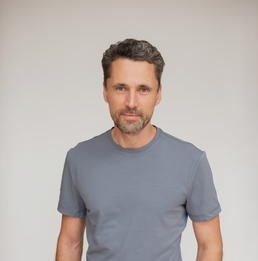
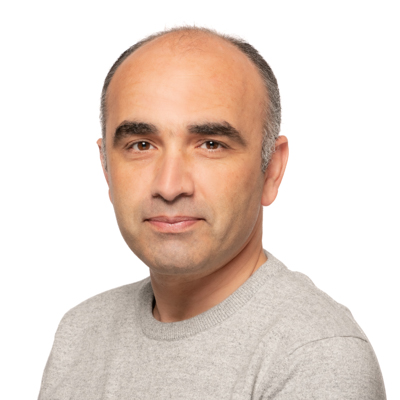
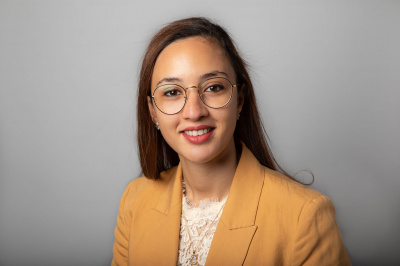
Prof. Tim Landgraf is a Professor of Computer Science at Freie Universität Berlin, affiliated with the Dahlem Center for Machine Learning and Robotics. He specializes in artificial intelligence, robotics, and biohybrid systems, focusing on collective behavior, machine learning, and animal-robot interactions. His work bridges computational methods with biological systems, as seen in studies of honeybee communication and fish behavior. Key research interests include self-supervised learning algorithms, robotic swarm dynamics, and applications of AI in education and healthcare. Prof. Landgraf has led projects like the Biorobotics Lab and contributed to initiatives such as the H2020-funded HIVEOPOLIS. He has been honored with the 'Hochschullehrer des Jahres' (Professor of the Year) award in 2020. Recent publications emphasize biohybrid systems, explainable AI, and counterfactual explanations, reflecting his commitment to interdisciplinary innovation. His courses, such as 'Self-Supervised Learning,' highlight theoretical and practical aspects of cutting-edge machine learning techniques.
Marc Alier Forment is an Associate Professor at the Universitat Politècnica de Catalunya (UPC), affiliated with the Department of Services and Information Systems Engineering within the Faculty of Informatics of Barcelona (FIB). He is also associated with the Institut de Ciències de l'Educació and serves as Coordinator of the Doctoral Program in Engineering, Science, and Technology Education. His research is conducted through the UPC EduSTEAM - STEAM University Learning Research Group. His research interests span Educational Technology , Artificial Intelligence in Education , Learning Management Systems , Open Source in Education , Ethics in Computing , Sustainability in Education , Mobile Learning , Learning Analytics , and Privacy in EdTech . He emphasizes ethical, secure, and sustainable applications of technology in higher education, particularly in engineering contexts. The recent scholarly output highlights a strong focus on the integration of AI in education (especially through the LAMB framework), ethical implications of generative AI, privacy in learning analytics using edge and fog computing, and innovative pedagogical methods in computer science education. His work increasingly bridges technical computing with humanistic concerns such as ethics, privacy, and social responsibility. Best Paper Award TEEM'22 Premis de Programari lliure 2005 de l'AGAUR VI Premi Davyd Luque a la innovació en les TIC Best interoperability innovation: Moodle simple learning tools for interoperability consumer – Spain Marc Alier Forment has led and participated in numerous educational innovation and R&D+i projects, particularly focused on Moodle/LMS integration, mobile learning, open-source educational tools, and the development of ethical and privacy-preserving technologies. He has mentored and collaborated extensively with colleagues on curriculum development, particularly in embedding sustainability and ethics into computing education. His work is central to UPC’s digital education strategy, especially through the Atenea platform. He leads and contributes to the UPC EduSTEAM research group and has been instrumental in developing STEAM-based lecturer training programs. His projects often involve interdisciplinary collaboration across computing, education, and social sciences, aiming to create holistic, responsible technological solutions for learning.
Dr. Enayat Rajabi is an Associate Professor of Business Analytics at the Shannon School of Business, Cape Breton University. Holding a PhD in Information and Knowledge Engineering from the University of Alcala (Spain) and a postdoctoral fellowship from Dalhousie University, his research focuses on the intersection of Machine Learning, Knowledge Graphs, and Data Analytics. He actively applies these technologies in healthcare, smart cities, and social media crisis response contexts. Education PhD in Information and Knowledge Engineering, University of Alcala (Spain) Postdoctoral Fellowship, Dalhousie University Research Interests His work bridges Knowledge Graphs with Machine Learning, emphasizing explainability and practical applications. Key areas include: Explainable AI for clinical decision-making Knowledge Graph applications in healthcare systems Social media analytics for emergency response Smart city data integration Generative modeling for tabular data Recent Publications Trends Recent articles highlight: Explainable AI in healthcare settings Industrial breakdown prediction systems Social media influencer detection Smart city infrastructure modeling Advanced data synthesis techniques Continued focus on Knowledge Graph applications
Klaas-Jan Stol is a Senior Lecturer at the School of Computer Science and Information Technology, University College Cork. His research focuses on software development methods, open source practices, and improving research methodologies in software engineering. He leads projects funded by Science Foundation Ireland (SFI) and industry, with grants totaling over €1.5 million. Notable roles include SFI Principal Investigator on open source and agile projects. Education: PhD (Computer Science, University of Limerick), MSc (University of Groningen), B.ICT (Hanzehogeschool Groningen). Former Research Fellow at Lero - Irish Software Research Centre. Research interests span open source adoption, inner source frameworks, crowdsourcing, and theory development. Key publications include Adopting InnerSource: Principles and Case Studies (2018) and Scaling a Software Business (2017). Awards include the Lero Director’s Research Excellence Award (2019). Grant leadership includes SODAW (€464k), HUSRAI (€353k), and Security-Centered Developers (€91k). Guides PhD/postdoc researchers in areas like secure coding and open source ecosystems. Editorial roles: Empirical Software Engineering, Journal of Systems and Software. Labs/Teams: Active in Lero as a Funded Investigator, contributing to industry-academia collaborations.
Pascal Hitzler is the University Distinguished Professor and endowed Lloyd T. Smith Creativity in Engineering Chair at Kansas State University's Department of Computer Science within the Carl R. Ice College of Engineering. He serves as Director of the Center for Artificial Intelligence and Data Science (CAIDS) and Director (Research) of the Institute for Digital Agriculture and Advanced Analytics (ID3A). Previously, he held roles at Wright State University, including NCR Distinguished Professor and Director of Data Science. His academic journey includes a PhD in Mathematics from University College Cork (2001) and a Diplom in Mathematics from the University of Tübingen (1998). Affiliations: Kansas State University (2020–present), Wright State University (2009–2020), University of Karlsruhe (2004–2009), TU Dresden (2001–2004). Education: PhD in Mathematics (2001, UCC Cork), Diplom in Mathematics (1998, Tübingen). His research focuses on neuro-symbolic AI, semantic web technologies, knowledge graphs, and ontology modeling. Key contributions include founding editorships of the Neurosymbolic Artificial Intelligence and Semantic Web journals, co-authoring the Foundations of Semantic Web Technologies textbook, and pioneering ontology design patterns. His work emphasizes semantic web standards like OWL and integrates explainable AI with deep learning. Recent articles explore neuro-symbolic integration, geospatial knowledge graphs (KnowWhereGraph), and explainable AI through concept induction. He has received awards such as the SWSA Ten-Year Award (2020) and is a highly cited researcher in artificial intelligence. Grants and collaborations span digital agriculture, cybersecurity (K-CaTS), and interdisciplinary initiatives like the NSF-funded Global Food Systems Datahub. His DaSe Lab develops advanced semantic technologies, with projects including the Enslaved.org hub ontology and crisis management frameworks (HIP Ontology). Labs/Teams: Director of the DaSe Lab for Data Semantics, leading projects on knowledge graphs, neuro-symbolic AI, and geospatial data integration. Collaborates with institutions like the University of Notre Dame, Jönköping University, and IOS Press.
Archil Chochia is a Senior Research Fellow at the Department of Law , Tallinn University of Technology , actively contributing to European Law , Artificial Intelligence Regulation , and Cybersecurity . He serves on the Academic Ethics Committee and is a visiting lecturer at Lille Catholic University . He was a Weinstein JAMS fellow in 2018 and an International Mediator for the Kyrgyz Republic’s court. His academic journey includes a Doctoral Degree (2013) and Master’s Degree (2025) from TalTech, with studies at Harvard , Pepperdine , and University of California Hastings College of Law . Research Interests : His work spans European Union Law , Digital Governance , AI Ethics , and Political Geography , often intersecting with Geopolitics and Human Rights . Projects like Digital Europe and Future Integration and Legal and Regulatory Governance of Artificial Intelligence Systems highlight his focus on technology’s legal implications. Scientific Awards : Recognized with Letters of Appreciation from institutions such as NATO Cooperative Cyber Defence Centre of Excellence , Supreme Court of Georgia , and Vilnius Gediminas Technical University , alongside the Weinstein JAMS Fellowship . Teaching & Administrative Roles : Courses include Human Rights, Ethics and Technology and EU External Relations Law . He has coordinated academic programs, directed TalTech’s Doctoral School , and served on editorial boards for journals like TalTech Journal of European Studies and TSU Law Review .
Lu Feng is an Associate Professor of Computer Science at the University of Virginia, affiliated with the Link Lab, a center specializing in Cyber-Physical Systems (CPS). She holds a Ph.D. in Computer Science from the University of Oxford. Her research focuses on ensuring safety and trustworthiness in CPS, with applications in medical devices, autonomous robotics, and smart cities. She has received prestigious awards including the NSF CRII Award (2018) and NSF CAREER Award (2020). Her work integrates formal methods, AI, and robotics to address challenges in CPS assurance and human-machine collaboration. Notable contributions include developing risk-assessment tools for heart failure patients, predictive monitoring frameworks for CPS, and trust-aware planning algorithms for autonomous systems. She has pioneered frameworks like DP-RuL for clinical decision support systems and IrrMap for precision agriculture. Her research bridges theoretical foundations (e.g., model checking, reinforcement learning) with practical applications in healthcare, transportation, and urban systems. She collaborates across disciplines, contributing to initiatives like the Link Lab’s smart city simulations and safety-critical medical CPS assurance. Education: Ph.D., Computer Science, University of Oxford Awards: NSF CRII (2018), NSF CAREER (2020) Labs: Link Lab (Cyber-Physical Systems Center) Focus Areas: Runtime safety, human-AI trust, medical device assurance, smart city systems
Meriem Benyahya is a Postdoctoral Researcher at the University of Geneva's Research Institute for Statistics and Information Science. Her work focuses on cybersecurity, data privacy, and regulatory frameworks for connected and automated vehicles (CAVs). She has published extensively in journals like Journal of Transportation Engineering and IEEE Access , addressing topics ranging from certification roadmaps for CAVs to GDPR compliance in automated transport systems. Education : - Ph.D., University of Geneva - Specialization in Applied Algorithmics (Executive Program) Research Highlights : - Systematic reviews of threat analysis methodologies for CAVs - Cybersecurity certification gaps and penetration testing strategies - Human-centric risk visualization for dynamic safety assessment Professional Engagement : - Active contributor to conferences like ARES 2023 - Collaborates with industry on modular CCAM (Connected and Autonomous Mobility) architectures
Omri Abend is an Associate Professor at The Hebrew University of Jerusalem, affiliated with the School of Computer Science and Engineering and serving as Chair of the Department of Cognitive and Brain Sciences. His research lies at the intersection of Computational Linguistics, Natural Language Processing, and Cognitive Science, with a focus on semantic representation and language acquisition modeling. His primary research interests include: Computational modeling of child language acquisition Semantic representation frameworks, particularly Universal Conceptual Cognitive Annotation (UCCA) Statistical learning and machine translation Unsupervised grammar learning and lexical relation induction Cross-lingual and cross-domain alignment in language models Evaluation methodologies for NLP systems His recent publications demonstrate a strong trend toward analyzing large language models (LLMs), exploring human-like patterns in AI, improving evaluation metrics, and applying NLP to humanitarian domains such as Holocaust testimony analysis. His work combines theoretical linguistic insights with practical machine learning applications. Scientific awards include: Outstanding Paper Award at ACL 2017 Area Chair Award for Best Paper in the Track at ACL 2023 He has supervised and collaborated with numerous researchers and students across projects in semantic parsing, machine translation, and cognitive modeling. His work has been supported by community-wide initiatives such as the MRP shared tasks, which he co-organized. He also leads research on ethical AI, open human feedback, and the computational analysis of historical narratives. Omri Abend leads several research teams focused on: The development and application of the UCCA framework for semantic annotation Cross-lingual and cross-domain knowledge representation in LLMs Computational modeling of language acquisition Evaluation and improvement of NLP systems Application of NLP to digital humanities and historical testimony analysis
Colin Porlezza is Associate Professor of Digital Journalism and Director of the Institute of Media and Journalism (IMeG) at the Università della Svizzera italiana (USI), Faculty of Communication, Culture and Society. He also leads the European Journalism Observatory (EJO) and holds an Honorary Senior Research Fellow position at City, University of London. Previously, he was a Research Fellow at Columbia University’s Tow Center for Digital Journalism. PhD in Communication Sciences – Università della Svizzera italiana Licentiate (BA/MA) in Communication Sciences – USI, specialization in Mass Communication and New Media Work experience at University of Zurich and University of Neuchâtel His research centers on digital journalism, with emphasis on automated journalism, artificial intelligence, datafication, disinformation, and journalistic ethics. He investigates how digital technologies reshape journalistic roles, norms, and practices, particularly in public service and hybrid news environments. His work bridges technical innovation with ethical and societal implications. The 15 most recent articles highlight a consistent trajectory in AI and journalism, focusing on automation, accountability, verification tools, and innovation. Keywords span communication, AI, ethics, and media policy, while subfields include algorithmic transparency, hybrid workflows, fact-checking, and value-sensitive design—reflecting a strong interdisciplinary focus on responsible technological integration in newsrooms. Knight News Innovation Fellowship Prof. Porlezza has secured major research grants from the Swiss National Science Foundation, Horizon 2020, Google Digital News Initiative, and OFCOM. He leads the JoIn-DemoS and Diacomet projects and previously directed Designing Hybrid Journalism and DMINR. He advises PhD students as Director of the PhD Program and collaborates with media organizations like SRG SSR and Tamedia. His advisory roles include the Austrian National Journalists' Study and Innovamedia network. He leads the Institute of Media and Journalism (IMeG) and the European Journalism Observatory (EJO), fostering collaborative research across Europe. These units serve as hubs for innovation, policy dialogue, and knowledge transfer between academia and professional journalism.
Prof. Dr. Andreas Bulling is Full Professor of Computer Science at the University of Stuttgart , leading the Collaborative Artificial Intelligence research group at the Institute for Visualization and Interactive Systems. He is also a founding director of the Stuttgart ELLIS Unit and serves on multiple prestigious boards including IEEE Transactions on Visualization and Computer Graphics . Education: MSc in Computer Science (KIT), PhD in Information Technology (ETH Zurich) Research Interests: Human-Computer Interaction, Eye Tracking, Wearable Computing, Computer Vision, and Privacy-Preserving AI Scientific Leadership: UbiComp Steering Committee member, ACM ETRA General Chair (2020), and extensive editorial/guest editor roles Key Awards: ERC Starting Grant (2018), Henriette Herz Scout (2024), and multiple best paper awards at CHI, ETRA, and UIST Technical Contributions: Developed datasets (LPW, VisRecall++), created novel methods for gaze estimation, mental face reconstruction, and saliency prediction in visualizations His work bridges AI and Human-Computer Interaction with applications in immersive systems and healthcare technologies.
Eric Pop is a Professor of Electrical Engineering and (by courtesy) Materials Science & Engineering at Stanford University's School of Engineering, where he leads the SystemX Heterogeneous Integration focus area. Previously, he served on the faculty at the University of Illinois at Urbana-Champaign (2007-2013) and worked at Intel Corporation (2005-2007). His academic background includes a PhD in Electrical Engineering from Stanford University (2005) and three degrees from MIT: MEng and BS in Electrical Engineering, and BS in Physics. His educational credentials: PhD in Electrical Engineering, Stanford University, 2005 MEng in Electrical Engineering, MIT BS in Electrical Engineering, MIT BS in Physics, MIT Professor Pop's research centers on the intersection of electronics, nanomaterials, and energy, with pioneering contributions to 2D materials (particularly transition metal dichalcogenides), semiconductor device physics, and thermal management. His work addresses critical challenges in contact engineering for atomically thin semiconductors, stability of oxide transistors, and energy-efficient neuromorphic systems. Current projects explore solvent doping techniques, strain engineering, and machine learning-assisted device characterization to enable next-generation electronics. Analysis of his 2023-2025 publications reveals dominant themes in 2D semiconductor transistors, oxide device reliability, and neuromorphic computing architectures. Key trends include the integration of hyperspectral microscopy for rapid material characterization, Monte Carlo simulations for thermal-electrical transport, and phase-change materials for artificial neurons. His research consistently bridges fundamental material science with practical device engineering, emphasizing industrial scalability and low-power operation. His scientific honors include: Presidential Early Career Award for Scientists and Engineers (PECASE) Young Investigator Awards from ONR, AFOSR, NSF, and DARPA Multiple best paper and best poster awards at international conferences with students Professor Pop actively mentors PhD and Master's students through directed research courses (EE 190/191/390/391), fostering award-winning projects in semiconductor device innovation. His research program is supported by substantial grants from federal agencies including NSF, DARPA, and the Department of Defense, with recent work focusing on heterogeneous integration and thermal management for 3D circuits. As Editor of 2D Materials and former General Chair of the Device Research Conference, he significantly influences the semiconductor research community. He directs the Pop Lab (poplab.stanford.edu), which maintains advanced nanofabrication and characterization facilities for semiconductor research. Current initiatives include developing flexible radio-frequency transistors exceeding 100 GHz, scalable production of transition metal dichalcogenide solar cells, and AI-accelerated thermal simulation pipelines for integrated circuit design. The lab's collaborative environment bridges electrical engineering, materials science, and computer science to address semiconductor industry challenges.
Tarleton Gillespie is an Adjunct Professor at Cornell University with joint appointments in the Department of Communication and Department of Information Science. He maintains a graduate field appointment in Science & Technology Studies while concurrently serving as Senior Principal Researcher at Microsoft Research New England. Gillespie earned his Ph.D. (2002) and M.A. (1997) in Communication from the University of California, San Diego, and a B.A. in English from Amherst College (1994). His research examines the sociotechnical dimensions of digital platforms, focusing on: Content moderation practices and platform governance Algorithmic systems shaping public discourse Generative AI's impact on representation and power dynamics Political controversies surrounding digital media infrastructures Gillespie's recent publications (2020-2025) demonstrate a strong focus on algorithmic governance challenges, with 73% examining content moderation systems and 67% analyzing AI's societal impacts. His work consistently addresses platform accountability, visibility politics, and the labor conditions underlying digital infrastructures. Awards & Honors: PROSE Award Finalist (2019) for Custodians of the Internet EURIAS Residential Research Fellowship (2012) SUNY Chancellor's Teaching Excellence Award (2011) Dual Outstanding Book Awards (2009) for Wired Shut Cornell Teaching Innovation Award (2008) As Principal Investigator, Gillespie leads research initiatives at Microsoft Research's Social Media Collective, examining platform governance frameworks. He maintains an active international speaking schedule, with recent keynotes addressing generative AI governance at institutions including Cornell University and University of Vermont.
Chris Callison-Burch is a Professor of Computer and Information Science at the University of Pennsylvania , where he leads research in Natural Language Processing , Large Language Models , and Multimodal Learning . Previously, he worked at Johns Hopkins University’s Center for Language and Speech Processing for six years. Research Areas Automated paraphrasing and natural language understanding Machine translation without bilingual parallel corpora Crowdsourcing for NLP and social justice applications Generative AI and vision-language models Recent work focuses on LLM soundness guarantees, multimodal reasoning, AI-generated text detection, and ethical applications of language models. His research has been cited over 25,000 times, and he testified before Congress in 2023 on generative AI and copyright law. Awards & Funding Sloan Research Fellow Faculty awards from Google, Microsoft, Amazon, Facebook, and Roblox Grants from DARPA, IARPA, and NSF He chairs major NLP conferences (ACL 2017, EMNLP 2015) and contributes to editorial boards of TACL and Computational Linguistics .
Martin Rätz is a researcher and team leader at the Institute for Energy Efficient Buildings and Indoor Climate of RWTH Aachen University , where he leads the Building Automation research team since January 2025. His work focuses on integrating advanced technologies like machine learning, IoT, and cloud computing into building automation systems to enhance energy efficiency and operational transparency. M.Sc. in Mechanical Engineering (Energy Engineering specialization), RWTH Aachen University Erasmus studies at Instituto Superior Técnico in Lisbon His research interests include: Model predictive control for building systems Energy-efficient control algorithms Machine learning applications in energy systems IoT integration for smart buildings Cloud computing in building automation Demand-controlled ventilation systems His recent publications demonstrate expertise in: Machine learning model validation Fault detection in district heating networks Energy weather data generation tools AI-driven building system optimization Dynamic ventilation strategies for healthcare settings Scientific honors include: Springorum Denkmünze for academic excellence (2018) Dean's List recognition (2018, 2019) As team leader, he directs projects such as: Monitoring 120 buildings in the OM4ABDO initiative Developing the BUDO standard for data point naming Advancing cloud-based building automation frameworks