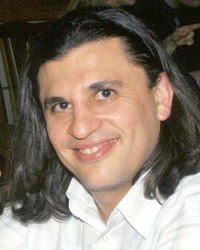
Prof. W.F.G. Haselager is a Professor of Artificial Intelligence at Radboud University Nijmegen, affiliated with the Donders Institute for Brain, Cognition and Behaviour and the Donders Centre for Cognition. He holds dual expertise in philosophy, psychology, and AI, focusing on societal implications of emerging technologies. His research integrates empirical methods (e.g., robotics, computational modeling) with philosophical inquiry into agency, responsibility, and human self-understanding. Education: MSc degrees in Philosophy and Psychology, PhD (1995) from Vrije Universiteit Amsterdam. Teaching responsibilities include bachelor/master programs in AI and Cognitive Neuroscience. Active in public engagement through lectures/workshops on AI ethics, neurotechnology, and free will. Key research themes include neuroethics, AI equity, and brain-computer interfacing. Current projects include the ELSA Lab (AI for Health Equity) and 'Healthy Data' initiatives addressing algorithmic bias and medical AI oversight. He advises Zander Labs on neurotechnology ethics and co-leads multi-institutional grants exploring conversational AI and neurodiverse education. Media appearances include Dutch TV/NOS coverage of brain implants and podcasts on AI sentience. Ancillary activities include the 'Pim Haselager Lectures' series and advisory roles in neurotechnology ethics.
Petra van den Bos is an Assistant Professor at the University of Twente, affiliated with both the Digital Society Institute and the Formal Methods and Tools department. Her research focuses on advancing software engineering through formal methods, model-based testing, and automated testing techniques. She has contributed to integrating Behavior-Driven Development (BDD) with model-based approaches, as well as developing tools like VeyMont for choreography-based concurrent programming. Her work emphasizes practical applications in video game development, web testing, and user story-driven methodologies. Notably, she received the FORTE 2023 Best artefact award for outstanding contributions to formal techniques. Petra collaborates on datasets archived on Zenodo, showcasing reproducible research in testing frameworks and formal verification. Research Interests: Formal Methods, Model-Based Testing, Automated Testing, Concurrent Programming, and Software Verification. Awards: FORTE 2023 Best artefact (2022). Advising & Grants: No formal advisees listed; contributions focus on collaborative research projects and open-source tool development. Labs/Teams: Active in the Formal Methods and Tools research group, advancing software reliability through interdisciplinary approaches.
Prof. Ferdinanda Ponci is a Professor at RWTH Aachen University, leading the Department of Monitoring and Distributed Control for Energy Systems. Her work focuses on smart grid technologies, renewable energy integration, and control systems for modern power networks. She actively contributes to advancing grid resilience, EV charging infrastructure, and cybersecurity in energy systems. Key research interests include hybrid AC-DC grids, distributed energy resources coordination, and application of AI in grid management. She has pioneered frameworks like datafev for EV charging management and SMU platforms for synchronized measurements. Her interdisciplinary approach also addresses diversity in engineering and societal impacts of energy systems. Prof. Ponci’s laboratory activities involve hardware-in-the-loop testing, blockchain-based grid solutions, and development of educational toolboxes for emerging technologies. She collaborates on projects such as submarine transmission systems and grid interoperability testing, contributing to both academic and industrial advancements in power systems engineering.
Benoît H. Lessard is an Associate Professor and Tier 2 Canada Research Chair in Advanced Polymer Materials and Organic Electronics at the Department of Chemical and Biological Engineering , University of Ottawa . His research focuses on developing low-cost, sustainable electronic materials and their integration into next-generation devices, emphasizing biodegradability, flexibility, and environmental compatibility. Research interests include organic thin-film transistors (OTFTs), polymer-based sensors, and nanomaterials for electronics. He leads the Lessard Research Group , fostering interdisciplinary partnerships with industry and academia. Key achievements include pioneering work on silicon phthalocyanine semiconductors and cannabinoid sensing technologies. Current affiliations: Faculty of Engineering, School of Computer Science and Electrical Engineering (collaborative). Awards: Early Career Researcher Award (2021), Glinski Prize (2020), John C. Polanyi Prize (2015). Supervision: 6 current PhD/MSc students, including Alexander Peltekoff and Nic Boileau. Publications emphasize advancements in OTFT stability, biocompatible materials, and sensor applications. Recent work explores rapid prototyping techniques and high-throughput characterization for accelerating material discovery.
Dr. Yaguang Zhang is a Clinical Assistant Professor at Purdue University, jointly appointed in the Department of Agricultural & Biological Engineering (ABE) and the Department of Agricultural Sciences Education & Communication (ASEC) . Holding a Ph.D. in Electrical and Computer Engineering from Purdue (2021), he specializes in data science , digital agriculture , and UAV-aided wireless communication systems , with applications in intelligent transportation, proactive road maintenance, and engineering education. Education: Ph.D. and M.Sc. in Electrical and Computer Engineering (Purdue), B.Eng. in Communication Engineering (Tianjin University) Research Interests span cutting-edge domains including: Digital Agriculture: GPS-based field shape generation, product traceability trees, and automated metadata collection for agricultural operations Wireless Communication: Millimeter-wave channel modeling, UAV relay systems, and rural network coverage optimization Smart Infrastructure: Pavement condition assessment tools, sun-shadow simulation for road treatment, and vehicle automation platforms Recent Publications emphasize scalable solutions for agricultural IoT, machine learning in crop monitoring, and interoperable data frameworks. His scientific awards include: 2024 Outstanding Engineering Teacher (Purdue) 2024 ASABE Superior Paper Award 2020 FFAR Student Poster First Prize Multiple NSF/IEEE travel supports Grants from USDA, NSF, INDOT, and industry partners (CableLabs, Nokia) fund projects like tractor autopilot development, rural 6G networks, and pavement monitoring systems. He mentors graduate students in agricultural robotics , data science , and connected vehicle research .
Hedayat Zarkoob is a Researcher in the Department of Computer Science at the University of British Columbia (UBC), where he completed his PhD under Prof. Kevin Leyton-Brown. His work focuses on AI applications in education, particularly in peer grading systems, active learning, and large-scale classroom engagement. He is actively involved in teaching within UBC's Master of Data Science (MDS) program and the Computer Science department, leading courses on privacy, algorithms, communication, and societal impacts of technology. Education: PhD in Computer Science, UBC (supervised by Kevin Leyton-Brown) MSc in Computer Science, Simon Fraser University (supervised by Andrei Bulatov) Research Interests: Zarkoob's research bridges AI and education, with emphasis on scalable assessment tools (e.g., Mechanical TA 2), classroom engagement platforms (Agora), and AI-driven conference review systems. His work combines algorithm design, educational technology, and human-AI collaboration. Recent Projects: Agora, an open-source tool for student participation in large courses; Mechanical TA 2, a peer-grading system with algorithmic support; and AAAI 2021 workflow innovations. Teaching Roles: Upcoming courses include DSCI 541, 553, 542, 512, and CPSC 430. He has co-taught CPSC 430 (Computers and Society) since 2023.
Mehmet Mercangoz is an Associate Professor in Autonomous Industrial Systems at the Department of Chemical Engineering, Faculty of Engineering, Imperial College London. His research focuses on developing intelligent systems for industrial processes and energy systems, emphasizing safety, reliability, and sustainability through process modeling, model predictive control, optimization, and machine learning. His recent publications highlight applications of large language models , reinforcement learning , and hybrid mechanistic-machine learning models to address challenges in industrial automation, fault handling, energy storage, and gas compression systems. Key themes include decarbonization, electrification of process industries, and adversarially robust control frameworks. Current affiliations include Imperial College London and ABB, with prior roles at ABB Corporate Research Switzerland and ABB Future Labs. His work bridges chemical engineering , control theory , and artificial intelligence , targeting zero-emission industrial operations.
Prof. Mauricio de Campos Porath is a Professor of Production Engineering and Measuring Technology at the Hamburg University of Applied Sciences (HAW Hamburg), Department of Mechanical Engineering and Production. He holds a Dr.-Ing. from RWTH Aachen University (2009), M.Sc. in Production Engineering from RWTH Aachen (2004), and B.Sc. in Mechanical Engineering from Universidade Federal de Santa Catarina (UFSC), Brazil (2002). His research focuses on precision metrology, including coordinate measuring technology, industrial computed tomography, and uncertainty analysis in manufacturing processes. Key roles include serving as Deputy Study Program Coordinator for the B.Eng. in Mechanical Engineering (Production Technology) at the Shanghai-Hamburg College (since 2024), Member of the Faculty Council (TI Faculty), and Reviewer for journals like Precision Engineering and Measurement Science and Technology. He has extensive industry experience, including roles at Carl Zeiss IMT GmbH and as a Measurement Engineer at CERTI Brazil. Research interests span advanced measurement techniques for industrial applications, robot calibration, and quality management. His work emphasizes bridging theoretical metrology with practical manufacturing challenges, particularly in additive manufacturing and shipbuilding assembly processes. Publications highlight contributions to calibration methodologies, uncertainty quantification, and precision measurement systems. He actively participates in international conferences and academic reform initiatives, reflecting his commitment to advancing technical education and industrial metrology standards.
Dr. Chunming Qiao is a SUNY Distinguished Professor and Chair of the Department of Computer Science and Engineering at the University at Buffalo (SUNY) , leading the Lab for Advanced Network Design, Evaluation and Research (LANDR) since 1993. His work spans cyber-physical systems , optical networks , and Internet of Things (IoT) , with a focus on safety, reliability, and protocol design. Education: PhD in Computer Science from the University of Pittsburgh (1993) BS in Computer Science and Engineering from the University of Science and Technology of China (1985) Dr. Qiao’s research interests combine theoretical and applied network design, including autonomous vehicles , quantum computing , and cloud services . He pioneered optical burst switching (OBS) and iCAR systems for wireless convergence, cited in BusinessWeek and Wireless Europe . His recent publications emphasize quantum networking , federated learning , and autonomous driving security , with projects on entanglement routing , edge inference optimization , and LiDAR adversarial attacks . Articles span IEEE and ACM venues , and include best paper awards . Scientific Awards: TC-CSR Distinguished Technical Achievement Award (2015) SUNY Chancellor's Award for Excellence (2013) IEEE Fellow (2009) UB Exceptional Scholar-Sustained Achievement Award (2005) Dr. Qiao has secured over two dozen NSF grants and collaborations with Google , Cisco , and NEC Labs . His 7 US patents and consulting experience highlight his industry impact, while his editorial roles and conference leadership underscore academic influence. He actively contributes to multi-disciplinary research through the New York State Center of Excellence in Bioinformatics and Life Sciences and CEDAR , advancing high-performance computing and document analysis .
Dr. Harish Sarma Krishnamoorthy serves as Associate Professor in the Department of Electrical and Computer Engineering at the University of Houston, College of Engineering. He holds concurrent roles as Associate Director of the PEMSEC Consortium and Associate Editor of IEEE Transactions on Power Electronics. Ph.D. in Electrical and Computer Engineering (2015), Texas A&M University B.Tech. in Electrical and Electronics Engineering (2008), National Institute of Technology Tiruchirappalli, India His research focuses on high-density power conversion systems with particular emphasis on solid-state transformers for renewable energy integration, machine learning-driven health analytics for power electronics, and converter solutions for extreme environments in aerospace, defense, and subsea applications. Current projects include NSF CAREER-funded work on Edge Intelligence for power converters and DOE ARPA-E OPEN 2021 Mini-PulPS initiative for pulsed power systems. Recent publications highlight advancements in GaN HEMT reliability testing, resonant circuit breaker topologies, and multiport energy routers for hybrid renewable-oil & gas systems. His work spans converter design for 5G communication, NMR metrology, and electric aircraft propulsion architectures. NSF CAREER Award recipient (2023) IEEE PELS Young Professional Exceptional Service Award OTC Emerging Leader recognition (2022) GE 6-Sigma Green Belt Certification Best Presentation Awards at IEEE APEC He teaches graduate courses on power converters, modeling, and renewable energy systems while leading industry-funded research programs with applications in electric vehicles, data centers, and offshore energy systems.
Prof. Victor Grigoras is a faculty member at the Technical University of Iași, holding the rank of Professor. He specializes in electrical engineering and computer science, focusing on signal processing, parallel architectures, and nonlinear dynamics in power systems. His research interests include smart grid technologies, renewable energy integration, and data-driven methodologies for grid optimization. He teaches courses such as 'Semnale, Circuite și Sisteme' and 'Algoritmi și Structuri Paralele de Calcul.' His research spans over 15 recent articles (2021–2025), emphasizing advancements in smart grid automation, machine learning applications in voltage quality analysis, and optimal power flow solutions for renewable integration. Notable trends include SCADA system improvements, energy storage strategies for prosumer grids, and IoT-based energy management. His work addresses challenges in grid reliability, power quality, and future urban grid resilience under high EV adoption scenarios. Prof. Grigoras has contributed to frameworks for electric vehicle charging station placement, hydropower plant optimization via data mining, and demand response mechanisms using smart metering. His methodologies often combine clustering techniques with fuzzy logic or metaheuristic algorithms to solve complex grid problems.
Bertrand Meyer is a renowned academic and software engineering expert affiliated with Constructor University in Switzerland. He previously held positions at ETH Zurich (2001-2016), the University of Toulouse (2015-2016), and Monash University. His research focuses on object-oriented programming, software engineering, formal methods, and programming languages. He is best known for developing the Eiffel programming language and pioneering the 'Design by Contract' paradigm. Meyer earned his PhD from the University of Nancy, France. His contributions include seminal textbooks like *Object-Oriented Software Construction* (1988, 1997), *Touch of Class* (2009), and *Agile!* (2014). He has received the ACM Software System Award (2006) for his work on Eiffel. His research emphasizes rigorous software design principles, formal verification, and practical software engineering practices. Key innovations include: Design by Contract methodology Advancements in object-oriented design patterns Contributions to component-based development Work on software testing and validation techniques Meyer has authored over 374 publications spanning journals, conferences, and books. His work bridges theoretical foundations and practical software development methodologies.
Vladimir V. Terzija is a prominent researcher specializing in power systems engineering with a focus on smart grid technologies, synchronized measurement systems, and power system protection. His extensive publication record spans over two decades, demonstrating continuous contributions to the field of electrical power engineering across numerous IEEE journals and conferences. Terzija's research primarily centers on advanced power system monitoring, protection, and control methodologies. His work has significantly contributed to the development of synchronized measurement technology applications, fault analysis algorithms, and state estimation techniques for modern power systems. He has pioneered approaches for wide-area monitoring systems, transmission line fault analysis, and integrating renewable energy resources into power grids while maintaining stability and reliability. His research spans from fundamental power system theory to practical implementations addressing contemporary challenges in grid operation. Analysis of his recent publications reveals a strong focus on integrating artificial intelligence and machine learning techniques into power system applications, particularly for condition monitoring, anomaly detection, and predictive maintenance. His work increasingly addresses challenges posed by the energy transition, including grid stability with high renewable penetration, multi-energy system integration, and advanced control strategies for low-inertia power systems. The interdisciplinary nature of his research connects power engineering with data science, optimization theory, and cybersecurity. Throughout his career, Terzija has collaborated extensively with researchers across Europe and internationally, as evidenced by his numerous co-authored publications with institutions worldwide. His work appears consistently in top-tier IEEE publications, indicating recognition by the power engineering community. While specific awards aren't documented in the available publication records, his sustained research productivity and influence in the field suggest significant professional recognition. Terzija has supervised numerous research projects focused on power system monitoring and control, with particular emphasis on practical implementations that bridge theoretical developments with real-world grid applications. His work on WAMS (Wide Area Monitoring Systems), fault location algorithms, and state estimation techniques has contributed to advancing grid operational capabilities. The research trajectory shows increasing focus on addressing challenges associated with renewable energy integration, grid digitalization, and maintaining stability in modern power systems. His research group appears to focus on developing advanced monitoring and control systems for power networks, with particular expertise in synchrophasor technology applications. The collaborative nature of his work suggests involvement in international research consortia addressing contemporary power system challenges, particularly those related to grid stability in systems with high renewable penetration and the development of intelligent monitoring solutions for power infrastructure.
Professor Risteski Aleksandar holds a Ph.D. in Telecommunications and has been a faculty member at the Faculty of Electrical Engineering and Information Technologies, University Ss. Cyril and Methodius, since 1996. He currently serves as a Professor and has held roles including Vice-Dean for Science and International Cooperation (2008–2016). His research focuses on telecommunications, cybersecurity, blockchain applications in education, and IoT security. He has extensive industry experience, including internships at IBM T.J. Watson Research Center in the U.S. Education: Ph.D. in Telecommunications (2001–2004) M.Sc. in Telecommunications (1997–2000) Dipl. Ing. in Electronics and Telecommunications (1991–1996) Research Interests: Blockchain technology for academic credential verification Cybersecurity in tactical communication systems IoT energy efficiency and reliability Network intrusion detection using deep learning Anti-forgery systems using AI and blockchain Publications Trends: Over 50 publications since 2000, with recent focus on blockchain applications in education, cybersecurity frameworks for 5G networks, and IoT energy optimization. His work bridges theoretical advancements with practical implementations in telecommunication infrastructure. Awards: No specific awards listed, though his contributions to blockchain-based educational systems and cybersecurity research are notable. Advising & Grants: No listed students, but active in research projects funded by industry partnerships. Collaborations include IBM Research and initiatives in Macedonia's telecommunication sector. Labs/Teams: Affiliated with the Institute of Telecommunications at his faculty, focusing on network security and emerging technologies.
Moharram Challenger is a tenure-track Assistant Professor in the Department of Computer Science at the University of Antwerp's Faculty of Sciences. Previously, he served as an assistant professor at Ege University (2017-2018) and as a post-doctoral researcher at the University of Antwerp (2019-2020) working on Flanders Make projects PACo and DTDesign. His academic journey includes R&D leadership roles at UNIT IT Ltd. (2012-2016), post-doctoral research at Wageningen University (2016-2017), and tenure-track faculty positions at IAU-Shabestar University (2005-2009). His research spans Cyber-physical Systems , Multi-agent Systems , and Domain-specific Modeling Languages , with recent publications focusing on quantum machine learning, digital twinning, and IoT optimization. Key projects include ITEA ModelWriter, ITEA Assume, and Flanders Make initiatives. His work demonstrates strong integration of model-driven engineering with emerging technologies like quantum computing and reinforcement learning. Challenger actively contributes to the academic community as a member of IEEE and ACM . His publication record shows consistent output across top venues, with 2025 featuring significant work in quantum-enhanced learning and CPS security. Current research emphasizes practical applications in drone energy modeling, medical diagnostics, and industrial IoT systems. His advising activities focus on cyber-physical systems and agent-based modeling, supported by grants from TUBITAK and Flanders Innovation & Entrepreneurship. Key collaborations include European ITEA projects and partnerships with industrial entities through UNIT IT Ltd. Challenger maintains active development through GitHub repositories related to code refactoring, model-driven engineering, and legacy system modernization, reflecting his commitment to practical software engineering solutions.