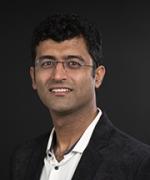
Yin Bao is an Assistant Professor in Plant and Soil Sciences and Mechanical Engineering at the University of Delaware since 2023, previously holding the same position at Auburn University's Department of Biosystems Engineering (2019-2023). He holds a BE in Mechanical Engineering from China Agricultural University (2012) and a PhD in Agricultural and Biosystems Engineering from Iowa State University (2018), followed by postdoctoral research there until 2019. His research focuses on automation technology for agriculture and forestry, leveraging robotics, machine learning, and sensing systems to develop tools for precision farming and plant phenotyping. Key areas include unmanned systems (UGVs/UAVs), spectral imaging, and AI-driven predictive models for crop and livestock management. Recent work emphasizes automated inventory systems for forest nurseries, UAV-based vegetation assessment, and machine learning applications in crop yield prediction. His publications span robotic guidance systems, root segmentation in X-ray CT scans, and equine gait analysis using deep learning. Notable projects include the Robotic Assay for Drought (RoAD) system and the 'smart canopy' sorghum initiative. Collaborative efforts involve integrating multifrequency microwave sensing and electronic nose technologies for crop quality analysis.
Alexandre Jacquillat is the Maurice F. Strong Career Development Associate Professor and Associate Professor of Operations Research and Statistics at MIT Sloan School of Management. His research focuses on data-driven decision-making with applications in air traffic management, urban mobility, and decarbonization. He holds a PhD in Engineering and MS degrees from MIT and École Polytechnique. Education PhD in Engineering, MIT MS in Technology and Policy, MIT MS in Applied Mathematics, École Polytechnique Research Interests His work develops scalable optimization models for efficient, equitable, and sustainable operations. Key areas include stochastic optimization, large-scale systems design, and machine learning applications in transportation and public policy. Recent projects explore vertiport planning for urban aerial mobility and prescriptive analytics for pandemic response. Awards Harold W. Kuhn Award (2024) INFORMS Harvey Greenberg Research Award (2023) MIT Jamieson Prize for Excellence in Teaching (2023) Multiple INFORMS Best Paper Awards (2015-2023) Named Leading Academic Data Leader by Chief Data Officer Magazine (2021-2022) Teaching & Grants Teaches courses in optimization (15.093, 15.083) and analytics (15.072). His grants support work in robotic warehousing, air traffic scheduling, and disaster response logistics. Advises on transportation analytics for industry and government. Labs/Teams Leads MIT Sloan's operations research group, collaborating with industry partners like McKinsey & Co. and Booz Allen Hamilton on transportation analytics and optimization projects.
James McCann is an Associate Professor at the Carnegie Mellon Robotics Institute, where he leads the Carnegie Mellon Textiles Lab. He has been a faculty member since May 2017 after working at Disney Research Pittsburgh. McCann's academic journey includes a PhD from Carnegie Mellon advised by Nancy Pollard, followed by a postdoc at Adobe Research and a period developing video games. McCann's research focuses on building creative tools that operate in real-time and build user intuition, with particular emphasis on textiles fabrication and machine knitting. His work spans computer-aided fabrication, simulation, graphics, and creative tools development. He has pioneered systems for machine knitting design, including compilers for knitting instructions and tools for automatic conversion of 3D meshes to knitting patterns. His recent publications demonstrate a strong trend toward computational textiles, with significant contributions to knitting semantics, deployable textile structures, and applications of machine knitting in healthcare and robotics. McCann's work bridges computer science, robotics, and textile arts, creating practical systems for once-off manufacturing with industrial knitting machines. McCann actively mentors students, with current PhD candidates working on solid knitting machines, knit calibration, and assistive devices. His teaching portfolio includes courses on Real-Time Graphics, Algorithmic Textiles Design, and Game Programming. He has taught at CMU since 2017, developing innovative courses that blend computer science with physical fabrication. As director of the Textiles Lab, McCann oversees research projects spanning machine knitting, robotic painting, and real-time graphics systems. His lab develops practical tools for creators, emphasizing intuitive interfaces and real-time feedback that lower barriers to advanced fabrication techniques.
Terry C. Lansdown is an Associate Professor in the School of Social Sciences and Department of Psychology at Heriot-Watt University. His expertise lies in Human Factors, particularly focusing on driver safety, workload management, and attentional distraction in transportation contexts. Prior to his academic role, he worked as a senior researcher at the Transport Research Laboratory, contributing to numerous EU-funded and government-sponsored projects. His research integrates ergonomics principles with real-world applications, addressing issues like automated driving systems, social distractions in vehicles, and occupational health in construction industries. Key research interests include: Driver behavior and road safety Human factors in automated systems Workload and attentional demands in complex tasks Health and safety in small-to-medium enterprises (SMEs) He has led studies on pandemic response strategies, such as the CHARIS project analyzing behavioral adherence during the COVID-19 crisis. Lansdown’s work frequently bridges psychological theory with practical interventions, including text messaging campaigns to improve construction worker safety and experimental designs to evaluate automation failure responses. Collaborations span academic and industrial sectors, with publications addressing topics ranging from UV exposure in outdoor workers to the cognitive impacts of in-vehicle distractions. His contributions align with UN Sustainable Development Goals related to health (SDG 3) and sustainable cities (SDG 11).
Jouni Partanen is a Professor at Aalto University's Department of Energy and Mechanical Engineering within the College of Engineering. His research focuses on advanced production technologies including Additive Manufacturing (3D-Printing), modern laser processing, and micromachining. Research Group: Materiaaleista tuotteiksi Specialization: Integration of AI in manufacturing processes Sustainability emphasis: Biochar-reinforced materials and carbon footprint reduction His work spans from fundamental material behavior analysis to industrial applications, particularly in metal additive manufacturing and composite fabrication. Recent research explores corrosion resistance in lattice structures and multiscale photopolymerization techniques. Publications highlight interdisciplinary approaches combining mechanical engineering with biomedical applications (e.g., patient-specific implants) and environmental health studies on industrial 3D printing emissions.
Mark Crowley is an Associate Professor in the Department of Electrical and Computer Engineering at the University of Waterloo, with a cross-appointment in the Cheriton School of Computer Science. He is a member of the Waterloo Artificial Intelligence Institute (WAII) and the Waterloo Institute for Complexity and Innovation (WICI), and serves as National Secretary of the Canadian Artificial Intelligence Association (CAIAC). His educational background includes a Ph.D. and M.Sc. in Computer Science from the University of British Columbia, where he worked in the Laboratory for Computational Intelligence, and a B.A. in Computer Science from York University. He completed a postdoctoral fellowship at Oregon State University working with Tom Dietterich's machine learning group. Crowley's research focuses on developing dependable and transparent algorithms to augment human decision-making in complex domains with multiple agents, spatial structure, or uncertainty. His work spans Reinforcement Learning , Deep Learning , Ensemble Methods , and Manifold Learning . He frequently collaborates with researchers in applied fields including Computational Sustainability, Sustainable Forest Management, Autonomous Driving, Medical Imaging, and Material Design. His research is motivated by both theoretical opportunities and real-world challenges such as forest fire management, automotive applications, and medical imaging. His recent publications demonstrate a strong focus on addressing challenges in reinforcement learning, particularly around observation costs, multi-agent systems, and causal representation learning. His work on ChemGymRL provides a significant contribution to digital chemistry and material design through reinforcement learning frameworks. The textbook Elements of Dimensionality Reduction and Manifold Learning represents a major contribution to the theoretical foundations of machine learning. Crowley actively supervises graduate students, with recent thesis completions including Shayan Shirahmadi Gale Bagi (PhD, Feb 2025) and Oleksandra Nahorna (MASc, Dec 2024). His lab, UWECEML (Waterloo ECE Machine Learning Lab), focuses on developing new algorithms at the intersection of Machine Learning, Optimization, and Probabilistic Modeling. He teaches courses including ECE 457C (Reinforcement Learning), ECE 657A (Data & Knowledge Modelling & Analysis), and ECE 457B (Fundamentals of Computational Intelligence). His blog Computationally Thinking explores AI, machine learning, and the societal impact of these technologies.
Dr. Liang Cheng is the Department Chair and Professor in the Department of Electrical Engineering and Computer Science at the University of Toledo. He leads a department with ~700 students across CS, CSE, and EE programs. His research focuses on Cyber-Physical Systems (CPS), IoT, AI/ML, and intelligent infrastructure, supported by over $30M in funding from NSF, DOE, DOT, and industry. Notable projects include CPS Breakthrough initiatives and underground sensing systems. He co-edited a multidisciplinary book on Underground Sensing and contributed to smart grid cybersecurity. Dr. Cheng has held leadership roles at Lehigh University, shaping faculty governance and equity policies. His 100+ publications span networking, real-time systems, and sensor networks. He advises on funded projects totaling $30M+ and has pioneered pedagogical approaches in computer science education. Research Interests: Cyber-Physical Systems (CPS): Focuses on autonomous drones, energy systems, and real-time infrastructure Networking: Expertise in TSN, DTN, and wireless protocols Cybersecurity: SCADA systems, PLC attack detection, and blockchain energy modeling Underground Sensing: Geo-sensing via wireless signals and subsurface tomography Grants & Projects: Over 20 sponsored projects including NSF CPS Breakthrough (2018-2023), ABB smart grid projects, and DARPA-funded EDIFY systems. Key contributions include reconfigurable wireless architectures and network calculus tools for real-time systems. Teaching: Courses span senior design, compiler design, parallel computing, and wireless sensor networks. Developed pedagogical patterns for non-CS programming education. Awards: Recognized for leadership in academic governance and interdisciplinary research collaboration.
Prof. Richard L. Peters is a Professor and Head of the Chair of Tree Growth and Wood Physiology at the Technische Universität München (TUM) since 2024. His research focuses on tree physiology, wood formation, and climate-forest interactions. He holds a doctorate summa cum laude from the University of Basel (2018) and has conducted postdoctoral research at the Swiss Federal Institute for Forest Science (WSL) and Ghent University. His work integrates forest ecology, dendrochronology, and ecophysiology to address climate change impacts on forests. Education: B.Sc./M.Sc. in Biology at Utrecht University, Ph.D. from University of Basel (2018). Key career steps include a Swiss National Science Foundation (SNSF) fellowship at Ghent University and coordination of the Swiss Canopy Crane II project (2021). Research Interests: Tree water-use strategies, drought tolerance mechanisms, carbon allocation dynamics, and the physiological basis of tree growth. He leads interdisciplinary projects to monitor forest responses to environmental stress using tools like the TreeNet network. Awards: Early Postdoc Mobility Fellowship (SNSF, 2019), Doctorate summa cum laude (2018). Contributions: Authored >180 publications, co-developed the datacleanr R package for ecological data processing, and pioneered methods linking tree-ring data with climate models. His work emphasizes the need for better observational data to improve vegetation models.
Ron H.J. Peerlings is Associate Professor in the Department of Mechanical Engineering at Eindhoven University of Technology (TU/e) , where he leads the Mechanics of Materials research group. Promoted to Associate Professor in 2007 after joining as Assistant Professor in 2000, he has built an extensive portfolio in theoretical and computational mechanics of materials. Education: PhD (1999) – Eindhoven University of Technology, thesis: Enhanced damage modelling for fracture and fatigue Post-doctoral research (1999–2000) – University of Cambridge, Engineering Department Research interests revolve around micromechanics , micro-plasticity , multiscale modelling , homogenisation , damage and fracture , and enriched continuum theories . His work spans advanced high-strength steels, composites, paper and fibrous networks, with strong emphasis on coupling rigorous theoretical developments to industrially motivated problems. His recent publications (2023-2025) demonstrate a clear trajectory towards integrating advanced experimental techniques (e.g., digital image correlation, micro-mechanical testing) with high-fidelity computational frameworks such as crystal-plasticity finite-element modelling, FFT-based solvers and micromorphic homogenisation. Dominant themes include: Deformation and fracture in lath martensite and dual-phase steels Hygro-mechanics of paper and fibrous networks Pattern-transforming mechanical metamaterials Discrete-to-continuum scale bridging methods Scientific awards are not explicitly listed in the provided material; however, his prolific output (294 research items, >6500 citations) attests to significant peer recognition. Teaching & supervision: He delivers courses on Computational Mechanics – Numerical Methods for Fluids and Solids and Fracture Mechanics – Theory and Application , and has supervised >80 student works and numerous PhD candidates whose names appear on joint publications. Laboratory & teams: He heads the Group Peerlings within the Mechanics of Materials cluster, maintaining close collaboration with the Mechanics of Materials Group Geers and extensive national/international experimental and computational networks.
Nihar B. Shah is an Associate Professor at Carnegie Mellon University with joint appointments in the Machine Learning and Computer Science departments within the School of Computer Science. His research focuses on developing theoretically grounded algorithms for evaluating scientific work, with applications in peer review, fairness, and human-AI collaboration. His work has impacted over 100,000 research papers and grant evaluations. Education: Ph.D. in EECS, UC Berkeley M.E. in Telecommunications, Indian Institute of Science B.Tech. in Electronics, NIT Karnataka Research Interests: Shah's group investigates the science of evaluation through machine learning, optimization, and large-scale experiments. Key areas include peer review systems, algorithmic fairness, LLM applications in science, and human-AI collaboration frameworks. Research addresses fundamental questions about research validity, funding allocation, and equitable assessment. Publication Trends: Recent work focuses on improving peer review through randomized controlled trials, security against collusion, LLM-based review systems, and bias mitigation. Publications consistently appear in premier venues (NeurIPS, PLOS ONE, AAAI) with growing emphasis on real-world deployments. Awards & Honors: Young Alumnus Medal (IISc 2024) NSF CAREER Award (2020-2025) Google Research Scholar Award (2021) Multiple best paper awards (HCOMP, ICLR) Research Group & Funding: Leads a focused research team with NSF, Google, and JP Morgan support. Alumni hold positions in academia and industry. Current projects involve large-scale evaluations of scientific work and algorithmic fairness.
Prof. Raffaello D'Andrea is a Full Professor at ETH Zürich's Department of Mechanical and Process Engineering, affiliated with the Institute for Dynamic Systems and Control. His research focuses on bridging digital and physical worlds through robotics, control systems, and autonomous systems. He has pioneered work in aerial robotics, swarm systems, tactile sensing, and soft robotics. His philosophy emphasizes solving 'easy' problems with scalable, robust solutions, prioritizing simplicity and replicability. Key research areas include UAV navigation, distributed control, tactile sensor design, and fault-tolerant systems. He has founded multiple organizations and led roles as CTO/CEO, emphasizing cross-disciplinary innovation. His work has commercial applications in logistics, healthcare, and automation, driven by a belief in technology's role in improving human life. Notable projects include the Cubli robotic cube, aerial vehicle swarms, and optical tactile sensors for robotics. His lab emphasizes collaboration and team leadership, aiming to translate theoretical insights into practical, scalable technologies. Scientific awards: None explicitly listed in the provided texts. Advising and grants: No students listed in the provided texts; grants information not detailed. Labs/Teams: Leads research at ETH Zurich's Institute for Dynamic Systems and Control, collaborating with industry and academic partners globally.
Animesh Garg is an Assistant Professor at the School of Interactive Computing at Georgia Tech, where he leads the People, AI, and Robotics (PAIR) research group . He holds a Senior Researcher position at Nvidia Research and has courtesy appointments at the University of Toronto and Vector Institute. Previously, he served as Chief Scientific Officer at Apptronik (2024-2025) and Senior Staff Research Scientist at Nvidia Research (2018-2024). Education : Ph.D. in Operations Research from UC Berkeley (2011-2016), MS in Computer Science and Industrial Engineering from Georgia Tech and University of Delhi. Research Focus : Building Generalizable Autonomy through Reinforcement Learning , Control Theory , and 3D Vision , with applications in Surgical Robotics , Self-Driving Labs , and Manufacturing . Key Article Themes : His recent work emphasizes Foundation Models for robotics, Differentiable Simulation , Language-Guided Autonomy , and Structured Inductive Biases in sequential decision-making. Scientific Awards : Stephen Fleming Early Career Professorship at Georgia Tech. Teaching : Courses on AI, Deep Reinforcement Learning, and Algorithmic Intelligence in Robotics at Georgia Tech. Labs & Collaborations : Affiliated with Institute for Robotics and Intelligent Machines (IRIM) and ML@GT at Georgia Tech; collaborates intensively with Nvidia Robotics.
Daniel E. Ho holds multiple prestigious positions at Stanford University: William Benjamin Scott and Luna M. Scott Professor of Law Professor of Political Science Professor of Computer Science (by courtesy) Senior Fellow, Stanford Institute for Economic Policy Research Senior Fellow, Stanford Institute for Human-Centered Artificial Intelligence Faculty Fellow, Center for Advanced Study in the Behavioral Sciences He serves on the National Artificial Intelligence Advisory Commission (NAIAC), as Senior Advisor on Responsible AI at the U.S. Department of Labor, and as a Public Member of the Administrative Conference of the United States (ACUS). Ho earned his J.D. from Yale Law School and Ph.D. from Harvard University, completing a clerkship with Judge Stephen F. Williams on the U.S. Court of Appeals for the District of Columbia Circuit. His research bridges artificial intelligence, law, and public policy with emphasis on: Regulatory governance frameworks for AI systems Fairness and bias mitigation in algorithmic decision-making Environmental enforcement using satellite imagery and computer vision Methods for estimating racial disparities without direct demographic data Legal AI reliability and statutory research systems Analysis of his 2025 publications reveals a consistent focus on practical AI governance tools addressing real-world regulatory challenges. Key themes include developing benchmarks for legal applications, mitigating hallucination in legal AI tools, and creating systems for statutory research. His work demonstrates strong integration of technical AI methods with policy implementation, particularly in environmental enforcement and fairness assessment. As Director of the Regulation, Evaluation, and Governance Lab (RegLab), Ho leads interdisciplinary research partnerships with government agencies. While specific grant details aren't provided, RegLab's operational model indicates substantial research funding for policy-relevant AI projects. No student advisees are mentioned in available materials. Ho's leadership extends to national advisory roles where he shapes federal AI policy through evidence-based recommendations, particularly regarding environmental protection and civil rights enforcement mechanisms.
Perla Maiolino serves as an Associate Professor in Engineering Science at the University of Oxford and Principal Investigator of the Soft Robotics Lab (SRL) within the Oxford Robotics Institute. Her academic foundation includes BEng, MEng, and PhD degrees in Robotics and Automation from the University of Genoa, where she pioneered CySkin technology for distributed tactile sensing in robots—later exhibited at the Science Museum in London. She expanded her expertise during a 2017-2018 postdoctoral fellowship at Cambridge University's Biologically Inspired Robotics Lab, focusing on soft robotics and tactile perception. Dr. Maiolino's research centers on developing artificial skin systems, soft robotic actuators, and distributed sensing architectures. Her work bridges biological inspiration with engineering innovation to create robots capable of safe human interaction and dexterous manipulation in unstructured environments. Key contributions include compliant beaded-string jamming mechanisms for anthropomorphic fingers, monolithic 3D-printed soft pneumatic arms (JAMMit!), and distributed time-of-flight sensor networks for robotic self-awareness. Recent publications (2024-2025) reveal a strong convergence of tactile sensing with machine learning, featuring optical flow for gesture recognition, diffusion models for artificial skin simulation, and zero-shot sim-to-real transfer techniques. Her team has made significant advances in multi-modal sensing integration, variable stiffness actuation, and scene flow estimation for robots operating in dynamic surroundings. Scientific Awards No specific awards were documented in the provided institutional materials. Advising and Grants While her leadership of the Soft Robotics Lab implies active student supervision and grant management, detailed information about advisees or funded projects was not included in the source documentation. Labs and Teams As Principal Investigator of the Soft Robotics Lab at Oxford Robotics Institute, Dr. Maiolino directs research on tactile perception systems, soft actuation mechanisms, and sensor-integrated robotic structures. The lab's work focuses on applications requiring safe physical interaction, including healthcare robotics and human-robot collaboration scenarios, with emphasis on multi-material 3D printing and embedded sensing technologies.
Adriana Schulz is an Assistant Professor in the Department of Computer Science & Engineering at the University of Washington's College of Engineering. She leads a research group focused on computational design, computer-aided design (CAD), and digital fabrication. Her work bridges computer science with practical applications in manufacturing, robotics, and sustainable design. Dr. Schulz received her Ph.D. in Computer Science from MIT in 2018 under the supervision of Professor Wojciech Matusik. Prior to her doctoral studies, she earned a Master's degree in Mathematics from IMPA (Instituto Nacional de Matemática Pura e Aplicada) in Rio de Janeiro, where she worked with Professor Luiz Velho, and a Bachelor's degree in Electronics Engineering from UFRJ (Federal University of Rio de Janeiro). Her research interests center around computational tools that enhance design and manufacturing processes. She develops novel algorithms for CAD systems, computational fabrication techniques, and sustainable design approaches. Her work spans multiple domains including robotics, textiles, electronics, and architecture, with a strong emphasis on creating practical tools that designers and engineers can use in real-world applications. She explores how machine learning, particularly neurosymbolic approaches, can improve design workflows and enable new capabilities in computational design systems. Analysis of her recent publications reveals a strong trend toward more intelligent and user-centered design tools. Her research increasingly integrates machine learning with traditional CAD systems to create more intuitive interfaces, supports sustainable design practices with computational tools, and develops novel fabrication techniques that push the boundaries of what's possible with digital manufacturing. She has made significant contributions to zero-waste fashion design, immersion cooling for high-performance computing, and CAD program understanding through novel representation learning techniques. Innovators Under 35 - MIT Technology Review Bolsa Aluno Nota 10 from FAPERJ Engineer 20000 award Dr. Schulz actively mentors several PhD students and postdoctoral researchers, including Haisen Zhao, Ben Jones, Yuxuan Mei, and others, often in collaboration with colleagues across different departments. Her research has attracted significant media attention, with coverage in major outlets including MIT News, BBC, IEEE Spectrum, Wired, and TechCrunch. Her work on Interactive Robogami was noted as the most read article in the International Journal of Robotics Research in its publication year. She leads a vibrant research group at the University of Washington that focuses on computational design systems, with particular emphasis on creating tools that bridge the gap between digital design and physical fabrication. Her team develops novel algorithms for CAD systems, computational fabrication techniques, and sustainable design approaches that have practical applications across multiple industries.