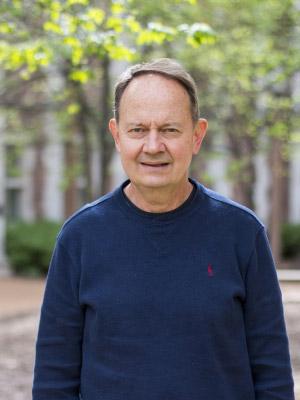
Adriano Jorge Cardoso Moreira is an Associate Professor with Habilitation at the Department of Information Systems, School of Engineering, Universidade do Minho, Portugal. He is also a Senior Researcher at the Algoritmi Research Centre and Scientific Coordinator of the Urban and Mobile Computing department at Centro de Computação Gráfica. His research focuses on indoor positioning , mobile and context-aware computing , urban computing , and simulation of wireless networks . Research Interests : Indoor Positioning, Mobile Computing, Urban Mobility, Sensor Networks, Wi-Fi and UWB Localization, Smart Cities. Leadership : Coordinated the Computer Communications and Pervasive Media Group (2008-2016), Scientific Committee member (Director of MAP-tele PhD program in multiple terms), and leads the Master in Telecommunications and Informatics since 2021. Publications : Over 100 papers, including IEEE Transactions and Sensors journal articles, with an h-index of 23 and 2136 citations. Awards : First and second prizes in EvAAL-ETRI Indoor Localization Competitions (2015, 2016, 2017).
Jie M. Zhang is an Assistant Professor in the Department of Informatics at King's College London, specializing in the intersection of software engineering and artificial intelligence. Her research focuses on two main directions: AI for Software Engineering (leveraging AI technologies to automate software tasks) and Software Engineering for AI (applying SE principles to enhance AI system trustworthiness). Her educational background includes a PhD in Computer Science from Peking University, where she was supervised by Professors Lu Zhang and Dan Hao. Prior to joining King's College London, she was a Research Fellow at University College London working with Professor Mark Harman and Professor Federica Sarro. Dr. Zhang's research interests center on software testing, machine learning trustworthiness, fairness testing, bias mitigation in AI systems, and program analysis. Her work particularly examines how large language models can be utilized for code generation, test case creation, and program repair, while also developing techniques to detect and fix issues within AI models. Her recent publications demonstrate strong trends in evaluating and enhancing the trustworthiness of AI-generated code, with specific emphasis on fairness testing across various domains including autonomous driving systems, machine translation, and decision-making software. Her research increasingly focuses on the efficiency of generated code and detecting hallucinations in large language models. 2025 ACM Sigsoft Early Career Researcher Award for pioneering contributions to software engineering for AI IEEE TSE 2024 Best Paper Award for 'Stealthy Backdoor Attack for Code Models' FSE 2025 Distinguished Paper Award Royal Society International Exchange Grant recipient NMES Enterprise & Engagement Partnerships Fund recipient Dr. Zhang has served in numerous leadership roles across major software engineering conferences including as General Chair for AIware 2025, Area Chair for ASE 2025, and Steering Committee Member for ICST. She has advised multiple PhD students and received significant research funding for her work on LLMs and software engineering. Her research group collaborates with industry partners including Huawei and Facebook, and she leads projects such as ITEA GENIUS and ITEA GreenCode. She is actively involved with King's College London research hubs including the Trusted Autonomous Systems Hub, Security Hub, and Software Systems group, where her work contributes to developing trustworthy AI systems across multiple domains.
Kihong Heo is an Associate Professor in the School of Computing and Graduate School of Information Security at KAIST (Korea Advanced Institute of Science and Technology) in South Korea. His academic career includes serving as an Assistant Professor at KAIST from 2017-2019 before being promoted to Associate Professor in 2020, following his postdoctoral research at the University of Pennsylvania. He earned both his Ph.D. and B.S. in Computer Science & Engineering from Seoul National University. Dr. Heo's research focuses on developing program reasoning systems for safe and reliable software, with specific interests in AI-based program analysis systems for detecting deep semantic software bugs, general-purpose program simplification systems for secure and efficient software, and scalable program synthesis systems for automatic software generation and repair. His work bridges the gap between programming languages, program analysis, and machine learning techniques to create next-generation programming systems. Analysis of his recent publications reveals a strong trend toward integrating machine learning techniques with traditional program analysis methods, with significant contributions in compiler validation, software security, fault localization, and program debloating. His research has practical impact, with some of his work incorporated into Facebook's Infer static analyzer. ACM SIGSOFT Distinguished Paper Award, FSE 2025 Amazon Research Award, 2024 The Soo-Young Lee Teaching Innovation Award, KAIST, 2024 Prize for Excellence in Teaching, KAIST, 2024 Best Artifact Award, ICSE 2022 ACM SIGPLAN Distinguished Paper Award, PLDI 2019 ACM SIGSOFT Distinguished Paper Award, ICSE 2019 Dr. Heo actively mentors graduate students, currently advising several Ph.D. candidates including Yeonhee Ryou, Taeeun Kim, and Sujin Jang, as well as master's students. He has served on program committees for major software engineering and programming language conferences including PLDI, ICSE, POPL, and SPLASH, demonstrating his active role in the academic community. His laboratory, the Programming Systems Laboratory at KAIST, focuses on creating innovative programming systems that leverage both semantic-based program analysis and AI techniques.
Isabelle Augenstein is a Professor at the University of Copenhagen, Department of Computer Science (DIKU), where she heads the Copenhagen Natural Language Understanding (CopeNLU) research group and the Natural Language Processing section. She is also a co-lead of the Danish Pioneer Centre for Artificial Intelligence, Denmark's largest research center initiated by the Danish Ministry of Higher Education and Science. In October 2022, she became Denmark's youngest ever female full professor. Dr. Augenstein earned her undergraduate degree in Computational Linguistics and Psychology from Heidelberg University, followed by a Master's in Computational Linguistics. She completed her PhD in Computer Science at the University of Sheffield under the supervision of Dr. Diana Maynard and Prof. Fabio Ciravegna. In 2021, she earned a Habilitation at the University of Copenhagen in Explainable Fact-checking. Professor Augenstein's primary research focuses on fair and accountable Natural Language Processing, with particular emphasis on explainability, factuality, and bias detection. Her work spans multiple subfields including automated fact-checking, stance detection, gender bias analysis, and cultural bias in language models. She has pioneered research in explainable fact-checking, developing methods that not only predict claim veracity but also provide meaningful explanations of the decision-making process. Her research group has produced numerous influential papers on measuring model fragility, quantifying gender biases, and developing robust fact-checking systems that account for distribution shifts. Her significant contributions have been recognized with several prestigious awards: ERC Starting Grant on 'Explainable and Robust Automatic Fact Checking' DFF Sapere Aude Research Leader fellowship on 'Learning to Explain Attitudes on Social Media' Karen Spärck Jones Award from the British Computing Society and Bloomberg Hartmann Diploma Prize from the Hartmann Foundation Member of the Royal Danish Academy of Sciences and Letters since 2024 Professor Augenstein has secured significant research funding including her ERC Starting Grant supporting five years of blue-sky research. She actively mentors PhD students and postdoctoral researchers through her 'ExplainYourself' project. She served as President of SIGDAT (which organizes the EMNLP conference series), having previously held leadership roles as Vice President and Vice President-Elect. She is a co-founder of Widening NLP (WiNLP), an initiative to increase diversity in the NLP community, and maintains the BIG Directory of underrepresented groups in NLP. She leads the Copenhagen Natural Language Understanding (CopeNLU) research group, which relocated to the historic Østervold Observatory in Copenhagen's Botanical Gardens in 2023. The group focuses on developing methods for explainable and robust natural language understanding, with applications in fact-checking, bias detection, and social media analysis. Professor Augenstein also co-leads the Speech and Language collaboratory at the Pioneer Centre for Artificial Intelligence, where her team investigates how language models can better serve diverse populations while maintaining accountability and transparency.
Jieh Hsiang is a Distinguished Professor at National Taiwan University , with affiliations in the Department of Computer Science and Information Engineering, the Digital Archives and Automatic Inference Laboratory, and the Digital Humanities Research Center. He holds concurrent roles at the Institute of Information Science, Academia Sinica, and the Higher Education Research & Development Office, National Taiwan University. Education PhD in Computer Science, University of Illinois at Urbana-Champaign (1979–1982) BS in Mathematics, National Taiwan University (1972–1976) Research Interests Hsiang's work spans automated reasoning , digital libraries , digital humanities , and information retrieval . His research focuses on integrating computational methods with cultural heritage preservation , particularly through tools like DocuSky and databases such as the Taiwan Historical Digital Library . He explores AI applications in patent analysis , historical text mining , and semantic relationships in legal documents . Recent Trends in Publications His recent articles highlight advancements in BERT and GPT-2 fine-tuning for patent classification , LARGE language models for legal automation , and GIS-based analysis of historical archives . Themes include digital preservation , AI-driven legal text analysis , and cross-disciplinary computational tools for humanities scholars. Scientific Awards 2019 Ministry of Science and Technology Distinguished Research Fellow 2009 National Taiwan University Outstanding In-House Service Award 2008 Chinese Library Association Special Contribution Award 2006 IEEE Test-of-Time Award 1997 & 1999 National Science Council Outstanding Research Award 1997 Ministry of Education Outstanding Industrial-Academic Collaboration Award 1998–2001 Founder and First Chair of IFIP WG1.6 Labs and Collaborations Hsiang leads the Digital Archive and Automatic Inference Laboratory , developing platforms like DocuSky for digital humanities, Taiwan Historical Digital Library , and QGIS Cloud Maps for spatial analysis. His team collaborates internationally on projects involving historical document digitization , patent automation , and cross-domain knowledge integration .
Oliver Alonzo is an Assistant Professor in the School of Computing at DePaul University. His academic journey includes a Ph.D. in Computing and Information Sciences from the Rochester Institute of Technology, a B.S. in Computer Science from Creighton University with minors in Graphic Design and Musical Theatre. Prior to joining DePaul, he served as a post-doctoral assistant professor at Creighton University and completed internships at Meta (Facebook) and Adobe Research. Dr. Alonzo's research focuses on Human-Computer Interaction and Computing Accessibility, with particular emphasis on creating technologies that improve digital access for people with disabilities, especially those who are Deaf or Hard-of-Hearing (DHH). His work spans several key areas: Design and evaluation of automatic text simplification tools for DHH readers Captioning and visualization of non-speech sounds in multimedia content Accessibility solutions for social media platforms Tools to assist American Sign Language learners Multimedia accessibility in emerging technologies like virtual reality His recent publications demonstrate a consistent focus on developing and evaluating accessibility technologies through rigorous user-centered design with DHH communities. His research has evolved from foundational work on text simplification and sign language interfaces to broader explorations of digital accessibility across multiple platforms and contexts. Dr. Alonzo has received notable recognition for his work, including: CHI 2025 Honorable Mention for research on Deaf and Hard-of-Hearing user experiences with misinformation on social media An NSF CRII grant for a two-year project focused on making videos accessible by design for Deaf, Hard-of-hearing, Blind and Low-Vision viewers As an educator, Dr. Alonzo teaches courses including HCI 440 Introduction to User-Centered Design, HCI 445 User Research Methods, and HCI 511 Accessibility Considerations in HCI. His teaching philosophy emphasizes practical, hands-on learning experiences that connect theoretical concepts to real-world accessibility challenges. Outside academia, Dr. Alonzo is fluent in Spanish, English, and Portuguese, and is learning American Sign Language. He has a background in musical theatre and enjoys black & white photography, which informs his creative approach to accessibility research.
Nuno Pereira Lopes is an Associate Professor at Instituto Superior Técnico , part of Universidade de Lisboa , and a researcher at INESC-ID . He also serves as an advisor at FuriosaAI , focusing on tensor contraction processors for AI workloads. Research Interests : Compilers, formal verification of LLVM optimizations, machine learning frameworks, undefined behavior exploitation, probabilistic model checking, blockchain security, and many-core code generation. Teaching : Compilers and Computer/Informatics Engineering projects. Funding : Supported by Google, Matter Labs, NLnet, Oracle, PRACE, RNCA, and Woven by Toyota. Recent Publications focus on LLVM backend validation , PyTorch pipeline parallelism , C++ dynamic cast optimization , undefined behavior in C/C++ , and AI tensor processors . His work bridges compiler design, formal methods, and AI hardware. Academic Service includes representing Portugal in ISO/IEC JTC 1/SC 22 (C++), organizing FLoC'26 , and serving on program committees for PLDI, EuroLLVM, and CGO.
Nicholas Evans is a Professor in the Digital Security department at EURECOM, where he teaches mathematical methods for engineers and speech and audio processing. He has been affiliated with EURECOM since October 2007 and leads research in speaker recognition, anti-spoofing, and biometric security. Previously, he was a Professor at the University of Wales Swansea (2002–2006) and taught at the University of Avignon (2006–2007). Research Interests: His work centers on biometric security, particularly in detecting spoofing and deepfake attacks in automatic speaker verification systems. Key areas include presentation attack detection, privacy-preserving voice technologies, and robust speech processing under real-world conditions. He actively contributes to advancing anti-spoofing countermeasures through large-scale datasets and challenge evaluations. The recent publications reflect a strong trend in developing and evaluating spoofing detection mechanisms, with a focus on real-world applicability, adversarial robustness, and multimodal analysis. His work spans from foundational feature engineering (e.g., Constant Q cepstral coefficients) to large-scale datasets like SpoofCeleb and ASVspoof, influencing both academic research and practical security systems. NeurIPS 2023 Scholar Award for 'StressID: a multimodal dataset for stress identification' Best Paper Award at IBERSPEECH 2022 Best System Award at IberSpeech 2018 Multiple Best Paper Awards (2016, 2017) Student Paper Award at WIFS 2013 Elected to IEEE Speech and Language Technical Committee (2013) Nicholas Evans has supervised numerous students and early-career researchers, many of whom are co-authors on his publications. He leads significant research initiatives such as the ASVspoof and SpoofCeleb challenges, which are supported by collaborative grants and institutional funding. His lab focuses on developing secure, privacy-preserving speech technologies with applications in biometrics and cybersecurity. He is a key member of international research teams and contributes to major challenges in voice privacy and spoofing detection, including the Voice Privacy Challenge and BIOSIG. His work involves close collaboration with institutions across Europe and Asia, and he maintains active profiles on Google Scholar, ResearchGate, and IEEE Xplore.
Stuart Shieber is the James O. Welch, Jr. and Virginia B. Welch Professor of Computer Science in the School of Engineering and Applied Sciences at Harvard University. He is a prominent researcher in computational linguistics and natural language processing, with significant contributions across multiple related fields including theoretical linguistics, computer-human interaction, automated graphic design, and the philosophy of artificial intelligence. Professor Shieber's research interests focus primarily on computational linguistics, examining natural language from the perspective of computer science. His work spans scientific and engineering goals, utilizing foundational formal and mathematical tools. He has made significant contributions to grammar formalisms, psycholinguistics, semantics, and synchronous grammars with applications in machine translation and sentence compression. Beyond computational linguistics, his research extends to automatic layout of charts and maps, novel interaction techniques for document reading and diagram layout, online auction mechanisms, library book access prediction, biological evolution tree reconstruction, and the philosophical basis for Turing's test for machine intelligence. His recent publications demonstrate a continued focus on neural language models, syntactic agreement mechanisms, readability assessment, conversational understanding, and bias detection in language models. His research has evolved from traditional grammar formalisms to incorporate modern neural network approaches while maintaining a strong theoretical foundation. The trend shows increasing attention to ethical considerations in NLP, particularly around bias detection and mitigation, alongside continued theoretical work on language structure. Presidential Young Investigator award (1991) Presidential Faculty Fellow (1993) John L. Loeb Associate Professorship in Natural Sciences (1993) Harvard College Professorship (2001) Fellow of the American Association for Artificial Intelligence (2004) Fellow of the Association for Computing Machinery (2014) Fellow of the Association for Computational Linguistics (2017) Professor Shieber has advised numerous PhD students who have gone on to successful careers at institutions including UCSD, Cornell University, Microsoft Research, Google, and various academic institutions. His work on open access and scholarly communication policy, particularly his development of Harvard's open-access policies, led to his appointment as the first director of the university's Office for Scholarly Communication. He is also the founding director of the Center for Research on Computation and Society and a faculty co-director of the Berkman Center for Internet and Society. His laboratory work has focused on advancing computational linguistics through both theoretical and applied research, with numerous patents and co-founding of Cartesian Products, Inc., a high-technology research and development company. His future work appears to be focusing on the intersection of neural network approaches with traditional linguistic theory, particularly in understanding and mitigating bias in language models, while continuing his long-standing interest in the theoretical foundations of language processing.
Jingling Xue is a Scientia Professor at the School of Computer Science and Engineering at the University of New South Wales (UNSW) in Sydney, Australia. As an IEEE Fellow of the Computer Society, he leads the Programming Languages and Compilers research group, focusing on practical applications of compiler optimization and program analysis techniques. His work bridges theoretical foundations with real-world software systems, particularly in developing open-source tools for large-scale program analysis. Professor Xue received his B.Eng and M.Eng degrees from Tsinghua University in 1984 and 1987, respectively, followed by a PhD from the University of Edinburgh in 1992. His academic journey has established him as a leading figure in programming languages and compiler technology. Xue's research spans programming languages, compiler technology, and program analysis with emphasis on practical relevance. His current projects include compiler techniques for improving parallelism and locality, pointer/alias analysis for million-line-scale programs, and static/dynamic analysis for detecting bugs and security vulnerabilities in real-world applications like web browsers and Android apps. His group actively develops open-source tools to support scientific replicability and reproducibility in these areas. His recent publications demonstrate a strong focus on applying program analysis techniques to modern challenges including AI compilers, homomorphic encryption, security vulnerability detection, and graph processing systems. The work shows evolution from traditional compiler optimization to addressing emerging domains like privacy-preserving computation and deep learning systems while maintaining rigorous theoretical foundations. Scientific Awards: Best Paper Award at CGO'13 Best Paper Award at CGO'16 Distinguished Paper Award at ECOOP'16 Distinguished Paper Award at ICSE'18 Distinguished Paper Award at ISSTA'19 Distinguished Paper Award at ASE'19 Distinguished Artifact Award at ISSTA'23 Best Artifact Award at FSE'23 Distinguished Paper Award at ASE'23 Test-of-Time Award at CGO'21 Professor Xue has successfully supervised 30 PhD students to completion, many of whom now work as professors or researchers in academia and industry. He has served as Program Chair for major conferences including LCTES'13, CC'18, CGO'20, and General Chair for LCTES'20. His group currently focuses on memory safety in Rust, smart contract analysis, AI compilers, compilation for privacy-preserving computation, and adversarial attacks in deep learning. The Programming Languages and Compilers group maintains strong connections with industry partners, translating theoretical advances into practical tools for real-world software development challenges. Their work on pointer analysis, memory safety, and compiler optimizations continues to influence both academic research and industrial practice.
Anuran Makur is an active Assistant Professor at Purdue University with dual appointments in the Department of Computer Science (College of Science) and the Elmore Family School of Electrical and Computer Engineering (College of Engineering). He is affiliated with the Institute for Control, Optimization and Networks (ICON) and teaches foundational courses in machine learning and data science. His educational background includes a B.S. in Electrical Engineering and Computer Sciences from UC Berkeley (2013, summa cum laude), an S.M. in Electrical Engineering and Computer Science from MIT (2015), and a Sc.D. from MIT (2019). B.S., UC Berkeley, 2013 S.M., MIT, 2015 Sc.D., MIT, 2019 Makur's research bridges theoretical machine learning, information theory, and applied probability. Key interests include ranking/preference learning, optimization for ML, non-parametric inference, information measures, permutation channel limits, broadcasting on graphs, and reliable computation. His work emphasizes fundamental theoretical limits and mathematical rigor in complex systems. Recent publications reveal strong trends in statistical learning theory (40%), information-theoretic methods (35%), and networked systems (25%), with growing emphasis on privacy-aware inference and high-dimensional statistics. His scientific achievements are recognized by prestigious awards: Arthur M. Hopkin Award (UC Berkeley, 2013) Ernst A. Guillemin Master's Thesis Award (MIT, 2015) Jin Au Kong Doctoral Thesis Award (MIT, 2020) Thomas M. Cover Dissertation Award (IEEE, 2021) NSF CAREER Award (2023) While specific advising details aren't public, his research leadership is evident through ICON affiliation and collaborations with MIT's LIDS/IDSS groups. The NSF CAREER grant supports his work on information-theoretic foundations of machine learning. He maintains active roles in theoretical computer science and information theory communities through conference organization and editorial work. Makur leads research within ICON, focusing on control-theoretic approaches to networked learning systems. His work integrates probabilistic modeling with optimization theory, particularly for distributed inference and networked decision-making under uncertainty.
Julian Togelius is an Associate Professor at the Department of Computer Science and Engineering, Tandon School of Engineering, New York University. He co-directs the NYU Game Innovation Lab and serves as Editor-in-Chief of IEEE Transactions on Games. His research focuses on AI techniques for game design and games as testbeds for AI development, including procedural content generation, evolutionary algorithms, and player modeling. He has organized major competitions like the General Video Game AI Competition and the Mario AI Championship. Research Interests: Julian explores AI-driven game design, procedural content generation (PCG), evolutionary computation, and the intersection of games with broader AI challenges. His work spans automatic level design, opponent AI, and using games to benchmark general intelligence. He emphasizes data-driven models of player experience and integrating machine learning into game development. Organizational Activities: He has held roles including General Chair of IEEE Computational Intelligence and Games (2017), co-organizer of the General Video Game Playing Competition, and editor roles in key journals. His work also extends to music generation (MetaCompose) and data-driven game design (e.g., 'Data Adventures' from open datasets). Professional Contributions: Julian has advised numerous PhD students focusing on AI and games, published over 160 peer-reviewed works, and authored/co-authored books like Artificial Intelligence and Games (2018) and Procedural Content Generation in Games (2016). His research bridges academic rigor with practical game development, emphasizing computational creativity and interactive systems.
David Balota serves as an Adjunct Professor in the Department of Psychological and Brain Sciences at Washington University in St. Louis. With a career spanning multiple decades, his research has significantly contributed to our understanding of cognitive processes in aging and Alzheimer's disease. His work bridges theoretical cognitive psychology with clinical applications, particularly in developing sensitive cognitive markers for early detection of neurodegenerative conditions. Dr. Balota's primary research interests focus on the interplay between attention, memory, and language processing, with specific emphasis on how these cognitive domains change in healthy aging and in the presence of dementing illnesses like Alzheimer's disease. His research program has extensively examined automatic and controlled processes in cognitive tasks, lexical decision performance across the lifespan, and the development of sensitive cognitive markers for preclinical Alzheimer's disease. A significant portion of his recent work has focused on mind-wandering, reaction time variability, and their relationship to Alzheimer's disease biomarkers. His extensive publication record demonstrates consistent contributions to the field, with recent work increasingly incorporating digital assessment methods and biomarker research. Dr. Balota has made notable contributions to understanding how subtle cognitive changes can predict progression to cognitive impairment, particularly through examining attentional control processes and their relationship to tau pathology and neurodegeneration. Dr. Balota has been instrumental in developing large-scale lexical decision and naming corpora that have become standard resources in psycholinguistics research. His work on the English Lexicon Project has provided valuable data for understanding word recognition processes across different age groups and clinical populations.
Sandeep Reddivari is an Associate Professor and Interim Graduate Director at the School of Computing, University of North Florida . Holding a Ph.D. in Computer Science and Engineering from Mississippi State University, his work focuses on software engineering , particularly requirements engineering , visual analytics , and software maintenance , with funding from the NSF, US Army Corps of Engineers, NSA, and UNF Foundation. Education : Ph.D. (2014, Mississippi State University), M.S. (2009, Texas A&M University), B.Tech. (2006, JNTU) Research Themes : Requirements Engineering, Visual Analytics, Data Mining, Machine Learning, GenAI, Software Security Teaching : Courses in Software Engineering, Data Science, and Database Systems Awards : NSF Grant Recognition (2024), Best Doctoral Symposium Poster (2013), Outstanding Graduate Teaching Award Nominee (2018) Publications span top venues like IEEE RE, ICSE, and COMPSAC, with a focus on combining visual analytics and machine learning to enhance software decision-making. His lab at UNF mentors students in directed independent studies, emphasizing code navigation , blockchain , and educational software tools .
Armando Fox is a Professor in the Department of Electrical Engineering and Computer Sciences at UC Berkeley, where he co-leads the ASPIRE Lab and directs the Berkeley MOOCLab. His work focuses on integrating online learning research into educational frameworks. He holds a PhD, MS and BS from Berkeley, Illinois, and MIT respectively. Fox's research spans applied statistical machine learning, Software as a Service (SaaS), cloud computing, parallel programming, and innovative online education methods. He pioneered Berkeley's first MOOC on software engineering and co-authored the textbook Engineering Software as a Service . His recent publications demonstrate strong focus on: AI-enhanced education tools and assessment systems Cloud-based learning management architectures Generative AI for collaborative programming education Automated testing frameworks for computer science Significant awards include: NSF CAREER Award ACM Distinguished Member Scientific American 50 top researcher recognition Fox previously contributed to Intel Pentium Pro microprocessor design and founded a mobile computing company based on his dissertation research.