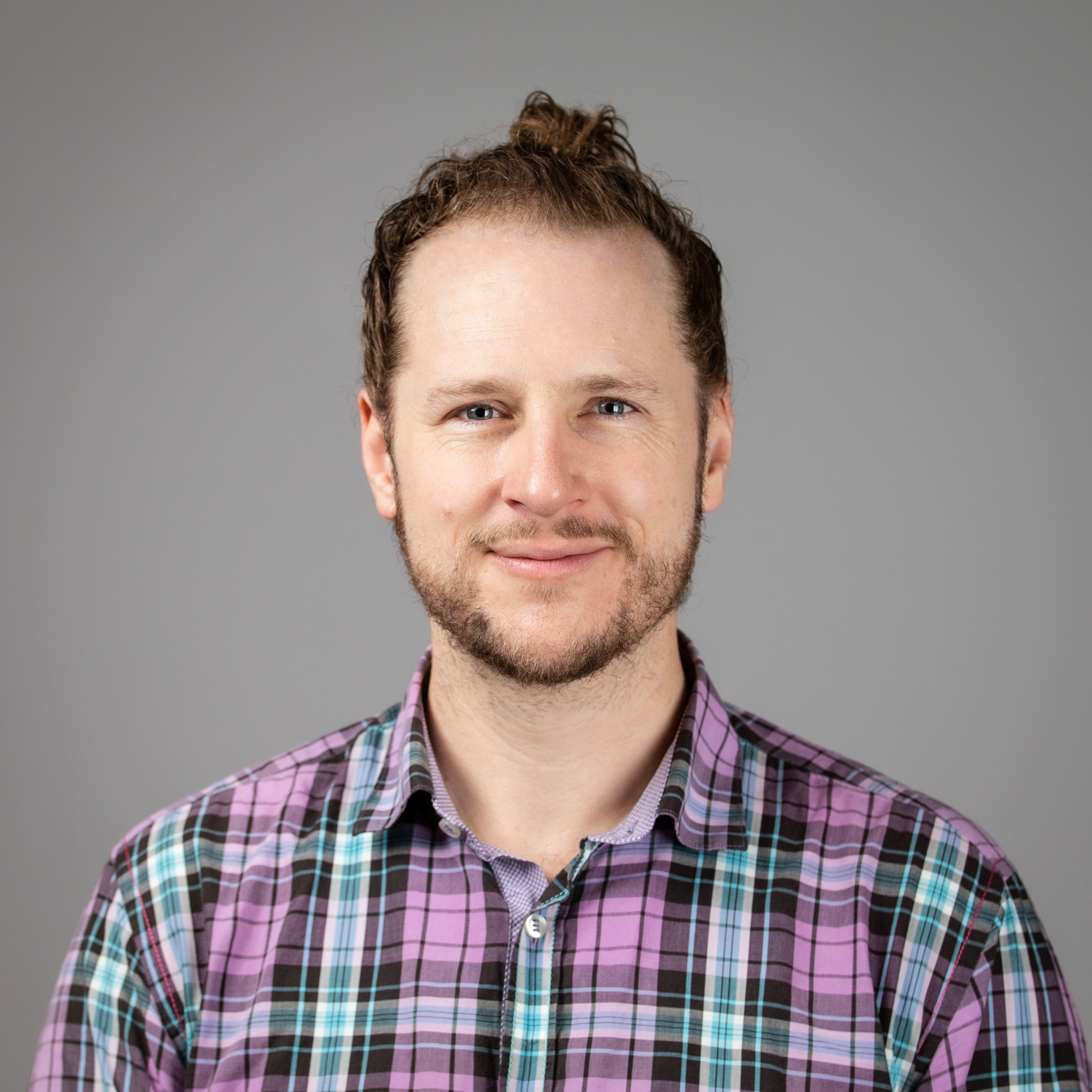
Andy Gibson is a Postdoctoral Research Associate in Linguistics at Queen Mary University of London. His research focuses on sociophonetics, speech perception, and the interplay between phonetic variation and cultural contexts. He holds a PhD from the University of Canterbury (2020) and an MPhil from Auckland University of Technology (2010). His work explores topics such as 'Pop Song English,' accents in popular music, and sound change in diverse linguistic communities. Educational Background: PhD in Linguistics, University of Canterbury, New Zealand (2020) MPhil in Linguistics, Auckland University of Technology, New Zealand (2010) GradDipMus in Music, [university unspecified] Research Interests: Context-dependent phonetic variation in singing Acoustic correlates of voice quality (e.g., creaky voice) Language contact and child speech in multilingual environments Methodological innovations in sociolinguistic data collection Key Projects: ARC-funded study on child speech diversity in Australian urban communities (Macquarie University, 2018–2021) Development of the PoPS Corpus for analyzing phonetic variation in popular songs Publications span high-impact journals like Language and Journal of Phonetics , with a focus on sociophonetic methodologies and cross-cultural language dynamics.
Marie Tahon is a Professor at Le Mans University and Director of the LST (Langage, Signal et Texte) team at LIUM (Laboratoire d'Informatique de l'Université du Maine). Her research spans expressive speech processing with applications in speech synthesis, emotion recognition, and speaker identification, complemented by expertise in musical acoustics for automatic song analysis and organology. Education : Engineering degree from École Centrale de Lyon (2007), M.S. in Acoustics from École Centrale & INSA Lyon (2007), and Ph.D. in Computer Science from University of Paris-Sud (Orsay, 2012). Postdoctoral positions at LIMSI-CNRS (affective computing), LMSSC CNAM (acoustics), and IRISA (Expression team). Research Focus : Tahon's work centers on developing interpretable systems for expressive speech processing. Key contributions include the ALLIES corpus for speech segmentation/diarization and AlloSat for call-center emotion analysis. Her recent publications demonstrate strong emphasis on low-resource speech translation (e.g., Kurdish), speaker verification after resynthesis, and turn-taking analysis in French media using explainable AI techniques. She integrates acoustic and linguistic features for continuous emotion prediction and develops noise-robust models for digital holography. Collaborations & Infrastructure : Leads the COMMUTE and ESPERANTO projects while directing LIUM's LST team. Her work leverages specialized resources like the ALLIES corpus (segmentation, diarization, recognition) and AlloSat (satisfaction/frustration analysis). Current efforts focus on lifelong learning for MOS prediction, multilingual speech translation, and perceptual evaluation of turn-taking phenomena in broadcast media.
Tiffane Levick is a Lecturer in Translation Studies at the University of Toulouse-Jean Jaurès, affiliated with the Center for Anglophone Studies (CAS). She teaches translation (theme and version) at undergraduate and master’s levels and specializes in the translation of urban youth speech, sociolinguistics, gender, and pedagogy. She co-founded the research network 'Translating Minority Voices' and holds a doctorate from Sorbonne Nouvelle University-Paris 3. Education: Doctorate (2018): 'Orality and Universality, in Search of a Global Youth Speech in Translation', Sorbonne Nouvelle University-Paris 3, supervised by Clíona Ní Ríordáin. Research Interests: Her work centers on the translation of non-standard language, particularly urban youth speech, creole, and gender-inclusive forms. She explores how sociolinguistic variation, cultural references, and multimodal elements (such as music and audiovisual media) are rendered across languages. Her research also addresses pedagogical approaches to teaching sensitive topics like non-binary language and marginalized voices in translation. Publications Trends: Her recent scholarly output spans book chapters, journal articles, and conference papers, with a strong focus on the intersection of translation, identity, and cultural representation. Key themes include the translation of slang, creole, rap, and inclusive language, often analyzing contemporary French and Anglophone literature and media. Scientific Awards: 2021 Gulf Coast Prize in Translation (for an excerpt from Sofia Aouine's Rhapsodie des oubliés ) Advising and Grants: While no specific students or grants are listed, she actively mentors through her teaching and co-supervises collaborative translation projects. She has co-edited a volume on teaching translation in Francophone contexts and leads experimental bilingual writing workshops that integrate translation and creative writing. Labs and Teams: She is a core member of the Center for Anglophone Studies (CAS) and co-founded the research network 'Translating Minority Voices' (in collaboration with PRISMES, Sorbonne Nouvelle). She also organizes and participates in interdisciplinary research seminars and conferences on translation, sociolinguistics, and minority representation.
Alexis Deighton MacIntyre is a Leverhulme Trust Early Career Fellow at the MRC Cognition and Brain Sciences Unit (CBU), University of Cambridge, within the School of Clinical Medicine. Her research investigates temporal structure in speech and its role in perception under challenging listening conditions, including background noise and spectral degradation. Her academic journey includes: BMus in Music Performance from Vancouver Island University MPhil from University of Cambridge's Centre for Music and Science (funded by Cambridge Trust Canada Scholarship) PhD in Cognitive Neuroscience from University College London (funded by UCL Research Excellence Scholarship) MacIntyre's research integrates auditory perception, speech processing, and temporal cognition, with focus on how rhythmic processes in auditory and motor systems facilitate speech production and perception. Her work employs behavioral experiments, physiological measurements, and computational modeling to examine speech breathing, cortical tracking of speech envelopes, and neural correlates in cochlear implant users. Current projects explore how temporal structure enhances speech intelligibility in noisy environments. Her publications (2018-2025) reveal consistent progression from foundational work on speech breathing and rhythm to advanced neural decoding of speech envelopes. Key trends include cross-linguistic studies of auditory illusions, computational methods for physiological signal analysis, and investigation of spectral degradation effects on cortical processing. This trajectory demonstrates increasing technical sophistication in EEG analysis and machine learning applications. Scientific recognition includes: Leverhulme Trust Early Career Fellowship Cambridge Trust Canada Scholarship UCL Research Excellence Scholarship Her research is currently funded by the Leverhulme Trust and Isaac Newton Trust for the project "Finding the Flow: Temporal Contributions to Speech Perception and Intelligibility," following doctoral support from UCL. She collaborates extensively with Dr. Matt Davis (Programme Leader) and Dr. Tobias Goehring on neural mechanisms of speech perception, particularly in cochlear implant users. Previous work at UCL with Professor Sophie Scott developed automated approaches for speech breathing analysis. MacIntyre actively contributes to the Cambridge Hearing Group and Hearing and Language Group at the CBU, participating in interdisciplinary research on auditory processing and language mechanisms within the university's neuroscience ecosystem.
Dong Jin Song is a full Professor at the National University of Singapore's School of Computing, Department of Computer Science. He joined NUS in 1998 and was promoted to Professor in 2016 after serving as Associate Professor (2005) and Assistant Professor. He has held various leadership roles including Deputy Head of CS Department (2023-2024), NUS Senate Member (2020-current), and Assistant Dean (Graduate Office, SoC). PhD, University of Queensland, Australia (1993-1995) BInfTech with First Class Honours, University of Queensland, Australia (1989-1992) - Major in Software Engineering Professor Dong's research spans formal methods, safety and security systems, probabilistic reasoning, sports analytics, and trusted machine learning. He is best known for co-founding the PAT verification system which has attracted thousands of registered users from over 150 countries and won the 20-year ICFEM Most Influential System Award in 2018. He also co-founded 'Silas: Trusted Machine Learning' and the Dependable Intelligence company. His work bridges formal verification with practical applications in security, AI, and even sports analytics where he developed Markov Decision Process models for tennis strategy analysis. His recent publications show a strong trend toward integrating formal methods with modern AI systems, particularly focusing on trustworthy AI, LLM verification, and security applications. The research spans multiple high-impact venues including ICML, NeurIPS, IEEE Transactions, and top security conferences like USENIX Security, reflecting his interdisciplinary approach that combines formal verification with machine learning, security, and practical applications. Professor Dong has received numerous honors including the ACM SIGSOFT Distinguished Paper Award for ICSE 2020, the 20-Year ICFEM Most Influential System Award (2018), and being named a Fellow of the Institute of Engineers Australia (2018). His awards reflect both theoretical contributions to formal methods and practical impact on software engineering. ACM SIGSOFT Distinguished Paper Award for ICSE 2020 NUS Research Recognition Award (2020) Fellow of Institute of Engineers Australia (2018) 20-Year ICFEM Most Influential System Award (2018) Best Paper Award at ICECCS (2015 and 2012) Professor Dong has successfully supervised 33 PhD students, many of whom have become tenured faculty members at leading universities worldwide including The University of Auckland, Aston University, Singapore Management University, and Monash University. His students have gone on to successful careers in both academia and industry at organizations like Google, Apple, HP Research Lab, and IBM. He has served on the editorial boards of prestigious journals including ACM Transactions on Software Engineering and Methodology and has been active in numerous conference organizing committees. Through his research group and commercial ventures (Dependable Intelligence), Professor Dong has built a strong team focused on formal verification, trusted AI systems, and practical applications of model checking. His work has evolved from foundational formal methods research to cutting-edge applications in AI safety and security, maintaining a consistent thread of rigorous verification throughout his career.
Dr. Dominik Feldmann is Lecturer for special tasks at the Chair of Didactics of Social Sciences , Institute of Political Science, Justus Liebig University Giessen since April 2023. Before that he held equivalent lecturer roles at the University of Cologne and University of Siegen . Education 2018–2022 Doctoral studies in Political Science, University of Cologne Dissertation: „Democracy despite anti-extremism? On the importance of extremism prevention for (de-)democratization and political education“ (magna cum laude) 2011–2017 Teacher training (HRSGe) in Social Sciences and Music, University of Siegen Research Interests His work centres on the intersection of democratic education , extremism prevention and political didactics . A second strand investigates music education’s potential for democracy-building , critically scrutinising claims that extracurricular music activities automatically foster democratic attitudes. Current projects include a cumulative habilitation on democracy education in (extra-curricular) music education . Publications & Scholarly Output Across more than 25 peer-reviewed articles and several edited volumes, Feldmann analyses how anti-extremism policies, constitutional loyalty requirements and security discourses shape educational practice. Recurring themes are the Beutelsbach Consensus , the Radikalenerlass , and the transfer expectations of arts-based education. His 2023 monograph „Demokratie trotz(t) Antiextremismus?“ has become a key reference in German-language debates. Grants & Professional Service Rosa Luxemburg Foundation doctoral scholarship (2020–2022) Liaison lecturer for the Rosa Luxemburg Foundation Editorial board, Off the Fence: Morality, Politics and Society Reviewer for Hessian Papers for Public Education Elected representative of mid-level staff on the board of the Institute of Political Science (JLU Gießen) Teaching He teaches undergraduate and graduate courses in political education, socio-economic education, inclusive pedagogy, ESD, methods of political didactics and extremism-prevention education . Since 2023 he coordinates the Praxissemester programme at Giessen.
Yun Lin is an Associate Professor and Deputy Head of the Department of Computer Science and Technology at Shanghai Jiao Tong University's School of Computer Science. Prior to joining SJTU, Lin served as a Research Assistant Professor at the National University of Singapore working with Prof. Dong Jin Song. Lin leads the CoPhi ("Code Philia") research group, which focuses on the intersection of Software Engineering, AI, and Security. Lin's research spans three major areas: Automatic Programming (including code editing, software testing, and debugging), Explainable AI (focusing on representation interpretation and training data attribution), and Web Misinformation (particularly phishing and scam detection). The research has resulted in numerous tools including CoEdPilot for code editing recommendation, DeepDebugger for interactive debugging of deep classifiers, and Phishpedia for phishing webpage detection. Lin's recent publications demonstrate a strong trend toward integrating AI techniques, particularly large language models and vision language models, with traditional software engineering and security tasks. The work shows increasing sophistication in understanding project context, handling interactive nature of programming tasks, and addressing security challenges in the age of generative AI. Key themes include consistency-based approaches for anomaly detection, agent-based frameworks for complex tasks, and hybrid models that combine symbolic reasoning with neural approaches. ACM Distinguished Paper Award in ICSE'18 for "Towards Optimal Concolic Testing" Distinguished Reviewer Award in FSE'25 2nd prize Research Prototype Award in ChinaSoft'24 Lin advises a large team of PhD, Master's, and undergraduate students, with several publications co-authored with students appearing in top venues. Current research is supported by collaborations with National University of Singapore, particularly with Prof. Dong Jin Song, and includes projects on code editing, GUI testing, and phishing detection. The CoPhi group maintains active development of multiple research tools and datasets. The CoPhi research group under Lin's leadership focuses on building practical tools that bridge the gap between theoretical advances and real-world programming and security challenges. The group's work spans from fundamental program analysis techniques to applied security solutions, with an increasing emphasis on leveraging AI capabilities while maintaining explainability and reliability.
SungYoung Kim is an Associate Professor in the Department of Electrical and Computer Engineering Technology within the College of Engineering Technology at Rochester Institute of Technology (RIT). His academic work focuses on spatial audio, immersive sound systems, and virtual/augmented reality audio applications, with a research career spanning over a decade of consistent publication and innovation. Dr. Kim's research spans multiple areas of audio engineering and perception. His work investigates how humans perceive spatial audio, develops techniques for more realistic immersive sound reproduction, and creates training methods to improve auditory spatial abilities. He has made significant contributions to understanding the role of height channels in multichannel audio systems, developing methods for personalized spatial audio through head-related transfer functions (HRTFs), and creating augmented reality applications for auditory training. His recent publications demonstrate particular expertise in binaural rendering with head-tracking, automatic audio panning systems, and neurofeedback training applications for auditory spatial attention. His research has practical applications across virtual reality, gaming, music production, and hearing rehabilitation. Recent work includes developing assessment systems for sound localization using Unity and AWS, creating augmented reality auditory training games for hearing-impaired individuals, and investigating the impact of customized interaural time differences on first-person shooter gaming performance. Dr. Kim's publications show a clear progression from fundamental research on spatial audio perception to increasingly applied work with real-world implementation. Japan Society for the Promotion of Science (JSPS) International Fellowships for Research in Japan (L18521), 2018 AES 138th Student Design Competition Silver Award (with Imamura Hidetaka) U.S. Patent US8320590B2 for 'Device, Method, Program, and System for Canceling Crosstalk when Reproducing through Plurality of Speakers Arranged around Listener' (2012) Dr. Kim has secured significant research funding, including grants from Yamaha Corporation totaling over $145,000 for the period 2022-2025, and previously received $179,878 from the Department of Defense for research from 2019-2022. His lab maintains strong industry connections, particularly with Yamaha Corporation, and has extensive international collaborations with researchers in Japan and South Korea. Dr. Kim actively mentors graduate students, as evidenced by his numerous publications with student co-authors across various audio engineering venues, often listing students as first authors to highlight their contributions. Dr. Kim's research group works at the intersection of audio engineering, human perception, and emerging technologies. The lab develops novel audio reproduction techniques, creates assessment tools for sound localization, and explores applications of spatial audio in virtual environments. Recent projects include the development of W-Ambisonics for immersive music reproduction, auditory augmented reality systems that estimate room-specific acoustical materials, and neurofeedback training applications that change oscillatory activity in the parietal cortex related to auditory spatial attention. His work bridges theoretical audio research with practical implementation in real-world applications.