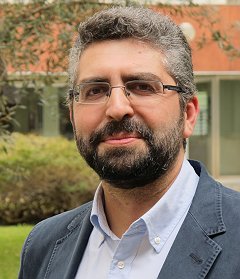
Martin Eberlein is a Doctoral Researcher and Ph.D. candidate in the Software Engineering group at Humboldt University of Berlin, Germany, working under Prof. Lars Grunske. Previously, he collaborated with Prof. Andreas Zeller's research group at CISPA Helmholtz Center for Information Security. His research focuses on automated software engineering, particularly software testing, vulnerability detection, and fuzzing. He is currently part of the EMPEROR project, which aims to automatically generate explanations for program behaviors, especially failures. Dr. Eberlein has developed notable tools including Avicenna (for explaining why programs fail) and EvoGFuzz (an evolutionary, grammar-based fuzzer). Education: 2022-Present: Dr. rer. nat. (PhD), Computer Science, Humboldt-Universität zu Berlin 2020-2022: Master of Science (M.Sc.), Computer Science, Humboldt-Universität zu Berlin (Final Grade: 1.0) 2015-2020: Bachelor of Science (B.Sc.), Computer Science, Humboldt-Universität zu Berlin (Final Grade: 1.3) His publications demonstrate innovative approaches to software testing and debugging, with emphasis on explaining program failures through machine learning. Recent work includes 'Which Inputs Trigger My Patch?' (APR'2025) and 'jAST' (FSE'2025), showing trends toward automated explanation of software behavior and program analysis tools. Scientific Awards: Black Shirt from HU-Berlin research group (2025) €900k initial funding for InputLab startup Dr. Eberlein serves on program committees for FSE 2025 (Artifact Evaluation Track) and ISSTA 2025 (Tools Demonstrations Track). He organizes and assists with teaching courses at HU Berlin, particularly in Software Engineering II and Compiler Construction. As co-founder of InputLab, he bridges academic research with practical applications in software testing for government and business formats. He maintains active research collaborations through GitHub, his blog, and participation in major software engineering conferences worldwide.