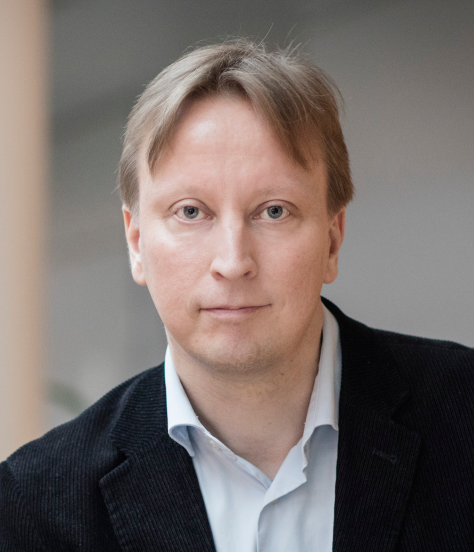
Professor Simo Särkkä holds a position in Sensor Informatics and Medical Technology at the Department of Electrical Engineering and Automation (EEA), Aalto University. His research focuses on multi-sensor data processing, Bayesian filtering, machine learning, and their applications in medical technology, brain imaging, and inverse problems. He leads research groups including the Helsinki Institute for Information Technology (HIIT) and Sensor Informatics and Medical Technology. His work bridges theoretical advancements in probabilistic methods with practical implementations in healthcare and engineering. Key research interests include Gaussian processes, stochastic differential equations, quantum machine learning, and signal processing. He has contributed to advancements in algorithms for nonlinear state-space models, parallel computing techniques, and medical imaging technologies such as scatter correction in CT scans. His methodologies are applied across domains like autonomous systems, robotics, and bioengineering. Notable publications span topics like quantum-assisted Gaussian regression, physics-informed machine learning for industrial processes, and parallel-in-time numerical methods. His work emphasizes computational efficiency and robustness in high-dimensional and real-time systems.
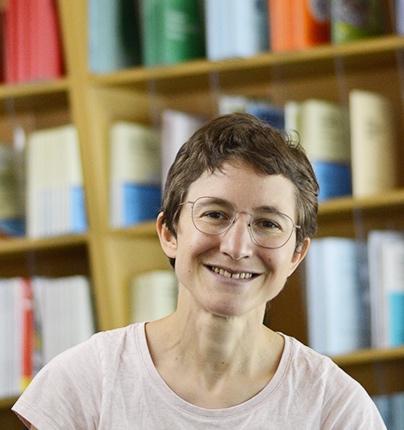
Panagiotis Hadjidoukas is an Associate Professor and Head of the Laboratory for Computing at the Computer Engineering and Informatics Department, University of Patras, within the School of Engineering. His work focuses on high-performance computing systems and parallel programming models. His research spans parallel and distributed computing , runtime support for parallel programming models , and automation of AI/ML workloads . Key contributions include developing the torc runtime system for task parallelism and pioneering work in extreme-scale scientific simulations. His interests bridge theoretical computer science with practical applications in scientific computing and AI acceleration. Notable achievements include the ACM Gordon Bell Prize Winner (2013) for 11 PFLOP/s cloud cavitation simulations and Finalist (2015) for in-silico lab-on-a-chip microfluidics. His software tools ( torc_lite , torcpy ) enable efficient parallelism across diverse architectures. Doctor of Philosophy (2003), University of Patras Master of Science (2001), University of Patras Diploma in Computer Engineering (1998), University of Patras As Head of the Laboratory for Computing, he leads infrastructure development while maintaining active research collaborations with IBM Research and ETH Zurich. His teaching portfolio includes graduate courses on high-performance computing for data sciences and parallel processing principles.
Jarosław Wąs is a Professor and Head of the Department of Applied Informatics at the Faculty of Electrical Engineering, Automatics, Computer Science and Biomedical Engineering, AGH University of Science and Technology in Kraków, Poland. His academic leadership extends to governance roles including the Senate, Faculty College, and Disciplinary Council for Technical Information Technology and Telecommunications. His research spans Artificial Intelligence, Machine Learning, and Data Mining with core expertise in Rough Sets theory. He develops computational models for crowd simulation and pedestrian dynamics critical for evacuation planning, and applies deep learning to renewable energy forecasting and health trajectory prediction. His work bridges theoretical computer science with practical applications in energy systems, healthcare analytics, and cosmic physics. Analysis of his 2023-2025 publications reveals interdisciplinary convergence: Rough Sets combined with cellular automata for crowd modeling, transformer networks for electronic medical records, and hybrid deep learning approaches for renewable energy forecasting. Key trends include zero-shot learning in healthcare, anomaly detection in cosmic data, and data-driven evacuation simulation with social group dynamics. No scientific awards are mentioned in available sources. Information regarding student advising and research grants is not provided in the source material. No laboratory or research team affiliations are specified in the available documentation.
Valiulis Gediminas serves as an Associate Professor at Vilnius University's Šiauliai Academy within the Department of Informatics Engineering. His academic career spans both engineering fundamentals and advanced environmental applications, with a pronounced shift toward bioaerosol monitoring and computer vision systems since 2018. His research interests focus on Environmental Informatics and Automatic Bioaerosol Detection , particularly developing computer vision models for pollen classification using light scattering techniques. This work bridges Environmental Science , Computer Vision , and Public Health through real-time pollen monitoring systems that serve allergy sufferers. His methodology combines fluorescent particle analysis , clustering algorithms , and sensor calibration to advance aerobiological research. Analysis of his publication trends reveals a strategic evolution: early work (2004-2012) centered on control systems engineering (granulation processes, microinverters), while recent output (2018-2024) demonstrates deep specialization in bioaerosol informatics . Key contributions include the Rapid-E particle counter validation, ozone-pollen interaction studies, and real-time pollen forecasting systems for clinical applications. His interdisciplinary approach connects atmospheric science with machine learning to solve environmental monitoring challenges. Automatic pollen recognition systems development Fluorescent bioaerosol characterization Real-time environmental data applications Computer vision for ecological monitoring While no formal advising relationships or scientific awards are documented in the source material, his collaborative research consistently involves multi-institutional teams across Lithuania and Europe. Current projects focus on enhancing bioaerosol sensor accuracy and developing clinical decision-support tools for allergy management through real-time environmental data integration.
Professor Simon Maskell is a Professor of Autonomous Systems at the University of Liverpool, affiliated with the School of Electrical Engineering, Electronics and Computer Science and the Faculty of Science and Engineering. He holds degrees including MEng, MA, PhD, and is a Fellow of the Institution of Engineering and Technology (FIET) and Chartered Engineer (CEng). His research focuses on algorithmic solutions at the intersection of Computer Science, Engineering, and Statistics. Key areas include Bayesian statistics for decision-making under uncertainty, particle filters for high-dimensional parameter estimation, and applications in autonomous systems, big data analytics, and data fusion for sectors like defense, healthcare, and maritime surveillance. He leads the Liverpool Big Data Network and contributes to the Stone Soup open-source tracking framework. Maskell has secured grants from the Home Office, European Commission, and EPSRC, addressing challenges like combating cyber threats, improving drug interaction detection, and enhancing sensor technologies. His notable award includes an Honorary Research Fellow title from Imperial College (2010). In teaching, he oversees modules such as Instrumentation & Control and supervises research on topics like Bayesian methods in proteomics, traffic signal control, and antimicrobial resistance. He serves as an Associate Editor for IEEE Transactions on Aerospace and Electronic Systems and IEEE Signal Processing Letters. Professional activities include editorial roles and administrative leadership in interdisciplinary initiatives, emphasizing ethical AI deployment and data-driven healthcare solutions.
Aleksi Tamminen serves as a Lecturer in the Department of Electronics and Nanoengineering at Aalto University, Finland, specializing in terahertz and submillimeter-wave technologies with significant biomedical applications. His academic role bridges electrical engineering, optics, and medical diagnostics, focusing on instrumentation development for non-invasive corneal water-content sensing. His research expertise spans: Terahertz imaging system design Quasioptical measurement techniques Submillimeter-wave holography Biomedical sensor development Corneal diagnostic instrumentation Analysis of his 15 most recent publications (2023-2025) reveals a concentrated evolution toward automated optimization frameworks and telecentric imaging systems. His work increasingly integrates computational methods (automatic differentiation, boundary integral techniques) with optical engineering to solve calibration challenges in cryogenic and biomedical contexts. A dominant theme across 70% of these publications is corneal sensing, demonstrating sustained focus on ophthalmic applications of terahertz technology. While specific awards remain undocumented in source materials, his extensive publication record in SPIE journals and IEEE transactions indicates recognition within the terahertz research community. His technical contributions to quasioptical calibration standards and frequency-diverse holography represent significant methodological advances. Dr. Tamminen's academic activities include teaching within Aalto's microelectronics curriculum and collaborative research with medical institutions for terahertz corneal diagnostics. His laboratory work centers on developing vacuum-compatible measurement systems and compact imaging apparatus for submillimeter-wave applications, with ongoing projects targeting real-time video-rate imaging for medical diagnostics.
Irène Marcovici is a Professor at the University of Rouen Normandy, affiliated with the Raphaël Salem Mathematics Laboratory (LMRS) and leading the Probability and Dynamic Systems Team. Her research spans probability theory, cellular automata, stochastic processes, and combinatorics, with a focus on ergodicity, percolation, and self-organization phenomena. She collaborates with institutions like the GDR Fundamental Computer Science and its Mathematics and has contributed to journals such as Probability Theory and Related Fields, Annales Henri Lebesgue, and Theoretical Computer Science. Education: Habilitation à Diriger des Recherches (2021, University of Lorraine), PhD in Mathematics (2013, University of Paris Diderot) Research Focus: Marcovici's work explores probabilistic cellular automata, percolation models, and their applications in physics, computer science, and mathematics. Key projects include analyzing stability regions in queueing systems, developing decentralized diagnostics, and studying self-descriptive sequences. Her articles highlight interdisciplinary connections between discrete mathematics and stochastic dynamics. Notable Collaborations: She has co-authored publications with researchers like Jérôme Casse, Régine Marchand, Nazim Fatès, and Mathieu Sablik. Her team participates in the ALEA and SDA2 working groups under GDR Fundamental Computer Science and its Mathematics.
Sebastián Sánchez Prieto is a Professor at the Department of Automatic Control, Universidad de Alcalá, Spain, affiliated with the Space Research Group (SRG-UAH). He holds a Doctorate from the same institution (1998) with a thesis on cosmic ion telescope control systems. His research focuses on space instrumentation, radiation detection systems, on-board data management, and embedded systems for space applications. He has contributed extensively to the Solar Orbiter mission, working on the Energetic Particle Detector (EPD) instrumentation and software validation. His technical expertise spans FPGA-based signal processing, RISC-V processor architectures, and model-driven engineering for space systems. Notable work includes advancing virtualization techniques for mixed-criticality space systems, digital beamforming architectures, and neural network applications in particle trajectory analysis. Publications emphasize cutting-edge topics like fault-tolerant computing in space environments, adaptive signal processing for space communications, and low-power positioning systems. He actively develops educational frameworks integrating on-board data management concepts across interdisciplinary university curricula. His contributions include over 50 peer-reviewed articles addressing hardware-software co-design, space software verification, and radiation effects mitigation. Current research explores AI-driven approaches for space instrumentation data analysis and next-generation on-board computing solutions.
Prof. Dr.-Ing. Richard Membarth is a faculty member at Technische Hochschule Ingolstadt , where he holds the professorship for System-on-a-Chip and AI for Edge Computing. He is also affiliated with the German Research Center for Artificial Intelligence (DFKI) as a Senior Researcher and Team Leader for Compiler Technologies and High-Performance Computing, and with the Saarland University Computer Graphics Lab . His research spans GPU computing, domain-specific languages, and compilers. PhD from Friedrich-Alexander University Erlangen-Nürnberg (2013) Postgraduate diploma from Auckland University of Technology His research focuses on: Parallel computer architectures and programming models Automatic code generation for embedded to HPC systems Image processing, computer graphics, and deep learning applications Domain-specific languages for performance-portable code Recent publications highlight compiler design, GPU acceleration, and parallel algorithms. Scientific awards include the HiPEAC Paper Award (2018) and GPCE Best Paper Award (2015) . Professional roles include organizing High-Performance Graphics conferences as Treasurer (2024-2025) and Papers Chair (2020).
Krzysztof Kasiński is a Professor at the Department of Metrology and Electronics, Faculty of Electrical Engineering, Automatics, Computer Science and Biomedical Engineering, AGH University of Science and Technology, Krakow, Poland. His work focuses on integrated circuit design for particle detectors and radiation imaging systems. School: Faculty of Electrical Engineering, Automatics, Computer Science and Biomedical Engineering Department: Metrology and Electronics Email: kasinski@agh.edu.pl Phone: +48 12 617 28 27 His research interests include: Integrated Circuit Design Sensor Systems Particle Physics Instrumentation Radiation Imaging The articles highlight his contributions to ASIC development for high-energy physics detectors, particularly for the CBM experiment at FAIR. Key areas include time-over-threshold readout, leakage current compensation, and 3D integration techniques. He is a member of the Quality of Education Council in the disciplines of automation, electronics, electrical engineering, space technologies, and biomedical engineering at AGH University.
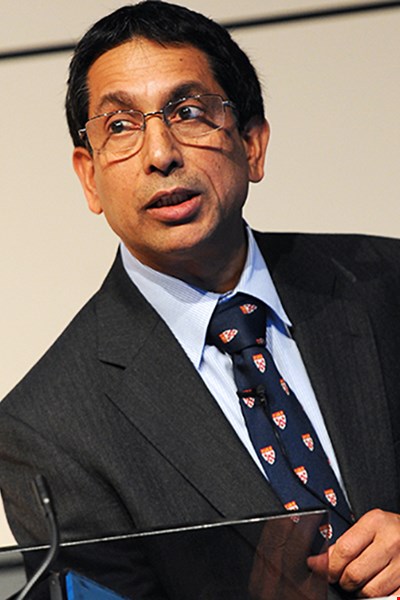
Professor Asoke Nandi serves as Professor of Electronic & Computer Engineering at Brunel University of London, where he has been Head of Electronic and Computer Engineering since April 2013. Previously, he held the David Jardine Chair of Signal Processing at the University of Liverpool, where he established and led the Signal Processing and Communications Research Group. His academic journey began with a PhD from the University of Cambridge, followed by positions at prestigious institutions including Rutherford Appleton Laboratory, CERN, Queen Mary University of London, the University of Oxford, Imperial College London, and the University of Strathclyde. Professor Nandi's research spans theoretical developments in signal processing and machine learning, with applied contributions across multiple domains. His work encompasses wireless communications (including automatic modulation recognition and equalization), biomedical signal processing (breast cancer detection, electrocardiogram extraction, retinal image processing), machine condition monitoring, image forensics, time series predictions, genomic signal processing (gene clustering), brain signal processing (music, EEG, and fMRI data processing), and Big Data analytics. These diverse research interests demonstrate his interdisciplinary approach to information engineering problems. His recent publications reveal a strong focus on deep learning applications across multiple domains, with emphasis on medical imaging (particularly cancer diagnosis and segmentation), remote sensing change detection, fault diagnosis in mechanical systems, and innovative approaches to image processing. The research shows a clear trajectory toward more sophisticated neural network architectures including attention mechanisms, diffusion models, and multimodal fusion techniques applied to real-world engineering and medical challenges. IEEE Transactions on Radiation and Plasma Medical Sciences Best Paper Award (2025) Foreign Member of Chinese Society for Vibration Engineering (2025) Member of Academia Scientiarum et Artium Europaea (2023) Member of Academia Europaea (2023) Fellow of Royal Academy of Engineering, U.K. (2014) IEEE Distinguished Lecturer (EMBS, 2018-2019) Finland Distinguished Professor Award (2010-2014) Co-discoverer of W+, W-, and Z0 particles (1983) Professor Nandi has supervised numerous PhD students and research projects across his career, though specific student names aren't listed in the provided materials. His work has been supported by various research grants that have enabled his prolific output of over 650 technical papers, including more than 320 in quality international journals, with an impressive h-index of 92 according to Google Scholar. His research group IEHS at Brunel focuses on information engineering and health systems, reflecting his interdisciplinary approach. Professor Nandi maintains active collaborations through his visiting professorships at institutions including Xi'an Jiatong University (China), Universite d'Orleans (France), and Tongji University (China), as well as his previous adjunct professorship at the University of Calgary (Canada). These international connections enrich his research environment and provide opportunities for cross-cultural scientific exchange.
Lingzhong Guo is a Lecturer in the Department of Automatic Control and Systems Engineering at the University of Sheffield , affiliated with the Insigneo Institute for in silico Medicine and Neuroscience Institute . His research bridges signal processing, nonlinear systems identification, and biomedical applications. PhD from Bristol Robotics Laboratory (UWE Bristol) Specializes in spatio-temporal system identification, PDE control, and machine learning for medical imaging Recent work focuses on deep learning applications for muscle segmentation in MR images and EIS analysis for oral disorder detection. Collaborations with Zilico Ltd. and participation in Horizon2020 projects highlight his translational research. Scientific Recognition SANO Centre grant (H2020, £2.5M) for computational diagnostics SPINe: Numerical and Experimental Repair strategies (H2020 European program, €1.58M) Innovate UK KTP for EIS-based medical diagnosis (£190K) His publications span nonlinear dynamics , multiscale modeling , and biomedical signal processing , with methodological contributions to Volterra series and coupled PDE-ODE systems.
Simone Formentin is Tenure Track Associate Professor at Politecnico di Milano and Visiting Professor at Università degli Studi di Bergamo, where he teaches Model Identification. He holds a B.Sc. and M.Sc. in Automatic Control Engineering from Politecnico di Milano (2006, 2008) and a Ph.D. in Information Technology from a joint program between Politecnico di Milano and Johannes Kepler University Linz (2011). His postdoctoral work included roles at EPFL (Switzerland) and Università degli Studi di Bergamo (2013). His research focuses on data-driven control strategies , automotive control systems , and nonlinear system identification , with a particular emphasis on kernel-based methods and stability analysis. Recent contributions include automated weighting functions for mixed-sensitivity control and Bayesian approaches to system identification. Selected publications (2022-2017) highlight advancements in kernel methods, robust control design, and nonlinear system modeling. His work bridges machine learning and control engineering, addressing applications in aerospace, retail, and financial systems. Teaching: Model Identification at Università degli Studi di Bergamo Key collaborations: EPFL, JKU Linz, and industry partners
Antoni Rucinski is a Professor at the Institute of Nuclear Physics Polish Academy of Sciences (IFJ PAN) in Kraków, Poland. His primary affiliation includes a visiting professorship at IFJ PAN since 2017. He holds a Ph.D. in Medical Physics from Heidelberg University (2013) and a Master's in Automatics and Robotics/Medical Physics from the Technical University of Warsaw (2009). His research focuses on interdisciplinary advancements in medical physics, particularly charged particle therapy, including proton and carbon ion therapy. Key contributions include development of the INFN Dose Profiler, GPU-accelerated Monte Carlo treatment planning systems (FRED), and J-PET-based proton range monitoring technologies. Education: Ph.D., Heidelberg University (2010–2013) Master’s, Technical University of Warsaw (2004–2009) Postdoctoral Fellowship, INFN Rome (2015–2016) Research Interests: Proton/carbon ion therapy treatment planning Radiobiological effectiveness modeling Monte Carlo simulations for dose calculation Development of real-time dose monitoring systems Translation of research innovations into clinical practice Scientific Achievements: Marie Sklodowska-Curie Actions Seal of Excellence (2017) Co-developed the FRED Monte Carlo code Pioneered J-PET-based proton range monitoring Grants/Leadership: Principal Investigator of two Polish National Science Centre grants Leads a 5-researcher team at IFJ PAN Labs/Teams: Active collaboration with Prof. Pawel Moskal’s group at Jagiellonian University on J-PET technology. Core member of the CCB Kraków proton therapy center research team.
Dr. Joseph P. Havlicek is the Gerald Tuma Presidential Professor in the Gallogly College of Engineering at the University of Oklahoma, where he has served since 1997. He directs the OU Center for Intelligent Transportation Systems and is a full member of the OU Institute for Biomedical Engineering, Science, and Technology. His extensive career spans both academic and professional realms, with significant contributions to signal processing, image analysis, and transportation systems. His educational background includes: BS in Electrical Engineering from Virginia Tech (1986) MS in Electrical Engineering from Virginia Tech (1988) PhD in Electrical and Computer Engineering from the University of Texas at Austin (1996) Dr. Havlicek's research spans multiple domains including signal, image, and video processing; modulation domain signal processing; target tracking; medical imaging; and intelligent transportation systems. His work bridges theoretical signal processing with practical applications in healthcare and transportation. He has pioneered techniques in AM-FM signal and image modeling, uncertainty measures, and developed innovative approaches for medical image analysis and infrared target tracking. Analysis of his recent publications reveals a strong interdisciplinary trend, with significant work at the intersection of signal processing and medical imaging, particularly in bone marrow assessment and cancer treatment monitoring using PET/CT imaging. His computer vision research focuses on infrared object detection and tracking, with recent work on dual-band infrared systems improving small object detection. The publications also demonstrate his continued theoretical contributions to signal processing, particularly in modulation domain techniques and entropy-based uncertainty measures. His scientific achievements have been recognized with numerous awards: University of Oklahoma Outstanding Faculty Advisor Award (2006) University of Oklahoma College of Engineering Brandon H. Griffith Faculty Award (2003) University of Oklahoma IEEE Favorite Instructor Award (1998, 2000) Department of the Navy Award of Merit for Group Achievement (1990) University of Texas Engineering Foundation Award for Exemplary Engineering Teaching (1992) Dr. Havlicek has been exceptionally successful in securing research funding, serving as PI or co-PI on more than 100 externally funded grants and contracts totaling over $25 million. His professional service includes editorial positions with IEEE Transactions on Image Processing and IEEE Transactions on Industrial Informatics, as well as leadership roles in major conferences including ICIP and ICASSP. He has chaired both graduate and undergraduate studies committees in the ECE department. He leads the OU Center for Intelligent Transportation Systems, which develops advanced technologies for traffic management and traveler information systems. His biomedical engineering work through the OU Institute focuses on medical image analysis, particularly for cancer treatment monitoring and bone marrow assessment. His research teams regularly collaborate with medical institutions to translate signal processing techniques into clinical applications.