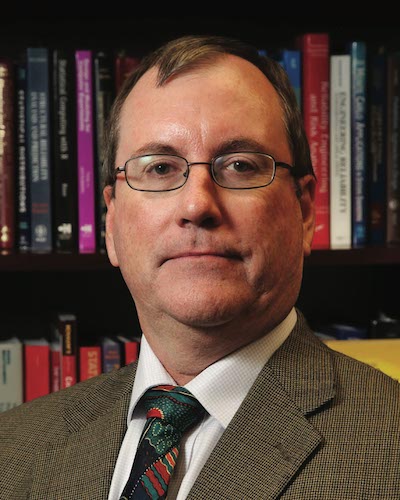
Срђан Вукмировић is a Full Professor at the Department of Computer Science and Automation, Faculty of Technical Sciences, University of Novi Sad. He specializes in automation, control systems, and industrial data management. His academic journey includes a B.Sc. (2000), M.Sc. (2004), and Ph.D. (2011) from the University of Novi Sad. Education: B.Sc. in Computer Technology and System Control (2000) M.Sc. in Automatic Control (2004), Thesis: 'Application of OPC XML-DA Servers in Supervisory Control Systems' Ph.D. (2011), Thesis: 'Intelligent Task Scheduling in Large Supervisory Control Systems' Research focuses on industrial automation, distributed control systems, and optimization techniques. He has participated in 6 scientific projects and conducted international collaboration through training at the University of Lugano (Switzerland) and University of Cologne (Germany) under COST EU projects (2011). Teaching includes courses such as Automatic Control Systems, System Modeling & Simulation, Optimization Methods, and Distributed Control Systems. Affiliations include IEEE and Microsoft Professional. His work emphasizes practical implementation of industrial control devices and data acquisition systems, combining theoretical expertise with real-world applications.
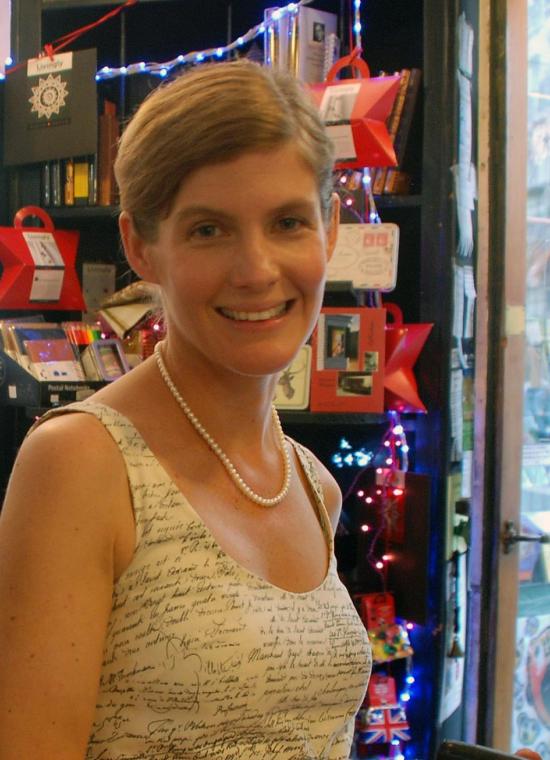
Bo Kum Jung is a Researcher at the Institute of Communications Engineering, Technical University of Braunschweig, specializing in Terahertz communications and wireless backhaul systems. Working under Prof. Dr.-Ing. Thomas Kürner in the Mobile Communications Systems Department, Jung contributes to cutting-edge research in high-frequency wireless communications, with a focus on 300 GHz systems and reconfigurable intelligent surfaces. Education: Bachelor's degree in Electrical Engineering from INHA University, South Korea (2009-2015) Master's degree in Electrical Engineering from Technical University of Braunschweig (2016-2019) Jung's research focuses on Terahertz (THz) communication systems, particularly at 300 GHz frequencies. Their work addresses critical challenges in wireless backhaul networks, including channel modeling, interference management, and the application of Reconfigurable Intelligent Surfaces (RIS) to enhance signal propagation. They have developed automatic planning algorithms for THz backhaul links using various topologies and analyzed the impact of environmental factors on system performance. The research has practical applications for future 6G networks and high-capacity wireless infrastructure. Analysis of Jung's publication record shows a consistent focus on practical implementation of THz communication systems. Their research spans channel measurements, performance analysis, and system design for 300 GHz wireless networks. A notable trend is the increasing focus on Reconfigurable Intelligent Surfaces as a key technology for overcoming propagation challenges at these high frequencies. Their work bridges theoretical modeling with experimental validation through collaborations with the Institute for Communications Engineering. As a research staff member at TU Braunschweig, Jung collaborates with Prof. Thomas Kürner and other researchers in the Mobile Communications Systems Department. Their work is supported by the university's research infrastructure and contributes to the institution's strategic focus on next-generation communication technologies. The research has potential applications in 6G network development, industrial wireless communications, and high-capacity backhaul solutions.
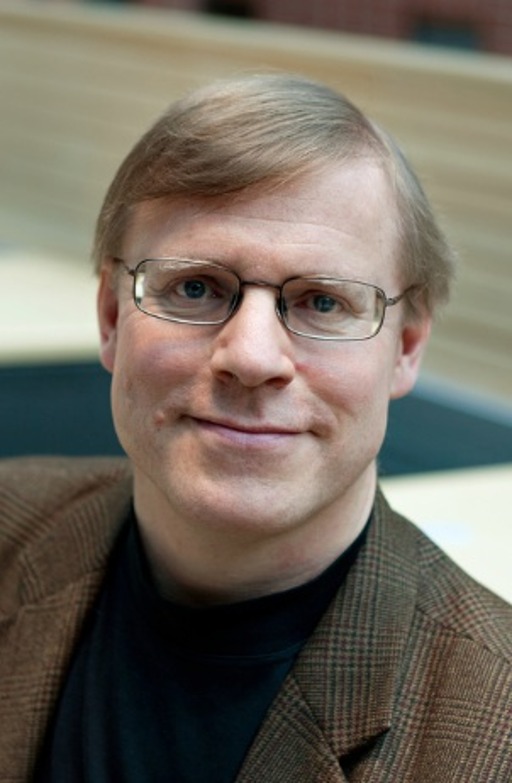
Louis-Noël Pouchet is an Associate Professor in the Department of Computer Science at Colorado State University, with a joint appointment in the Electrical and Computer Engineering department. He leads research in high-performance computing, focusing on polyhedral compilation, performance portability, and hardware-software co-design. His research interests include polyhedral compilation, iterative and adaptive compilation, machine learning for compilers, performance-oriented domain-specific languages, energy-aware program optimization, and high-level synthesis. He develops compiler technologies to optimize and parallelize code for heterogeneous platforms, with applications in scientific computing and embedded systems. The 15 most recent publications highlight a strong focus on compiler optimization for high-performance systems, particularly using the polyhedral model. Key themes include data locality, parallelization, vectorization, memory access optimization, and performance modeling. His work spans both theoretical advances in program transformation and practical implementations in tools like PoCC and PolyOpt. Member, Center for Domain-Specific Computing (NSF) Member, DSL Technology for Exascale Computing (DoE) Lead, Polyhedral Compilation Research (NSF and Intel ISRA) Former member, Platform-Aware Compilation Environment (DARPA) He teaches courses on polyhedral compilation and has developed widely used software tools such as PoCC, PolyBench/C, and PolyOpt/C. His research is supported by major funding agencies including NSF, DoE, and Intel.
Margret Plank is a Researcher at the German National Library of Science and Technology (TIB) , where she leads the Lab for Non-Textual Materials . Her work focuses on developing user-centered services for scientific videos, 3D models, and research data, with a strong emphasis on discoverability and reuse.
Wim Dewulf is a full professor at the Faculty of Industrial Engineering Sciences, KU Leuven, and serves as the dean of the faculty. He is a contact person for the Manufacturing Processes and Systems (MaPS) unit at Campus Group T Leuven and holds leadership roles such as division head and member of councils like the University Council and Academic Council. His research focuses on life cycle engineering, ecodesign, sustainable manufacturing, and computed tomography applications in industrial processes. His research interests span sustainable engineering, additive manufacturing (AM), dimensional quality control, and X-ray CT. Recent projects include using deep learning for CT reconstruction, improving AM surface quality via laser remelting, and enabling autonomous demanufacturing of battery-containing products. He actively supervises students in these areas, particularly in laser powder bed fusion and CT metrology. Wim Dewulf is a member of Leuven.AM (KU Leuven Institute for Additive Manufacturing) and SIM² (Institute for Sustainable Metals and Minerals). His work involves advising on circular economy strategies, process optimization, and advanced imaging techniques, with no explicit scientific awards listed in the provided data. He has contributed to education through courses like Applied Sustainability Assessment and Life Cycle Engineering , emphasizing sustainable design and manufacturing. His research teams focus on technology transfer, industrial collaboration, and developing data-driven models for AM and recycling.
Regina Stodden is a Research Fellow at the Department of Computational Linguistics, Heinrich Heine University Düsseldorf, since January 2019. She is affiliated with the NRW Research College for Online Participation (second funding phase) and works under the supervision of Prof. Dr. Marc Ziegele. Education: B.A. in Educational Science, Text Technology, and Computational Linguistics from Bielefeld University M.A. in Information Science and Language Technology from HHU Düsseldorf Her research focuses on automatic text processing , particularly text simplification for online discussions. This includes: Enabling participation for people with limited German proficiency Reducing manual workload in text analysis Exploring accessibility in Open Data portals She has contributed to tools like TS-ANNO for corpus annotation and EASSE-DE for simplification evaluation, with recent work extending to CEFR-based language proficiency assessment . Her research intersects Natural Language Processing , Machine Learning , and Usability Studies , often addressing accessibility challenges in digital participation. Scientific awards: No explicit awards mentioned. Advising and grants: Participates in the NRW Research College for Online Participation funding program and collaborates under Prof. Dr. Laura Kallmeyer's supervision. Her work involves grants related to text simplification for online participation processes.
J.W. van Wingerden is a Professor at the Wind Energy Institute (DUWIND) within the Mechanical Engineering school at Delft University of Technology (TU Delft) . His work focuses on wind turbine engineering, flow control strategies, and wake dynamics optimization in wind farms. Active research in model-predictive control systems Leadership in multidisciplinary wind energy projects Development of open-source simulation tools His research explores wake dynamics , atmospheric boundary layer interactions , and data-driven modeling to enhance wind farm efficiency. Recent publications address open-source frameworks for flow control and validation studies on turbine arrays. He received the O. Hugo Schuck Prize (2023) for contributions to automatic control applications. Current projects include Active Wind Farm Cluster Wake Mixing (2024–2028), aiming to improve wake mixing and energy capture in large wind farms.
Dr. Mingzhou Yin is a postdoctoral researcher at the Institute of Automatic Control within the Faculty of Electrical Engineering and Computer Science at Leibniz University Hannover, where he has been working since August 2024. He received his Doctor of Sciences degree from ETH Zurich in 2024 under the supervision of Prof. Roy S. Smith, with a dissertation titled 'Regularized and Nonparametric Approaches in System Identification and Data-Driven Control.' His research interests span data-based modeling and control, sparse learning theory, system identification using subspace and regularized methods, model predictive control, and periodic system theory. Dr. Yin has developed innovative approaches in low-rank matrix regression, Gaussian process-based control of nonlinear systems, and closed-loop identification frameworks. His work bridges theoretical advances with practical applications in energy-flexible buildings and aerospace systems. Dr. Yin has received significant recognition including the IEEE Control Systems Society Swiss Chapter Young Author Best Journal Paper Award and the Systems Identification and Adaptive Control Technical Committee Outstanding Student Paper Prize in 2023. His publications in IEEE Control Systems Letters, Automatica, and other top journals demonstrate his contributions to data-driven control theory. IEEE Control Systems Society Swiss Chapter Young Author Best Journal Paper Award (2023) Systems Identification and Adaptive Control Technical Committee Outstanding Student Paper Prize (2023) As an educator, Dr. Yin has supervised numerous student projects on data-driven predictive control, sparse learning algorithms, and closed-loop identification of networked systems. His teaching includes 'Data- and Learning-Based Control' exercises and previous TA roles for 'Robust Control and Convex Optimisation' and 'System Identification' courses.
Manuel Jesus Lopez Sanchez is a tenured professor at the University of Cádiz, Spain, affiliated with the College of Engineering and the Department of Automatic Engineering, Electronics, Computer Architecture, and Networks. His work focuses on Systems Engineering and Automation, with expertise in Nonlinear Dynamics, Cyber-Physical Systems, Robust Control , and Advanced Process Control . He has developed control methodologies for chaotic systems, marine applications, and real-time simulation environments. Education: PhD in Systems Engineering (1999) - University of Cádiz PhD in Systems Engineering (1995) - University of Sevilla His research spans multiple domains including chaos control , marine automation , and real-time systems . Key contributions include H∞ controller designs for aircraft , adaptive ship stabilization systems , and open-source hard real-time environments . Article trends show sustained focus on robust control algorithms (7/15 articles), chaotic system stabilization (5/15 articles), and maritime automation (6/15 articles) since the 1990s. He has collaborated on numerous projects, including the development of the ControlAvH software for controller design and the EPESC real-time simulation system. His work integrates nonlinear control theory with practical hardware implementations , often through experimental validation using physical systems like chaotic circuits and marine vessels.
Cristina Nuevo Gallardo is a Research Professor (“Profesional Investigadora”) at the University of Navarra , based in the Escuela Técnica Superior de Arquitectura (ETSA) within the Construction, Installations and Structures department. She recently defended her PhD (2024) at the University of Extremadura , supervised by Dr. Inés Tejado Balsera and Dr. Blas Manuel Vinagre Jara. Research Interests Bio-inspired micro-robotics and low-Reynolds swimming locomotion Design and control of IPMC-actuated Purcell-type swimmers Fractional-order control systems and their biomedical applications Digital twins and automatic assessment tools for engineering education Energy modelling of buildings, calibration and machine-learning comparisons Modelling and validation of cardiovascular system dynamics Across more than 35 peer-reviewed works (2018–2025), her publications display a clear evolution from theoretical modelling toward experimental validation and educational innovation. Early works focused on fractional-order controllers and their parameter interpretation, followed by hardware-in-the-loop evaluation of artificial eukaryotic flagellum microrobots. Since 2021 she has coupled these robotic studies with educational technologies, developing MATLAB Grader–based auto-graded exercises and digital-twin simulators for automatic control courses. Recent papers (2024–2025) extend into COVID-19 impact on digital education adoption, advanced building-energy modelling with LSTM networks, and clinical validation of cardiovascular electrical analogues. Contact Email: cnuevoga@unav.es
Harry Millwater is the Samuel G. Dawson Endowed Professor and Associate Chair for Research in the Mechanical Engineering Department at the University of Texas at San Antonio's Margie and Bill Klesse College of Engineering and Integrated Design. With over three decades of academic and research experience, he has established himself as a leading expert in structural mechanics and computational methods. Dr. Millwater's primary research focuses on fracture mechanics, probabilistic structural analysis, sensitivity analysis, and computational mechanics. His work bridges theoretical developments with practical applications in structural reliability, fatigue analysis, and digital twin technologies. He has pioneered methods using hypercomplex variables for sensitivity analysis, which have significantly advanced the field of computational mechanics and structural engineering. His extensive publication record shows a clear evolution from foundational work in probabilistic structural analysis to cutting-edge research in hypercomplex automatic differentiation applied to structural mechanics. Recent publications demonstrate a strong focus on developing arbitrary-order sensitivity analysis methods using hypercomplex mathematics, with applications spanning structural dynamics, fracture mechanics, additive manufacturing, and uncertainty quantification. His scientific recognition includes multiple U.S. Air Force Research Lab Summer Faculty Fellowships awarded in consecutive years (2005-2007). These prestigious awards reflect the practical impact of his research on aerospace engineering applications. Dr. Millwater's research has been supported by significant funding from defense and aerospace sectors, particularly the Air Force Office of Scientific Research. His work on probabilistic methods for risk assessment of airframe digital twin structures represents a major contribution to modern structural integrity assessment. He has also contributed to educational initiatives focused on improving STEM education at Hispanic-serving institutions. His laboratory work centers on computational mechanics, with emphasis on developing and implementing advanced numerical methods for structural analysis. The ZFEM (Complex Variable Finite Element Method) framework appears to be a cornerstone of his research program, enabling high-precision sensitivity calculations that have broad applications across engineering disciplines.
Virginie A. Duzer is Professor and Chair of Romance Languages and Literatures at Pomona College, where she has taught since 2008. She coordinates the French Section and specializes in 19th-21st century French literature, art, and culture. Her research examines text-image relationships in avant-garde movements (1870-1970), with current work focused on color theory in literature. Education includes: Ph.D. from Duke University M.A. from Kent State University Maîtrise FLE & D.E.A. de Lettres Modernes from Université Michel de Montaigne, Bordeaux III Research explores interdisciplinary connections between literature and visual arts, particularly in: French avant-garde movements (Impressionism to Situationism) The myth of Salomé in decadent literature Surrealist poetics and aesthetics Text-image interactions in modernist works Literary representations of color Her methodology begins with fragments and paradoxes to reconstruct broader cultural contexts. Publications demonstrate sustained focus on avant-garde aesthetics, with recent work analyzing: Gide's symbolic landscapes (2022) Mallarmé's modernist legacy (2020) Gender dynamics in surrealism (2016) Anthropophagic dimensions of avant-garde movements Awards and fellowships: The Borchard Foundation Scholar in Residence (2011, 2017) Multiple Pomona College summer fellowships (2009-2019) Edouard Morot-Sir Research Fellowship (2008) Dean's Award for Excellence in Teaching, Duke University (2008) Professional affiliations include: Research associate for 'Savoirs des femmes' project MDRN research affiliate (KU Leuven) Editorial board: Cahiers Benjamin Péret Scientific committees: Revue de Photolittérature, MuseMedusa Co-organizer of Littératures Mode d'Emploi
Dionissios T. Hristopulos is a Professor and Head of the Geostatistics Laboratory at the School of Mineral Resources Engineering, Technical University of Crete, Greece. His research spans geostatistics, spatial random fields, environmental modeling, stochastic hydrology, and porous media mechanics. He has developed innovative Spartan Spatial Random Field (SSRF) models rooted in statistical physics, enabling efficient spatial interpolation and simulation. PhD in Physics, Princeton University (1991) MA in Physics, Princeton University (1988) Diploma in Electrical Engineering, National Technical University of Athens (1985) Hristopulos' research interests focus on the development and application of geostatistical methods in mineral resources, environmental monitoring, petroleum reservoirs, and GIS. He investigates spatial anisotropy, groundwater dynamics, earthquake return times, and the mechanical properties of heterogeneous materials. His work bridges statistical physics and geostatistics, particularly through SSRF models and renormalization group methods for upscaling transport properties in porous media. The most recent publications highlight his focus on geometric anisotropy detection in environmental data, non-parametric estimation methods, and applications of Spartan random fields in environmental time series and spatial data interpolation. His work increasingly integrates machine learning concepts with geostatistical modeling, especially for automatic mapping and ecological monitoring using remote sensing. Marie Curie success story (European Commission, 2010) for SPATSTAT project Hristopulos has secured research funding from national and EU programs, including the Marie Curie Transfer of Knowledge (SPATSTAT) and the INTAMAP STREP project. He has mentored several Master’s and PhD students, including Manos Varouchakis (PhD candidate on groundwater monitoring) and Manolis Petrakis (Master’s on anisotropy characterization). He collaborates with researchers in the US, France, Slovakia, and the UK. He serves on the editorial board of Stochastic Environmental Research and Risk Assessment and has contributed software tools for anisotropy detection in MATLAB and R. His research group, the Geostatistics Laboratory at TUC, focuses on machine learning and geostatistics, developing computational tools for environmental data analysis, spatial interpolation, and simulation. The lab emphasizes practical applications in hydrology, ecology, and mineral resources, supported by strong theoretical foundations in statistical physics and stochastic modeling.
Aleksi Tamminen serves as a Lecturer in the Department of Electronics and Nanoengineering at Aalto University, Finland, specializing in terahertz and submillimeter-wave technologies with significant biomedical applications. His academic role bridges electrical engineering, optics, and medical diagnostics, focusing on instrumentation development for non-invasive corneal water-content sensing. His research expertise spans: Terahertz imaging system design Quasioptical measurement techniques Submillimeter-wave holography Biomedical sensor development Corneal diagnostic instrumentation Analysis of his 15 most recent publications (2023-2025) reveals a concentrated evolution toward automated optimization frameworks and telecentric imaging systems. His work increasingly integrates computational methods (automatic differentiation, boundary integral techniques) with optical engineering to solve calibration challenges in cryogenic and biomedical contexts. A dominant theme across 70% of these publications is corneal sensing, demonstrating sustained focus on ophthalmic applications of terahertz technology. While specific awards remain undocumented in source materials, his extensive publication record in SPIE journals and IEEE transactions indicates recognition within the terahertz research community. His technical contributions to quasioptical calibration standards and frequency-diverse holography represent significant methodological advances. Dr. Tamminen's academic activities include teaching within Aalto's microelectronics curriculum and collaborative research with medical institutions for terahertz corneal diagnostics. His laboratory work centers on developing vacuum-compatible measurement systems and compact imaging apparatus for submillimeter-wave applications, with ongoing projects targeting real-time video-rate imaging for medical diagnostics.
Lauri Malmi is a Professor of Computer Science at Aalto University's Department of Computer Science, School of Science, leading the Learning+Technology research group (LeTech) since 2001. His primary research focus is Computing Education Research with emphasis on programming education tools, automatic assessment systems, and learning analytics. His research interests center on developing and evaluating advanced learning environments for programming education. Key areas include automatic assessment and feedback systems, program simulation and visualization tools, and gamified learning approaches. His empirical work spans qualitative interview studies to educational data mining techniques. He has made significant contributions to theoretical frameworks in computing education and meta-studies of the field. Malmi has chaired major international conferences including Koli Calling (2004, 2008) and ICER (2017-2018). He served as a regular columnist for ACM Inroads (2013-2020) and editorial board member for ACM Transactions on Computing Education and IEEE Transactions on Learning Technologies. His work demonstrates strong interdisciplinary connections between computer science education, learning sciences, and human-computer interaction. ACM SIGCSE award for Outstanding Contribution to Computer Science Education (2020) 2016 Learning Contribution Achievement Award (2017) Excellent Education in Electronics (2000) Teacher of the year 1999, Helsinki University of Technology Malmi has led significant educational initiatives including the national Center of Excellence in Education at Helsinki University of Technology (2001-2006) and the Aalto Online Learning digitalization project. His research group has secured numerous grants for developing innovative educational technologies and studying their impact. The LeTech group maintains active collaborations across Europe and globally in computing education research. His work extends into healthcare education through virtual reality childbirth training applications, demonstrating the transferability of educational technology approaches across domains. Malmi has contributed extensively to establishing methodological standards in computing education research through conference workshops and special journal issues.