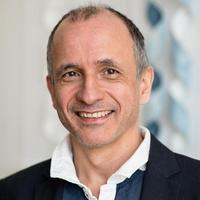
Henrik Sandberg is a Professor at the Division of Decision and Control Systems , KTH Royal Institute of Technology , Stockholm, Sweden. He holds the title of Deputy Head of Division and is affiliated with the School of Electrical Engineering and Computer Science . Education: MSc in Engineering Physics (1999) PhD in Automatic Control (2004) from Lund University Postdoctoral position at Caltech (pre-2007) Research Interests: Focus on cyber-physical systems security , power systems , model reduction , and fundamental limitations of control systems . Key sub-areas include attack detection , networked control , privacy-preserving estimation , and resilient control architectures . Publications: Over 150 papers across IEEE Transactions and Automatica , covering topics like stealthy attacks , distributed control , LQG optimization , and thermodynamic costs in filtering . Recent work includes LWE-based encrypted control and Bayesian deception mechanisms . Scientific Awards: Best Student Paper Award Finalist at IEEE CASE 2014; Best Student-Paper Award at IEEE CDC 2004. Grants & Projects: Leads the DYNACON project (WASP Cybersec cluster) and collaborates on CERCES (critical infrastructure resilience). Serves as examiner for multiple advanced courses in cybersecurity and control systems. Contact: Email: hsan@kth.se Phone: +46 (0)8 790 7294 Room: A:607, Malvinas Väg 10, Stockholm
Luca Peretti is an Associate Professor in Electric Machines and Drives at KTH Royal Institute of Technology, affiliated with the School of Electrical Engineering and Computer Science and the Department of Electrical Engineering, Division of Electric Power and Energy Systems. He works as a researcher in the EMD (Electric Machines and Drives) group and serves as Partner Director for KTH's strategic partnership with ABB. Education: M.Sc. in Electronic Engineering (2005) from University of Udine, Ph.D. from University of Padova (2008) Professional Experience: Postdoc at University of Padova (2009-2010), Principal Scientist at ABB Corporate Research (2010-2018), Associate Professor at KTH (2018-present) His research focuses on: Automatic parameter estimation in electric machines Multiphase drive systems Sensorless control algorithms Loss segregation in drive systems Condition monitoring of industrial and transportation applications Recent publications demonstrate expertise in variable phase-pole machines, harmonic plane decomposition, predictive control algorithms, and advanced modeling of permanent magnet motors. Key application areas include transportation electrification, wind energy systems, and industrial drive technologies. Scientific roles include: Associate Editor, IET Electric Power Applications Journal (2019-present) Theme Co-Leader, Swedish Electromobility Center (2020-present) Member, IEEE (2021-present) and IET (2006-present) He leads the strategic partnership with ABB and contributes to doctoral program committees at University of Padova.
Xiaoming Hu is a Professor at the Division of Numerical Analysis, Optimization and Systems Theory within the Department of Mathematics at KTH Royal Institute of Technology (Kungliga Tekniska Högskolan) in Stockholm, Sweden. Born in Chengdu, China, he received his B.S. degree from University of Science and Technology of China in 1983, followed by M.S. and Ph.D. degrees from Arizona State University in 1986 and 1989 respectively. After serving as a research assistant at the Institute of Automation, Chinese Academy of Sciences (1983-1984), he was a Gustafsson Postdoctoral Fellow at KTH (1989-1990) before becoming a faculty member. His educational background includes: B.S. in Engineering, University of Science and Technology of China, 1983 M.S. in Engineering, Arizona State University, 1986 Ph.D. in Engineering, Arizona State University, 1989 Xiaoming Hu's research primarily focuses on multi-agent systems, nonlinear feedback stabilization, nonlinear observer design, and sensing and active perception. His work bridges theoretical control theory with practical applications in robotics and autonomous systems. He has made significant contributions to geometric control theory, mathematical systems theory, and nonlinear systems analysis and control. His research often involves developing theoretical frameworks for distributed control, formation control, and cooperative behavior in multi-robot systems. Professor Hu's publication record shows a consistent research trajectory with numerous high-impact publications in top-tier journals like Automatica, IEEE Transactions on Automatic Control, and Systems & Control Letters. His research has evolved from fundamental control theory to more applied problems in robotics and multi-agent systems, while maintaining strong mathematical foundations. Recent work shows increasing focus on safety-critical control, inverse problems in estimation, and networked systems. His scientific contributions include: Development of theoretical frameworks for multi-agent coordination and formation control Advances in nonlinear observer design for robotic systems Contributions to geometric control theory and systems theory Research on distributed estimation and control algorithms Applications of control theory to robotics and autonomous systems Professor Hu teaches several advanced courses including Mathematical Systems Theory, Geometric Control Theory, and Nonlinear Systems: Analysis and Control. He has supervised numerous degree projects at both undergraduate and graduate levels in mathematics, optimization, systems theory, and scientific computing. His teaching reflects his research expertise, providing students with both theoretical foundations and practical applications of control theory.
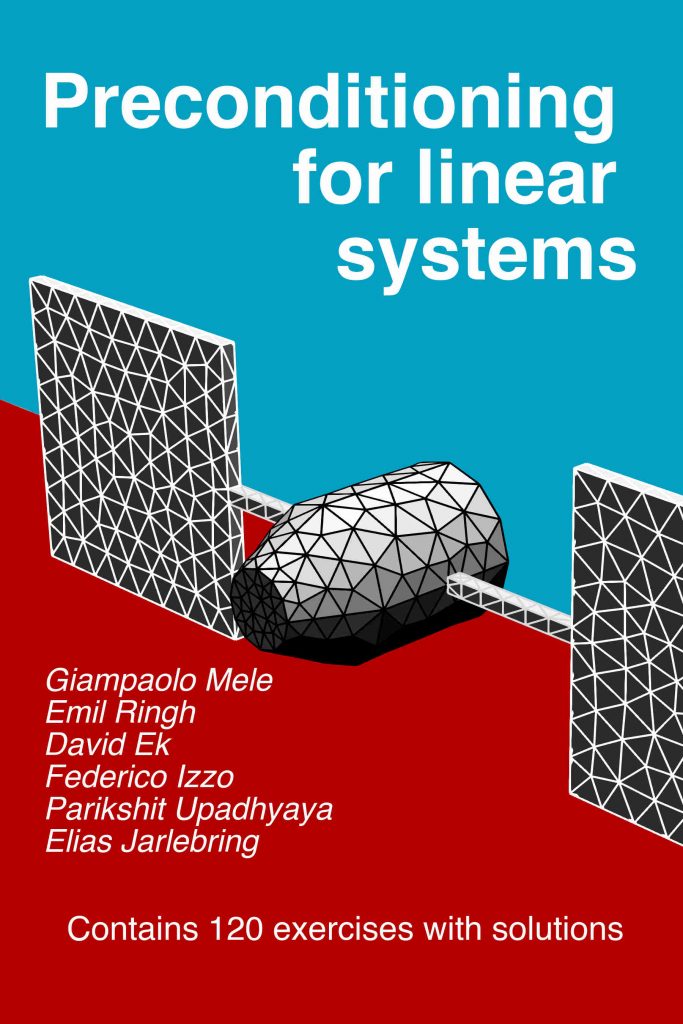
Elias Jarlebring is a Professor in Numerical Linear Algebra at the Department of Mathematics, KTH Royal Institute of Technology, Stockholm. He has held the position of Full Professor since 2021, following his tenure as Associate Professor (2013-2021) and Dahlquist Research Fellow (2011-2013). His research focuses on numerical analysis, numerical linear algebra, matrix computations, and scientific computing. Jarlebring develops linear algebra algorithms to solve problems from various fields including systems and control, acoustics, electromagnetics, data science, quantum mechanics, and quantum chemistry. He is a core developer of NEP-PACK, a scientific computing software package for nonlinear eigenproblems. His recent publications demonstrate significant contributions to computational methods for nonlinear eigenvalue problems, matrix functions, and parameterized linear systems. The research shows a clear trajectory toward increasingly complex applications in quantum computing, data science, and wave propagation problems. Project grant, Swedish research council (2019) Ruth och Nils-Erik Stenbäcks foundation, junior grant (2019) Göran Gustafsson Prize for junior researchers (2014) Project grant for junior researchers, Swedish research council (2014-2018) Professor Jarlebring has supervised numerous PhD students including Vilhelm Peterson Lithell, Gustaf Lorentzon, Siobhán Correnty, Parikshit Upadhyaya, Emil Ringh, Antti Koskela, and Giampaolo Mele. He has received multiple research grants from the Swedish Research Council and serves as editor for BIT Numerical Mathematics, Linear and Multilinear Algebra, NACO Numerical Algebra Control and Optimization, and CALCOLO. He is actively involved in the numerical linear algebra community as a member of ILAS (International Linear Algebra Society), GAMM Activity Group on Numerical Linear Algebra, and the Nordic Numerical Linear Algebra Association. He also contributes to open source projects, particularly in the Julia programming language ecosystem.
Karl Henrik Johansson is a Professor at the School of Electrical Engineering and Computer Science, KTH Royal Institute of Technology in Stockholm, Sweden, where he also serves as the Founding Director of Digital Futures. He is a Fellow of both IEEE and the Royal Swedish Academy of Engineering Sciences, and has held leadership positions including Immediate Past President of the European Control Association and IEEE Control Systems Society Vice President Diversity, Outreach & Development. Dr. Johansson earned his MSc in Electrical Engineering and PhD in Automatic Control from Lund University. His academic journey includes visiting positions at prestigious institutions such as UC Berkeley, Caltech, and NTU. His research focuses on networked control systems and cyber-physical systems with applications in transportation, energy, and automation networks. His work investigates fundamental challenges in connecting physical world systems through communication networks, exploring how wireless communication and sensor technology can enhance system robustness, reliability, energy efficiency, and safety. Current research directions include security of cyber-physical systems, distributed optimization, multi-agent systems, and applications to intelligent transportation and energy networks. Analysis of his recent publications reveals a strong focus on distributed optimization algorithms, secure networked control, multi-agent systems, and applications to transportation and energy networks. His work increasingly integrates machine learning techniques with traditional control theory, addressing challenges in privacy-preserving distributed computation, resilient state estimation, and resource allocation in complex networked systems. IEEE Control Systems Society Hendrik W. Bode Lecture Prize (2024) Swedish Research Council Distinguished Professor (2018-2027) Wallenberg Scholar (2009-2026) IFAC Young Author Prize IEEE CSS Distinguished Lecturer (2017-2019) IFAC Outstanding Service Award IEEE Fellow Dr. Johansson has supervised over 100 postdocs and PhD students, with many now holding prominent positions at institutions worldwide. His research has been supported by significant grants including the Swedish Research Council Distinguished Professor Grant (2018-2027), multiple Wallenberg Foundation grants, and numerous EU and national research projects. He has directed major research centers including ACCESS Linnaeus Centre (2009-2016) and Strategic Research Area ICT TNG (2013-2020). His research group operates within the Digital Futures initiative and maintains strong connections with industry partners through projects like the Integrated Transport Research Lab (supported by Scania and Ericsson) and Smart Mobility Lab. The group actively collaborates with international institutions and participates in major EU-funded projects addressing challenges in cyber-physical systems, transportation, and energy networks.
Emma Tegling is a Senior Lecturer (Associate Professor) at the Department of Automatic Control, Faculty of Engineering (LTH), Lund University, Sweden. She joined the department in January 2021 and holds a prestigious WASP (Wallenberg AI, Autonomous Systems and Software Program) professorship. Her research focuses on the analysis and control of large-scale networked systems, with applications in distributed electric power networks and socio-epidemiological networks. She is actively involved in multiple research projects, supervises several PhD students, and contributes to major academic events in control theory. Education: Ph.D. in Electrical Engineering, KTH Royal Institute of Technology (2019) M.Sc. in Engineering Physics, KTH Royal Institute of Technology (2013) B.Sc. in Engineering Physics, KTH Royal Institute of Technology (2011) Emma Tegling's research centers on the fundamental limitations of distributed control, particularly in large-scale and non-normal network systems. Her work addresses critical challenges in vehicular formations, power grids, and social networks. She develops scalable control designs, consensus protocols, and optimal control strategies for complex networked environments. Her recent publications highlight breakthroughs in string stability, transient performance, and distributed optimization. The trend in her articles shows a strong focus on mathematical control theory, network dynamics, and real-world applications in socio-technical systems. Scientific Awards: WASP professorship (Wallenberg AI, Autonomous Systems and Software Program) Emma Tegling leads and co-leads several significant research grants, including WASP NEST: Learning in Networks and Dynamics of Complex Socio-Technological Network Systems. She actively supervises PhD students such as Jonas Hansson and David Ohlin, whose work has led to novel consensus protocols and optimal control formulations. Her academic leadership extends to organizing the European Control Conference and co-organizing interdisciplinary workshops on power and democracy in modern societies. She is also involved in public engagement and academic service through supervision and project coordination. Emma Tegling is a key member of the Department of Automatic Control at Lund University, contributing to research teams focused on networked systems, control theory, and AI integration. She collaborates extensively within ELLIIT (the Linköping-Lund initiative on IT and mobile communication) and participates in cross-disciplinary labs working on AI, digitalization, and natural/artificial cognition. Her work is aligned with UN Sustainable Development Goals related to sustainable energy and resilient infrastructure.
Martina Maggio is a Professor at the Department of Computer Science, Saarland University (full-time since 2020) and holds a 20% position at Lund University's Department of Automatic Control (since 2023). She serves as Coordinator of LTH's AI and Digitalization Profile Area and is a member of Lund University's Natural and Artificial Cognition initiative. Her research integrates control theory, real-time systems, and cybersecurity in cyber-physical systems. She has supervised over ten PhD students and postdoctoral researchers, contributing to advancements in resource allocation, fault-tolerant control systems, and self-aware computing. Education: PhD in Control Theory from Politecnico di Milano (with MIT visiting research), postdoctoral work at Lund University. Key affiliations: ELLIIT, Bosch Corporate Research (sabbatical 2019). Research focuses on robust control strategies under computational uncertainties, cyberattacks, and sensor misalignment. Notable work includes influential papers at the intersection of software engineering and control theory (e.g., 2015 SEAMS most influential paper). Grants and advising: Supervised 10+ students, including alumni Dr. Nils Vreman (2023) and Dr. Gautham Nayak Seetanadi (2021). Active in collaborative projects like Bosch's control system verification initiatives. Labs/Teams: Leads research groups at Saarland and Lund, focusing on real-time systems, embedded systems security, and AI-driven control architectures.
Anders Rantzer is a **Professor** at the **Department of Automatic Control** at Lund University, affiliated with LTH (Lund Institute of Technology). He is also a member of key initiatives like ELLIIT (IT and mobile communication) and LTH's profile areas for AI & Digitalization and The Energy Transition. His research focuses on scalable control systems, energy networks, and adaptive methodologies. He has published extensively in top journals and led major projects like the WASP NEST initiative on learning in networks. Rantzer advises numerous PhD students and collaborates internationally on topics ranging from district heating optimization to AI-driven control systems. His work bridges theoretical advancements with practical applications in energy and digital infrastructure.
Dilian Gurov is a Professor in Computer Science at KTH Royal Institute of Technology, associated with the Digital Futures Faculty and the Division of Theoretical Computer Science. He also coordinates the Doctoral Programme in Computer Science at the CSC school. Before joining KTH in 2002, he earned a Ph.D. from the University of Victoria, Canada (1998), and worked at the Swedish Institute of Computer Science (1997-2002). His research focuses on software specification and verification, including contracts, program models, logics, and tools, as well as multi-agent strategic planning involving knowledge-based strategies in imperfect information settings. Key contributions include the CAV Distinguished Paper Award 2023 for 'Automatic Program Instrumentation for Automatic Verification' and an EASST award for 'Checking Absence of Illicit Applet Interactions: A Case Study' (2004). He leads projects funded by VR (SEFROS, ContraST) and Vinnova (AVerT2) and collaborates with industries like Scania on formal verification of C programs. His service roles span over 30 conference committees and organization roles, including PC memberships for iFM, TAP, and ISoLA. Teaching responsibilities include courses such as 'Formal Methods,' 'Program Semantics and Analysis,' and 'Knowledge in Games with Imperfect Information.' His work emphasizes practical applications of formal methods, bridging academic research with industry needs through collaborations and tool development (e.g., CVPP, ProMoVer, TriCo).
Richard Pates is a Senior Lecturer and researcher in the Department of Automatic Control at the Faculty of Engineering (LTH), Lund University. He is actively involved in research and teaching, contributing to key profile areas including the Energy Transition, AI and Digitalization, and Natural and Artificial Cognition at Lund University. His work is supported by multiple ongoing research projects and collaborations within ELLIIT, the Linköping-Lund initiative on IT and mobile communication. Research Interests: Control Theory and Engineering Electrical Power Systems and Grid Control Scalable and Decentralized Control Systems Optimal Control and Mathematical Foundations Applications in District Heating and Sustainable Energy Systems His recent research, published in top-tier journals and conferences such as Automatica , IEEE Control Systems , and the IEEE Conference on Decision and Control , demonstrates a strong focus on scalable control solutions, networked system dynamics, and performance optimization in complex physical systems. There is a clear trend toward mathematically rigorous approaches with practical applications in infrastructure and energy systems. Scientific Contributions and Activities: Active in 4 major research projects, including grid integration of second-life batteries and scalable control for power and heating networks. Organizer and host of seminar series on the Energy Transition at Lund University. Contributor to the Energy Transition retreat and academic workshops. Richard Pates advises students and supervises research work, though specific names are not listed. He has received research funding through national and multidisciplinary grants, particularly in sustainable energy and control systems. He also promotes accessible education through his YouTube channel and personal website, emphasizing both teaching and research dissemination. Laboratories and Research Groups: He is affiliated with the Department of Automatic Control at LTH and contributes to the ELLIIT research environment. His work is integrated into Lund University's strategic profile areas, particularly in energy and AI, suggesting strong collaboration within interdisciplinary teams focused on sustainable technological development.
Anton Cervin is a Senior Lecturer (on Leave of Absence) at the Department of Automatic Control, Lund University. He is affiliated with the LTH Profile Area: AI and Digitalization. His roles include Director of First and Second Cycle Studies, Deputy Head of the Department (2019–2022), and Director of the China Profile at LTH (2008–2012). Research focuses on real-time systems, control over cloud platforms, event-based control, and cyber-physical systems. Key projects include the Swedish Research Council-funded 'Event-Based Control of Stochastic Systems' and WASP-supported 'Event-Based Information Fusion for Self-Adaptive Cloud'. Developed software tools: TrueTime (real-time simulator), JitterTime, Jitterbug, and TinyRealTime. Recognized with multiple Best Paper Awards at ECRTS, RTNS, and RTCSA conferences. Supervised over 5 PhD students in real-time control and embedded systems. Teaching includes advanced courses on automatic control, systems engineering, and real-time systems. His work aligns with UN SDG 9 (Industry, Innovation, and Infrastructure) through contributions to smart infrastructure and cloud-based control systems.
Kristian Soltesz is a Senior Lecturer and Project Manager in the Department of Automatic Control at Lund University's Faculty of Engineering (LTH). He is actively engaged in research focusing on data-driven modeling and control of cyberphysiological systems, with applications in anesthesia, intensive care, and organ transplantation, as well as industrial process control in mining and bioreactors. His research interests span Control Engineering , Data-Driven Modeling , Automated Drug Delivery , Hemodynamic Stabilization , Process Control , and Closed-Loop Anesthesia Systems . His work emphasizes interdisciplinary collaboration with clinical and industrial partners, aiming to develop practical, robust control solutions for complex real-world systems. He contributes to the UN Sustainable Development Goals through sustainable engineering applications, particularly in mining and healthcare. The recent trend in his research outputs shows a strong focus on integrating advanced control strategies—such as Model Predictive Control (MPC), Kalman filtering, and PID autotuning—into medical and industrial applications. His publications highlight innovations in seamless anesthesia delivery, signal quality handling in closed-loop systems, and optimization of industrial flotation processes. The interdisciplinary nature of his work is evident in the blend of biomedical, industrial, and data-centric control themes. Kristian Soltesz has supervised multiple research projects and academic works, with five supervised works documented. He leads or contributes to numerous research initiatives, including projects on ex vivo heart evaluation, sustainable mining, pharmacometric modeling, and historical studies in automatic control. He is involved in key academic activities such as organizing conferences and delivering invited talks, including participation in the Engineering Health PI Retreat 2023 and presentations on microalgae cultivation and ex vivo perfusion systems. His research is supported by grants from foundations such as Familjen Hjelms stiftelse för medicinsk forskning and Mats Paulssons stiftelse. Labs and research teams he is affiliated with include interdisciplinary groups working on cyberphysiological control systems , industrial automation , and biomedical engineering applications , often in collaboration with clinical departments and industrial stakeholders.
Jiabao He is a Ph.D. Student in the Division of Decision and Control Systems at KTH Royal Institute of Technology , supervised by Prof. Håkan Hjalmarsson. He holds a Master's degree in Control Engineering (2021) and a Bachelor's degree in Mechanical Engineering (2018) from Tsinghua University. Education M.S. in Control Engineering (Tsinghua University, 2021) B.S. in Mechanical Engineering (Tsinghua University, 2018) His research interests lie in systems, control theory, and information theory , with current focus on subspace identification, finite-sample analysis , and data-driven control . Past work explored fuzzy control and descriptor systems . His publications reflect expertise in subspace methods , statistical learning , and Markov parameter identification . Conference Participation includes Reglermötet 2025 (Lund) , 63rd IEEE CDC 2024 (Milan) , 32nd ERNSI Workshop 2024 (Venice) , and SYSID 2024 (Boston) . He is a reviewer for journals and conferences like IEEE Transactions on Automatic Control and IFAC Symposium on System Identification . Scientific Awards IEEE TC SIAC Student Paper Award (2025) Travel Scholarship from Karl Engvers Foundation (2024) Travel Scholarship from Björns stiftelse (2024) He has served as a Teaching Assistant for courses such as EL1020 Automatic Control and EL2520 Control Theory and Practice , and supervised Bachelor theses on Learning in Dynamical Systems (2023-2024). His work bridges theoretical control methods with practical applications in descriptor systems and space robotics.
Johan Eker is a Professor at the Department of Automatic Control at Lund University and an Adjunct Professor at ELLIIT: the Linköping-Lund initiative on IT and mobile communication . He is also a member of the LTH Profile Area: AI and Digitalization and LU Profile Area: Natural and Artificial Cognition . His research focuses on control engineering, telecommunications, cloud computing, real-time systems, IoT, and anomaly detection. He actively contributes to UN Sustainable Development Goals through his work. He has received notable awards including the Best paper runner-up award at IEEE CloudNet 2023 , Best Paper Award at RTCSA 2004 , and Best Student Paper Award at RTCSA 1999 . Key projects include: AORTA: Advanced Offloading for Real-Time Applications (2023–2025) ICS: Industrial Cloud Sandbox (2019) AutoDC: Autonomous datacenter for long-term deployment (2018–2021) He has organized workshops such as the Real-Time Cloud Workshop and serves on the advisory board for Internet of Things and People (IoTaP) .
Cristian Rojas is a Professor of Automatic Control at KTH Royal Institute of Technology, specializing in system identification. His research bridges control theory, statistics, and machine learning to develop data-driven methods for analyzing and controlling dynamical systems. He holds an MS in Electronics Engineering from Universidad Técnica Federico Santa María (Chile) and a PhD in Electrical Engineering from the University of Newcastle (Australia). Research focuses on efficient utilization of data for self-learning systems, including topics like continuous-time system identification, robust control, and statistical estimation. Notable contributions include work on subspace identification, input design for sparse systems, and algorithms for H-infinity norm estimation. His methodologies emphasize practical applications in industrial automation, smart infrastructure, and autonomous systems. Recent publications highlight advancements in inverse filtering, decentralized learning systems, and the theoretical underpinnings of data-driven control. He collaborates widely on projects involving Bayesian methods, adversarial systems, and privacy-protected decision-making frameworks. Rojas' work often addresses challenges such as undersampling effects, model consistency, and computational efficiency in real-world control scenarios. His academic contributions include organizing academic ceremonies at KTH and mentoring researchers in the Department of Automatic Control. Current research explores intersections between machine learning interpretability and control theory, with applications to explainable AI in engineering systems.