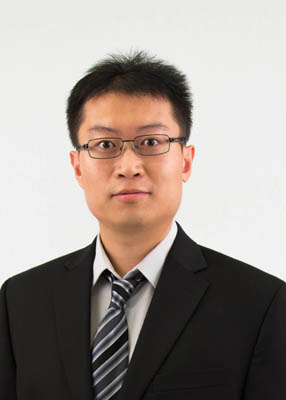
Xingyong Song is an Associate Professor at Texas A&M University's College of Engineering, affiliated with the Department of Engineering Technology and Industrial Distribution and Electrical & Computer Engineering. He holds a Ph.D. in Mechanical Engineering from the University of Minnesota (2011), and degrees from Korea Advanced Institute of Science and Technology and Harbin Institute of Technology. His research focuses on automation, machine learning, autonomous vehicles, and drilling automation. He leads the Controls and Mechatronics Research Lab, which explores machine intelligence, connected vehicles, and energy systems. Key research projects include NSF-funded work on autonomous directional drilling and powertrain optimization for autonomous vehicles. His awards include the NSF CAREER Award (2021) and NAS GRP Early Career Award (2018). He advises multiple PhD and master’s students and has published extensively in top journals like IEEE Transactions and Automatica. Dr. Song’s lab develops advanced control systems for oil/gas, automotive, and construction industries. His research spans optimal control, reinforcement learning, and mechatronics design. He collaborates with industry partners on projects like vision-based pipe inspection and catalyst filling automation.
Giuseppe Contissa is an Associate Professor at the Department of Legal Sciences, University of Bologna. His work focuses on Legal Informatics, AI & Law, Legal Theory, and Law & Technology, particularly in robotics and automated systems. He holds a PhD in Legal Informatics from the University of Bologna and has extensive experience in research projects like ALIAS (air traffic management liability) and CLAUDETTE (AI-driven contract analysis). He is affiliated with ALMA Ai (Human-Centered AI Institute) and ARCES (Electronic Systems Research). Education: PhD in Legal Informatics (2006, University of Bologna), Master's in Legal Informatics (2002), Laurea in Jurisprudence (2001). Research Interests: Computable legal reasoning, AI ethics in healthcare, liability frameworks for autonomous systems, socio-technical systems governance, and automated vehicle regulation. He leads projects on AI certification in aviation and consumer protection through AI systems. Key Projects: CrossJustice (digital criminal procedure rights), SAFELAND (air traffic safety), and COMPULAW (computable law models). He advises the Council of Europe on AI ethics in justice systems. Labs/Teams: CIRSFID (Computer Law Research), ALMA Ai, and collaborations with CodeX (Stanford).
Anna Jackman is a Lecturer in Human Geography at the School of Archaeology, Geography and Environmental Science (SAGES), University of Reading. She serves as Director of Postgraduate Research Students in Human Geography and is a member of the SAGES Diversity and Inclusion leadership collective and Research Ethics Committee. Her research is situated at the intersection of feminist political geography, digital and robotic technologies, and critical militarism. Education: PhD in Human Geography, University of Exeter, 2017 Fellowship, Advance HE General Visual Line of Sight Certificate (GVC), UK A2 Certificate of Competency (A2 CofC), UK Anna Jackman’s research focuses on the political geographies of drones, particularly how drone technologies reshape airspace, urban life, and military practices. Her work critically engages with feminist geopolitics, volumetric space, and the gendered and embodied dimensions of drone use. She explores how drones are visualized, normalized, and naturalized in public, military, and commercial contexts, especially through media and tradeshows. Her research emphasizes the ethical, legal, and social implications of drone proliferation, including issues of surveillance, security, and harm. Her recent publications examine drone sensing, feminist understandings of volume, and the concept of 'everyday droning' as a mode of homing military technologies into civilian life. She has led an ESRC New Investigator Award project titled 'Diversifying Drone Stories' (2021–2023), which investigates aerial insecurities and harms in UK airspace. Her interdisciplinary work connects geography with law, gender studies, and security analysis. Scientific Awards and Recognition: Economic and Social Research Council (ESRC) New Investigator Award Advance HE Fellowship Specialist Adviser to the UK House of Commons Science and Technology Committee (2019) Expert witness for the Defence Committee on domestic drone threats Anna advises on postgraduate research in human geography and has contributed to collaborative projects such as the Royal Geographical Society and Antipode-funded 'States of Precarity' initiative. She has received research funding from the ESRC and is actively involved in public engagement, policy advising, and interdisciplinary collaboration. Her work is supported by her expertise in ethnographic methods, particularly event ethnography at defense tradeshows. She is affiliated with research centers including the Human Geography Research Cluster and the Global Development Research Division at the University of Reading. She also contributes to academic discourse through her roles on the editorial boards of Digital War and Defense & Security Analysis .
Valeria Castellucci is a Senior Lecturer and Associate Professor in the Department of Electrical Engineering at Uppsala University, Sweden, affiliated with the Division of Electricity. She holds the title of Docent in Engineering Science with Specialisation in Science of Electricity, reflecting her advanced academic standing and research contributions. Her research focuses on renewable energy systems, particularly wave energy and the integration of electric vehicles into power grids. Key areas include demand-side flexibility, peak load management, load shifting, and the optimization of wave energy parks. Her work combines theoretical modeling with real-world applications, often based on case studies in Uppsala, such as microgrid operations and EV charging infrastructure in parking garages. The recent publications highlight a strong trend toward smart grid technologies, grid stability, and the role of distributed energy resources in modern power systems. Her research emphasizes practical solutions for integrating variable renewable sources and managing electricity demand efficiently. Docent in Engineering Science with Specialisation in Science of Electricity Valeria Castellucci is actively involved in research collaboration, particularly with colleagues such as Carl Flygare, Alexander Wallberg, and Rafael Waters. Her work has been cited in policy sources and referenced in Wikipedia, indicating broader impact beyond academia. She contributes to both journal publications and conference proceedings, maintaining a high level of scholarly output in energy and electrical engineering. She is based at Ångströmlaboratoriet in Uppsala and is a key contributor to Uppsala University's wave energy research, including work at the Lysekil Research Site. Her doctoral thesis, Sea Level Compensation System for Wave Energy Converters (2016), laid the foundation for much of her ongoing research in marine renewable energy systems.
Sarika Khushalani-Solanki is an Associate Professor in the Lane Department of Computer Science and Electrical Engineering at West Virginia University , affiliated with the Benjamin M. Statler College of Engineering and Mineral Resources . She holds a Ph.D. in Electrical and Computer Engineering from Mississippi State University (2006), an M.E. in Electrical Engineering from Mumbai University (2000), and a B.E. in Electrical Engineering from Nagpur University (1998). Education: Ph.D., Electrical and Computer Engineering, Mississippi State University, 2006 M.E., Electrical Engineering, Mumbai University, 2000 B.E., Electrical Engineering, Nagpur University, 1998 Her research interests focus on smart grids , microgrid modeling and control , data mining , and AI applications in power systems . She has pioneered work in cyber-physical microgrids , resilient frequency control , and intelligent power system restoration , with a strong emphasis on integrating renewable energy and electric vehicles into modern grids. Her recent publications highlight advancements in microgrid control under cyber disruptions , AI-driven disturbance identification , and stochastic optimization for resilient power systems. She actively employs machine learning , dynamic time warping , and neuroscience-based control to address challenges in smart grid technologies . Scientific Awards: NSF CAREER Award Honda Fellowship As an IEEE Senior Member and former IEEE PES Subcommittee Chair , she contributes to grid resilience standards and workforce development . She serves as an Editor for IEEE Transactions on Smart Grid and MDPI Energies , and has taught courses like Electric Distribution Systems , Power Markets , and Smart Grid Technologies .
Prof. Dr. Stephan Keuchel is a faculty member at the Westphalian University within the Faculty of Engineering and Natural Sciences , specifically in the Department of Economics, especially Transport Economics and Transport Policy . He teaches courses such as Volkswirtschaftslehre , Transport Policy , and Statistics in Mobility and Logistics at both Bachelor's and Master's levels, while also supervising final theses. Research Focus: Transport economics, environmental management, digitalization of transport, empirical transport research, discrete choice modeling His research projects include spatial effects of carbon pricing on transport equity (2024), ticket inspection impacts, and digitalization of transport systems. He leads the Institute for Mobility and Transport (MoVe) and collaborates on EU Commission initiatives, Eurostat data, and German Federal Ministry of Transport projects. His work emphasizes policy relevance, sustainability, and empirical analysis.
Dr. Chunming Qiao is a SUNY Distinguished Professor and Chair of the Department of Computer Science and Engineering at the University at Buffalo (SUNY) , leading the Lab for Advanced Network Design, Evaluation and Research (LANDR) since 1993. His work spans cyber-physical systems , optical networks , and Internet of Things (IoT) , with a focus on safety, reliability, and protocol design. Education: PhD in Computer Science from the University of Pittsburgh (1993) BS in Computer Science and Engineering from the University of Science and Technology of China (1985) Dr. Qiao’s research interests combine theoretical and applied network design, including autonomous vehicles , quantum computing , and cloud services . He pioneered optical burst switching (OBS) and iCAR systems for wireless convergence, cited in BusinessWeek and Wireless Europe . His recent publications emphasize quantum networking , federated learning , and autonomous driving security , with projects on entanglement routing , edge inference optimization , and LiDAR adversarial attacks . Articles span IEEE and ACM venues , and include best paper awards . Scientific Awards: TC-CSR Distinguished Technical Achievement Award (2015) SUNY Chancellor's Award for Excellence (2013) IEEE Fellow (2009) UB Exceptional Scholar-Sustained Achievement Award (2005) Dr. Qiao has secured over two dozen NSF grants and collaborations with Google , Cisco , and NEC Labs . His 7 US patents and consulting experience highlight his industry impact, while his editorial roles and conference leadership underscore academic influence. He actively contributes to multi-disciplinary research through the New York State Center of Excellence in Bioinformatics and Life Sciences and CEDAR , advancing high-performance computing and document analysis .
WU Jian is a Professor of Finance at NEOMA Business School, serving ten years as Head of the Economics and Finance Department. She teaches investment, financial risk management, and sustainable finance across undergraduate and executive programs. Her research focuses on financial engineering, banking regulation, corporate governance, and ESG integration. Notable contributions include studies on green bonds' impact on manufacturing, carbon pricing mechanisms in EU countries, and the diffusion of corporate social responsibility through board interlocks. Education: Holds a Doctorate in Management Sciences with specialization in Finance. Professional activities include organizing seminars on banking capital structure and presenting at global conferences such as EFMA, AFFI, and ATINER. Recent work emphasizes sustainability topics like smart agriculture evaluation and carbon subsidy effectiveness in Chinese cities. Her publications span journals like Renewable Energy , Economics Letters , and Bankers, Markets & Investors , reflecting expertise in both theoretical finance (e.g., exotic options) and applied sustainability research. Active in international academic networks, she contributes to bridging financial innovation with real-economy applications.
Aseem Kinra is a Professor at the School of Energy, Geoscience, Infrastructure and Society, Heriot-Watt University, United Kingdom. He is actively involved in research and supervision, currently accepting PhD students for projects focused on digital transformation and sustainability in global supply chains. His research interests lie at the intersection of digital technologies and sustainable operations, particularly in supply chain management. He investigates how digital objects, blockchain, and data-driven technologies can enable transformative change toward net-zero and regenerative supply systems. His work emphasizes decision-making, resilience, transparency, and stakeholder engagement in complex logistics environments. The recent trends in his publications reflect a strong focus on digital supply chains, sustainability transitions, and technological innovation. His research spans topics such as blockchain for trust in food supply chains, digital twins for maritime logistics, bibliometric analysis of data-driven technologies, and sustainability in humanitarian and circular supply chains. These works collectively demonstrate a commitment to leveraging digital transformation for environmental and social impact. While no specific scientific awards are mentioned, his extensive publication record in high-impact journals and conference proceedings indicates significant scholarly contribution. He has supervised or collaborated on numerous research projects, as evidenced by his co-authored works and editorial roles, including serving as a co-editor for conference proceedings. His research is aligned with multiple UN Sustainable Development Goals, particularly those related to sustainable industries, responsible consumption, climate action, and innovation. Aseem Kinra is engaged in collaborative research across international boundaries, with recent work involving partners in Europe and beyond. His projects often involve qualitative and quantitative analysis of organizational practices, policy frameworks, and technological adoption, aiming to generate actionable insights for both industry and policymakers.
Hossam H. H. Mousa is a Doctoral Researcher at Aalto University's Department of Electrical Engineering and Automation, School of Electrical Engineering. He also serves as an Assistant Lecturer at South Valley University's Department of Electrical Engineering since 2020. B.Sc. in Electrical Engineering (2017), South Valley University M.Sc. in Electrical Power and Machines Engineering (2020), South Valley University His research focuses on electrical power engineering, including maximum power point tracking (MPPT) for renewable energy, power systems analysis, energy management, and machine learning applications in grid optimization. He has published extensively on topics like hosting capacity estimation, unbalanced microgrids, and hydrogen storage integration. The 15 most recent articles emphasize modern power systems optimization through machine learning (2025), smart inverter applications in renewable integration (2025), and hydrogen storage's role in cold climate energy management (2025). Earlier works include best practice studies on capacitor allocation (2024) and photovoltaic system controls (2024), earning him the 2024 Best Paper Award in the International Journal of Electrical Power & Energy Systems. Best Paper Award (2024), International Journal of Electrical Power & Energy Systems His scholarly activities span energy conversion, microgrid stability, and applied machine learning, contributing to sustainable energy transition solutions. He has collaborated on international research books addressing distribution network hosting capacity (2025) and future energy systems challenges.
Kristie Young is a Senior Research Fellow at the Monash University Accident Research Centre (MUARC), within the Faculty of Medicine, Nursing and Health Sciences at Monash University. She is actively involved in high-impact research on human factors in road safety, with a focus on distracted driving, driver behavior, and vehicle automation. She leads and contributes to numerous national and international research projects and is accepting PhD students. Education: Bachelor of Applied Science (Psychology) (Honours), Deakin University PhD in Human Factors, Monash University Kristie's research centers on human factors in road transport, particularly driver distraction, adaptation to in-vehicle technologies, Human Machine Interface (HMI) design, and automated vehicles. Her work integrates naturalistic driving studies, driving simulations, and surveys to understand real-world driver behavior. She investigates how drivers self-regulate their engagement with non-driving tasks and how technology can be designed to enhance safety. Her research has significant implications for road safety policy, vehicle design, and public education campaigns, especially targeting young and high-risk drivers. Her recent publications reveal a strong trend in using naturalistic driving data to analyze driver distraction, self-regulation, and the role of executive function. There is also growing emphasis on automated vehicles, HMI design, and the application of AI for distraction detection. Her work spans cognitive psychology, transportation engineering, public health, and policy development. Scientific Awards: ARC Discovery Early Career Researcher Award (2016) Best Paper by an Early Career Researcher (2013) Best Research Paper 2020 Monash Injury Research Institute Award for Outstanding Research by an Early Career Researcher (2011) MUARC 2024 Seeding Grant Kristie has secured competitive research grants, including an ARC DECRA grant, and leads major projects such as the implementation of the National Driver Distraction Roadmap and research on automated vehicles for high-risk drivers. She advises on policy through submissions to government inquiries and collaborates extensively with national and international institutions. Her research is supported by organizations such as the Australian Research Council, Transport for NSW, and the Road Safety Trust (UK). Kristie is a key member of the Human Factors and Sustainable Safety team at MUARC, contributing to one of Australia’s leading road safety research centers. Her work involves interdisciplinary collaboration with psychologists, engineers, and public health experts, and she utilizes advanced facilities such as the Integrated Facility for Recording Driver and Road User Behaviour.
Dr. Łukasz Frącczak is a researcher at Lodz University of Technology, specializing in medical robotics and minimally invasive surgical technologies. He has been a member of the Robotics and Automation Research Group since the early stages of his career, focusing on the development of the Robin Heart cardiac surgery robot in collaboration with the Foundation for the Development of Cardiac Surgery in Zabrze. His recent work extends to robotic diagnostics for the human digestive system. Education: Master's and doctorate from Lodz University of Technology. Frącczak’s research spans medical robotics, pneumatic actuators, and textile engineering, with a particular emphasis on friction properties in surgical contexts. His publications highlight innovations in flexible robotic propulsion, control algorithms, and legal-ethical implications of autonomous systems. Scientific trends include interdisciplinary applications of robotics in healthcare and textiles, with a focus on soft robotics, friction optimization, and path planning. His work bridges mechanical engineering, biomedical applications, and practical ethics.
Chenchen Kang serves as Assistant Professor of Precision Agriculture in Tennessee State University's College of Agriculture, Department of Agricultural Science and Engineering, based at the Otis L. Floyd Nursery Research Center in McMinnville, TN. His work integrates cutting-edge technology with agricultural engineering to solve field-level production challenges. Education: Postdoctoral Scholar, The Pennsylvania State University (2023-2025) Ph.D., Biological and Agricultural Engineering, Washington State University (2018-2023) M.S., Agricultural Mechanization Engineering, China Agricultural University (2016-2018) B.S., Agricultural Engineering (Outstanding Graduate), China Agricultural University (2012-2016) Dr. Kang's research pioneers autonomous agricultural machinery and AI-driven field solutions , with core expertise in computer vision for crop monitoring, precision irrigation systems, and robotic harvesting. His work bridges electrohydraulic control systems and data science to optimize resource use in specialty crops, particularly viticulture and vegetable production. Key innovations include hyperspectral imaging for water stress detection and low-cost sensor networks for orchard management. Analysis of his 9 publications (2022-2025) reveals dominant trends in sensor fusion (hyperspectral/thermal/3D imaging) for real-time vineyard monitoring, robotic thinning/spraying systems, and IoT-based decision support. The research consistently targets practical implementation in controlled environments and open-field agriculture, with strong emphasis on cost-effective solutions for small-scale growers. Dr. Kang actively secures external funding as Co-PI on State Horticultural Association of Pennsylvania projects ($20,964 total) for orchard sensor systems. He has contributed to USDA proposals including AgShred robotic harvesting ($601,250) and precision crop load management. His research infrastructure leverages the Otis L. Floyd Nursery Research Center for field validation of agricultural robotics and sensor technologies.
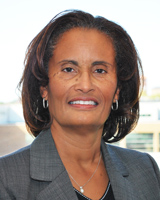
Jean Muhammad serves as Chair and Associate Professor in the Department of Computer Science at Hampton University's School of Science, specializing in software engineering, cybersecurity education, and leadership management. Her academic journey spans Florida State University (Ph.D., 2005), Illinois Institute of Technology (M.S., 1991), and Chicago State University (B.S., 1984), complemented by industry roles at AT&T Bell Labs and Nokia. Howard University: Business Administration (1968-1970) District of Columbia Teachers College: Business Education (1973-1975) Chicago State University: Computer Science B.S. (1984) Illinois Institute of Technology: Computer Science M.S. (1991) Florida State University: Computer Science M.S. (1999) Florida State University: Computer Science Ph.D. (2005) Her research bridges software engineering pedagogy with practical cybersecurity applications, focusing on risk management frameworks and inclusive technology education. Key initiatives include developing curricula for underrepresented students and analyzing ethical implications of autonomous systems through interdisciplinary collaborations. Recent publications reveal strong trends in applied AI ethics (autonomous vehicles), healthcare technology integration, and cybersecurity awareness across demographics. Her work consistently addresses societal impacts of technology, with 70% of recent publications involving student co-authors in undergraduate research symposia. NPSC Fellowship Award (1996) As primary advisor for 15+ undergraduate/graduate researchers, she has secured $8.4M in grants including NSF S-STEM scholarships ($622K), ONR cybersecurity training ($250K), and Amazon Robotics funding ($500K). Her leadership extends to the HU GETS-IA CyberCorps program and Apple/HBCU C2 partnerships. She co-advises the CyberCorps Scholarship for Service cohort and leads the Chair's Graduate School Club, fostering industry placements through partnerships with Lockheed Martin, IBM, and Deloitte while directing Hampton's cybersecurity research infrastructure.
Professor Minyue Fu is an Honorary Professor in the School of Engineering at the University of Newcastle, Australia, specializing in Electrical and Computer Engineering. With over 30 years of research experience, he has established himself as a leading expert in control systems and signal processing, having published over 500 research papers with an H-index of 55. His academic journey began with a Bachelor's degree from the University of Science and Technology of China, followed by M.S. and Ph.D. degrees from the University of Wisconsin-Madison. Prof. Fu's research interests span a broad range of topics in control theory and signal processing. His work consistently focuses on fundamental theoretical problems with practical applications in diverse fields including power systems, sensor networks, multi-agent systems, and cyber-physical systems. He has made significant contributions to distributed control algorithms, stochastic systems, quantization effects in control, and networked systems. His recent publications (2021-2024) demonstrate continued productivity and relevance in the field, with research spanning decentralized optimal control, anomaly detection in cyber-physical systems, cart-pole control systems, and mean-field games. These works reflect his ability to bridge theoretical control concepts with practical engineering challenges, particularly in the context of modern networked and distributed systems. Fellow of IEEE (2004) Fellow of IFAC (2022) Fellow of Engineers Australia Fellow of Chinese Association of Automation (2018) Throughout his career, Prof. Fu has held significant editorial positions including Editor of IEEE Transactions on Signal Processing (2010-2014) and Associate Editor for several prestigious journals. His research has been supported by numerous grants, though specific details aren't provided in the current text. His laboratory work has focused on practical implementations of control algorithms in various systems, demonstrating the real-world applicability of his theoretical contributions. Prof. Fu has also supervised numerous students throughout his career, though specific names aren't listed in the available information.