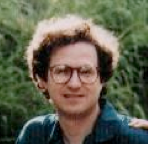
Jean Marie Guillaume De Nivelle holds the title of Privatdozent (Associate Professor equivalent) at TU Wien's Faculty of Informatics, affiliated with the Theory and Logic department (E192-05). His research focuses on foundational aspects of computer science with emphasis on logic-based methodologies. Education details: PhD holder with Privatdozent qualification reflecting advanced academic standing. Contact via jean.nivelle@tuwien.ac.at or through institutional portals like TISS and departmental website. Research interests center on theoretical foundations including formal systems, automated theorem proving, and computational logic applications. No specific awards or current grants explicitly listed in available data.
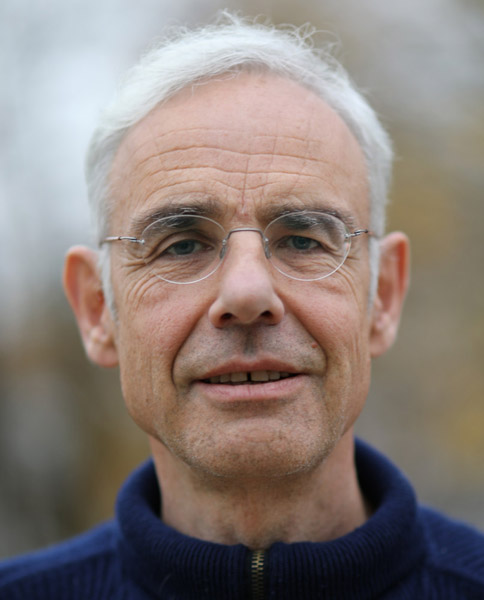
Clemens Eisenhofer is a PreDoc Researcher at TU Wien's Institute of Logic and Computation within the Faculty of Informatics. His role combines doctoral research with active contributions to multiple funded projects, positioning him at the forefront of SMT solver development and formal methods research. His research centers on advancing Satisfiability Modulo Theories through innovations in bit-vector reasoning, non-classical logics, and custom theory integration. Key focus areas include enhancing Z3's capabilities for word-level operations, embedding proof calculi like connection calculus, and developing user-propagator frameworks. These efforts target practical applications in software verification, program analysis, and constraint solving, with direct implications for reliability-critical systems. Eisenhofer actively contributes to four major research initiatives: ARTIST (2021-2026) on automated reasoning foundations; SFB SPyCoDe (2023-2030) for cyber-physical systems verification; TAIGER (2023-2027) in theorem proving; and ForSmart (2023-2027) for smart contract analysis. These projects provide substantial computational resources and foster international collaborations, though he does not currently supervise students given his PreDoc status. His research operates within TU Wien's Institute of Logic and Computation—a leading European hub for formal methods—leveraging institutional expertise in computational logic and strong industry ties. The institute's collaborative environment supports his work on solver extensions while connecting theoretical advances to practical verification challenges across multiple domains.
Marton Hajdu is a PostDoc Researcher at the Vienna University of Technology , affiliated with the Systems Engineering department under the Formal Methods in Systems Engineering group (E192-04). His research focuses on formal methods , automated reasoning , and inductive logic . He actively contributes to projects such as ARTIST (2021–2026) , ForSmart (2023–2027) , and SFB SPyCoDe (2023–2026) , which explore recursive programming, saturation-based reasoning, and inductive benchmarks. His work intersects superposition calculus , term rewriting , and formal verification . His recent publications highlight advancements in inductive reasoning , recursive program synthesis , and constraint solving using saturation techniques. These contributions align with broader trends in automated deduction and logic programming for computer-aided verification. Marton Hajdu holds a Diploma Thesis from TU Wien (2020) titled Automating inductive reasoning with recursive functions , establishing his expertise in formal methods and recursive logic. He collaborates with researchers like Laura Kovács and Andrei Voronkov , and his work is supported by projects spanning formal reasoning, smart systems, and theoretical computer science.
Matthias Hetzenberger is a PreDoc Researcher at the Department of Formal Methods in Systems Engineering, Technische Universität Wien. His research focuses on formal verification techniques and computational logic. Research Interests: Formal Methods Systems Engineering Higher-Order Logic Constraint Solving Publications: Recent work includes research on constraint superposition for higher-order logic (2023), advancing automated theorem proving methodologies.
Stefan Hetzl is an Associate Professor at Vienna University of Technology (TU Wien), affiliated with the School of Informatics and the Institute of Computer Science. His research focuses on computational logic, proof theory, and formal languages, with a particular emphasis on automated and interactive theorem proving. He contributes to the development of the GAPT system for proof analysis and participates in projects like the Automated Analysis of Mathematical Proofs funded by the Austrian Science Fund (FWF). Interactive Theorem Proving Automated Theorem Proving Proof Theory Theory of Formal Languages Hetzl has supervised multiple academic theses, including Diploma Theses on topics such as open induction, finite languages, and cyclic superposition. His publications span areas like cut-elimination, Herbrand sequents, and higher-order logic, reflecting a deep engagement with structural invariance and algorithmic transformations in formal proofs. While no explicit awards are listed, his work contributes significantly to the theoretical foundations of computer science and mathematical logic.
Christoph Hochrainer is a PreDoc Researcher at Technische Universität Wien, affiliated with the Software Engineering department. His academic role involves research in software systems and formal methods, supported by projects like ForSmart (2023–2027) and MirandaTesting (2023–2028). He completed his Diploma in automated reasoning at TU Wien in 2020. His research spans software engineering, cryptography, and programming languages, with specialized interests in fuzzing techniques, architecture description languages, and smart contract security. Recent work emphasizes zero-knowledge circuits, Solidity benchmarking, and macro systems for domain-specific tooling. Christoph's publications consistently explore automated testing and formal verification, with a trend toward practical applications in blockchain and secure software pipelines. He supervises student theses, including work on inconsistency detection in Solidity smart contracts. He contributes to collaborative projects focused on formal methods and software reliability, operating within TU Wien's research units. No scientific awards are documented.
Daniela Kaufmann is a PostDoc Researcher at the Department of Formal Methods in Systems Engineering , part of the School of Informatics at Vienna University of Technology. Her work focuses on combining SAT solving and computer algebra for formal verification of arithmetic circuits. Research Interests: Daniela specializes in Formal verification of arithmetic circuits Algebraic reasoning SAT/SMT solving Grammar inference Automated reasoning Finite field arithmetic verification Recent Article Trends: Her publications emphasize hybrid approaches merging SAT techniques with computer algebra for circuit verification, finite field arithmetic reasoning in SMT solvers, and fuzzing-based grammar inference. She has contributed to tools like AMulet2 and PolySAT, addressing scalability challenges in multiplier verification. Projects: Daniela is a key researcher in the CalgSAT (2024-2027) ARTIST (2021-2026) SFB SPyCoDe (2023-2026) projects funded by the Austrian Science Fund (FWF).
Markus Kirchweger is a PreDoc Researcher at the Department of Algorithms and Complexity, Faculty of Informatics, Technische Universität Wien. His work spans Satisfiability (SAT) solving, graph theory, and combinatorial optimization, with a focus on symmetry breaking and SAT modulo theories. Research Interests: Developing SAT-based frameworks for graph generation and enumeration Dynamic symmetry breaking in combinatorial problem encodings Integrating user propagators into CDCL solvers Applying SAT techniques to conjectures like Erdős-Faber-Lovász and Rota’s Basis Co-certificate learning and shortest common supersequence optimization Projects: INCR (2021–2024), REVEAL-AI (2020–2024), SLIM (2019–2024), ASK-SAT (2024–2027).
Pascal Schreck is a Professor of Computer Science at the University of Strasbourg, affiliated with the Department of Computer Science within the UFR of Mathematics and Computer Science. He is a researcher at the ICube laboratory and has held administrative roles, including Director of the Computer Science Department (2008–2011) and course coordinator for specialized programs. His research focuses on geometric computing, formal methods in geometry, automated deduction, and geometric constraint solving, with contributions to theorem proving, computational geometry, and CAD applications. His work integrates algebraic and geometric approaches to solve problems like constructibility in geometric constructions, incidence geometry, and constraint systems. He has developed methods using Coq proof assistants for formal verification and explored topics such as homotopy-based solutions for geometric constraints. His contributions span theoretical advancements and practical applications in areas like 3D modeling and medical trajectory planning. Key research trends include leveraging formal systems (e.g., Coq) for mechanized proofs, analyzing geometric constructs' feasibility, and improving algorithms for constraint resolution. His publications address foundational geometry theorems (e.g., Dandelin-Gallucci), combinatorial geometry, and automated construction verification. He has also contributed to international workshops and conference proceedings on automated deduction in geometry. As a member of the ICube laboratory and the IGG Team (Geometric and Graphical Computing), Schreck collaborates on interdisciplinary projects, bridging mathematics, computer science, and engineering. His work emphasizes rigorous formalization, algorithm optimization, and practical implementation in geometric problem-solving domains.
Nachum Dershowitz is a Full Professor at the School of Computer Science, Tel Aviv University, with a career spanning institutions like the University of Illinois at Urbana-Champaign, Microsoft Research, and the Weizmann Institute. His research bridges theoretical computer science, computational logic, and digital humanities. Fields: Rewrite systems, termination proofs, automated reasoning, program verification, computational linguistics Awards: Herbrand Award (2011), Test-of-Time Award (2006), Chair in Computational Logic (2012) Grants: NSF, ISF, Intel, Google, Israeli Ministry of Science His work on historical manuscript analysis combines computer vision with natural language processing, while his contributions to term rewriting systems have shaped automated deduction. He has edited volumes in logic and AI, and served as program chair for major conferences.
Tobias Nipkow is a Professor for Logic and Verification at the Department of Informatics, Technical University of Munich (since 2011), previously serving as Professor for Theory of Programming (1992-2011). His career spans academic roles at The University of Manchester, MIT, and University of Cambridge, including positions as Lecturer, Research Associate, and Advanced SERC Fellow. Research Interests focus on foundational aspects of computer science, particularly Formal verification of algorithms and systems Interactive theorem proving Term rewriting systems Semantics of programming languages Development of proof assistants Automated reasoning techniques Notable Publication Trends include extensive contributions to Isabelle/HOL formalization, verification of programming languages, and critical advancements in term rewriting and automated deduction. His work bridges theoretical foundations with practical verification tools. Scientific Awards Herbrand Award for Distinguished Contributions to Automated Reasoning (2021) Editorial Leadership includes tenure as Editor-in-Chief of the Journal of Automated Reasoning (2007-2020) and co-founding editor roles for ACM Transactions in Computational Logic and Logical Methods in Computer Science .
Jonas Karge is a Researcher at the International Center for Computational Logic (ICCL) within the Faculty of Computer Science at Technische Universität Dresden. He is a doctoral student in the Computational Logic Group at the Institute of Artificial Intelligence, focusing on logic-based knowledge representation, formal epistemology, and multi-agent systems. His work addresses challenges in combining agent beliefs under severe uncertainty, particularly in contexts involving imprecise probabilities and collective decision-making. Karge has taught multiple courses including Foundations of Knowledge Representation , Algorithmic Game Theory , and Theoretical Computer Science and Logic across various semesters. His research integrates formal methods from logic and social choice theory to advance understanding of belief fusion, voting mechanisms, and decision-making frameworks under uncertainty. Notable contributions include work on generalized Condorcet jury theorems and taming dilation in imprecise pooling. His publications span conferences like AAMAS, IJCAI, and PRIMA. Education: M.A. (Master of Arts) in a related field (implied by title, exact discipline unspecified). Research interests emphasize formal epistemology applied to multi-agent systems, with a focus on how agents can rationally aggregate beliefs when faced with uncertainty. His recent work explores bin voting mechanisms for integrating imprecise probabilistic beliefs and the application of sequent calculus to description logics. These efforts bridge theoretical computer science with practical applications in collective decision-making and knowledge representation. Teaching responsibilities include foundational courses on knowledge representation, game theory, and formal systems, reflecting his expertise in both theoretical and applied aspects of computational logic. No specific grants or labs are explicitly mentioned, though his affiliation with the ICCL suggests involvement in collaborative projects within the center.
Piotr Ostropolski-Nalewaja is a Research Associate in Computational Logic at Technische Universität Dresden's Faculty of Computer Science. His research focuses on computational logic, database theory, and knowledge representation, with particular emphasis on decidability problems and formal methods in computer science. Research interests include: Decidability in formal systems Query processing and optimization Knowledge representation formalisms Automated reasoning Ontology-based data access Recent publications investigate decidability boundaries for various logical formalisms, developing novel approaches to query answering under existential rules. His work bridges theoretical computer science and practical applications in database systems. Awards: No awards listed He contributes to multiple collaborative projects exploring the theoretical foundations of knowledge representation and reasoning systems.
Prof. Maria Paola Bonacina is a former Visiting Professor at the Technische Universität Dresden (TU Dresden), affiliated with the Faculty of Computer Science and the International Center for Computational Logic (ICCL). Her research focuses on computational logic, formal methods, and automated reasoning, with contributions to theorem proving and artificial intelligence. Though no specific publications are listed here, her work aligns with the ICCL's emphasis on foundational and applied logic research. Her academic career at TU Dresden included teaching and research activities within the ICCL, though she is now a former member of the institution. No specific educational background details are provided in the text. Awards and grants are not explicitly mentioned, but her affiliation with the ICCL suggests involvement in collaborative research projects. Labs and teams associated with her work include the International Center for Computational Logic, a hub for interdisciplinary research in computational logic and related fields.
Dr. Chunping Li is a former Visiting Scientist at the International Center for Computational Logic (ICCL) within the Faculty of Computer Science at TU Dresden. Their research focuses on computational logic, formal methods, and automated reasoning, aligning with the interdisciplinary goals of the ICCL. Though no specific publications are listed here, their work contributes to advancing theoretical computer science and artificial intelligence. Dr. Li’s affiliation with TU Dresden highlights expertise in foundational areas of computer science. Research interests emphasize formal verification, automated theorem proving, and applications in AI. The ICCL environment supports collaborative projects in logic-based systems and computational foundations.