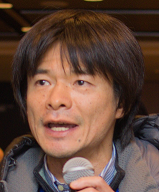
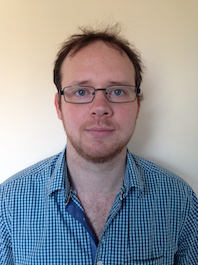
Kristian Gjøsteen is a Professor at the Department of Mathematical Sciences within the Norwegian University of Science and Technology (NTNU) . He actively contributes to the Algebra Group and specializes in cryptographic systems with a focus on electronic voting , security proofs , and privacy-enhancing technologies . Educational Background: MSc and PhD from NTNU Research Interests: His work spans cryptography , key exchange protocols , cloud security , and formal verification of security mechanisms. Particular emphasis is placed on coercion-resistant voting systems , lattice-based encryption , and blockchain privacy models . Article Trends: Recent publications demonstrate expertise in post-quantum cryptography , machine-checked security , and privacy-preserving voting architectures . Collaborative efforts explore hybrid cryptographic schemes , verifiable decryption , and mix-net implementations for secure elections.
Gudmund Grov is an Associate Professor in Digital Security at the Department of Informatics, Faculty of Mathematics and Natural Sciences, University of Oslo. His research focuses on cybersecurity, with emphasis on anomaly detection, explainable AI, and security modeling. He is actively contributing to advancements in autonomous cyber defense and machine learning applications in security operations. His research interests span Digital Security , Network Anomaly Detection , Explainable AI (XAI) , Machine Learning for Cyber Defense , Security Modeling , and Risk Modeling in Enterprise Architecture . His work integrates formal reasoning with practical modeling to enhance system security and interpretability. The recent publications reflect a strong trend towards intelligent and interpretable cybersecurity systems, combining deep learning with formal methods to detect and explain network threats. His work bridges the gap between theoretical modeling and real-world security applications, particularly in autonomous defense and labeled dataset generation for APTs. No scientific awards were mentioned in the provided text. Gudmund Grov collaborates extensively with researchers in cybersecurity and formal methods. While specific grants and advising roles are not detailed, his co-authorship on multiple projects indicates active research supervision and collaboration. He is involved in developing frameworks for labeled data generation, contextual anomaly detection, and explainable alerts in SOC environments. There is no explicit information about labs or research teams, but his work suggests involvement in cybersecurity research groups at the University of Oslo focusing on AI-driven security and formal verification.
Kazuhiro Ogata is a Professor in the School of Information Science at Japan Advanced Institute of Science and Technology (JAIST). He actively teaches courses such as i116 Basic of Programming, i217 Functional Programming, and i219 Software Design Methodology, indicating a strong commitment to computer science education and curriculum development. Institution: Japan Advanced Institute of Science and Technology (JAIST) School: School of Information Science Position: Professor Email: ogata@jaist.ac.jp Research Laboratory: http://www.jaist.ac.jp/~ogata/lab/ His research interests center on programming languages, software design methodology, formal methods, and compiler construction. He emphasizes formal verification using theorem proving and rewriting logic, particularly with tools like Maude. His work bridges theoretical computer science with practical software engineering and education, focusing on correctness, design patterns, and language semantics. The analysis of his recent publications reveals a consistent focus on formal specification, verification of software systems, and educational tools for programming. His work spans functional programming, concurrent systems, and distributed algorithms, often using rewriting logic as a unifying framework. He integrates formal methods into both research and teaching, promoting rigorous software development practices. No scientific awards are explicitly mentioned in the provided texts. Kazuhiro Ogata advises students through his laboratory at JAIST and has developed structured course materials that suggest active mentorship. While specific grant information is not available, his sustained research output and tool development imply ongoing project funding. He contributes to academic outreach through summer schools and educational frameworks. He leads a research laboratory focused on formal methods and programming language design, fostering a collaborative environment for students and researchers. The lab develops tools for teaching and verifying software systems, emphasizing correctness and educational impact.
Einar Broch Johnsen is a Professor at the Department of Informatics, University of Oslo. His research focuses on programming models, formal methods, and distributed systems, with significant contributions to languages like ABS and SMOL. He has led major projects including the Sirius Center (2015-2023) and EU initiatives Envisage and HyVar. His work spans asynchronous systems, cloud computing, and digital twins, emphasizing rigorous verification techniques. Recent publications show a trend toward AI integration, robotics, and knowledge-based systems, blending formal methods with practical applications in autonomous decision-making and semantic validation. Johnsen holds editorial and committee roles for journals including Formal Aspects of Computing and conferences like FASE and iFM. He teaches courses on computability and concurrency models, advancing both theoretical and applied aspects of software engineering.
Michael Kirkedal Thomsen is an Associate Professor in the Department of Informatics at the University of Oslo's Faculty of Mathematics and Natural Sciences. His office is located in room 10461 at Gaustadalléen 23B, 0373 Oslo, with postal address PO Box 1080 Blindern 0316 Oslo. His research focuses on programming languages and security, with particular expertise in reversible computing and programming language theory. Thomsen's research spans multiple interconnected domains within computer science. His primary focus is on reversible computing - investigating how to design programming languages, compilers, and hardware that minimize energy consumption through reversible operations. He has developed Jeopardy, an invertible functional programming language, and has made significant contributions to reversible circuit design, reversible arithmetic operations, and energy-efficient computation. His work bridges theoretical computer science with practical hardware implementation concerns, particularly examining how reversible programs behave on conventional irreversible hardware. An analysis of his recent publications reveals a clear evolution in his research trajectory. Starting with foundational work on reversible circuits and arithmetic operations (2008-2014), he has progressed toward higher-level programming language constructs for reversible computation. His 2022-2024 publications demonstrate a shift toward practical applications, educational tools, and energy analysis of reversible systems. The recurring themes across his work include invertibility, energy efficiency, formal methods, and the relationship between high-level programming abstractions and low-level hardware implementation. While specific grant information isn't detailed in the available text, Thomsen's research program clearly involves significant collaboration with colleagues at the University of Oslo and international partners. His publications show consistent work with researchers including Holger Bock Axelsen, Robert Glück, Joachim Tilsted Kristensen, and Robin Kaarsgaard across multiple years, suggesting ongoing collaborative projects and likely sustained funding support. Though not explicitly stated in the available information, Thomsen's work on reversible processor architecture, Jeopardy programming language, and energy analysis strongly suggests involvement with research groups focused on energy-efficient computing, programming language design, and potentially quantum-inspired computing architectures at the University of Oslo's Department of Informatics.
Mateus De Oliveira Oliveira is an Associate Professor in the Department of Informatics at the University of Bergen. His research focuses on theoretical computer science, automated theorem proving, parameterized complexity, formal verification, graph theory, and computational logic. His work spans algorithm design for constraint satisfaction problems, automated reasoning systems, and formal verification techniques. Notable contributions include advancements in width-based automated theorem proving, Petri net synthesis, and parameterized complexity analysis for graph algorithms. He leads the Autoproving project funded by the Research Council of Norway, exploring automated theorem proving through parameterized complexity theory. Recent publications highlight developments in symbolic functional decomposition, state canonization for theorem proving, and optimal dynamic programming algorithms. His research bridges foundational theory with practical applications in automated systems and formal methods.
Ana Ozaki is an Associate Professor at the Department of Informatics, University of Bergen, Norway. Her research focuses on the intersection of Artificial Intelligence (AI), knowledge representation and reasoning, and learning theory. She explores formal methods to analyze learnability, complexity, and reducibility in logical frameworks like description logics. Ozaki leads projects on ontology learning from neural networks, knowledge graph embeddings, and theoretical guarantees for machine learning systems. She has organized international conferences like AIB 2022 and DL 2024, and serves on editorial boards for Journal of Machine Learning Research and Journal of Web Semantics . Ozaki supervises PhD and master’s students in topics ranging from query-based learning to traffic prediction with graph neural networks. Her work emphasizes bridging theoretical foundations with practical AI applications, including ethics in autonomous systems and formal verification of neural networks.
Giles Reger is a Senior Lecturer in the School of Computer Science at the University of Manchester , affiliated with the Formal Methods Group . His academic journey includes a BA in Computer Science from the University of Cambridge (2009), an MSc in Advanced Computer Science (University of Manchester, 2010) with the Highest Achiever of the Year Award , and a PhD (University of Manchester, 2014) on runtime verification. Research Interests: Theorem Proving (via Vampire system) and Runtime Verification (via MarQ and VyPR tools). Collaborations: Projects with University of Oxford, ARM, AWS, CERN, and SnT Luxembourg. Recent Work: Giles' publications span 2019-2016, focusing on Vampire's higher-order reasoning, symmetry avoidance in finite model finding, neural guidance in theorem proving, and runtime verification for Python web services (VyPR2). Trends include integrating machine learning with formal methods and advancing logic-based verification tools. Scientific Awards: Highest Achiever of the Year Award (MSc, University of Manchester, 2010) Vampire's multiple trophies at CASC and SMT-COMP competitions Advising: Supervises PhD students Michael Rawson, Ahmed Bhayat, and Joshua Dawes. Labs/Teams: Contributes to the Vampire team and the VyPR project.
Martin Giese is a Professor at the Department of Informatics (IFI), University of Oslo , specializing in applied logics , formal methods , and semantic technologies . He is affiliated with the Data and Knowledge Systems (DKM) research group and has held postdoctoral positions at RICAM, RISC, and Chalmers University of Technology. PhD and Diploma in Computer Science from Universität Karlsruhe (2002/1998) Secretary of the Association of Automated Reasoning and CADE Inc. (2010–2018) Steering Committee member of Tableaux (2009–2017), Vice President (2013–2017) His research focuses on semantic web technologies , ontology-based data access (OBDA) , and industrial applications of formal methods. Key contributions include the development of OptiqueVQS (visual query system for big data) and GeoFault (ontology for geological modeling). Recent publications address SPARQL optimization with SHACL , digital twins , and geological process simulation . Scientific collaborations span institutions like Statoil , Siemens , and ACM/IEEE conferences. His work bridges theoretical logic with practical industrial data challenges , emphasizing user-centric semantic systems and scalable solutions for cross-linked datasets.
Ana Ozaki is an Associate Professor at the University of Oslo (full-time) and holds a part-time position at the University of Bergen. Her research focuses on Artificial Intelligence, particularly knowledge representation, machine learning theory, and algorithms for learning logical theories in description logic. Her primary research interests include the formalization of learning phenomena to investigate questions of learnability, complexity, and reducibility. Ozaki specializes in algorithms for learning logical theories using description logic and related formalisms. Her work bridges theoretical foundations with practical applications in knowledge representation. Ozaki's publications predominantly explore themes in computational logic, knowledge representation, and machine learning theory. Recent works focus on ethical AI applications, hybrid logic systems, and knowledge extraction techniques from language models, demonstrating consistent innovation at the intersection of formal methods and practical AI systems. She has led significant research projects including 'Learning Description Logic Ontologies' (funded by RCN) and 'Apprendimento PAC di Ontologie in Logica Descrittiva' (PACO), and has collaborated internationally on graph-based computation models. Ozaki serves the AI community through editorial roles at the Journal of Machine Learning Research and Journal of Web Semantics, and has chaired program committees for major conferences including the International Joint Conference on Rules and Reasoning and the International Description Logic Workshop.