Rui Prada is a Full Professor at the Department of Computer Engineering, Instituto Superior Técnico, University of Lisbon. His research focuses on Artificial Intelligence , Game Development , and Human-Machine Interaction , with emphasis on socially intelligent agents and affective computing. His work explores Multi-Agent Systems , XR Testing , and Educational Game Design , particularly for neurodiverse populations. Recent publications highlight Procedural Content Generation , Human-AI Collaboration , and Social Power Dynamics in agent-based systems. Scientific contributions include the Best Poster Award and leadership in projects like PartiPlay and RAGE , advancing Inclusive AI and Game Technologies Marketplace frameworks.
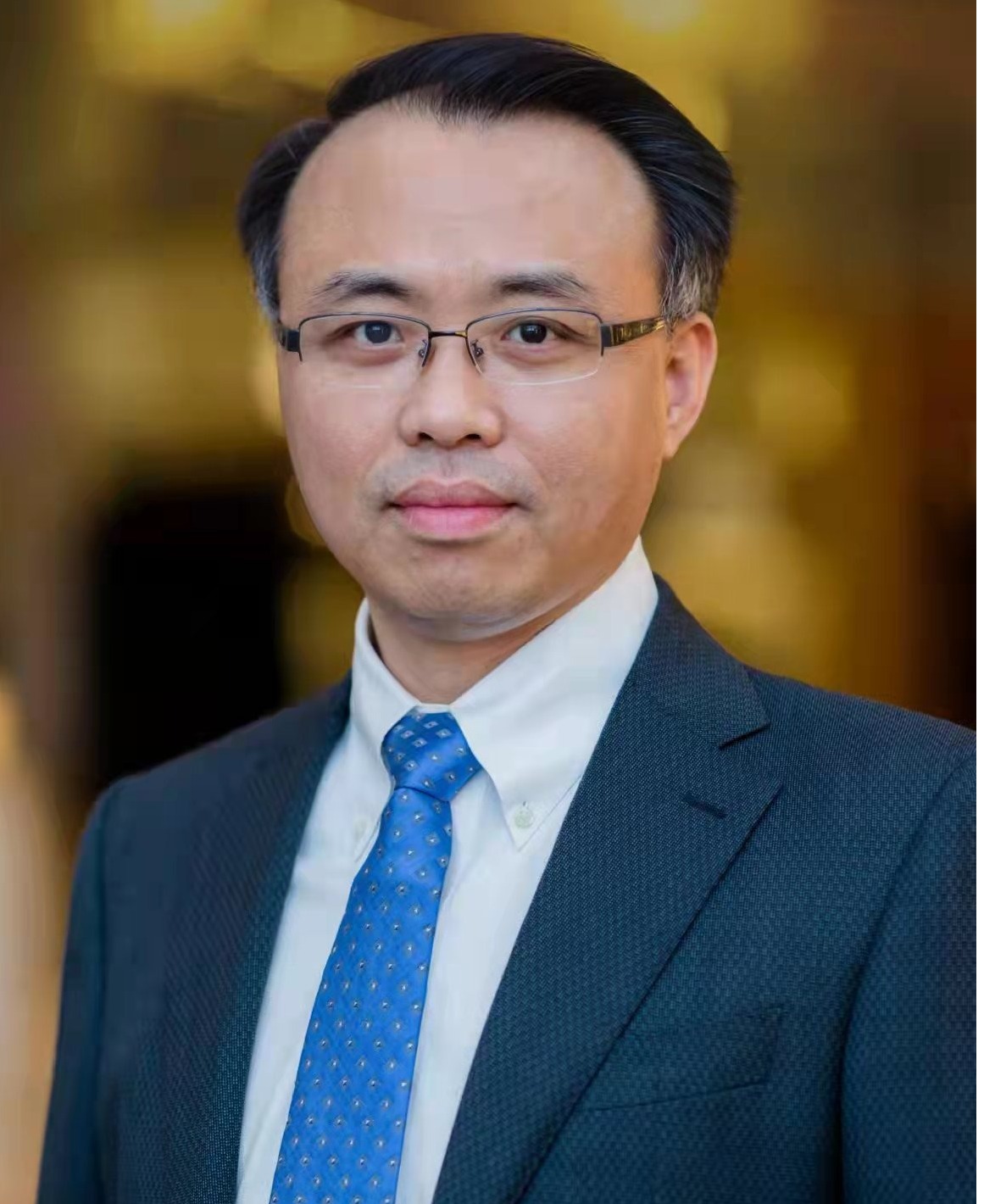
Zhu Yan serves as Professor at Tsinghua University's School of Economics and Management, Department of Management Science and Engineering. He concurrently holds leadership positions as Dean of Tsinghua's Internet Industry Research Institute, Director of the Advanced Information Technology Business Application Laboratory, and Executive Deputy Director of the Medical Management Research Center. Education: Postdoctoral Fellow (1998-2000) and Ph.D. in Nuclear Energy Technology (1994-1998) at Tsinghua University, Bachelor's in Engineering Physics (1989-1994) Professional Experience: Professor (2010-present), Associate Professor (2002-2010), Lecturer (2000-2002); Visiting Scholar at MIT Sloan, CUHK, and Lancelot Institute Professor Zhu's research spans digital transformation , industrial blockchain , and digital production relations , with emphasis on practical applications in healthcare, construction, and finance. His work bridges theoretical frameworks with industry implementation, particularly in China's digital economy evolution. Current projects focus on industrial internet integration and digital finance systems. His 15 most recent publications demonstrate strong interdisciplinary focus, connecting information systems with healthcare analytics (40%), industrial digitalization (35%), and economic policy (25%). The research shows increasing emphasis on AI-driven diagnostic systems and pandemic-responsive economic strategies since 2020. Beijing Philosophy and Social Sciences Excellent Achievement Award (2020) China Petroleum and Chemical Automation Association Science and Technology Progress Award (2010) Multiple Beijing Science and Technology Progress Awards (2001, 2005) Tsinghua University Outstanding Teaching Award (1999) As academic advisor to national initiatives, Professor Zhu leads the China Technology Economics Society's Blockchain Division and serves as Chief Academic Officer for Chengdu University of Information Technology's Blockchain Industry College. His industry partnerships include SAP Global HR Advisory role since 2000 and CCTV Financial Commentary position since 2015. Current research funding focuses on digital infrastructure development through the Industrial Digital Finance Technology Application Laboratory. He directs the Advanced Information Technology Business Application Laboratory, which develops enterprise digital transformation frameworks, and co-leads the Medical Management Research Center's AI diagnostic initiatives. Current projects include national blockchain infrastructure development and pandemic-resilient supply chain systems.
Marina Milovanović is a Professor at the University of Singidunum, Faculty of Informatics and Computing, Department of Mathematics. She holds dual doctoral degrees from the Faculty of Science, University of Kragujevac (Department of Mathematics, 2014) and Faculty of Entrepreneurial Business, Union University (2008), along with Master's and Bachelor's degrees from the Faculty of Mathematics, University of Belgrade (2000-2005 and 1995-2000 respectively). Faculty of Science, University of Kragujevac, Department of Mathematics (PhD, 2014) Faculty of Entrepreneurial Business, Union University (PhD, 2008) Faculty of Mathematics, University of Belgrade (Master's, 2000-2005) Faculty of Mathematics, University of Belgrade (Bachelor's, 1995-2000) Svetozar Marković High School, science and mathematics major (1991-1995) Professor Milovanović specializes in Mathematics Education and Educational Technology, with particular expertise in interactive multimedia applications for teaching mathematics. Her research consistently bridges theoretical mathematics with practical educational technology solutions, evolving from traditional multimedia approaches to incorporating cutting-edge AI and machine learning techniques. She has authored multiple books including 'Interactive multimedia in mathematics teaching' (2015) and collections of solved mathematics problems for entrance exams. Her recent publication record through 2025 demonstrates active engagement in interdisciplinary research, particularly at the intersection of educational technology, artificial intelligence, and practical applications in fields ranging from software engineering to medical diagnostics. Her work shows a clear trajectory from foundational educational technology research toward more sophisticated AI-enhanced learning systems. Professor Milovanović has made significant contributions to semantic web applications in education, particularly through Moodle LMS enhancements, and has explored SCADA applications in industrial contexts. Her collaborative research spans multiple countries and institutions, reflecting an international scholarly network. She has extensive experience developing computer tools for engineering education and has published on diverse topics including petroleum industry processes, environmental management, and financial mathematics. Her work demonstrates consistent application of computational approaches to solve domain-specific problems across multiple disciplines.
Mayank Goel serves as an Assistant Professor in the Software and Societal Systems Department (S3D) at Carnegie Mellon University's School of Computer Science. His research bridges computer science and societal impact through practical sensing systems that leverage existing environmental devices for health monitoring and human-computer interaction without requiring hardware modifications. Dr. Goel specializes in mobile computing, signal processing, and machine learning to develop unobtrusive health technologies applicable to real-world scenarios. His core research areas include passive activity recognition for chronic disease management (particularly multiple sclerosis), privacy-preserving acoustic sensing, smartwatch-based clinical interventions for post-operative care, and equitable healthcare systems for global development contexts. He emphasizes end-to-end solutions through close collaboration with medical professionals and designers to ensure immediate deployability outside laboratory environments. Analysis of his 2024-2025 publications reveals a strong interdisciplinary focus spanning computer science, biomedical engineering, and clinical practice. Key trends include longitudinal digital phenotyping for neurological conditions, on-device privacy preservation in activity recognition, and multimodal procedural assistance systems. His work consistently addresses real-world challenges in sensor placement flexibility, user adoption barriers, and equitable access to medical technologies. No scientific awards were mentioned in the available documentation. Information regarding student advising, research grants, or laboratory affiliations was not specified in the provided materials, though his publication record indicates active collaboration with medical professionals and bio-engineers for clinical validation of health technologies.
Claire Le Goues is an Associate Professor in the School of Computer Science at Carnegie Mellon University , affiliated with the Software and Societal Systems Department (formerly Institute for Software Research). She holds a Ph.D. and M.S. in Computer Science from the University of Virginia and a B.A. in Computer Science from Harvard College. Her research focuses on software engineering with emphasis on program analysis , transformation , and search-based repair . She leads the squaresLab group and co-directs the REUSE@CMU summer program. Her work spans automated program improvement (stochastic/formal approaches), software assurance, quality metrics, and systems from open source to robotics. Recent scientific awards include the ACM FSE 2025 Test of Time Award Honorable Mention and the Presidential Early Career Award for Scientists and Engineers (PECASE) . She mentors students in software engineering and actively collaborates on projects like SearchRepair and GenProg , supporting empirical benchmarks such as ManyBugs and IntroClass . She teaches software engineering and program analysis at undergraduate, master’s, and doctoral levels, addressing challenges in scaling modern systems. Her lab focuses on software repair , code transformation , and AI-driven testing .
Bradley Schmerl serves as a Principal Systems Scientist in the Software and Societal Systems Department (S3D) within Carnegie Mellon University's School of Computer Science. His research advances software engineering practices for modern challenges in distributed heterogeneous systems, self-adaptation, and cyber-physical integration. He leads the ABLE research group and actively mentors students in the Masters in Software Engineering program while teaching core courses like Software Architecture and Software Engineering Practicum. Dr. Schmerl's work addresses critical challenges in composing continuously evolving software systems, including components from untrusted third parties and on-the-fly recomposition for environmental changes. His research develops reusable, analyzable tools for software composition with emphasis on model-based adaptation, uncertainty management, and cross-language integration. Key projects include Rainbow for runtime architecture reflection, Acme for formal architectural foundations, and Cyber-physical Systems research linking software models with physical dynamics. Analysis of his 2023-2025 publications reveals intensifying focus on robotics software architecture (particularly ROS-based systems), explainable AI for architectural tradeoff analysis, and configuration management in adaptive systems. Trends show growing integration of machine learning for auto-tuning, empirical studies of misconfigurations, and dimensionality reduction techniques for visualizing design spaces—consistently bridging theoretical rigor with practical tool development for real-world applications. Scientific Awards: No specific awards were documented in the source materials. Dr. Schmerl serves as Practice Area Lead and mentor in CMU's Masters in Software Engineering program, guiding client projects including Rainbow UI for self-adaptive framework interfaces, CoBot UI for telepresence robots, and Educational Telepresence Tasking Language development. His research receives support through ABLE group projects funded by grants targeting software architecture foundations, adaptation mechanisms, and cyber-physical system validation. As a core member of the ABLE research group, he directs investigations into architecture-based self-adaptation with active projects spanning Rainbow (runtime architecture models for dynamic adaptation), Acme (formal architectural styles and tools), and Cyber-physical Systems (software-physical model integration). The group also maintains legacy work in End-User Architecting, Architecture Evolution, and service-oriented platforms for intelligence analysis through SORASCS.
Rayid Ghani is a Professor at Carnegie Mellon University (CMU), affiliated with both the Machine Learning Department (School of Computer Science) and the Heinz College of Information Systems and Public Policy. He co-leads CMU’s Responsible AI Initiative and leads the Data Science and Public Policy Group and the Data Science for Social Good Program. His work focuses on applying machine learning, AI, and data science to address social and policy challenges in health, criminal justice, education, public safety, workforce development, and sustainability, with an emphasis on fairness, equity, and transparency in AI systems. Education: PhD in Software Engineering PhD in Societal Computing Rayid’s research spans three pillars: (1) building AI systems for human collaboration to improve decision-making, (2) embedding fairness and equity in AI design, and (3) ensuring reliability and resilience of AI systems in dynamic environments. He emphasizes application-grounded experimental design and stakeholder engagement. His recent publications include frameworks for fair ML experimentation, analyses of fairness-accuracy trade-offs, and AI applications in child welfare, public health, and housing policy. He has also contributed to policy discussions, including congressional testimonies on responsible AI procurement. Advising & Grants: Rayid collaborates with governments, NGOs, and academic institutions on projects like eviction prevention, HIV care retention, and bias mitigation in public policy. He advises non-profits and startups on data science strategy and ethics. Labs & Teams: He leads the Data Science and Public Policy Group and the Data Science for Social Good Program at CMU, fostering interdisciplinary collaborations between computer scientists, social scientists, and policymakers.
Stephen Turner is an Associate Professor of Data Science and Assistant Dean for Research at the University of Virginia School of Data Science . His work bridges genomics, data science, and national security , focusing on biosecurity, synthetic biology, conservation, and bioinformatics applications in human health . Previously, he was a faculty member in the UVA School of Medicine’s Department of Public Health Sciences (2011–2019) and directed the UVA Bioinformatics Core . Ph.D., Human Genetics, Vanderbilt University M.S., Applied Statistics, Vanderbilt University B.S., Biology, James Madison University Turner’s research spans computational approaches to biosecurity, biodiversity conservation, and human health . Recent publications highlight tools like the qqman and kgp R packages, PLANES for epidemiological modeling, and biorecap for bioRxiv preprint summarization. His work integrates large-scale sequencing, genome editing, and machine learning in conservation biotechnology and public health forecasting. Scientific contributions include applications in infectious disease forecasting , forensic genomics , and maternal-fetal biology . He has mentored interdisciplinary students and collaborated on NIH-funded research , while advising biotech startups at the intersection of academia, industry, government, and policy .
Stefan Kowalewski serves as Professor of Embedded Software at RWTH Aachen University, leading the Chair of Embedded Software (Informatik 11) within the Department of Computer Science. His research spans critical domains including medical cyber-physical systems, automotive software, and industrial automation, with over 150 publications demonstrating sustained scholarly impact. Professor Kowalewski's work focuses on three interconnected research pillars: Embedded Systems Verification: Pioneering model checking techniques for PLC code, particularly addressing state space challenges in GRAFCET-based specifications Medical Cyber-Physical Systems: Developing safety-critical software for mechanical ventilation, extracorporeal membrane oxygenation, and ARDS diagnosis systems with strong clinical collaborations Automotive Software: Creating verification frameworks and safety architectures for automated vehicles through projects like UNICARagil Recent publications reveal an increasing integration of AI techniques with traditional verification methods, particularly for medical applications involving neonatal care and critical respiratory support. His 2024-2025 work shows particular emphasis on timing isolation in vehicle communication systems, middleware performance evaluation, and robust AI models for medical diagnosis. Professor Kowalewski maintains active collaborations with RWTH Aachen University Hospital's medical departments and automotive industry partners. His laboratory operates specialized facilities including the Cyber-Physical Mobility Lab for vehicle research and in-vivo testing setups for medical device validation. He has supervised numerous doctoral candidates, with recent students focusing on topics like ARDS classification algorithms, GRAFCET verification techniques, and safety architectures for software-defined vehicles. His educational contributions include developing remote teaching platforms for cyber-physical systems education.
Alastair F. Donaldson is a Professor and Director of Research in the Department of Computing at Imperial College London, where he leads the FastPL research group. His academic career spans over a decade at Imperial, progressing from Lecturer (2011-2014) to Senior Lecturer (2014-2017), Reader (2017-2020), and Professor (2020-present). He has also held significant industry positions, including Founder and Director of GraphicsFuzz Ltd. (acquired by Google in 2018), Senior Software Engineer at Google (2018-2021), and Visiting Researcher at both Google and Microsoft Research Redmond. Donaldson earned his PhD from the University of Glasgow under Alice Miller, following a BSc (hons, First Class) in Computing Science and Mathematics. His postdoctoral work included an EPSRC Postdoctoral Research Fellowship at the University of Oxford and a Research Fellowship at Wolfson College Oxford. His research focuses on formal analysis, software testing and programming languages techniques for improving software reliability, with special emphasis on high-performance systems. Donaldson's work bridges theoretical foundations with practical applications, particularly in compiler testing, GPU programming verification, and metamorphic testing. His research has significantly influenced both academia and industry, as evidenced by the acquisition of his startup GraphicsFuzz by Google. Analysis of his recent publications reveals a strong focus on fuzz testing techniques applied across diverse domains including compilers, GPUs, cryptographic protocols, and large language models. His work consistently combines formal methods with practical testing approaches, addressing challenges in compiler correctness, memory models, and API verification across multiple platforms. 2017 BCS Roger Needham Award EPSRC Early Career Fellowship Best Paper Award, EuroSys 2024 Best Paper Award, MET 2021 Best Paper Award, IWOCL 2019 Best Paper Award, IISWC 2019 Best Paper Award, ICST 2016 ACM SIGSOFT Distinguished Paper Award, ISSTA 2023 ACM SIGSOFT Distinguished Paper Award, FSE 2017 ACM SIGPLAN Most Influential OOPSLA Paper Award, 2022 (for GPUVerify) As Director of Research in the Department of Computing, Donaldson oversees research strategy and development. His FastPL research group investigates novel techniques for programming, testing and reasoning about high performance systems. He has served on numerous program committees and held leadership roles including PLDI Steering Committee Chair (2022-2025) and PACM-PL Advisory Board member. His industry engagement includes testifying as an Expert Witness in the IBM UK Ltd v LzLabs GmbH & Ors case. The FastPL research group, which Donaldson leads, focuses on formal analysis, software testing and programming languages. The group has made significant contributions to compiler testing, GPU verification, and metamorphic testing techniques, with practical impact demonstrated by the acquisition of GraphicsFuzz. Current research directions include fuzzing for zero-knowledge proof circuits, randomized testing of decompilers, and systematic testing of large language models for code generation.
Robrecht Abts is a researcher at KU Leuven’s Manufacturing Processes and Systems (MaPS) group, affiliated with the De Nayer Campus. His work bridges electromechanics, materials science, and advanced manufacturing techniques. His research focuses on structure, behavior, and sustainability of materials , with particular emphasis on thermal analysis in additive manufacturing processes like fused filament fabrication (FFF). This includes leveraging deep learning for real-time thermal data interpretation and optimizing electrical discharge machining (EDM) through adaptive pulse classification. Recent publications highlight his expertise in Threshold-free machine learning pipelines Thermal modeling in 3D printing COMSOL simulations for manufacturing processes
Marc C.W. Geilen is an Associate Professor at the Electronic Systems group , Eindhoven University of Technology. He leads the Model-Based Design Lab and contributes to the CompSOC Lab and High Tech Systems Center . His work focuses on model-based design methods, design automation, and optimization for real-time and embedded systems. Research Keywords: Cyber-Physical Systems, Real-Time Systems, Embedded Systems, Performance Analysis, Design Automation Key Collaborations: EU ECSEL TRANSACT project, SAM-FMS project, Arrowhead Tools initiative His recent publications address weakly-hard timing constraints in server-based systems, hybrid performance modeling for cyber-physical systems, and neural network optimization for communication. Article trends span Real-Time Scheduling , Trustworthy Modeling , Neural Network Efficiency , and Resource Allocation in distributed environments. Scientific Awards : Partial-Order Reduction for Performance Analysis (2018) Teaching activities include courses in Computational Modeling , Embedded Signal Processing , and Discrete Mathematics . He collaborates across projects like TRANSACT, SAM-FMS, and Arrowhead Tools, focusing on flexible manufacturing and cloud-to-edge transitions.
Dr. Enrico Opri is an Assistant Professor in the Department of Biomedical Engineering at the University of Michigan , where he directs the Opri Lab. His research focuses on engineering novel methodologies to automate and enhance clinical procedures in neuromodulation for neurological disorders such as Parkinson’s, Tourette syndrome, essential tremor, and epilepsy. Research Focus Neurophysiological activity in basal ganglia-thalamocortical circuits Therapeutic effects of neuromodulation (e.g., Deep Brain Stimulation, cortical stimulation mapping) Identification of neurological biomarkers for improved clinical procedures Advancements in closed-loop neurostimulation systems Article Trends Dr. Opri's recent publications emphasize closed-loop deep brain stimulation (DBS) systems, computational modeling of neural activity, and the identification of biomarkers for neurological disorders. Key subfields include Parkinson’s disease motor dynamics, Tourette syndrome tic detection, essential tremor treatment, and cortico-thalamic coupling mechanisms. His work bridges biomedical engineering and clinical neuroscience, focusing on translating technological innovations into therapeutic applications.
Michael Fink is a researcher at the Chair of Automatic Control Engineering , Technical University of Munich . He holds an M.Sc. in Electrical Engineering and Information Technology (2020) and a B.Eng. in the same field from Technical University Munich and University of Applied Sciences Landshut (2018), respectively. Research Interests : Model Predictive Control (MPC) with focus on stochastic and robust variants Optimal control strategies for autonomous driving and vertical farming Constraint violation probability minimization in dynamic systems Publications span topics in: Time-optimal MPC for linear systems Stochastic and robust MPC frameworks Learning-based control for greenhouse climate systems Vertical farming optimization Contact: michael.fink@tum.de
Roopsha Samanta serves as an Assistant Professor in the Department of Computer Science at Purdue University, where she leads the Purdue Formal Methods (PurForM) research group and participates in the Purdue Programming Languages (PurPL) initiative. Her academic foundation includes a PhD from the University of Texas, Austin (2013) and postdoctoral research at the Institute of Science and Technology Austria prior to joining Purdue in 2016. Education: PhD in Computer Science, University of Texas, Austin (2013) Postdoctoral Researcher, Institute of Science and Technology Austria Professor Samanta's research centers on bridging formal methods with programming languages to enhance software reliability, with core expertise in program verification, program synthesis, and concurrency. Her work uniquely targets both professional developers and non-programmers, developing techniques to ensure programs align with user intent through automated reasoning and synthesis. Recent efforts focus on distributed systems verification where traditional methods face scalability challenges. Analysis of her 2020-2024 publications reveals a dominant trajectory in distributed agreement systems, particularly advancing parameterized verification for unbounded process networks. Key innovations include bounded verification techniques for doubly-unbounded systems, explainable synthesis through specification localization, and secure multi-party computation frameworks like HACCLE. Her work consistently integrates theoretical formal methods with practical system implementation. Scientific Awards: NSF CAREER Award (2019) for “Robustness of Inductive Reasoning Engines” Amazon Research Award (2021) supporting secure computation research Her research is primarily funded through competitive grants including the NSF CAREER award and Amazon Research Award, enabling exploration of verification robustness and secure multi-party computation. While specific advising details aren't publicly documented, her leadership of the PurForM group indicates active mentorship of graduate researchers in formal methods. Current projects suggest expanding applications to privacy-preserving technologies and explainable AI-assisted programming. The PurForM research group, under her direction, develops foundational tools for program verification and synthesis with emphasis on distributed and concurrent systems. Collaborations within PurPL and industry partners like Amazon drive translational research from theoretical models to practical verification frameworks applicable to real-world distributed infrastructure.