Danielle Mowery is an Assistant Professor at the Department of Biostatistics, Epidemiology, and Informatics at the University of Pennsylvania and serves as the Chief Research Information Officer (CRIO) at Penn Medicine. She also directs the IBI Clinical Research Informatics Core, focusing on leveraging technology to enhance clinical research infrastructure. Her research interests span natural language processing , knowledge representation , patient phenotyping , clinical research services , clinical/translational informatics , and learning health systems . These areas center on improving disease understanding, treatment efficacy analysis, and patient outcomes through computational methods. Recent publications highlight her work in large language models for clinical text analysis , multinational cohort studies for COVID-19 and long-term outcomes , and machine learning applications in dermatology and mental health . Her research emphasizes health equity , data harmonization , and automated health systems . FAMIA (Fellow of the American Medical Informatics Association)
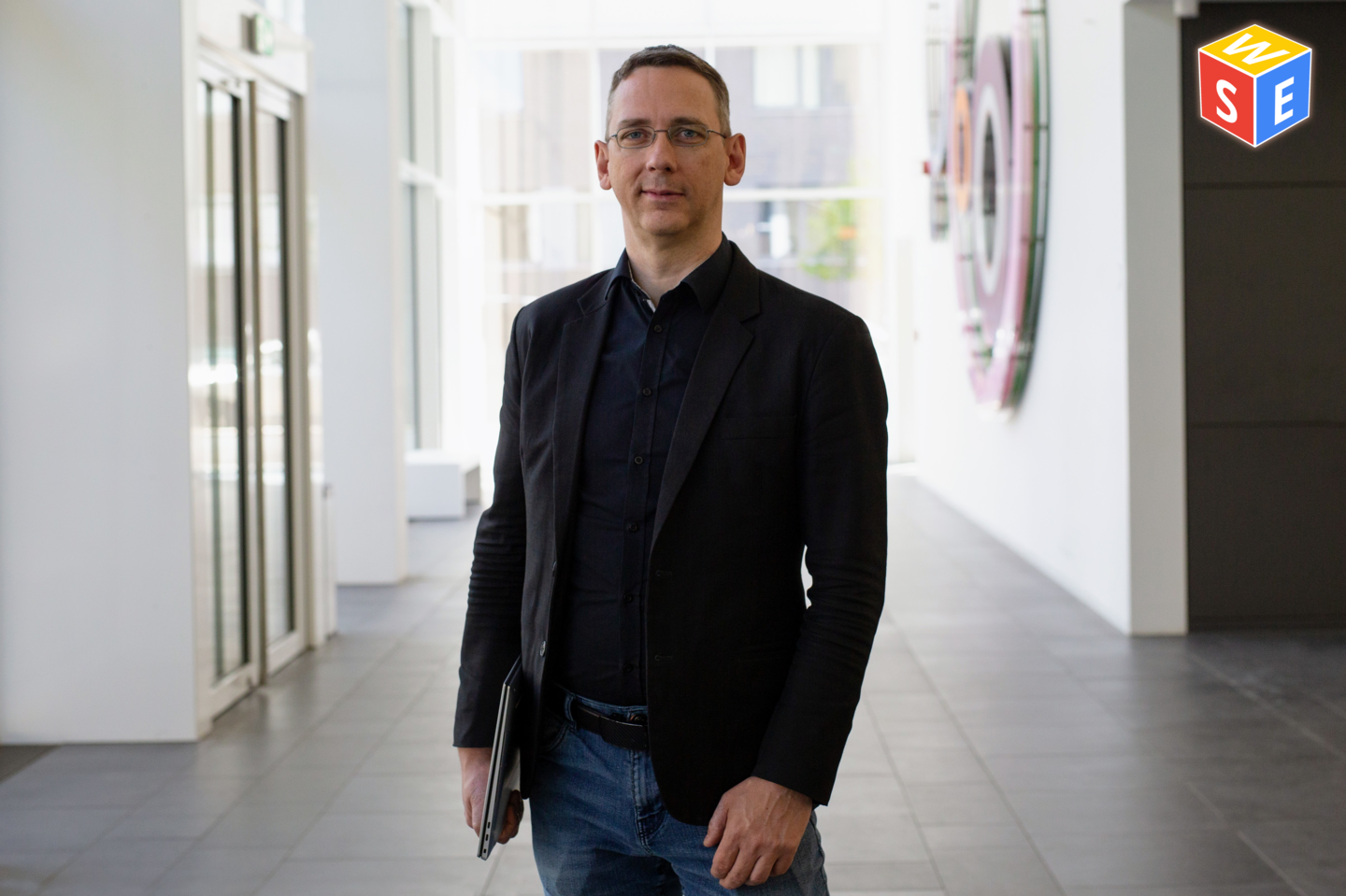
Andreas Both is a Professor at the Faculty of Computer Science and Media at Leipzig University of Applied Sciences (HTWK Leipzig), where he leads the Web & Software Engineering (WSE) research group. His work spans multiple domains of computer science with a strong focus on bridging theoretical foundations with practical applications in software engineering, web technologies, and artificial intelligence. His research interests primarily revolve around Software Engineering (particularly test automation with AI and source code analysis), Web Engineering , Applied Artificial Intelligence (including Machine Learning, Deep Learning, and Large Language Models), Question Answering & Chatbots , and Data-driven Applications . He has developed innovative approaches in knowledge graph question answering systems, multilingual NLP applications, and privacy-preserving data sharing technologies using the Solid protocol framework. The analysis of his recent publications reveals a strong trajectory toward leveraging Large Language Models for knowledge graph applications, with particular emphasis on multilingual capabilities, explainability, and quality improvement in question answering systems. His work increasingly integrates privacy considerations with advanced AI techniques, particularly through Solid protocol implementations for data sovereignty. Best Paper Award at ICWE 2024 for AuthApp - a GDPR-compliant access granting system Outstanding Paper Award at ICWI 2024 for LLM-generated explanations in question answering systems Multiple first-place awards at the TEXT2SPARQL Challenge 2025 Best Paper Awards at ICWE 2025 and IEEE ISI 2025 CHI 2015 Honorable Mentions for search interface research Professor Both actively mentors students through the Google Summer of Code program and serves on the leadership board of the Architecture (ARC) working group of the German Computer Science Society (Gesellschaft für Informatik). His teaching portfolio includes Software Engineering, Question Answering & Chatbots, Software Projects, Project Management Practicum, Web Engineering, and Software Engineering & AI courses. His office hours are Thursdays from 11:15-12:15, requiring advance email appointment with topic specification.
Dr. Debayan Banerjee is a Researcher at the Institute for Business Information Systems (IIS) and part of the Professorship for Business Informatics, especially Artificial Intelligence and Explainability at Leuphana University Lüneburg. His work bridges academic research with practical applications in knowledge management, network science, and AI systems. Institute: Institute for Business Information Systems (IIS) Professorship: Business Informatics, Artificial Intelligence and Explainability Location: Universitätsallee 1, C4.308b, Lüneburg (21335) Email: debayan.banerjee@leuphana.de Research interests focus on knowledge graph integration, hybrid intelligence systems, and explainable AI. His projects include USIN5G, ARDIAS, and INSTANT, emphasizing human-AI collaboration and scholarly data accessibility. Recent publications highlight SPARQL translation automation, hybrid question answering frameworks, and environmental impact analysis of language models. Collaborative work spans DBpedia-Wikidata interoperability, DBLP knowledge graph applications, and graph embeddings for QA systems. Education and advising : Mentored students include Mathias Gross, Fatemeh Ghoochani, and Soham Majumder, focusing on final theses related to AI-driven data extraction and knowledge graph development.
Zöhre SERTTAŞ is a Lecturer in the Department of Computer Information Systems at Near East University, Northern Cyprus, with contact details zohre.serttas@neu.edu.tr and +90 (392) 223 64 64. Her research focuses on transformative educational technologies, particularly: AI-driven immersive e-learning environments Metaverse-based educational paradigms Gamification and digital game development Mobile applications for special education and elderly/disabled users Cloud forensics and digital evidence preservation Recent publications (2023-2025) demonstrate her leadership in developing simulation-based cultural education tools, ethical AI frameworks for education, and practical implementations like the NEU-LIFE ASSIST mHealth application. Her work bridges technical innovation with pedagogical effectiveness across banking, healthcare, and STEM education domains.
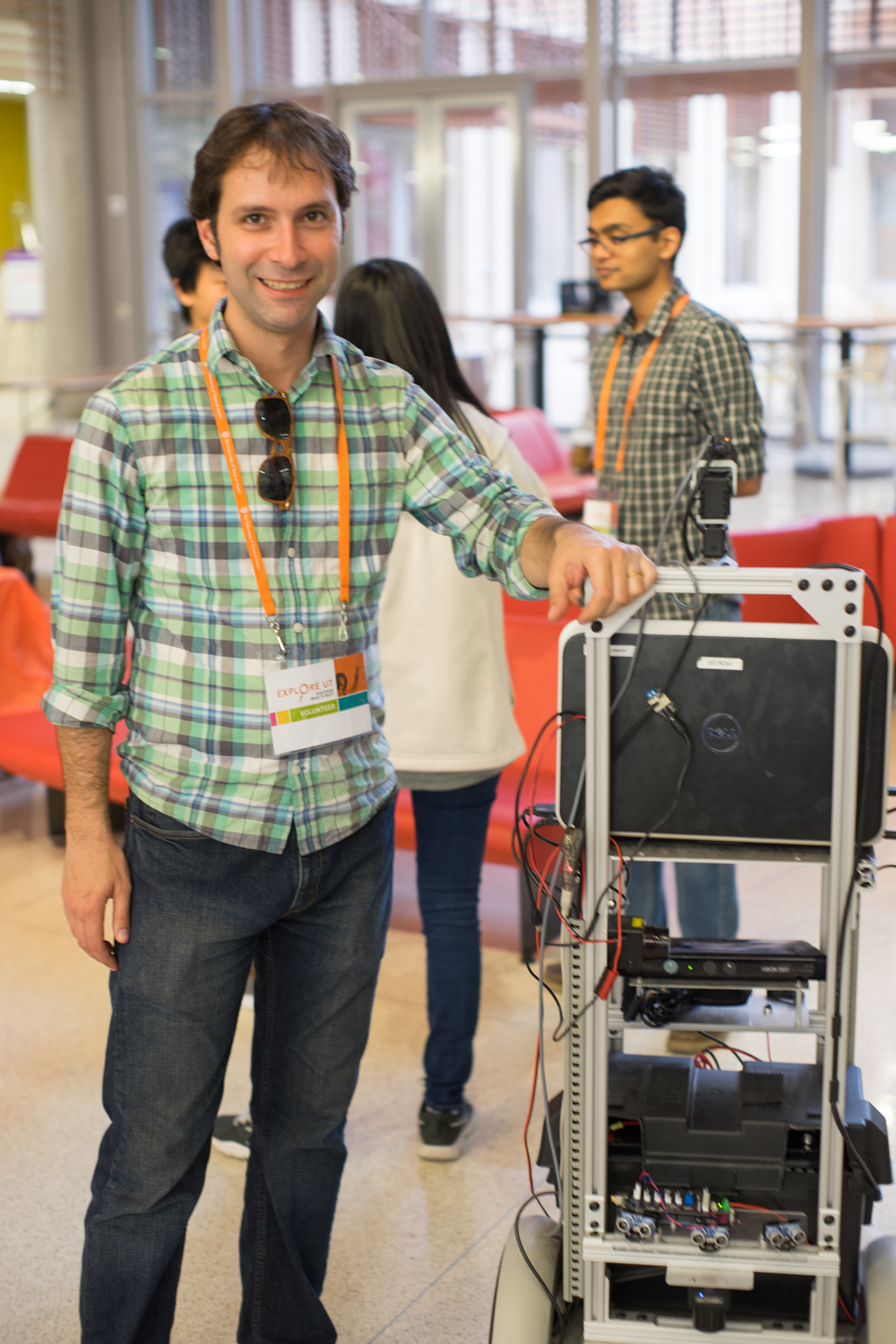
Jivko Sinapov is an Associate Professor with dual appointments in the Department of Computer Science and Department of Mechanical Engineering at Tufts University's School of Engineering. He also serves as a CEEO Fellow at the Center for Engineering Education Outreach. His research focuses on enabling physical robots to operate and learn in human-inhabited environments through developmental approaches. Education: PhD in Computer Science and Human-Computer Interaction, Iowa State University (2013) BSc in Computer Science and Mathematics, University of Rochester (2005) Professor Sinapov's research centers on Artificial Intelligence, Developmental Robotics, Computational Perception, and Human-Robot Interaction . His work addresses fundamental questions about implementing intelligence in physical robots, with emphasis on enabling extended operation in human environments. His laboratory develops methods for behavioral object exploration, multi-modal perception, and knowledge transfer between robots, with applications ranging from educational robotics to space exploration. Current research directions include neurosymbolic approaches for handling novelty in open worlds, multimodal object property learning, and augmented reality interfaces for improved human-robot collaboration. Scientific Awards and Recognition: Winner of the Verizon 100K 5G EdTech Challenge (Spring 2019) for AR-based robotics education NSF CAREER Award: "Learning and Sharing Transferable Grounded Object Knowledge for Collaborative Robots" (2023) CEEO Fellow at the Center for Engineering Education Outreach Professor Sinapov actively mentors graduate students in the Multimodal Learning, Interaction, and Perception (MLIP) Lab, currently advising five PhD students across Computer Science and Mechanical Engineering departments. His research has been supported by significant grants including his NSF CAREER award. He has co-organized prominent symposia including the AAAI Spring Symposium on "Interactive Multi-Sensory Perception for Embodied Agents" (2017) and the AAAI Fall Symposium on "AI for Human-Robot Interaction" (2019). He directs the Multimodal Learning, Interaction, and Perception (MLIP) Lab , which develops cognitive robotics systems capable of learning through environmental interaction. The lab's research spans robot learning, computational perception, and human-robot interaction, with applications in education, space technology, and collaborative robotics systems operating in complex human environments.
Prof. Dr. Kurt Stockinger is a Professor of Computer Science at ZHAW School of Engineering and holds a doctorate at the University of Zurich . He serves as Head of the MAS Data Science program and co-leads the ZHAW Datalab . His research focuses on Intelligent Information Systems , bridging information systems, natural language processing, and machine learning. Affiliated with the University of Zurich, he contributes to Quantum Machine Learning and Open Data Exploration initiatives. Stockinger's educational background includes a PhD in Computer Science (University of Vienna & CERN), a Master in Business Informatics (University of Vienna), and a CAS in Didactics & Methodology (ZHAW). He has taught courses in Quantum Computing , Big Data for Natural Sciences , and Data Science programs at ZHAW and University of Zurich. His research spans Data Science , Big Data , Natural Language Query Processing , Knowledge Graphs , and Quantum Machine Learning . Recent publications focus on quantum autoencoders , hybrid quantum neural networks , and prompt engineering for knowledge graph question answering. He has developed frameworks like ScienceBenchmark for real-world NL-to-SQL evaluation and NQuest for natural language query exploration. Scientific awards include the Best Paper Award at 7th Swiss Conference on Data Science (2020) He leads major projects such as DataGEMS (Data Discovery Platform, Horizon Europe) Digital Health Zurich (Clinical Innovation Lab) INODE4StatBot.swiss (NL-to-SQL Translation) GraphQueryML (Graph Database Optimization) ScienceBenchmark (NL-to-SQL Evaluation) Stockinger's work intersects with computer vision , biomedical data , and industrial applications , demonstrated through collaborations with institutions like Lawrence Berkeley National Laboratory, CERN, and University of Washington. He has contributed to establishing QuantumBasel and ZHAW Datalab as research hubs.
Dr. Andrew Peng is a Lecturer (Research) at the Australian Artificial Intelligence Institute (AAII) within the Faculty of Engineering and Information Technology at University of Technology Sydney (UTS), Australia. With dual PhDs from UTS (2015) and Beijing Institute of Technology (2013), he has published 45 peer-reviewed papers across top venues like IEEE ICDM, COLING, and Frontiers in Molecular Biosciences. Education: Dual PhD (2013-2015) from Beijing Institute of Technology and University of Technology Sydney His research focuses on Data Science , Artificial Intelligence , and Healthcare Analytics , addressing challenges in medical data analysis, unstructured clinical text processing, and federated learning frameworks. Recent publications explore: Deep graph clustering for community detection Privacy-preserving medicine shortage detection via social media Time-aware medication recommendation using dynamic treatment regimes Knowledge tracing enhancements for online education Contrastive learning approaches for ICD coding Hypergraph-based sequential diagnosis prediction Dr. Peng has secured over AUD $1M in external research grants and serves as Subject Coordinator for undergraduate/postgraduate courses. He contributes to professional leadership through roles as Web Chair at AJCAI 2021 and ADMA 2021, PC member for major conferences, and reviewer for journals like NeurIPS and AAAI. His work spans collaborations with universities, industry, and government agencies.
Prof. Dr. Andreas Harth holds the Chair of Business Information Systems, especially Technical Information Systems, at Friedrich-Alexander University Erlangen-Nuremberg (FAU), where he has been a faculty member since 2018. He also serves as a department head at the Fraunhofer IIS-SCS in Nuremberg. His academic work spans both theoretical research and practical applications in decentralized information systems, with strong connections to industry through numerous collaborative projects. Harth completed an apprenticeship as a banker before studying computer science. He earned his doctorate from the Digital Enterprise Research Institute at the National University of Ireland, Galway, and completed his habilitation at the Karlsruhe Institute of Technology. His academic journey included teaching and research stays at the universities of Heidelberg, Innsbruck, Stanford, and Southern California, providing him with a global perspective on information systems research. His research focuses on developing methods and technologies for decentralized information systems found in the World Wide Web and blockchain environments, with applications in companies. He investigates data integration using Semantic Web and Linked Data technologies, process modeling languages, and their applications in the Internet of Things, Web of Things, and Industry 4.0 contexts. His work bridges theoretical computer science with practical business applications, particularly in data sovereignty and decentralized architectures. Analysis of his recent publications reveals a strong trend toward Solid protocol applications, knowledge graph technologies, and the integration of large language models with semantic web technologies. His research increasingly focuses on practical implementations in enterprise settings, healthcare data management, and manufacturing systems, demonstrating the real-world applicability of his theoretical work. As a member of FAU's research focus on Digitalization and Innovation, Harth collaborates with strategic partners including the Fraunhofer Institute for Information Systems (IIS) and major German industrial companies. His work contributes significantly to FAU's position as one of Germany's most research-intensive universities, particularly in the fields of business informatics and decentralized systems.
Daisuke Kawahara is a Professor at Waseda University's Faculty of Science and Engineering and a Visiting Professor at the National Institute of Informatics. He holds a PhD in Informatics from Kyoto University (2005) and has previously served as Associate Professor at Kyoto University and Senior Researcher at NICT. His research spans natural language processing, computational linguistics, and AI infrastructure. Education: Ph.D. in Informatics, Kyoto University (2005) Graduate Studies in Intelligent Informatics, Kyoto University (1999–2002) M.Eng. in Electronic & Communication Engineering, Kyoto University (1997–1999) B.Eng. in Electrical Engineering, Kyoto University (1993–1997) Research Focus: Kawahara specializes in NLP, including syntactic parsing, semantic role labeling, language resource development (e.g., JGLUE benchmark), and multilingual corpus construction. His work integrates machine learning with linguistic theory to improve text understanding systems, error correction tools, and dialogue agents. Publication Trends: His recent articles emphasize Japanese and Chinese NLP, neural network-based parsing, and practical applications like educational tools and pandemic information systems. Common themes include benchmarking, corpus annotation, and cross-lingual adaptation. Awards: 情報処理学会 自然言語処理研究会 優秀研究賞 (2025) 言語処理学会最優秀論文賞 (2024, 2023) 科学技術分野の文部科学大臣表彰 (2017) Multiple Best Paper Awards from NLP conferences (2000–2025) Projects & Advising: He leads JSPS-funded projects like Building General Language Understanding Infrastructure (2021–2025) and Acquisition of Knowledge Frames (2018–2021). No student advisees are listed. Labs & Teams: Collaborates with RIKEN Center for Advanced Intelligence Project and maintains ties to Kyoto University's NLP lab. Focuses on large-scale language modeling and collaborative AI-human intelligence frameworks.
Dr Floriana Grasso is an academic staff member at the University of York, Department of Computer Science, focusing on interdisciplinary research bridging Artificial Intelligence with education and social sciences. Coordinated modules like Computer Science Capstone Project and Natural Language Processing . Active in editorial roles for journals such as Argument and Computation and Frontiers in Digital Public Health . Her research spans Ontology Engineering , Generative AI , and Social Emotion Analysis , with recent emphasis on spatio-temporal modeling for infant language acquisition and gender dynamics in academia. Explores applications of Graph Neural Networks and Competency Question Engineering . Investigates societal impacts of motherhood on female STEM faculty across cultures. Professional activities include: Founder and Chair of the Computational Models of Natural Argument workshop series. Director of Online Learning (2022–present) and Global Opportunities Academic Lead (2017–2024). Judge for the Global Undergraduate Awards and grant reviewer for the Royal Society.
Dr. Terry Payne is a Senior Fellow of the Higher Education Authority (SFHEA) at the University of Liverpool's Faculty of Science and Engineering. With over 30 years of research in agent-based computing and knowledge systems, he has published 195+ peer-reviewed papers. His current work explores dialogue-based ontological alignment for IoT environments and generative AI applications in education. Research Focus: His research integrates symbolic knowledge representation with multi-agent systems, specializing in: Ontology-driven service discovery/provision Agent negotiation in open environments Generative AI for knowledge engineering Pedagogical modeling using knowledge graphs Publication Trends: Recent work demonstrates strong emphasis on large language models for knowledge evaluation, competency question engineering, and bias analysis in medical AI applications, alongside foundational contributions to semantic web service frameworks. Awards & Honors: Faculty Learning & Teaching Awards (2022, 2019, 2016, 2013) Guild of Students Teacher of the Year (2016) SWSA Distinguished Paper Awards (2011, 2012) AAMAS Best Industrial Paper (2006) Academic Leadership: Supervised 17 PhD graduates, currently mentoring multiple doctoral candidates. Serves as Academic Lead for Recruitment and coordinates industry liaison activities. Professional roles include Program Co-Chair for ISWC 2023 and editorship at Journal of Web Semantics.
Simone Diniz Junqueira Barbosa is an Associate Professor at the Informatics Department of Pontifical Catholic University of Rio de Janeiro (PUC-Rio). She leads the IDEIAS-SERG lab, focusing on Human-Computer Interaction (HCI) and Information Visualization research. Her work spans model-based interactive systems design, visual analytics, digital storytelling, and AI techniques for improving system usability and accessibility. Her research explores: Model-based approaches for interactive systems Data science and visual analytics for complex datasets Digital storytelling techniques Accessibility and usability enhancement through AI Semiotic engineering foundations for HCI Publication analysis reveals strong emphasis on HCI methodologies, data visualization literacy, ethical AI development, and applications in legal informatics/industrial automation. Recent works focus increasingly on explainable AI, visualization cognition, and ethical ML practices. Awards & Honors: IFIP TC13 Pioneer Award (2019) Outstanding HCI Career Award (Brazilian Computer Society, 2020) Selo de Inovação SBC Innovation Award (2022) IFIP Fellow Award (2024) She has advised over 45 graduate students (PhD/MSc) and coordinates multiple labs including DasLab, ExACTa, and Americanas Futuro Lab. Funded projects include CNPq, FAPERJ, Microsoft Research, and Petrobras collaborations focusing on HCI innovations and data visualization tools. Leads the IDEIAS-SERG research group merging semiotic engineering with interaction design. Serves on steering committees for ACM CHI and IFIP TC13, previously co-edited ACM Interactions Magazine (2016-2019).
Dr. Dorota Leszczyńska-Jasion serves as Associate Professor at Adam Mickiewicz University in Poznań, Poland, within the Faculty of Cognitive Science and Department of Logic and Cognitive Science. Her academic profile centers on foundational logic research with significant interdisciplinary applications. Her educational trajectory features: Habilitation (post-doctoral degree) in Social Science (2019) from Adam Mickiewicz University based on From Questions to Proofs. Between the Logic of Questions and Proof Theory Ph.D. in Philosophy (2006) from University of Zielona Góra with dissertation The Method of Socratic Proofs for Normal Modal Propositional Logics M.A. in Philosophy (2003) from University of Zielona Góra Her research pioneers Proof Theory through the Method of Socratic Proofs —a question-based deduction framework enabling loop-free decision procedures for modal logics. She extends this work to Erotetic Logic (logic of questions), developing Erotetic Search Scenarios that model human inquiry processes. Current innovations include Distributive Deductive Systems for classical/non-classical logics and Synthetic Tableaux with unrestricted cut rules, bridging theoretical logic with computational applications. Over the past decade, her publication pattern reveals escalating focus on unifying proof-theoretic and semantic approaches. Recent work integrates correspondence analysis with Socratic proofs and develops distributive frameworks for first-order logic, demonstrating consistent advancement from modal logics toward comprehensive deductive systems with computational relevance. Her scholarly recognition includes: Foundation for Polish Science Scholarship START (2013) Foundation for Polish Science Scholarship under Prof. Wiśniewski's FPS Award (2002-2004) She currently directs the National Science Centre-funded project Distributive Deductive Systems (2017-2023) and previously contributed to major grants including Erotetic Logic in Question Processing (2013-2017) and Inferential Erotetic Logic and Problem-solving (Foundation for Polish Science). Her research program consistently secures competitive funding for exploring the intersection of formal logic, cognitive modeling, and computational methods. As core member of the Reasoning Research Group, she advances theoretical foundations of deductive systems while fostering collaborations across logic, computer science, and cognitive studies. The group's work on erotetic frameworks provides formal tools for modeling scientific inquiry and human reasoning processes.
Michel C. Desmarais is a Full Professor in the Department of Computer Engineering and Software Engineering at Polytechnique Montréal, where he has been faculty since 2002. With a PhD in Psychology from Université de Montréal, his research bridges artificial intelligence, educational technology, and human-computer interaction. He holds affiliations with IVADO and LAMA-WeST research groups, and has held visiting positions at Sorbonne University, Eindhoven Technical University, and other European institutions. His research focuses on three interconnected pillars: 1) Cognitive modeling and educational data mining , developing algorithms for student knowledge assessment and adaptive learning systems; 2) AI-driven educational tools , including automated grading systems and peer instruction platforms; and 3) Recommendation systems and user modeling , particularly for personalized learning interfaces. His work consistently applies machine learning to solve practical challenges in technology-enhanced education. Analysis of his 150+ publications reveals strong trends in educational NLP (sentence similarity for short-answer grading), generative AI (LLM-generated code validation), and Bayesian modeling (Q-matrix refinement). Recent work increasingly focuses on transformer architectures and real-world educational datasets. He maintains an active supervision record, having graduated 35+ graduate students. Current PhD candidates work on NLP for educational applications (Bakhtiari, Kamdem) and AI for engineering (Wang). His teaching covers user interface design, recommender systems, and intelligent interfaces. Professional service includes editorial leadership (JEDM journal), conference co-chairing (UMAP 2017, EDM founding), and grant review panels for NSERC, MITACS, and EU programs. Industry experience includes prior roles as R&D Director at MVM Inc. and researcher at Montreal Computer Research Center.
Hristina Kostadinova is an Assistant Professor in the Department of Informatics at New Bulgarian University. She previously held positions as a Chief Assistant at NBU (2016-present) and Honorary Assistant roles at both NBU and American University in Bulgaria (2013-2015). Her educational background includes a PhD, Master's, and Bachelor's degree in Informatics from South-West University 'Neofit Rilski'. Her research focuses on three primary domains: E-learning systems : Development of adaptive courses, gamified training, and automated assessment tools Programming education : Innovative teaching methods for Java and other languages Educational technology : Implementation of Moodle-based solutions and conceptual mapping techniques Recent publications demonstrate strong emphasis on automated test generation, adaptive learning frameworks, and gamification in programming education for diverse audiences including children and vocational students. Her work consistently integrates pedagogical theories with technical implementations. No scientific awards are mentioned in available documentation. Current courses taught include Java programming and related technical subjects. No information is available regarding research grants, student advising, or laboratory affiliations.