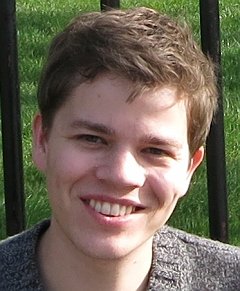
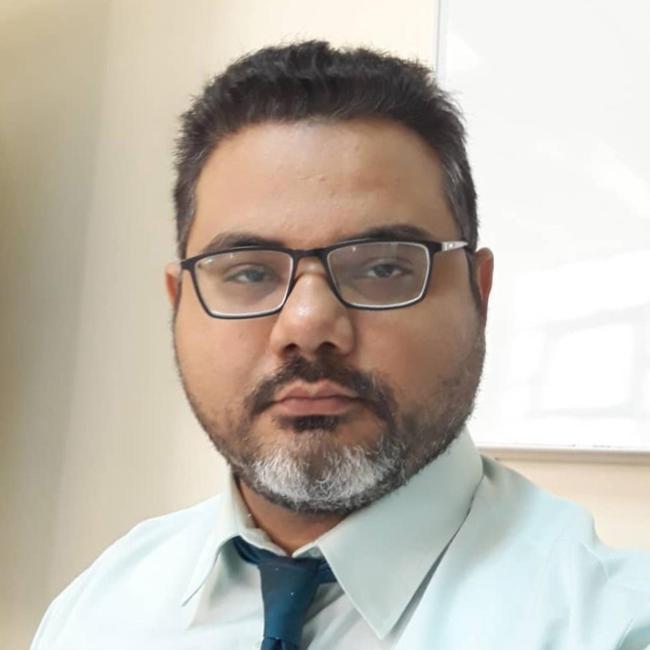
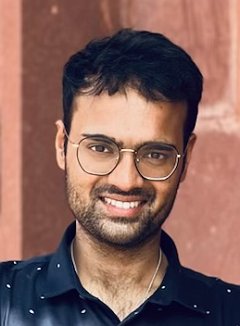
R.K. Shyamasundar is a Professor at the Indian Institute of Technology Bombay , with a focus on Real-Time and Reactive Programming, Logic Programming, Pi-Calculus, and Parallel Programs. Research spans formal verification, concurrency, and distributed systems. Key contributions include RT-CDL semantics, Esterel language extensions, and hybrid system controller synthesis. Scientific awards include JC Bose National Fellow, Fellowships at Indian Academy of Sciences and Indian National Science Academy, and Senior Membership in IEEE. His work involves collaborations with institutions like TCS Group and researchers such as Basant Rajan, N. Raja, and Deepak Kapur.
Kristian Gjøsteen is a Professor at the Department of Mathematical Sciences within the Norwegian University of Science and Technology (NTNU) . He actively contributes to the Algebra Group and specializes in cryptographic systems with a focus on electronic voting , security proofs , and privacy-enhancing technologies . Educational Background: MSc and PhD from NTNU Research Interests: His work spans cryptography , key exchange protocols , cloud security , and formal verification of security mechanisms. Particular emphasis is placed on coercion-resistant voting systems , lattice-based encryption , and blockchain privacy models . Article Trends: Recent publications demonstrate expertise in post-quantum cryptography , machine-checked security , and privacy-preserving voting architectures . Collaborative efforts explore hybrid cryptographic schemes , verifiable decryption , and mix-net implementations for secure elections.
Karl Palmskog is a Lecturer at KTH Royal Institute of Technology in the Division of Theoretical Computer Science and the STEP research group. His work focuses on program verification and proof engineering, with particular emphasis on developing techniques and tools based on proof assistants for constructing functionally correct and secure software systems. Palmskog received his Ph.D. in Computer Science in 2014 from KTH, advised by Mads Dam, and his M.Sc. in Computer Science and Engineering from KTH in 2007. Prior to his current position, he was a postdoc at The University of Texas at Austin and University of Illinois at Urbana-Champaign. His research interests span programming languages, software engineering, and formal verification, with a particular focus on developing techniques and tools based on proof assistants. He is an avid user of the Coq proof assistant for both proving and programming, often complemented by OCaml, and also utilizes HOL4 and other ML family dialects. His work bridges theoretical foundations with practical applications, particularly in the domains of blockchain systems, distributed systems, and automotive software verification. Analysis of his recent publications reveals a strong focus on Coq-based verification, with significant contributions to proof engineering tools and methodologies. His work includes developing tools for regression proving, change impact analysis, mutation testing for Coq projects, and lemma name suggestion using deep learning. There's also a growing trend toward applying formal methods to real-world systems like blockchain protocols and automotive software. Palmskog has been involved in several research projects, including Coq-community Proof Engineering and Distributed Components. His past projects include Trustfull (SSF), Model-based Event Driven Scalable Programming for the Mobile Cloud (NSF), Highly Adaptable and Trustworthy Software (EU FP7), and 4WARD Future Internet (EU FP7). As an educator, Palmskog has served as examiner, course responsible, teacher, and assistant for various courses including Algorithms, Data Structures and Complexity; Degree Projects; Game Theory; Parallel and Distributed Computing; and Programming Paradigms. His work on Chip, a Coq formalization of change impact analysis, demonstrates his commitment to creating practical, certified tools that bridge formal methods with software engineering practice.
Benjamin Lucien Kaminski is a Professor at Saarland University and a Lecturer at University College London . He specializes in quantitative aspects of formal program verification , with a focus on probabilistic and quantum programs , incorrectness logic , and non-classical computation models . His research includes semantics , probabilistic program verification , expected runtimes , and explainable verification . He leads the Examination Board for B.Sc. Computer Science (English) and actively mentors PhD, Master’s, and Bachelor’s students in logic and verification. 2025 : A Taxonomy of Hoare-Like Logics (POPL), Partial Incorrectness Logic (TPSA) 2024 : Quantitative Weakest Hyper Pre (OOPSLA), Caesar: A Verifier for Probabilistic Programs (Dafny), Hoare-Like Triples (Incorrectness-track) 2023 : A Deductive Verification Infrastructure (OOPSLA), Lower Bounds (OOPSLA), A Calculus for Amortized Expected Runtimes (POPL) He has received notable awards including the Ackermann Award (2020), Best Paper at LOPSTR 2020 , and EATCS Best Paper Award at ETAPS 2016 . He has also served on program committees for leading conferences like CAV , POPL , and LICS , and reviewed for prestigious journals such as Journal of the ACM and TOCL .
Dr. Muhammad Humayoun is a Senior Lecturer at Karlstad University, Sweden, specializing in informatics education and computational linguistics research. He holds a Ph.D. from University of Grenoble Alpes (2012) and M.Sc. from Chalmers University (2006). His academic career spans over 15 years across Pakistan and Sweden, including teaching roles at COMSATS University, University of Central Punjab, and Higher Colleges of Technology. Research Focus: His work centers on NLP applications for under-resourced languages like Urdu/Punjabi, including text summarization, abusive language detection, and formalization of mathematical texts. He has developed linguistic resources (corpora, lexicons) and contributed to plagiarism detection systems in programming courses. Teaching Contributions: Designed and taught over 15 courses across multiple universities, including advanced programming, AI, and cloud computing modules. Currently teaches graduate-level courses like 'Legal Tech, AI and Rules-as-Code' and undergraduate software engineering courses at Karlstad University. Awards: Recognized for Urdu threat detection system (3rd place, 2021) and top rankings in Urdu fake news competitions. His work on Urdu summarization corpora has been widely cited in computational linguistics research.
Tej Chajed is an Assistant Professor in the Department of Computer Sciences at the University of Wisconsin-Madison, focusing on formal verification of systems software. His research bridges theoretical foundations and practical implementations to ensure software correctness in concurrent and crash-safe systems. Research interests include formal verification, concurrency, crash safety, and programming languages, particularly using Coq, Perennial, and Goose frameworks. He has contributed to systems like DaisyNFS, a verified file system with sequential reasoning, and Verus, a foundation for systems verification. His work appears in top venues like SOSP, OSDI, and PLDI. 2025: Dafny PC Member 2024: PLDI Committee Member, CoqPL Co-chair 2023: CoqPL Co-chair, POPL Program Committee He actively mentors students and develops tools for systems verification education, including extensive Coq-based course materials.
Pascal Sasdrich is a Researcher at Ruhr University Bochum, Germany, affiliated with the Faculty of Computer Science and the Security Engineering department. He holds a PhD in IT-Security/Information Technology from the same university (2018), following M.Sc. (2015) and B.Sc. (2012) degrees in the same field. His research focuses on Hardware Security, Secure Processor Design, Computer-Aided Security, and Security by Design. He has extensive experience in cryptographic hardware implementations, including countermeasures against side-channel and fault attacks. Teaching includes courses on Processor Security and Implementation of Cryptographic Schemes. His work bridges theoretical security models with practical hardware implementations, emphasizing automated tools and formal verification for secure embedded systems. Key projects include contributions to Project HEP (open-source hardware security chip design) and development of methodologies like EASIMASK for automated masking in hardware. Publications span cryptographic hardware implementations, fault and side-channel countermeasures, and formal security verification. Notable works include combined threshold implementations, secure processor extensions, and automated generation of masked hardware circuits. Current research emphasizes securing embedded systems through holistic design approaches, including ISA extensions and automated EDA tools.
Emily First is an incoming Assistant Professor in Computer Science at Rutgers University New Brunswick starting Fall 2025. She previously served as a postdoctoral researcher at UC San Diego under Sorin Lerner and earned her PhD in Computer Science at UMass Amherst under Yuriy Brun in the Laboratory for Software Engineering Research (LASER). Her research focuses on leveraging AI for theorem proving, working at the intersection of machine learning, software engineering, and programming languages. She specializes in creating tools for automated proof generation in proof assistants like Coq, Isabelle/HOL, and Lean. Her work explores how AI can enhance human reasoning across domains, with applications in software verification and formal logic systems. Recent publications show trends in neuro-symbolic AI, software verification, and LLM integration for formal methods. Her team's research has been recognized with ACM SIGSOFT Distinguished Paper Awards at ICSE, ACL, and ESEC/FSE conferences, along with workshop presentations at AI and Theorem Proving conferences. ACM SIGSOFT Distinguished Paper Award (ICSE 2025) ACM SIGSOFT Distinguished Paper Award (ACL Main 2024) ACM SIGSOFT Distinguished Paper Award (ESEC/FSE 2023) ACM SIGSOFT Distinguished Paper Award (ICSE 2022) Contact: emfirst@ucsd.edu (new email coming soon).
Professor Boris Konev is a faculty member at the University of Liverpool, affiliated with the School of Electrical Engineering, Electronics and Computer Science. He holds the academic rank of Professor in Computer Science. Description Logics Ontologies Automated Reasoning Temporal Logic Formal Verification Encrypted Database Applications His recent research focuses on temporal queries mediated by ontologies, knowledge evaluation agents using large language models, and semantic modularity in description logics. Key sub-fields include LLM applications, encrypted databases, and formal verification techniques. He has contributed to software development projects and industry partnerships, including design of equine simulators and online services with Racewood Limited. Current teaching includes the Foundations of Computer Science module (COMP109). Professional roles include guest editorships for AI Communications and program committee membership for the European Conference on Logics for Artificial Intelligence (JELIA).
Talia Ringer is an Assistant Professor at the University of Illinois at Urbana-Champaign , focusing on making program verification using interactive theorem provers more accessible through improved proof engineering tools and practices. Her research addresses challenges in maintaining proofs as programs evolve and advancing formal verification. Ph.D., University of Washington (2021), NSF GRFP and P.E.O. Fellow B.S., Mathematics and Computer Science, University of Maryland Former software engineer at Amazon Her research interests include: Program Verification Proof Engineering Dependent Type Theory Interactive Theorem Provers (Coq) Key trends in her publications include: Automated proof generation and repair using large language models Tool development for Coq and other proof assistants Formal verification of software and data structures Integration of identifiers and type equivalences in verification Test input generation for software reliability Scientific awards and honors: NSF Graduate Research Fellowship Program (GRFP) P.E.O. Scholar Award She has advised numerous researchers through her work and founded the SIGPLAN-M Mentoring Program and Computing Connections Fellowship . No specific student names are listed in the scraped text.
James Davis is an Assistant Professor in the Elmore Family School of Electrical and Computer Engineering at Purdue University. His research focuses on engineering robust computing systems through socio-technical approaches, emphasizing software correctness, security, and usability. He applies empirical methodologies to evaluate the practical impact of technical solutions. Research interests include software supply chain security, deep learning reproducibility, regular expression optimization, IoT cybersecurity, and the socio-technical challenges in system design. His work bridges theoretical foundations with real-world applications, addressing issues like regex denial-of-service (ReDoS), model reuse in AI, and developer practices for safety-critical systems. Recent publications span topics such as actor reputation metrics in software supply chains, AI safety for downstream developers, and edge-computing optimizations for vision transformers. His interdisciplinary approach integrates empirical studies, formal verification, and human-centered design principles. No scientific awards are explicitly mentioned in the provided materials. His advising record is currently unspecified, though his research group likely engages in collaborative projects with industry and academia. He contributes to initiatives like the Sigstore ecosystem and open-source security tooling, reflecting his commitment to practical impact.
Prof. Dr.-Ing. Stefan Schulte is a Full Professor at Hamburg University of Technology, leading the Institute for Data Engineering and the Christian Doppler Laboratory Blockchain Technologies for the Internet of Things (CDL-BOT). He holds a diploma in Economics and a Bachelor's in Computer Science from the University of Oldenburg, followed by a Master's in Information Technology (with Merit) from the University of Newcastle. After completing his PhD at TU Darmstadt in 2010, he held roles as Postdoctoral Researcher at TU Wien, Assistant Professor (tenure-track), and eventually Associate Professor before joining TU Hamburg in 2021. His research focuses on data engineering, blockchain technologies applied to IoT, elastic computing, and quality-of-service (QoS) aspects in smart systems. Notable contributions include work on fog computing, federated learning, and cross-blockchain interoperability. He has published over 140 papers in top-tier venues like IEEE Transactions on Services Computing and ACM Computing Surveys. Key awards include Best Paper Awards at the IEEE International Conference on Blockchain (2020) and the European Conference on Service-Oriented and Cloud Computing (2023). Prof. Schulte chairs major conferences such as the IEEE International Conference on Fog and Edge Computing (ICFEC 2025) and serves on editorial boards for journals like IEEE Transactions on Services Computing. He leads CDL-BOT, a lab exploring blockchain applications in IoT and manufacturing. His industrial collaborations include projects like SIMPLI-CITY (smart mobility) and CREMA (cloud-based manufacturing). Current research emphasizes blockchain interoperability, federated learning frameworks, and edge-AI systems. He actively reviews proposals for the German Research Foundation, EU programs, and industry initiatives.
Umang Mathur is an Assistant Professor at the National University of Singapore's School of Computing, where he leads the FOCS Lab and is affiliated with PLSE@NUS. His research focuses on Formal Methods , Concurrency , and Decidability in Programming Languages and Software Engineering . PhD in Computer Science from the University of Illinois at Urbana-Champaign (advisor: Prof. Mahesh Viswanathan) Former Research Scientist at Facebook Inc. and Research Fellow at the Simons Institute Recipient of Google PhD Fellowship, 2024 CPP Distinguished Paper Award, 2023 ACM SIGPLAN Award, and ASPLOS 2022 Best Paper Award His recent work explores algorithmic techniques for detecting concurrency bugs , decidable program verification , and synthesis , with a focus on weak memory models, predictive monitoring, and automata-theoretic approaches. Articles span topics like causal concurrency, tree clock data structures, and probabilistic counting algorithms, reflecting interdisciplinary intersections of logic and systems research. Scientific Awards Google PhD Fellowship 2024 CPP Distinguished Paper 2023 ACM SIGPLAN Distinguished Paper 2022 ASPLOS Best Paper 2018 ESEC/FSE Distinguished Paper He advises PhD students in Formal Methods and supervises teams in the FOCS Lab. Teaching includes advanced modules on Automata Theory, Logic, and Verification at NUS.
Aws Albarghouthi is affiliated with the University of Wisconsin-Madison, USA. He is an active researcher with significant contributions to program synthesis, formal verification, and machine learning. Key roles: Author, Session Chair, Committee Member in conferences like PLDI, POPL, VMCAI, SPLASH, and ICFP. Research spans quantum computing, differential privacy, and static analysis. Research Trends include: Quantum Circuit Compilation and Optimization Probabilistic Verification of Fairness and Privacy Synthesis of Datalog and MapReduce Programs Neural-Augmented Static Analysis Bias Detection in Data Security Robustness in Machine Learning
Andrei Popescu is a Senior Lecturer in Computing Foundations at the School of Computer Science, University of Sheffield, where he also serves as School Programmes Lead (PGT). He is a member of both the Security of Advanced Systems research group and the Foundations of Computation research group. Prior to joining Sheffield in May 2020, he was a Lecturer at Middlesex University and a postdoctoral researcher at TU Munich. Dr. Popescu holds dual PhDs: one in computer science from the University of Illinois at Urbana-Champaign (advised by Elsa L. Gunter and Grigore Roșu) and another in mathematics from the University of Bucharest (advised by George Georgescu). His primary research interests include proof assistants, information flow security, inductive and coinductive datatypes, automated deduction, and syntax with bindings. His work often focuses on the formal verification of security properties in practical systems, as evidenced by projects like CoCon (a conference management system with verified confidentiality) and CoSMeDis (a social media platform with formally verified security guarantees). Analysis of his recent publications reveals a strong focus on foundational aspects of proof assistants, particularly Isabelle/HOL, with significant contributions to syntax with bindings, recursion principles, and the formalization of Gödel's incompleteness theorems. His work bridges theoretical computer science with practical applications in security verification. Scientific Awards: Distinguished paper award at POPL 2025 for 'Barendregt Convenes with Knaster and Tarski: Strong Rule Induction for Syntax with Bindings' Distinguished paper award at POPL 2024 for 'Nominal Recursors as Epi-Recursors' Distinguished paper award at POPL 2023 for 'Admissible Types-to-PERs Relativization in Higher-Order Logic' Dr. Popescu has successfully supervised PhD students, including Lorenzo Gheri whose thesis focused on syntax with bindings. He has secured significant research funding, including the COVERT project (EPSRC, £422,585), Security of Digital Twins in Manufacturing (EPSRC, £774,954), and Cyclic Reasoning Mechanisms for Interactive Theorem Proving (Royal Society, £12,000). He is actively involved in the research community, serving on program committees for major conferences including POPL, ITP, CSF, and IJCAR, and co-organizing the Midlands Graduate School. His work with the Security of Advanced Systems group continues to advance the field of formal verification for security-critical systems.