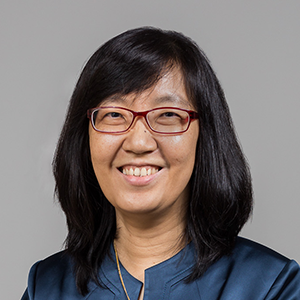
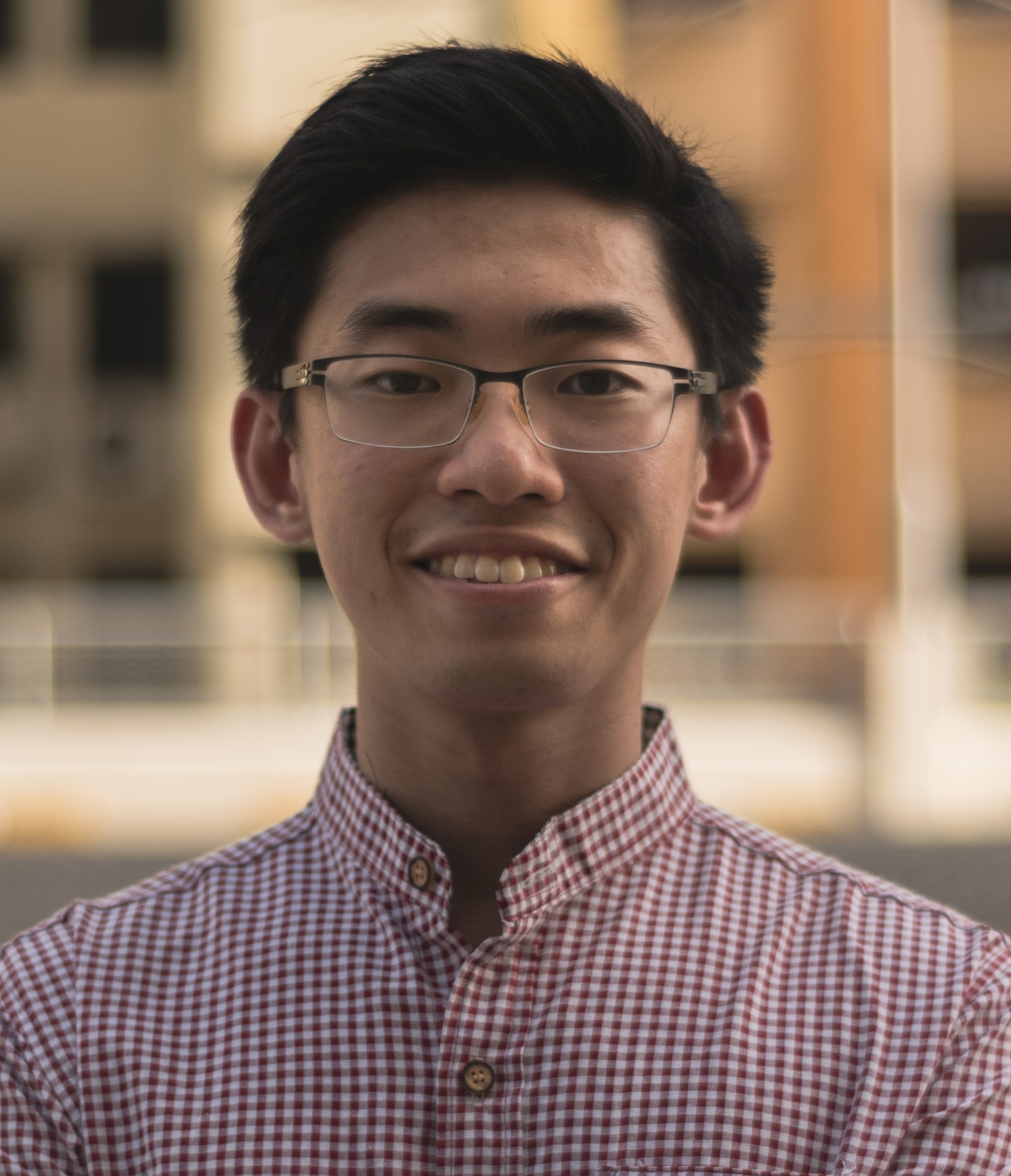
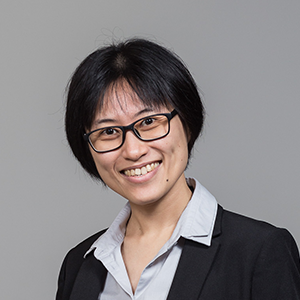
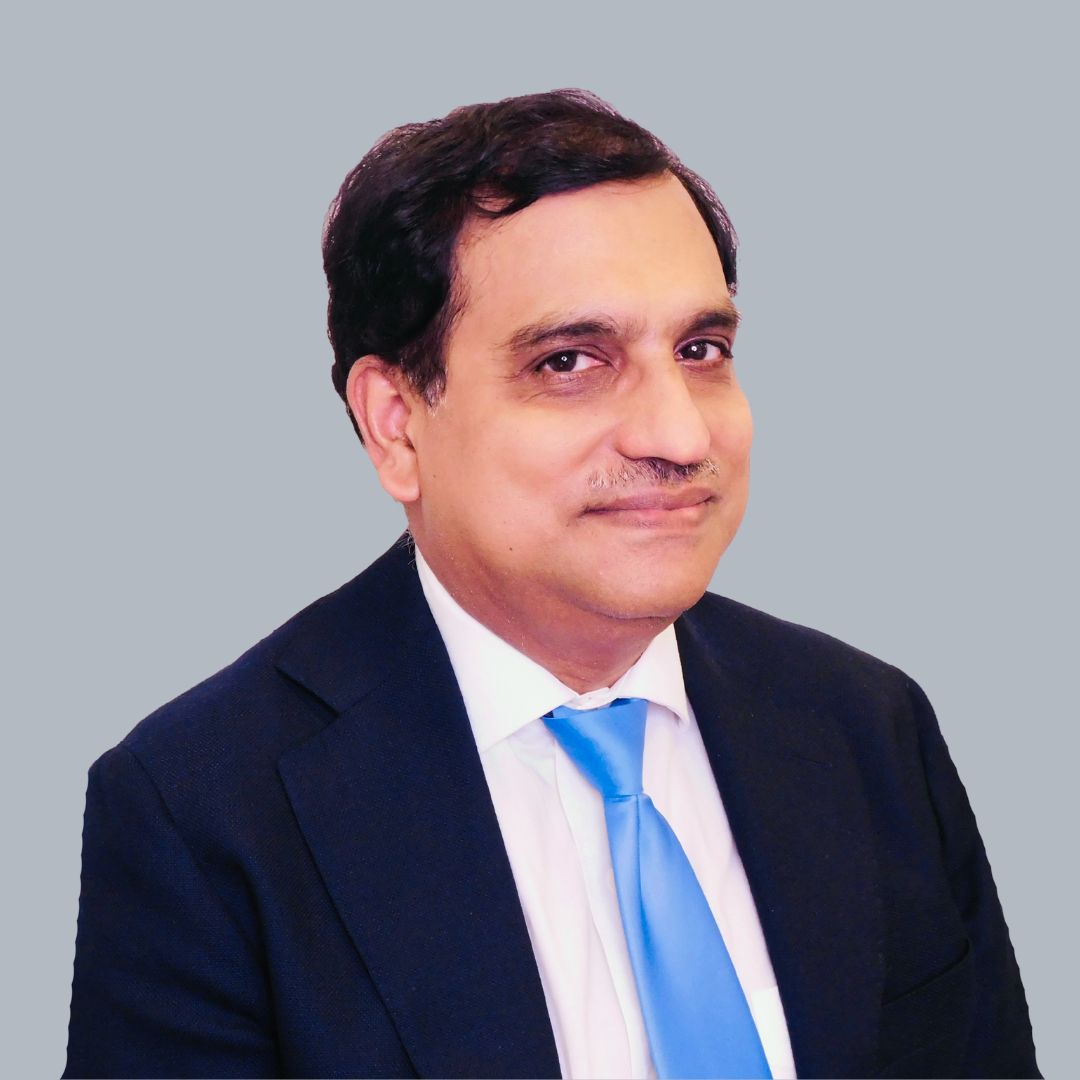
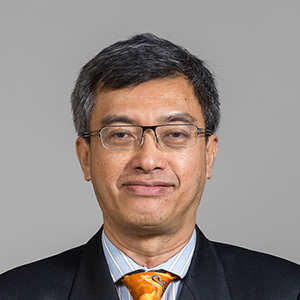
Aniello Murano is a Professor of Computer Science at the Department of Electrical Engineering and Information Technologies , University of Naples Federico II. He serves as Scientific Director of the ASTREA (Automated Strategic Reasoning) Laboratory and leads cutting-edge research in Artificial Intelligence, Strategic Reasoning, Multi-Agent Systems , and Formal Verification . Research Interests : Strategic reasoning under perfect/imperfect information, specification/verification/synthesis of reactive systems, temporal/modal logics, automata theory, parity games, game theory, mechanism design, and formal languages. Notable Projects : PNRR Research Unit Coordinator (2023-2025) on Resilient AI, PRIN 2020 Unit Coordinator (RIPER: Resilient AI-Based Self-Programming and Strategic Reasoning), H2020-MSCA SEAL (Principal Coordinator). Awards & Honors : JPMorgan Faculty Research Award (2022), Royal Society Award (2016), Best Paper PRIMA (2015), INDAM Project Leader (2023), Italian Scientific Habilitation (2017-2018). Students & Postdocs : Supervised 6 PhD students (e.g., Silvia Stranieri, Vadim Malvone) and mentored postdocs such as Munyque Mittelmann and Bastien Maubert. Laboratory : Leads ASTREA Lab, focusing on automated strategic reasoning and resilient AI systems.
Yang Kaidi is an Assistant Professor in the Department of Civil and Environmental Engineering at the National University of Singapore (NUS), affiliated with the Institute of Operations Research and Analytics (IORA) within NUS’s Smart Nation Research Cluster. Their research focuses on intelligent transportation systems, traffic control, shared mobility, and machine learning applications in mobility. Key interests include connected and automated vehicles, privacy-preserving data sharing, and reinforcement learning for traffic optimization. Research highlights include developing parameter privacy-preserving strategies for mixed-autonomy platoons, enhancing safety in autonomous driving via transformer-based trajectory prediction, and optimizing traffic signal timing using connected vehicle data. Their work bridges theoretical control systems with practical urban mobility challenges, addressing issues like ridesourcing-public transit integration, modular transit service operations, and weaving section management in mixed traffic environments. Recent publications emphasize real-time control frameworks, cooperative safety mechanisms, and data-driven solutions for urban and highway systems. Yang’s interdisciplinary approach integrates robotics, optimization, and cybersecurity to advance smart transportation infrastructure. Their contributions are particularly notable in privacy-preserving techniques for traffic state estimation and federated learning applications. While no specific awards or grants are listed, their research aligns with Singapore’s Smart Nation initiatives through IORA’s strategic focus areas. Yang’s work has implications for future traffic management systems, autonomous vehicle coordination, and sustainable urban mobility solutions.
LEE Mong Li is a Professor of Computer Science at the National University of Singapore (NUS) and serves as Director of the NUS Centre for Trusted Internet and Community. She holds a Ph.D., M.Sc., and B.Sc. (First Class Honours) in Computer Science from NUS, where she was awarded the IEEE Singapore Information Technology Gold Medal as the top Computer Science student in 1989. Her academic career includes a visiting fellowship at the University of Wisconsin-Madison (1999) and consultancy with QUIQ USA (2000). Her research spans Data Management, Spatio-temporal Databases, Biomedical Informatics, and Retinal Image Analysis . She has pioneered work in data cleaning, data fusion, and analysis of semistructured data, with applications in social media analytics and healthcare. Her recent publications demonstrate strong interdisciplinary focus, particularly in AI-driven medical diagnostics including diabetic retinopathy screening and chronic kidney disease detection from retinal images. She co-authored foundational books on 'Designing Semi-structured Database' and 'Temporal and Spatio-Temporal Data Mining'. Her 150+ publications in major database conferences and journals reflect leadership in both theoretical and applied research. Recent work shows significant emphasis on Medical AI applications (retinal analysis, kidney disease prediction) Temporal fact verification systems Misinformation detection in multimodal environments Privacy challenges in large language models Key honors include: Singapore's President Technology Award (2014) for co-inventing an AI system screening eye conditions IEEE Singapore Information Technology Gold Medal (1989) She actively contributes to government-funded multidisciplinary projects building practical deployable systems. Her leadership extends to program committees of prestigious database conferences and directing the NUS Centre for Trusted Internet and Community. She teaches BT5110 Data Management and Warehousing and has co-developed an AI system for diabetic retinopathy screening deployed in Singapore's national teleophthalmology program.
Quan Quan Tan is a Research Fellow at Nanyang Technological University (NTU), Singapore, specializing in symmetric-key cryptanalysis and automation tools. He previously served as a Cybersecurity Engineer at CSIT, Singapore for nearly two years. His educational background includes: Ph.D. in Mathematical Sciences from NTU (2023) under Prof. Thomas Peyrin. Thesis: "Cryptanalysis of Lightweight Symmetric-Key Cryptographic Algorithms" M.Sc. in Mathematical Sciences from NTU, with research on optimization techniques for block cipher hardware implementations B.Sc. in Mathematical Sciences from NTU Dr. Tan's research focuses on automation in cryptographic design and analysis, emphasizing secure symmetric-key primitives and advanced cryptanalysis tools. His work bridges theoretical cryptography with practical security engineering through algorithm development and vulnerability assessment. Analysis of his 2020-2025 publications reveals dominant themes in symmetric-key cryptanalysis, including innovative meet-in-the-middle attacks, differential cryptanalysis frameworks, and automated verification systems. His contributions span attack methodologies (e.g., higher-order differential-linear techniques), tool development (Trail-Estimator), and novel cipher design (uKNIT-BC), demonstrating consistent advancement in lightweight and low-latency cryptographic systems.
Vivy Suhendra serves as Associate Professor of Practice and Programme Director for Master Programmes at the National University of Singapore's School of Computing, while also holding the position of Assistant Dean for Graduate Studies. Previously, she led the Singapore Cybersecurity Consortium (SGCSC) as Executive Director from 2016 to 2022, driving collaborative cybersecurity research between academia, industry, and government agencies. Her career at NUS spans over two decades, beginning as a Research Assistant before advancing to her current leadership roles. Her academic credentials include: Ph.D. in Computer Science, National University of Singapore (2009). Thesis: "Memory Optimizations for Time-predictable Embedded Software". Advisors: Abhik Roychoudhury and Tulika Mitra. B.Comp. (Honors) in Computer Science, National University of Singapore (2004). Dr. Suhendra's research integrates Software Assurance, Cybersecurity, Security and Privacy, and Embedded Systems domains. Her work bridges theoretical foundations with practical applications, particularly in national cybersecurity ecosystem development, smart grid security protocols, denial-of-service mitigation techniques, and real-time embedded system optimization. This interdisciplinary approach enables innovative solutions for critical infrastructure protection and time-predictable software execution in multi-core environments. Her 14 selected publications (2004-2020) demonstrate an evolving research trajectory from foundational embedded systems timing analysis to applied cybersecurity solutions. Early work focused on memory optimization for predictable execution in multi-core embedded systems, which naturally transitioned into cybersecurity applications for smart grids, cloud environments, and national infrastructure. This progression highlights her ability to translate low-level system expertise into high-impact security frameworks for complex real-world systems. Scientific recognition includes: Microsoft Research Asia Fellowship (2006) Valedictorian at NUS School of Computing Ph.D. Commencement (2010) While specific graduate student advising details aren't provided, her leadership as SGCSC Executive Director involved extensive mentorship across academic-industry partnerships. She has also contributed significantly to the research community through roles including Conference Chair for ESEC/FSE 2022 and Workshops Committee Member for ICSE 2024. Dr. Suhendra established the Singapore Cybersecurity Consortium as a national platform for collaborative R&D during her directorship (2016-2022). Though no personal laboratory is specified, her research leadership manifests through cross-institutional teams focused on cybersecurity innovation, particularly in critical infrastructure protection and embedded systems security where she maintains active publication records.
Abhik Roychoudhury is a Provost's Chair Professor of Computer Science at the National University of Singapore (NUS), leading the Trustworthy and Secure Software (TSS) research group since 2001. His work focuses on automated program repair, software testing, security, and agentic AI. He is a Senior Advisor at SonarSource following the acquisition of his startup AutoCodeRover. He holds an ACM Fellowship and has received the ICSE Most Influential Paper Award for program repair research. Education: M.S. and Ph.D. in Computer Science from State University of New York at Stony Brook (1997-2000). Research interests include program analysis, software security, and AI-driven software engineering. His team has pioneered techniques like SemFix and Angelix for program repair, and AFLNet for protocol fuzzing. He has served as editor-in-chief of ACM TOSEM and conference chair for ICSE and FSE. Awards include the NUS Outstanding Graduate Mentor Award (inaugural recipient) and IEEE New Directions Award. His work bridges academia and industry, with contributions to projects like the DesCartes initiative for critical urban systems. Key collaborations include Microsoft on API repair and IBM on AI research centers. His recent focus includes agentic AI for software engineering, reflected in AutoCodeRover's acquisition by SonarSource.
Akshay Narayan is a Senior Lecturer (Educator Track) at the School of Computing, National University of Singapore (NUS), where he teaches senior undergraduate and graduate-level courses in AI Planning and Decision Making, as well as introductory and intermediate-level Software Engineering courses. Education: Ph.D. in Computer Science from National University of Singapore (completed in 2020) M.Tech. in Information Technology from International Institute of Information Technology Bangalore, India B.E. in Computer Science & Engineering from Visveswaraya Technological University, India Research Interests: Dr. Narayan's research spans multiple domains within computer science with a primary focus on artificial intelligence and its applications. His current research centers on transfer learning in reinforcement learning, multi-agent decision making, and AI planning. He has also made significant contributions to cloud computing research, particularly in areas such as smart metering, chargeback systems, power-aware cloud metering, and workload analysis for virtual machine sizing. His work bridges theoretical foundations with practical applications, addressing real-world challenges in computing systems. He has recently expanded his research to include technology in education, exploring how AI can be integrated into teaching and learning processes. Publication Trends: Dr. Narayan's publication record demonstrates a clear evolution from foundational work in cloud computing to more recent explorations in reinforcement learning and AI education. His early work focused on practical applications in cloud systems, including smart metering and QoS monitoring. More recently, his research has shifted toward AI planning, decision making, and the educational applications of AI. This progression shows his ability to adapt to emerging fields while maintaining a strong foundation in systems research. Awards and Recognition: Teaching and Mentoring: Dr. Narayan teaches a variety of courses at NUS including CS2113 Software Engineering & Object-Oriented Programming, CS3219 Software Engineering Principles and Patterns, CS3268 Responsible AI: From Algorithms to Impact, and IT5100F Industry Readiness: Data Analytics and AI in Practice. He has also taught CS4246/CS5446 AI Planning and Decision Making. His teaching approach integrates his research expertise with practical applications, providing students with both theoretical foundations and hands-on experience. He has taught these courses across multiple academic years from AY-2013/14 through AY-2020/21. Research Groups and Collaborations: Dr. Narayan has collaborated with researchers across multiple institutions, including work with Prof. Tze Yun Leong at NUS (his PhD advisor), Shrisha Rao, Zhuoru Li, and others. His research has often involved interdisciplinary collaborations that bridge theoretical computer science with practical system implementations.
Marcel Böhme is a faculty member at the Max Planck Institute for Security and Privacy (MPI-SP) , leading the Software Security research group. His work focuses on foundational advancements in fuzzing , statistical program analysis, and scalable vulnerability discovery. Education: PhD from National University of Singapore (NUS) Research interests span: Statistical and causal frameworks for software testing Efficiency/Scalability of automated testing Fundamental limits of vulnerability detection Practical fuzzing technology (e.g., Entropic in LibFuzzer) Recent publications highlight trends in: Machine learning for security analysis Privacy-preserving statistical methods Future-proof security frameworks Protocol fuzzing with large language models Scientific accolades include: ERC Consolidator Grant (2024) NUS Outstanding Young Alumni Award (2022) ARC DECRA (2019) Multiple ACM Distinguished Paper Awards He serves as: Spokesperson for Research Group Leaders at Max Planck Society Guest Editor-in-Chief for ACM TOSEM PC Chair for ASE'25 and ISSTA'26
Manuel Rigger is an Assistant Professor at the National University of Singapore in the School of Computing and leads the Trustworthy Engineering of Software Technologies (TEST) Lab . His research focuses on improving data-centric systems , particularly their reliability, having found over 1,000 unique bugs in database systems. Education : PhD in Computer Science (2019) and MSc in Software Engineering (2015) from Johannes Kepler University Linz; MPhil in Chinese Philosophy (2015) from Xiamen University Research Highlights : Developed SQLancer – an automated testing framework that found 500+ bugs in DBMSs; created Query Plan Guidance (QPG) for efficient logic bug detection; received best paper awards at ICSE '23 and EuroSys '24 Scientific Awards : Recipient of 6 distinguished artifact/reviewer awards Major industry support from Google, AWS, and Microsoft Developed tools adopted by Oracle GraalVM and SQLite Teaching : Lecturer for CS3213 Foundations of Software Engineering and CS6223 Advanced Topics in Software Testing . Supervises multiple PhD/MSc theses on database testing and compiler reliability.
Heyuan Shi is an Associate Professor at the School of Electronic Information, Central South University since 2023. He earned his B.S. (2015) and Ph.D. (2020) from Central South University and Tsinghua University respectively. His research focuses on software quality assurance with emphasis on kernel fuzz testing , open source software security , and AI application security . Presided over 10+ projects including NSFC General Program (No.62472448) and National Key R&D Sub-Project Published 30+ CCF-A/B papers across software security, machine learning, and quantum testing Supervised 15+ graduate students in software quality assurance areas His recent 2024-2025 publications demonstrate expertise in: LLM-enhanced patch classification Quantum neural network verification Hypergraph adversarial attacks RTOS fuzzing techniques Scientific recognition includes: 2024 Beijing Science & Technology Progress Award (First Prize) Hunan Province Xiaohe Sci-Tech Talent (2023) China Association for Science & Technology Young Talent (2025-2027) Active in academic service as PC member for FM2024 and reviewer for IEEE Transactions journals. Leads industry collaborations with Alibaba and Beijing Institute of Aerospace Metrology.
Xiaofei Xie is an Assistant Professor at the School of Computing and Information Systems (SCIS), Singapore Management University (SMU). He received his PhD from Tianjin University in 2018 and was a postdoctoral researcher at Nanyang Technological University (2018-2021) before joining SMU in 2022. His research focuses on software engineering, AI systems, and cybersecurity. Dr. Xie's primary research areas include program analysis, software testing, vulnerability detection, and quality assurance of AI systems. His work spans: Testing methodologies for autonomous systems and games AI security including backdoor detection and model robustness Automated program repair and code generation Formal methods and semantic code analysis His recent publications demonstrate strong emphasis on AI/ML system testing, cybersecurity applications, and program analysis techniques. Research trends show increasing focus on LLM-based program repair, autonomous system validation, and federated learning security. Major Awards: ACM SIGSOFT Distinguished Paper Awards (ASE'23, ISSTA'22, ASE'19, FSE'16) CCF Outstanding Doctoral Dissertation Award (2019) 3rd place in AI Singapore's Trusted Media Challenge (2022) Wallenberg-NTU Presidential Postdoctoral Fellowship (2019) APSEC Best Paper Award (2020) He currently advises 7 PhD/Master's students including CHENG Mingfei, KONG Jiaolong, and YU Jiongchi. Dr. Xie leads research in software reliability and AI security at SMU's SCIS.
Sanka Rasnayaka is a Lecturer at the School of Computing, National University of Singapore , where he has worked since 2022. He previously served as a full-time Teaching Assistant and PhD candidate at the same institution. PhD in Computer Science (2021), National University of Singapore B.Sc. Engineering (Honours) in Computer Science and Engineering (2016), University of Moratuwa, Sri Lanka Research interests focus on Artificial Intelligence and Computer Vision , specifically in biometrics, privacy, and human perception. Current projects explore: Biometrics & Continuous Authentication (gait, keystroke dynamics) Large Language Models for Software Engineering Physics-Informed Generative AI for flood modeling Recent publications demonstrate expertise in: Biometric authentication systems Privacy-preserving AI Transformer architectures for behavioral analysis Generative AI in environmental modeling Teaching includes foundational courses like CS1101S Programming Methodology (co-teaching since 2022) and CS2040 Data Structures and Algorithms (AY2410). He also developed workshops on Generative AI, LLMs, and Computer Vision. Projects supervised: CRISP Platform for classroom management Live Annotation Tool for educators AI Pal for customized LLM assistants Scientific awards include multiple Teaching Excellence Awards (2024-2025) and scholarships from NUS (2017-2021).
Julie Cailler is an Associate Professor at the University of Lorraine, affiliated with CNRS, Inria, and LORIA in Nancy, France. She is a member of the VeriDis Team and focuses on automated deduction, interactive proof systems, and logic in computer science. PhD in Theoretical Computer Science from the University of Montpellier (2023) Former Associate Professor at the University of Regensburg Her research interests include: Designing concurrent and parallel decision procedures for first-order logic Integration of automated and interactive theorem proving Proof system interoperability and formal verification Recent publications highlight her work on: SC-TPTP format extensions for sequent-based proofs (CADE-30, 2025) Graph Neural Networks for word equation solving (ATVA 2024, 2025) Deskolemization strategies in first-order logic (LPAR 25, 2024) Scientific recognition: Woody Bledsoe Award (2022) Best Newcomer Prover (CASCJ11, 2022) She supervises students in projects related to: Automated theorem prover development Logic programming and deduction modulo theory Formal verification and proof tool integration Julie is actively involved in academic service as: Co-head of GT LVP (Languages and Program Verification) working group PC member for major conferences like FMCAD, FSTTCS, and ITP
Yong Kiam Tan is a research scientist at the Institute for Infocomm Research (A*STAR, Singapore) and holds a joint appointment as a Nanyang Assistant Professor at the College of Computing and Data Science, Nanyang Technological University (NTU, Singapore). He earned his PhD in Computer Science (Pure and Applied Logic) from Carnegie Mellon University, supported by a National Science Scholarship (BS-PhD) from A*STAR, Singapore. His research focuses on Deductive verification and interactive theorem proving Applications in automated reasoning, compilers, formalized mathematics, hybrid systems, and cybersecurity (cryptography) Development of verified tools like the CakeML compiler and KeYmaera X for hybrid systems His recent work spans formal verification of machine learning models, cryptographic protocols, and hybrid systems, with a strong emphasis on tool development and practical applications. Notable trends include integrating theorem proving with SAT solving and model-counting techniques for security verification. Scientific awards include: CMU SCS Distinguished Dissertation Award 2022 Distinguished Paper Award at CAV 2024 Best Paper and Best Repeatability Evaluation Awards at HSCC 2022 Peter Landin Prize at IFL'15 Best Tool Paper Award at FM'19 He actively recruits students and postdocs for fully funded positions at NTU and A*STAR, and collaborates with researchers such as Wei-Lin Wu (A*STAR) Joe Watt (A*STAR) Ciaran McCreesh (University of Glasgow) Magnus Myreen (Chalmers University)
CHIN Wei Ngan is an Associate Professor at the Department of Computer Science, School of Computing, National University of Singapore (NUS). His academic credentials include a PhD in Computing from Imperial College of Science, Technology and Medicine (1990), an MSc in Computer Science from University of Manchester (1983), and a BSc (First Class Honours) in Computer Science from University of Manchester (1982). Research Focus His research spans several interconnected domains in computer science: Foundations of programming languages and advanced type systems Automated program verification and analysis techniques Dependable software construction methodologies Formal software specification models Programming language design principles Research Projects Automated Specification Discovery for Trusted Software (MoE Tier-2 funded) Security - Software Library Verification (NRF-funded) SLEEK: Entailment Prover for Separation Logic HIP: Program Verifier for Imperative Languages HIPO: Program Verifier for Object-Oriented Languages Fixpoint Calculator development Teaching He teaches CS2030 Programming Methodology II, focusing on modern programming paradigms and methodologies.