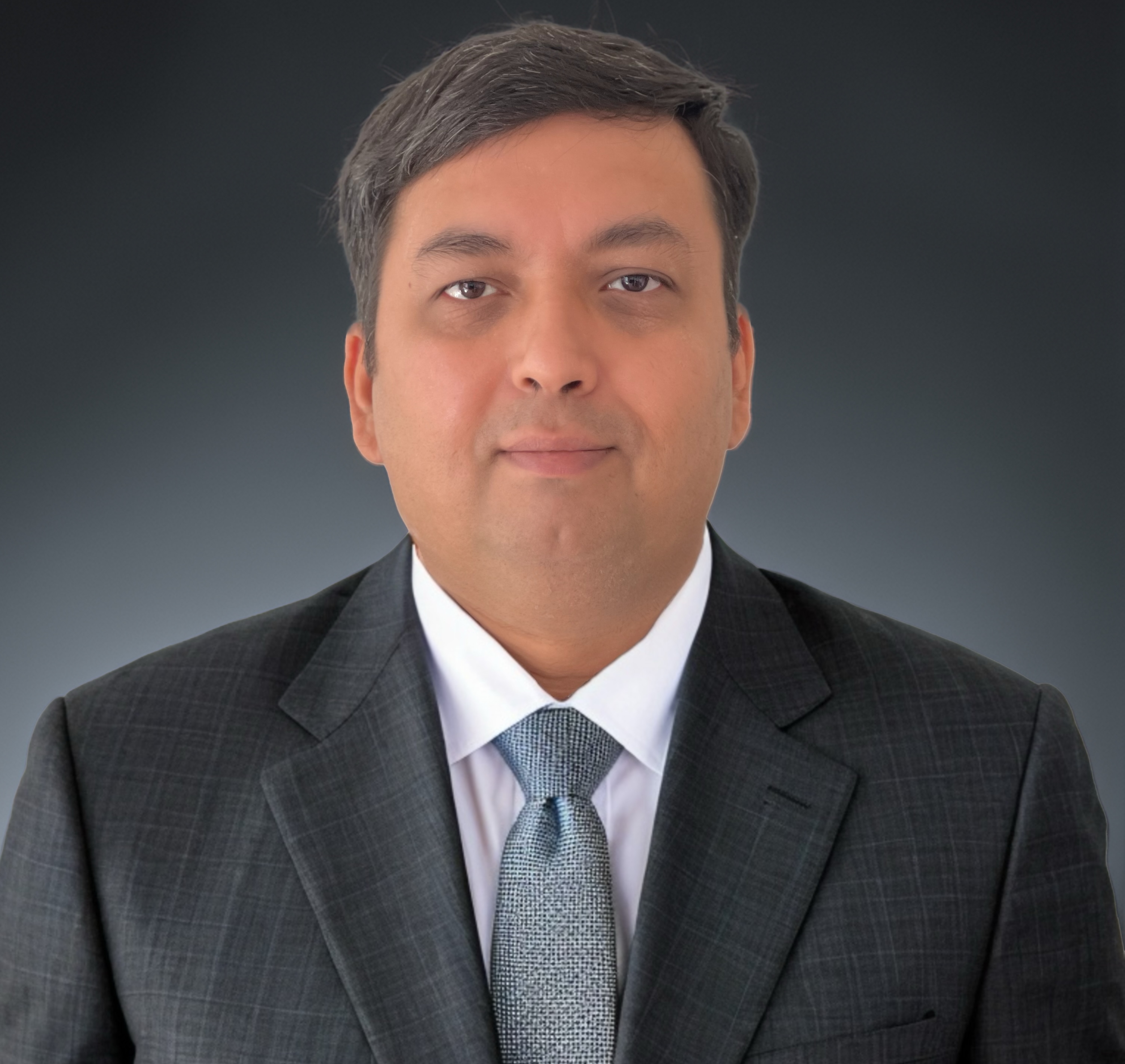
Prof. Sumit Kumar Jha is a Professor in the Department of Computer Science at Florida International University (FIU), specializing in artificial intelligence, formal methods, and computer architecture. His research focuses on AI-driven system design, in-memory computing, and robust machine learning systems. He leads over $17 million in active research projects from agencies like DARPA, AFRL, NSF, and DOE. Research interests include: Adversarial machine learning and model robustness Neuro-symbolic systems and program synthesis Analog/digital in-memory computing architectures Formal verification and safety-critical systems Explainable AI and model interpretability Recent work emphasizes secure LLM code generation, quantum computing applications, and fault-tolerant in-memory systems. His publications span top venues like ICML, ICLR, and DAC. Awarded FIU's Top Scholar Award (2024-25) and multiple best paper nominations. Active in NSF-funded initiatives including SPX (extreme-scale computing) and FMitF (formal methods in in-memory systems).
Prof. Dr.-Ing. Markus Weinhardt is a Professor at the Faculty of Engineering and Computer Science at Osnabrück University of Applied Sciences. His research focuses on reconfigurable computing, compiler development, and image processing. He earned his Ph.D. from Karlsruhe Institute of Technology (2000) and held postdoctoral positions at Imperial College London (2000) and PACT XPP Technologies AG (2009). He leads the DFG-funded HiPReP project and organizes workshops like FSP 2016. Education: Ph.D. in Computer Science (Karlsruhe Institute of Technology), postdoctoral research at Imperial College London, and industry experience at PACT XPP Technologies AG. Research Interests: Reconfigurable architectures, FPGA-based acceleration, compiler optimization, and high-performance computing. Projects include HiPReP (high-performance reconfigurable processor) and HPVis (software optimization via FPGA coprocessors). Teaching: Courses on Hardware/Software Codesign, Programming, and Master’s projects in compiler design and hardware optimization. Key Contributions: Over 30 publications, including works on CHiPReP compilers, dynamic scheduling in reconfigurable arrays, and FPGA-accelerated algorithms.
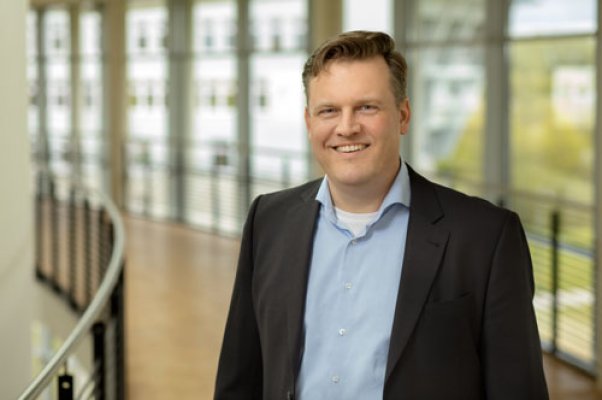
Dr. Michael Robbeloth serves as an Associate Professor in the Department of Mathematics and Computer Science at Mount Vernon Nazarene University (MVNU), part of the School of Natural and Social Sciences. Previously, he was an Assistant Professor at MVNU (2017–2024) and held roles in industry including Embedded Software Engineering at PDi Communication Systems and Senior Consultant at Data Science Automation (DSA). He holds a Ph.D. in Computer Science from Wright State University, an MBA from the University of Dayton, and advanced degrees from Bowling Green State University and Wilmington College. His research focuses on object recognition, particularly in incomplete data scenarios, leveraging geometric-based algorithms and machine learning. Recent projects include collaborations with students on improving incomplete object characterization algorithms and GPU-accelerated machine learning. He has secured grants totaling over $19,000 for undergraduate research initiatives, including server upgrades and GPU accelerators. Robbeloth actively contributes to academic and community organizations: he chairs Pathways of Central Ohio, advises Knox Technical Center’s IT program, and reviews for ACM conferences. His work bridges theoretical computer science with practical applications in aerospace and data-driven industries.
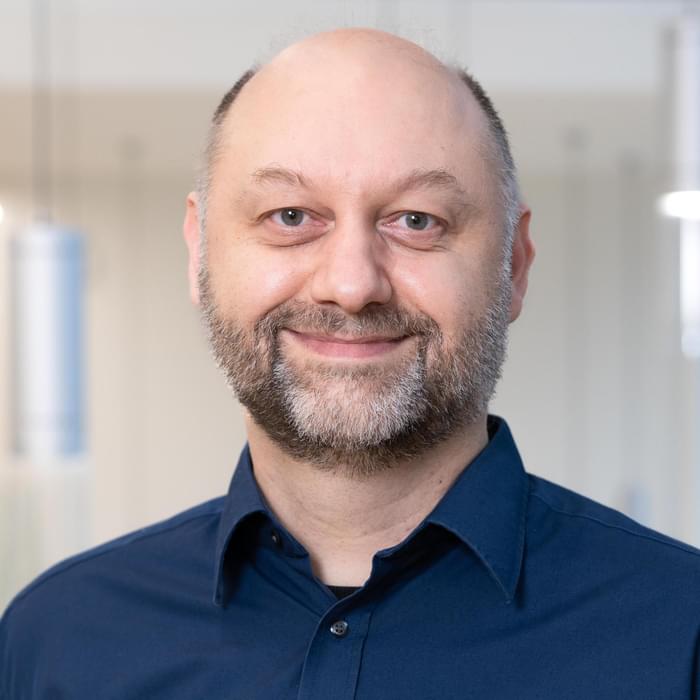
Prof. Marcus Brandenburg is a Professor of Business Administration at the Department of Economics, Flensburg University of Applied Sciences. His research focuses on Sustainable Supply Chain Management, Supply Chain Performance Management, and Production Economics. He holds a habilitation in economics and serves on the Editorial Review Board of the International Journal of Operations & Production Management (IJOPM) since 2017. Key research interests include sustainability in logistics, automotive supply chains, and maritime operations. He leads the university's Sustainability Network and contributes to Data Science and AI initiatives in production planning. His work bridges theoretical frameworks and practical applications, emphasizing interdisciplinary collaboration and real-world impact. Teaching responsibilities include courses in Business Administration and Supply Chain Management. He advises students and collaborates with industry partners on projects like GrønBusiness, focusing on sustainable practices in emerging markets such as Ethiopia's textile sector. Recent publications address supply chain resilience during the pandemic, automation challenges in container terminals, and sustainability certifications in apparel industries. Awards: Editorial Board Membership (IJOPM, 2017) Responsibilities: Committee for Research & Knowledge Transfer, Director of the Sustainability Network Key Projects: System Dynamics modeling for supply chain sustainability, AI/ML in production planning
Yuri Meshman is a former Post-doctoral Researcher at IMDEA. He holds a PhD from the Technion Israel Institute of Technology, where he was supervised by Prof. Eran Yahav. His research focuses on program verification, program analysis, program synthesis, machine learning, computability learning, and programming languages. His teaching interests include program analysis, programming languages, software engineering, and formal specification. Education: PhD in Computer Science, Technion Israel Institute of Technology (Advisor: Prof. Eran Yahav) Contact (Historical): Taub Building, Technion Israel Institute of Technology, Haifa 32000, Floor 7, Room 738 Phone: (+972-77-887)-4806 Research Interests: Meshman’s work emphasizes formal methods in software engineering, particularly in enhancing program reliability through automated verification and synthesis techniques. His exploration of machine learning intersects with computability theory, aiming to develop adaptive systems capable of self-optimization. His contributions bridge theoretical computer science with practical software development challenges.
Amy Hoover is an Assistant Professor in the Informatics department at New Jersey Institute of Technology (NJIT). Her research focuses on artificial intelligence, procedural content generation, and the intersection of AI with creative domains such as music composition and video game design. She explores topics like evolutionary algorithms, open-ended learning systems, and ethical considerations in AI applications. Her work spans contributions to procedural content generation (PCG) in games, including automated deckbuilding for Hearthstone and generative level design. She also investigates peer learning dynamics in AI systems and the application of large language models (LLMs) for creative tasks. Hoover’s research often bridges computational methods with human-centric design, such as curriculum development in AI education and fostering creativity through interactive tools. Her publications reflect collaborations in AI-driven game design, music composition, and educational technology. Media coverage highlights her work on ethical risks in mixed-reality gaming and AI’s role in mental health support through gaming communities. Notable contributions include frameworks like Watts for open-ended learning, ensemble learning methodologies inspired by human collaboration, and studies on transfer dynamics in evolutionary curricula. Her work emphasizes practical applications of AI in both technical and creative fields.
Prof. Bernd Finkbeiner is a faculty member at CISPA Helmholtz Center for Information Security and holds a Professorship in Computer Science at Saarland University. He earned his Ph.D. in 2003 from Stanford University. Leading the Reactive Systems Group since 2003, now part of CISPA, his research focuses on ensuring safety and security in computer systems through formal methods like specification, program synthesis, and verification. Key projects include output-sensitive reactive synthesis (OSARES), hyperproperty logics (HYPER), and real-time monitoring (RTLOLA). Education : Ph.D. in Computer Science, Stanford University, 2003 His research interests span hyperproperties, formal verification, runtime monitoring of cyber-physical systems, and distributed synthesis. He has pioneered tools like StreamLAB and AutoHyper for hyperproperty analysis. His work on temporal causality and information-flow guided synthesis addresses challenges in distributed and secure systems. Key Achievements : Recipient of ERC Advanced Grant 2022–2027 for Project HYPER Best Paper Awards at ICALP 2009, FSEN 2007, and VMCAI 2012 Leader of the Reactive Systems Group at CISPA Grants & Funding : ERC Advanced Grant supporting research on hyperproperties His lab develops cutting-edge tools for formal methods, including BoSy for bounded synthesis and RTLola for runtime verification. Current research explores compositional synthesis, explainable reactive systems, and robust monitoring for medical and autonomous systems.
Sihem TEBBANI is a **Professor** at **CentraleSupélec**, affiliated with the **Laboratoire des signaux et systèmes (L2S)**. Her research focuses on systems and control, bioprocess engineering, optimization, robotics, and environmental engineering. She has supervised/co-supervised over 16 PhD theses, including work on predictive maintenance, UAV trajectory planning, and microalgae cultivation for CO₂ biofixation. **Education**: PhD in Automatic Control, SUPAERO (2001) Habilitation (HDR) in Automatic Control, Université Paris-Sud (2016) Master’s in Automatic Control, SUPAERO (1998) Engineering Degree in Automatic Control, SUPAERO (1998) **Research Interests**: Her work spans nonlinear control, bioprocess modeling, and optimization. She specializes in applications such as microalgae cultivation for biofuel production, autonomous systems, and predictive maintenance. Her research bridges theory and industry, addressing challenges in sustainability and automation. **Awards**: Recipient of the Knight of the Order of Academic Palms (2020) for contributions to education and research. **Grants & Labs**: Active in interdisciplinary projects at L2S, collaborating with institutions like IRT SystemX, INRIA, and industry partners (e.g., Parrot, Thales Alenia Space). Her lab focuses on systems control, modeling, and estimation.
Prof. Sagiv Shmuel is a Full Professor at Tel-Aviv University's Department of Computer Science. He has held various academic roles, including Associate Professor (2004–2005), Senior Lecturer (2000–2004), and visiting positions at institutions such as the University of Chicago and University of Copenhagen. His research focuses on software verification, shape analysis, smart contracts, and programming languages. Education: Ph.D. in Computer Science, Technion (1986–1990) B.A. in Computer Science, Technion (1982–1985), cum laude Research Interests: His work addresses challenges in static analysis, formal verification, and program analysis. Notable areas include invariant inference, smart contract security, and parametric shape analysis. These contributions have led to practical tools like Ivy and the foundation of Certora, a company specializing in smart contract verification. Awards: ACM Fellow (2016) Friedrich Wilhelm Bessel Research Award (2002) Microsoft Outstanding Collaborator Award (2016) Grants & Leadership: Principal Investigator (PI) of a Senior ERC Grant (1.57M Euros) for software composition verification Editor of Foundations and Trends in Programming Languages Chair of program committees for POPL, SAS, and other leading conferences His research has been applied to real-world systems, such as improving the Java concurrent library and ensuring kernel extension security in Linux.
Anthony Widjaja Lin is a Full Professor (W3) in Theoretical Computer Science (Automated Reasoning) and Max-Planck Fellow at University of Kaiserslautern-Landau, Germany. Previously, he was an Associate Professor in Programming Languages at Oxford University Department of Computer Science and Governing Body Fellow at Kellogg College (2016-2019), and an Assistant Professor at Yale-NUS, Singapore (2014-2016). He completed his PhD in Informatics at University of Edinburgh in 2010 under Leonid Libkin (supervisor) and Richard Mayr (co-advisor). Dr. Lin's educational background includes: PhD in Informatics, University of Edinburgh (2010) MSc, University of Toronto BSc (Honours), Melbourne University Dr. Lin's research focuses on automated reasoning, particularly over strings, formal language theory, learning/synthesis, and foundations of machine learning. His work has significant applications in software verification, program synthesis, querying graph databases, and computer security. He leads the development of the OSTRICH string solver, which won the QF_S (Single Query Track) in SMT-COMP 2023. His research has evolved from foundational work on string constraint solving to applications in verification of string-manipulating programs and more recently to connections with machine learning models like transformers. Dr. Lin has received numerous prestigious awards including an ERC Consolidator Grant (2023), Amazon Research Award (2021), ERC Starting Grant (2017), Google Faculty Award (2017), and the LICS Kleene Award (2010). Dr. Lin has advised several PhD students to completion, including Pascal Bergsträßer, Chih-Duo Hong, and Xuan-Bach Le, who have gone on to become Assistant Professors at institutions like National Chingchi University and Nanyang Technical University. He currently supervises multiple PhD students and postdocs working on string solving, automated reasoning, and verification. Dr. Lin leads the AV-SMP project (Algorithmic Verification of String-Manipulating Programs), which was supported by an ERC Starting Grant (2017-2022) and an Amazon Research Award (2021). His research group develops tools like OSTRICH, SLOTH, and CertiStr for string constraint solving and verification.
Ekkart Kindler is an Associate Professor in the Department of Applied Mathematics and Computer Science at DTU Compute, Technical University of Denmark. His research focuses on model-based software engineering, process mining, and road condition assessment using vehicle sensor data. He leads the Competence Centre for Model-Based Software Engineering, supporting industry adoption of advanced software development methodologies. Education: M.Sc. (1990), Ph.D. (1995) from Technische Universität München; Habilitation in Computer Science (2001) from Humboldt-Universität zu Berlin. He held visiting professorships at German universities (2000–2007) and has extensive experience in formal methods, business process modeling, and Petri nets. Research interests include declarative process modeling, complexity metrics for cognitive load assessment, and the integration of formal methods into industrial software development. His work contributes to UN Sustainable Development Goals related to sustainable infrastructure (SDG 9) and innovation (SDG 9). Notable collaborations include road condition assessment projects using vehicle sensor data (LiRA-CD dataset) and contributions to Petri net standards (PNML). He has supervised PhD students such as K. I. Simonsen (protocol software) and A. Skar (road assessment). Grants and projects: Live Road Assessment with Vehicle Sensors (2019–2022), Model Transformation Tools (2013–2016), and waste management modeling (2012–2016). Active in open-source datasets and tool development for indoor climate control (climify.org).
Philippe Oster is a Lecturer at the Institute of Financial Services Zug (IFZ) within the Lucerne School of Business. His academic roles include teaching courses on Fixed Income (CFA-linked), Derivatives and Structured Products, and CAS Asset Management programs. He holds a PhD in Empirical Capital Market Research and Econometrics from Zeppelin University, along with advanced qualifications in banking and finance. His research focuses on fixed income instruments, bank capitalization, and regulatory impacts on financial markets. Education highlights include: PhD in Empirical Capital Market Research (2017–2021) MSc Banking & Finance (2008–2010) BSc in Business Administration (2006–2008) Eidg. Dipl. Betriebsökonom FH (2002–2005) Research interests span hybrid capital instruments, bank regulation, and ESG investing. His publications analyze topics like CoCo bonds, regulatory effects on wealth managers, and fixed-income strategies. Notable works include Hybridkapital – Finanzierungsinstrument und Kapitalanlage Praxishandbuch and contributions to the European Financial Management journal. Professional experience includes roles as Senior Portfolio Manager at Baloise Asset Management and leadership positions in portfolio management at Zugerberg Finanz and Capra Ibex Investment Partners. He has conducted over 30 presentations on topics like risk management, emerging markets, and compliance in wealth management. Key projects include the IFZ Vermögensverwalter Guide series, studies on sustainable investments, and collaborations with financial technology providers. His work bridges academic research and industry practice, emphasizing practical applications of financial theory.
Dr. Alan G. Sutherland is a Practitioner in Residence in the Chemistry and Chemical & Biomedical Engineering Department at the University of New Haven since 2011. He also works as a Medicinal Chemist at L2 Diagnostics in New Haven. Prior to joining UNH, he held research roles at Wyeth Research (1995–2010), where he advanced from Senior to Principal Research Scientist, and earlier faculty positions at the University of Exeter and University of North London in the UK. B.Sc. in Chemistry , University of Edinburgh Ph.D. in Chemistry , University of East Anglia Dr. Sutherland's research focuses on developing anti-inflammatory, antibacterial, antiviral, and antitumor agents . He leads a NEI-supported program on macular degeneration treatments and contributes to NIH and DoD-funded projects as a Co-Investigator. His work integrates medicinal chemistry , biocatalysis , and structure-based drug design to target diseases like AIDS , Gram-positive bacterial infections , and cancer . Key publication trends include anti-inflammatory agents , glycopeptide antibiotics , asymmetric synthesis methods , enzymatic resolutions , and inhibitors of bacterial cell division proteins (FtsZ/ZipA) . His studies span organic chemistry , pharmacology , and biocatalysis , emphasizing practical applications in drug discovery.
Robert Hesketh is a Full Professor of Chemical Engineering at Rowan University's Henry M. Rowan College of Engineering. He holds a Ph.D. and B.S. in Chemical Engineering from the University of Delaware and the University of Illinois, respectively. His research focuses on sustainability, green engineering, process optimization, and computational methods. Key areas include novel separations (crystallization, adsorption), reaction engineering (green chemistry, combustion kinetics), and fluid dynamics (agitation, multiphase flow). Recent work emphasizes machine learning applications in sustainability, such as predicting environmental impacts and optimizing industrial processes like pipeline flushing. He has collaborated with industry partners like Johnson Matthey on projects involving PGM recovery and green engineering design. Hesketh is also active in advancing pedagogical innovation, including student-industry collaboration programs and integrating computational tools (Python/MATLAB) into curricula. His work has been recognized through over 120 publications and grants totaling $1.3M in funding. Education: Ph.D., Chemical Engineering, University of Delaware; B.S., Chemical Engineering, University of Illinois. Research Interests: Sustainability engineering, green chemical processes, fluid dynamics, and AI-driven process design. His projects address environmental challenges through interdisciplinary approaches, combining experimental and computational methods. Grants & Awards: Led three industry-funded grants (2013–2016) focusing on green engineering and PGM recovery. His work bridges academia and industry, fostering innovation in sustainable manufacturing and pollution prevention.
Matthew Campbell is a Professor at the School of Mechanical, Industrial, and Manufacturing Engineering at Oregon State University. He holds the title of Hans Fischer Senior Fellow at the Technical University of Munich (TUM) Institute for Advanced Study (TUM-IAS). His academic journey includes a PhD from Carnegie Mellon University (2000) and prior roles as an Associate Professor at the University of Texas at Austin. Education: BSc and MSc in Mechanical Engineering from Carnegie Mellon (1995-1997), PhD in Mechanical Engineering (2000). He founded the Automated Design Lab at UT Austin and specializes in computational design tools that integrate engineering, computer science, and cognitive psychology to enhance design efficiency and quality. Research focuses on automated design synthesis, topology optimization, and human-computer collaborative systems. His work bridges algorithmic innovation with practical engineering applications, emphasizing multi-physics computational platforms and generative design methods. Awards include the NSF CAREER Award (2005) and multiple best paper awards in engineering design and computational methods. His publications span design automation, optimization, and interdisciplinary methodologies. Key contributions include the CDS platform for multi-physics design synthesis and foundational work on automated concept generation. Current projects involve integrating qualitative/quantitative data in experimental design and advancing fluid channel topology optimization.