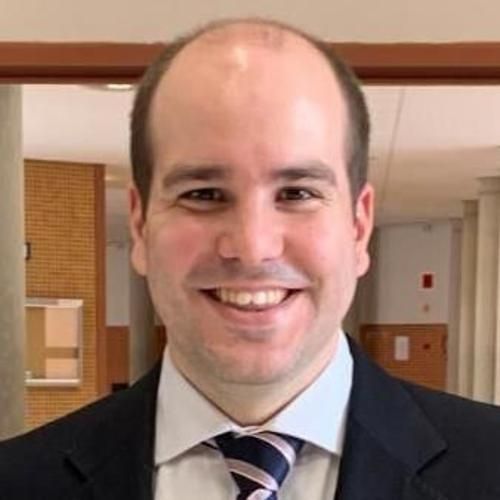
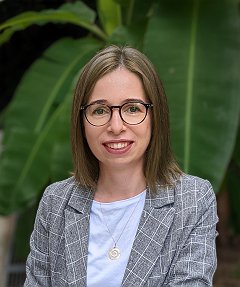
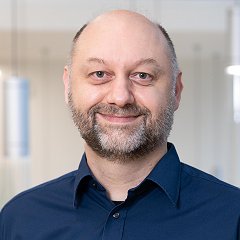
Talia Ringer is an Assistant Professor at the University of Illinois at Urbana-Champaign , focusing on making program verification using interactive theorem provers more accessible through improved proof engineering tools and practices. Her research addresses challenges in maintaining proofs as programs evolve and advancing formal verification. Ph.D., University of Washington (2021), NSF GRFP and P.E.O. Fellow B.S., Mathematics and Computer Science, University of Maryland Former software engineer at Amazon Her research interests include: Program Verification Proof Engineering Dependent Type Theory Interactive Theorem Provers (Coq) Key trends in her publications include: Automated proof generation and repair using large language models Tool development for Coq and other proof assistants Formal verification of software and data structures Integration of identifiers and type equivalences in verification Test input generation for software reliability Scientific awards and honors: NSF Graduate Research Fellowship Program (GRFP) P.E.O. Scholar Award She has advised numerous researchers through her work and founded the SIGPLAN-M Mentoring Program and Computing Connections Fellowship . No specific student names are listed in the scraped text.
Antonio García Cabot is an Associate Professor in the Department of Computer Science at the University of Alcalá. His research focuses on artificial intelligence, educational technology, natural language processing, and mobile computing. He leads the INTELIA research group (Interaction Technologies and Artificial Intelligence Lab) and previously contributed to the PMI group (Intelligent Mobile Platforms). He earned his Doctorate in Computer Science from the University of Alcalá in 2013 with a thesis titled *Propuesta de un sistema multi-agente para la adaptación de contenidos docentes a las competencias, contexto y dispositivo del usuario*. His work emphasizes accessibility in digital education, gamification in MOOCs, and software engineering innovations like automated code repair using LLMs. Research trends in his 2024-2025 publications include: Advancing AI applications in educational assessment (e.g., automated question generation, distractor design) Improving mobile app usability through gesture-based interfaces and sensor integration Developing large language model-based tools for vulnerability repair and teacher simulation analysis Systematic reviews on digital competence ecosystems and multilingual AI systems His contributions to open educational resources (OER) and accessible virtual campuses have been widely adopted in Latin America. Current research extends into embedded systems education and olfactory stimuli impacts on mobile app performance.
Eva García López is a Professor in the Department of Computer Science at the University of Alcalá. She holds a PhD from the same institution, completing her thesis on improving the usability of interfaces for teaching objects in m-learning in 2013. Her research focuses on usability engineering, artificial intelligence, and educational technology, with emphases on mobile applications, accessibility, and gamification. She is affiliated with the INTELIA research group (Interaction Technologies and Artificial Intelligence Lab) and previously contributed to TIFyC (Information Technologies for Training and Knowledge) and PMI (Intelligent Mobile Platforms). Eva’s work spans developing adaptive learning systems, enhancing digital content accessibility, and leveraging large language models for educational tools. Her projects include MOOC development, social gamification experiments, and usability evaluations of mobile instant messaging apps. She has also explored the impact of olfactory stimuli on user performance and the application of NLP in automated question generation. Her contributions include guidelines for accessible digital content creation and frameworks for personalized learning paths in web engineering curricula. Her research integrates interdisciplinary approaches, combining machine learning, human-computer interaction, and educational theory to address challenges in digital learning ecosystems. Notable contributions include frameworks for curriculum development, methodologies for usability evaluation, and tools for automated code vulnerability repair.
Rui Abreu is a Full Professor at the Faculty of Engineering of the University of Porto, Portugal. His academic career spans multiple institutions including IST, ULisbon where he served as an Associate Professor, and the University of Porto where he previously held the position of Assistant Professor. He has also been a Visiting Researcher at Google NYC (2019-2020) and a member of the Model-Based Reasoning group at PARC's System and Sciences Laboratory. Dr. Abreu earned his Ph.D. in Computer Science - Software Engineering from the Delft University of Technology, The Netherlands, and his M.Sc. in Computer and Systems Engineering from the University of Minho, Portugal. His research revolves around software quality with emphasis on automating testing and debugging phases of the software development life-cycle as well as self-adaptation. With extensive expertise in both static and dynamic analysis algorithms, his work spans traditional software engineering, quantum software testing, and security-focused development practices. His recent publications demonstrate a strong focus on applying AI techniques to software engineering problems, quantum software testing, and security vulnerability detection. The trend shows increasing integration of large language models in debugging tools and expanding research into quantum software verification. Dr. Abreu has received significant recognition for his work, including 6 Best Paper Awards and a Distinguished Paper Award at ESEC/FSE 2019. His research has attracted considerable attention in the software engineering community. As an entrepreneur, he co-founded DashDash in January 2017, a platform that allows users to create web applications using only spreadsheet skills. The company secured $9M in Series A funding in May 2018. His industry experience complements his academic work, particularly in the areas of practical software tools and applications. Dr. Abreu has been actively involved in numerous conferences, serving as General Chair for ICST 2020, Program Committee member for multiple tracks across various conferences, and as Steering Committee member for ICST. His leadership in the software engineering community is evident through his extensive service and contributions to the field.
Antonio Chica is an Associate Professor at the Department of Computer Science, Universitat Politècnica de Catalunya (UPC), specializing in geometry processing, real-time rendering, and virtual reality applications. His research focuses on 3D reconstruction, procedural landscape generation, and LiDAR data optimization. Teaching at Terrassa School of Engineering and Barcelona School of Informatics Member of the Modeling, Visualization, Interaction and Virtual Reality Group Key research areas include: Geometry processing techniques for signed distance fields Procedural generation of 3D landscapes and vegetation Game development frameworks and VR training systems Efficient algorithms for massive point cloud rendering His recent publications emphasize Bayesian reconstruction methods, adaptive SDF approximations, and optimized VR training tools. He actively collaborates on LiDAR data calibration, terrain modeling, and cultural heritage visualization projects. Antonio Chica's work integrates advanced graphics algorithms with practical applications in urban modeling, medical training, and historical preservation. He develops open-source tools like MeshPipe to simplify geometry processing workflows.
Alessandra Gorla is an Associate Research Professor at the IMDEA Software Institute in Madrid, Spain. She holds a Ph.D. in Informatics from the Università della Svizzera Italiana (University of Lugano) in Switzerland, where her doctoral thesis on automatic workarounds for software failures earned the Fritz Kutter Award (2011). Prior to IMDEA, she was a postdoctoral researcher at Saarland University’s Software Engineering Chair in Germany and a visiting researcher at Google. Education: Ph.D. in Informatics, Università della Svizzera Italiana (2011) Research Interests: Her work focuses on software engineering, with emphasis on mobile and web security, software testing/analysis, and automatic software repair. She has pioneered techniques like intrinsic redundancy for self-healing systems and malware detection in mobile applications. Awards: Fritz Kutter Award (2011) Best Student Poster Award (2008) Best Paper Award (2014) Service: She has served as SBST program co-chair (2018), tool demo co-chair at FSE 2016, and artifact evaluation co-chair at ISSTA and ESSoS 2016. Her work spans organizing committees for major software engineering conferences. Teaching: She has taught courses on mobile testing, self-healing systems, and software engineering at Saarland University and the University of Lugano. Her lab focuses on advancing software reliability through automated techniques, with ongoing projects analyzing app behaviors, third-party libraries in iOS, and lazy initialization optimizations.
Dr. Andreea Costea is an Assistant Professor at the Programming Languages Group in the Faculty of Electrical Engineering, Mathematics and Computer Science (EEMCS) at TU Delft, Netherlands. She completed her PhD at the School of Computing, National University of Singapore (NUS), and previously collaborated with NUS's Programming Languages and Software Engineering lab, Automated Program Repair team, and VERSE lab. Research: Formal Methods, Software Verification, Automated Program Repair, Rust Programming, Concurrency Funding: Ministry of Education Tier 3 Grant (2022) Projects: HIPPODROME (Java data race repair), ROBoSuSLik (heap synthesis), Mercurius (session protocols) Recent MSc Students: Matei Mirică (2025), Arjan Seijs (2025), Jim van Vliet (2025), Timen Zandbergen (2025), Arthur de Groot (2024), Julius de Jeu (2024), Matteo Bertorotta (2024). Conference Involvement: Program Committee member for PriSC 2024, PEPM 2024, SPLASH/ISSTA 2026, ICSE 2025, ICFP 2023, APLAS 2021.
Conrad Watt is an Assistant Professor at Nanyang Technological University in Singapore. His research focuses on the formal verification and mechanisation of WebAssembly, particularly its concurrency and security features. He previously held a Research Fellow position at Peterhouse, University of Cambridge. His work bridges theoretical formal methods with practical systems implementation, contributing to standards proposals for WebAssembly's evolution. He co-chairs the W3C WebAssembly Community Group and has served on program committees for POPL, PLDI, and SPLASH. Education: PhD in Computer Science (University of Cambridge, 2021), supervised by Peter Sewell Research interests include mechanisation of programming language specifications, relaxed-memory concurrency, and domain-specific languages for formal semantics. His projects like SpecTec aim to unify WebAssembly's specification across documentation, implementations, and mechanisations. Selected contributions to WebAssembly include: Designing its initial concurrency specification Developing WasmRef-Isabelle as a verified interpreter and fuzzing oracle Creating Iris-Wasm for modular program verification Scientific recognition includes: ACM Doctoral Dissertation Award Honorable Mention EAPLS Best Dissertation Award He advises PhD students in WebAssembly-related topics and leads collaborations with industrial partners like Wasmtime. Current research explores irreducible control flow in WebAssembly, richer concurrency models, and performance optimization through mechanised specifications.
Bernd Finkbeiner is a Professor of Computer Science at Saarland University and a faculty member at the CISPA Helmholtz Center for Information Security . He leads the Reactive Systems Group, which merged with CISPA in 2020, focusing on formal methods for ensuring system safety and security. University: Saarland University Research Institution: CISPA Helmholtz Center for Information Security His research spans synthesis, verification, and monitoring of reactive systems , with applications to program repair, static/dynamic analysis, and security guarantees . Recent work includes coinductive proofs for hyperliveness, asynchronous hyperproperty verification, and symbolic execution for bug detection. Key trends in his publications include: Hyperliveness and fairness in reactive systems Symbolic execution for hyperbug identification Integration of synthesis and verification techniques Formal guarantees for cybersecurity and software reliability He contributes to academic communities through committee roles at conferences like POPL, ICFP, SPLASH, and VMCAI.
Dr. Alfonso González Briones is an Associate Professor in the Department of Computer Science and Automation at the University of Salamanca, where he conducts cutting-edge research in intelligent systems and their applications. He is a prominent member of the BISITE Research Group and has also worked with the GRASIA Research Group at Complutense University of Madrid as a 'Juan De La Cierva' postdoc. His academic journey at the University of Salamanca includes a Bachelor of Technical Engineering in Computer Engineering (2012), a Bachelor's Degree in Computer Engineering (2013), a Master's Degree in Intelligent Systems (2014), and a PhD in Computer Engineering (2018). His research focuses on Ubiquitous Computing and Ambient Intelligence for developing smarter, more energy-efficient cities that improve social welfare and promote sustainable development. His work spans Multiple Agent Systems (MAS), energy optimization, smart cities infrastructure, Industry 4.0 applications, and machine learning techniques for various domains including social networks, transportation, and agricultural systems. Dr. González Briones has published extensively with over 30 journal articles and 60 conference proceedings publications, demonstrating consistent productivity across multiple domains of computer science and artificial intelligence. His research trends show a clear progression from foundational work in multi-agent systems toward increasingly sophisticated applications in smart cities, energy management, and Industry 4.0 contexts, with a growing emphasis on practical implementations that address real-world challenges. 2nd place in 1st SENSORS+CIRTI Award for best national thesis in Smart Cities (CAEPIA 2018) Juan de la Cierva State Program Grant in ICT - Information and Communication Technologies (2018) Member of scientific committees for Advances in Distributed Computing and Artificial Intelligence Journal (ADCAIJ) and British Journal of Applied Science and Technology (BJAST) Reviewer for prestigious journals including Supercomputing Journal, Journal of King Saud University, Energies, Sensors, Electronics, and Applied Sciences As an active researcher, Dr. González Briones has participated in 10 international research projects and served on technical committees for prestigious international conferences including AIPES, HAIS, FODERTICS, PAAMS, and KDIR. His work bridges academic research with practical industry applications, particularly in energy optimization systems, IoT, and Machine Learning solutions for real-world problems. He has also collaborated with private research centers including Virtual Power Solutions in Portugal and AIR Institute, where he worked as Project Manager in Industry 4.0 and IoT projects. His research infrastructure includes work with the BISITE Research Group, where he develops and implements multi-agent architectures for optimizing energy consumption and other complex systems. His laboratory work spans smart home energy management, intelligent transportation systems, semantic analysis for Industry 4.0, and social network analysis applications.