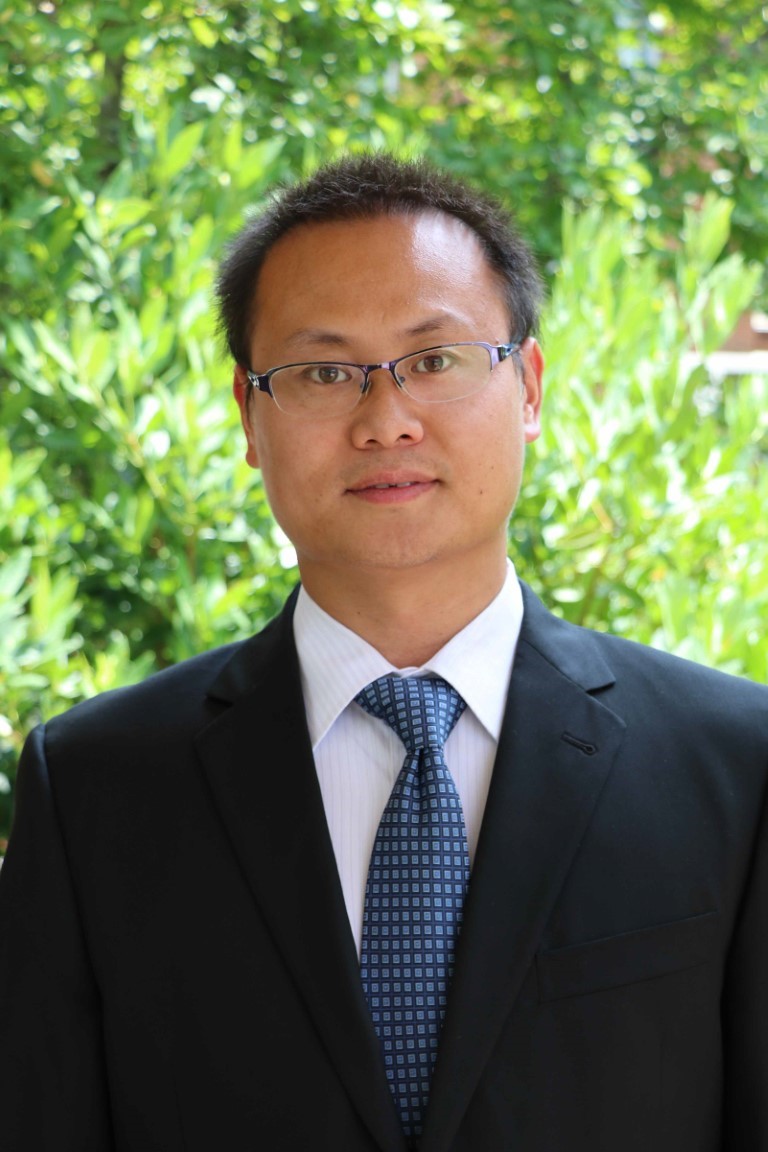
Yin Tat Lee is an Associate Professor at the Paul G. Allen School of Computer Science & Engineering , University of Washington, and a Senior Principal Researcher in Microsoft AI. His research spans convex optimization , convex geometry , graph algorithms , online algorithms , and differential privacy , with applications in machine learning and theoretical computer science.
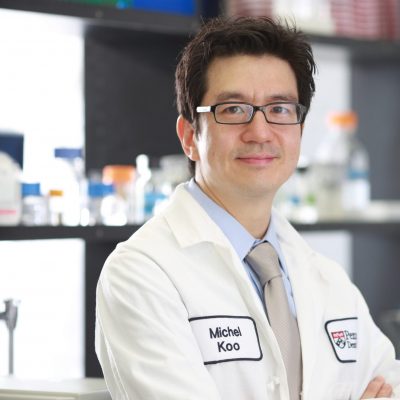
Hyun (Michel) Koo is a Professor at the University of Pennsylvania School of Dental Medicine , with affiliations in the Department of Orthodontics , Division of Community Oral Health , and Division of Pediatric Dentistry . As Co-Founder and Co-Director of the Center for Innovation & Precision Dentistry (CiPD) , he leads interdisciplinary efforts merging bioengineering, nanotechnology, and oral health research. Education : DDS and PhD Research Focus : Biofilms, bacterial-fungal interactions, and nanotechnology for oral disease prevention Leadership : Co-Director of CiPD; key roles in training programs like NIDCR-sponsored R90 and T90/R90 Dr. Koo’s research explores biofilm mechanisms in oral infectious diseases, particularly childhood caries, through engineering methods and microrobotics . His team developed micron-scale robots for automated biofilm eradication and FDA-approved nanoparticles for caries prevention. Collaborations with Penn Engineering, including Dr. Daeyeon Lee and Dr. Kacy Cullen, emphasize translational approaches. The 15 most recent publications highlight his work in nanorobotics , interkingdom biofilms , and precision diagnostics . Articles span 2025–2024 and address topics like adaptive micromotors , biofilm matrix degradation , and single-cell microbial interactions . These emphasize his focus on targeted therapies and biofilm microenvironment engineering . Key Awards : Elected Fellow, American Association for the Advancement of Science (AAAS) IADR Distinguished Scientist Award for innovative dental research Dr. Koo trains next-generation researchers through the CiPD NIDCR T90/R90 Postdoctoral Training Program , mentoring fellows like Smruti Nair (ACE2 Chewing Gum development) and Zhi Ren (K99 awardee). His work intersects with Penn Health-Tech, CT3N , and Penn Institute for Biomedical Informatics , fostering transdisciplinary innovation.
Dr. Zhenman Fang is an Associate Professor at the School of Engineering Science , Simon Fraser University (SFU) , where he founded and directs the HiAccel Lab . He also holds an associate membership in the School of Computing Science at SFU. His research focuses on customizable computing with software-defined hardware acceleration , addressing performance, energy-efficiency, and reliability in post-Moore’s law computing across domains like machine learning , big data analytics , quantum chemistry , and precision medicine . Education: Ph.D. in Computer Science from Fudan University (2014), with a visit to University of Minnesota during his studies. Postdoctoral Work: University of California, Los Angeles (UCLA) (2014-2017). Industry Experience: Staff Software Engineer at Xilinx (2017-2019). Dr. Fang’s research spans the entire computing stack , including application characterization , accelerator-rich architecture design , and programming/tool support . He has developed frameworks like HiSpMV , SyncNN , and SQL2FPGA , emphasizing FPGA acceleration for vision transformers , quantum chemistry , and spiking neural networks . His work has been recognized with 3 best paper awards (FPL 2024, TCAD 2019, MEMSYS 2017) and 3 best paper nominees (FCCM 2025, HPCA 2017, ISPASS 2018). Recent publications highlight trends in low-precision machine learning ( ShiftQuant , ESRU ), quantum chemistry acceleration ( SERI ), and vision transformer optimization ( Quasar-ViT ). His HiAccel Lab actively mentors PhD and MASc students , with notable graduates like Alec Lu (PhD 2024, now at Meta) and Philip Stachura (MASc, now with BC Graduate Scholarship). Scientific Awards: Inaugural SFU Research Excellence Award - Horizon Award (2025) FPL 2024 Stamatis Vassiliadis Best Paper NSERC Alliance Award (2020) CFI JELF Award (2019) Xilinx University Program Award (2019) IEEE Senior Member (2023) Grants: NSERC Discovery Grant (2019) CFI JELF Funding (2019) Huawei and Xilinx sponsorships Dr. Fang leads open-source initiatives like SyncNN , PASTA , and SQL2FPGA , and serves as General Chair for ASAP 2025 and Program Co-Chair for RAW 2025 . His lab collaborates globally with institutions such as UCLA , Northeastern University , and Xidian University .
Suguman Bansal is an Assistant Professor in the School of Computer Science at Georgia Institute of Technology. Her research focuses on formal methods and their applications to artificial intelligence, programming languages, and machine learning. Previously, she held an NSF/CRA Computing Innovation Postdoctoral Fellowship at the University of Pennsylvania (2020-2022) and completed her PhD at Rice University (2016-2020). Education: PhD in Computer Science, Rice University (2016-2020) MS in Computer Science, Rice University (2014-2016) BSc (Honors) in Mathematics and Computer Science, Chennai Mathematical Institute (2011-2014) Research Interests: Formal methods, reinforcement learning, reactive synthesis, quantitative verification, and trustworthy AI systems. Her work bridges logic-based formal methods with modern AI challenges, emphasizing safety, reliability, and generalization in AI systems. Key Contributions: Pioneering work on specification-guided reinforcement learning, compositional synthesis algorithms, and formal verification of AI systems. Notable tools include Lisa (LTLf synthesis tool) and DiRL (compositional reinforcement learning framework). Awards: 2020 NSF CI Fellowship, 2021 MIT EECS Rising Star, 2023 ATVA Best Paper Award, and Keynote Speaker at SAS 2022. Advising & Grants: Advises PhD and Master’s students in reinforcement learning and formal methods. Lead PI on a collaboration grant with IIT Bombay (2024) and recipient of a ~$250K NSF/CRA postdoctoral grant. Labs/Teams: Leads the BansalLab at Georgia Tech, focusing on trustworthy AI through formal methods and algorithmic innovation.
Matthew Kay is an Associate Professor in the Department of Communication Studies at Northwestern University's School of Communication, with a secondary appointment in Computer Science. He serves as Co-Director of Graduate Studies for the PhD in Technology and Social Behavior program. His research focuses on human-computer interaction and information visualization, specializing in uncertainty communication, usable statistics, and personal informatics. He employs mixed-method approaches including behavioral analysis, interactive system development, and visualization technique evaluation to address real-world data interpretation challenges. Analysis of his recent publications reveals dominant themes in visualization literacy development, uncertainty representation for decision-making, and health informatics applications. His work consistently bridges theoretical frameworks with practical implementations, particularly in educational assessment tools and election forecast visualizations. Professor Kay co-directs the Midwest Uncertainty Collective (MU collective), a research group advancing uncertainty communication methodologies. Previously faculty at the University of Michigan School of Information, he maintains active contributions to visualization tool development including the ggdist R package for uncertainty visualization.
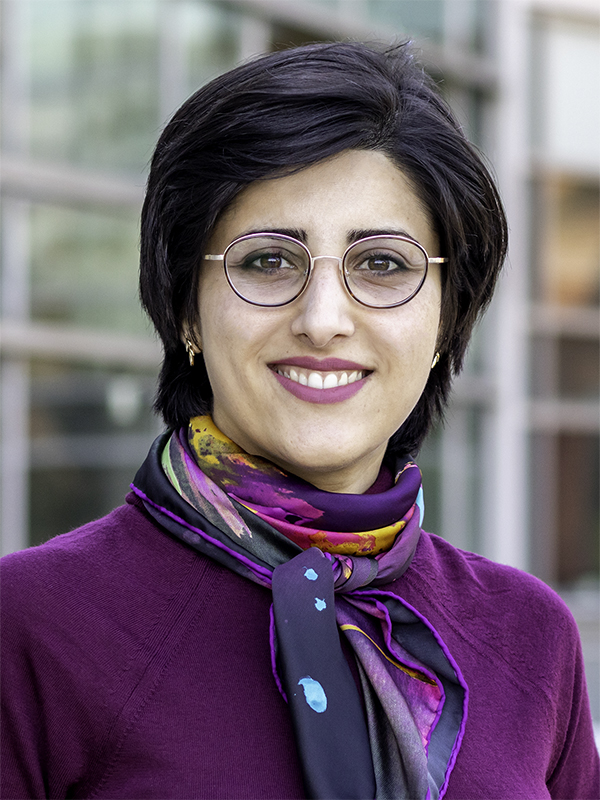
Elahe Soltanaghai is an Assistant Professor in the Department of Computer Science and a Faculty Affiliate in Electrical and Computer Engineering at the University of Illinois Urbana-Champaign. She is also a 2022 NCSA Fellow and received her PhD in Computer Science from the University of Virginia (2019), MS in Computer Engineering from Sharif University of Technology (2014), and dual BS degrees in Computer and Information Technology Engineering from Amirkabir University of Technology (2011, 2013). PhD: University of Virginia, Computer Science, 2019 MS: Sharif University of Technology, Computer Engineering, 2014 BS (Computer Engineering): Amirkabir University of Technology, 2011 BS (Information Technology Engineering): Amirkabir University of Technology, 2013 Her research spans wireless sensing and communication, focusing on Millimeter-wave Radar Sensing (for automotive, mixed reality, structural monitoring), Machine Learning for Wireless Systems (adaptive sensing/communication), Forest IoT (through-canopy biomass and soil sensing), Metaverse Technologies (gaze-based VR/AR), and Low-Power Backscatter Communication (WiFi/power-line tags). She directs the Wireless, Sensing & Embedded Networked Systems (iSENS) Lab and co-directs the Illinois Center for IoT. Her work bridges wireless networking with cyber-physical sensing , emphasizing environmental monitoring (e.g., wildfire fuel detection via radar tags) and human-computer interaction (e.g., gaze-tracking in VR). Recent articles include innovations in passive radar profiling , through-canopy biomass characterization , and integrated communication-sensing protocols . Scientific Awards: Google Research Scholar Award (2022) N2Women Rising Star (2021) ACM SIGMOBILE Dissertation Award (2020) EECS Rising Stars (2019) NCSA Faculty Fellowship (2023) Best Demo Runner-up, IPSN (2023) Teaching Excellence Award (2023) Grants: NASA FireTech Program Grant (2025) NSF Grant for Radar-based Perception (2024) Insper-Illinois Grant for VR Research (2024) Keysight Research Gifts (2022, 2023) T-Mobile Research Gift (2022)
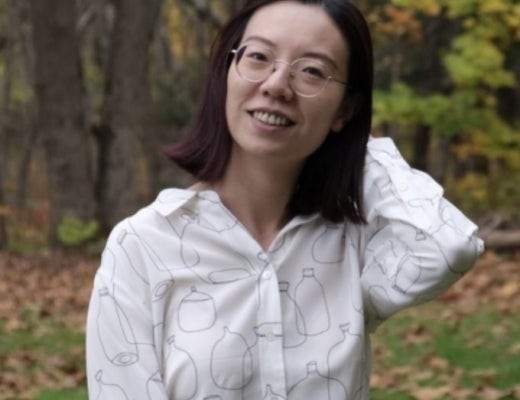
Lorraine (Xiang) Li is an Assistant Professor in the Department of Computer Science at the University of Pittsburgh’s School of Computing and Information (SCI). Her research focuses on the intersection of natural language processing, commonsense reasoning, knowledge representation, and machine learning, particularly in designing probabilistic models and evaluation methods for implicit commonsense knowledge in language. Li holds a PhD from the University of Massachusetts, Amherst, and previously worked as a young investigator with the Mosaic team at AI2. She has an M.S. in Computer Science from the University of Chicago, where she conducted research at TTIC. Her work emphasizes advancing AI’s ability to reason contextually and generate robust, human-like understanding through probabilistic frameworks. Key research themes include bias detection in reasoning models, iterative model editing, domain adaptation with LLMs, and evaluating commonsense through probabilistic measures. Her recent publications explore challenges like confirmation bias in chain-of-thought reasoning and geographical robustness in object recognition. Li actively contributes to the NLP community, serving on program committees for ACL, EMNLP, NAACL, and ARR. Though no formal awards are listed, her prolific publication record reflects her impact in AI research. She currently leads research in procedural knowledge models (e.g., Plasma) and long-tail knowledge generation, advancing foundational AI methodologies.
Prof. Dr.-Ing. Rüdiger Daub serves as Professor and Chair of Production Engineering and Energy Storage Systems at the Technical University of Munich (TUM), operating within the Department of Mechanical Engineering. His leadership encompasses research direction, academic supervision, and strategic development of battery production technologies at TUM's Garching campus (Boltzmannstr. 15), with active industry collaborations driving innovation in sustainable manufacturing. Daub's research program pioneers advanced production methodologies for lithium-ion and solid-state batteries, focusing on electrode manufacturing, electrolyte filling, and cell assembly processes. His work investigates critical parameter interdependencies affecting battery safety and performance, developing inline monitoring systems and digital twin technologies for real-time process optimization. Key contributions include moisture control in electrode production, electrochemo-mechanical characterization of solid-state systems, and robotics solutions for deformable object assembly, all integrated with machine learning for quality assurance in industrial settings. Analysis of his 2023-2025 publications reveals a dominant research trajectory toward solving production bottlenecks in next-generation energy storage. The work demonstrates increasing integration of computational modeling with empirical validation, particularly in solid-state battery manufacturing and high-voltage electrolyte systems. A notable trend is the cross-pollination of robotics, computer vision, and uncertainty quantification techniques to address complex assembly challenges and distribution shifts in quality monitoring, reflecting industry's urgent need for adaptable, data-driven production systems. Leading TUM's specialized laboratories for battery cell production, Daub's team maintains comprehensive facilities for electrode calendering, electrolyte filling, and cell assembly with integrated tracking and tracing capabilities. The research infrastructure supports collaborative projects with automotive OEMs and battery manufacturers to develop scalable production processes, emphasizing environmental sustainability through water-based electrode production and footprint optimization. Current initiatives focus on digital factory modeling and prelithiation technologies for next-generation battery systems.
Joseph Eremondi is an Assistant Professor in the Department of Computer Science at the University of Regina, Faculty of Science, Canada. He began his tenure in 2024 after serving as a Royal Society Newton International Fellow at the University of Edinburgh, where he conducted postdoctoral research with Ohad Kammar in the Laboratory for Foundations of Computer Science. He earned his PhD from the University of British Columbia (UBC) under the supervision of Ron Garcia at the UBC Software Practices Laboratory. His research is centered on programming languages theory, with a strong focus on type systems that enhance software reliability and usability. He is particularly known for his work in dependent types, gradual typing, and the integration of both paradigms. His research interests include: Dependent pattern matching and its semantic foundations Gradual dependent types and approximate normalization Error message generation and usability in dependently typed languages Static analysis using set constraints and SMT solvers Theoretical properties of reversal-bounded counter automata and shuffle operations His recent publications, appearing in premier venues like POPL, ICFP, and CPP, reflect a consistent trajectory toward making advanced type systems more accessible and practical. Key themes include coverage semantics for dependent pattern matching, formal models of gradual dependent typing, and improving the developer experience through better tooling and error diagnostics. Notable scientific recognitions include the NSERC Discovery Grant (awarded in 2025) and the prestigious Royal Society Newton International Fellowship. These awards underscore the impact and promise of his research program on the usability of dependently typed programming languages. Joseph is actively mentoring and recruiting graduate students, particularly in areas such as dependently typed programming (Lean, Agda, Idris, Coq), gradual typing, live programming environments, and static analysis. He emphasizes close collaboration within a small, focused research group. He has also served on program committees, including for TyDe and POPL Artifact Evaluation, demonstrating active engagement in the programming languages community. His work bridges theoretical rigor with practical implementation, evident in his artifact releases on GitHub and integration with tools like Ott and DrRacket. He maintains a personal website and open-source repositories that support reproducibility and community involvement.
Shiyu Su is an Assistant Professor in the Department of Electrical and Computer Engineering at the University of Waterloo. His research focuses on high-speed data converters, wireless transceivers, digital phase-locked loops (PLL), and AI-assisted analog/mixed-signal design automation. He holds a Ph.D. from the University of Southern California (2019) and teaches courses such as ECE 340 (Electronic Circuits 2) and ECE 432 (Radio Frequency Integrated Devices and Circuits). Education: B.S. from Beijing University of Post and Telecommunication (China) and Queen Mary, University of London (UK), 2011; M.S. and Ph.D. from USC, 2013 and 2019, all in electrical engineering. Research Interests: High-speed ADCs/DACs RF/mm-wave transceivers Time-approximation filters (TAF) Analog/mixed-signal design automation Memristor-based computing Biomedical interfaces Key Awards: IEEE SSCS Predoctoral Achievement Award (2017–2018) Best Student Paper Award at IEEE RFIC (2022) Ming Hsieh Institute Scholar (2019–2020) Lab Focus: The Shiyu Su Lab develops integrated circuits for communications, sensing, and computing, with a focus on AI-driven methodologies and digital-analog co-design. Collaborations include work with Prof. Wei Wu (USC) on memristor-based systems.
David Allcock is an Assistant Professor in the Department of Physics at the University of Oregon, part of the College of Arts and Sciences. His research focuses on ion trapping, quantum computing, and hybrid quantum systems, with an emphasis on manipulating atomic and molecular systems using electric and magnetic fields for quantum information applications. He leads the Ion Trapping Lab at UO, where he develops scalable quantum technologies and open-source control systems like ARTIQ and Sinara. His work bridges experimental physics with engineering, addressing challenges in qubit control, error mitigation, and large-scale quantum computer design. Education: MPhys from the University of Oxford (2007), D.Phil. in Physics from Oxford (2012). Prior to UO, he was a Lindemann Fellow at the National Institute of Standards and Technology (NIST) in Boulder, CO. His research includes innovations in trapped-ion qubit control, including laser-free entangling gates, scalable architectures, and applications in quantum sensing and dark matter detection. Key research themes include metastable qubit systems, photon scattering error mitigation, and the integration of superconducting detectors for state readout. He collaborates on open-source hardware-software stacks for quantum experiments and mentors students in quantum engineering through programs like the Quantum Technology Master’s Internship. Current projects explore hybrid quantum-classical interfaces and ultra-stable ion trap fabrication. His lab’s contributions span theoretical and experimental domains, with recent advances in geometric phase gates, microwave-driven control, and error-resilient qubit operations. The group also engages in interdisciplinary work linking quantum computing with precision measurement, such as SPUD (SPectroscopy for Ultralight Dark matter) and bosonic sensing tools.
Olga Fink is a Tenure Track Assistant Professor at the École Polytechnique Fédérale de Lausanne (EPFL), affiliated with the Department of Intelligent Maintenance and Operations Systems (IMOS) within the School of Architecture, Civil and Environmental Engineering (ENAC). She also holds roles in PhD program committees for Civil and Environmental Engineering (EDCE) and Robotics, Control, and Intelligent Systems (EDRS). Her research focuses on machine learning for infrastructure monitoring, predictive maintenance, and physics-informed AI models. She teaches courses on machine learning, data science for infrastructure, and advanced deep learning topics. Fink advises multiple PhD students and is involved in interdisciplinary projects such as ThermoNeRF (multimodal 3D thermal modeling) and physics-informed neural networks for fault diagnostics. Her work bridges AI and engineering with applications in smart infrastructure, energy systems, and industrial IoT. Education: PhD in Engineering (inferred from role) Affiliations: IMOS Lab, ENAC-SGC, EPFL PhD Committees (EDCE, EDRS) Key Research Themes: Explainable AI, Digital Twins, Structural Health Monitoring, Domain Adaptation Her publications (2023–2025) emphasize robust AI for industrial systems, including fault detection in high-voltage equipment, multimodal data fusion, and physics-consistent models. She collaborates on EU and industry-funded projects, focusing on real-world applications like predictive maintenance and energy efficiency.
Yuvraj Agarwal is a Professor in the School of Computer Science at Carnegie Mellon University , where he leads the SYNERGY Labs . His research focuses on Systems and Networking with emphasis on Embedded Systems , Security , and Energy Efficiency in computing environments. He has been recognized with the NSF Expeditions in Computing Award for Computational Decarbonization research and multiple best paper awards. Education : PhD in Computer Science from University of California, San Diego Research Leadership : Founder/Director of SYNERGY Labs; Executive Director of NSF Expeditions in Variability (2010-2013) Research Trajectory : Recent publications highlight his work on Privacy-preserving smart classroom systems (EduSense, ClassID) IoT security labeling frameworks Audio privacy protection mechanisms Computational decarbonization of infrastructure His research combines hardware-software co-design with societal impact considerations. Scientific Recognition : NSF Expeditions in Computing Award for CoDec (2024) Ubicomp/IMWUT Distinguished Paper Award (2024) CHI Best Paper Honorable Mention (2022) Advising & Collaboration : Mentors students in IoT systems , privacy research , and green computing . Collaborates with institutions including University of Massachusetts Amherst and industry partners like Johnson Controls. Grants include NSF funding for multi-university research initiatives.
Dr. Lilong Chai serves as an Associate Professor & Engineering Specialist in the Department of Poultry Science at the University of Georgia's College of Agricultural and Environmental Sciences, with affiliate status at the UGA Institute of Integrative Precision Agriculture. His work integrates engineering principles with animal science to advance sustainable poultry production systems through climate-resilient practices and precision farming technologies. His academic foundation includes a Ph.D. in Agricultural and Bio-environmental Engineering from China Agricultural University (2005-2011), B.S. from Anhui Agricultural University (2001-2005), joint Ph.D. studies at Purdue University (2008-2010), and postdoctoral research at Iowa State University (2015-2018) and Agriculture and Agri-Food Canada (2012-2015). Dr. Chai's research program centers on precision poultry farming, climate-smart animal production, and animal welfare enhancement. He pioneers applications of deep learning, computer vision, and environmental engineering to develop real-time monitoring systems for poultry behavior, health indicators, and housing conditions. His work addresses critical industry challenges including floor egg management, footpad dermatitis detection, air quality control, and disease prevention in cage-free systems, emphasizing practical solutions that balance productivity with ethical animal husbandry. Analysis of his 2023-2025 publications reveals dominant themes in AI-driven behavioral monitoring (dustbathing, perching, foraging), thermal imaging for welfare assessment, and sustainable waste management. These studies consistently bridge agricultural engineering, veterinary science, and data analytics to create scalable precision farming tools applicable across commercial poultry operations. His scientific recognition includes 20 major awards such as: Educational Aids Blue Ribbon Award from ASABE (2024) NACAA Communications Award for Precision Poultry Farming Education (2023) Georgia Research Alliance's Georgia Greater Yield selection (2023) ASABE Outstanding Associate Editor Award (2022) Dr. Chai has secured $5 million through 40 competitive grants from USDA-NIFA, NSF, and international agencies as PI/Co-PI. He actively translates research into practice through leadership roles including Coordinator of the Georgia Precision Poultry Farming Conference, Chair of ASABE's Environmental Air Quality Committee, and reviewer for major research foundations. His extension work directly impacts industry stakeholders through annual training programs serving Georgia's poultry sector. His research infrastructure operates within UGA's Poultry Science Department and the Institute of Integrative Precision Agriculture, where he collaborates with interdisciplinary teams to develop next-generation monitoring systems integrating robotics, thermal imaging, and foundation models for real-world poultry applications.
Meng Wu is an Assistant Professor in the School of Electrical, Computer and Energy Engineering (ECEE) at Arizona State University, specializing in advanced optimization, control, and machine learning methods for integrating distributed energy resources (DERs) into power systems. Her work addresses critical challenges in power system planning, operations, stability, and electricity markets under high DER penetration. Education: Ph.D. in Electrical and Computer Engineering, Texas A&M University, 2017 M.Eng. in Electrical and Computer Engineering, Cornell University, 2011 B.Eng. in Electrical Engineering & Automation, Tianjin University, China, 2010 Research Interests: Dr. Wu's research focuses on DER integration through transmission-distribution coordination , spatio-temporal price forecasting , and optimal market participation strategies. Key areas include: Physics-guided machine learning for DER-penetrated distribution systems Computational algorithms for wholesale-distribution market coordination Dynamic modeling of DERs and composite loads for voltage stability Optimal bidding strategies for energy storage and DER aggregators Publication Trends: Her 2021-2024 publications reveal a concentrated effort on DER market integration using parametric programming and deep learning, with emphasis on real-time locational marginal price forecasting, transmission-distribution coordination, and degradation-aware energy storage operations. Scientific Awards: Best Paper Award, IEEE PES General Meeting (2021) Best Conference Paper Award, North American Power Symposium (2019) Invited Participant, US Frontiers of Engineering Symposium, NAE (2021) Advising and Grants: Dr. Wu mentors multiple PhD and Master's students, including recent graduates Zhongxia Zhang (PhD) and Sayyid Mohssen Sajjadi (MS). Her group secured PSERC funding for projects on DER aggregation and adaptive transmission-distribution modeling, with industry partnerships at ISO New England and Quanta Technology. Research Group: Leading an active research team at ASU, she collaborates with the Power Systems Engineering Research Center (PSERC) on DER integration challenges, advising students through FURI, MORE, and Barrett Honors College programs.