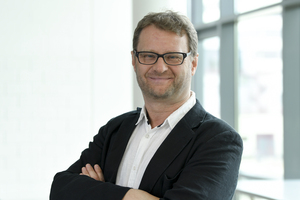
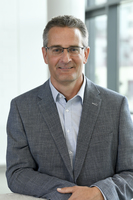
Professor Dr. Tobias Engel is affiliated with Neu-Ulm University of Applied Sciences (HNU) as a faculty member in the School of Information Management , specializing in Supply Chain Management . His work bridges academic research with practical applications in digital transformation and sustainability. PhD from Technische Universität München (2015) Active in international conferences (AMCIS, MWAIS, POMS) since 2010 Key research areas: Supply Chain Analytics, Digital Twins, RFID Systems, Lean Management Recent research focuses on merging digitalization with supply chain sustainability through AI-based verification systems , large language models , and digital twin frameworks . His 2025 work on sustainability maturity models and multilingual manufacturing support demonstrates ongoing innovation. Article trends show consistent emphasis on data-driven optimization (2011-2025), with recent shifts toward AI integration (2024-2025) and sustainable practices (2025). Awards: Best Paper Award in Digital Health (2025) Engel contributes to supply chain pedagogy through simulation game methodologies (2023) and collaborates with researchers like Gökhan Cenk and Benjamin Hofmann. His work spans both academic publications and practitioner-focused guides like "Supply Chain Strategy: From Strategy to Operational Excellence" (2020). Current thesis topics include Industrial Metaverse , Digital Twins , and Procurement Innovations , indicating future research directions that align with Industry 4.0 advancements.
Christoph-Alexander Holst, M.Sc., is a researcher group leader at the Institute Industrial IT (inIT) at Ostwestfalen-Lippe University of Applied Sciences (TH OWL) and a Ph.D. candidate at Brandenburg University of Technology Cottbus-Senftenberg. His work focuses on information fusion, machine learning, and AI for resource-constrained systems, particularly in automation technology. PhD in Computer Engineering (ongoing, 2021–present) Executive Board Member of inIT (2020–present) Research Group Leader at inIT (2020–present) Master’s Degree in Information Technology (2014–2017) His research explores challenges in data scarcity , adversarial robustness for industrial systems, and AI-based mobile applications (e.g., Parkinson Network OWL+). Recent publications highlight his contributions to possibilistic fusion frameworks, sensor redundancy metrics, and robust machine learning strategies. He serves on organizing committees for IEEE ETFA and BVAu Bildverarbeitung in der Automation conferences, and as a reviewer for IEEE journals and conferences like INDIN and ICDL. His professional activities emphasize real-time image processing , sensor fusion , and sustainable AI in automation contexts.
Michael Munz is a Professor at the Department of Software Engineering and Sensor Technology at Technische Hochschule Ulm (THU). He leads the research group AI for Sensor Data Analytics (AISD) and co-leads the Biomechatronics Research Lab . His work focuses on machine learning, particularly deep learning for time series and image data, reliable AI systems, and automated sensor data analysis in therapy, diagnosis, and sports (e.g., motion analysis via inertial sensors). Education: Diploma in Computer Science, University of Ulm (2007), specializing in Neuroinformatics Doctorate (Dr.-Ing.) in 2011 with thesis: "Generic Sensor Fusion Framework for Simultaneous State and Existence Estimation for Vehicle Environment Recognition" Research Trends: His publications and projects emphasize algorithmic development for sensor data analytics, explainable AI, and applications in medical devices and biomechatronics. Current work includes software engineering for medical devices, image analysis, and scientific computing in healthcare technologies. Transfer Activities: Lead, Steinbeis Transfer Center AI Systems and Software Solutions Member, Transferzentrum für Digitalisierung, Analytics & Data Science Ulm (DASU)
Prof. Dr. Anna-Lena Lamprecht is a Chair of Software Engineering at the University of Potsdam, Institute of Computer Science. Her work focuses on interdisciplinary research software engineering, scientific workflows, and FAIR principles for computational materials science and bioinformatics. University of Potsdam Department of Software Engineering Research Interests Lamprecht explores the intersection of domain-specific languages, automated workflow composition, and agile methodologies for scientific computing. She emphasizes reproducibility, sustainability, and semantic validation in research software, particularly through projects like Workflomics and TopoToolbox3. Publications Her recent work spans multi-dimensional software categorization, workflow modeling patterns, and FAIR adoption in GitHub repositories. She also investigates benchmarks for bioinformatics workflows and semantic constraints in geospatial service composition. Projects Current projects include VERSECLOUD, Workflomics, and TopoToolbox3. She leads initiatives in automated workflow composition and has contributed to the FAIR4RS principles. Teaching and Supervision Supervised student works Full-semester RSE courses Computational thinking education Contact anna-lena.lamprecht@uni-potsdam.de | +49 331 977-3040 | Campus Golm, Building 70, Room 1.35
Prof. Dr. Michael Layh is a Professor in the Faculty of Mechanical Engineering at Kempten University of Applied Sciences . He serves as the Institute Director for the Institute for Computer Vision and heads the Optical 3D Metrology and Computer Vision Laboratory (3Dvisionlab) . His expertise lies in Machine Vision, Optical Design , and Simulation and Modeling . Teaching Areas: Physics, Engineering Mathematics, Optical Measurement Technology, Technical Optics Research Focus: Development of advanced optical measurement systems, including spectrometer-free chromatic confocal metrology and synthetic image-based neural networks for industrial applications Current Projects: ReGAIN (2023-2024) and opTWINspect (2024-2026) with funding from the German Federal Ministry for Economic Affairs and Climate Action and Bavarian Research Foundation His recent work includes innovations in 3D imaging and high-speed optical scanners , with patents covering EUV projection lithography and micro mirror arrays. Collaborations span Carl Zeiss SMT GmbH and iron foundry industries .
Prof. Dr.-Ing. Martin Ruskowski is a leading academic and researcher in automation and industrial AI. He serves as Head of the Innovative Factory Systems research department at the German Research Center for Artificial Intelligence (DFKI) and holds the Chair of Machine Tools and Control Systems at the University Kaiserslautern-Landau (RPTU) . Additionally, he chairs the board of the SmartFactory KL technology initiative. DFKI : Head of Innovative Factory Systems RPTU : Chair of Machine Tools and Control Systems SmartFactory KL : Chairman of the Board Research Interests : Ruskowski focuses on innovative control concepts for automation , artificial intelligence in industrial systems , and industrial robotics . His work bridges advanced AI with manufacturing, emphasizing resilience, safety, and human-centric integration. Project Highlights : RAASCEMAN : Resilient supply chains for adaptive manufacturing STAR : Secure human-centric AI in manufacturing PHYSICS : Hybrid space-time service continuum for FAAS ReCircE : Digital lifecycle records for circular economy MAS4AI : Multi-agent systems for modular production Contact: Martin.Ruskowski@dfki.de
Baochang Zhang is an Assistant Professor in the Department of Informatics at the Technical University of Munich's School of Computation, Information and Technology. He is affiliated with the Chair of Computer Applications in Medicine (Prof. Navab) at the Garching campus, specializing in medical image analysis and AI-driven healthcare solutions. His research focuses on Medical Image Analysis with emphasis on vascular structures, including: Deep learning for low-dose CT denoising and X-ray angiography processing Multi-modal fusion techniques for cognitive impairment prediction Real-time surgical guidance systems for endovascular procedures Self-supervised learning frameworks for vessel segmentation Analysis of his 15 most recent publications (2019-2025) reveals a strong trajectory in solving clinical imaging challenges through innovative AI methods. His work consistently bridges computer vision and clinical applications , with increasing focus on zero-shot learning, domain adaptation, and surgical robotics integration since 2022. Key trends include replacing traditional segmentation with diffusion models and addressing missing data in multi-modal clinical datasets. No scientific awards were documented in the provided materials. While no formal advisees are listed in the scraped data, his lab appears to focus on translational medical AI projects with strong industry and clinical partnerships. The publications suggest active grant funding in EU medical technology initiatives, particularly for intraoperative imaging systems and neurodegenerative disease prediction tools. Zhang leads research within TUM's medical imaging group under Prof. Navab, likely contributing to the CAMP (Computer Aided Medical Procedures) Lab ecosystem. His team develops clinical decision support systems with emphasis on real-time vascular analysis during interventions.
Dominik Bentler is a researcher at the Research Institute for Cognition and Robotics and affiliated with the Faculty of Psychology and Sport Science at Bielefeld University . His work spans Artificial Intelligence applications in personnel planning , sustainable organizational behavior , and human-computer interaction . Email: dominik.bentler@uni-bielefeld.de Contact: Phone +49 521 106-4510, Office UHG N4-122 Research Interests include: Human-centered AI systems in organizational contexts Employee green behavior and sustainability strategies Augmented reality applications for workplace learning Behavioral analysis of unethical competition ("Winning Ugly") Technology acceptance models (TAM) with user experience factors Design of socio-technical systems in Industry 4.0 environments Recent Publications demonstrate expertise in: Intelligent scheduling systems Green leadership dynamics Augmented reality training solutions Workplace environmental behavior Human-AI collaboration models Change management in technology implementation Key Collaborations involve interdisciplinary projects with Bielefeld University's research centers including: CITEC (Cognitive Interaction Technology) CoR-Lab (Cognition and Robotics) ZiF (Center for Interdisciplinary Research)
Rebekka Benfer, M.Eng., is a Research Fellow at the Chair of Energy Efficient and Sustainable Design and Building (Prof. Lang) at the Technical University of Munich . Her work focuses on energy and systems monitoring, data-driven optimization of building operations, and semantic digital twin development for building systems. She actively contributes to research at the intersection of building automation, Industry 4.0, and sustainable design. Education : Master of Engineering in Green Building Engineering (2021-2024) and Bachelor of Engineering in Energy and Building Services Engineering (2017-2021) from Cologne University of Applied Sciences. Professional Background : Previously worked as a Research Fellow at the Laboratory for Building Automation and Control Systems (2021-2024) and as a Working Student in Building Automation at ZWP Ingenieur-AG (2020-2021). Her recent publications emphasize semantic interoperability, knowledge graph integration, and automated testing of building automation systems. Current activities center on advancing data-driven building optimization and creating intelligent building representations through digital twins.
Prof. Dr. Martin Middendorf is a faculty member at the Department of Computer Science , Faculty of Mathematics and Computer Science , Leipzig University , Germany. He leads the Swarm Intelligence and Complex Systems Group and focuses on interdisciplinary research at the intersection of computational methods and biological systems. Fields of Interest Swarm Intelligence Bioinformatics Genome Rearrangement Analysis Combinatorial Optimization Evolutionary Algorithms Task Allocation in Multi-Agent Systems His recent research emphasizes mitochondrial genome annotation , predator-prey dynamics in swarm systems , and metaheuristic algorithms for dynamic optimization . Key trends include de-Bruijn graph applications , pheromone-dependent movement modeling , and automated behavior tracking in social insects . Supervised Students Dr. Nicolas Wieseke Dr. Hoang Thanh Le Dr. Fatma Turna Tobias Jagla Carsten Seemann Prof. Middendorf's group develops tools like DeGeCI 1.1 for mitochondrial gene annotation and explores swarm-controlled emergence in ant clustering systems. They apply swarm intelligence principles to solve real-world problems in vehicle routing , sewer network design , and biomedical signal processing .
Prof. Dr.-Ing. Tim Wilhelm Nattkemper leads the Biodata Mining Group at the Faculty of Engineering , Universität Bielefeld , while holding affiliations with the Center for Biotechnology (CeBiTec) and the Institute for Bioinformatics Infrastructure . His work bridges bioinformatics with marine environmental monitoring , focusing on machine learning and computer vision applications. The group specializes in multivariate bioimage analysis , developing platforms like BioIMAX for web-based high-dimensional data exploration. Research spans from MALDI imaging to deep-sea megafauna classification , integrating information visualization and web technologies . Recent projects address seafloor macrolitter monitoring , coral stress response analysis , and self-supervised learning for diatom classification. Their 15 most recent publications (2023-2025) highlight advancements in marine imaging , automated annotation systems , and AI-driven biodiversity assessment , particularly in polymetallic nodule fields. The group also tackles technical challenges like data imbalance in marine image classification and FAIR data principles implementation. As module responsible for courses like Information Visualization and Introduction to Bioinformatics , Nattkemper contributes to academic training in bioinformatics and data science . His interdisciplinary collaborations span physics , chemistry , and ecology within Bielefeld's Material World strategic research area.
Prof. Dr. Alexander Sczyrba is a Professor at Bielefeld University, serving as group leader of the Computational Metagenomics Group within the Faculty of Engineering. He holds multiple leadership positions including head of the Computational Metagenomics group at the Center for Biotechnology (CeBiTec), head of Bielefeld University Bioinformatics Services (BiBiServ), and head of Cloud Computing at the Institute for Bioinformatics Infrastructure (BIBI). His work bridges bioinformatics, microbiology, and data science to address challenges in analyzing complex microbial communities. Prof. Sczyrba specializes in computational approaches to study the 'microbial dark matter' - over 99% of microbial species that cannot be grown in pure culture. His research focuses on developing high-throughput computational techniques for analyzing massive metagenomic datasets, such as the cow rumen metagenome project (over 500 Gbp of sequence data) conducted in collaboration with the DOE Joint Genome Institute. From this dataset, his team identified more than 27,000 putative carbohydrate-active genes and assembled 15 uncultured microbial genomes. Analysis of his recent publications (2023-2025) reveals a strong emphasis on developing computational infrastructure for metagenomics research, with particular focus on cloud-based workflows, data submission standards, and integration with national research data infrastructure. His work demonstrates interdisciplinary applications across environmental engineering, biogas production, soil science, and clinical settings, reflecting the collaborative nature of modern bioinformatics research. Prof. Sczyrba actively mentors researchers and collaborates with institutions including the DOE Joint Genome Institute. He is developing new tools specifically designed for metagenomic assembly challenges that standard genome assembly tools cannot handle due to the complexity of mixed microbial communities. His work on single cell genomics focuses on automated bioinformatic pipelines to address coverage bias introduced by amplification techniques. He is a key contributor to Bielefeld University's Microbiology in a data-driven world (MDDW) focus area, which brings together researchers from biology, medicine, chemistry, and technology faculties to leverage bioinformatics and biotechnology strengths for studying and improving microbiomes. His office is located at UHG M3-111, and he teaches courses including 'Application-oriented analysis of post-genome datasets' and 'Parallel and Distributed Computing'.
Prem Devanbu is a Research Professor of Computer Science at the University of California, Davis, where he has been a faculty member since transitioning from his industrial R&D position at Bell Labs in New Jersey. He holds a distinguished position in the Department of Computer Science within the College of Engineering, focusing on cutting-edge research at the intersection of software engineering and artificial intelligence. Dr. Devanbu earned his B.Tech from the Indian Institute of Technology (IIT) Madras and completed his Ph.D at Rutgers University under the supervision of Alex Borgida. His career path from industry to academia has shaped his practical yet research-oriented approach to software engineering problems. Devanbu's research primarily centers on Empirical Software Engineering , the Naturalness of Software , and Software Engineering education . His groundbreaking work on the naturalness hypothesis—that software exhibits statistical properties similar to natural language—has profoundly influenced the field. This research has expanded to explore bimodality in software (its dual nature as both machine-executable code and human-readable text), opening new avenues for analysis and tool development. His recent work heavily focuses on the application of Large Language Models to software engineering tasks, particularly in code summarization, program repair, and type inference. Analysis of Dr. Devanbu's recent publications reveals a clear trend toward leveraging Large Language Models for software engineering tasks. His research demonstrates how statistical properties of code can be exploited to improve software development processes, with particular emphasis on program understanding, documentation generation, and automated repair. The work bridges theoretical insights about code naturalness with practical applications that address real-world software maintenance challenges. Dr. Devanbu has received numerous prestigious awards recognizing his contributions to the field: ACM SIGSOFT Outstanding Research Award (2021) - "for profoundly changing the way researchers think about software by exploring connections between source code and natural language" Alexander von Humboldt Research Award (2022) IEEE Computer Society Harlan Mills Award (2024) ACM Fellow Six "test-of-time" or "10 year most influential paper" awards (MSR 2006, MSR 2009, ESEC/FSE 2008, ESEC/FSE 2009, ESEC/FSE 2011, ICSE 2012) Throughout his career, Dr. Devanbu has been actively involved in mentoring the next generation of software engineering researchers, serving on doctoral committees, and participating in New Faculty Symposia to support early-career academics. His research has been supported by significant grants that have enabled his team to explore innovative approaches at the intersection of empirical methods and software tool development. At UC Davis, he has contributed to building a strong software engineering research group that bridges theoretical insights with practical applications. Dr. Devanbu leads research efforts focused on understanding the statistical properties of software and leveraging these insights to build practical tools. His work on the naturalness and bimodality of code has established a framework that continues to influence how researchers approach program analysis and software development. His current team is at the forefront of exploring how Large Language Models can be effectively applied to software engineering tasks while accounting for the unique characteristics of code as a specialized form of human communication.
Chuanyi Li is an Assistant Professor at the Software Institute, Nanjing University, affiliated with the State Key Laboratory for Novel Software and Technology. His office is located in Room 917, Fei Yimin Building, 22 Hankou Road, Gulou District, Nanjing, China. Education: Ph.D. in Computer Science, Nanjing University (2012-2017), supervised by Professor Bin Luo Visiting Scholar at Southern Methodist University, Dallas, Texas (2016-2017), collaborating with Associate Professor Liguo Huang B.Sc. from Nanjing University (2008-2012) Research Focus: Dr. Li's work bridges Software Engineering, Natural Language Processing, and Business Process Management. He specializes in applying NLP and machine learning techniques to software engineering challenges including code summarization, program repair, code completion, and software maintenance. His research emphasizes empirical validation and practical tool development for real-world software systems. Publication Trends: Recent work (2021-2025) demonstrates strong focus on large language model applications in software engineering, including code generation, program repair, and benchmarking. Publications frequently involve empirical comparisons, dataset creation, and efficiency optimization techniques for code-related tasks. Professional Service: Active contributor to top software engineering venues (ASE, ICSE, ESEC/FSE) as author and committee member. Recent roles include Program Committee membership for ICSE 2025 Research Track and SANER 2025 Research Papers track.
Teja Kattenborn serves as Professor for Sensor-based Geoinformatics (geosense) at the University of Freiburg, Germany. With 118 publications, over 95,000 reads, and 7,103 citations, he has established himself as a leading researcher in remote sensing applications for ecological monitoring and environmental assessment. His work bridges advanced technological approaches with fundamental ecological questions, making significant contributions to understanding vegetation dynamics and forest health through innovative remote sensing methodologies. Professor Kattenborn's research focuses on integrating cutting-edge remote sensing technologies with ecological science to monitor plant species distributions, forest health, and ecosystem dynamics. His expertise spans UAV/drone imagery analysis, satellite data interpretation, and deep learning applications for vegetation mapping. He has pioneered methods to extract plant functional traits from spectral data, enabling new approaches to understanding biodiversity patterns and ecosystem responses to climate change. His work demonstrates how advanced computational techniques can transform raw remote sensing data into meaningful ecological insights about plant functioning and community composition. His recent publications reveal a strong emphasis on advancing remote sensing methodologies for ecological applications, particularly using deep learning for fine-grained plant species mapping, monitoring forest dieback and tree mortality at unprecedented scales, and retrieving plant functional traits from diverse remote sensing platforms. His research spans from centimeter-scale UAV applications to global analyses using satellite data, demonstrating both technical innovation and ecological relevance. Notably, his work increasingly addresses climate change impacts on forest ecosystems, particularly drought-induced forest dieback and its cascading effects on ecosystem services. Scientific recognition includes: Best oral presentation at the IAVS Annual Symposium 2019 Best oral presentation at the EARSel SIG Imaging Spectroscopy Workshop 2019 ARCADIS price for Geo- and environmental research Fellowship for UAV-Based beach-profile monitoring system Karl-Steinbuch-fellowship 2013 As principal investigator of the Sensor-based Geoinformatics (geosense) research group, Professor Kattenborn leads multiple collaborative projects, including participation in the ECOSENSE Collaborative Research Centre funded by the German Research Foundation (DFG). His extensive publication record with numerous co-authors across institutions indicates active mentorship of graduate students and postdoctoral researchers, though specific advisees aren't listed in the provided information. His research program appears well-funded through various national and international grants supporting innovative environmental monitoring approaches. The geosense research group develops and applies novel remote sensing techniques for environmental monitoring, with particular strengths in UAV-based systems, deep learning applications, and multi-sensor data fusion. Professor Kattenborn maintains extensive collaborations across Germany and internationally, as evidenced by his diverse publication record spanning European institutions and global research initiatives focused on forest ecology, biodiversity monitoring, and climate change impacts.