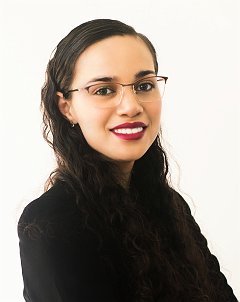
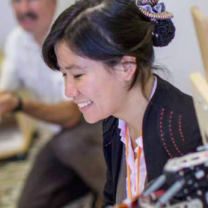
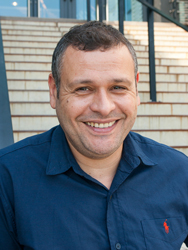
Joanna C. S. Santos is an Assistant Professor at the University of Notre Dame's Department of Computer Science and Engineering. She leads the Security and Software Engineering research lab (S²E) and focuses on Software Engineering, Security, and Program Analysis. Her work bridges empirical studies with practical tool development. PhD in Computing and Information Sciences (Rochester Institute of Technology) M.Sc. in Software Engineering (Rochester Institute of Technology) B.Sc. in Computer Engineering (Federal University of Sergipe) Her research spans Software Security (vulnerability detection, ReDoS), Code Generation (LLM evaluation, benchmarking), and Program Analysis (taint tracking, call graphs). Recent articles show a strong focus on LLM-generated code quality and quantum computing applications. Scientific Awards : 2023 - Distinguished Reviewer (ESEC/FSE) 2020 - Research Pitch Winner (JOBS @MICRO) 2017 - Best Paper (ICSA) 2014 - CAPES Scholarship 2013 - ERBASE 3rd Place She actively contributes to conference committees (OOPSLA, ICSE, SCAM) and collaborates across institutions. Her lab S²E drives research in secure software development and empirical cybersecurity validation.
Sidonie Christophe is a Senior Researcher (Directrice de Recherche, DR1) at UMR LASTIG, a joint research unit of Université Gustave Eiffel, IGN-ENSG, and EIVP. She serves as co-director of the LASTIG laboratory and leads research in geovisualization, map design, and interactive spatial data exploration. She also holds a part-time advisory role (60%) at the French Ministry of Higher Education and Research in the domain of digital technology, environment, climate, and sustainable urban development. PhD in Geographic Information Sciences Senior Researcher, DR1, MTECT Co-Director, LASTIG Laboratory (since 2021) Former Team Leader, GEOVIS (Geovisualization, Interaction, and Immersion) Advisor, Environment and Urban Climate, French Ministry of Higher Education & Research Her research centers on innovative methods for 2D/3D and nD geospatial data visualization, with a focus on enabling spatio-temporal understanding through visual and non-visual spatial thinking. Her work integrates principles from geographic information science, human-computer interaction, and computer graphics. Key areas include urban climate visualization, tactile and augmented reality for accessibility, expressive cartographic rendering, and cognitive aspects of map design. She investigates how aesthetic and semiotic choices impact map comprehension and utility. The 15 most recent publications reflect a strong trend in interactive and accessible geovisualization, particularly for urban and environmental applications. Topics include neural map style transfer, 3D urban climate analysis, tactile maps for the visually impaired, augmented reality in geography, and visual analytics for crisis and climate data. There is a consistent emphasis on user-centered design, interdisciplinary integration, and the development of tools for decision-making under uncertainty. Scientific Recognition and Service: Invited speaker at major conferences (IEEEVIS, AGILE, ICC, CPGIS) Co-organizer of international workshops (e.g., GeoVIS, ISPRS AR/VR sessions) Leader of national research projects (ANR ORACLES, ANR ACTIVmap, ANR ECOCIM) Recipient of international mobility grants (AMICI I-SITE FUTURE) Contributor to national glossaries and research strategy (e.g., French photogrammetry glossary) Advising and Grants: Sidonie Christophe actively supervises PhD students and postdoctoral researchers, including Markie Jiang, Maria-Jesus Lobo, and Alexandre Mielniczek. She leads or participates in multiple funded research projects such as ANR ORACLES (marine flooding visualization), ANR ACTIVmap (tactile 3D maps), and ANR ECOCIM (eco-design of city information models). Her advisory role at the MESR involves shaping national research strategy in digital and environmental sciences. Labs and Research Teams: She is a core member of the GEOVIS team (Geovisualization, Interaction, and Immersion) at LASTIG and previously served as its leader. As co-director of LASTIG, she plays a central role in the leadership and strategic direction of the entire laboratory, which comprises over 100 researchers across four teams: ACTE, GEOVIS, MEIG, and STRUDEL.
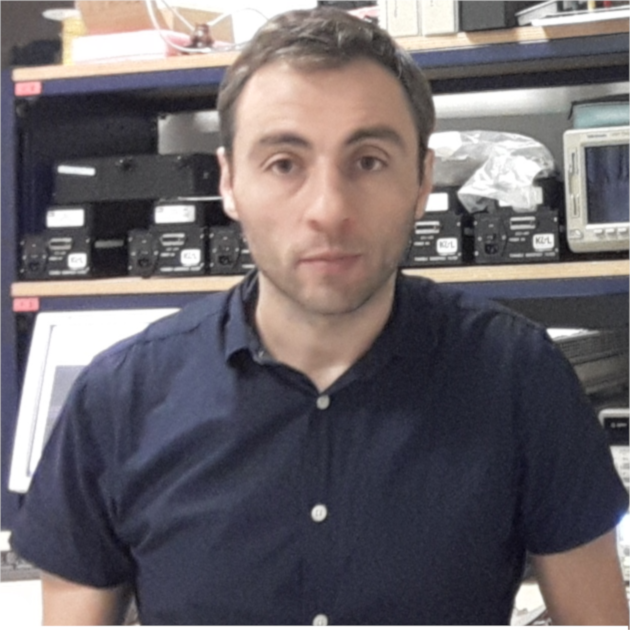
Samir Ouchani is a Research Director at the CESI LINEACT laboratory (Aix-en-Provence, France), affiliated with the CESI Engineering School. He holds a PhD in Computer Science from Concordia University (2013) and an HDR (Accreditation to Supervise Research) from CNAM Paris (2022). His research focuses on securing cyber-physical systems (CPS) through formal methods, blockchain, and AI-driven approaches. Key roles include leading projects on resilient CPS architectures, IoT security, and federated learning in industrial contexts. Education: 2022: HDR in Security and Reliability of Smart CPS (CNAM Paris) 2013: PhD in Computer Science (Concordia University, Montreal) 2006: Master in Computer Science (Lorraine University, France) 1997: Engineering Degree in Computer Science (Djillali Liabess University, Algeria) Research Interests: His work emphasizes secure CPS design, including cryptographic protocols for IoT, formal verification frameworks, and AI applications for intrusion detection. He explores blockchain for smart cities, federated learning in distributed systems, and resilience engineering for autonomous vehicles. Recent projects include developing PUF-based authentication protocols and digital twin architectures for resource-constrained systems. Advising & Collaborations: Supervised PhD theses on IoT security (Fahem Zerrouki), smart city formal verification (Walid Miloud Dahmane), and federated learning in industrial CPS (Souhila Bedra Guendouzi). Collaborates with institutions like Blida University (Algeria) and HESAM University. Active in conferences such as CRISIS, ICFNDS, and IEEE WETICE. Labs & Teams: Leads the Engineering and Numerical Tools research team at CESI LINEACT, focusing on model-based design, CPS simulation, and cybersecurity tool development. Engaged in EU-funded projects on Industry 4.0 and smart infrastructure security.
Hervé Debar is a Professor and head of the Telecommunications Networks and Services (RST) department at Télécom SudParis. His research focuses on network and information system security, including SIEM systems, automated threat mitigation, SDN security, and resilience against cyber attacks. He coordinates major European projects like NECOMA (EU-Japan cybersecurity collaboration) and PANOPTESEC (industrial control systems security). Research interests span SIEM frameworks, intrusion detection, risk management, and defense mechanisms for critical infrastructures. His work emphasizes practical implementation through projects like MASSIF (SIEM decision support systems) and DEMONS (privacy-aware network monitoring). Recent articles address TLS protocol analysis, DDoS mitigation with SDN, honeypot models, and risk assessment for healthcare systems. He supervises multiple PhD students and collaborates with industry partners via CIFRE theses. His research group is part of SAMOVAR (CNRS UMR 5157). Teaching includes leading the Networks and Systems Security master's program, emphasizing hands-on training with industry partnerships. He actively recruits postdocs and engineers for cybersecurity research.
Aws Albarghouthi is affiliated with the University of Wisconsin-Madison, USA. He is an active researcher with significant contributions to program synthesis, formal verification, and machine learning. Key roles: Author, Session Chair, Committee Member in conferences like PLDI, POPL, VMCAI, SPLASH, and ICFP. Research spans quantum computing, differential privacy, and static analysis. Research Trends include: Quantum Circuit Compilation and Optimization Probabilistic Verification of Fairness and Privacy Synthesis of Datalog and MapReduce Programs Neural-Augmented Static Analysis Bias Detection in Data Security Robustness in Machine Learning
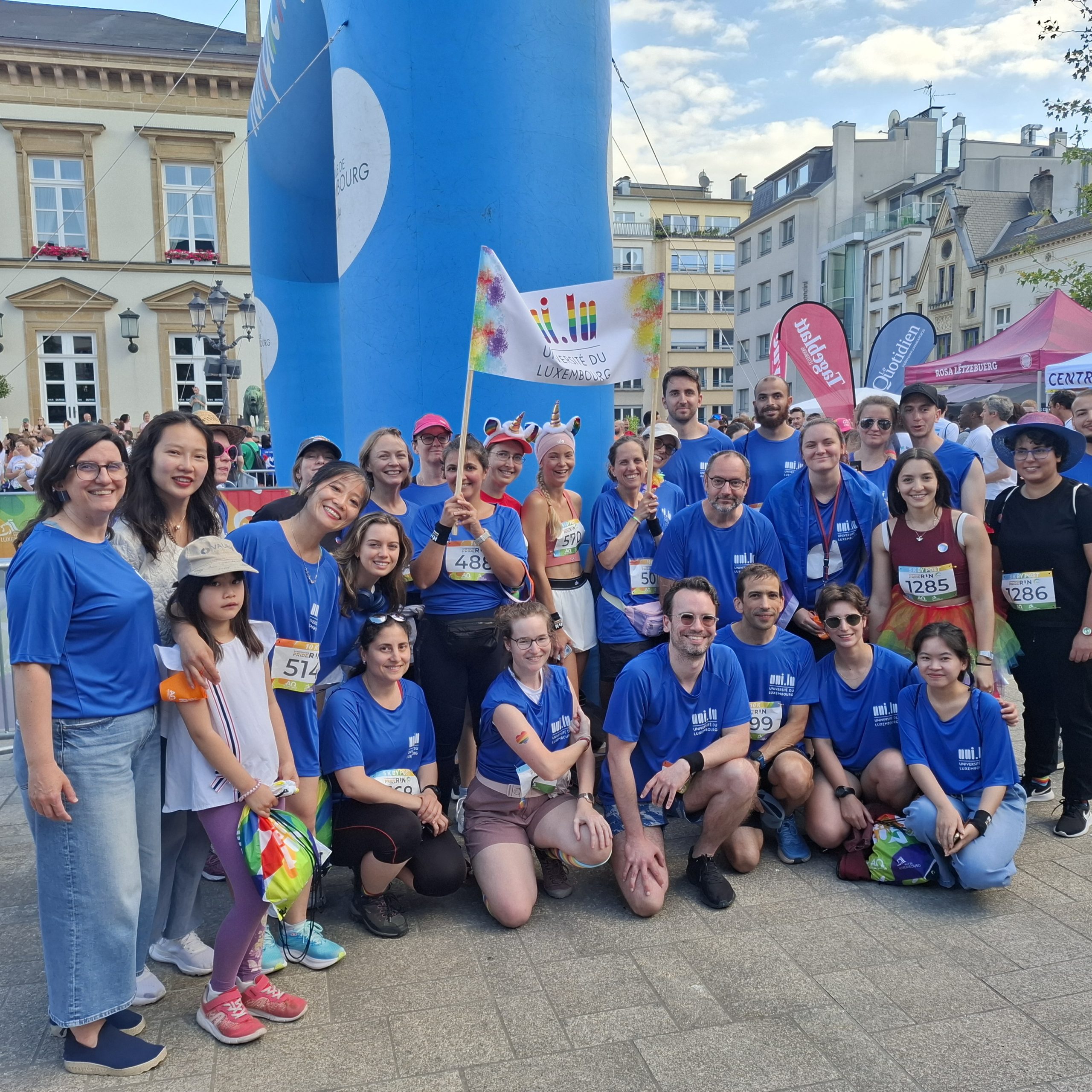
Dr. Yves Le Traon is a Full Professor of Computer Science at the University of Luxembourg, where he serves as Vice-Director of the Interdisciplinary Centre for Security, Reliability and Trust (SnT). He leads the 25-member SerVal research group (SEcurity, Reasoning and VALidation), focusing on software testing, security, and data-intensive systems. Previously, he chaired the CSC Research Unit (2013-2016) and pioneered model-driven engineering at INRIA. PhD and engineering degree in Computer Science from Institut National Polytechnique, Grenoble (1997) Former Associate Professor at University of Rennes (1998-2004) His research spans three main areas: innovative software testing and repair , Android security through static analysis and machine learning , and robust machine learning system design . Collaborations include industry leaders like PayPal, CREOS, and Cebi in fintech, smartgrid, and industry 4.0 domains. Awarded IEEE Fellow (2022) and Facebook Testing & Verification Research Award (2019) , he chairs editorial boards for STVR, SoSym, and IEEE Transactions on Reliability. His team has produced 20+ PhD graduates including Li Li (Monash University), Donia El Kateb (European Investment Bank), and Alexandre Bartel (SnT Research Associate). Commercial impact includes co-founding Datathings for runtime AI decision systems.
Chadi Jabbour is a Professor at Institut Polytechnique de Paris , specializing in analog/digital converter design, communication system linearization, and flexible receiver architectures. He leads the Communication Circuits and Systems (C2S) team at the Information Processing and Communication Laboratory (LTCI) in the Communications and Electronics (Comelec) department.
Overview ASSILA Ahlem is a Researcher-Lecturer at CESI, specializing in Human-Machine Interaction (HMI), Augmented Reality (AR), and Virtual Reality (VR). She holds a PhD in Computer Science from Université de Valenciennes (2016) and a postdoctoral position at Institut Image ARTS ET METIERS PARISTECH (2017). Her research focuses on usability evaluation, digital twin technology, and BIM-integrated XR systems. She has supervised multiple engineering and master’s projects, including AR application development for network management. Research Contributions Developed frameworks for integrating subjective/objective usability metrics using ISO standards Proposed maturity models for BIM-based AR/VR systems Explored digital twin applications in manufacturing and construction industries Education & Responsibilities Teaches computer science at all engineering levels (L1-M2) at CESI Reims, including algorithmics, HMI design, and project-based learning. Served as pilot for engineering program cycles (2017–2020). Active in organizing international conferences (e.g., HCI 2020, Flexible Automation 2018) and peer review for journals like IJISE and IEEE VR. Awards & Recognition No specific awards listed, but recognized for contributions to HCI and industry-relevant research. Advising & Grants Supervised over 10 student projects including PFEs and internships. Actively participates in jury panels for engineering thesis defenses and academic promotions across multiple institutions. Labs & Collaborations Member of the CESI Chair for Industry and Services of Tomorrow, focusing on technology integration in construction and manufacturing sectors.
Sao Mai Nguyen is an Enseignante-Chercheuse (Lecturer-Researcher) at ENSTA Paris, affiliated with the Unité d'Informatique et d'Ingénierie des Systèmes (U2IS). Her research bridges robotics, artificial intelligence, and cognitive science, focusing on cognitive developmental robotics, intrinsic motivation in learning, and human-robot interaction. She explores how robots can adapt to social and physical environments, particularly in physical rehabilitation and smart home applications. Research Interests: Nguyen’s work integrates machine learning, robotic embodiment, child psychology, and neuroscience. Key areas include human-robot interaction, assistive robotics for chronic low back pain rehabilitation, activity recognition in smart homes using IoT sensors, and intrinsic motivation-driven learning frameworks. Recent Contributions: Her 2024 HDR thesis on reinforcement and imitation learning for sequential tasks underscores her expertise in strategic learning systems. Recent publications address bio-inspired robotics models, hierarchical reinforcement learning, and benchmark environments like 'Open the Chests' for activity recognition. Collaborations include projects like the R-COOL randomized trial for robot-coached physical exercises. Labs & Teams: She contributes to the U2IS lab, advancing interdisciplinary research in AI and robotics. Her work spans experimental platforms for sensorimotor learning and healthcare robotics applications.
Antoine Miech is a Researcher at DeepMind's Vision Group , with prior affiliations at Inria and Ecole Normale Supérieure where he completed his computer vision Ph.D. under Ivan Laptev and Josef Sivic . He has collaborated with researchers from Facebook AI and Google during his academic career. Research Interests span video understanding, weakly-supervised machine learning, and multimodal analysis. His work focuses on: Text-video embedding Self-supervised video representation Action localization Anticipatory video modeling Scalable multimodal learning Scientific Contributions include: HowTo100M - A massive dataset of narrated instructional videos MIL-NCE - A novel loss function for video-text alignment MEE - A model for handling heterogeneous data Context Gating - Learnable pooling architecture Awards & Recognition : Google Ph.D. Fellowship (2018) Technical Leadership : Created the LOUPE TensorFlow toolbox for feature pooling and maintained annotated video dataset catalogs. Organized the Data Science Game competition (2016-2017).
Zeina ELRAWASHDEH is a Researcher Lecturer at the Institut Catholique d'Arts et Métiers (ICAM), based at the Grand Paris Sud campus. Her research focuses on Measurements and Controls, with a particular emphasis on fiber-optic sensors, multi-agent systems, and IoT integration for smart infrastructure. She collaborates with prestigious research laboratories globally to develop innovative solutions in energy optimization, smart cities, and precision engineering. Her expertise spans applied research in fiber-optic displacement sensors, algorithm optimization for sensor performance, and user-centric building automation systems. Zeina’s work bridges theoretical advancements with practical applications in manufacturing, energy, and urban systems. She actively contributes to international academic discourse through peer-reviewed publications and participates in ICAM’s strong industry partnerships for applied research outcomes. Zeina’s research portfolio demonstrates a trajectory toward integrating AI and IoT with traditional engineering challenges, addressing technical gaps in sensor networks, multi-agent coordination, and precision machining. Her recent work highlights advancements in smart city infrastructure and energy-efficient building systems. While no awards are explicitly mentioned, her involvement in ICAM’s research initiatives underscores her commitment to impactful, industry-relevant science. Collaborations with global companies and academic institutions position her at the forefront of applied engineering research.
Raphaël Troncy is an Assistant Professor at EURECOM's Data Science Department, specializing in Semantic Web technologies, Knowledge Graphs, and Natural Language Understanding. He teaches courses like 'Human-computer interaction for the Web' and 'Semantic Web technologies.' His research focuses on semantic data integration, knowledge graph applications, and recommender systems. Notable projects include DOREMUS (musical work graph), entity2rec (knowledge graph-based recommendations), and 3cixty (city exploration knowledge bases). He actively contributes to semantic web challenges and conferences, winning multiple awards including the 2018 Best Poster Award at ESWC and 2015 First Prize in the Semantic Web Challenge. Troncy's work spans cultural heritage digitization (e.g., Odeuropa olfactory data modeling), cybersecurity anomaly detection (NORIA-O ontology), and interdisciplinary projects like SILKNOW's silk textile knowledge graph. He leads development of tools like DAGOBAH for semantic table interpretation and KG Explorer for knowledge graph exploration. Education: Not explicitly stated in text Labs/Teams: Active in EURECOM's Data Science group, collaborating on projects involving knowledge graphs, AI, and semantic technologies
Alex 'Sandy' Pentland is a Professor of Media Arts and Sciences at the MIT Media Lab, where he helped create and direct both the MIT Media Lab and Media Lab Asia in India. He also serves as a HAI Fellow at Stanford University. Pentland is one of the most-cited computational scientists globally and was named by Forbes as one of the '7 most powerful data scientists in the world.' Pentland's educational background includes undergraduate studies at the University of Michigan and a Ph.D. in artificial intelligence and psychology from MIT. His research spans computational social science, organizational engineering, wearable computing (including Google Glass), image understanding, and modern biometrics. His recent publications reveal a strong focus on the intersection of AI and social systems, with emphasis on human-AI coevolution, data ethics, network science, and the societal implications of digital technologies. His work increasingly addresses critical issues in data privacy, tokenized asset networks, and the social contract in the age of big data, demonstrating his continued leadership in shaping how society understands and manages digital transformation. MIT's Toshiba endowed chair Election to the U.S. Academy of Engineering McKinsey Award from Harvard Business Review 40th Anniversary of the Internet from DARPA Brandeis Award for work in privacy Pentland has advised over 80 PhD students, with nearly half now tenured faculty at leading institutions, a quarter leading industry research groups, and the remainder founding their own companies. His research has attracted significant funding, evidenced by projects like the DARPA Network Challenge where his team won by applying data-driven approaches to crowd coordination. His work on 'reality mining' has led to practical applications in call centers, mental health services, and urban planning. As director of the Human Dynamics group at MIT, Pentland has pioneered sociometric sensors and reality mining techniques. His lab has incubated numerous companies including Ginger.io (mental health services), CogitoCorp.com (AI coaching), Wise Systems (delivery optimization), Sila Money (financial technology), and several others focused on data privacy and AI applications across various sectors.
Hanan Samet is a Distinguished University Professor in the Computer Science Department at the University of Maryland, College Park. He holds affiliations with the Center for Automation Research and the Institute for Advanced Computer Studies (UMIACS). His academic journey includes a PhD from Stanford University (1975) in Computer Science, following degrees in Engineering (UCLA) and Operations Research/Computer Science (Stanford). Affiliations: University of Maryland, College Park (since 1975) Roles: Professor, Founding Editor-in-Chief of ACM Transactions on Spatial Algorithms and Systems, Founder of ACM SIGSPATIAL Samet's research focuses on spatial data structures, spatial databases, GIS, computer vision, and information retrieval. His seminal work includes the Foundations of Multidimensional and Metric Data Structures , an award-winning book addressing spatial indexing and query optimization. He pioneered frameworks like NewsStand for map-based news exploration and Coronaviz for pandemic visualization. Key contributions span spatial synonyms for approximate search, SAND spatial browser for digital government, and trajectory analysis systems for aviation safety and urban mobility. His work bridges theory and practice, influencing databases, graphics, and geographic systems. Education: B.S. Engineering, UCLA M.S. Operations Research, Stanford M.S./Ph.D. Computer Science, Stanford Samet has advised numerous students and led NSF-funded projects on spatio-textual data, similarity search, and spreadsheet analysis. His honors include the ACM Paris Kanellakis Award (2011), IEEE Wallace McDowell Award (2014), and UCGIS Research Award (2009). His labs and teams focus on spatial algorithms, visualization, and GIS applications. Notable projects include VASCO (spatial index demo), MARCO (image databases), and CHOLERA (disease tracking).
Adlen KSENTINI is a Professor at EURECOM's Communication Systems department, specializing in advanced networking technologies. His research focuses on Mobile and Wireless Networks, Software Defined Networking (SDN), Mobile Edge Computing (MEC), Network Function Virtualization (NFV), and Content Delivery Networks (CDN), with an emphasis on performance evaluation and network virtualization. He has contributed to projects like AC3 and 6G-BRICKS, exploring cloud-edge continuum integration and 6G infrastructure. Key research interests include virtualized mobile core networks, carrier cloud systems, and AI-driven network management. He has received Best Paper Awards at IEEE WCNC 2018 and IWCMC 2016 for works on network slicing and LTE modeling accuracy. His work often integrates machine learning for optimization, sustainability, and security in 5G/6G networks. Distinctions: Two Best Paper Awards Labs/Teams: Involved in EU-funded projects like AC3 and 6G-BRICKS Grants: Not explicitly listed, but active in collaborative research initiatives