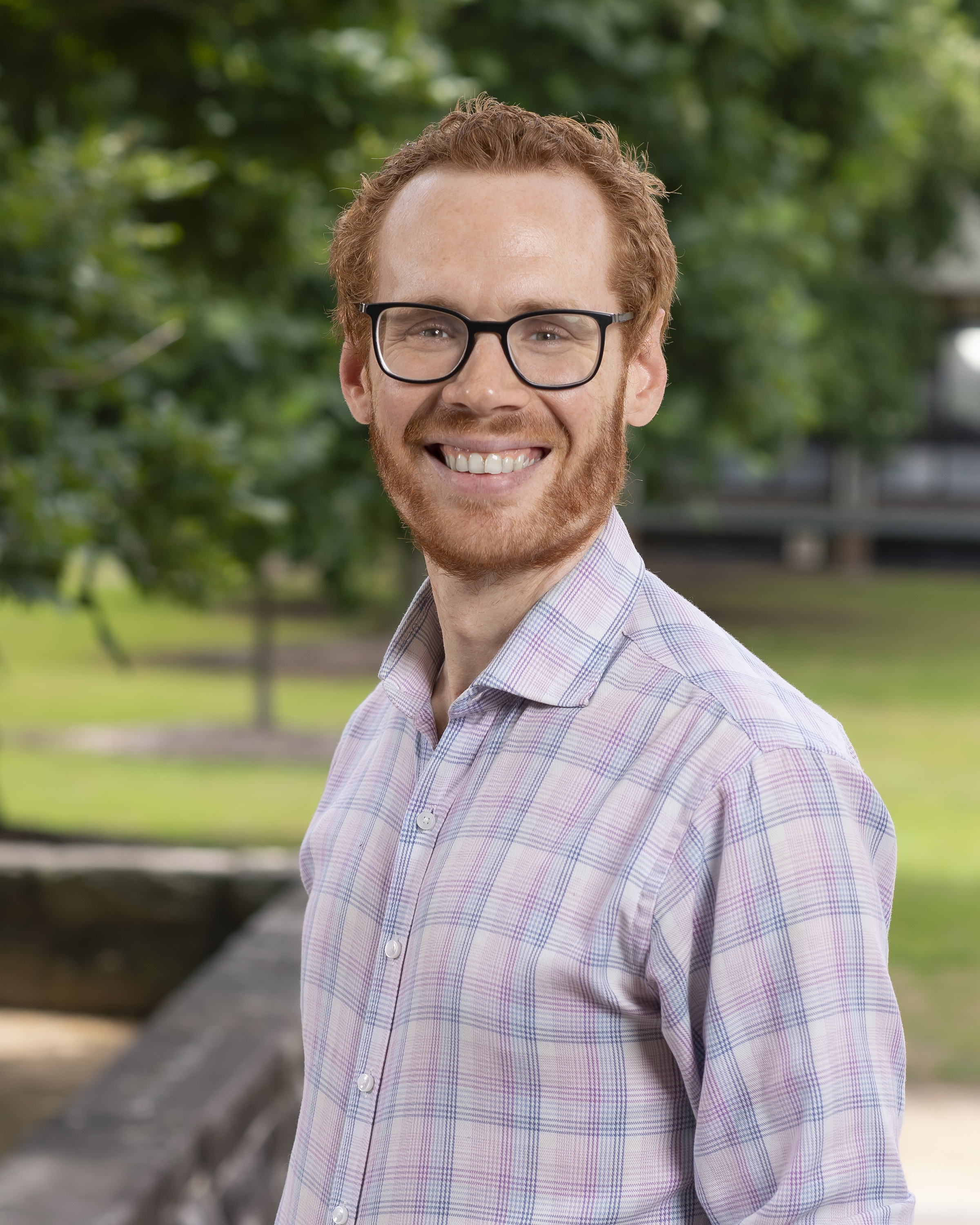
Didar Zowghi is a Senior Principal Research Scientist and Science Team Leader at CSIRO Data61, Australia's national science agency. His work focuses on advancing ethical AI systems, data quality frameworks, and requirements engineering methodologies. He leads research initiatives addressing challenges in AI governance, diversity/inclusion in technology, and human-centered AI development. Research interests include AI ethics, data completeness in healthcare systems, and the application of machine learning in requirements engineering. His contributions span theoretical frameworks for responsible AI patterns, empirical studies on user perceptions of AI tools like M365 Copilot, and analysis of AI's role in global diplomatic practices. Zowghi has published extensively on topics ranging from blockchain in supply chains to pedagogical innovations in software engineering education. His work often bridges technical systems and societal impacts, emphasizing real-world implementation challenges through collaborative industry-academia projects. Notable outputs include the Responsible AI Pattern Catalogue and studies examining barriers to data quality in IoT platforms. He has pioneered frameworks linking innovation initiatives to occupational skill requirements and developed tools like Elica for dynamic requirements knowledge extraction in agile teams.
Dongming Xu is an Associate Professor in Business Information Systems at the University of Queensland Business School. She holds a PhD from the City University of Hong Kong in Information Systems and has established herself as a prominent researcher in the field of information systems with over 100 publications in top-tier journals and conference proceedings. Her educational background includes a PhD from City University of Hong Kong in Information Systems, though specific details about earlier degrees are not provided in the available text. Dr. Xu's research focuses on the confluence of information technology use and innovation, with particular emphasis on IT entrepreneurship, social media applications in business contexts, and business intelligence systems. Her work explores how information systems influence society and business performance, with applications spanning disaster management, eFinance, eHealth, and knowledge management. She combines theoretical model building with laboratory and field experiments, often developing prototype systems to validate her research. Her publication record demonstrates consistent high-quality output across multiple domains of information systems research, with recent work emphasizing digital disruption, platform ecosystems, social media in disasters, healthcare technology, and micro-learning applications. Her research shows a clear trajectory from foundational work on intelligent agents and decision support systems toward contemporary topics in digital transformation and platform-based innovation. Associate Editor, Information & Management Associate Editor, Journal of Electronic Commerce Research Associate Editor, Australasian Journal of Information Systems Dr. Xu has supervised numerous PhD students to completion, with research topics spanning digital disruption, IT startup development, social media in disasters, conceptual modeling, and environmental management. She has received multiple research grants, including current funding for 'Empowering Australia's Visual Arts via Creative Blockchain Opportunities' (2023-2026) and past projects on 'Smart micro learning with open education resources' (2018-2022). Her research has been supported by various agencies including the Hong Kong Government Research Grant Council, The National Natural Science Foundation of China, The University of Queensland, and City University of Hong Kong. She leads research in several key areas including IT entrepreneurship, business intelligence systems, and social media applications across multiple domains. Her work often involves developing innovative systems such as web-service-agent-based family wealth management systems, decision support systems for securities exception management, and knowledge management systems for disaster management.
Dr. Johnson Xuesong Shen is an Associate Professor at the School of Civil and Environmental Engineering , University of New South Wales . His work integrates Digital Twins , Building Information Modeling (BIM) , and Construction Automation with a focus on robotics, AI, and LiDAR/UAS technologies. Research Interests: Digital Twins, BIM, Construction Robotics, Emissions Modeling, LiDAR/UAS, Structural Health Monitoring Education: Ph.D. in Construction Engineering and Management, The Hong Kong Polytechnic University His publications span 2025–2005, emphasizing construction automation , environmental impact reduction , and innovative tunneling solutions . Recent work includes IoT-Bayes fusion for real-time safety monitoring and life cycle analysis of construction waste. Scientific Awards: Vice Chancellor's Award for Teaching Excellence, UNSW, 2014 Best PhD Student Paper Award, CONVR, UK, 2013 Postdoctoral Fellowship, University of Alberta, 2011-2013 Best Paper Award, ASCE Construction Research Congress, 2010 Dr. Shen mentors 9 PhD candidates in areas like 3D object detection , fuel consumption modeling , and UAV-based LiDAR . His grants include $5.98M from the Australian Research Council (2022–2027) for resilient infrastructure systems and projects on modular construction and intelligent tunneling .
Professor Ibrahim Khalil is a faculty member in the School of Computing Technologies at RMIT University, Melbourne, Australia. He holds a PhD in Computer Science from the University of Bern (2003) and has extensive industry experience in Silicon Valley focusing on secure network protocols. His research spans Security, Privacy, Federated Learning, Blockchain, Quantum Computing, and Distributed Systems. He leads high-impact projects funded by ARC grants (DP250100582, DP220100215, etc.) and international initiatives like the EU’s SELFY project. His work addresses challenges in secure AI data analytics, privacy-preserving systems, and critical infrastructure protection. Khalil supervises PhD/Masters students on topics ranging from federated learning security to quantum-enhanced machine learning. Education: PhD in Computer Science (University of Bern, 2003); prior roles at EPFL, Osaka University, and industry tech hubs. Research Interests: Privacy-Preserving Technologies Blockchain Applications in Healthcare and Supply Chains Quantum Computing for Machine Learning Secure Edge Computing and Federated Learning IoT Security and Critical Infrastructure Protection Grants & Collaborations: Over 10 major grants since 2017, including ARC Discovery/Linkage Projects and international partnerships (QNRF, EU). Notable projects include Privacy-Aware Digital Twins for Critical Infrastructure and Federated Learning frameworks for GenAI models. Advising & Labs: Active supervisor of 25+ research projects since 2013, focusing on anomaly detection, secure data analytics, and blockchain-based systems. Collaborates with industry partners on defense and healthcare tech.
Professor Karin Verspoor is the Dean of the School of Computing Technologies at RMIT University in Melbourne, Australia. She previously held roles as Director of Health Technologies and Deputy Head of the School of Computing and Information Systems at the University of Melbourne, and as Scientific Director of Health and Life Sciences at NICTA's Victoria Research Laboratory. Her research focuses on applying artificial intelligence methods to biomedical discovery and clinical decision support, particularly through natural language processing of clinical texts and biomedical literature. Affiliations: RMIT University (STEM College), Australian Alliance for Artificial Intelligence in Health (Victorian Node Lead) Industry Experience: Intelligenesis/Webmind Corp., Applied Semantics, Los Alamos National Laboratory, National ICT Australia Research Interests: Artificial Intelligence in Medicine Biomedical Natural Language Processing Health Informatics Computational Biology Cheminformatics Her work emphasizes cross-modal data integration, EHR analytics, and AI-driven clinical tools to address challenges in healthcare outcomes, musculoskeletal disorders, and infectious disease surveillance. Advising & Grants: Supervises research on AI-based decision-making frameworks, EHR data quality, and chemical knowledge extraction. Leads projects funded by initiatives like CANAIRI (Collaboration for Translational AI in Healthcare). Labs & Collaborations: Co-founder of the Australian Alliance for AI in Health, advancing national AI healthcare policy and translational research.
Professor John Zeleznikow is an Honorary Associate at La Trobe University's Law School, with a distinguished career spanning 49 years across multiple institutions including the University of Edinburgh and Victoria Business School. His research focuses on AI applications in legal decision-making, dispute resolution, and autonomous vehicle technology. He has secured over $8M in research grants and supervised 20 PhD graduates. Key projects include the Split-Up system (used in high-profile divorce cases like Prince Charles and Lady Di) and Family-Winner software, which won an ABC TV innovation award. His work bridges law, technology, and ethics, with publications in leading journals like the Harvard Negotiation Law Review and Artificial Intelligence and Law . Recent research explores AI-driven online dispute resolution (ODR), autonomous vehicle regulation, and the ethical implications of technology in legal systems. He advocates for transparent, user-centric legal tech solutions to enhance access to justice and improve decision-making processes.
Dr. Nour Moustafa is an Associate Professor and ARC DECRA Fellow at the School of Systems & Computing (SysCom) , University of New South Wales (UNSW) Canberra , Australia. He leads the Intelligent Security Group and focuses on developing AI/ML-driven cybersecurity frameworks for smart systems. Educated at Helwan University (BSc/MSc in Information Systems) and UNSW (PhD in Cybersecurity). Research Interests include intrusion detection, threat intelligence, privacy preservation, digital forensics, and cyber resilience, with methodologies spanning statistical analysis , machine learning , and deep learning applied to IoT , Edge/Cloud , and Industrial IoT environments. His work emphasizes federated learning for privacy preservation, blockchain for secure AI, and digital twins for network self-healing. Notable contributions include the TON-IoT , Bot-IoT , and UNSW-NB15 datasets for cybersecurity evaluation. Scientific Awards : 2020 Spitfire Memorial Defence Fellowship ACM Distinguished Speaker IEEE Senior Member He has served as guest associate editor for IEEE Transactions journals and held leadership roles in conferences like IEEE TrustCom . His research bridges academia and industry, with over 75 publications in top-tier venues.
Matthew Stephenson is a Lecturer at Flinders University's College of Science and Engineering, specializing in Artificial Intelligence applications for games. He leads the Data for Decisions initiative within the Factory of the Future Transdisciplinary Hub, focusing on AI-powered scenario generation for smart digital twins. Additionally, he is a member of IRL CROSSING, an international lab studying human-autonomous agent teaming dynamics. PhD in Computer Science (Australian National University, 2019) B.Sc.(Hons) in Computer Science (University of Canterbury, 2015) His research applies AI, Machine Learning, and Data Science to game domains, including intelligent agent development for physics-based environments, procedural content generation, and game analytics. He also investigates deceptive behaviors in multi-agent systems and leverages games as testbeds for real-world AI solutions. Recent publications focus on large language models for game benchmarking, physical reasoning challenges, and evolutionary game generation. Scientific awards include an honourable mention at Foundations of Digital Games (FDG'18). He supervises students in procedural generation, game AI, and physics-based task creation, with teaching roles in computational intelligence and neural networks courses.
Associate Professor Andre Kyme is an academic staff member in the School of Biomedical Engineering at The University of Sydney. His research focuses on developing enabling technologies for biomedical imaging, including motion compensation in MRI/PET, robotic platforms for image-guided therapy, and cross-disciplinary applications like plant salt uptake analysis using PET. He collaborates with institutions globally and advises students on projects like lameness detection in horses and AI-based motion correction. Research Interests: Kyme's work spans motion correction in medical imaging modalities, medical robotics integration with imaging systems, and innovative applications of imaging technologies in non-traditional fields. His team emphasizes leveraging advancements in computer vision, machine learning, and instrumentation to improve imaging performance and accessibility. Recent Projects: Current research includes MRI-compatible robotic platforms for therapy applications, AI-driven lameness detection in horses, and pediatric neuroimaging improvements. He leads the BREEZE initiative to enhance MRI accessibility for children with cerebral palsy through eye-gaze communication technology. Publications: His work spans 20+ years with over 50 peer-reviewed publications in journals like Physics in Medicine and Biology and IEEE Transactions. Key areas include PET/SPECT/CT motion correction algorithms, robotic systems for medical imaging, and novel imaging applications in plant science. Teaching: Kyme instructs core biomedical engineering courses including thesis supervision and capstone projects at both undergraduate and postgraduate levels. Labs/Teams: Active in the Brain and Mind Centre and Biomedical Imaging, Visualisation and Information Technologies groups at Sydney. Collaborates with industry partners like TeleMedVet and academic institutions including University of California Davis and Chinese University of Hong Kong.
Matthew J. Cracknell is a Senior Lecturer in Geodata Analytics at the University of Tasmania's School of Natural Sciences, specializing in Earth Sciences. He holds a PhD in Computational Geophysics (2014) and BSc (Hons) in Geophysics (2009), both from the University of Tasmania. His research integrates geoscience with machine learning to address challenges in mineral exploration, environmental remediation, and sustainable resource management. Key focuses include automated detection of geological features in drillcore imagery, decarbonization of energy systems via ore deposit discovery, and legacy mine waste characterization. Cracknell leads the CODES Research Program 6 (Geophysics and Computational Geosciences) and Module 2 of the AMIRA P1249 project. He has secured significant industry and government funding, including projects with Boliden AB, Anglo American, and the Tasmanian Government. His work emphasizes collaboration with mining partners and agencies like Geoscience Australia and Mineral Resources Tasmania. Teaching roles include developing courses on the mining value chain, climate resilience, and geodata analytics. As Graduate Research Coordinator, he promotes HDR student well-being and supervises over 20 doctoral and masters students. Awards include the 2019 Oz Minerals Explorer Challenge Prize. Key affiliations include the International Association for Mathematical Geosciences, Australian Society of Exploration Geophysicists (Tasmanian Branch Secretary), and Geological Society of Australia.
Dr. Andy Nguyen is a Senior Lecturer in the School of Engineering at the University of Southern Queensland. He holds a PhD from Queensland University of Technology (QUT), an MEng from the National University of Civil Engineering (NUCE), and a BEng from NUCE. His research focuses on structural health monitoring, integrating machine learning and deep learning techniques to assess infrastructure integrity. Key areas include damage detection in bridges, pavements, and buildings, as well as sustainable construction materials like bamboo. Nguyen leads projects such as the 'Next Generation Living Laboratory for Engineering Education and Engagement,' emphasizing real-world applications of technology in civil infrastructure. His work spans crack detection algorithms, finite element model updating, and vibration-based structural analysis. He collaborates on AI-driven solutions for autonomous vehicle object detection and smart maintenance planning. Nguyen’s contributions include over 50 peer-reviewed publications and active supervision of postgraduate research in composite materials and transport infrastructure. His research outputs highlight advancements in computational mechanics, sensor technologies, and data-driven methods for infrastructure resilience. Nguyen’s expertise bridges civil engineering challenges with cutting-edge machine learning, advancing both theoretical and applied solutions for sustainable and safe structures.
Dr. Michael Stevens is a Senior Lecturer at University of New South Wales (UNSW) Canberra , where he focuses on advanced manufacturing and biomedical device control systems . His work bridges digital manufacturing for SMEs with smart artificial heart technologies , emphasizing industry collaboration and translational research. Specializes in physiological control systems for rotary blood pumps Develops unobtrusive fall detection systems for dementia patients Leads international projects on total artificial heart development Education : B.Eng (Medical - First Class Honours), Queensland University of Technology (2010) PhD in Physiological Control for Biventricular Assist Devices, University of Queensland (2014) Research Trends show consistent focus on: Machine learning for biomedical diagnostics (2018–2025) mmWave radar and thermal sensors in patient monitoring (2021–2024) Computational fluid dynamics in artificial heart modeling (2016–2024) Physiological control algorithms for rotary blood pumps (2011–2025) Scientific Awards : UNSW Scientia Education Award (2021) for contextual teaching Heart Foundation Runner-up for "Smart Artificial Hearts" pitch (2021) ARC PGC Supervisor Award (2017) for mentoring Grants & Supervision : Holds over $6 million in competitive funding including MRFF and ARC grants. Currently supervises 4 PhD students while maintaining industry partnerships with VitalCare and BiVACOR. Labs & Facilities : Works across UNSW Engineering labs and Graduate School of Biomedical Engineering platforms, including mock circulation loops and high-performance computing clusters for CFD simulations.
Dr. Siqi Ma is a Senior Lecturer at the UNSW Institute for Cyber Security (IFCYBER) within the School of Systems & Computing at the University of New South Wales (UNSW). He previously served as a Lecturer at the University of Queensland's School of Information Technology and Electrical Engineering (ITEE). He holds a Ph.D. in Information Systems from Singapore Management University (2018) and was a Postdoctoral Research Fellow at Data61, CSIRO. He also visited Carnegie Mellon University (CMU) in 2015. Current Role: Senior Lecturer, UNSW Institute for Cyber Security Former Role: Lecturer, University of Queensland Education: Ph.D. (Singapore Management University), Postdoc (Data61, CSIRO) His research spans automated vulnerability detection, mobile security, IoT security, network authentication, and graph-based adversarial robustness. Recent work focuses on drone configuration bugs, Android malware analysis via GNNs, federated learning privacy, and credential leakage in open-source projects. Key trends in his 2024-2025 publications include automated security analysis for embedded systems, deepfake detection in multimedia, and privacy-preserving mechanisms for distributed networks. He collaborates with institutions like Purdue University, Singapore Management University, and CSIRO Data61.
Chun Ouyang is a Professor at Queensland University of Technology (QUT) in the School of Computer Science within the Faculty of Science. With an extensive publication record spanning over two decades from 2002 to 2025, Professor Ouyang has established themselves as a leading researcher in Business Process Management, Process Mining, and Explainable AI. Their work bridges theoretical foundations with practical applications across healthcare, finance, and industrial sectors. Professor Ouyang's research interests primarily focus on Business Process Management systems, Process Mining techniques, Explainable Artificial Intelligence, and Healthcare Process Analysis. Their work has evolved from foundational BPMN/BPEL translation research in the early 2000s to sophisticated process mining approaches in the 2010s, and most recently to cutting-edge Explainable AI applications in clinical and business contexts. They have developed novel methodologies for process querying, predictive process analytics, and XAI evaluation frameworks that have significantly advanced the field. Their research consistently emphasizes practical applicability while maintaining strong theoretical foundations, with publications in top-tier journals and conferences including IEEE Transactions, Springer journals, and major BPM conferences. Analysis of Professor Ouyang's recent publications (2023-2025) reveals a strategic research trajectory that integrates traditional process mining with modern AI techniques, particularly focusing on explainability and trustworthiness. Their work demonstrates a consistent pattern of addressing real-world challenges through rigorous methodological development, with increasing emphasis on healthcare applications, clinical decision support systems, and the ethical implications of AI deployment. The publications show strong interdisciplinary collaboration patterns, particularly with medical researchers and industry partners. Professor Ouyang has mentored numerous PhD students and early-career researchers who have gone on to establish themselves in the BPM and AI communities. Their research group at QUT has secured multiple competitive grants supporting innovative work in process analytics and AI. They maintain active collaborations with leading researchers globally, including Catarina Pinto Moreira, Arthur ter Hofstede, and Moe Wynn. Professor Ouyang leads the Process Analytics Research Group at QUT, which focuses on developing advanced techniques for business process analysis, prediction, and optimization. The group maintains strong industry connections with healthcare providers, financial institutions, and government agencies, ensuring their research has practical impact. Current projects include developing trustworthy AI systems for clinical decision support, cross-organizational process analysis frameworks, and next-generation process mining techniques for complex, distributed systems.
Dr. Ali Kashani is a Senior Lecturer at the University of New South Wales (UNSW) within the School of Civil and Environmental Engineering. His research focuses on sustainable and low-carbon concrete materials, robot-aided construction (particularly 3D printing), and Circular Economy-aligned applications. Leadership in cementitious materials innovation Expertise in 3D printing for construction Advocate for waste valorisation and carbon capture Dr. Kashani has secured approximately $7 million in research funding and holds a patent in lightweight concrete foam. His work spans 70+ publications with 9,000+ citations, including media coverage in the Sydney Morning Herald and The Fifth Estate. He actively contributes to professional organizations such as MECLA, RILEM, and ASTM. Recent research trends include AI and optimization algorithms for sustainable concrete mix design, chloride diffusion modeling, and 3D printing performance analysis. His publications often address waste material integration, durability assessment, and eco-friendly construction practices. Scientific Awards: National and NSW Awards for 'Excellence in Concrete' (Technology and Innovation) from the Concrete Institute of Australia Churchill Fellowship for Digital Construction and 3D Printing sponsored by AVJennings Dr. Kashani serves as Co-Chair of the cement and concrete working group at MECLA and contributes to RILEM and ASTM committees. His email is ali.kashani@unsw.edu.au , and his office is located in the Civil Engineering Building (H20), Level 2, Room CE204, UNSW.