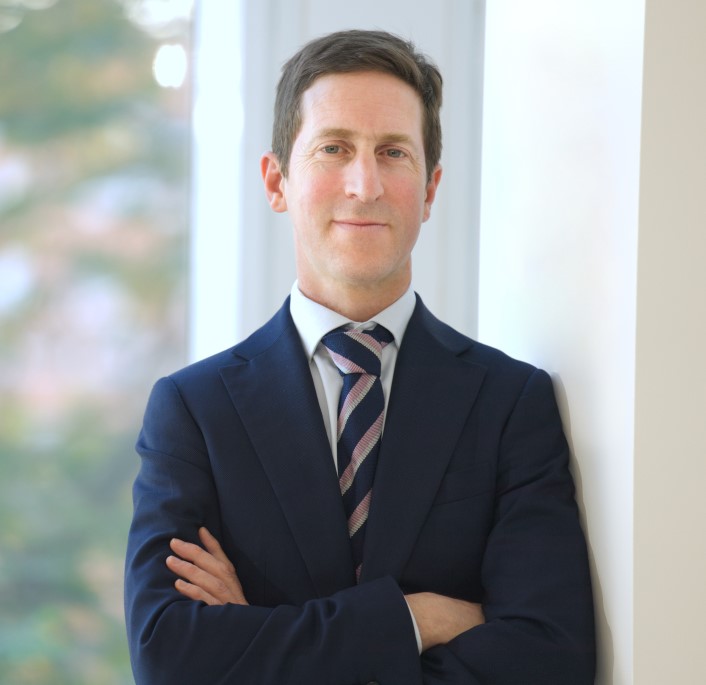
Rajendra Acharya is a Professor (Artificial Intelligence in Health) at the University of Southern Queensland's School of Mathematics, Physics and Computing. He holds qualifications including BEng, MTech, two PhDs, and a DSc. His research focuses on AI applications in healthcare, pattern recognition, and medical diagnostics, with notable contributions to EEG analysis, deep learning, and disease detection. Awards include multiple Research.com Leader Awards in Computer Science for Australia and Singapore (2022–2025). His work spans over 650 publications, with high-impact studies on automated disease diagnosis via AI, including COVID-19 detection using X-rays and EEG-based seizure detection. His research interests integrate machine learning, signal processing, and healthcare technologies. He collaborates internationally and advises on AI-driven health solutions. No student list provided; however, his extensive supervision is implied through his research output.
Dr. Liyi Zhou is a Lecturer in the School of Computer Science at the University of Sydney, specializing in systems security, blockchain, and AI. His research focuses on developing automated and adaptive security tools using machine learning and reinforcement learning. He co-founded D23E.ch, a platform addressing blockchain security and privacy challenges. Research interests include AI-driven vulnerability detection, large security models, real-time intrusion prevention, advanced program analysis (fuzzing/symbolic execution), and privacy-preserving systems. He actively recruits PhD students for projects advancing AI in cybersecurity. Notable achievements include pioneering 'sandwich attacks' discovery in DeFi protocols, contributing to Ethereum Foundation grants, and receiving bug bounties from Flashbots and Ethereum Foundation for vulnerability disclosures. His work has been published in venues like IEEE S&P, USENIX Security, and SIGMETRICS. Teaching includes the course INFO2222. He seeks collaborations and funding to bridge academic research with real-world industry problems, emphasizing practical impact.
Dr. Thanh Nho Do is a Scientia Senior Lecturer at the Graduate School of Biomedical Engineering (GSBmE), UNSW Sydney, and Director of the UNSW Medical Robotics Lab. He holds a PhD in Mechanical Engineering (Surgical Robotics) from Nanyang Technological University (NTU), Singapore, and a B.Eng. in Manufacturing Engineering from Ho Chi Minh City University of Technology, Vietnam. His research focuses on soft robotics, wearable technologies, and biomedical devices, including flexible surgical systems, soft actuators, and haptic interfaces. Education PhD in Mechanical Engineering (Surgical Robotics), NTU Singapore, 2015 B.Eng. in Manufacturing Engineering, Ho Chi Minh City University of Technology, Vietnam Research Interests Soft robotics for medical applications (e.g., NOTES systems, wearable haptics) Functional materials for biomedical devices Cardiovascular engineering and assistive devices Advanced control algorithms for medical robotics Key Contributions His work spans bioprinting, motor-free robotic systems, and soft wearable technologies. Recent studies include self-deploying cardiac compression devices and bioinspired artificial muscles. Awards 2025: CINSW Career Development Fellow 2024: NSW Young Tall Poppy Science Award 2023: Best Poster Awards at EMBC and ICRA Grants & Funding Includes NHMRC Ideas Grant (Lead CI), Cancer Institute NSW Fellowship, and UNSW Scientia Grant. Active projects address cardiovascular interventions and wearable robotics. Labs & Teams Leads the UNSW Medical Robotics Lab, collaborating on devices like soft robotic catheters and textile-driven exosuits.
Professor Vinayak Dixit serves as the IAG Chair of Risk in Smart Cities and Director of the Research Centre for Integrated Transport Innovation (rCITI) at the University of New South Wales (UNSW), within the School of Civil and Environmental Engineering. With a distinguished career spanning academia and research leadership, Professor Dixit has established himself as a leading expert in transportation risk analysis and smart city infrastructure. Professor Dixit's research focuses on studying risk in transportation infrastructure systems, with particular emphasis on highway safety, travel time uncertainty, and resilience against natural and man-made disasters. His work integrates cutting-edge approaches including quantum computing applications for transportation network optimization, analysis of connected and automated vehicles, and development of models for transportation resilience. His research interests span multiple disciplines, bridging civil engineering, transportation science, risk analysis, and computational methods. Professor Dixit has secured significant research funding from prestigious organizations including the United States National Science Foundation, Federal Highway Administration, and the Strategic Highway Research Program of the Transportation Research Board. His leadership extends to directing the Research Centre for Integrated Transport Innovation (rCITI), where he oversees a comprehensive research program addressing critical transportation challenges in smart cities through multiple focus areas including Connected Mobility Services, Deep Data and Digitization, Engineering Smart Cities & Logistics, Human-Centred And Automated Systems Design, and Integrated Infrastructure Strategic Planning. Professor Dixit previously served as the Associate Director of Research for the Gulf Coast Centre for Evacuation and Transportation Resiliency at Louisiana State University, where he founded the Driving Simulator Laboratory in collaboration with other faculty members. This demonstrates his longstanding commitment to innovative research infrastructure development and interdisciplinary collaboration across engineering, economics, computer science, and urban planning to address complex transportation challenges in the 21st century.
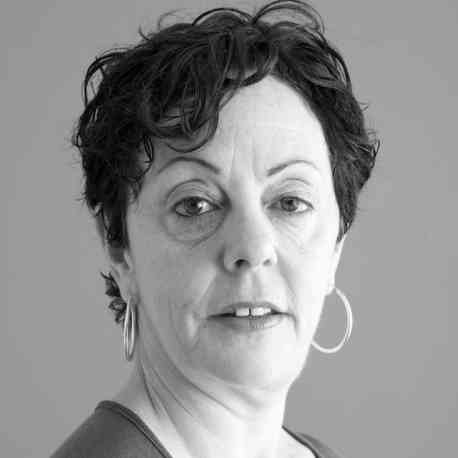
Professor Anna Marie Munster is a distinguished academic and artist at UNSW Art and Design (College of Fine Arts), where she has held a full-time tenured position since 2001. Her work bridges theoretical scholarship with creative practice, establishing her as a leading figure in digital media art and critical theory. University: University of New South Wales School: College of Fine Arts (UNSW Art and Design) Position: Professor Qualifications: PhD from UNSW (2002), BA (Class 1 Hons with University Medal) from University of Sydney (1984) Professor Munster's research explores the intersections of art, technology, and philosophy, with particular focus on statistical visuality, radical empiricism, the politics and aesthetics of machine learning, and more-than-human perception. Her work integrates process philosophy with contemporary media practices, examining how time, movement, and sonicity shape our experience of digital environments. She approaches these topics through both theoretical scholarship and creative practice, often collaborating with artist Michele Barker on multi-channel audiovisual installations. Her publications reveal a consistent trajectory exploring the relationship between embodiment and digital media, with recent work focusing on AI and machine learning in cultural contexts. Munster's creative output demonstrates sophisticated integration of technical innovation with philosophical inquiry, particularly in how her installations challenge conventional perceptions of time and space. ARC, UNSW Student Council Award for Excellence in Postgraduate Supervision (2017) Dean's Award for Excellence in Postgraduate Supervision (2015) Highly commended for Materializing New Media at Prix Ars Electronica (2008) Winner of National Digital Art Awards 'The Harries' (2006) University Press of New England Publishing Award (2005) Professor Munster has completed over 20 PhD and Masters supervisions at UNSW and been involved in another 10 secondary supervisions. She currently supervises five PhD candidates working on diverse topics including coding materialities, critical bio-textiles, schizophrenia and XR technologies, sound and resonance, and affective drawing. Her ARC-funded research projects demonstrate sustained commitment to interdisciplinary work, particularly at the intersection of art, science, and technology. Her creative practice with Michele Barker has resulted in numerous commissioned installations exploring perception, embodiment, and the relationship between humans and technology.
Dr. Robert Pickle is a Postdoctoral Fellow at the Research School of Earth Sciences (RSES), Australian National University (ANU), specializing in Geophysics. His work focuses on seismic network design, machine learning applications in seismology, and tectonic studies in active seismic zones. He contributes to projects like the Southwest Australia Seismic Network (SWAN) and the Australian Passive Seismic Server, advancing understanding of crustal dynamics and seismic hazard assessment. Education: PhD (specific details not provided in texts). Research Interests: Dr. Pickle’s expertise spans seismic instrumentation, regional seismic monitoring, and the integration of machine learning for improving earthquake catalog accuracy. His studies address critical areas such as the Banda Arc–Australian Plate collision zone and the seismicity of southwest Australia. Projects: Principal investigator on the Australian Passive Seismic Server and researcher on the Enhanced 3-D seismic structure of Southwest Australia (SWAN) project. Collaborates with institutions like the ANU’s RSES and international seismological networks. Labs/Teams: Active in ANU’s Geophysics research groups, contributing to collaborative efforts in seismic data acquisition and analysis.
Prof Raphaël Phan is a Professor and Deputy Head of the School of IT at Monash University Malaysia. His expertise spans security, cryptography, malicious AI, emotion recognition, motion analysis, and generative AI. He has published over 220 papers and led significant projects including privacy-preserving data mining funded by UK MoD and Malaysian government grants exceeding RM4 million. He co-designed the BLAKE hash function (SHA-3 finalist) and has an h-index of 50. Education: PhD in Cryptography (Multimedia University, 2005), MEngSci (2001), BEng (Hons) Computer Engineering (1999). Research focuses on adversarial AI, brain networks, and secure systems. Current projects include Æmbience: emotion-aware virtual assistants using motion magnification. Supervised 15 PhD graduates and 19 current students. Professional affiliations: Chartered Engineer (IET, UK), HEA Fellow, Board of Engineers Malaysia. Recent work emphasizes causal bias detection in micro-expressions, brain tumor detection via advanced YOLOv8, and generative adversarial networks for medical imaging. His work bridges cybersecurity with neuroscience applications.
George Athanasopoulos is Professor and Head of the Department of Econometrics and Business Statistics at Monash University, a position he has held since 2022. He was appointed Professor in 2019 and has established himself as an internationally recognized expert in forecasting, time series analysis, and applied econometrics. He serves as Past President (since 2024) and former Director (2014-2024) of the International Institute of Forecasters, and is Associate Editor of the International Journal of Forecasting since 2014. His research focuses on hierarchical and grouped time series forecasting, where he has pioneered methods for forecast reconciliation and cross-temporal coherence. His work has significantly influenced forecasting practices across diverse fields including national statistics offices, energy markets, and public health. He is particularly renowned for his contributions to tourism forecasting and macroeconomic modeling in big data environments. Awarded the Australian Awards for University Teaching in 2022 for outstanding contributions to student learning, Professor Athanasopoulos has also received multiple Dean's Awards from Monash Business School for research excellence, teaching innovation, and publication quality. His research output includes over 49 publications and leadership of six major research projects, including the ARC-funded 'Macroeconomic forecasting in a Big Data world' and the RACE for 2030 CRC project on clean energy forecasting. His work contributes to UN Sustainable Development Goals through applications in economic forecasting, energy modeling, and sustainable tourism development. He has supervised numerous research students and collaborated extensively with institutions including Australian National University, Griffith University, and international partners across multiple continents.
Associate Professor Dan Dongseong Kim is Deputy Director of UQ Cybersecurity and an Associate Professor at The University of Queensland (UQ), Australia. Previously, he held permanent academic positions at The University of Canterbury (UC), New Zealand (2011-2018) as a Senior Lecturer and Lecturer. His research focuses on Cybersecurity and Dependability for AI, IoT, Autonomous Vehicles, Cloud Computing, and Moving Target Defenses (MTD). Doctor of Philosophy in Computer Engineering from Korea Aerospace University Postdoctoral Research at Duke University (2008-2011) Visiting Scholar at University of Maryland (2007) Dan's work explores Graphical Security Models , Moving Target Defense for proactive resilience, and AI-Driven Cybersecurity with emphasis on adversarial robustness and interpretable models. His recent publications (2024-2025) span journals like IEEE Transactions on Dependable and Secure Computing and conferences such as DSN , addressing automated defense, evolving attacks, and hardware-aware security frameworks. He has advised 15 Ph.D. graduates, including researchers now at institutions like RMIT University, La Trobe University, and CSIRO's Data61. Current supervision includes projects on Automated Penetration Testing , AI-Based Intrusion Response , and Moving Target Defense . Dan's research is funded by agencies including the Republic of Korea's Agency for Defence Development and US Army Research Lab . His professional roles include Associate Editor for IEEE Communications Surveys and Tutorials and Steering Committee Chair for IEEE PRDC .
Yong-Bin Kang is a Senior Data Science Research Fellow at the ARC Centre of Excellence for Automated Decision Making and Society (ADM+S) at Swinburne University of Technology, affiliated with the School of Social Sciences, Media, Film and Education. He holds a PhD in AI from Monash University and leads numerous transdisciplinary research projects applying artificial intelligence to address complex societal challenges. Education: PhD in Faculty of IT, Monash University, Australia Dr. Kang's research focuses on Responsible AI and Society, with specific interests in developing Societal-AI platforms that integrate social data with ethical principles. His work spans healthcare, humanitech, education, financial planning, environmental health, and justice domains. He investigates how AI can enhance decision-making processes while promoting societal well-being, with particular attention to ethical implementation and human-centered approaches. His expertise encompasses AI, natural language processing, machine learning, and decision-making optimization. Analysis of Dr. Kang's recent publications reveals a strong trajectory toward socially responsible AI applications across diverse domains. His work consistently bridges technical AI capabilities with social implications, particularly focusing on ethical frameworks, community-centered design, and addressing societal inequalities through technology. The publications demonstrate increasing collaboration across disciplines including criminology, environmental science, mental health, and education. Dr. Kang is actively involved in significant research funding initiatives, with multiple ongoing projects that address critical societal challenges through AI. His supervision availability includes Doctorate (PhD) candidates, indicating his commitment to mentoring the next generation of researchers in AI and data science fields. Current Flagship Areas: Digital Capability Innovative Society Manufacturing Futures Sustainable Development Goals: Good Health and Well Being (SDG 3) Industry, Innovation and Infrastructure (SDG 9) Affordable and Clean Energy (SDG 7)
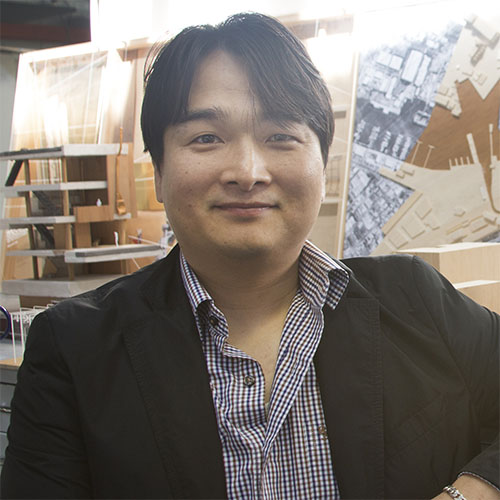
JuHyun Lee is an Associate Professor of Architecture and Computational Design in the School of Built Environment at the Faculty of Arts, Design and Architecture (ADA), University of New South Wales (UNSW) Sydney, where they also hold the prestigious title of Scientia Academic. With a professional background in architecture and construction (1998-2002), they have held academic positions across Australia including a five-year post-doctoral fellowship at the University of Newcastle (2012-2017) and a senior research fellowship at the University of South Australia (2018), following earlier research and teaching roles in South Korea (2003-2011). Lee specializes in architectural design computing, design cognition, and urban complexity, integrating computational methods, cognitive science, and architectural theory to advance architectural intelligence and human-centered design. Their research spans architectural visualization, analysis and design methods, algorithm/protocol design, and data visualization with computational approaches. They have established a strong research program examining the intersection of language, culture, and design cognition, particularly focusing on cross-cultural design communication between Australia and Korea. Lee's recent publications demonstrate a clear trajectory toward increasingly sophisticated integration of computational methods with architectural design theory, particularly in the areas of shape grammar, space syntax, and machine learning applications. Their work shows consistent focus on practical applications of computational design methods to real-world architectural problems, with growing emphasis on cross-cultural collaboration and intelligent design systems. The research portfolio reveals a deepening engagement with AI and machine learning techniques applied to architectural design assessment and generation. Scientia Academic at UNSW Sydney Associate Fellow of the Higher Education Academy (AFHEA, 2020) As an educator, Lee develops cutting-edge courses in computational design and Building Information Modeling (BIM), integrating experiential learning and industry engagement. They have secured over $11 million in research funding, including multiple ARC Discovery Projects and an Australia-Korea Foundation grant. Lee co-directs the Advanced Architectural Analytics Laboratory (A 3 LAB), leading interdisciplinary research on design automation, spatial analysis, and machine learning applications in architecture, while also leading cross-cultural initiatives like the Australia-Korea Architects' Network (AKAN). Lee supervises multiple HDR students working on culturally sustainable urban design, socio-spatial patterns in public housing, and computational layout generation. Their research has significant implications for improving design communication across cultural boundaries and developing more coherent, clear, and accessible built environments through computational design approaches.
Julia Powles is an Associate Professor at the UWA Law School and Director of the UWA Tech & Policy Lab. Her research focuses on privacy, intellectual property, internet governance, and the legal and political dimensions of data, automation, and AI. She has led investigations into high-profile cases like the NHS/Google DeepMind data breach and Sidewalk Labs’ smart city project. Currently, she advises on national robotics strategy, responsible AI, and privacy policies in Australia. With a background spanning academia, policy, and law, she holds roles in global committees and contributes to media outlets like the New Yorker and Financial Times. Her work bridges legal frameworks and technological innovation, emphasizing ethical governance and societal impact. Education: BSc (Hons) ANU, LLB (Hons) UWA, BCL Oxford, PhD Cantab. Expertise includes AI ethics, data privacy, and regulatory policy. Recent projects address drone delivery systems, corporate accountability of Big Tech, and governance in health monitoring. Awards include the 40 Under 40 Award for WA (2022) and Poynter Fellowship (2018). Grants include the Children’s Online Safety Program (2024–2027) and Minderoo Foundation initiatives. She chairs the PRIS Universities Network and co-chairs international tech policy summits. Roles: Director, UWA Tech & Policy Lab; Expert on National AI Centre, WA Privacy Committee. Research: Over 100 outputs, focusing on AI governance, corporate liability, and tech ethics.
SangHyung Ahn is a Lecturer at the School of Civil Engineering , University of Queensland (UQ), since 2017. He joined UQ as a postdoctoral research fellow in 2015 after earning his PhD in Civil Engineering (Construction Engineering and Management) from Purdue University, USA. Prior to his academic career, he worked as an assistant manager at Hyundai Engineering and Construction Co., Ltd. (2003-2007) and holds an MBA in international business from Hanyang University and a B.Sc in Civil Engineering from Korea University. Research Focus: Construction process modelling with virtual reality, decision support systems for construction, automation of data-driven simulation modelling, sensor-based operations analysis, and integration of Building Information Modelling (BIM). Teaching: Coordinates undergraduate courses Introduction to Project Management (CIVL3510) and Construction Engineering Management (CIVL4522) . Research Trends: His recent publications highlight interdisciplinary work in transportation engineering, structural design, and AI-driven simulation tools. Key themes include application of machine learning to car-following models, drone-based vehicle identification, and optimization of public transport systems using agent-based simulations. Supervision: Available for supervision, with completed supervision of PhD and Master’s theses on topics such as BIM-LCA integration, pedestrian trajectory analysis, and AI-driven driving behavior models.
Gavin Schwarz is a Professor and Head of School at the School of Management and Governance within the UNSW Business School . He specializes in organizational change , organizational failure and inertia , and the dynamics of virtual teams , with a focus on how organizations fail during change processes and how to develop applied strategies for change management . His work spans diverse sectors including healthcare, technology, and education, with publications in leading journals such as Academy of Management Learning and Education and Administrative Science Quarterly . Education : PhD in Management (University of Queensland), MPhil (Hons) in Management (University of Auckland), BA in Management and English (University of Auckland). Grants : 2020 Brock University grant for "University communication in times of COVID-19" , 2020 UNSW Medicine grant for "Translation and change: Embedding effective change management in health" , and earlier Australian Research Council and Gordon J. Samuels Fellowship awards. His research explores the development of knowledge in organizational theories , with an emphasis on collective responses to change , HR management during crises , and technology strategy . He has contributed to understanding organizational communication , team innovation , and structural inertia . His 15 most recent publications cover topics from AI’s role in organizational change to pandemic-driven research adaptation, with keywords spanning management science , behavioral economics , and digital transformation . Scientific Awards 2021-2023 : Outstanding Reviewer Awards (Academy of Management Review) 2017-2020 : Best Reviewer Awards (Journal of Organizational Behavior) 2019, 2013, 2011 : Best Paper Finalist/Awardee (Academy of Management divisions) 2007, 2006 : Editorial Board Excellence (Academy of Management Journal) and Gordon J. Samuels Fellowship As an active supervisor in organizational change and HR development , his work supports healthcare innovation and digital transformation. He serves as Editor-in-Chief for the Journal of Applied Behavioral Science and is on the editorial boards of Academy of Management Review , Journal of Management , and Journal of Organizational Behavior . Contact: g.schwarz@unsw.edu.au
Didar Zowghi is a Senior Principal Research Scientist and Science Team Leader at CSIRO Data61, Australia's national science agency. His work focuses on advancing ethical AI systems, data quality frameworks, and requirements engineering methodologies. He leads research initiatives addressing challenges in AI governance, diversity/inclusion in technology, and human-centered AI development. Research interests include AI ethics, data completeness in healthcare systems, and the application of machine learning in requirements engineering. His contributions span theoretical frameworks for responsible AI patterns, empirical studies on user perceptions of AI tools like M365 Copilot, and analysis of AI's role in global diplomatic practices. Zowghi has published extensively on topics ranging from blockchain in supply chains to pedagogical innovations in software engineering education. His work often bridges technical systems and societal impacts, emphasizing real-world implementation challenges through collaborative industry-academia projects. Notable outputs include the Responsible AI Pattern Catalogue and studies examining barriers to data quality in IoT platforms. He has pioneered frameworks linking innovation initiatives to occupational skill requirements and developed tools like Elica for dynamic requirements knowledge extraction in agile teams.