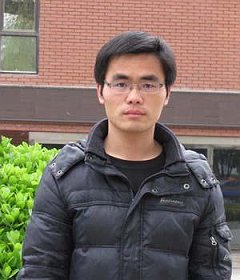
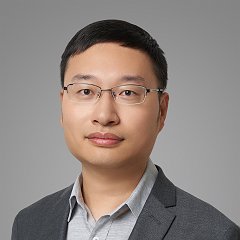
Felix Dobslaw is a Senior Lecturer and Associate Professor at Mid Sweden University , affiliated with the Department of Communication, Quality Technology and Information Systems (KKI). He leads the cross-disciplinary Software Engineering and Education (SEE) research group, focusing on the intersection of technology and human use in software development, with a particular emphasis on Generative AI applications.
Giacomo Garaccione is a Ph.D. candidate in Computer and Systems Engineering at the Polytechnic University of Turin , affiliated with the Department of Control and Computer Engineering (DAUIN) and the SOFTENG - Software Engineering Group . He holds an MSc in Computer Engineering (Software) from the same institution. Current Role : Ph.D. candidate (38th cycle, 2022-2025) Teaching : External lecturer and teaching assistant for Information Systems and Software Engineering courses in Engineering and Management and Computer Engineering programs (2022-2025). His research focuses on applying gamification to software engineering education , with emphasis on conceptual modeling and GUI testing . He develops gamified tools like UMLegend and GERRY , integrating artificial intelligence and natural language processing for automated model validation and feedback. Publications analyze gamification’s impact on student productivity and perception in UML/BPMN education. Scientific recognition : Nominated for merit awards (2025). Collaborator on multiple studies involving large language models and gamified IDE plugins , with ongoing work to create a comprehensive gamified environment for software modeling and requirements training.
Mattia Fazzini is an Assistant Professor in the Department of Computer Science & Engineering at the University of Minnesota's College of Science and Engineering. His primary academic appointment focuses on software engineering research and teaching, with active involvement in major conferences including ASE, ISSTA, ICSE, and MOBILESoft where he has served in leadership roles such as General Co-chair (MOBILESoft 2023) and Program Committee Co-chair. His research centers on software testing, maintenance, and security , with particular emphasis on mobile applications. Key research themes include: Developing techniques for automated Android testing and maintenance Addressing API compatibility issues across Android versions Creating tools for test oracle generation and bug reproduction Investigating security vulnerabilities in mobile ecosystems Optimizing test suites through test double analysis His recent publications (2021-2025) reveal strong focus on Android-specific challenges, with recurring themes in compatibility testing, automated test generation, and security analysis. Over 60% of his work involves tool development for practical testing scenarios, particularly targeting mobile platforms. Notable recognitions include: IEEE TCSE Distinguished Paper Award (2024) for work on test suite optimization ACM Distinguished Paper Award (2022) for COVID-19 app analysis As an educator, he advises multiple PhD and Master's students while teaching undergraduate and graduate courses including CSCI 3081W (Program Design) and CSCI 5802 (Software Engineering II). His service contributions span conference organization (MOBILESoft, ISSTA, ICSE) and extensive program committee work across top software engineering venues. He leads research projects focused on practical testing solutions with real-world applicability in mobile software development.
Chao Peng is a Principal Research Scientist at ByteDance where he leads the Trae Research team (ByteDance Software Engineering Lab), conducting cutting-edge research on AI agents for software engineering. He also serves as a Part-time Postgraduate Student Mentor at Fudan University's School of Computer Science, bridging industry research with academic mentorship. PhD in Informatics (2021), University of Edinburgh, UK MSc in High Performance Computing and Data Science (2017), University of Edinburgh, UK BEng in Computer Science and Technology (2016), Xuzhou University of Technology, China Dr. Peng's research focuses on the intersection of software testing, program analysis, and large language models. His work explores how AI agents can revolutionize software engineering practices, with particular emphasis on automated bug detection, code generation, and testing frameworks. He has pioneered approaches for evaluating LLM performance in software engineering contexts and developing agent-based systems that enhance developer productivity while maintaining code quality and security. His recent publications demonstrate a clear trend toward integrating large language models with traditional software engineering practices. The research spans code generation evaluation, security vulnerability detection, automated bug reproduction, and issue localization. These works collectively advance the field of AI-assisted software development by addressing practical challenges in reliability, security, and efficiency of AI-generated code. Distinguished Reviewer for FSE'25 School of Informatics Scholarship (fully-funded PhD scholarship) Outstanding Graduate Scholarship at Xuzhou University of Technology Multiple China National Scholarships Honours Spot Bonus at ByteDance Certificate of Achievement for HPCAC Student Cluster Competition Dr. Peng actively mentors students through his role at Fudan University and previously at the University of Edinburgh, where he served as sub-supervisor for MSc projects and teaching assistant for software testing courses. His research has attracted significant industry attention, leading to multiple collaborations between ByteDance and academic institutions. He frequently serves on program committees for major software engineering conferences including ASE, FSE, and ICSE, demonstrating his leadership in the field. As leader of the Trae Research team at ByteDance Software Engineering Lab, Dr. Peng oversees research on AI agents for software engineering, including the application and evaluation of AI agents and training LLMs for agent-based systems. The lab's work focuses on practical systems that predict, detect, diagnose, and fix bugs across various software systems, with particular emphasis on real-world applications and measurable impact on developer productivity.
Zhen Dong is an Associate Professor at Fudan University, China, specializing in software engineering with a focus on software reliability and security, particularly in mobile computing. Previously, he was a PostDoc and Senior Research Fellow at the National University of Singapore under the guidance of Abhik Roychoudhury. His educational background includes: PhD in Computer Science from Heidelberg University (2017), advised by Prof. Artur Andrzejak Dr. Dong's research centers on developing techniques and tools for improving software reliability and security. His work spans mobile application testing, Android security, flaky test detection, and vulnerability localization. He has made significant contributions to the field of software testing and analysis, with a particular emphasis on practical applications for mobile systems. His research bridges theoretical foundations with real-world software engineering challenges. Analysis of Dr. Dong's recent publications reveals a strong focus on leveraging AI/ML techniques for software engineering tasks, particularly using LLMs for test automation and program analysis. His work consistently addresses critical challenges in mobile computing, especially Android application reliability and security. There's a clear trajectory toward more sophisticated analysis techniques, from traditional testing methods to AI-driven approaches. His notable scientific achievements include: ACM Distinguished Paper Award at ICSE'20 Best Paper Award at AsiaCCS'21 (1/370 submissions) ASE'22 Distinguished Reviewer Award Dr. Dong serves on the Board of Distinguished Reviewers for ACM Transactions on Software Engineering and Methodology and has been an active member of numerous program committees for top software engineering conferences including ICSE, ASE, and ISSTA. His service to the academic community extends to reviewing for prestigious journals such as IEEE Transactions on Software Engineering and Methodology and ACM Transactions on Software Engineering and Methodology. His research has been supported through various academic channels, enabling him to maintain an active lab focused on software testing and analysis, particularly for mobile platforms. The lab has produced numerous tools and techniques that have influenced both academic research and industrial practice in software reliability.
Yun Lin is an Associate Professor and Deputy Head of the Department of Computer Science and Technology at Shanghai Jiao Tong University's School of Computer Science. Prior to joining SJTU, Lin served as a Research Assistant Professor at the National University of Singapore working with Prof. Dong Jin Song. Lin leads the CoPhi ("Code Philia") research group, which focuses on the intersection of Software Engineering, AI, and Security. Lin's research spans three major areas: Automatic Programming (including code editing, software testing, and debugging), Explainable AI (focusing on representation interpretation and training data attribution), and Web Misinformation (particularly phishing and scam detection). The research has resulted in numerous tools including CoEdPilot for code editing recommendation, DeepDebugger for interactive debugging of deep classifiers, and Phishpedia for phishing webpage detection. Lin's recent publications demonstrate a strong trend toward integrating AI techniques, particularly large language models and vision language models, with traditional software engineering and security tasks. The work shows increasing sophistication in understanding project context, handling interactive nature of programming tasks, and addressing security challenges in the age of generative AI. Key themes include consistency-based approaches for anomaly detection, agent-based frameworks for complex tasks, and hybrid models that combine symbolic reasoning with neural approaches. ACM Distinguished Paper Award in ICSE'18 for "Towards Optimal Concolic Testing" Distinguished Reviewer Award in FSE'25 2nd prize Research Prototype Award in ChinaSoft'24 Lin advises a large team of PhD, Master's, and undergraduate students, with several publications co-authored with students appearing in top venues. Current research is supported by collaborations with National University of Singapore, particularly with Prof. Dong Jin Song, and includes projects on code editing, GUI testing, and phishing detection. The CoPhi group maintains active development of multiple research tools and datasets. The CoPhi research group under Lin's leadership focuses on building practical tools that bridge the gap between theoretical advances and real-world programming and security challenges. The group's work spans from fundamental program analysis techniques to applied security solutions, with an increasing emphasis on leveraging AI capabilities while maintaining explainability and reliability.
Minxue Pan is a Professor and PhD supervisor at the Software Institute, State Key Laboratory for Novel Software Technology, Nanjing University, China. His research focuses on the dependability of complex software systems, with expertise spanning software modeling and verification, software analysis and testing, cyber-physical systems, mobile computing, and intelligent software engineering. Ph.D. in Computer Science and Technology from Nanjing University (2014), supervised by Prof. Xuandong Li B.Sc. from Nanjing University Studied at UC Berkeley's Department of Electrical Engineering and Computer Sciences (2009-2010) under Prof. Edward A. Lee Professor Pan's research interests center on improving software dependability through innovative approaches to modeling, analysis, and testing. His work spans traditional software systems, mobile applications (particularly Android), cyber-physical systems, and the application of AI techniques to software engineering problems. He has made significant contributions to GUI testing, vulnerability detection, and deep learning applications in software engineering. His recent publications (2024-2025) demonstrate a strong focus on applying advanced machine learning techniques to software testing and security challenges. Key trends include leveraging large language models for test migration, enhancing fault localization with graph learning and contrastive learning, developing specialized frameworks for Android security analysis, and improving test efficacy through GUI and functional equivalence. His work consistently targets real-world industrial settings and addresses practical challenges in mobile and complex software systems. ISSTA 2020 Distinguished Paper Award ICSE 2025 Best Artifact Award Professor Pan actively advises graduate students and has developed several notable tools including Q-testing (reinforcement-learning based Android testing), ISDChecker (model checking for interrupt-driven systems), PREFEST (preference-wise testing for Android), Sketchoid (GUI code search), and PI-REC (hand-drawn draft conversion). His research is supported by extensive publication records in top-tier software engineering venues including ASE, ICSE, FSE, ISSTA, and TOSEM. He teaches undergraduate courses in Advanced Programming with C++, Software System Design, and Software Construction, as well as graduate courses in Advanced Software Design. His laboratory work focuses on developing practical solutions for real-world software dependability challenges through the State Key Laboratory for Novel Software Technology.