
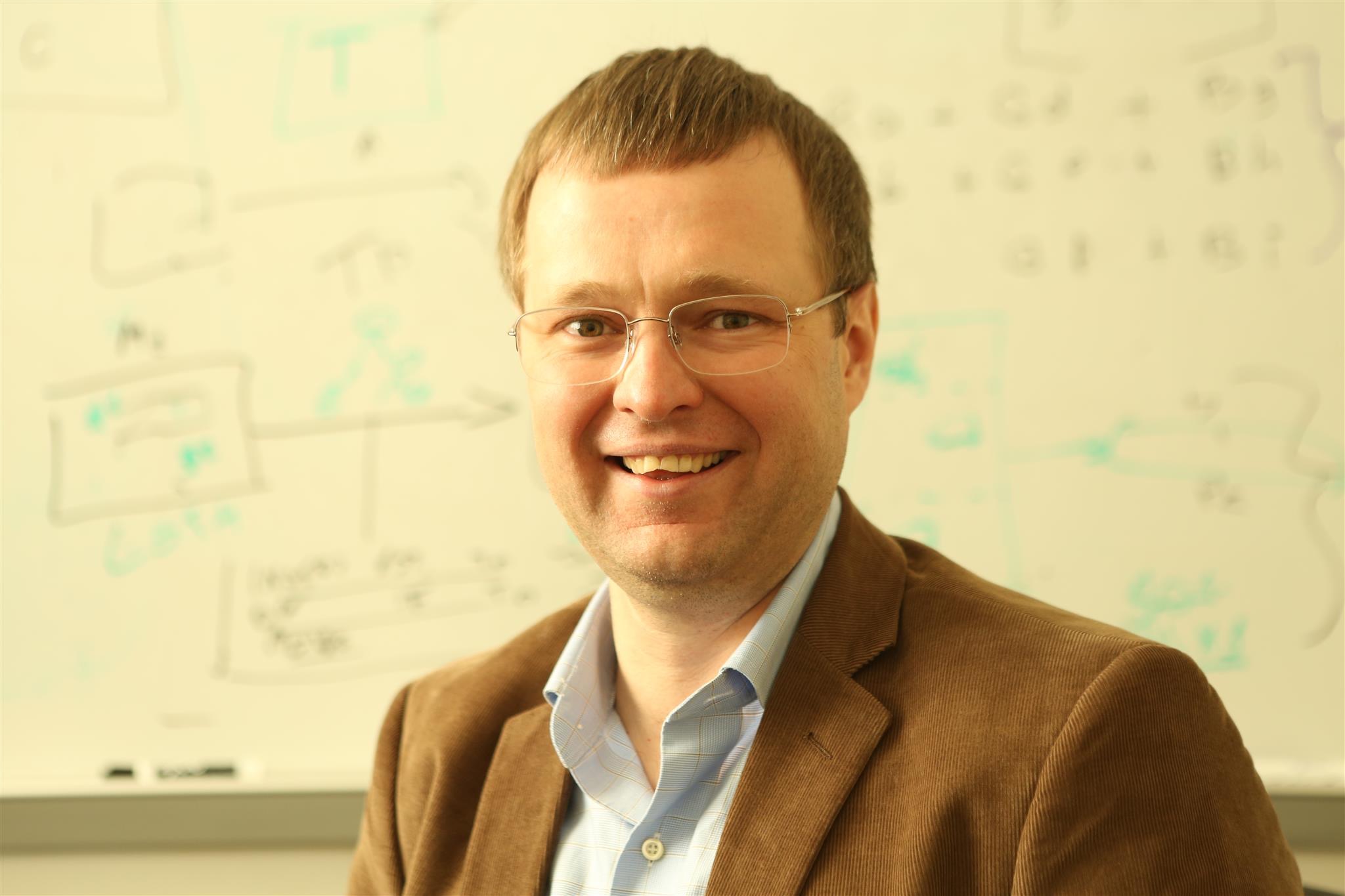
Denys Poshyvanyk is the Chancellor Professor of Computer Science and Graduate Director at William & Mary, where he leads the SEMERU research group. He received his Ph.D. from Wayne State University under Dr. Andrian Marcus. Research Interests: Software Engineering (SE), with a focus on software analytics, evolution, and maintenance Deep Learning for Software Engineering (DL4SE) and SE for deep learning (SE4DL) Program comprehension, mobile app testing and security, reverse engineering Large-scale mining of software repositories and traceability His research integrates AI and machine learning to improve software development practices, with a strong emphasis on empirical studies and tool development. Recent work explores large language models (LLMs), GUI testing, and quantum-classical software integration. Awards and Honors: NSF CAREER Award (2013) IEEE Fellow and ACM Distinguished Member Multiple Best Paper and ACM SIGSOFT Distinguished Paper Awards Most Influential Paper Awards (ICSME, ICPC, SCAM, MSR) Service and Leadership: Senior Associate Editor, ACM TOSEM Editorial Board, Empirical Software Engineering, JSEP, SCP Steering Committee: FSE, ASE, AIware PC Co-chair for FSE’25, MOBILESoft'24, ASE'21; General Chair for MOBILESoft'24 Member, CRA-E Board of Directors He has advised numerous students who have secured faculty and research positions. His work is widely cited and has significantly influenced the software engineering community through both theoretical contributions and practical tools.
جستوجوی استاد و پژوهشگر
استاد راهنما، استاد دانشگاه یا پژوهشگر مناسب برای مسیر پژوهشیتان را پیدا کنید و با او ارتباط بگیرید.
نمایش ۹۱-۱۰۵ از ۱۲۷ استاد راهنما
اطلاعات این پروفایلها از صفحات عمومی دانشگاهها جمعآوری شده و ممکن است بهروز نباشد.

Jinhan Kimمشاهده پروفایل
پژوهشگر
Jinhan Kim is a Postdoctoral Researcher at the Software Institute of USI University of Lugano, Switzerland, working in the TAU lab under the guidance of Prof. Paolo Tonella. He completed his Ph.D. in Software Engineering at KAIST, South Korea, under the supervision of Prof. Shin Yoo, where his research focused on mutation testing and the intersection of artificial intelligence and software engineering. His educational background includes: Ph.D. in Software Engineering, KAIST, South Korea (completed February 2023) Kim's research spans software engineering and artificial intelligence, with a focus on mutation testing, testing of deep learning systems, and security of AI models. He investigates techniques for improving the reliability and robustness of AI systems, particularly in safety-critical domains like autonomous driving. His work bridges traditional software engineering practices with modern AI systems, leading to novel approaches in fault localization, program repair, and adversarial testing. His recent publications reveal a strong trend toward testing and securing deep learning models in autonomous systems. He has developed taxonomies for attacks, frameworks for testing autonomous agents, and empirical studies on fault localization for neural networks. His work increasingly addresses securing AI systems against adversarial attacks and improving robustness of security detectors generated by large language models. Kim has received notable recognition including: Best Paper Award at the 18th International Workshop on Mutation Analysis (Mutation 2023) As an advisor, Kim supervises two PhD students: Masoud Jamshidiyan Tehrani and Samuele Pasini, working on security of deep learning models and robustness of security attack detectors. He actively serves the research community through program committees for ASE, ICSE, ISSTA, and ICST, and as organizer of DeepTest and SBFT workshops. His service includes being a Distinguished Reviewer for TOSEM. Kim is a core member of the TAU (Testing: Analysis and Understanding) lab at USI, which pioneers innovative approaches to software testing and analysis for modern AI-based systems.
Valerio Terragniمشاهده پروفایل
مدرس ارشد
Valerio Terragni is a Senior Lecturer in the Department of Electrical, Computer, and Software Engineering at the University of Auckland, New Zealand, where he also serves as the Program Director of the Software Engineering Degree. His position as Senior Lecturer in New Zealand is equivalent to Associate Professor in many Asian, European, and North American academic systems. His educational background includes a PhD in Computer Science from The Hong Kong University of Science and Technology (2017), and B.Sc. and M.Sc. degrees in Computer Science from the University of Milano-Bicocca, Italy. Prior to his current position, he was a Senior Research Fellow at Università della Svizzera italiana (USI) in Lugano, Switzerland from 2017 to 2020. Dr. Terragni's research focuses primarily on Software Testing, with special emphasis on automated techniques for generating test cases and their applications in modern software systems. His current work centers on SE4AI (Software Engineering for AI) and AI4SE (AI for Software Engineering), particularly investigating the intersection of software testing and large language models. His research has been published in leading software engineering venues including IEEE TSE, ACM TOSEM, ICSE, FSE, ASE, ICST, and ISSTA. His recent publications demonstrate a strong focus on metamorphic testing, particularly for AI systems and large language models, as well as work on test oracle generation, software quality assessment, and software engineering education. His research shows a clear evolution from traditional software testing techniques toward addressing the unique challenges posed by AI systems. As Program Director of the Software Engineering Degree at the University of Auckland, Dr. Terragni plays a significant role in shaping software engineering education. His work on GradeStyle demonstrates his commitment to improving programming education through automated assessment tools integrated with GitHub.
- Software Testing
- GUI Testing
- Automated Testing
- +۴ مورد دیگر
Atif Memon is a Professor in the Department of Computer Science at the University of Maryland, College Park (UMCP), where he has been a faculty member since 2001, progressing from Assistant Professor to Associate Professor and finally to Professor in 2015. He is also a Professor at the Institute for Advanced Computer Studies at UMCP. Dr. Memon founded and heads the Event Driven Software Lab (EDSL), where his research focuses on design, development, quality assurance, and maintenance of event-driven software applications. Dr. Memon received his Ph.D. in Computer Science from the University of Pittsburgh in 2001, with a dissertation titled "A Comprehensive Framework for Testing Graphical User Interfaces." His advisors were Martha Pollack and Mary Lou Soffa. Prior to his Ph.D., he earned an M.S. in Computer Science from King Fahd University of Petroleum and Minerals in Saudi Arabia (1995) and a B.C.S. in Computer Science from the University of Karachi (1991). Dr. Memon's research primarily focuses on software testing, particularly for event-driven systems. He is renowned for designing and developing GUITAR, a model-based GUI testing framework that operates on Android, iPhone, Java Swing, .NET, Java SWT, and web systems. His work extends to Community Event-based Testing (COMET), a community infrastructure for event-based testing researchers. His research interests include: Automated GUI and mobile application testing Model-based software testing techniques Event-driven software quality assurance Testing methodologies for emerging technologies Test automation and script maintenance Flaky tests and test reliability Dr. Memon's recent publications demonstrate a strong focus on practical applications of software testing, particularly in mobile environments. His work bridges theoretical testing concepts with real-world implementation challenges, with significant contributions to GUI test automation, mobile application testing, and test script maintenance. The trend in his recent work shows increasing emphasis on mobile platforms, security testing, and addressing the challenges of flaky tests in continuous integration environments. His research spans both academic innovation and practical industry applications, as evidenced by his collaborations with companies like Google, Apple, and others. Among his notable achievements, Dr. Memon received the Best Paper Award at SECURWARE 2014 for his work on "N-Gram Based User Behavioral Model for Continuous User Authentication" and a retrospective award for the most influential paper among the papers of 2003 Working Conference on Reverse Engineering. Dr. Memon currently advises six PhD students at Maryland on various aspects of testing event-driven software systems, and so far six students have completed their doctoral thesis work under his guidance. His research has been supported by significant funding from agencies including DARPA, NSF, NIH, and NSA for projects such as "Vetting Android Applications for Security Using Graphical User Interface Logic," "COMET - Community Event-based Testing," "Algorithms and Software for the Assembly of Metagenomic Data," and "Research in Science and Public Policy for the U.S. National Security Agency." As the founder and head of the Event Driven Software Lab (EDSL), Dr. Memon leads a team focused on advancing the state of the art in testing event-driven software applications. The lab has developed several influential tools and frameworks, most notably GUITAR, which has been widely adopted in both academic and industrial settings. Dr. Memon has also been instrumental in developing community infrastructure for testing researchers through COMET, enabling uniformity in experimentation and benchmarking in event-driven software testing.
Mattia Fazziniمشاهده پروفایل
استادیار
Mattia Fazzini is an Assistant Professor in the Department of Computer Science & Engineering at the University of Minnesota's College of Science and Engineering. His research focuses on improving software quality through innovative techniques in software testing, maintenance, and security. His work primarily targets mobile applications, particularly Android platform challenges. Dr. Fazzini received his Ph.D. in Computer Science from the Georgia Institute of Technology before joining the University of Minnesota. His educational background provided the foundation for his research in software engineering with emphasis on practical solutions for real-world software quality problems. His research interests center around software engineering with specific focus on software testing methodologies, maintenance techniques, and security considerations. Dr. Fazzini's work addresses critical challenges in mobile application development, including test oracle generation, API compatibility issues, bug reproduction, and energy efficiency concerns in Android applications. His research has evolved to incorporate AI techniques, as evidenced by recent work leveraging LLMs for DevOps automation. His publication record demonstrates consistent contributions to top-tier software engineering venues, with a clear trajectory toward increasingly sophisticated approaches to software quality assurance. His work shows strong emphasis on practical tool development alongside theoretical contributions, with numerous tool papers and competitions organized around his research themes. IEEE TCSE Distinguished Paper Award for 'Automatically Removing Unnecessary Stubbings from Test Suites' ACM Distinguished Paper Award for 'Characterizing Human Aspects in Reviews of COVID-19 Apps' Dr. Fazzini actively mentors students, with multiple undergraduate and graduate researchers contributing to his publications. He has served in significant organizational roles for major conferences including ASE, ICSE, ISSTA, and MOBILESoft, demonstrating leadership in the software engineering community. His teaching portfolio includes both undergraduate and graduate courses in software engineering and program design.
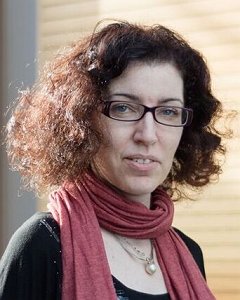
Julia Rubinمشاهده پروفایل
دانشیار
- Software Quality
- Software Security
- AI Reliability
- +۷ مورد دیگر
Julia Rubin is an Associate Professor in the Department of Electrical and Computer Engineering at the University of British Columbia, Canada, holding the prestigious Canada Research Chair in Trustworthy Software. She leads the UBC Research Excellence Cluster on Trustworthy ML and serves as an Associate Faculty Member in the Department of Computer Science. Her academic journey includes a PhD from the University of Toronto and postdoctoral research at MIT, complemented by nearly a decade of industry experience at IBM Research where she worked as a research staff member and group manager. PhD in Computer Science, University of Toronto Postdoctoral Research, MIT Department of Electrical Engineering and Computer Science Research Staff Member and Group Manager, IBM Research (10 years) Professor Rubin's research centers on quality, security, and reliability of software and AI systems. Her work develops automated solutions for analyzing, auditing, and improving these systems, with particular focus on reliable approaches for malware detection, code management techniques combining generative AI with program analysis, and technology for regulatory compliance of AI systems. Her research spans mobile security, smart contract vulnerabilities, program analysis techniques, and trustworthy machine learning. Analysis of her 15 most recent publications reveals strong emphasis on software security (particularly in mobile and blockchain applications), program analysis techniques (especially slicing methods), and microservice architecture. Her work consistently bridges theoretical foundations with practical applications, often involving empirical studies and tool development. The publications demonstrate evolution from traditional software analysis toward AI-integrated approaches while maintaining rigorous methodology. 2023 Alexander von Humboldt Research Fellowship for Experienced Researchers 2023 Killam Faculty Research Fellowship 2022 CS-Can | Info-Can Outstanding Early Career Computer Science Researcher Award Multiple Distinguished/Best Paper Awards at major conferences Canada Research Chair, Tier II IBM CAS Project of the Year Award Professor Rubin actively mentors students and contributes to the academic community through program committee roles, including serving as Program Co-Chair for ASE 2022. She has secured significant research funding through fellowships and industry partnerships, including IBM collaborations. Her research group (ReSeSS Research Lab) focuses on developing practical solutions for software trustworthiness challenges. She leads the ReSeSS Research Lab at UBC, which focuses on developing automated solutions for analyzing, auditing, and improving software and AI systems. The lab's work spans multiple projects in trustworthy software, with particular emphasis on reliable and explainable approaches for security analysis, code management, and regulatory compliance of AI systems.
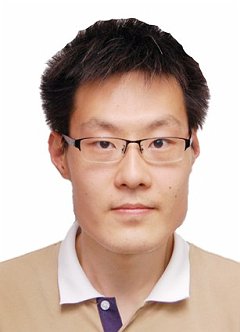
Bo Wangمشاهده پروفایل
استادیار
Bo Wang is an Assistant Professor in the School of Computer Science and Technology at Beijing Jiaotong University (BJTU), where he serves as a Master's Supervisor. He received his PhD in Computer Science from Peking University in 2021, with prior educational background from University of Science and Technology of China (Master) and Central South University (Bachelor). His academic journey includes significant international experience, having been a visiting Ph.D. student at the National University of Singapore in 2019 under the supervision of Prof. Abhik Roychoudhury, and a visiting scholar at Singapore Management University in 2024. These experiences have contributed to his global perspective on software engineering research. Dr. Wang's research spans four primary areas of software engineering: Compiler Testing and Tuning - Focusing on identifying bugs in C++ compilers through innovative fuzzing techniques and type-driven mutation Mutation Analysis - Developing efficient approaches to mutation testing that reduce computational overhead while maintaining effectiveness Automated Program Repair - Creating systems that automatically fix software bugs, with emphasis on efficiency and validation techniques AI for Software Engineering - Exploring how large language models can enhance various software engineering tasks including fault localization and test generation His publication record demonstrates a consistent focus on practical software engineering problems with significant technical depth. Recent work shows an increasing integration of AI/ML techniques with traditional software engineering approaches, particularly in evaluating how large language models can contribute to automated program repair and fault localization. His research often targets efficiency improvements, seeking to make advanced software engineering techniques more practical for real-world application. Dr. Wang has been recognized with prestigious awards including the ACM SIGSOFT Distinguished Paper Award for his ISSTA 2017 work on mutation analysis and the IEEE TCSE Distinguished Paper Award for his ICSME 2025 paper on automated program repair. As an active member of the software engineering community, Dr. Wang serves on program committees for major conferences including ASE, FSE, and ICSE. He has advised multiple Master's students at Beijing Jiaotong University, guiding research in software testing, program analysis, and automated repair techniques. His work has been supported by academic grants that enable his research group to pursue innovative approaches to challenging software engineering problems. Dr. Wang maintains an active research group focused on software testing and analysis, with projects spanning compiler testing, mutation analysis, automated program repair, and AI applications in software engineering. His lab employs both traditional program analysis techniques and cutting-edge AI approaches to address longstanding challenges in software reliability and maintenance.

Yakun Zhangمشاهده پروفایل
دانشیار
Yakun Zhang is an Associate Professor at the School of Computer Science and Technology, Harbin Institute of Technology (Shenzhen). She holds a Ph.D. in Software Engineering from Peking University (2021-2025) and was a visiting scholar at the National University of Singapore. Her research integrates AI technologies like large language models to advance software engineering automation. Education Ph.D. in Software Engineering, Peking University (2021-2025) M.S. in Software Engineering, University of Chinese Academy of Sciences (2018-2021) B.S. in Computer Science, Wuhan University (2014-2018) Research Focus Her work spans: Intelligent Software Engineering (LLM-powered code generation/testing), Multi-Agent Systems (collaborative AI agents), and Trustworthy LLMs (addressing hallucinations/security). Recent publications demonstrate strong emphasis on GUI testing automation and dynamic analysis frameworks. Awards & Honors CCF System Software Outstanding PhD Dissertation Nomination (2025) Tencent Qingyun Talent Program & ByteDance Soaring Star Talent (2025) Outstanding Graduate of Beijing Municipality & Peking University (2025) National Scholarship & President's Awards (Peking University/CAS) Academic Service PC member for ASE 2025, ICSE 2026, and MSR 2025. Reviewer for ACM TOSEM and IEEE TSE. Actively recruits PhD/Master's students and collaborates with NUS, Microsoft, and Tencent.
Jeffrey P. Bigham is the Philip Guo Endowed Professor of HCI at the Human-Computer Interaction Institute, Carnegie Mellon University, with a joint appointment in the Language Technologies Institute. His research focuses on accessibility, human-AI interaction, dialog systems, and crowdsourcing. School: School of Computer Science Institute: Human-Computer Interaction Institute His research spans creating accessible technologies for blind users, improving speech recognition for people with disabilities, and developing human-AI collaboration frameworks. Key projects include VizWiz accessibility tools, Scribe captioning systems, and Chorus conversational AI. Recent work emphasizes UI understanding (WebUI dataset, UICoder), generative AI applications (Apple Intelligence), and accessibility infrastructure (System-class Accessibility). Articles highlight intersections between computer vision, NLP, and inclusive design. NSF CAREER Award Best Paper Awards: ASSETS 2021, CHI 2021, W4A 2021 Nominations: CHI 2024, ECCV 2024, DIS 2024 He advises numerous students and postdocs across accessibility, AI, and HCI domains, with trainees now at Google, Apple, University of Michigan, and beyond. Funding comes from Apple, Google, Microsoft, NSF, and other major institutions.
Marco Torchiano is a Full Professor at the Department of Control and Computer Science (DAUIN) at Politecnico di Torino , Italy. He is a member of the SmartData@PoliTO laboratory and the SOFTENG - Software Engineering Group . Research Interests : Agile software development, bias detection, data integrity, software testing, gamification, empirical software engineering, and software maintenance. Disciplinary Expertise : Covers software engineering, human-computer interaction, web systems, and data science. His research focuses on improving software quality through empirical studies, gamification of testing processes, and bias detection in algorithms. He has developed tools like GAppium for gamified testing and MINOS for GDPR compliance analysis. Recent Trends in his publications include gamification applied to UML/BPMN modeling, Android testing frameworks, algorithmic fairness, and technical debt management in industrial projects. Scientific Awards : EGOV-DeDEM-ePart Best Paper Award (Category 1) - IFIP (2020) ICPC Best Paper Award - IEEE (2017) PROMISE Best Paper Award - PROMISE Program Committee (2017) EESSMod Best Paper Award - EESSMod Program Chairs (2012) Best Paper Award - COTS Based Software Systems Conference (2004) Fellow - Nexa Center for Internet and Society (2016-) Fellow - IEEE (2015-) Senior Member - IEEE (2015-) Advisory Roles : Supervises PhD students in Computer Systems Engineering and Artificial Intelligence. Grants : Leads the EndGame project (2023-2025) on gamified end-to-end testing and a PRIN project on software migration to web architectures.
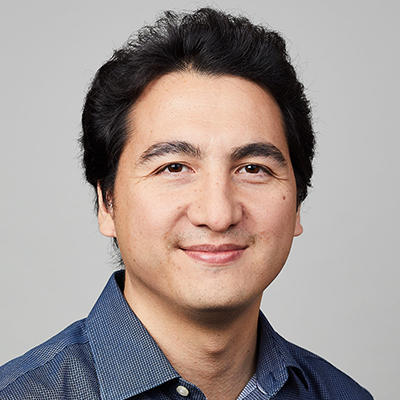
Zachary A. Pardos is an Associate Professor of Education at the University of California, Berkeley , where he directs the Computational Approaches to Human Learning (CAHL) Research Lab . He is also affiliated with the Cognitive Science program and serves as the Head Graduate Advisor there. PhD in Computer Science from Worcester Polytechnic Institute Bachelor's in Computer Science from Worcester Polytechnic Institute His research focuses on adaptive learning systems , AI in education , and knowledge representation using behavioral and semantic data to enhance postsecondary student mobility. Key projects include the OATutor open-source adaptive tutoring system and the ATAIN infrastructure network. Recent publications analyze large language models in education, Bayesian knowledge tracing optimizations, and psychometric validation of AI-generated content. Awards include Best Short Paper at EDM 2024 and Best Paper at L@S 2019 . Active grants from Foundation for California Community Colleges , College Futures Foundation , and Accendium Past funding from NSF , Google , and Bill & Melinda Gates Foundation He teaches DATA 144 (Data Mining and Analytics), EDUC C260F (Machine Learning in Education), and EDUC W161 (Digital Learning Environments). The CAHL research group explores equity, diversity, and AI's role in K-16 education.
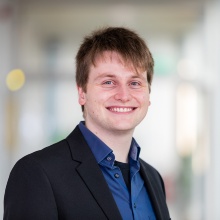
Sandro Spethمشاهده پروفایل
پژوهشگر
Sandro Speth is a Researcher and Doctoral Researcher at the University of Stuttgart's Institute of Software Engineering, focusing on cross-component issue management in microservice architectures. He contributes to software engineering research and education, particularly in gamified platforms and agile methodologies. University of Stuttgart, Software Quality and Architecture Group Doctoral Researcher in Software Engineering Active in teaching and supervising programming and software architecture courses His research spans software architecture analysis, issue propagation in distributed systems, automated GUI testing, and educational technology innovations like gamification and AI-driven content generation. Publications address challenges in microservice management, deployment model abstraction, and scalable educational tools. Speth's teaching roles include lecturing on data structures, software development, and deploying gamified systems like Gamify-IT and IT-REX. He supervises student projects in cross-component issue management, autoscaling explainability, and microservice design.

Cemal Yilmazمشاهده پروفایل
دانشیار
Cemal Yilmaz is an Associate Professor in the Computer Science and Engineering Program at Sabanci University's Faculty of Engineering and Natural Sciences in Istanbul, Turkey. His office is located in FENS G019, and he can be contacted via email at cyilmaz@sabanciuniv.edu or by phone at +90 (216) 483 9532. He directs the SUSOFT (Software Engineering Research Group), focusing on enhancing programmer productivity through practical tools and techniques. Education: Ph.D. in Computer Science, University of Maryland, 2005 M.S. in Computer Science, University of Maryland, 2002 M.S. in Computer Engineering and Information Science, Bilkent University, 1999 B.S. in Computer Engineering and Information Science, Bilkent University, 1997 Research Interests: Yilmaz's research centers on software engineering innovations, particularly combinatorial interaction testing, software security, and runtime failure prediction. He emphasizes experimental approaches with incremental prototyping and empirical analysis. Key domains include: Developing cost-aware testing frameworks for complex systems Hybrid hardware/software instrumentation for security vulnerability detection Systematic testing methodologies for multithreaded applications Real-time side-channel attack detection using hardware counters Publication Trends: His recent articles (2023-2025) demonstrate a strong focus on AI-driven testing automation, cybersecurity vulnerability analysis, and industrial case studies. Predominant themes include model-based test adaptation, privacy compliance in web systems, and deep learning for anomaly detection in telemetry data. Cross-cutting interests in combinatorial optimization and hardware security vulnerabilities are consistently evident. Advising and Grants: Yilmaz actively mentors 6 PhD and 1 MS students while having supervised 9 alumni. Major grants include: TÜBİTAK 1003: Privacy-Preserving Security Operation Center (2017) TÜBİTAK 1001: Cost- and Test Case-Aware Combinatorial Testing (2014) Marie Curie International Reintegration Grant (2009) Laboratory Leadership: As director of SUSOFT, he oversees projects in combinatorial testing, security profiling, and distributed quality assurance. The group collaborates with industry partners like Netas and prioritizes solutions for scalable software reliability.
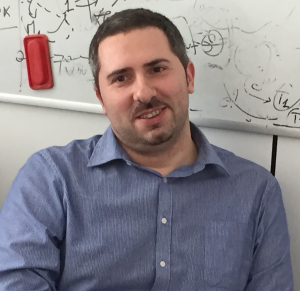
Apostolos Zarras is a Professor in the Department of Computer Science & Engineering at the University of Ioannina, Greece. He has been with the institution since 2002, progressing from Visiting Professor to full Professor in 2022. His academic journey includes a Ph.D. from the University of Rennes 1, France (2000), an M.Sc. from the University of Crete (1996), and a B.Sc. from the same institution (1994). Education: Ph.D. in Computer Science, University of Rennes 1, France (1996–1999) M.Sc. in Computer Science, University of Crete, Greece (1994–1996) B.Sc. in Computer Science, University of Crete, Greece (1990–1994) His research centers on software engineering, with a focus on software architecture, design patterns, software evolution, middleware, and service-oriented computing. He explores quality aspects of software systems, including refactoring, schema evolution, and dependable systems. His work often bridges theoretical models with practical applications in distributed and pervasive environments. The recent publications reflect a strong trend in software evolution, particularly schema evolution in databases, refactoring patterns, and the empirical study of design patterns (e.g., GoF patterns) in real-world systems. Themes such as anti-patterns, tool support for refactoring, and naming conventions in SQL are recurrent, indicating a deep interest in improving software quality through structured design and evolution practices. Scientific Awards: No specific awards are mentioned in the provided text. Advising and Grants: Apostolos Zarras has supervised over 17 B.Sc. theses, more than 12 M.Sc. theses, and one Ph.D. thesis. He has served as a principal investigator in several EU and national R&D projects, including the ForeverSOA INRIA project and the CHOReOS FP7 ICT IP project. His professional service includes extensive reviewing for top journals (IEEE TSE, CACM, etc.) and participation in program committees of major conferences (ICSE, FSE, Middleware, ER). Labs and Teams: He has collaborated with the ARLES Group at INRIA Rocquencourt, France, during multiple visiting researcher stays (2005–2008). His research is conducted within the Department of Computer Science & Engineering at the University of Ioannina, where he contributes to graduate studies and academic dissemination.
- Software Engineering
- Automated Testing
- GUI Testing
- +۳ مورد دیگر
Leonardo Mariani is a Professor at the University of Milan Bicocca, specializing in software engineering with a focus on software testing and analysis. He actively leads and participates in European and national research projects such as the ERC-funded 'Learn' and 'AST' projects, as well as H2020 NGPaaS. His research spans automated testing, GUI testing, AI-based code assistants, and cloud system monitoring. He has contributed to improving software testability, runtime enforcer testing, and AI-driven development tools. His work emphasizes practical applications in mobile and edge computing environments. Recent publications highlight innovative approaches to test case generation, energy-efficient AI systems, and ethical/legal implications of AI-generated code. Mariani's scientific achievements include the ERC Consolidator Grant 2014 and Proof of Concept funding, alongside senior memberships in IEEE and ACM. As principal investigator in multiple projects, he bridges academic research with industry needs, focusing on Kubernetes testing, Android compatibility, and formal methods in software quality. His collaborative efforts involve advising students and coauthoring over 233 publications.