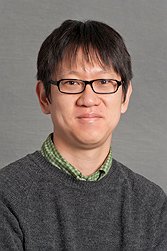
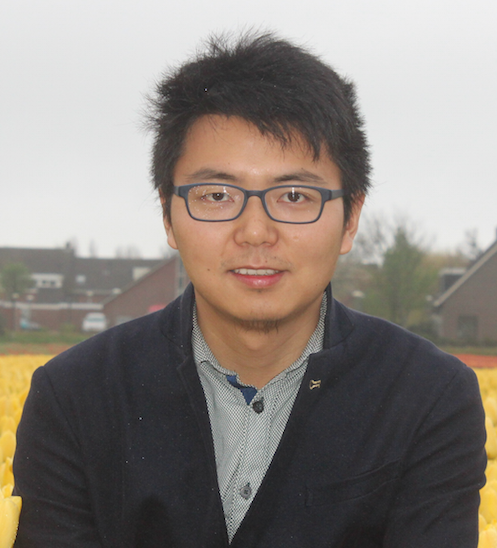
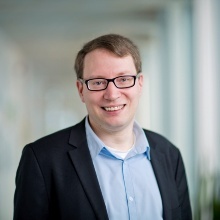
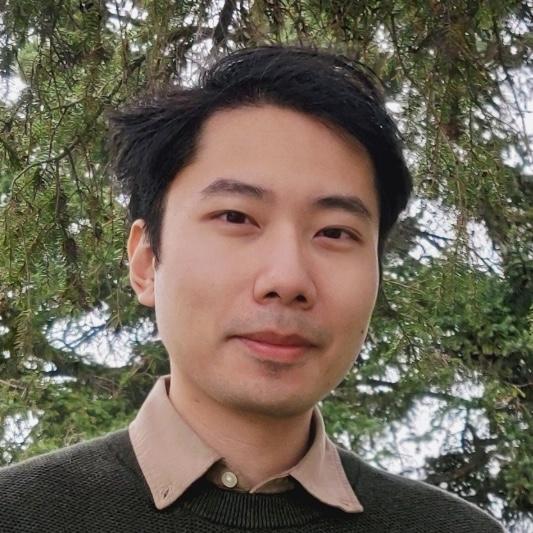
Prof. Dr. Chunyang Chen is a Full Professor at the Department of Computer Science, Technical University of Munich (TUM), Heilbronn, Germany. He holds the Chair of Software Engineering & AI, serves as a core member of the Munich Data Science Institute, board member of the Heilbronn Data Science Center, and Fellow at Fortiss. He also maintains an Adjunct Professor role at Monash University, Australia. Research Focus: His work bridges Software Engineering, Deep Learning, and Human-Computer Interaction (HCI), specializing in AI/ML, NLP, and program analysis for mobile app development, testing, and security. Key areas include LLM-assisted app development, robustness of deep learning models, and accessibility testing. Scientific Awards: Best Paper Honorable Mention in CHI 2024 Discovery Early Career Researcher Award (DECRA), Australian Research Council ACM SIGSOFT Early Career Researcher Award Facebook Research Award in Probability and Programming Dean's Award for Research Impact at Monash University Academic Leadership: He actively mentors PhD students, supervises postdocs, and leads research teams focusing on software security, automated testing, and LLM applications. His recent work explores the intersection of software security and large language models, with a special issue call for EMSE journal.
Shin Yoo is a tenured Full Professor in the School of Computing at Korea Advanced Institute of Science and Technology (KAIST), where he leads the Computational Intelligence for Software Engineering (COINSE) research group. He received his PhD from King's College London in 2009 under the supervision of Prof. Mark Harman. Currently, he serves as the General Chair for ASE 2025, which will be held in Seoul, Korea. Professor Yoo earned his PhD in Computer Science from King's College London (2009), following an MSc in Software Engineering with Distinction from the same institution (2006). His academic journey includes positions as Tenured Associate Professor (2021-2025), Associate Professor (2018-2021), and Assistant Professor (2015-2018) at KAIST, as well as Lecturer and Research Associate positions at University College London and King's College London. His research focuses on the intersection of software engineering and artificial intelligence, particularly in search-based software engineering, software testing, automated debugging, SE4AI (Software Engineering for AI), and AI4SE (AI for Software Engineering). Professor Yoo's work bridges theoretical foundations with practical applications, developing innovative techniques for fault localization, test case generation, and debugging using machine learning and genetic programming approaches. His research has significant implications for improving software reliability and development efficiency in both traditional software systems and AI-powered applications. Professor Yoo's recent publications demonstrate a clear trend toward leveraging large language models and deep learning techniques for software engineering tasks. His work spans fault localization, automated debugging, GUI testing, and program analysis, with increasing focus on the challenges and opportunities presented by AI systems. His research shows a consistent evolution from traditional search-based software engineering to AI/ML-enhanced approaches, reflecting the broader trends in the field. ACM SIGEVO HUMIES Silver Medal (2017) for human competitive application of genetic programming to fault localization research IEEE TCSE Most Influential Paper Award (ICST 2024) for work on mutation-based fault localization Professor Yoo has supervised five PhD students to completion, with his former students now holding positions as assistant professors, post-doctoral researchers, and software engineers at institutions including Kyoungpook National University, Max-Planck Institute Security & Privacy, Università della Svizzera Italiana, Roku Korea, and NUS. He currently serves as an associate editor for the Journal of Empirical Software Engineering and ACM Transactions on Software Engineering and Methodology, and has held significant leadership roles in major software engineering conferences including Program Co-chair for SSBSE (2014), ICST (2018), and ICSE NIER track (2020), General Chair for SSBSE (2022), and Testing & Analysis Area Chair for ICSE (2024). As leader of the Computational Intelligence for Software Engineering (COINSE) group at KAIST, Professor Yoo directs research that combines computational intelligence techniques with software engineering challenges. The group focuses on developing novel approaches to software testing, debugging, and analysis using search-based and AI-driven methods. Their work spans both theoretical foundations and practical implementations, with strong connections to industry challenges and applications.
Li Li is a Professor of Software Engineering at Beihang University , China. Previously, he served as an ARC DECRA Fellow and Senior Lecturer at Monash University , leading the SMart software Analysis and Trustworthy computing (SMAT) research lab at the Department of Software Systems and Cybersecurity. His academic journey includes a Ph.D. in Software Engineering from the University of Luxembourg (2016), supervised by IEEE Fellow Prof. Yves Le Traon and Dr. Jacques Klein. Research Interests Li's research focuses on Mobile Software Engineering (Mobile Security, Quality Assurance) and Intelligent Software Engineering (SE4AI, AI4SE). He applies static code analysis , dynamic program testing , and machine/deep learning to enhance software security and reliability. Key areas include Android API evolution, automated patch validation, and multi-language code analysis frameworks like Scalpel for Python. Scientific Recognition ARC DECRA Fellowship Rising SE Research Star Top-5 Most Impactful Early Career SE Researchers (2020, 2017) 5 Best/Distinguished Paper Awards across PLDI, WWW, ASE, MSR, and SANER Academic Contributions He has contributed to foundational Android analysis tools (e.g., AndroZoo++, DroidRA) and developed scalable systems for distributed program analysis (Seads). His work appears in top venues like ICSE, ESEC/FSE, ASE, ISSTA, POPL, and TSE.
Steffen Becker is a Professor at the University of Stuttgart's Faculty of Computer Science, Electrical Engineering and Information Technology, affiliated with the Institute for Software Engineering's Software Quality and Architecture group. His work focuses on software engineering, cloud systems, model-driven engineering, and cybersecurity. He leads research in architectural modeling tools like Slingshot, GUI testing frameworks (ViMoTest), and hardware security analysis. Recent studies explore AI integration in testing, education, and automotive systems (CARISMA). Research interests include elasticity modeling, self-adaptive systems, and educational technology. His 2025 publications address issues like end-user hardware comprehension, FPGA security, and LLM-driven test generation. Notable tools developed include the Slingshot Simulator for cloud-native systems and Gropius for cross-component issue management. Becker contributes to both theoretical advancements and practical implementations in software quality, security, and cloud infrastructure. Key Areas: Software Architecture, Cyber-Physical Systems, Testing, Reverse Engineering Tool Developments: ViMoTest, Slingshot, Gropius Education Focus: Online programming pedagogy and curriculum innovation His work bridges foundational research with industry applications, addressing challenges in automotive computing, cloud elasticity, and human-centric security awareness. Recent efforts emphasize explainable hardware (XHW) and AI's role in qualitative analysis automation.
Tse-Hsun (Peter) Chen is an Associate Professor in the Department of Computer Science and Software Engineering at Concordia University, Montreal. He leads the Software PErformance, Analysis, and Reliability (SPEAR) lab, focusing on improving software quality through log analysis, AIOps, and mining software repositories. His research collaborates with companies like Microsoft, BlackBerry, and Ericsson. Education: PhD, MSc, and BSc in Computer Science from Queen's University and the University of British Columbia. Awards include the Gina Cody Research Award (2021) and recognition as one of the world's most active software engineering researchers (JSS study). Research interests include software testing, DevOps, and leveraging LLMs for SE tasks. Recent work emphasizes log parsing with LLMs (e.g., LibreLog) and fault localization. Graduates from his lab hold academic positions at institutions like York University and DePaul University. Teaching includes courses on software verification, testing, and process management. Active in program committees for ICSE, FSE, and MSR. Over 50 publications in top venues like TSE, ICSE, and FSE.
Xin Wang is a Professor at Fudan University's School of Computer Science, specifically within the Department of Communication Science and Engineering and affiliated with the State Key Laboratory of ASIC and System in Shanghai, China. With 185 publications spanning two decades (2003-2025), Wang maintains an exceptionally active research profile, particularly evident in recent high-output years including 22 publications in 2019, 19 in 2021, and 13 in 2024. The research portfolio demonstrates deep collaboration networks, most notably with Yang Chen (45 co-authored papers), Yangfan Zhou, and Qingyuan Gong. Wang's research spans multiple critical areas in computer science, with significant contributions to networking systems (particularly CDN optimization, HTTP/3 implementation, and IPv6 infrastructure), software engineering (focusing on work rhythms, testing methodologies, and GUI analysis), mobile applications (including healthcare implementations and accessibility features), and security (especially account security and fraud detection in e-commerce). The interdisciplinary nature of the work is evident through applications in healthcare, e-commerce, campus safety, and IoT systems. Analysis of recent publications (2023-2025) reveals a strong trend toward practical system implementations addressing real-world challenges. The research demonstrates a consistent pattern of moving from theoretical foundations to deployable solutions, with particular emphasis on optimizing performance in networking systems, enhancing security in digital platforms, and improving user experience across diverse application domains. The work frequently incorporates machine learning techniques to solve complex system problems while maintaining practical applicability. While specific grant information isn't detailed in the publication records, the extensive collaboration network spanning multiple institutions in China and internationally suggests substantial research funding support. The consistent publication output across top venues including IEEE/ACM Transactions, INFOCOM, SIGCOMM, and ICSE indicates sustained research productivity and impact.
Dr. Shengcheng Yu is a Postdoctoral Researcher at the TUM School of Computation, Information and Technology (CIT) of the Technical University of Munich (TUM) , affiliated with the Chair of Software Engineering & AI . He earned his bachelor's and Ph.D. from Nanjing University (NJU) in 2020 and 2024, respectively. Research Focus: His work bridges Software Testing with Artificial Intelligence , concentrating on GUI Testing , Mobile App Testing , Crowdsourced Testing , and GUI Automation . His methodologies integrate Image Recognition , Reinforcement Learning , and Large Language Models (LLMs) to enhance automated testing frameworks. Publications Trends: His recent studies (2023-2024) emphasize AI-driven testing tools , including vision-based GUI testing , LLM-based test script generation , and deep image-text fusion for crowdsourced test reports . Earlier work (2021) established foundations in cross-platform testing and screenshot understanding. Team Affiliation: Collaborates with Prof. Dr. Chunyang Chen and researchers such as Lukas Roschel , Wenchao Gu , and Yanqi Su .
Xiaofei Xie is an Assistant Professor in the School of Computing and Information Systems at Singapore Management University (SMU), where he has been employed since 2022. Prior to this position, he was a postdoctoral researcher at Nanyang Technological University in Singapore from 2018 to 2021. His research primarily focuses on program analysis, software testing, vulnerability detection, and quality assurance of AI systems. SMU is ranked No. 9 (No. 5 in Asia) in the Software Engineering category according to CSRankings. Dr. Xie's research interests span multiple critical areas in software engineering and AI systems. His work on program analysis includes detecting non-termination bugs and developing practical methods like EndWatch for real-world software. In software testing, he has made significant contributions to deep learning systems testing, autonomous driving systems testing, and smart contract security. His research on vulnerability detection encompasses various aspects of AI security, including backdoor attacks, adversarial examples, and security testing for web-based deep learning frameworks. His quality assurance work for AI systems includes developing metrics for robustness evaluation and creating testing methodologies for diverse AI applications. Dr. Xie's publication record shows a strong trend toward integrating large language models with traditional software engineering techniques. His recent work demonstrates increasing focus on testing autonomous systems, securing AI models, and applying advanced machine learning techniques to traditional software engineering problems. The research spans multiple domains including deep learning frameworks, smart contracts, autonomous driving systems, and federated learning environments. Among his notable achievements are multiple ACM SIGSOFT Distinguished Paper Awards (ASE 2019, ASE 2023, ISSTA 2022), the ACM Tianjin Doctoral Dissertation Award 2019, and the Best Paper Award at APSEC 2020. His work has been accepted to top-tier conferences including ICSE, FSE, ASE, ISSTA, and security venues like USENIX Security. Dr. Xie actively serves the academic community as a PC co-chair for ICECCS 2025 and as a program committee member for numerous prestigious conferences including ICSE, FSE, ASE, ISSTA, and AAAI. He has also organized workshops such as the Workshop on AI and Software Testing/Analysis (AISTA) and served as Guest Editor for special issues on AI security. His service demonstrates leadership in bridging software engineering with AI and security research communities.
Alessio Gambi is a Researcher at the Austrian Institute of Technology (AIT) within the Security & Communication Technologies department, specializing in software engineering for autonomous systems. His current work focuses on testing methodologies for self-driving cars, self-adaptive systems, and cloud environments. His research interests center on Software Testing for Autonomous Vehicles , where he develops novel techniques for scenario generation, safety validation, and uncertainty management. Key areas include search-based procedural content generation, simulation-based testing, and the integration of large language models for test learning. His work bridges theoretical advances with practical tools like Flexcrash and TEASER for real-world validation. Analysis of his recent publications (2023-2025) reveals a strong trend toward autonomous vehicle testing with increasing incorporation of AI techniques. Approximately 60% of his work addresses self-driving car validation, 25% focuses on general software testing methodologies, and 15% explores AI/LLM applications in testing. His subfield specialization shows consistent emphasis on critical scenario generation, mixed-traffic simulation, and safety monitoring. Gambi actively contributes to the software engineering community through program committee roles at major conferences including ASE (2023-2025), ICSE (2024-2026), ISSTA (2021-2025), and ESEC/FSE. He has served as session chair, workshop organizer, and track committee member across these venues, demonstrating leadership in software testing research. His professional activities include developing open-source testing tools (visible on GitHub), teaching engagements like the Database Systems course at AIT (2024), and industry collaborations through AIT's research infrastructure. Current projects focus on predictive safety monitoring and uncertainty management for automated driving systems.
Kihong Heo is an Associate Professor at the School of Computing and Graduate School of Information Security, KAIST, Republic of Korea. He leads the Programming Systems Laboratory and has held academic positions since 2017, including Assistant Professor (2017-2020) and Associate Professor (2020-2024). His research focuses on developing program reasoning systems for safe and reliable software, with key contributions in AI-based program analysis, program simplification, and scalable synthesis systems. His educational background includes a Ph.D. and B.S. in Computer Science & Engineering from Seoul National University (2009 and 2005 respectively). He has served as a post-doctoral researcher at the University of Pennsylvania (2009-2017) before transitioning to KAIST. Research interests span AI-driven program analysis for deep semantic bug detection, program debloating systems for security optimization, and synthesis frameworks using probabilistic models. His work bridges undecidability in static analysis with external information integration. Recent publications analyze logic-based verification for mobile agents, compiler fuzzing , and data dependency guided fuzzing . Trends show a focus on security-critical systems, reinforcement learning for code reduction, and probabilistic models. Scientific awards include the ACM SIGSOFT Distinguished Paper Award (FSE 2025) , Amazon Research Award (2024) , and multiple KAIST teaching honors . He has also received ACM SIGPLAN Distinguished Paper (PLDI 2019) and Best Artifact Awards. He has mentored numerous Ph.D. and Master’s students and contributes to program committees for leading conferences like SOAP (PC Co-Chair) , ICSE , and SAS . His work is supported by grants and collaborations with institutions including Facebook and Seoul National University.
Dr. Bogumiła Hnatkowska serves as Assistant Professor at the Institute of Informatics within the Faculty of Computer Science and Management at Wrocław University of Science and Technology. Her academic career spans software engineering research and education with emphasis on model-driven approaches and quality assurance methodologies. Her research interests include: Software Engineering Analysis and Design of Information Systems Software Development Methodologies Model-Based Software Development Domain-Specific Languages Software Quality Recent publications (2021-2025) reveal concentrated research in model-driven engineering, business rules processing, and ontology integration. Key trends involve textual specification languages for use-cases, automated test generation mechanisms, and formal transformations for ontologies – demonstrating consistent application of theoretical rigor to practical software development challenges across agile and model-based contexts. Scientific Awards: No scientific awards were mentioned in the provided text Dr. Hnatkowska has served as principal investigator for multiple State Committee for Scientific Research grants including UML extensions for multimedia systems (2000), real-time systems analysis (2005), and model-driven database design (2008). Her teaching portfolio includes Software Engineering, Software System Development, and Advanced Programming Techniques courses where she supervises team projects providing students with hands-on development experience. She actively participates in partner programs including Visual Paradigm's Academic Training Partner Program (providing UML/BPMN/agile tools) and IBM Academic Initiative, supporting her research in software engineering methodologies and educational tool development.
Fuyuan Zhang is a Postdoctoral Researcher at the Max Planck Institute for Software Systems, specializing in advanced software testing methodologies and formal verification techniques. His research focuses on improving the reliability and security of AI systems, quantum computing frameworks, and concurrent systems through innovative testing criteria, adversarial attacks, and compositional reasoning. Key areas of expertise include: Large Language Model (LLM) testing and validation Quantum program analysis and security Adversarial machine learning and neural network robustness Formal verification of concurrent and cyber-physical systems Automated bug detection in complex software systems His work bridges theoretical foundations with practical applications, addressing critical challenges in AI safety, quantum software reliability, and system-wide security certification.
Susanne Gerber is a Professor at iDNA and Adjunct Director at the Institute of Molecular Biology (IMB), Johannes Gutenberg University Mainz (JGU), affiliated with the Faculty of Biology's Bioinformatics department. Her academic journey includes an Assistant Professorship in Bioinformatics at JGU (2015-2020) and postdoctoral research at Università della Svizzera italiana. Her educational background comprises a PhD in Biophysics from Humboldt University of Berlin (2011), an M.Sc. in Bioinformatics from Free University of Berlin and Konrad Zuse Institute (2007), and a B.Sc. in Bioinformatics from Free University of Berlin and Max Planck Institute (2004). Dr. Gerber's research spans Bioinformatics, Computational Genomics, Systems Biology, Molecular Evolution, and Neuroinformatics , focusing on developing computational frameworks for genomic analysis, neurodegenerative disease modeling, and microbiome interactions. Her work integrates machine learning with multi-omics data to address complex biological questions in molecular evolution and neural systems. Analysis of her 15 most recent publications (2024-2025) reveals a strong emphasis on nanopore sequencing applications for RNA modification detection, deep learning frameworks for genomic data enhancement, and neurobehavioral modeling using AI-driven approaches. Key thematic clusters include epitranscriptomics, chromatin dynamics, and computational psychiatry with ethical AI considerations. Her methodological innovations include tools like COMET for network analysis, CCUT for chromatin data enhancement, and ModiDeC for RNA modification classification, demonstrating translational impact across genomics and neuroscience. Dr. Gerber leads research groups at IMB and iDNA focusing on computational genomics, advising students in bioinformatics and securing grants for AI-driven genomic analysis. Her labs develop open-source tools for nanopore data processing and neuroimaging analysis, fostering collaboration between computational and experimental biologists.
Chao Peng is a Principal Research Scientist at ByteDance where he leads the Software Engineering Lab, focusing on AI agents for software engineering. He holds a part-time position as a Postgraduate Student Mentor at Fudan University's School of Computer Science. His research bridges industry and academia, with significant contributions to software testing, program repair, and LLM applications in software development. Education: PhD in Informatics, 2021, University of Edinburgh, UK MSc in High Performance Computing and Data Science, 2017, University of Edinburgh, UK BEng in Computer Science and Technology, 2016, Xuzhou University of Technology, China Dr. Peng's research interests center on the intersection of artificial intelligence and software engineering. He explores how large language models can transform traditional software development practices, particularly in code generation, testing, and bug fixing. His work on LLM4Code has led to innovative frameworks like CodeVisionary for evaluating code generation capabilities and Trae Agent for software engineering tasks with test-time scaling. He investigates the synergy between machine learning techniques and compiler optimizations to enhance software reliability and developer productivity. His recent publications reveal a strong focus on practical evaluation frameworks for LLMs in real-world software engineering contexts. Rather than theoretical benchmarks, his work emphasizes real-world applicability, as seen in RepoMasterEval which evaluates code completion in actual repository settings. He examines multi-faceted challenges including code generation, bug reproduction, issue resolution, and repository-level question answering, consistently addressing the gap between laboratory evaluations and practical development environments. Scientific Awards: Distinguished Reviewer for FSE'25 Invited to program committees for FSE'26, SANER 2026, ASE 2025, and others School of Informatics Scholarship (fully-funded PhD) Multiple national scholarships during undergraduate studies Honours Spot Bonus at ByteDance Dr. Peng actively mentors postgraduate students at Fudan University while leading research initiatives at ByteDance that foster university collaborations. His laboratory work translates academic research into practical tools for software development, with several frameworks deployed in industrial settings. He serves on multiple conference program committees, contributing to the advancement of software engineering research through rigorous peer review and community building. His Software Engineering Lab at ByteDance operates at the forefront of AI-assisted development, exploring how agent-based systems can automate complex software engineering tasks. The team's work on frameworks like AEGIS for bug reproduction and DialogAgent for code question answering demonstrates their commitment to solving practical challenges faced by developers in real-world settings.
Zhenyu Chen is a Full Professor and Director of the iSE Laboratory at Nanjing University, specializing in AI-driven software testing methodologies. His research bridges artificial intelligence and software engineering with dual focus areas: leveraging AI to enhance testing processes ( AI for Testing ) and validating AI/ML systems ( Testing for AI ). His research interests center on deep learning framework testing , crowdsourced testing optimization , and Large Language Model applications in verification . Recent work demonstrates innovative approaches to metamorphic testing of neural networks, LLM-based test report analysis, and security hardening of code models against backdoors. Key contributions include the development of mooctest.com and frameworks like DevMuT for mutation testing of deep learning APIs. His publication trajectory reveals evolving focus from crowdsourced testing (2018-2020) to deep learning system validation (2021-2023) and current emphasis on LLM-powered testing solutions. Major venues include ASE, ICSE, and ISSTA where he serves regularly on program committees.