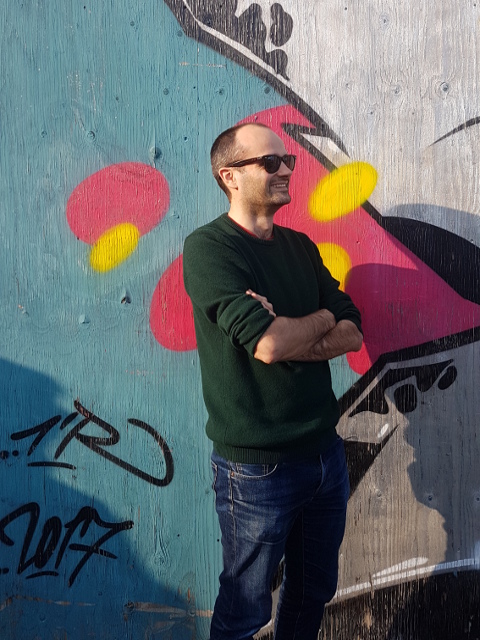
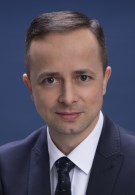
Dr. Reuben Binns is an Associate Professor of Human Centred Computing at the University of Oxford , where he investigates intersections between computer science, law, and philosophy. His research focuses on data protection , machine learning ethics , and regulation of technology .
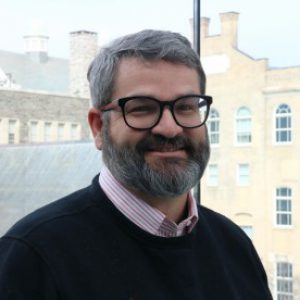
Tom Mitchell is the Fredkin Professor of AI and Learning and Director of the Center for Automated Learning and Discovery (CALD) at Carnegie Mellon University's School of Computer Science. His research focuses on machine learning, computational neuroscience, and their applications in neuroimaging and natural language processing. He is renowned for pioneering work in developing algorithms to decode brain activity and for contributions to foundational machine learning theory, including co-training and explanation-based learning. Mitchell authored the seminal textbook *Machine Learning* (McGraw Hill, 1997) and has led projects like Never-Ending Learning (NELL), an AI system that autonomously learns from web content. His work bridges computer science and cognitive science, exploring how machines can learn from data and human interaction. Notable research interests include brain-computer interfaces, automated knowledge extraction, and ethical AI. Mitchell's publications span influential journals like *Science* and *Nature*, and he has been recognized for advancing interdisciplinary research in AI and neuroscience. He has advised numerous students and contributed to initiatives like the AAAI Presidential Address on AI and brain sciences. Mitchell's current projects include studying the neural basis of language and developing AI tools for education and healthcare.
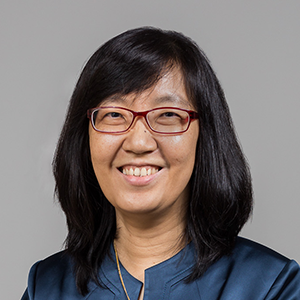
LEE Mong Li is a Professor of Computer Science at the National University of Singapore (NUS) and serves as Director of the NUS Centre for Trusted Internet and Community. She holds a Ph.D., M.Sc., and B.Sc. (First Class Honours) in Computer Science from NUS, where she was awarded the IEEE Singapore Information Technology Gold Medal as the top Computer Science student in 1989. Her academic career includes a visiting fellowship at the University of Wisconsin-Madison (1999) and consultancy with QUIQ USA (2000). Her research spans Data Management, Spatio-temporal Databases, Biomedical Informatics, and Retinal Image Analysis . She has pioneered work in data cleaning, data fusion, and analysis of semistructured data, with applications in social media analytics and healthcare. Her recent publications demonstrate strong interdisciplinary focus, particularly in AI-driven medical diagnostics including diabetic retinopathy screening and chronic kidney disease detection from retinal images. She co-authored foundational books on 'Designing Semi-structured Database' and 'Temporal and Spatio-Temporal Data Mining'. Her 150+ publications in major database conferences and journals reflect leadership in both theoretical and applied research. Recent work shows significant emphasis on Medical AI applications (retinal analysis, kidney disease prediction) Temporal fact verification systems Misinformation detection in multimodal environments Privacy challenges in large language models Key honors include: Singapore's President Technology Award (2014) for co-inventing an AI system screening eye conditions IEEE Singapore Information Technology Gold Medal (1989) She actively contributes to government-funded multidisciplinary projects building practical deployable systems. Her leadership extends to program committees of prestigious database conferences and directing the NUS Centre for Trusted Internet and Community. She teaches BT5110 Data Management and Warehousing and has co-developed an AI system for diabetic retinopathy screening deployed in Singapore's national teleophthalmology program.
Derry Wijaya is an Associate Professor and Program Coordinator for the Data Science Program at Monash University Indonesia. She also co-directs the Monash Data and Democracy Research Hub, focusing on analyzing data's impact on democracy. Previously, she served as an Assistant Professor at Boston University's Department of Computer Science. Her research spans multilingual NLP, low-resource language technologies, and combating AI-driven misinformation. Education: PhD in Language Technologies, Carnegie Mellon University (2013) Postdoctoral Fellowship, University of Pennsylvania (2013–2015) Bachelor's & Master's in Computing, National University of Singapore Research Interests: Improving language model performance via self-consistency and reasoning Analysis of bias, toxicity, and framing in AI outputs Preservation of Indonesian indigenous scripts and languages Development of tools like OpenFraming AI for multilingual framing analysis Recent Work Trends: Her publications (2023–2025) emphasize ethical AI, low-resource language solutions, and social media analysis. Notable contributions include frameworks for metric calibration (MetaMetrics), debiasing generative models, and surveys on Indonesian language technology needs. Awards & Roles: Fulbright Scholarship recipient Serves on program committees for ACL, EMNLP, NeurIPS, and ICLR Co-created OpenFraming AI for multilingual framing analysis Grants & Labs: Leads the Monash Data and Democracy Hub, focusing on tech's societal impact. Active in grant-funded projects preserving Indonesia's linguistic heritage through digitization efforts.
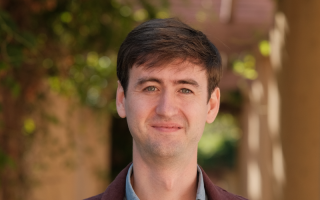
Dr. Jeremy Bowles is a Lecturer in Comparative Politics at the Department of Political Science, University College London (UCL). His research focuses on the political economy of development, particularly in sub-Saharan Africa, examining interactions between state-building processes and distributive politics. Prior to UCL, he held a Postdoctoral Fellowship at Stanford University's King Center on Global Development and earned his Ph.D. from Harvard University. His work has been supported by institutions like J-PAL and USAID. Education: B.A. and M.Sc. from the University of Oxford Ph.D. in Government from Harvard University (2021) Postdoctoral Fellowship at Stanford University His research explores how distributive conflicts shape state-building and electoral accountability in weakly institutionalized contexts. Key themes include taxation systems in Tanzania, elite politics in post-colonial states, and the role of social media in African autocracies. He employs experimental and observational methods to study governance challenges in developing democracies. His publications appear in top journals like the American Political Science Review and American Journal of Political Science . Recent work addresses misinformation dynamics, electoral accountability, and post-pandemic policy responses in Zimbabwe. Teaching focuses on African governance and political economy models. Grants and partnerships include collaborations with the International Growth Centre (IGC) and Stanford Impact Labs.
Desmond Elliott is an Associate Professor and Villum Young Investigator at the Department of Computer Science, University of Copenhagen. His research focuses on vision-language models, multilingual and multimodal processing, with particular emphasis on tokenization-free language modeling approaches. He leads a research group actively working on pixel language models and cross-lingual multimodal understanding. University of Copenhagen, Department of Computer Science Villum Young Investigator Associate Editor for JAIR (2025-2028) Senior Area Chair for ACL 2025 Elliott's research spans vision-language integration, multilingual NLP, and multimodal machine learning. His work explores how language models can operate directly on visual pixels without traditional tokenization, enabling more seamless integration of vision and language processing. He investigates compositional generalization in multimodal systems, retrieval-augmented image captioning, and cross-lingual transfer in vision-language tasks. His group develops methods for low-resource language processing and creates benchmarks for evaluating multimodal systems across diverse cultural contexts. His recent publications demonstrate strong trends in pixel-based language modeling, synthetic dataset generation through retrieval augmentation, and multilingual vision-language processing. The work spans theoretical advances in model architectures and practical applications in areas like medical text analysis, food culture understanding, and social media content moderation. His research often bridges computer vision and natural language processing with a focus on making these technologies accessible across diverse languages and cultures. Best Paper Honorable Mention at CVPR Visual Concepts Workshop 2025 Best Long Paper Award at EMNLP 2021 Area Chair Favourite paper at COLING 2018 Elliott actively supervises student projects in BSc and MSc programs related to his research interests. His research has received substantial funding from Google (2024-2025), Facebook (2022-2024), Villum Foundation (2021-2026), Novo Nordisk Foundation (2019-2024), and European Union (2023-2026). He regularly recruits postdocs for projects including the Danish Foundation Models project and the Responsible AI for the People Project. His group holds regular meetings on Tuesdays from 13:00-14:00 in IF G.03, with an active mailing list for announcements. The research environment appears collaborative, with frequent co-authorship across institutions and regular participation in major NLP and computer vision conferences.
Isabelle Augenstein is a Professor at the University of Copenhagen's Department of Computer Science, where she leads the Copenhagen Natural Language Understanding (CopeNLU) research group and the Natural Language Processing section. She became Denmark's youngest female full professor in 2022 and co-leads the Danish Pioneer Centre for Artificial Intelligence's Speech and Language collaboratory. ERC Starting Grant recipient DFF Sapere Aude Research Leader fellow Karen Spärck Jones Award winner Hartmann Diploma Prize recipient Her research focuses on fair and accountable NLP systems, with specific emphasis on explainability, factuality, bias detection, and social NLP. She investigates cultural biases in language models, develops frameworks for explainable fact checking, and explores uncertainty estimation in NLP systems. Recent publications demonstrate expertise in: Mechanistic analysis of cultural bias representations Context utilization techniques for LLMs Explainability metrics and attribution methods Cross-domain label adaptation Retrieval-augmented generation Fact checking uncertainty quantification Major scientific contributions include: Numerous EMNLP and ACL publications Foundational work on stance detection Development of fact checking benchmarks Multilingual model analysis AI ethics frameworks She supervises a team of researchers working on explainable AI and fact checking systems, with current projects including the ExplainYourself ERC-funded initiative on explainable fact checking. Her group recently presented multiple papers at EMNLP 2025 on topics spanning explainable AI and social NLP.
Prof. Dr. Matthias Weidlich is a faculty member at Humboldt University of Berlin within the Institute of Computer Science under the Faculty of Mathematics and Natural Sciences . His research focuses on Process Mining , Complex Event Processing , and Data Privacy with applications in Business Process Management and Scientific Workflows . Research Interests: Business Process Management and Process Mining Complex Event Processing and Stream Data Analysis Data Privacy and Security in Process Systems Scientific Workflow Systems and User Behavior Heterogeneous Network Embeddings Algorithm Design and Optimization Recent Publications (2023-2025) demonstrate expertise in: Efficient stream processing techniques Privacy-preserving process mining frameworks Scientific workflow analysis tools Graph neural network applications Multi-modal data integration Adaptive querying systems Contact: Office: Unter den Linden 6, 10099 Berlin Phone: 030 2093-41277 Email: matthias.weidlich@hu-berlin.de Web: hu.berlin/data
Aidong Zhang is the Thomas M. Linville Professor of Computer Science at the University of Virginia, with joint appointments in Biomedical Engineering and the School of Data Science. Her research focuses on machine learning, interpretable AI, federated learning, and generative AI applications in healthcare and bioinformatics. She holds a Ph.D. in Computer Science from Purdue University. Dr. Zhang has been honored with prestigious awards including the ACM Fellow (2017), IEEE Fellow (2009), and the 2025 Distinguished Researcher Award from UVA. Her work bridges computational methods with biomedical challenges, emphasizing fairness, robustness, and explainability in AI systems. Key research areas include federated learning frameworks, concept-based models, and large language models for scientific hypothesis generation. Dr. Zhang leads a lab offering PhD positions in machine learning, bioinformatics, and health informatics. Notable grants include NSF projects on explainable AI platforms and hardware-software co-design for extreme-scale machine learning. Education: Ph.D., Computer Science, Purdue University Affiliations: School of Engineering and Applied Science, School of Data Science Grants: NSF-funded projects on federated learning, multimodal analysis, and biomedical AI Labs/Teams: Zhang's Research Group focusing on interpretable machine learning and healthcare applications
Dr. Jason Bennett Thatcher is a Professor at Temple University in the Department of Management Information Systems at the Fox School of Business. He holds additional faculty appointments at the Technical University of Munich, Information Technology University-Copenhagen, and Hong Kong Polytechnic University. His research bridges human behavior and information technology, focusing on cybersecurity, strategic alignment, and digital innovation. 20-year track record in top FT50 journals Top 35 active IS researcher by productivity Senior Editor roles at MIS Quarterly , Information Systems Research , and Journal of the AIS Research spans three pathways: strategic IT decisions (firm performance, governance), IT workforce management (job satisfaction, turnover), and post-adoption IT innovation (technostress, IT identity). 2022 publications emphasize digital commerce, social media ethics, and technostress mitigation. Awards include: Clemson's 2008 Undergraduate Teaching Award KPMG Foundation Circle of Compadres Top Associate Editor recognition by Information Systems Research Multiple productivity rankings Teaching spans undergraduate to Ph.D. levels with global mentorship experience. Editorial leadership roles include Senior Editor positions and former editorial board memberships. Productivity metrics highlight 12,000+ Google Scholar citations and consistent publication in FT50 journals since 2002.
Christina Elmer is Professor for Digital Journalism and Data Journalism at the Institute of Journalism, Technical University of Dortmund. Prior to her academic career, she held significant positions at DER SPIEGEL as Deputy Head of Development, Member of the Editorial Board of SPIEGEL ONLINE, Head of the Data Journalism Department, and Science Editor (2013-2021). She is recognized as a leading expert in data journalism, AI in media, and digital transformation of journalism. Elmer's research focuses on data journalism, algorithmic accountability, and the integration of artificial intelligence in journalistic workflows. Her work explores how digital transformation affects media production, distribution, and reception, with particular attention to user-centered journalism, ethical dimensions of digital media, and the development of editorial products. She has pioneered approaches to structured journalism and modular content creation that adapt to changing audience needs. Her recent publications examine AI's impact on journalism, methods for combating disinformation, and strategies for maintaining journalistic integrity in algorithmically mediated information ecosystems. Her work shows a clear trend toward investigating how journalism can maintain societal relevance while adapting to technological changes, with increasing focus on AI systems as both tools and challenges for quality journalism. scoop award of the nextMedia.Hamburg initiative, 2023 Helmut Schmidt Journalist Prize (second prize) for 'Blackbox Schufa', 2019 Philip Meyer Award (third place) for 'Hanna and Ismail', 2018 dpa-infografik Award for 'Die Pendlerrepublik', 2018 Journalistin des Jahres, Fachkategorie Wissenschaft, 2016 Deutscher Journalistenpreis Forst & Holz (Print), 2007 Elmer actively contributes to the journalism community as a board member of Netzwerk Recherche (serving as second chair 2021-2023), shareholder of AlgorithmWatch, and member of various advisory boards including Science Media Center Germany and MIP.labor. She frequently collaborates with students through the KURT student editorial team, guiding them in applying design thinking to develop new journalistic formats. Her approach emphasizes the importance of user-centered thinking while maintaining journalistic integrity in the digital age.
Dr hab. Krzysztof Węcel serves as Professor and current Head of the Department of Economic Informatics at Poznan University of Economics and Business (UEP), appointed on October 4, 2024. His primary affiliation spans over 25 years with UEP's Department of Economic Informatics, which maintains one of Poland's longest-running academic websites since 1998. He holds dual recognition through habilitation from University of Potsdam (2020) and professorship conferred by UEP (June 24, 2020). His academic milestones: Habilitation degree in Economic Informatics, University of Potsdam (2020) Professor title, Poznan University of Economics and Business (2020) Węcel's research centers on Semantic Technologies and data quality assessment across multilingual Wikipedia, with emphasis on company information verification, citation analysis, and open data applications. His work bridges Big Data analytics with practical business solutions, particularly in maritime logistics where he pioneered evolutionary algorithm-based AIS data processing. Current investigations focus on generative AI's dual role in creating and combating disinformation, including ChatGPT's impact on academic writing and fake news propagation. Recent publications (2022-2025) reveal three dominant trends: First, systematic analysis of Wikipedia's reliability across languages during crises like the pandemic and Ukraine war. Second, development of AI-driven fact-checking frameworks (e.g., OpenFact project's CLEF 2023 victory). Third, exploration of generative AI's societal impact ranging from student creativity to disinformation campaigns. Scientific awards received: Best Paper Award at ICIST 2017 Conference Award for most innovative article at NATCON 2018 conference Microsoft Azure for Research Award (2016) As academic advisor, he leads the 'Semantic Technologies' diploma seminar attracting high-achieving students, with participants winning the 29th UEP Foundation Competition (2025) and Eurostat's Web Intelligence Challenge (2024). His grant portfolio includes the 'Maritime Big Brother' project (2017) for ship voyage prediction using AIS data and Microsoft Azure funding for Wikipedia quality enhancement. Ongoing initiatives include OpenFact (fake news detection) and GOBLIN projects. He actively collaborates with SKN Data Science student circle (evidenced by 2024/2025 inaugural meeting) and international consortia like CLEF and QOD workshops. Departmental leadership involves managing the OpenFact research team that achieved top results in CheckThat! Lab competitions, alongside maritime data analytics groups applying evolutionary algorithms to shipping networks.
Gias Uddin is an Associate Professor at York University's Lassonde School of Engineering and an Adjunct Professor at the University of Calgary . His research bridges Software Engineering (SE) and Artificial Intelligence (AI) , focusing on AI Trustworthiness Assessment (SE4AI) and AI-Driven Productivity Tools (AI4SE) . PhD in Software Engineering & AI, McGill University (2018) MSc in Software Engineering, Queen’s University (2008) BSc in Computer Science & Engineering, Bangladesh University of Engineering and Technology (2004) His research explores: Metamorphic Relations for LLM Hallucination Detection AI-Enhanced Software Documentation Foundational Models for Runtime System Modernization Developer-Centric AI Tooling Recent article trends show expertise in LLM Trustworthiness , Low-Code Platforms , and IoT Developer Communities . Awards include Distinguished Paper at FSE 2025 , multiple IBM Champion recognitions, and York Research Award . He leads the Data Intensive Software Analytics (DISA) Lab and mentors PhD students in SE-AI Intersections .
Dominik Stammbach is a Postdoctoral Research Associate at Princeton University's Center for Information Technology Policy (CITP) and Polaris Lab, applying Natural Language Processing to enhance access to justice, detect climate misinformation, and combat corporate greenwashing through data-centric methodologies. His educational background includes: Dr. Sc. in Computer Science, ETH Zurich (2024) Master's in Language Science and Technology, Saarland University, Germany Stammbach's research pioneers NLP applications for societal impact, focusing on automated fact checking (evidence extraction from legal documents), AI tools for public defenders, and detection of climate denial narratives. He integrates high-quality data practices with transformer-based models to address real-world challenges in legal accessibility and environmental communication, emphasizing user-centered design through nationwide interviews with public defenders. His publication trajectory reveals accelerating specialization in climate-NLP intersections and legal AI, with 2023-2024 works dominating his output. Key themes include knowledge-base optimization for fact verification, political bias mitigation in LLMs, and environmental claim detection—showcasing methodological rigor through ACL/EMNLP publications and interdisciplinary journal contributions. Stammbach actively shapes research communities as organizer of ClimateNLP workshops (ACL 2024/2025) and keynote speaker at IEEE ICDM 2025, driving collaboration between NLP researchers and climate scientists while developing practical AI tools for public sector agencies.
Mercedes Herrero de la Fuente is a Professor at Antonio de Nebrija University's School of Communication and Arts in Madrid, specializing in Journalism and Media Innovation. Holding a PhD in Information Sciences from Complutense University of Madrid, she coordinates the doctoral program in Innovation in Digital Communication and Media while leading research through the INNOMEDIA Research Group. Her academic affiliations include active participation in multiple national research projects funded by Spain's Ministry of Science and Innovation. Her research focuses on the intersection of digital technologies and communication, with particular emphasis on data journalism, transmedia narratives, disinformation combat strategies, and gender representation in media. Recent work explores augmented reality applications in journalism, accessibility for people with disabilities in the audiovisual sector, and women's leadership in media production. She has conducted research fellowships at Cornell University, Radboud Universiteit, Salford University, and Charles University. Herrero de la Fuente has published extensively in high-impact journals, with her most recent work examining AI applications against electoral misinformation, women creators in streaming platforms, and immersive journalism technologies. Her research demonstrates consistent focus on emerging media technologies and their societal implications, particularly regarding inclusion and verification practices. As an educator, she previously directed Nebrija University's Master's in Digital and Data Journalism (2016-2021) and Master's in Television Journalism (2015-2020), while currently teaching in both undergraduate and graduate programs. Her professional background includes eight years as a producer for TELEMADRID News, providing practical industry experience that informs her academic work.