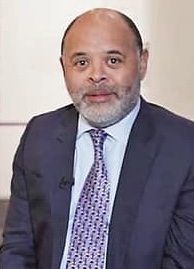
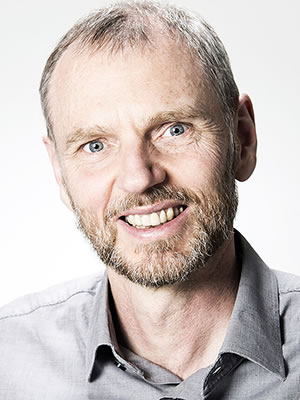
Professor Kurt Barling is Deputy Dean (Research & Knowledge Exchange) at Middlesex University's Faculty of Arts and Creative Industries. With a distinguished 26-year career as a BBC journalist covering international conflicts and social issues, Barling specializes in journalism practice, diversity in media, and the impact of AI on journalism ecosystems. His research examines media representation of inequality, AI's role in local journalism, and historical journalism practices. Barling holds a first-class degree in Languages and Politics (1984), MSc in Comparative Government (1985), and PhD in International Relations (1989) from the London School of Economics. He is fluent in French and German. His current research focuses on AI's impact on media communications and archival/heritage sectors. Teaching responsibilities include PhD supervision on digital media transformations, MSc Digital Journalism (Technological Advances module), and BA Creative Writing & Journalism. He actively judges national media awards including RTS, BAFTA, and Orwell Prize, and gives motivational talks in schools through the Speaker4Schools programme. Fellow Royal Society of Arts Trustee, Park Theatre London Senior Fellow, Higher Education Academy
Hong Tien Vu is an Associate Professor at the William Allen White School of Journalism and Mass Communications, University of Kansas. He specializes in global/development communication, digital media, and communication for global change. His teaching focuses on media writing, international journalism, information management, and strategic communication. Education: Linguistics, Hanoi National University M.S., University of Kansas Ph.D., University of Texas at Austin Research Focus: Vu's work examines media framing in global crises (e.g., Rohingya crisis, climate change), cross-cultural journalism practices, and the impact of digital platforms on activism and public health. His studies often integrate computational methods like automated framing analysis and longitudinal semantic network analysis. Publications & Presentations: Vu has published over 30 peer-reviewed articles and presented at major conferences such as AEJMC and ICA. Recent work includes studies on pandemic reporting, vaccine hesitancy, and journalists' debunking behaviors on social media. Labs/Teams: Collaborates with interdisciplinary teams on projects involving global NGOs, health communication campaigns, and media literacy initiatives.
Gabriele Lenzini is an Associate Professor at the University of Luxembourg's Interdisciplinary Centre for Security, Reliability and Trust (SnT), where he leads the IRiSC research group. With a PhD in Computer Science from the University of Twente and dual MSc degrees from the University of Pisa, his research focuses on socio-technical security, electronic voting systems, and privacy engineering. He has extensive international experience through positions at CNR Italy, University of Twente, and Telematica Institute. His research explores security and privacy in human-centered systems through interdisciplinary approaches. Primary interests include: Design of trustworthy socio-technical systems Security protocols for electronic voting Location privacy assurance mechanisms Human factors in cybersecurity Publications demonstrate consistent focus on security and privacy innovations, particularly in social media analysis (misinformation detection, credibility systems) and cryptographic applications (voting protocols, authentication systems). Recent works show growing emphasis on AI/ML security implications and ethical HCI design patterns.
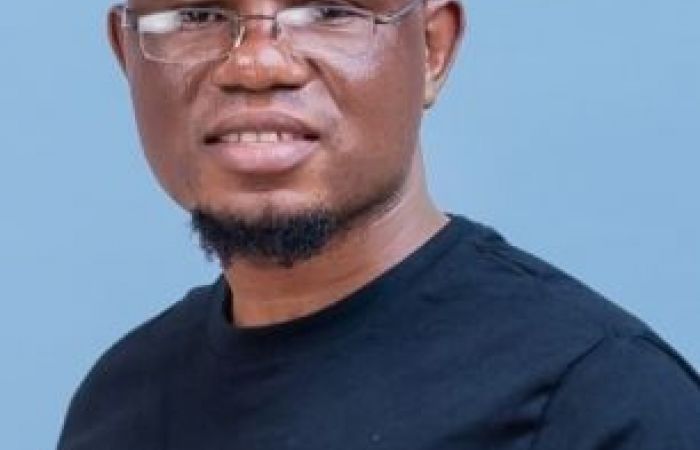
Dr. Albert Sharra is a Joint-postdoctoral Research Fellow at the University of the Witwatersrand and University of Edinburgh, and an Honorary Fellow in the Centre of African Studies at the University of Edinburgh. His academic work spans digital culture, political activism, criminology, and media studies with a strong focus on African contexts. He also serves as an Affiliate at Edinburgh's Centre for Data, Culture & Society, Research Fellow at the Institute for Advanced Studies in Humanities (IASH), and Affiliate at the Edinburgh Futures Institute's Media & Communications Cluster. Dr. Sharra's research falls within two main areas: 'digital culture, society and the state' examining how technologies transform political activism and state responses through policing and surveillance; and journalism/media culture focusing on technological transformations in Global South media. His work includes building the first comprehensive dataset of policing in Malawi since 1953 and editing a Special Issue on Digital State Surveillance of Political Activists in Africa for the Journal of Southern African Studies. His research interests encompass digital citizenship, online victimization, criminology in online spaces, and the future of journalism in Africa. His recent publications reveal a strong focus on BBC's legacy in African broadcasting, digital political activism in Southern Africa, and transformations in African newsrooms. The research demonstrates an interdisciplinary approach connecting digital sociology, political science, media studies, and criminology with particular attention to postcolonial contexts and decolonial frameworks. His work often employs comparative analysis across multiple African countries including Malawi, Kenya, Zimbabwe, and Uganda. IASH Susan Manning Grant at Edinburgh (2024) Joe Ebrahim Prize for Best Honours Dissertation (awarded to student) Multi-award-winning journalist with decade of newsroom experience Dr. Sharra actively supervises PhD and Master's students across institutions, with current advisees researching digital finance and women empowerment, philanthropic humanitarianism, fact-checking in Africa, political transitions, and cold war diplomacy. He has secured over €65,000 in professional development grants for African journalists through partnerships with Konrad Adenauer Stiftung and Friedrich Naumann Foundation, training over 500 media personnel across multiple African countries. His current projects include examining the Universal Periodic Review mechanism for human rights monitoring and investigating 'Tech companies and compensation for traditional media'.
Zhijun Yin is an Assistant Professor in the Department of Biomedical Informatics and Computer Science at Vanderbilt University's School of Engineering. His research focuses on developing machine learning and data mining techniques to analyze health behaviors through online data sources like social media and electronic health records (EHRs). He holds dual appointments in Biomedical Informatics and Computer Science, reflecting his interdisciplinary work in health informatics and computational methods. Yin earned a Ph.D. in Computer Science and an M.S. in Biostatistics from Vanderbilt University. His research spans ethical AI applications in healthcare, predictive modeling for disease recurrence, and understanding caregiver dynamics in online communities. He has published extensively on topics including AI ethics, health data privacy, and leveraging social media for medical insights. Notable areas of focus include optimizing word embeddings for small medical datasets, improving risk prediction models using EHR longitudinal data, and addressing algorithmic bias in healthcare AI systems. His work often bridges biomedical data analysis with computational methodologies, aiming to enhance patient care through technology-driven solutions.
Angus Burgin is Associate Professor of History at Johns Hopkins University. He specializes in 20th-century intellectual history, political economy, and the history of capitalism. He directs the Moral and Political Economy program and serves as executive editor for the Intellectual History of the Modern Age series. His research explores: Evolution of market advocacy and neoliberal thought Intersections of capitalism, democracy, and technology Historical narratives of economic expertise Publications analyze intellectual movements like neoliberalism, critiques of capitalism, and the role of elites in policy. Award-winning work includes studies on free market reinvention and economic paradigms. Awards: Merle Curti Award Joseph Spengler Prize
Glen Gostlow is a Research Fellow in the Department of Finance at the University of Zurich. His research focuses on the intersection of environmental factors and financial markets, particularly climate litigation impacts, carbon risk measurement, and AI-driven sustainability analysis. He holds a First Class joint degree in Economics and Geography from the University of Glasgow (with economics dissertation prize), an MSc from the London School of Economics (LSE), and a PhD from LSE's Department of Geography and Environment. He has received notable awards including the Global Research Alliance for Sustainable Finance & Investment Best Paper Award and the Robeco Sustainable Investing Best Paper Award. His work explores innovative applications of AI in environmental assessment and climate risk quantification. Recent projects include CHATREPORT for sustainability disclosure analysis and ChatClimate for grounding AI in climate science. Key research themes include physical climate risk pricing, weather exposure prediction using historical data, and the carbon risk premium. His interdisciplinary approach bridges geography, economics, and computational methods to address sustainability challenges in finance.
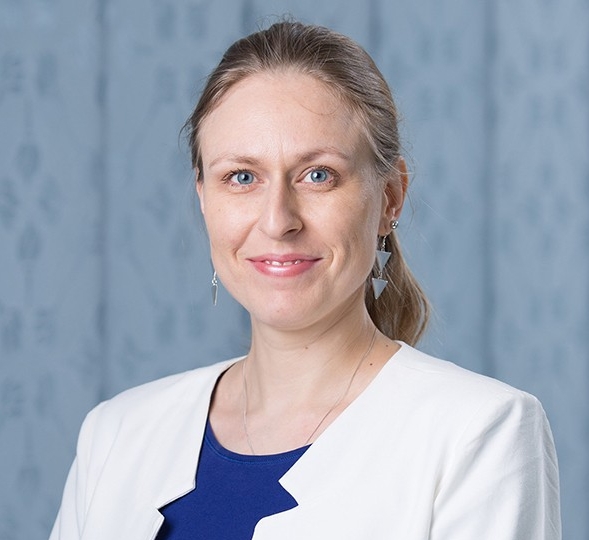
Daniela Mahl is a Postdoctoral Researcher at the Department of Communication and Media Research, University of Zurich, and a Senior Research and Teaching Associate. She holds a Ph.D. in Communication and Media Research (cum laude) from the University of Zurich (2024) and a Master’s in Communication Science and Linguistics (with distinction, 2019). Her research focuses on socio-cultural implications of technology, responsible AI, platformization, science communication, and mixed methods. She has conducted research at the University of Hamburg and the Weizenbaum Institute for the Networked Society. Her research projects include studies funded by the Swiss National Science Foundation (SNSF), WHO, and DFG, addressing AI’s impact on public health, conspiracy theories, and climate change communication. She has published extensively in journals like *Journal of Science Communication*, *BMJ Global Health*, and *New Media & Society*, with over 30 peer-reviewed articles. Mahl is also a Visiting Research Fellow at Nanyang Technological University (Singapore) and the Weizenbaum Institute (Berlin). Her awards include a Semester Award for academic excellence (2019) and a FAN Award shortlist (2025). She teaches MA/BA courses on AI in science communication, conspiracy theories, and misinformation. Mahl has organized workshops on computational methods and serves on academic committees for the German Communication Association (DGPuK).
Bruce Desmarais is a Professor of Political Science and Social Data Analytics at Pennsylvania State University (Penn State), holding the William and Monica DeGrandis-McCourtney Early Career Professorship. He serves as Director of the Center for Social Data Analytics (C-SoDA) and directs the Social Data Analytics (SoDA) graduate program. His research focuses on statistical methods applied to social and political systems, particularly network analysis, with applications to international relations, policy diffusion, digital communication, and regulatory policymaking. Desmarais earned a Ph.D. in Political Science from the University of North Carolina at Chapel Hill (2010) and a B.A. from Eastern Connecticut State University (2005). Before joining Penn State, he was an Assistant Professor at the University of Massachusetts Amherst (2010–2015). His work is supported by grants from the National Science Foundation and the Russell Sage Foundation. Key research areas include policy diffusion networks, network dynamics in legislatures, computational social science, and the analysis of digital communication patterns among policymakers. He co-founded Public Square Analytics LLC, a firm focused on improving digital public discourse. Desmarais has published extensively on topics such as exponential random graph models, citation networks in the Supreme Court, and the application of machine learning to policy analysis. His work bridges political methodology, American politics, and international relations, emphasizing methodological innovation and interdisciplinary collaboration. He is affiliated with Penn State’s Institute for Computational and Data Sciences and has held leadership roles in professional organizations. His research has been featured in journals like Policy Studies Journal , Social Networks , and Political Analysis .
Sophie Lecheler is a Professor in the Department of Communication at the University of Vienna's Faculty of Social Sciences. Her research focuses on media framing, political communication, disinformation, and immersive journalism. She leads major projects like the Vienna Doctoral College on Digital Humanism and the TACo project on automated content moderation. Lecheler has over 96 publications since 2010, with recent work addressing digital journalism ethics, audience engagement in immersive media, and the societal impact of AI-driven content moderation. Her academic contributions span cross-national studies on political campaigns, the role of emotions in news consumption, and the challenges of misinformation in digital ecosystems. Lecheler actively engages in public discourse through media commentary on quality journalism and science communication. She collaborates internationally, with research collaborations across Europe and beyond. Education: Not explicitly stated in text. Key Projects: Vienna Doctoral College on Digital Humanism (2024-2029), TACo (2021-2025), Emotions in Political Journalism (ongoing). Awards: None explicitly mentioned. Lecheler’s work aligns with UN Sustainable Development Goals, particularly in promoting quality education (SDG 4) and responsible consumption (SDG 12) through media literacy initiatives. Her research bridges theoretical insights with practical solutions for modern media challenges.
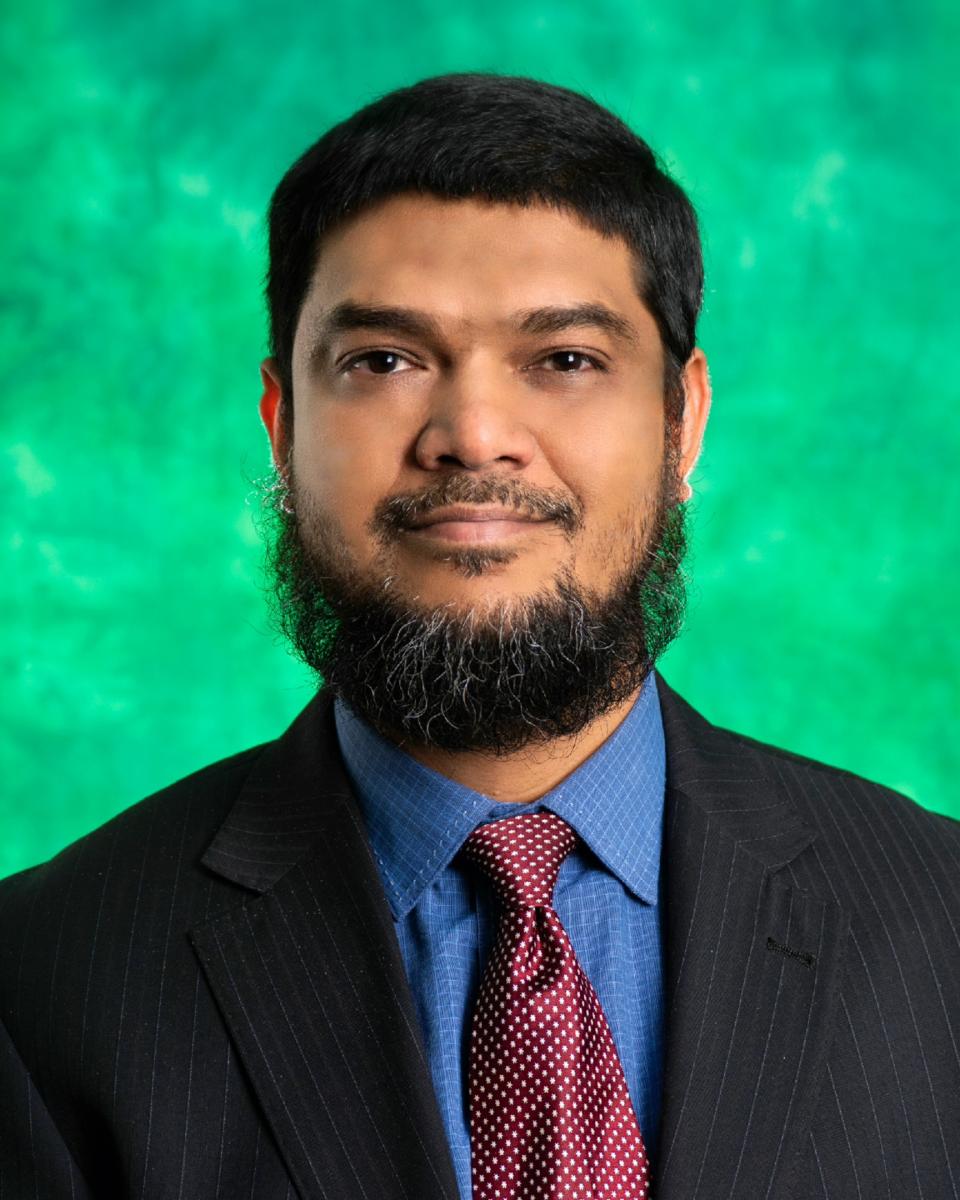
Gahangir Hossain is an Associate Professor at the University of North Texas, specializing in interdisciplinary research at the intersection of cybersecurity, artificial intelligence, and cognitive science. His work focuses on advancing cybersecurity solutions, smart agriculture systems, and healthcare technologies through data-driven methodologies and machine learning innovations. He holds a Ph.D. from the University of Memphis, M.S. degrees from the University of Memphis and Bangladesh University of Engineering and Technology (BUET), and a B.S. from Shahjalal University of Science and Technology (SUST). Education: Ph.D., University of Memphis M.S., University of Memphis M.S., Bangladesh University of Engineering and Technology B.S., Shahjalal University of Science and Technology His research interests span Artificial Intelligence , Cybersecurity Management , Data Science , and Health Informatics . Notable projects include the CyberCREWS program for high school cybersecurity education and the Perfect Project , which provides STEM training in cybersecurity for 9th-12th graders. He also develops AI-driven tools like JIBON++ , an assistive voice assistant for people with visual impairments. Recent work highlights include leveraging federated learning for cybersecurity education ( Cognitive CyTutor ), optimizing EV charging security, and applying steganography to enhance multi-factor authentication. His research bridges societal challenges such as digital literacy gaps and healthcare cybersecurity vulnerabilities. Grants and collaborations involve advancing cybersecurity recruitment strategies, smart agriculture cybersecurity frameworks, and ethical hacking training for students. He leads initiatives to integrate cybersecurity into K-12 education through courses on machine learning for cyberthreat analytics and blockchain technology. His lab focuses on interdisciplinary projects such as CyberTMS (transportation cybersecurity management) and iRestroom , a smart infrastructure for elderly care. Current efforts emphasize AI ethics, dementia care through ChatGPT integration, and reducing cyber value at risk (CVaR) through anomaly detection systems.
Christina Pöpper is an Associate Professor of Computer Science and Program Head of Computer Science at New York University Abu Dhabi (NYUAD), with a Global Network Associate Professor appointment at the Courant Institute of Mathematical Sciences, NYU. She leads the Cyber Security & Privacy (CSP) Lab and is Co-PI of the Center for Cyber Security at NYUAD. Education: PhD in Computer Science, ETH Zurich MSc (Diploma) in Computer Science, ETH Zurich Her research focuses on cyber security and privacy, with emphasis on wireless and mobile communication security, including 5G/nextG networks, secure localization, and privacy-preserving mechanisms. Her work combines systems and security approaches to build secure systems where cryptography alone is insufficient. She has published extensively in top venues such as USENIX Security, NDSS, IEEE S&P, and ACM CCS. The recent research articles highlight a strong trend in mobile and wireless security, including 5G vulnerabilities, SMS timing attacks, GPS spoofing, and privacy risks in AI-generated code and LLMs. Her group also investigates disinformation, browser fingerprinting, and secure communication protocols. Scientific Awards: Runner-up, Andreas Pfitzmann Best Student Paper Award (PETS 2024) Christina Pöpper has advised numerous PhD and master’s students, including Shujaat Mirza and Zacharia Kornas. She has led significant research grants through the Center for Cyber Security and the CSP Lab. She serves on the steering committees of NDSS and ACM WiSec and has chaired TPCs for NDSS and ACNS. She previously served as Assistant Professor at Ruhr-University Bochum and worked at the European Space Agency. Labs and Teams: Cyber Security & Privacy (CSP) Lab, NYUAD Center for Cyber Security, NYUAD Co-organizer of the WiseML workshop on Wireless Security and Machine Learning
Prof. Dr.-Ing. Kurt Sandkuhl serves as Professor and Chair of Business Information Systems at the Institute of Computer Science within the Faculty of Computer Science and Electrical Engineering at the University of Rostock. He concurrently holds the position of Dean of the Faculty and maintains active roles as Academic Advisor for the Business Information Systems Master's program, ERASMUS+ Coordinator, and member of the academic management of the Center for Entrepreneurship. His research centers on enterprise architecture, enterprise modeling, capability management, and digital business models, with significant contributions to knowledge-based systems, smart process management, and mobile/wearable information systems. Recent work demonstrates pioneering integration of artificial intelligence—particularly large language models—into enterprise modeling practices, addressing challenges in cybersecurity, sustainable business transformation, and public sector digitalization. Analysis of his recent publications reveals dominant trends in AI-augmented enterprise modeling, cybersecurity architecture for public administration, and circular economy transitions in manufacturing. His work consistently bridges theoretical modeling frameworks with practical implementations in SMEs, public transport, and energy management contexts, emphasizing usability and real-world impact. Prof. Sandkuhl advises the WIN M.Sc. program and coordinates international academic exchanges through ERASMUS+. His institutional leadership extends to the IT Initiative Mecklenburg-Vorpommern board and co-opted membership in the Interdisciplinary Faculty's Department of Ageing, while maintaining active affiliations with the German Computer Science Society and founding membership in the European Association for Software and Systems Technology. He directs the Business Informatics Enterprise Modeling Lab, which employs multi-touch tables and smart boards for participatory modeling research. The lab focuses on capability-driven enterprise architecture, digital business ecosystem design, and context-aware systems for quantified products, with notable projects in maritime dataspaces and demand-responsive public transport integration.
Monica Agrawal is an Assistant Professor at Duke University with joint appointments in the Division of Translational Biomedical (Biostatistics & Bioinformatics), Trinity College of Arts & Sciences (Computer Science), and Pratt School of Engineering (Biomedical Engineering). Holding a Ph.D. from MIT (2023), her work bridges machine learning, clinical data analysis, and health equity through biomedical AI systems. Research Focus: Combines natural language processing, graph networks, and EHR analysis to address medical challenges. Key areas include polypharmacy side effects, health knowledge graphs, and human-AI collaboration in clinical settings. Scientific Contributions: Pioneering applications of large language models in health equity promotion, clinical information extraction, and EHR-based research. Collaborates with Harvard Medical School and Harvard School of Public Health on translational health projects. Teaching: Instructs courses on natural language processing (COMPSCI 572) and research independent study (COMPSCI 393/394), emphasizing hands-on AI development for healthcare. Recent Publications: Explore medical conversational AI, ambient scribing tools, and LLM safety in clinical communication. Her 2025 paper on health equity highlights AI's potential to reduce disparities.
Zhijiang Guo is an Assistant Professor at the DSA Thrust, HKUST (GZ), and an Affiliated Assistant Professor of HKUST. Previously, he was a Senior Researcher at Huawei Noah's Ark Lab and a Postdoc at the Department of Computer Science and Technology at the University of Cambridge, where he was also a member of Trinity College. Dr. Guo earned his PhD in Computer Science from Singapore University of Technology and Design (SUTD) in 2020 under Professor Wei Lu. During his doctoral studies, he was a visiting student at the University of Edinburgh (2019-2020), collaborating with Professors Shay Cohen and Giorgio Satta on Structured Prediction. His undergraduate education was completed at Sun Yat-sen University. Dr. Guo's research focuses on natural language processing and machine learning, with particular emphasis on large language models (LLMs). His work explores fundamental questions about knowledge representation and reasoning capabilities in LLMs, examining how these systems understand and process information. Key research areas include logical consistency in language models, efficient code generation, autoformalization techniques, meta-reasoning benchmarks, and parameter-efficient fine-tuning methods. His work bridges theoretical insights with practical applications requiring systematic reasoning and knowledge representation. Dr. Guo's publication record demonstrates significant contributions to advancing reasoning capabilities in language models. His work spans top-tier conferences including ICML (with spotlight papers in 2025), NeurIPS (including an oral presentation in 2024), ICLR (with spotlight papers in 2024), and ACL. His research shows a clear progression from foundational LLM capabilities toward more sophisticated reasoning systems, with particular attention to evaluating and improving logical consistency, developing meta-reasoning benchmarks, and creating frameworks for automated alignment evaluation. Dr. Guo has served as an Area Chair for NeurIPS 2025, reflecting his standing in the research community. His work on MR-Ben introduced a novel benchmark for evaluating System-2 thinking in LLMs, while his contributions to AVeriTeC created an important dataset for real-world claim verification with web evidence. Dr. Guo actively seeks strong and motivated students to join his research group. His advising philosophy emphasizes fundamental research questions about LLM capabilities while maintaining practical relevance. Current projects focus on understanding the transition from System 1 to System 2 reasoning in language models, with significant implications for creating more reliable and trustworthy AI systems. Dr. Guo leads research efforts focused on the intersection of knowledge representation and reasoning in large language models. His group develops new methodologies for evaluating and improving logical consistency, knowledge composition, and reasoning processes in AI systems. Current projects include investigating the transition from intuitive to deliberate reasoning in LLMs, developing efficient fine-tuning techniques like HydraLoRA, and creating frameworks for automated alignment evaluation in complex reasoning tasks.