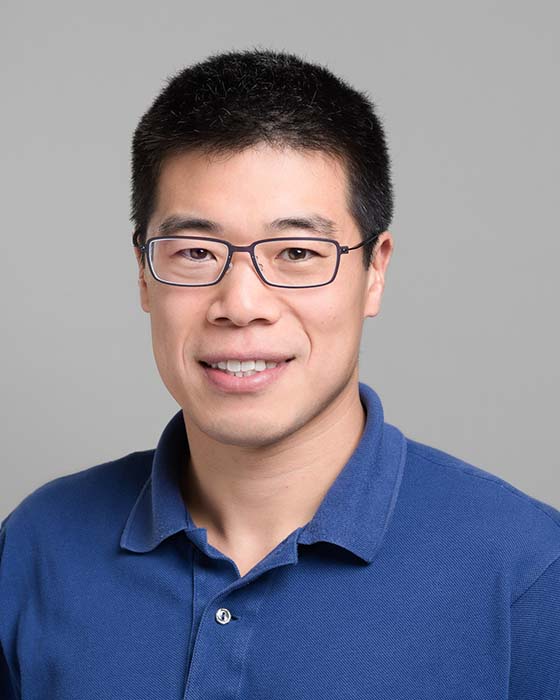
Jonathan Anderson is an Associate Professor at Memorial University of Newfoundland's Faculty of Engineering and Applied Science. He holds a B.Eng. and M.Eng. from Memorial University (2006, 2008) and a PhD from the University of Cambridge (2012). His research focuses on computer security, privacy, operating systems, and the hardware/software interface. He is a contributor to the FreeBSD operating system, particularly its Capsicum sandboxing framework, and maintains securityconferences.net . Anderson's work includes the development of the CHERI capability model and the TESLA security logic assertions framework. He has held postdoctoral roles at Cambridge before returning to Memorial in 2014. His honors include the IEEE Canada–Telus Innovation Award and the Rothermere Fellowship. His research spans secure operating systems, cryptographic protocols, and distributed systems. Key contributions include advancements in sandboxing technologies, secure storage systems, and blockchain applications for data integrity. Anderson actively participates in academic workshops and conferences, contributing to the field of security protocols and system design.
Dr. Banani Roy is an Assistant Professor in the Department of Computer Science at the University of Saskatchewan. Her research focuses on software maintenance, empirical software engineering, program comprehension, and scientific workflow management systems. She explores challenges in quantum computing applications for software engineering, AI-driven code tools, and reproducibility in computational experiments. Her work includes developing frameworks like VizSciFlow for scientific workflow visualization and Nutrient App for environmental monitoring via smartphone applications. Her research interests span topics such as code quality analysis, gender disparities in software systems, and XAI (Explainable AI) challenges. She has contributed to tools like CloneCognition for code clone validation and FSECAM for feature-to-architecture linkage. Her recent studies address developer challenges with large language models and federated learning approaches for real-time bug prediction. Dr. Roy's publications emphasize interdisciplinary applications of software engineering principles in scientific computing, quantum algorithms, and community-driven problem-solving platforms. She advocates for reproducible workflows and FAIR (Findable, Accessible, Interoperable, Reusable) data practices in collaborative scientific research. While no awards are explicitly listed, her extensive contributions to open-source tool development and empirical studies highlight her impact in advancing software engineering methodologies. She collaborates on projects involving legacy system reengineering, cloud-based code clone validation, and asynchronous collaboration frameworks for scientific teams.
Jeremy Bradbury is an Associate Professor in the Faculty of Science at Ontario Tech University, where he has served as Undergraduate and Graduate Program Director for Computer Science and as a member of the Board of Governors. His research focuses on software testing, analysis, and quality assurance, with a particular emphasis on human-centered approaches, empirical methodologies, and concurrency issues in software systems. He leads the Software Quality Research Lab (SQRLab) and develops tools like PIE for visualizing software design patterns and GidgetML for adaptive educational gaming. Education: PhD in Computer Science from Queen's University (2007). Research interests include software visualization, open-source software analysis, flaky test detection, and the application of machine learning to software engineering challenges. His work spans both academic contributions (e.g., combinatorial testing frameworks) and practical innovations like the Run, Llama, Run game for computational thinking education. Recent work explores AI-driven bug prediction, data augmentation bias in ML models, and cybersecurity for connected autonomous vehicles. He has organized workshops on testing configurable systems (ToCaMS) and challenges in parallel computing.
Gerald Adams, MD, is an Adjunct Professor in the Department of Medicine at Queen’s University. He joined the faculty in 1990 as an interventional cardiologist and pioneered the Percutaneous Coronary Intervention (PCI) program at KHSC. In 2000, his team became the first in Ontario to offer 24/7 Primary PCI for STEMI. Dr. Adams has held leadership roles including Division Chair, Cardiology Service Chief, and postgraduate training Program Director. He remains clinically active in the PCI lab, inpatient services, and outpatient stress testing. His research interests span interventional cardiology, cardiovascular medicine, and healthcare administration. Recent scholarly work focuses on software engineering advancements, including cybersecurity protocols, AI-driven bug fixing, and blockchain smart contract analysis. Dr. Adams has contributed to over 15 peer-reviewed articles since 2020, addressing topics like MCP server security, semantic versioning of language models, and swarm robotics optimization. His interdisciplinary research bridges clinical practice and computational innovations.
Joanne Atlee is a Professor in the Department of Computer Science at the University of Waterloo, Canada. She serves as Director of Women in Computer Science, actively promoting gender equity in the field. Her research focuses on software product line engineering, feature interaction analysis, and visualization of software analysis results. She holds a Ph.D. (1992), M.Sc. (1988), and B.Sc. (1985) from the University of Maryland and College of William and Mary. Education: Ph.D., Computer Science, University of Maryland, 1992 M.Sc., Computer Science, University of Maryland, 1988 B.Sc., College of William and Mary, 1985 Research Interests: Analysis and visualization of large distributed software systems Semantics of software feature composition Feature interaction detection and resolution Formal methods in software engineering Model-driven engineering Her work emphasizes industrial applications, particularly in automotive software and safety-critical systems. Recent research trends in her publications include: Exploring AI-driven code analysis (e.g., distinguishing human vs. GPT-4-generated code) Advancing visualization techniques for software product line analysis (e.g., Neo4j-based tools) Addressing scalability challenges in formal verification for industrial systems As an advocate for diversity, her work on gender representation in software engineering communities bridges technical and sociotechnical aspects of the discipline. She has advised numerous industrial collaborations in automotive and embedded systems domains, though no specific student names are listed in available materials. Labs/Teams: Leads the Women in Computer Science initiative at Waterloo and collaborates with automotive industry partners through formal methods research.
Weiyi (Ian) Shang is an Associate Professor at the University of Waterloo, affiliated with the Department of Electrical and Computer Engineering within the Faculty of Engineering. His research focuses on software engineering, performance testing, and machine learning applications in software systems. He leads the Software Engineering and System Engineering Lab, emphasizing practical solutions for logging, performance optimization, and automated testing. Key research areas include log analysis (privacy leakage detection, log summarization, and logging strategies), performance monitoring (regression detection, workload modeling), API evolution (migration techniques, workaround analysis), and automated code generation (LLMs in bug decomposition, AI code evaluation). His work bridges theoretical advancements with industrial applications, particularly in web systems and mobile app ecosystems. Publications span empirical studies, novel algorithms (e.g., DELA for error detection, CoMSA for configuration testing), and tools like LogAssist and Log4Perf. His research consistently addresses challenges in developer productivity, system reliability, and security across diverse domains like federated learning and DevOps practices. Notable contributions include improving log management through topic models, enhancing performance testing efficiency via microbenchmark optimization, and analyzing privacy risks in mobile app logs. Ongoing work explores AI-driven code evaluation and generalizable code embeddings for software tasks. Shang’s lab collaborates with industry on real-world systems, as seen in case studies involving serverless applications and database-centric systems. His research often involves empirical studies and tool development to bridge gaps between academic research and practical software engineering challenges.
Richard Trefler is an Associate Professor at the David R. Cheriton School of Computer Science, University of Waterloo. He specializes in formal verification, model checking, and the analysis of reactive and distributed systems. His work focuses on compositional reasoning, abstraction techniques, and parameterized systems to address state explosion challenges. Trefler has contributed to the synthesis of protocols, smart contract verification, and temporal logic applications. Research interests include automated reasoning tools, parameterized systems, communication protocols, and visual specifications for system design. His publications span conferences like VMCAI, ECOOP, and TACAS, with notable work on symmetry reduction and compositional verification. He received the Best Paper Award at the 22nd IFIP FORTE Conference for his contributions to modular reasoning in asynchronous systems. Current Student: Ruoxi Zhang Former Students: Zarrin Langari (2011), Shoham Ben-David (2009), Naghmeh Ghafari (2009), Jane D. Thi Tang (2006) His research explores cutting-edge topics such as protocol synthesis using temporal specifications and formal analysis of smart contracts. Trefler’s work bridges theoretical foundations with practical applications in distributed computing and cybersecurity.
Troy Michael John Vasiga is a faculty member at the David R. Cheriton School of Computer Science under the Faculty of Mathematics at the University of Waterloo , where he lectures undergraduate computer science courses and contributes to academic outreach. His research interests span Computer Science Education , Algorithms , Discrete Mathematics , and Theoretical Computer Science , with a focus on programming pedagogy, competitive programming, and combinatorial structures. Education : PhD in Computer Science (2008, University of Waterloo) with a thesis on error detection in number-theoretic algorithms. His publications highlight expertise in algorithm design , educational technology (e.g., CS Circles), and combinatorics (e.g., Thue-Morse sequence analysis). He has participated in events like IBM CASCON and ISSEP, presenting on computing education and algorithmic challenges. Previously serving as an undergraduate advisor, Vasiga now focuses on admissions and outreach, maintaining an active role in curriculum development and programming competition mentorship. Scientific Awards : No specific awards mentioned in the provided text. Labs & Teams : Involved with the Canadian Computing Competition and Waterloo’s computer science outreach initiatives, including organizing contest archives and mentoring students.
Yuepeng Wang is an Assistant Professor at the School of Computing Science, Simon Fraser University, Canada. He received his PhD and MSc from the University of Texas at Austin and BEng (honors) from the University of Science and Technology of China. Previously, he was a postdoctoral researcher at the University of Pennsylvania. Academic Honors: Distinguished Paper Award (OOPSLA'24, OOPSLA'17) Research Focus: Programming languages, formal verification, program synthesis, software engineering, and databases His research combines program verification and synthesis techniques across database applications, smart contracts, and software refactoring. Recent work focuses on SQL query equivalence, smart contract verification, and synthesis-driven database transformations. He supervises multiple graduate students and teaches advanced courses in programming languages and formal verification. He has contributed 15+ publications to top venues including PLDI, OOPSLA, ICSE, and POPL. His service includes program committee roles at POPL'26, SAS'25, and artifact evaluation committees for OOPSLA'23 and CAV'20. He also received the Distinguished Reviewer Award from PLDI'24.
Dr. Masud Rahman is an Assistant Professor in the Faculty of Computer Science at Dalhousie University, where he leads the RAISE Lab. He earned his Ph.D. in Computer Science/Software Engineering from the University of Saskatchewan under Prof. Chanchal Roy and completed a postdoctoral fellowship at Polytechnique Montreal with Prof. Foutse Khomh. Ph.D., Computer Science/Software Engineering, University of Saskatchewan Postdoctoral Fellow, Polytechnique Montreal M.Sc., Computer Science, University of Saskatchewan B.Sc., Computer Science, Khulna University His research focuses on the intelligent automation of software maintenance and evolution, particularly in debugging, bug localization, code search, and mining software repositories. He integrates Artificial Intelligence with Software Engineering to tackle challenges in modern software systems, including those involving Large Language Models, Deep Learning, and Cloud Computing. His work addresses critical industry problems such as software bugs, crashes, vulnerabilities, and technical debt, aiming to reduce the immense economic cost of software failures. Dr. Rahman’s recent publications show a strong trend in applying AI and machine learning techniques to software engineering problems, especially in deep learning systems, reproducibility of bugs, and automated code analysis. His work frequently appears in top-tier venues like ICSE, FSE, ASE, TOSEM, and EMSE. Scientific Awards: Governor General's Gold Medal U of S Doctoral Thesis Award Best PhD Thesis Award (Computer Science) Dr Keith Geddes Award Dalhousie Belong Research Fellowship President Gold Medal (Bangladesh) TCSE Distinguished Paper Award (2020) Best Reviewer Award (2 times) Best Paper Award (2 times) Dr. Rahman has successfully advised multiple graduate students and secured over $475K as Principal Investigator and $4.3M as Co-PI from competitive grants including NSERC Discovery, Mitacs Accelerate International, NSERC Alliance, and Dalhousie Startup Fund. He actively contributes to the academic community as a Guest Editor for EMSE Special Issue (SANER 2025), PC Chair, PC Member, and journal reviewer. He leads the RAISE Lab, which focuses on R esearch in A rtificial I ntelligence and S oftware E ngineering, fostering innovation in sustainable software and AI systems.
Mei Nagappan is an Assistant Professor at the David R. Cheriton School of Computer Science, University of Waterloo. Previously, he held positions as an Assistant Professor at Rochester Institute of Technology and as a Post-Doctoral Fellow at Queen’s University’s Software Analysis and Intelligence Lab (SAIL). His research focuses on leveraging big data for empirical software engineering, particularly mining ultra-large software repositories to identify patterns and relationships in ecosystems. He emphasizes solutions addressing stakeholders beyond developers, such as operators, build engineers, and project managers. Education: PhD in Computer Science from North Carolina State University under Dr. Mladen Vouk, and postdoctoral work under Dr. Ahmed Hassan. His research spans vulnerability detection, DevOps, AI in programming (e.g., GitHub Copilot analysis), and diversity in software engineering conferences. Key interests include static analysis, security, and the impact of non-traditional backgrounds in SE. He advocates for inclusive practices and evaluates tools like Copilot through a security and user-centric lens. Research Interests: Big Data Empirical SE, Human-LLM Collaboration, Vulnerability Detection, DevOps, Security, Diversity in SE, Static Analysis Tools. His work bridges theory and practice, with studies on logging practices, build technologies, and mobile app analytics. Recent projects explore barriers faced by non-traditional SE professionals and the effectiveness of AI-driven testing tools. Grants & Advising: While specific grants are not listed, his research is supported by large-scale empirical studies. Advising focuses on graduate students exploring topics like bug localization, LLM limitations, and diversity metrics in open-source projects. His lab collaborates on tools like AddressWatcher for memory leak analysis and RepoQuester for GitHub project evaluation. Labs & Teams: Previously associated with SAIL at Queen’s University. Current collaborations involve the Cheriton School’s SE research groups, focusing on AI in software development and empirical studies of developer workflows.
Professor Andreas Veneris, currently at the University of Toronto , holds cross-appointments in the Edward S. Rogers Sr. Department of Electrical & Computer Engineering , Department of Computer Science , and the Munk School of Global Affairs & Public Policy . He earned his Diploma in Computer Engineering from the University of Patras (1991), M.S. in Computer Science from USC (1992), and Ph.D. in Computer Science from UIUC (1998). AAAS ACM Fellow IEEE Fellow Professional Engineers of Ontario Technical Chamber of Greece Planetary Society NSERC COHESA Network Director His research spans two decades of CAD/VLSI design automation followed by blockchain technology focusing on CBDCs , smart contract verification , DeFi mechanisms , and techno-legal Web3.0 policy . Recent work includes ASTRAEA decentralized oracle , DeFi insurance protocols , and privacy-preserving CBDC architectures . Award highlights: ACM SIGSOFT Distinguished Paper (ICSE 2024) IEEE Best Paper Awards (2024, 2022, 2020) ACM SIGARCH Maurice Wilkes Award MICRO Hall of Fame He advises Ph.D. candidates in blockchain and machine learning while leading research sponsored by Ripple (UBRI) , Huawei , and IBM . His group develops value-based accelerators for deep learning and formal verification frameworks for smart contracts. Selected projects include: HEMVM (Interoperable Blockchain VMs) BAKUP (DeFi Insurance Protocol) SigVM (Event-Driven Smart Contracts) CnvluTin (Ineffectual Neuron-Free CNNs) Stripes (Precision-Variable DL Accelerators)
Professor Yuan Ding is a Canada Research Chair in Systems Software at the University of Toronto , affiliated with the Faculty of Applied Science and Engineering and serving as Chair of the Computer Engineering Group . He joined the Department of Electrical and Computer Engineering in 2013 and was promoted to Professor in 2023. Education: PhD in Computer Science (2012) from University of Illinois at Urbana-Champaign, B.E. in Computer Science and Engineering and B.S. in Mathematics (2006) from Beihang University Research Interests focus on improving the reliability and performance of large-scale software systems , particularly distributed and systems software. His work addresses critical issues like upgrade failures , log compression , performance profiling , and non-intrusive debugging . Key methodologies include empirical studies of real-world failures, static analysis, and runtime optimization. Publication Trends show expertise in operating systems , distributed systems , and software engineering . Recent work includes μSlope (log compression) and Relational Debugging (root-cause analysis), while earlier studies investigated JVM performance and distributed failure patterns . Scientific Awards : Canada Research Chair (2023), McCharles Prize (2018), NetApp Faculty Fellowship (2013–2016), ACM SIGSOFT Distinguished Paper (2011), Saburo Muroga Fellowship (2006–2007), University Gold Medal (2005) Advising & Collaborations : Supervised 15+ PhD and Master’s students, including Yongle Zhang (Purdue), Xu Zhao (Facebook), and Xiang Ren (Northeastern). Founded startup YScope to commercialize log compression tools like CLP , now deployed at Uber.
Paulo Blikstein is a Professor in the Department of Mathematics, Science and Technology at Teachers College, Columbia University, where he leads the Transformative Learning Technologies Lab (TLTL) . He previously held faculty positions at Stanford University and maintains strong interdisciplinary ties across computer science, education, and human-computer interaction. His research spans constructionist learning, learning analytics, data science education, and maker-based pedagogy. Research Interests: Core focus on constructionism , inspired by Seymour Papert, emphasizing learning through creating. Development of tangible and embodied interfaces for STEM learning. Innovation in multimodal learning analytics to assess student behavior in open-ended tasks. Advancing equitable and inclusive models for AI and computing education. Design and scaling of biology cloud labs and no-code data science tools for youth. Recent Research Trends: His latest work (2022–2025) shows a strong focus on integrating computational modeling with real-world data in middle school science, developing no-code platforms for community data science, and analyzing sustainability challenges in classroom technology adoption. He emphasizes teacher-driven curriculum design and systemic implementation of maker education globally. Scientific Awards: Best Pictorial Award Honorable Mention (ACM) Honorable Mention Short Paper Advising and Grants: He actively mentors graduate students, postdocs, and visiting scholars in the TLTL. His lab partners with schools, museums (e.g., New York Hall of Science), and policy makers to translate research into practice. Projects are funded by competitive grants, including awards from Columbia University’s School of Engineering and national competitions like the Learning Engineering Tools Competition. Labs and Teams: He directs the Transformative Learning Technologies Lab (TLTL) , a multidisciplinary research group focused on designing, researching, and scaling innovative STEM education technologies. The lab collaborates with institutions in Brazil, Switzerland, and China, and works closely with educators to ensure real-world impact.
Sebastian Fischmeister is a Professor and NSERC/Magna Industrial Research Chair in Automotive Software for Connected and Automated Vehicles at the Department of Electrical and Computer Engineering, University of Waterloo. His research focuses on systems at the intersection of software technology, distributed systems, and formal methods, with applications in automotive systems, avionics, and medical devices. He has pioneered frameworks for scalable location-based pervasive computing and verifiable real-time communication schedules, contributing to the ASTM F29.21 standard. Education: Dipl.-Ing. in Computer Science (Vienna University of Technology, 2000), Ph.D. in Computer Science (University of Salzburg, 2002) Research Themes: Real-time embedded systems, runtime monitoring, security analysis, data analytics for validation, and performance evaluation. Scientific Awards: APART Stipend (2005) Ontario Early Researcher Award (2014) Multiple best paper and tool awards He is an ACM Distinguished Speaker and actively participates in organizing conferences such as ESCAR, RTSS, DATE, and ICPE. His work includes significant contributions to anomaly detection, cybersecurity in automotive networks, and runtime verification techniques under unreliable conditions.