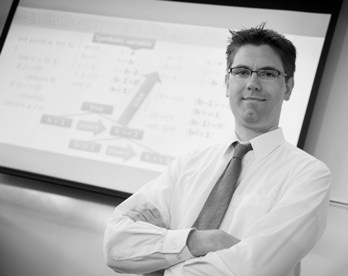
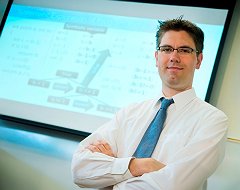
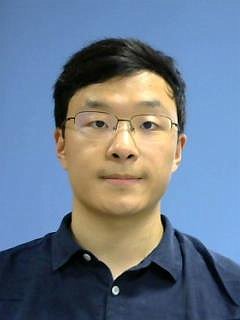
Cristian Cadar is Professor of Software Reliability in the Department of Computing at the Faculty of Engineering, Imperial College London. He leads the Software Reliability Group, focusing on automatic techniques for increasing the reliability and security of software systems. His research has significant impact in both academia and industry, particularly through the development of widely-used tools. His educational background includes a PhD in Computer Science from Stanford University, and undergraduate and Master's degrees from the Massachusetts Institute of Technology. Cristian's research primarily focuses on software reliability, security, and verification. His work spans symbolic execution, fuzzing, compiler testing, and automated techniques for finding and fixing software bugs. He has pioneered practical, scalable solutions that address real-world software challenges, with particular emphasis on security-critical applications. His research integrates formal methods with practical engineering approaches to create tools that are both theoretically sound and practically useful. Analysis of his recent publications reveals a strong focus on improving fuzzing techniques, enhancing symbolic execution systems, and developing better methods for compiler and infrastructure testing. His work consistently bridges the gap between theoretical foundations and practical implementation, resulting in tools that have substantial real-world impact. EuroSys Jochen Liedtke Award HVC Award BCS Roger Needham Award ACM SIGOPS Hall of Fame Award ACM CCS Test of Time Award ERC Consolidator Grant EPSRC Early-Career Fellowship Cristian has advised numerous PhD and Master's students, contributing significantly to the next generation of software engineering researchers. His research has been supported by prestigious grants including an ERC Consolidator Grant and an EPSRC Early-Career Fellowship. He has held leadership positions in major conferences, serving as Program Co-Chair for ESEC/FSE 2022 and General Chair for ISSTA 2021, demonstrating his standing in the research community. He leads the Software Reliability Group at Imperial College London, which maintains an active research agenda in software testing and verification. The group's work on KLEE and related tools continues to influence both academic research and industrial practice in software reliability engineering.